
Reviewed · CRUISES & BOAT TOURS
1 Hour Traditional Gondola Sightseeing Vistula River Cruise
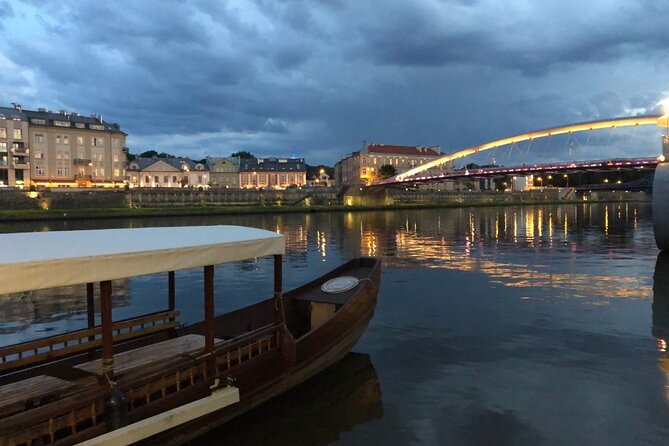
The most appealing thing about this Krakow cruise is its small wooden gondola, built in the Polish folk-boat tradition rather than shaped like a large sightseeing barge. From Kazimierz, you glide past Wawel Castle, old bridges, churches, monasteries, and the riverfront districts of Podgórze and Dębniki.
I like the calm pace and the chance to see Krakow from a low, open-water viewpoint. I also like that the trip is short enough to fit between museum visits, with drinks available before departure at Barka Mauretania. The main drawback is simple: much of Krakow’s famous center sits away from the river, so this is best for a pleasant view of the city, not a complete sightseeing tour.
Key points to know
- Traditional 12-person wooden boat: The gondola is made from spruce or oak using traditional Polish boatbuilding patterns and modern safety methods.
- Best river view: Wawel Castle is the clear highlight, especially from the bend in the Vistula.
- One-hour route: You see a useful stretch of the river without giving up half a day of sightseeing.
- Quiet starting point: Boarding takes place at Barka Mauretania in Kazimierz, away from the main boat area near Wawel.
- Audio commentary onboard: The route is explained with Polish-English audio commentary, with the sound kept fairly gentle.
- Good value at $17.80: This works well as a low-cost break, especially for couples, families, and anyone wanting a relaxed afternoon or sunset ride.
A wooden gondola gives Krakow a different angle
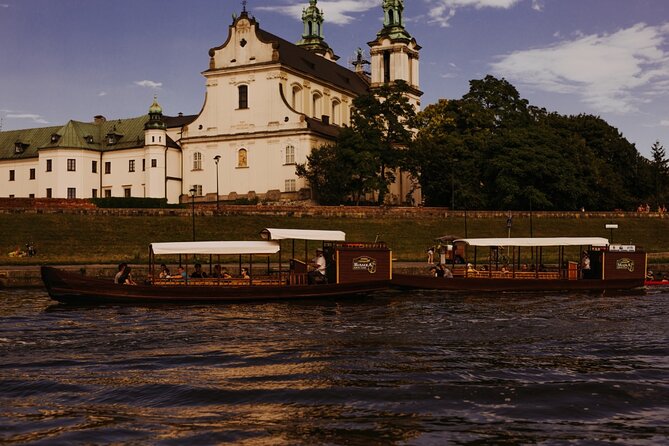
Krakow is a city of grand squares, church towers, and narrow streets. The Vistula offers another view, but not the usual one. On this cruise, you see the city from water level, with the river widening the view around Wawel Hill and opening sightlines toward Kazimierz, Podgórze, and the greener western districts.
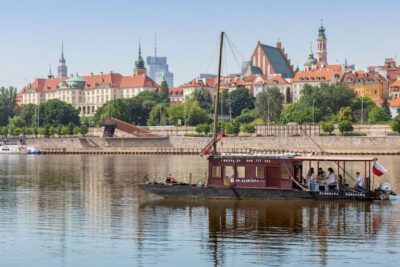
The boat is a traditional wooden 12-person gondola-riverboat. That detail matters. You are not sitting on a large commercial vessel with rows of enclosed seats. The smaller craft gives the ride a more personal feel, and its wooden construction adds a little character before the first bridge even comes into view.
The ride lasts about one hour and returns to the same place where it starts. That makes it easy to add to a day in Kazimierz. You can visit the district, walk to the river, take the cruise, and continue on foot afterward without arranging a separate transfer.
The listed price is $17.80 per person. For a one-hour outing, that is fair rather than a bargain, but the value improves if you want a break from walking. You get a compact introduction to several riverfront sights, a seat on a small boat, and an audio guide without committing to a longer paid tour.
More boat tours in Kraków:
- Kraków: Evening or Night River Cruise
★ 4.0 · 7,386 reviews - Krakow: Sightseeing Cruise by Vistula River
★ 4.1 · 1,897 reviews - Krakow: Evening Cruise with a Glass of Wine
★ 4.0 · 1,054 reviews
Starting at Barka Mauretania in Kazimierz
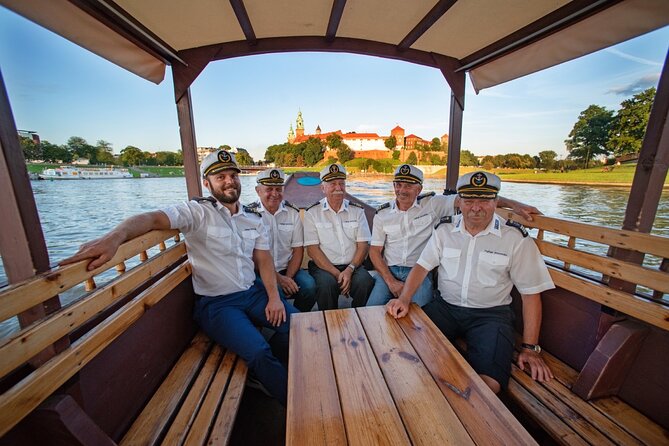
The meeting point is Barka Mauretania, at Bulwar Kurlandzki 137/7. The cruise begins along the Kazimierz riverfront, and the boat returns here at the end.
This location is useful for two reasons. First, Kazimierz is already one of Krakow’s most rewarding areas for food, cafés, churches, and Jewish heritage. Second, the departure point is away from the main concentration of sightseeing boats near Wawel Castle. If you prefer a quieter launch point, this can be a better fit.
You can buy coffee, tea, or another drink at the bar before boarding. Food and drinks are not included in the cruise price, but you may bring a coffee or cold drink with you. Use the restroom before getting on, since there is no restroom on the boat.
At busy times, arrive early if you want the best seat. One useful seating tip is to head for the upper deck when possible. It offers a clearer view and makes photography easier, though space can be limited on a small boat.
Kazimierz, Podgórze, and the first bridges
The route begins near Kazimierz, a former independent city that became part of Krakow in the early nineteenth century. Its Jewish and Christian traditions remain closely linked, and the riverfront gives you a broad view of the district’s position between the historic center and Podgórze.
The first notable crossing is the bridge connecting Krakowska Street in Kazimierz with Podgórze. It is the oldest complete road bridge in Krakow over the Vistula that still survives. From the water, the bridge is more than a way to cross the river. It helps you understand how the two districts face each other across the water.
You then pass the Church on the Rock, officially dedicated to St. Michael the Archangel and St. Stanislaus the Bishop and Martyr. It is one of Krakow’s oldest sacred sites. The Three Millennium Altar in the church garden is an unusual feature to look for from the river, although you will not get the same detail that you would on foot.
Next comes Grunwaldzki Bridge, which links the Old Town with Podgórze. Water tram stops sit on both riverbanks here, so this section also gives you a sense of how the Vistula works as part of Krakow’s transport network.
The river view is strongest when the boat is moving slowly near the bridges. You can look up at the structures, then back toward the banks for churches, apartment buildings, and promenades. The route is urban, not wild. If you want quiet countryside, this is not that kind of boat trip.
Wawel Castle is the main event
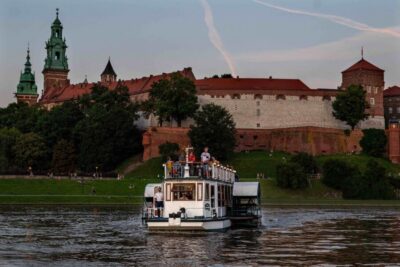
Wawel Hill is the strongest reason to take the cruise. The former royal residence sits on a bend in the Vistula, and the river gives you a clean view of its position above the water.
From land, Wawel can feel enclosed by walls, courtyards, paths, and nearby buildings. From the river, you see the hill as a single historic complex. The castle, defensive walls, and cathedral area become easier to place within the city. This is also one of the best moments for photographs, especially when the boat passes at a comfortable distance rather than directly below the hill.
The audio commentary points out the main sights as you go. The tone is not usually overpowering, which is useful if you want to chat or simply listen to the water. The information is helpful for orientation, though you should not expect a full guided lecture. Some passengers may find the commentary too brief, particularly if they want detailed architectural or royal history.
The next crossing is Dębnicki Bridge, built in its current form in 1951. It is 157 meters long and 19 meters wide, supported by two spans. It is not as visually dramatic as Wawel, but it marks the shift from the central riverfront toward the greener western part of the city.
Same base, a different kind of day:
- From Krakow: Auschwitz-Birkenau Guided Tour & Hotel Pickup
★ 4.5 · 33,358 reviews - From Krakow: Auschwitz-Birkenau Guided Tour & Hotel Pickup
★ 4.5 · 29,340 reviews - Krakow: Auschwitz Guided Tour with Optional Hotel Pickup
★ 4.5 · 15,280 reviews - Krakow–Zakopane: Cable Car, Chocholow Baths, Cheese & Vodka
★ 5.0 · 10,720 reviews
Zwierzyniec and Salwator bring more open views
Beyond Dębnicki Bridge, the cruise reaches Zwierzyniec, one of Krakow’s greenest districts. The Vistula feels more open here, with fewer dense central buildings and more room to watch the riverbanks pass.
Salwator is part of the former Zwierzyniec village. The route also gives you a view toward Kościuszko Mound, one of Krakow’s well-known elevated landmarks. The mound may not be close enough for fine detail, but its position helps show how the city extends beyond the Old Town and its immediate suburbs.
You also pass the mouth of the Rudawa River, a left-bank tributary of the Vistula and one of Krakow’s drinking-water sources. This is a small geographic detail, but it adds meaning to the route. The cruise is not only a parade of buildings. You are also seeing how Krakow’s waterways connect.
The Norbertan Sisters’ Monastery is another important sight. Its present form comes from a major seventeenth-century rebuilding during the time of Ksenia Dorota Kątska. From the boat, you mainly appreciate its river position and historic mass. For a closer look at the architecture, you would need to visit separately.
Dębniki, Manggha, and Podgórze from the water
Dębniki occupies the former site of a village where craftsmen once worked with tanning and fabric dyes among oak woods. Today, the riverfront view is more urban, but the district’s older identity remains part of the commentary and route.
One of the most modern sights is the Manggha Center of Japanese Art and Technology. Its building resembles a wave on the Vistula, making it easy to recognize from the boat. The center was created as a home for a collection of Japanese art in Krakow. It provides a nice visual contrast to Wawel’s medieval and royal forms.
The boat then passes Podgórze on the right bank. Podgórze began as a separate city founded near the end of the eighteenth century. Its location attracted settlement much earlier, helped by local flint deposits and later Slavic communities.
Father Bernatek’s footbridge links Kazimierz and Podgórze. It carries pedestrians and bicycles and has become known as a bridge for couples. From the water, the bridge is easy to pick out because of its light structure and prominent position between the two districts.
Nearby, the Tadeusz Kantor Museum, also called Cricoteka, occupies a former Podgórze power-plant building. The museum promotes Kantor’s theater and visual art. You will not have time to visit it during the cruise, but seeing the building from the Vistula can help you decide if it deserves a separate stop.
What the audio commentary adds
The tour includes Polish-English audio commentary. The information covers the buildings, bridges, districts, and river features along the route. In practice, you should treat it as orientation rather than a substitute for a city guide.
That is not necessarily a weakness. A boat ride works best when the commentary leaves room for the sound of the water and conversation. The audio points your attention toward Wawel, the monastery, the bridges, and the museums, then lets you enjoy the view without a constant stream of facts.
The main limitation is that the commentary may not explain every sight in great detail. If you want a thorough history of Krakow, book a walking tour or visit the monuments afterward. If you want context while relaxing for an hour, the audio does its job.
The captain and crew also matter here. The boat staff are described as friendly and approachable, and the captain may add clear information during the ride. Specific guide names are not provided, so you should not expect a named historian or private guide.
Afternoon calm or sunset atmosphere
The cruise works at different times of day. An afternoon departure gives you clear views of the buildings and bridges. It can be a useful pause after a morning of museums, castle rooms, and city streets.
A sunset departure adds more atmosphere. The river, castle, and bridges change as the light fades, and the route can feel quite different once Krakow begins to glow after dark. Music may play onboard, along with the commentary, so the mood is more about relaxation than serious sightseeing.
Weather affects the experience. The boat operates in light rain, and blankets may be available, but you should dress for an exposed position on the river. A sunny day gives you the best views. A gray day can still be pleasant, but the castle and distant sights will have less visual impact.
Who will get the most from this cruise
I would recommend this outing to you if you want a short, gentle activity rather than a major tour. It suits couples looking for a quiet hour, families wanting a simple break, and first-time visitors who would like to place Krakow’s river districts on a mental map.
It is also useful for anyone who has already spent several hours walking. A seat, a calm current, and a drink before boarding can reset your pace without taking up the rest of the day.
The cruise may disappoint you if you expect every major Krakow sight to appear along the river. The Old Town’s main square, many churches, and most museums are inland. Wawel is the major exception, and it is the trip’s best sight by a clear margin.
The maximum group size is 24 people, while the traditional gondola itself is described as holding 12. That suggests a small-scale setting, though the exact boat arrangement can depend on the departure. Service animals are allowed, most people can participate, and the dock is near public transport.
Is $17.80 a fair price?
At $17.80, the cruise is reasonably priced for an hour on a small wooden boat in central Krakow. You are paying for the boat, the route, the audio commentary, and the convenience of a return trip to Kazimierz.
The value is strongest when you see it as a break from land sightseeing. A one-hour river ride will not replace a castle visit or a guided city walk, but it adds something those experiences cannot: a broad view of Wawel and the riverfront districts without more walking.
The value is weaker if you judge it only by the number of famous monuments. Many sites are seen from a distance, and some are best appreciated from land. Still, the price is low enough that the cruise can make sense as a small extra rather than the centerpiece of your Krakow plans.
You can cancel for a full refund if you do so at least 24 hours before the scheduled start time. Cancellations or changes within 24 hours are not refunded or accepted, so check your plans before booking.
Should you book this Krakow gondola ride?
Book it if you want one peaceful hour on the Vistula, especially with a sunset departure or a free afternoon in Kazimierz. The wooden gondola, friendly crew, compact group size, and excellent view of Wawel give the ride real charm.
Skip it if you want a detailed history tour, a long countryside cruise, or a route packed with Krakow’s best-known buildings. For most people, I see it as a pleasant add-on rather than a must-do attraction. Arrive early for an upper-deck seat, use the restroom first, and think of the trip as a calm change of viewpoint. At $17.80, that is a sensible deal.
FAQ
How long does the Vistula River cruise last?
The cruise lasts approximately one hour.
Where does the cruise start?
It starts at Barka Mauretania, Bulwar Kurlandzki 137/7, in Krakow.
Where does the cruise finish?
The boat returns to the same meeting point at Barka Mauretania.
What sights can I see from the boat?
The route includes views of Wawel Hill and Royal Castle, Kazimierz, Podgórze, several bridges, the Church on the Rock, the Norbertan Sisters’ Monastery, the Manggha Center of Japanese Art, Cricoteka, Zwierzyniec, Salwator, and Kościuszko Mound.
Is an audio guide included?
Yes. Polish-English audio commentary is included in the cruise.
Is food or drink included?
No. Food and drinks are not included, but drinks are available at Barka Mauretania. You may also bring coffee or a cold drink with you.
Is there a restroom on the boat?
No. You should use the facilities at the dock before boarding.
How much does the cruise cost?
The listed price is $17.80 per person.
How many people can join the activity?
The activity has a maximum of 24 participants. The traditional wooden gondola is described as a 12-person boat.
Can I cancel for a refund?
Yes. You can receive a full refund if you cancel at least 24 hours before the scheduled start time. Cancellations within 24 hours are not refunded.
Just added in Kraków
- Wawel Castle, Old Town with St. Mary’s Church Guided Tour★ 5.0 · 5 reviews
- Wawel Castle, Old Town with St. Mary’s Church Guided Tour★ 5.0 · 3 reviews
- Wawel Castle, Cathedral, Old Town and St. Mary’s Basilica★ 4.8 · 13 reviews
- Wawel Castle, Cathedral, & Rynek Underground Tour with Lunch★ 4.5 · 10 reviews
- Wawel Castle & Cathedral Skip the Line Small Group Tour★ 5.0 · 3 reviews
- Wawel Castle and Cathedral Guided Tour★ 4.6 · 44 reviews
- Wawel Castle, Cathedral, Rynek Underground Tour with Lunch★ 5.0 · 3 reviews
- Wawel Castle and Cathedral Guided Tour★ 5.0 · 8 reviews
Cruises & Boat Tours, compared.
Traditional Galar Cruise on The Vistula River
Read the review →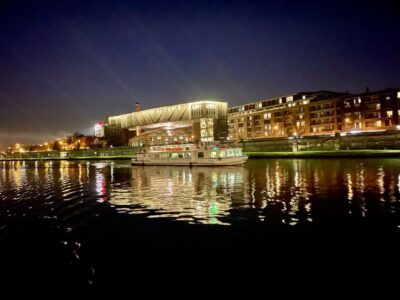
Browse the lists this tour appears in