
Reviewed · JOHN PAUL II HERITAGE TOURS
Łagiewniki-Sanctuary of Divine Mercy and John Paul II
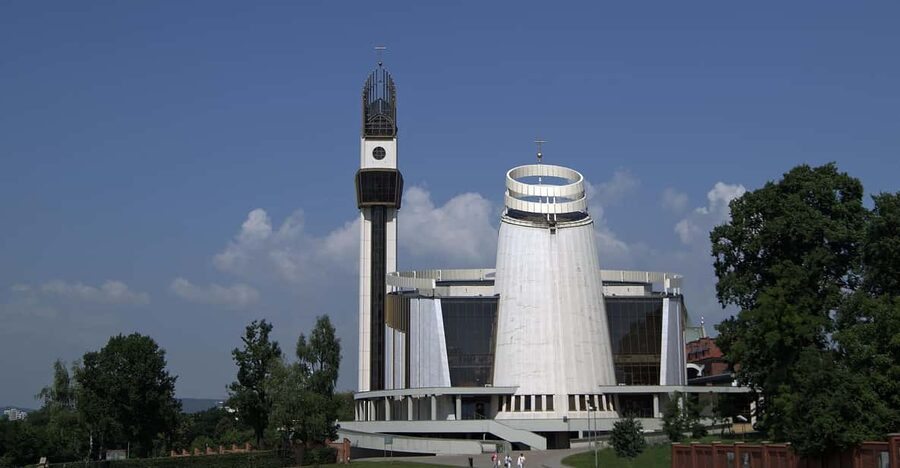
The most moving part of this half-day outing is the link between two modern Polish saints: Saint Faustina Kowalska, whose message of Divine Mercy began here, and Pope John Paul II, who helped spread that devotion around the world. You visit both sanctuaries in Łagiewniki, with time for prayer, exhibits, and views from the Observation Tower.
I like the hotel pickup and drop-off, which removes the need to sort out transport from Kraków. I also like having a live guide to explain the people and symbols behind the buildings, rather than wandering through a large religious complex without context.
The main consideration is the price, $122 per person. That is a serious outlay for five hours, especially since food and drinks are not included. The value is strongest if you want guided interpretation, private transport, and a focused visit to both sites.
Key points at a glance
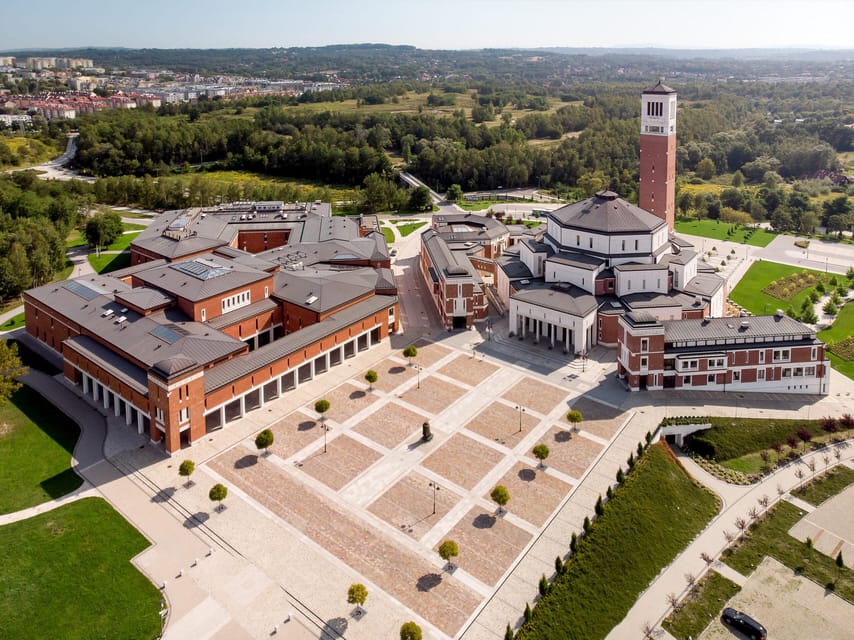
- Two important Polish shrines in one outing: Visit the Sanctuary of Divine Mercy and the Sanctuary of St. John Paul II in Łagiewniki.
- Saint Faustina’s tomb: Learn about the nun whose visions and message of God’s mercy shaped the devotion centered here.
- Observation Tower visit: Include time for views from the sanctuary complex, weather and access permitting.
- Museum of Saint Faustina: Add historical context to the religious experience through a dedicated museum visit.
- Hotel transport from Kraków: Pickup and return make this easier than arranging the trip independently.
- Guides in four languages: Tours are offered in English, Polish, Ukrainian, and Russian.
Why Łagiewniki matters to Kraków
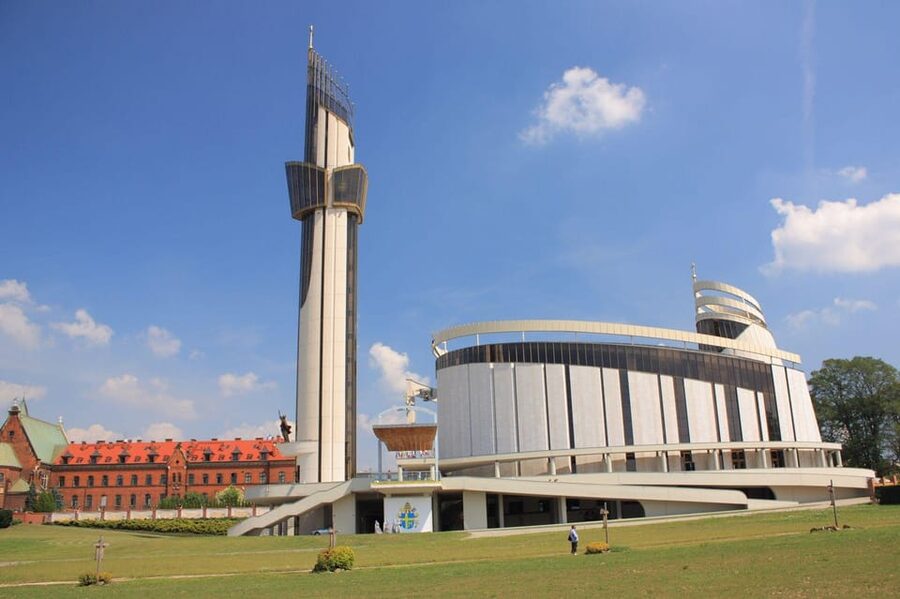
Łagiewniki is not simply another church stop outside Kraków. It is the center of a worldwide Catholic devotion linked to Saint Faustina Kowalska, a Polish nun who wrote about visions of Jesus and a message of Divine Mercy.
That background changes the way you see the visit. The basilica is not only an impressive modern church. It is also a place where people come to pray, reflect, and connect with Faustina’s spiritual message. You will see the site through both lenses: as a religious destination and as a place shaped by 20th-century Polish Catholic life.
The second sanctuary adds another layer. The Sanctuary of St. John Paul II is devoted to Karol Wojtyła, the Kraków archbishop who became pope in 1978. It forms part of the Have No Fear! Center, a complex with a church, museum, and displays about his life and papacy.
Put the two places together and you get a compact lesson in modern Polish religious identity. Saint Faustina represents a personal message of mercy and forgiveness. John Paul II represents a major public figure whose work reached far beyond Poland.
You do not need to be a practicing Catholic to find the visit worthwhile. The sites also appeal to anyone interested in Polish history, modern church architecture, pilgrimage, or the personal stories behind major religious movements.
More John Paul II trips from Kraków:
- Krakow: Pope John Paul II Guided Tour with Home & Sanctuary
★ 4.9 · 104 reviews - Krakow: Black Madonna of Częstochowa & Home of John Paul II
★ 4.8 · 97 reviews - From Krakow: Full-Day Wadowice & Czestochowa Tour
★ 4.9 · 77 reviews
Starting from Kraków with hotel pickup
The experience begins with pickup in Kraków, followed by transport to Łagiewniki. This is one of the clearest practical benefits of booking a guided outing rather than making your own way there.
Independent visitors must work out transport, find the right entrances, and decide how to divide their time between two related but separate sanctuary complexes. Here, the ride and route are handled for you. That leaves your attention free for the guide’s explanations and the sites themselves.
The total activity lasts five hours. The highlights describe a three-hour guided tour within that wider period, so you should check the available start time and exact schedule before booking. The difference may reflect driving, pickup, return, and time at the sites.
The ride also gives you a chance to see more than Kraków’s historic center. One booking specifically praised the countryside along the way and the contrast between old and new. That contrast is useful: the sanctuaries feel modern and planned, while the route out of Kraków gives the outing a change of pace.
Pickup details matter. Make sure your Kraków accommodation can be served and watch for the exact meeting instructions after booking. Since the advertised service includes hotel pickup and drop-off, this is not a tour designed around meeting at a central city landmark.
Entering the Sanctuary of Divine Mercy
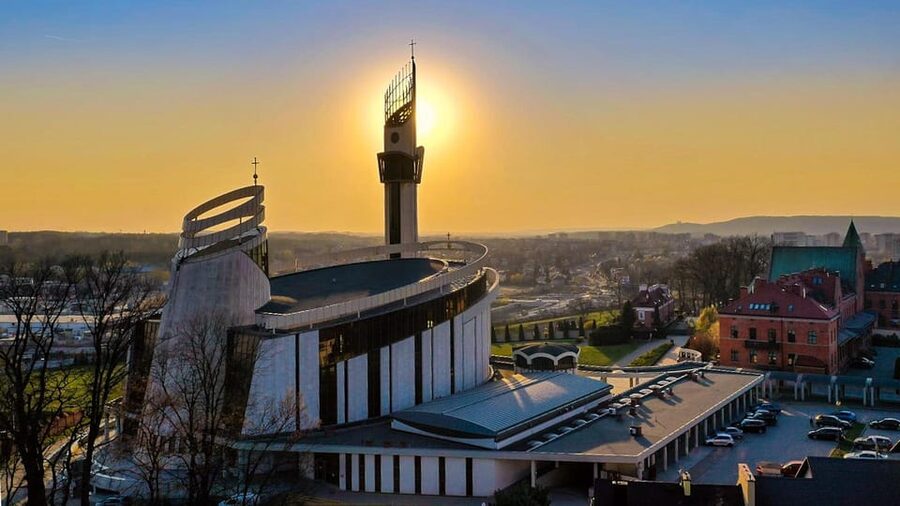
The first major stop is the Sanctuary of Divine Mercy. Saint Faustina’s tomb is a central point here, making this more than a standard church visit.
Your guide can explain Faustina’s life, her visions of Jesus, and the message of Divine Mercy connected with her. The theme is God’s love, forgiveness, and compassion. Even if you know little about Faustina beforehand, this context helps the basilica make sense.
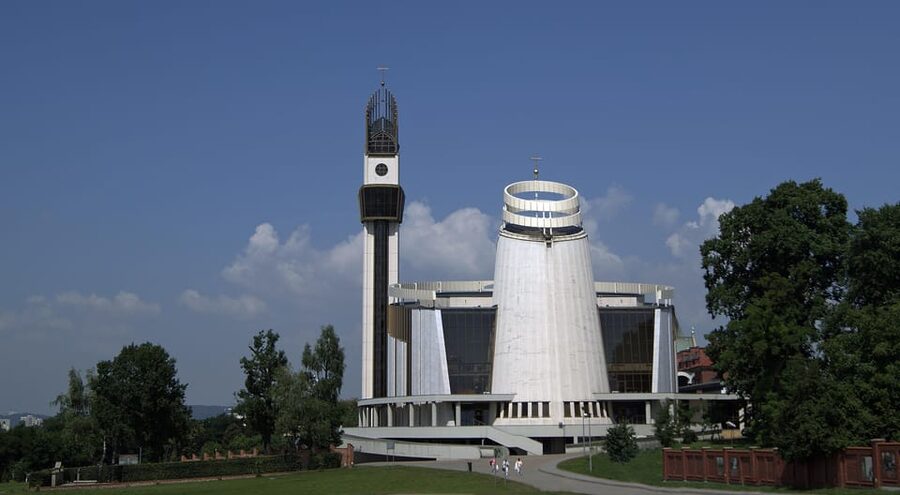
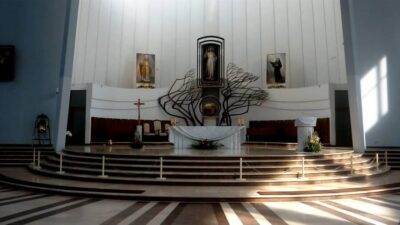
The main basilica has a modern design. That may surprise you if you expect an old European church with centuries-old stonework, ornate chapels, and medieval art. The modern setting gives the sanctuary a quieter, more open character, with the building’s purpose tied closely to contemporary devotion.
I like this part of the visit because it combines visual sightseeing with a clear human story. You are not simply shown an attractive building. You are introduced to the person whose life made the site important.
The atmosphere can be contemplative, so plan to listen and observe rather than expect constant entertainment. This is a place of worship as well as a sightseeing stop. Your guide will provide explanation, but you should also allow room for silence and personal reflection.
Saint Faustina’s museum visit adds another useful layer. It helps connect the sanctuary’s message with her life and mission. Since the tour includes the Museum of Saint Faustina, you are not limited to the basilica itself.
The Observation Tower and views over Łagiewniki
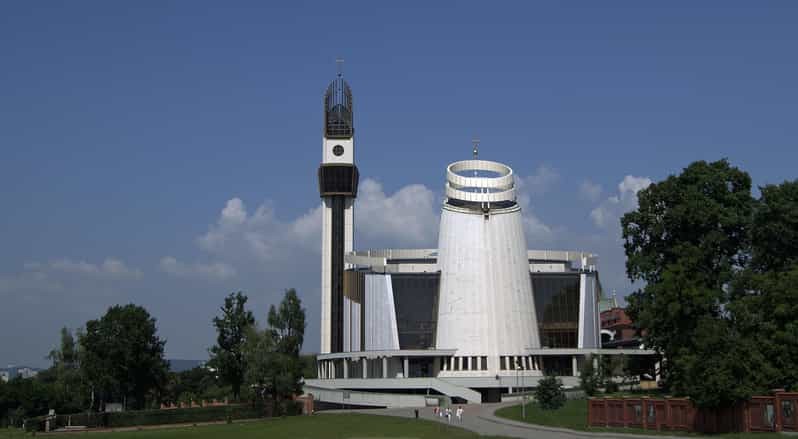
The Observation Tower is another included visit and gives the outing a visual change after the indoor religious spaces. From above, you can take in the surrounding area and see how the sanctuary complex relates to its setting.
The tower is especially useful for visitors who want more than church interiors. It gives you a chance to pause, look outward, and understand the scale of the site. Bring a little patience if access is busy, and keep in mind that views can depend on weather and operating conditions.
The tour information confirms the tower visit but does not give a guaranteed length of stay or detailed access arrangements. If the view is a priority, ask your guide about timing when you meet. You should also choose sensible shoes, since the day combines transport, indoor visits, and movement around a large religious complex.
This stop works best as part of the larger visit rather than as a stand-alone lookout. The view has more meaning once you know why the buildings are there and how the two sanctuaries fit into the same pilgrimage area.
Same base, a different kind of day:
- From Krakow: Auschwitz-Birkenau Guided Tour & Hotel Pickup
★ 4.5 · 33,358 reviews - From Krakow: Auschwitz-Birkenau Guided Tour & Hotel Pickup
★ 4.5 · 29,340 reviews - Krakow: Auschwitz Guided Tour with Optional Hotel Pickup
★ 4.5 · 15,280 reviews - Krakow–Zakopane: Cable Car, Chocholow Baths, Cheese & Vodka
★ 5.0 · 10,720 reviews
Meeting the legacy of John Paul II
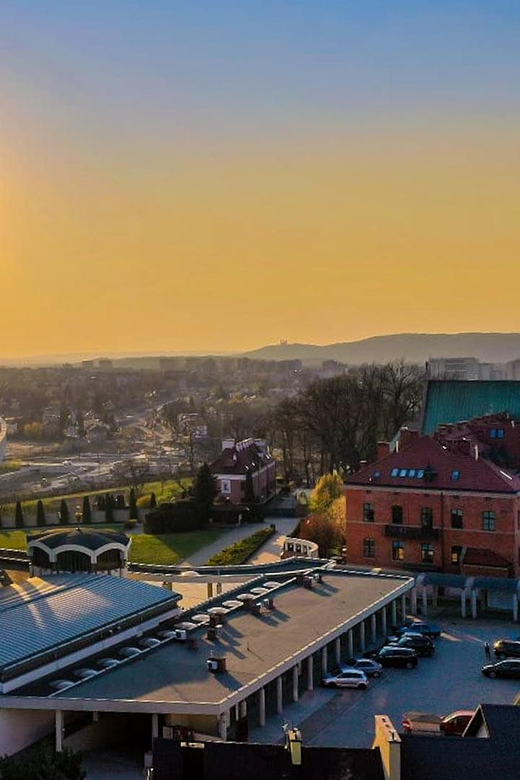
The trip continues a short distance to the Sanctuary of St. John Paul II. This site honors the life and legacy of the Polish pope and is part of the Have No Fear! Center.
The center includes a church, museum, and exhibits about John Paul II’s life, teachings, and time as pope. This makes the visit broader than a simple memorial. You get religious space, personal history, and public biography in one complex.
The architecture blends modern and traditional elements. That combination suits the subject. John Paul II was a figure rooted in Polish Catholic tradition, yet his papacy reached a global audience and unfolded in the modern media age.
A good guide is particularly useful here. The exhibits can cover many stages of his life, and it is easy to lose the main thread without explanation. Recent tours have featured guides named Alexandra and Oleksandra, both praised for explaining Saint Faustina and John Paul II and for pointing out important details along the way. Guide assignments can change, but the experience is offered with live commentary in English, Polish, Ukrainian, or Russian.
You should expect this stop to feel different from the Divine Mercy sanctuary. Faustina’s story centers on private visions and spiritual writing. John Paul II’s story is more public, tied to church leadership, Poland, and world events. Seeing both in one day creates a useful comparison.
What the guide adds to the visit
The guide is the heart of this experience. Without one, you could still enter the churches and museums, but you would have to build the connections yourself.
A strong guide can explain why Saint Faustina’s tomb matters, how the Divine Mercy devotion spread, and why John Paul II is honored in a separate sanctuary nearby. The guide can also help you decide what deserves your attention when there is a great deal to see.
This matters because the two complexes are not just collections of rooms and religious objects. Their importance comes from people, beliefs, and events. A guide turns those details into a story.
The most useful approach is to ask questions. One guest specifically valued a guide who answered questions and adjusted the pace instead of rushing through the stops. That is an important point for this outing. There are enough exhibits and religious spaces that a rigid pace could leave you feeling hurried.
When you meet your guide, tell them what interests you most. You may want more time with Faustina’s story, more detail about John Paul II, or a quieter period inside the basilica. The guide may be able to shape the visit around those priorities.
Language choice is another strength. Live tours are available in English, Polish, Ukrainian, and Russian. Select the language that lets you ask questions comfortably, especially if the religious terms and historical details are new to you.
Is $122 good value?
At $122 per person, this is not the cheapest way to visit Łagiewniki. You are paying for transportation, hotel pickup and return, a live guide, the Observation Tower, the Museum of Saint Faustina, and visits to the sanctuary sites.
The price makes more sense if you value convenience and explanation. A do-it-yourself visit may cost less, but it would not automatically provide the same route, background, or help deciding what to see. You would also need to organize transport from Kraków and connect the two sanctuary visits yourself.
The strongest value comes for solo visitors, first-time visitors to Kraków, and anyone who wants to ask questions in their own language. It may be less appealing for someone who already knows the sites well or prefers to spend a full day moving at a slow, independent pace.
Food and drinks are not included. Since the outing lasts five hours, have something to eat before pickup or carry what you need if permitted. The supplied details do not specify a meal stop, so do not book this expecting lunch to be part of the plan.
The tour offers free cancellation up to 24 hours in advance and allows you to reserve now and pay later. Those terms give you some flexibility while planning a Kraków stay, though you should still check the exact conditions shown at booking.
Who will enjoy this half-day outing
I would recommend this tour to you if you want a focused visit to both sanctuaries without spending time on transport planning. It is also a good fit if Saint Faustina, Divine Mercy, or John Paul II is a main reason for your visit to Kraków.
It suits visitors who like history explained through personal stories. The two sanctuaries offer different subjects, and the guide helps you see the connection rather than treating them as unrelated churches.
It is also useful for families or small groups with mixed levels of interest. Someone drawn to architecture can focus on the modern basilicas. Someone interested in Polish history can follow John Paul II’s life. Someone seeking a place of prayer can spend time with the religious meaning of the sites.
I would hesitate to recommend it to you if you want a relaxed meal, lots of free time, or a broad tour of Kraków. This is a focused religious and cultural excursion. It does not cover the city’s other major sights.
Practical tips for a better visit
Wear comfortable shoes. The outing includes several buildings and the Observation Tower, and you may spend a fair amount of time moving between exhibits, churches, and viewpoints.
Dress respectfully for the sanctuaries. The supplied information does not state a specific dress code, but these are active religious sites, not only museums.
Choose your guide language carefully. English, Polish, Ukrainian, and Russian are available, and good communication will make the explanations and question period much more useful.
Keep your schedule flexible around pickup. The activity lasts five hours, but the exact starting time depends on availability. Hotel pickup is convenient, yet transport time can vary.
Think about your priorities before you go. If you want detailed explanations of Faustina, tell the guide. If John Paul II interests you more, ask for context at the Have No Fear! Center. The best use of a guided visit is active participation, not simply following from room to room.
Should you book the Łagiewniki tour?
Book it if you want an organized, information-filled half-day from Kraków focused on two major Polish religious sites. The combination of hotel transport, a live multilingual guide, Saint Faustina’s museum and tomb, John Paul II’s center, and the Observation Tower gives you a clear reason to choose this over an unplanned visit.
The $122 price is high, but the service includes the parts that are hardest to arrange well on your own: transport, context, and a sensible route. I would choose it especially for a first visit, a short Kraków stay, or a personal interest in Faustina and John Paul II.
Skip it if you prefer complete independence or do not want a religious-focused day. For the right visitor, though, this is a thoughtful way to understand two important figures in modern Polish Catholic life without wasting half the day finding your way around.
FAQ
Where does the tour begin and end?
The tour provides pickup in Kraków and returns you to Kraków after the visit.
How long does the experience last?
The total duration is five hours. The tour information also describes three hours of guided touring, so check the available schedule for the exact division of travel and sightseeing time.
Which sites are included?
The experience includes the Sanctuary of Divine Mercy, the Museum of Saint Faustina, the Observation Tower, and the Sanctuary of St. John Paul II.
Which languages are available?
Live guides are available in English, Polish, Ukrainian, and Russian.
Is food included?
No. Food and drinks are not included in the price.
Can I cancel the booking?
You can cancel up to 24 hours in advance for a full refund. The experience also offers a reserve-now, pay-later option.
Just added in Kraków
- Wawel Castle, Old Town with St. Mary’s Church Guided Tour★ 5.0 · 3 reviews
- Wawel Castle, Old Town with St. Mary’s Church Guided Tour★ 5.0 · 5 reviews
- Wawel Castle, Cathedral, Old Town and St. Mary’s Basilica★ 4.8 · 13 reviews
- Wawel Castle, Cathedral, & Rynek Underground Tour with Lunch★ 4.5 · 10 reviews
- Wawel Castle & Cathedral Skip the Line Small Group Tour★ 5.0 · 3 reviews
- Wawel Castle and Cathedral Guided Tour★ 4.6 · 44 reviews
- Wawel Castle, Cathedral, Rynek Underground Tour with Lunch★ 5.0 · 3 reviews
- Wawel Castle and Cathedral Guided Tour★ 5.0 · 8 reviews
John Paul II Heritage Tours, compared.
Pope John Paul II Guided Tour with Home & Sanctuary
Read the review →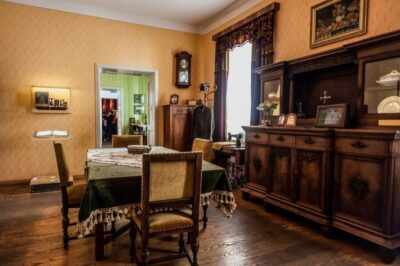
Black Madonna of Częstochowa & Home of John Paul II
Read the review →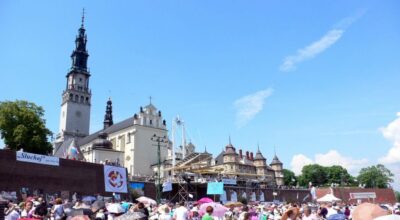
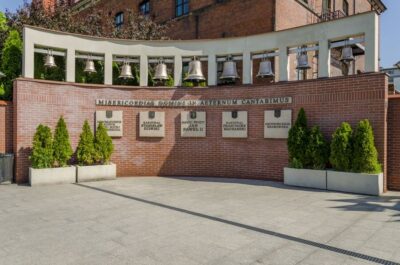
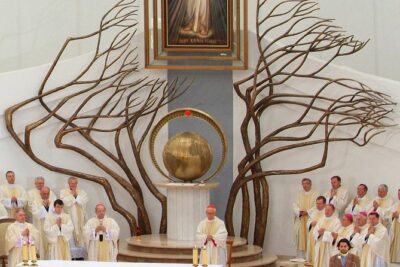
The Black Madonna of Czestochowa & John Paul II Family Home
Read the review →
Private Catholic Tour about John Paul II, St. Faustina & The Divine Mercy Shrine
Read the review →Browse the lists this tour appears in