
Reviewed · WALKING TOURS
Private Walking Tour of Old Gdańsk with an architect-guide
Gdańsk reveals itself best through its buildings, and this private walk gives you an architect’s eye on the city. You move from the Old Town City Hall and the Great Mill into the grander Main Town, with old photographs helping you picture streets altered by war and time. Agnieszka leads with humor, energy, and a clear love for her city.
I like the way the tour links architecture to trade, religion, defense, and daily life. I also like the freedom of a private group, especially since the walk can last from 90 minutes to four hours. The catch is that several of the most worthwhile interiors, including the Amber Museum, Artus Court, Uphagen’s House, and the Prison Tower, are not included in the tour price.
Key points to know before you book
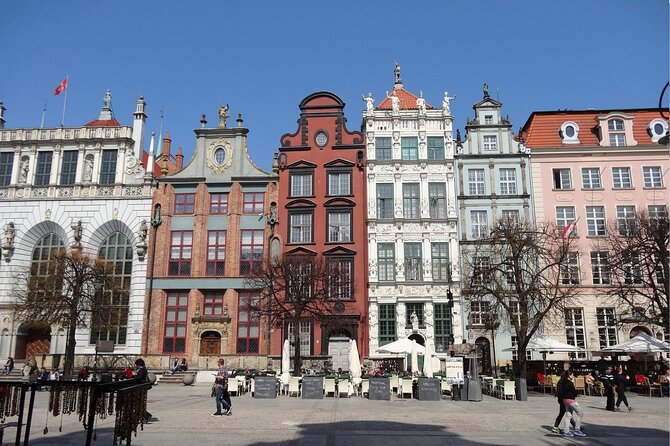
- An architect’s view of Gdańsk: Expect more than dates and names, with attention to how buildings functioned and why they look the way they do.
- Old Town and Main Town in one walk: The route begins near the Radunia Canal and ends by the historic gates at Targ Węglowy.
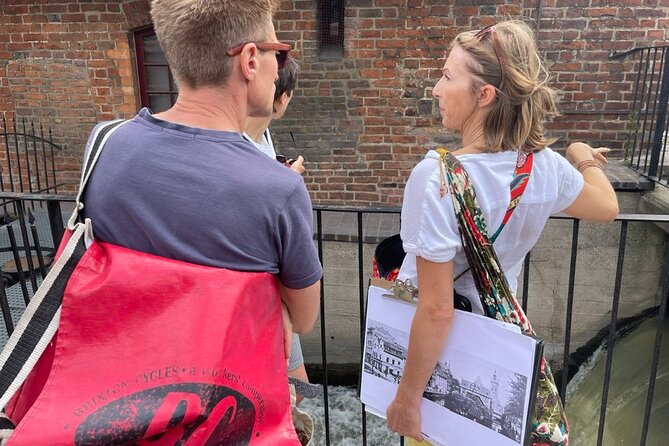
- Useful old photographs: Agnieszka uses images to show what parts of Gdańsk looked like before the Second World War.
- Flexible private format: Your group alone takes part, with a maximum of seven people and a duration that can stretch well beyond the basic route.
- Strong French option to confirm: English is offered, while Agnieszka has also led French-language walks and speaks French very well.
- Bring a museum plan: Several museums are suggested along the way, but their admission fees are separate.
Why an architect makes this Gdańsk walk different
Many city walks turn into a march from one famous façade to another. This one has a more useful idea behind it: buildings tell you how Gdańsk worked.
Agnieszka’s architectural training gives the route a practical frame. At the Great Armoury, for example, you consider the unusual meeting of appearance and purpose. It was built to store weapons, yet its Renaissance design also displayed the city’s wealth. That is a better way to understand architecture than simply calling a building beautiful.
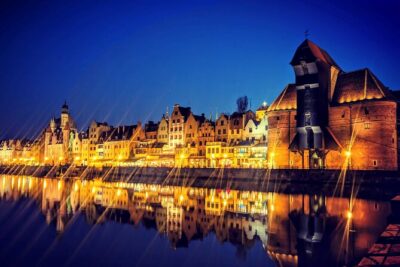
The tour also connects places that can feel separate on a map. You start at the Old Town City Hall, near the Radunia Canal, then move toward the Great Mill and the fortifications. From there, the walk enters Main Town, with its larger public spaces, churches, merchant buildings, gates, and waterfront route.
I especially value the use of old photographs. Gdańsk has been heavily marked by war and reconstruction, so a present-day façade does not always tell the whole story. Comparing historic images with what you see now helps you understand the city as a place that changed, not just a preserved medieval set.
The private format matters too. With only your own party, you can ask why a building looks a certain way, pause for a photo, or spend more time on the subjects that interest you. A group of seven is still small enough for a personal walk, though the larger your party, the less intimate the conversation may feel.
More walking tours in Gdańsk:
- Gdańsk City Sights & History Guided Walking Tour in English
★ 4.8 · 876 reviews - Main Town Gdańsk Walking Tour
★ 5.0 · 644 reviews - Discover Gdansk Walking Tour
★ 5.0 · 495 reviews
Starting beside the Radunia Canal and Old Town City Hall
The tour begins at Ratusz Starego Miasta, the Old Town City Hall on Korzenna Street. This opening stop introduces the Old Town and the Teutonic Order, whose role is part of the city’s early story.
You also begin near the Radunia Canal, a useful setting for thinking about water, movement, and urban growth. The opening explanation lasts about 12 minutes and requires no admission ticket.
This is a smart place to start because it gives you a frame before the grander sights arrive. Gdańsk’s identity is tied to trade, waterways, defense, and shifting political power. You will hear some of that here, rather than meeting the city as a collection of unrelated monuments.
The meeting point is Ratusz Staromiejski at Korzenna 33/35. Pickup is offered, but the supplied details do not specify the exact pickup area or whether it costs extra, so I would settle that before booking.
The Great Mill and the value of old photographs
The Great Mill is the next main stop, with about 10 minutes devoted to its importance and past. The guide uses pictures to show what the area looked like before the Second World War.
That visual comparison is one of the tour’s strongest features. You are not only hearing that Gdańsk suffered major wartime damage. You are being helped to read the gap between historic images and the city in front of you.
The Great Mill also gives the tour a chance to discuss working Gdańsk, not only ceremonial Gdańsk. Its importance is tied to the city’s economic life, and the building helps connect architecture with food, labor, water, and trade.
The Amber Museum is housed in this building and is strongly recommended as a separate visit. It is not part of the walking tour, and admission is not included. If amber interests you, ask to visit it before the walk, since that may make better use of your time than trying to squeeze it in afterward.
Optional towers, clocks, and a test for your legs
Two additional sights are mentioned as options rather than fixed tour stops.
One church still functions as a place of worship and also houses the Museum of Turret Clocks. The museum is in the tower, so reaching it calls for strong legs. Inside are centuries-old timekeeping devices, Poland’s biggest concert carillon, and the world’s first pulsar clock.
The details do not identify the church by name, so confirm that when arranging your tour. It is also not clear from the supplied information whether admission or opening hours affect the plan.
Another optional point is the highest tower in the medieval fortifications of Main Town. This marks the shift from Gdańsk Old Town into the larger Main Town area. The distinction matters because the two parts are often treated as one sightseeing zone, yet the tour presents them as different pieces of the city.
If you want every tower and museum, the four-hour version will make more sense than the 90-minute option. If you mainly want orientation and architecture, you can keep moving.
Same base, a different kind of day:
- Gdansk: City Cruise on Historical Polish Boat
★ 4.8 · 2,913 reviews - Gdańsk: Sunset Cruise on a Historic Polish Boat
★ 4.9 · 977 reviews - Gdansk: Firearm Shooting Experience with Instructor
★ 4.8 · 866 reviews - Gdansk: Guided Round-Trip Cruise to Westerplatte
★ 4.3 · 865 reviews
Great Armoury, where decoration meets defense
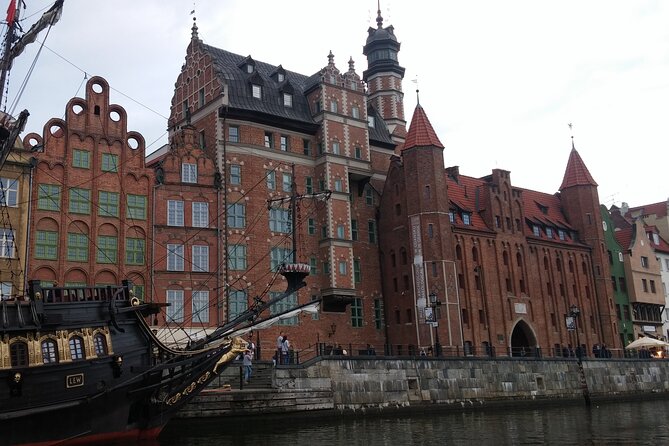
The Great Armoury is a quick five-minute stop, but it has an important role in the route. Its design and original function make it a vivid example of Gdańsk’s wealth during the Renaissance period.
Today, the building houses the Academy of Fine Art. It is sometimes open to the public during student exhibitions, though that access is not guaranteed and should not be treated as part of the tour.
I like this stop because it asks a simple question: what does a city choose to make impressive? A building for military supplies could have been plain and practical. Here, the exterior also served as a public display of power and prosperity.
Since the stop is short, you will mainly study the building from outside unless an exhibition happens to be open. If interiors are important to you, ask Agnieszka what may be available on your date.
St. Mary’s Church and its giant astronomical clock
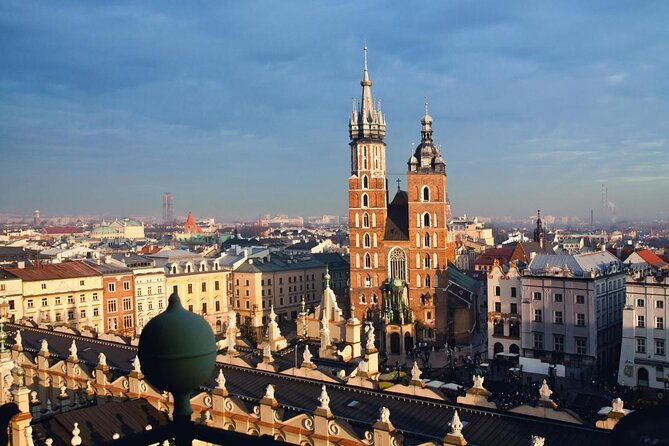
St. Mary’s Church gets about 15 minutes, with free admission. It is described as the world’s largest brick church, and it contains a huge astronomical clock from the 15th century.
The clock chimes daily at noon. That is a useful planning tip, though the tour schedule may not line up with the chime. If seeing or hearing it matters to you, ask about the start time before setting your booking.
This stop brings together religious life, engineering, and civic pride. The church is still active, as are almost all the churches along the route, so you should be ready for the possibility of worship or other church activity during your visit.
The tour gives you an introduction rather than a long church visit. You may want extra time afterward if the clock, interior, or tower interests you. The supplied information does not say that a tower climb is included.
Mariacka Street, amber shops, and the old-city mood
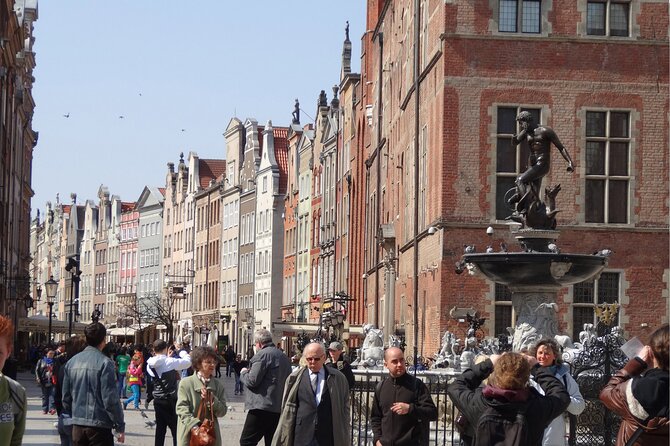
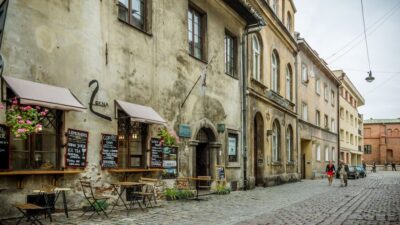
Mariacka Street is allotted about 20 minutes and is likely to feel less like a formal monument stop. It is a charming lane where the older atmosphere of Gdańsk comes through in the street itself.
This is where I would slow down and look closely. The route is not only about major landmarks. Small details, doorways, façades, and the way the street leads toward the water help you sense how the old center was organized.
The tour does not promise shopping time, tastings, or a dedicated amber demonstration. Keep expectations to the street’s architecture and atmosphere. If you want to browse, ask whether the guide can allow a little extra time, since the private format may make that possible.
After Mariacka Street, you pass through Brama Mariacka, or St. Mary’s Gate. The five-minute stop leads toward the Long Seashore, where the guide talks about maritime trade. That transition is useful: the street is not isolated scenery, but part of a route connecting the town to the water.
Green Gate and the Great Market
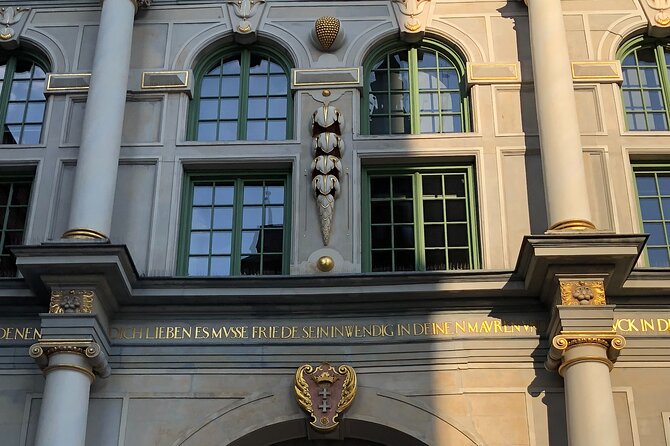
The Green Gate receives about 10 minutes. It marks the entrance to the Great Market, once the place to be in Gdańsk.
This is one of the clearest points for understanding the city’s public face. The market was not just an open space. It was where commerce, status, movement, and civic life met.
The route then reaches an area containing Artus Court and the Main Town Hall. Artus Court once served as a meeting place for merchants and now operates as a museum of history and art. The Main Town Hall also has interesting interiors.
Neither interior visit is clearly included in the base walking tour. Treat this part as an introduction and decide with Agnieszka whether you want to return or enter during the walk. Admission arrangements are not specified, so check before you arrive.
Uphagen’s House and a glimpse of domestic life
Uphagen’s House, now part of the Museum of Gdańsk, offers a quick look into the past. Even a short peek inside can show you how a historic home differs from the churches, gates, and public buildings on the route.
The stop is listed at about five minutes, and admission is not included. You will need to decide if you want to visit the house rather than simply hear about it.
I like having this choice because it adds a domestic note to a route otherwise filled with public power. A merchant meeting hall and a grand church tell you how a city presented itself. A house can tell you more about how people arranged private life.
If you choose several museums, your tour will naturally grow longer. That is one reason the broad 1.5 to 4-hour range matters. This is not one fixed-speed walk for every group.
Ending at the Prison Tower and historic gates
The tour ends at the Prison Tower, with about 10 minutes devoted to the site. The tone changes here. The route finishes where some lives ended, bringing a darker note to the city’s story.
The endpoint is Katownia at Targ Węglowy 26, near the series of gates that once led toward one of the wealthiest cities on the Baltic coast. This gives the walk a clear finish rather than leaving you in the middle of a square.
The Prison Tower is not included as a free interior visit. Admission is listed separately, and the information does not say that entry is part of the standard plan.
Ending at the fortification gates also completes the movement from Old Town to Main Town. You begin with canals and early urban power, pass through trade and religious landmarks, and finish at the defensive edge of the historic center.
Price, length, and what you really receive
The price is $264.35 per group of up to seven people. That is not a cheap solo activity, but the calculation changes if you fill the group. Seven people would bring the cost to roughly $38 per person, before any separate museum admissions. Two people would pay about $132 each.
The value rests in the private guiding, not included entry tickets. You are paying for an architect-led explanation, a route that links Old Town and Main Town, historic photographs, and the ability to shape the pace around your group.
The advertised duration is about 90 minutes to four hours. That is a wide spread, so I would not book it without deciding what kind of day you want. A short version can cover the main streets and exterior sights. A longer version gives you room for towers, photographs, and optional museums.
English is offered. Agnieszka has also guided French-language walks and speaks French very well, including a background in France. If French is important to you, confirm availability before booking rather than assuming it comes with every departure.
Confirmation is sent within 48 hours, subject to availability. The tour uses a mobile ticket, is near public transportation, allows service animals, and most people can take part. Free cancellation is available if you cancel at least 24 hours before the start time. Within 24 hours, refunds are not provided and changes are not accepted.
Who should book this private Gdańsk walk?
I would choose this tour if you want the city explained rather than simply photographed. It suits first-time visitors who need a strong orientation, architecture fans, history-minded families, and small groups that prefer questions and conversation over a fixed public group.
It also works well if you have several interests competing for limited time. You can focus on trade, churches, fortifications, wartime change, or design, then ask Agnieszka to adjust the emphasis.
I would think twice if you want a museum-heavy outing with all admissions handled in advance. Several important interiors are optional and cost extra. I would also not choose it if you want a quick list of sights with no flexibility, since the route’s main advantage is the chance to spend more time where your curiosity leads.
Should you book it?
Book this walk if you want context, old photographs, and an architect’s reading of Gdańsk rather than a simple landmark checklist. The private format gives you control, and Agnieszka’s energy, humor, French ability, and passion for the city add real appeal.
Before paying, decide how long you want to walk, ask about pickup, confirm your language, and choose which museums or towers you want to enter. If you do that planning, the price can be fair for a group of up to seven and the tour can become a useful first chapter in your Gdańsk visit.
FAQ
How long does the private Gdańsk walking tour last?
The experience lasts approximately 1 hour 30 minutes to 4 hours. The exact length depends on the plan for your private group and whether you discuss optional towers or museums.
How many people can join the private tour?
The price covers one private group of up to seven people. Only your group takes part in the activity.
Is the tour offered in English?
Yes. English is listed as an available language. Agnieszka has also led tours in French, so you can ask about French availability when booking.
Does the tour include museum admission?
No. Admission is not included for the Amber Museum, Uphagen’s House, and the Prison Tower. Artus Court, the Main Town Hall, and the Museum of Turret Clocks are discussed as possible additions, so confirm entry arrangements before the tour.
Where does the tour start?
The tour starts at Ratusz Staromiejski, Korzenna 33/35, 80-001 Gdańsk, Poland. Pickup is offered, but the exact pickup details should be confirmed in advance.
Where does the tour end?
The walk ends at Katownia, Targ Węglowy 26, 80-836 Gdańsk, Poland, by the historic series of gates leading into Gdańsk Main Town.
Is the Amber Museum part of the walking tour?
No. The Amber Museum is in the Great Mill building and is strongly recommended as a separate visit. You can discuss visiting it before the walking tour.
Can I cancel for a full refund?
Yes, if you cancel at least 24 hours before the experience starts. Cancellations or changes made less than 24 hours before the start time are not accepted for a refund.
Just added in Gdańsk
- Gdansk, Gdynia, and Sopot: 8-Hour Private Sightseeing Tour★ 4.9 · 13 reviews
- Undercover City Games: Gdynia★ 5.0 · 34 reviews
- Private WW2 Tour of Westerplatte,Gdansk and Stutthof Including Lunch★ 5.0 · 12 reviews
- Whisky Tasting in Gdańsk★ 5.0 · 3 reviews
- Gdansk EVERYDAY Vodka Tasting Tour★ 5.0 · 6 reviews
- Westerplatte private tour led by Expert-Guide (door to door)★ 5.0 · 5 reviews
- TriCity Tour (Gdansk, Gdynia, Sopot) – PRIVATE (8h)★ 5.0 · 4 reviews
- Westerplatte – 2h private trip by luxury car|★ 5.0 · 4 reviews
Walking Tours, compared.


Gdańsk City Sights & History Guided Walking Tour in English
Read the review →
Browse the lists this tour appears in