
Reviewed · CRUISES & BOAT TOURS
Gdansk Guided City Cruise on Historical Polish Boat
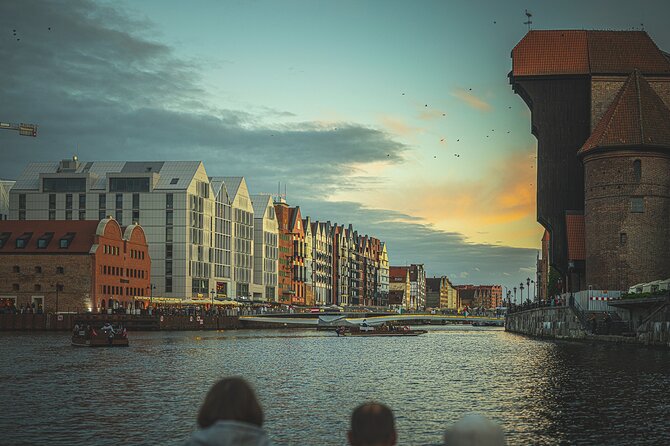
Gdansk’s story makes more sense from the water. This small boat takes you from the former Imperial Shipyard past medieval gates, the famous Crane, Ołowianka Island, and rebuilt granaries, all while a live guide explains what you are seeing. I especially like the 12-seat boat, which can reach views larger sightseeing boats cannot, and the lively guides, including Simon and Damian, who turn city history into an easy hour of listening.
I also like the way the route joins old and new Gdansk. You see submarine production sites and working shipyards before gliding beside the Main City’s Gothic and Hanseatic landmarks. The main drawback is practical: the boat is open, so wind, rain, fog, or a long wait at a lock can change the feel of the trip. Allow extra time to find the dock, too, since the approach is not clearly marked.
Key points to know before booking
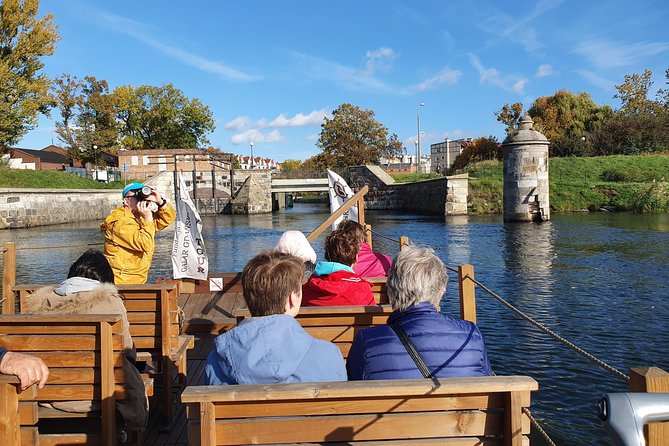
- A small historical boat: The 12-seat design gives you a closer view than a large river cruiser.
- A strong first look at Gdansk: The route links the Imperial Shipyard, Main City, Ołowianka Island, and Granary Island.
- Guides make the difference: Simon, Damian, and other guides are praised for humor, clear English, and useful local stories.
- Open-air sightseeing: Blankets are provided in cooler weather, but wet and windy conditions can be uncomfortable.
- Good value at $21.92: About 70 minutes on the water costs less than many larger sightseeing experiences.
- Plan for the meeting point: Dokowa 1 is near the former shipyard, but walking directions can become unclear near the end.
Why this small boat shows Gdansk so well
Gdansk is easy to admire from the pavement. The Long Embankment, tall brick buildings, and ornate gates create one of Poland’s most memorable city centers. But the river is not just a pretty foreground. It explains why Gdansk became important.
The Motlawa connected the city to Baltic trade, shipbuilding, warehouses, and the wider Hanseatic world. From the boat, you see the old commercial city from the same water that once carried grain, timber, and other goods. You also see how modern Gdansk grew around that older port.
That mix is the best reason to book this cruise. It is not only a short ride past attractive buildings. You begin beside an active industrial area, then move into the historic center and finish among islands shaped by trade and reconstruction. I find that progression more useful than a sightseeing loop that shows only polished facades.
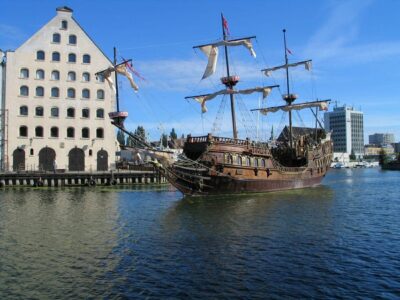
The boat itself adds character. It is based on the type of craft used on Polish rivers for centuries, though it has an engine and modern comforts. With only 12 seats, it feels far removed from a large harbor vessel. The smaller size also helps it reach corners and channels that bigger boats cannot enter.
The booking information allows up to 48 participants for the activity, which likely means several departures or boats may operate around the same time. Your own boat is described as a 12-seater, so do not confuse the overall activity limit with the size of the vessel you will board.
More boat tours in Gdańsk:
- Gdansk: City Cruise on Historical Polish Boat
★ 4.8 · 2,913 reviews - Gdańsk: Sunset Cruise on a Historic Polish Boat
★ 4.9 · 977 reviews - Gdansk: Guided Round-Trip Cruise to Westerplatte
★ 4.3 · 865 reviews
Starting at the former Imperial Shipyard
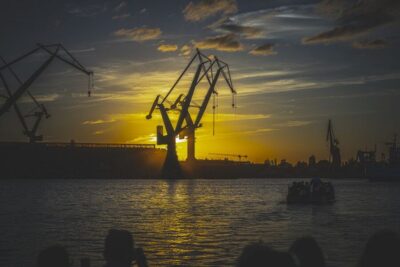
The meeting point is at Dokowa 1, in the post-shipyard area of Gdansk. This is not the postcard center, and that is part of its appeal. You begin beside the former Imperial Shipyard, where u-boats were produced, with existing shipbuilding activity nearby.
Look around before boarding. The area has a working-port feel, with characteristic Gdansk cranes, specialist ships, yachts, and industrial structures. It gives you a quick lesson in the city’s modern identity before the boat turns toward the older center.
The location is the main logistical nuisance. If you walk from central Gdansk, allow more time than a map estimate might suggest. The final route to the dock is not clearly marked, and it can be easy to wonder if you are in the right place. One useful practical tip is to arrive early enough to ask locally if needed rather than racing to the boat.
The start point can also be interesting for anyone who enjoys cities as working places, not just historic displays. You are not being dropped beside a grand monument. You are seeing the machinery and waterfront that helped shape Gdansk in the modern era.
Along the Motlawa: gates, walls, and the Crane
Once underway, the boat follows the Motlawa along the long waterfront embankment. This is the most concentrated stretch of historic sightseeing, and the guide’s commentary matters here.
You pass remains of the wall of the Teutonic Castle, including the Swan Tower. These fragments are easy to overlook when walking because the city presents so many larger sights at once. From the water, the old defensive line has more room to make sense.
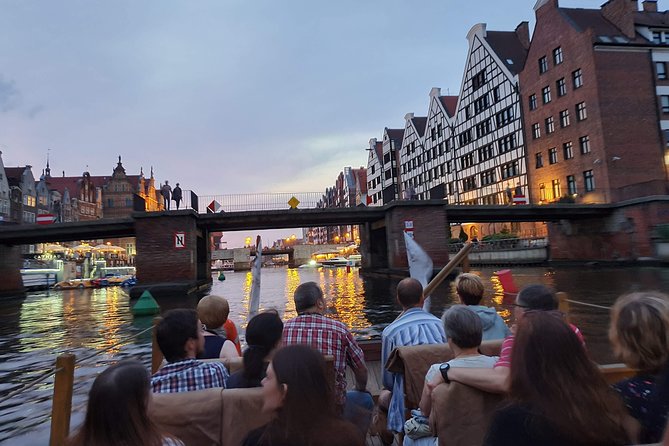
The boat then moves past the water gates leading into the city. Gdansk’s gates were not simply decorative entrances. They marked the meeting point of the river, the docks, and the built-up city beyond. Seeing them from their water side helps you understand their original purpose.
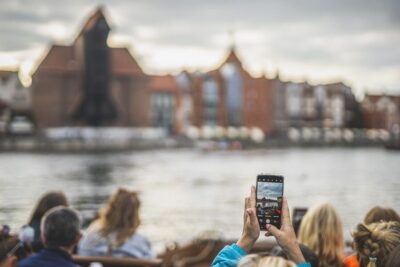
The most famous sight on this stretch is the 15th-century Crane. Its huge wooden lifting structure is one of Gdansk’s defining images, and the view from below gives it proper scale. From the river, you can better see how closely the Crane was tied to loading goods along the waterfront.
The guide also points out St. Mary’s Gate, described as the most beautiful of the water gates, and the Green Gate, the oldest. You will not have time for a full visit inside every landmark, but you get a useful visual introduction. If this is your first day in Gdansk, note the buildings that you want to revisit on foot afterward.
The commentary is generally the heart of the experience. Guides have been praised for speaking strong English, adding jokes, and answering questions. Simon is singled out for making the past feel lively, while Damian is praised for clear information about the area. One guide was occasionally hard to understand because he mumbled, so the quality of delivery can vary slightly by departure.
Ołowianka Island and the city’s waterfront culture
The route continues around Ołowianka Island, where the waterfront changes character. Here you see the Polish Baltic Philharmonic, the Royal Granary, the National Maritime Museum, and Stonemason’s Bridge.
Ołowianka is a useful reminder that Gdansk’s islands were working parts of the port, not empty pieces of scenery. Their uses changed over time, and the buildings around them reflect that shift from storage and maritime trade toward culture and museums.
From a small boat, you get changing angles on the island’s buildings. The water keeps you moving, so you see the facades as part of a larger waterfront rather than as isolated attractions. This is also one of the calmer stretches of the ride, a pleasant pause after the denser run of gates and historic structures.
Do not expect a full museum visit. The boat only passes the National Maritime Museum and other landmarks. If maritime history interests you, treat this part as an introduction and return later on foot.
The open design is useful for sightlines but less helpful in poor weather. Blankets are available, and they can make a real difference on a cool day. Still, a blanket will not turn a wet or windy trip into a comfortable one. Check the forecast before booking, since the experience requires good weather and may be moved or canceled if conditions are poor.
Same base, a different kind of day:
- Gdańsk City Sights & History Guided Walking Tour in English
★ 4.8 · 876 reviews - Gdansk: Firearm Shooting Experience with Instructor
★ 4.8 · 866 reviews - Gdańsk: Sightseeing EcoCruise around the Old Town of Gdansk
★ 4.6 · 719 reviews - Main Town Gdańsk Walking Tour
★ 5.0 · 644 reviews
Granary Island: trade, destruction, and rebuilding
The boat also circles Granary Island, whose name explains its original role. Storehouses once held goods brought through Gdansk’s port, making the island central to the city’s commercial life.
The Green Bridge links the island to the old center. From the water, you can see how the bridge, river, and warehouse buildings formed one working system. This is a better place to think about Gdansk as a trading port rather than just a collection of handsome streets.
The route includes surviving pieces of the old granaries, including the Blue Lamb, one of the best-preserved examples. You also see newer buildings created during the island’s reconstruction after the Second World War. That contrast gives the cruise some useful historical depth without turning it into a formal lecture.
For me, this is one of the route’s most valuable sections. Gdansk was heavily damaged during the war, and many parts of the city were rebuilt. From the river, old fragments and modern reconstructions appear side by side. The guide can connect those visible layers in a way that a quick walk through the center may not.
The view also changes as the boat loops around the island. Instead of seeing one fixed facade, you watch the relationship between the island, the Green Bridge, the Main City, and the wider waterfront develop over several minutes. That is the kind of perspective a land-based tour cannot provide.
What the 70-minute format gets right
The cruise lasts about one hour and 10 minutes. That is long enough to cover the main waterfront sights, but short enough to fit into a busy day of museums, churches, and walking.
I like this length for a first introduction. You get a clear sense of the city’s layout without committing half a day to a boat excursion. It also works well after arriving in Gdansk, when you want an overview before choosing which areas deserve more time.
The ride is described as smooth and relaxing, though water conditions and weather will always affect that. One trip was held behind a lock gate for roughly 20 minutes. That delay became part of the entertainment, but it also shows why you should not schedule a tight connection immediately afterward.
A foggy departure can still be worthwhile because the guide keeps the experience moving with stories and commentary. But visibility matters here. The boat’s main reward is the view, so clear weather gives you more for your money.
The activity returns to the meeting point, according to the stated arrangement. Confirm the exact boarding instructions when you book, especially if several boats are operating in the area.
Is $21.92 good value?
At $21.92 per person, this is a strong-value introduction to Gdansk’s waterfront. You get about 70 minutes on the water, a historical-style boat, and live commentary rather than simply a silent ride past the sights.
The price works especially well if you are comparing it with larger sightseeing cruises. A big vessel may offer more seats and greater shelter, but this boat gives you a closer relationship with the river and access to places taller craft may not reach. You are paying for the viewpoint and the guide, not luxury service.
The value is also tied to your expectations. If you want a warm, covered boat with guaranteed calm conditions, this may not be the right choice. If you want an easy overview, a compact group, and a fresh angle on familiar landmarks, the cost is modest.
The experience is rated 4.6 out of 5, with 90 percent recommending it. That fits the nature of the trip: the route and guides tend to be the strongest parts, while weather, dock directions, and the open boat are the main variables.
Who should book this Gdansk cruise?
I would suggest it to first-time visitors who want to get their bearings quickly. The route covers the shipyard, Main City waterfront, Ołowianka Island, and Granary Island, giving you a useful map of the city before you explore it on foot.
It also suits repeat visitors. One guide helped a returning visitor see Gdansk differently by adding details about the city’s past and present. The water changes familiar views, and the shipyard setting adds something beyond the usual Old Town route.
Families and groups of friends should find the format appealing, especially because the guides use humor as well as facts. The boat has life jackets available, and service animals are allowed. Most people can participate, though seasickness is listed as a consideration.
I would be more cautious if you are very sensitive to motion, need a fully sheltered ride, or have only a few minutes between activities. The small open boat is part of its charm, but also its main limitation.
Booking, weather, and practical details
You receive confirmation at booking, and the activity uses a mobile ticket. Public transportation is nearby, although the walking approach to Dokowa 1 may still require care.
Free cancellation is available up to 24 hours before the start time for a full refund. Cancellations or changes inside that 24-hour window are not refunded or accepted. Because good weather is required, a cancellation caused by poor conditions gives you the choice of another date or a full refund.
Bring clothing suitable for a cooler waterfront, even if the day feels mild inland. Blankets are supplied, but warm layers remain sensible. If rain or strong wind is forecast, think carefully before booking rather than assuming the boat will feel comfortable.
Arrive early. The dock is in an interesting but less central part of Gdansk, and the last part of the walk can be confusing. That small time buffer will make the start much less stressful.
Should you book it?
Yes, if you want a reasonably priced introduction to Gdansk that combines medieval landmarks with the city’s working-port past. The small historical boat, strong route, and entertaining guides give it more character than a standard sightseeing loop.
Book it early in your stay so the cruise can help shape the rest of your walking plans. Choose a reasonably clear day, allow extra time for Dokowa 1, and bring a layer for the open water. If you do that, this is an efficient and enjoyable way to see Gdansk from the side of the city that roads cannot show you.
FAQ
Where does the Gdansk boat cruise start?
The cruise starts at Dokowa 1, 80-863 Gdańsk, Poland, in the post-shipyard area near the former Imperial Shipyard.
How long does the cruise last?
The activity lasts approximately 1 hour and 10 minutes.
What kind of boat is used?
The cruise uses a historical-style Polish boat based on craft used on Polish rivers for centuries. The boat has 12 seats, an engine, and modern comforts.
What sights will I see?
The route includes the former Imperial Shipyard, the Motlawa waterfront, Teutonic Castle wall remains, Swan Tower, several water gates, the 15th-century Crane, Ołowianka Island, and Granary Island.
Is the boat covered?
The boat is open. Blankets are provided during cooler periods, but rainy or windy weather may make the ride uncomfortable.
Can I cancel for a full refund?
Yes. You can cancel at least 24 hours before the experience start time for a full refund. Cancellations within 24 hours are not refunded.
What happens if bad weather cancels the cruise?
If poor weather causes the activity to be canceled, you will be offered a different date or a full refund.
Just added in Gdańsk
- Gdansk Sopot and Gdynia 3 Cities Private Full-Day Tour★ 5.0 · 56 reviews
- Highlights of Gdańsk, Gdynia and Sopot 1-day Private Tour★ 4.9 · 59 reviews
- Gdansk Highlights Bicycle Tour★ 5.0 · 65 reviews
- Gdansk Traditional Food Tour with Old Town Sightseeing★ 4.5 · 27 reviews
- Gdansk Private Bike Tour★ 5.0 · 36 reviews
- Gdansk: 4-Hour Polish Food Tour★ 4.9 · 35 reviews
- Delicious Gdańsk Food Tour in Poland★ 4.5 · 59 reviews
- Malbork Castle Tour from Gdansk★ 4.5 · 52 reviews
Cruises & Boat Tours, compared.
Traditional Galar Cruise on The Vistula River
Read the review →
Browse the lists this tour appears in