
Reviewed · AUSCHWITZ-BIRKENAU MEMORIAL TOURS
Krakow to Auschwitz-Birkenau Live Guided Tour & Hotel Pick-up
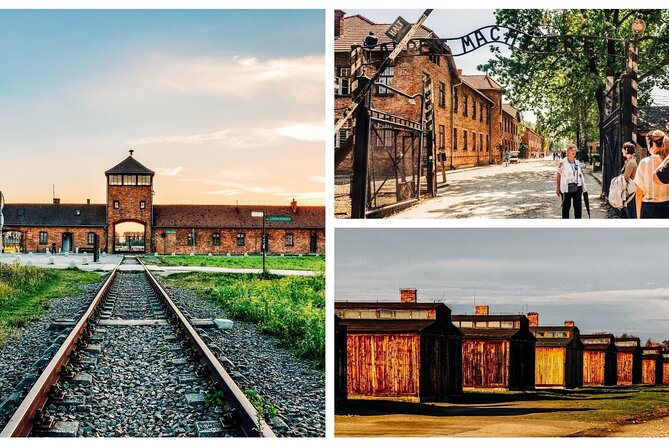
Auschwitz-Birkenau is not a sightseeing stop in the usual sense. It is a place of evidence, memory, and silence, and this tour gives you roughly four hours inside both former camps after the drive from Krakow. Admission is included, and a licensed museum guide leads the visit rather than leaving you to find your way through the site alone.
I like two practical things here: you can choose hotel pickup or a central Krakow meeting point, and the transport, entry, guide, and return journey are bundled into one price. Drivers such as Michael, Peter, Bogdan, Patryk, and Łukasz have also been praised for calm communication and helpful support.
The main caution is pace. The tour covers uneven ground, stairs, long paths, and two large sites in a set time. Some guides move quickly, so this may not suit you if you need frequent pauses, use a wheelchair or walking aid, or want to read every information panel at leisure.
Key points to know before booking
- Both Auschwitz I and Birkenau are included: You visit the original camp and the much larger Birkenau site on the same day.
- The group can reach 30 people: Headsets help you hear the guide, but a large group can still make it harder to stay close.
- Pickup times are flexible: Your final departure time is usually confirmed the day before and can shift because of museum scheduling or traffic.
- Bring your passport or ID: The museum requires personal details to be checked before entry.
- Pack food and wear sensible shoes: There is no regular meal break, and the tour involves substantial walking on uneven ground.
- The price is strong for an organized day: At $30.17 per person, transport and admission are included, though hotel pickup may cost more than meeting centrally.
Why this seven-hour day matters
Auschwitz-Birkenau is about 65 kilometers from Krakow, with a drive of roughly one hour and 15 minutes each way. The distance is manageable, but the visit takes most of a day because the museum is really two separate places.
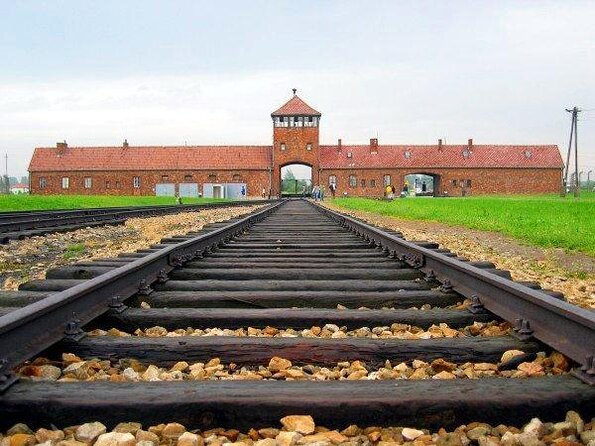
Auschwitz I is the smaller, original camp. Birkenau, also called Auschwitz II, is about three minutes away by vehicle and is far larger. Seeing both matters. The first site gives you the preserved buildings and exhibits. The second shows the scale of the killing center and the physical distance prisoners had to cross under brutal conditions.
You are not simply being taken to a memorial and left alone. A professional guide licensed by the Auschwitz-Birkenau Museum leads the museum portion. That structure is valuable because the place contains more detail than you can absorb from signs alone, and the subject demands careful explanation.
At the same time, this is not a private tour built around your own rhythm. Museum regulations control the route and timing. Your guide may need to keep the group moving so it stays with its assigned schedule.
Other ways to visit Auschwitz-Birkenau from Kraków:
- From Krakow: Auschwitz-Birkenau Guided Tour & Hotel Pickup
★ 4.5 · 33,358 reviews - From Krakow: Auschwitz-Birkenau Guided Tour & Hotel Pickup
★ 4.5 · 29,340 reviews - Krakow: Auschwitz Guided Tour with Optional Hotel Pickup
★ 4.5 · 15,280 reviews
Krakow pickup and the journey to Oswiecim
You can begin at the central meeting point on Floriana Straszewskiego 17, near Krakow’s historic center, or select a hotel pickup option. Check the product choice carefully because the price differs between central pickup and hotel transfer.
Do not treat the time shown when booking as fixed. The operator confirms the exact pickup time about a day before departure, commonly by email or WhatsApp. Changes are usually 30 to 60 minutes, but the possible departure window runs from 5:00 in the morning to 2:00 in the afternoon.
That flexibility comes from museum scheduling and road traffic, not from a leisurely departure policy. Keep your phone available the day before, and check the message before going to bed. One poor experience involved a time change without clear notice, so I would not rely only on the original voucher.
The ride itself is one of the easier parts of the day. Drivers are required to hold the relevant European Union passenger transport certifications. Several drivers have been singled out for being friendly, polite, and clear about what would happen next. A documentary may be shown during the ride, which can help set the mood and provide background before you arrive.
The transport may involve a smaller vehicle from your hotel to a central point, followed by a larger coach. That arrangement is practical, but it means hotel pickup does not always mean the same vehicle will carry you all the way to the museum.
There is usually a short break after arrival. You can get coffee, use the facilities, or look at outdoor exhibits before joining the museum guide. Do not count on a full breakfast or lunch. Pack something small, especially if your departure is early.
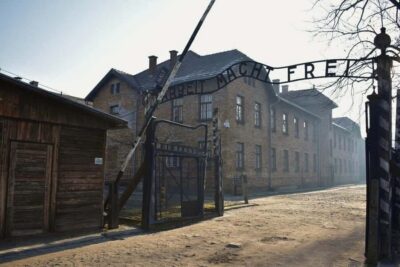
Entering Auschwitz I beneath Arbeit Macht Frei
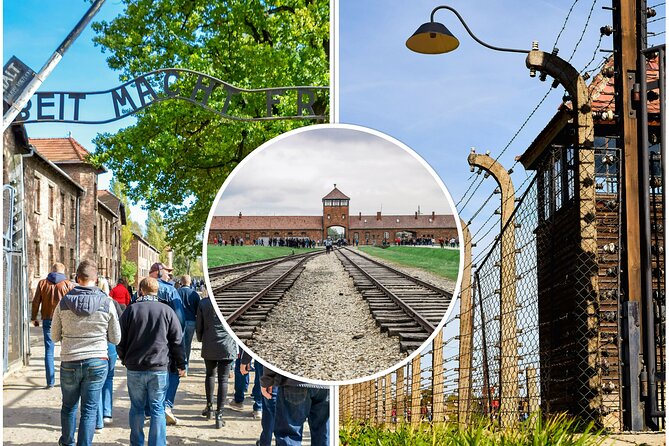
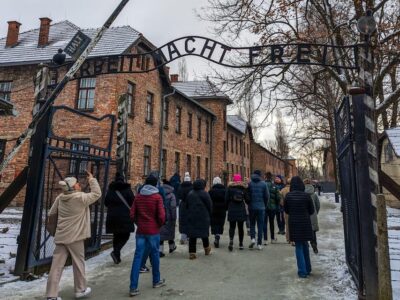
The first camp begins at the familiar gate bearing the words Arbeit Macht Frei, meaning Work Makes You Free. The phrase is one of the most recognizable symbols of Nazi persecution, but the power of the entrance comes from what lies beyond it: original barracks, walls, fences, and buildings used during the camp’s operation.
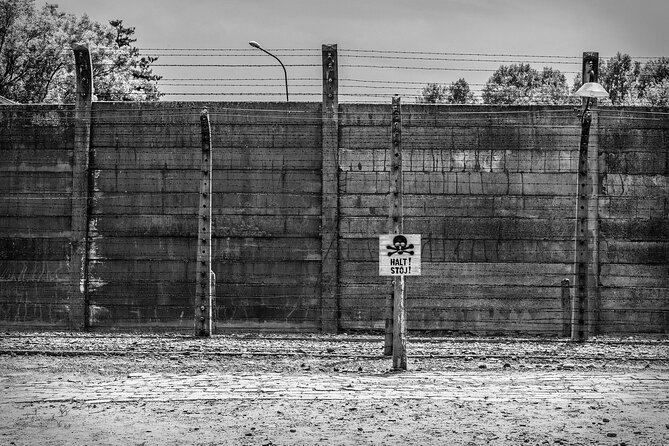
Auschwitz I was first established as a concentration camp for Polish citizens arrested after Germany annexed Poland in 1939. The museum presents the site through preserved structures and carefully arranged exhibits. You may see barracks, fortified boundaries, barbed wire, gas chambers, and crematoria as part of the guided route.
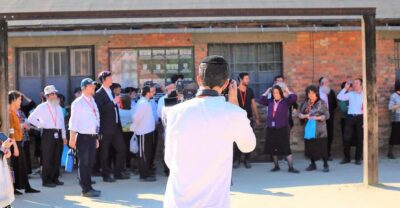
This section usually lasts about two hours. You wear a headset, which is useful in a group because you can hear the guide without everyone gathering around a single speaking point. The official group limit is 30 people.
That limit keeps the tour manageable, but 30 is still a sizeable group in narrow rooms and along busy paths. Stay near the guide and watch for the group marker or meeting instructions. One of the most common practical complaints is not the subject matter, but losing the guide’s words when standing at the back.
The guide’s approach makes a major difference. Michael has been praised for combining strong subject knowledge with a calm, respectful manner. Anna has also been described as careful and deeply informed. Those names do not guarantee your assigned guide, but they show the level of museum interpretation the operator can provide.
The headset also has a weak point. A microphone transmitter can pick up noise from a coat zipper or clothing. If the sound becomes unclear, tell the guide at once and move closer rather than waiting for the next stop. The group cannot easily pause while the problem goes unnoticed.
The short break between the two camps
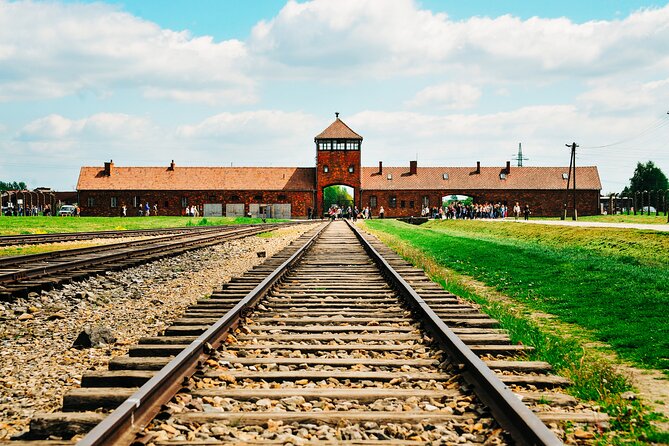
After Auschwitz I, you get a brief break of up to 15 minutes before continuing to Birkenau. The transfer takes about three minutes by vehicle, but do not expect a long rest.
Use this pause wisely. Get water, eat a snack, adjust your clothing, and check your shoes. You will spend more time outside at Birkenau, where weather can make the visit much harder. A warm coat is especially important in colder months, and you should bring clothing suitable for wind and rain.
Food arrangements are limited. The stated plan does not include lunch, and there may not be time for a normal meal between the two camps. Some on-site facilities may be available, but the safest plan is to carry a snack. Larger bags are not suitable inside the museum. Carry-on luggage must be no bigger than 30 by 20 by 10 centimeters, though larger luggage can remain in the vehicle.
A few more things to do in Kraków worth a look
- Krakow: Auschwitz-Birkenau Guided Tour with Pickup & Lunch
★ 4.5 · 9,800 reviews - Krakow: Auschwitz-Birkenau Guided Tour Pickup/Lunch Options
★ 4.5 · 9,057 reviews - Krakow: Auschwitz-Birkenau and Salt Mine Guided Tour
★ 4.7 · 9,020 reviews - Krakow to Auschwitz Birkenau Guided Tour with Transfer and Ticket
★ 5.0 · 8,197 reviews
Birkenau and the scale of Auschwitz II
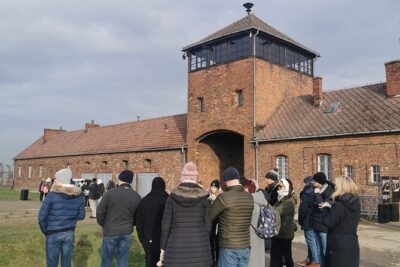
Birkenau is the larger and more open part of the memorial. Built in 1941 under the orders of SS commander Heinrich Himmler, it could hold around 90,000 prisoners. The site was created with the purpose of killing European Jews on a vast scale.
Here the physical size tells part of the story. Long rows of barracks, open ground, fences, railway infrastructure, and the remains of killing facilities make the system feel industrial in scale. The guide explains the selections, living conditions, forced labor, and medical experiments carried out by Nazi doctors, including Josef Mengele.
The Birkenau visit lasts about 90 minutes. It is shorter than the Auschwitz I section but can feel more physically demanding because of the distances and outdoor conditions. The ground is not uniformly smooth, and there are stairs and uneven sections. You need to keep up with the guide, especially if the group is moving between widely separated points.
This is where the tour’s fixed structure can frustrate some people. You may want time to stand quietly, read a panel, or discuss what you have heard. Some guides allow more breathing room than others, but the museum schedule does not promise a slow, reflective pace.
If you are traveling with someone who walks slowly, say so before the tour begins. One person may need to sit out part of Birkenau when the pace becomes too quick. The operator describes the activity as suitable for most people, but the experience is not ideal for anyone with serious mobility limits.
Children under 13 may also find the material too difficult. The operator recommends the visit for ages 13 and above, and I would take that advice seriously. This is not a place for casual family entertainment or a last-minute add-on for a young child.
How much walking should you expect?
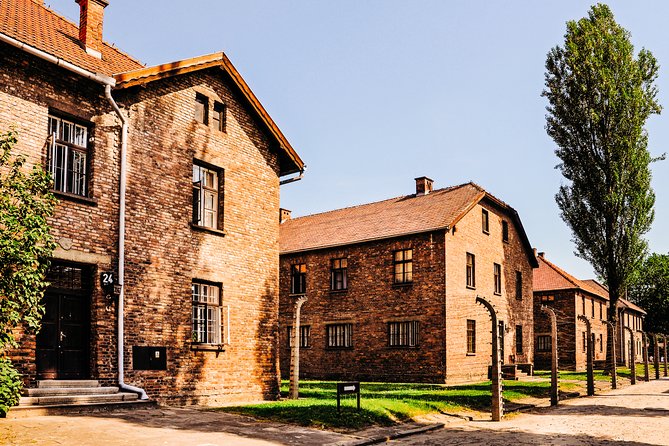
You should prepare for a lot of walking. The route includes indoor and outdoor sections, stairs, uneven surfaces, and time spent standing while the guide speaks.
A person in ordinary walking condition should manage the day, but comfortable shoes matter. Avoid anything that makes you unsteady. Bring water and a small snack, and leave large luggage behind.
If you use a wheelchair, walking aid, or need frequent rests, ask specific questions before booking. The supplied information does not promise a slower route or special accessibility arrangement. The schedule must follow the museum’s visitor service rules, and one particularly difficult experience involved a participant with a disability who felt the group was not given enough time to gather.
That does not mean every guide will handle mobility needs poorly. It does mean you should not assume the tour can adapt at short notice. A private or specially arranged visit may be better if accessibility is central to your plans.
The guides and drivers shape the day
The museum guide handles the historical interpretation, while the English-speaking group leader or driver helps with meeting points, transfers, security, and timing.
That division works well when communication is clear. Drivers such as Łukasz have been praised for helping people through security and finding anyone who falls behind. Patryk has been praised for keeping the coach organized, while Michael and Peter have been noted for being friendly and informative during the drive.
Your driver is not a replacement for the licensed museum guide. The driver may explain the day, show a film, and help you move between locations, but the formal camp tour is led by the museum-approved guide.
Group size affects the experience. Thirty people is the maximum, not necessarily the number on every departure. A smaller group will feel easier to manage. A full group can be perfectly workable with headsets, but you need to stay alert and avoid drifting behind.
Is $30.17 good value?
At $30.17 per person, this is an inexpensive way to arrange a full day from Krakow. The price includes transport, entry to both museum sections, and the licensed guided visit. You also avoid having to organize the drive to Oswiecim and coordinate separate admission.
The value is strongest if you want a straightforward package. You book one experience, receive a pickup plan, ride out and back, and follow a professional guide through both camps.
The price does not cover lunch, and hotel pickup may carry an additional charge. You are also paying for a group format, not personal attention. If you want to stop whenever you choose, ask extended questions, or move at a very slow pace, the cheapest option may not be the best match.
Central pickup can also be more predictable than hotel service. Some hotel transfers have involved a change to the departure point or a return to a central location, leaving people with a walk back to their accommodation. If you choose hotel pickup, confirm exactly where you will be collected and where you will be dropped off.
What to bring and how to prepare
Bring your passport or national identity card. The museum requires personal details to be confirmed at entry, and you may not be admitted without identification.
Wear comfortable shoes and clothes suited to the weather. Birkenau has substantial outdoor walking, and the site can feel cold and exposed. A warm layer is a sensible choice even when Krakow feels mild.
Pack a small snack because lunch is not included and the break is short. Keep bags within the 30 by 20 by 10 centimeter limit. Larger luggage can stay in the vehicle.
Photography is generally allowed, but some areas have clearly marked restrictions. Follow the signs and behave quietly and respectfully. This is a memorial site, not a place for casual posing or loud conversation.
Keep the day open. The advertised duration is about seven hours, but museum schedules, traffic, security, and the walking pace can change the timing. Do not book a tight dinner reservation or airport transfer immediately afterward.
Who should book this Auschwitz tour?
I would recommend it to an adult or older teenager who wants an organized first visit from Krakow and values having the memorial explained by a licensed guide. It also suits anyone who does not want to arrange transport, tickets, and museum entry separately.
It is a good fit for history-focused visitors, first-time visitors to Poland, and people who want both Auschwitz I and Birkenau in one day. The price is hard to fault if the central pickup option works for you.
I would hesitate if you need a slow pace, frequent seating, or full control over the route. The day can be emotional as well as physically tiring, so give yourself quiet time afterward rather than planning another major attraction.
Should you book it?
Book this tour if you want the simplest low-cost way to reach Auschwitz-Birkenau from Krakow, with admission and a professional guide included. The strongest parts are the complete two-site visit, helpful transport staff, and the chance to hear a serious account of the camps while moving through the actual buildings and grounds.
Before paying, check the pickup option, confirm your ID is ready, and accept that the timing may change the day before. Most important, be honest about your walking ability. For a fit visitor who wants structure and context, this is a practical and worthwhile choice. For someone who needs long pauses or extra mobility support, choose an arrangement that gives you more time and flexibility.
FAQ
How long does the Auschwitz-Birkenau tour from Krakow last?
The tour lasts about seven hours in total. This includes roughly one hour and 15 minutes of travel each way, around two hours at Auschwitz I, about 90 minutes at Birkenau, and short breaks.
Is admission to Auschwitz-Birkenau included?
Yes. Admission to both Auschwitz I and Birkenau is included in the tour price, so you do not need to pay an additional entry fee on the day.
Do I need to bring a passport or ID?
Yes. The museum requires personal details to be confirmed at the entrance. Bring your passport or identity card, or you may not be allowed to enter.
Can I choose hotel pickup?
Yes, pickup is offered, or you can meet at the central location on Floriana Straszewskiego 17 in Krakow. The price differs depending on the option you select.
Is lunch included?
No. Lunch is not included, and there is no time for a regular meal between the two museum visits. Bring a snack, since on-site food options are limited.
Is the tour suitable for people with limited mobility?
The tour involves a lot of walking, stairs, uneven ground, and outdoor paths. It may not suit anyone who cannot walk at a steady pace, and the available information does not promise a slower route or special accessibility support.
Just added in Kraków
- ZALIPIE – painted village, unique PRIVATE tour from Krakow★ 5.0 · 20 reviews
- From Krakow: Guided Tour of Zalipie★ 4.6 · 30 reviews
- From Krakow: Zalipie Village Day-Tour★ 4.9 · 74 reviews
- Krakow: Zalipie Village Tour★ 4.6 · 8 reviews
- Krakow: Axe Throwing Fun★ 4.9 · 70 reviews
- Krakow: Energylandia Park Entry Ticket and Optional Transfer★ 4.8 · 39 reviews
- Krakow: Guided Craft Beer Tour★ 4.4 · 38 reviews
- Ojcow National Park: Full-Day Trip from Krakow★ 4.0 · 29 reviews
Auschwitz-Birkenau Memorial Tours, compared.
Auschwitz-Birkenau Guided Tour & Hotel Pickup
Read the review →
Auschwitz Guided Tour with Optional Hotel Pickup
Read the review →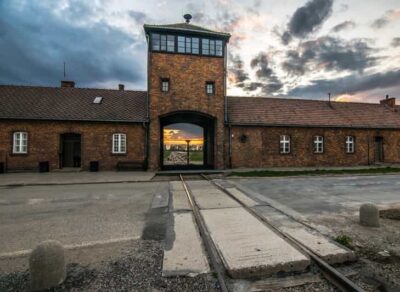
Auschwitz-Birkenau Guided Tour with Pickup & Lunch
Read the review →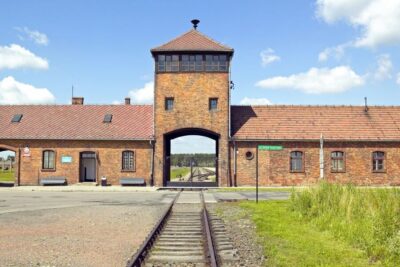
Krakow to Auschwitz Birkenau Guided Tour with Transfer and Ticket
Read the review →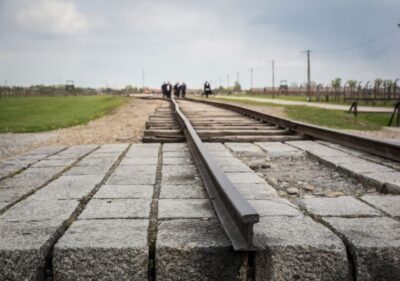
Auschwitz Birkenau Small Group Tour with Pickup
Read the review →Browse the lists this tour appears in