
Reviewed · AUSCHWITZ-BIRKENAU MEMORIAL TOURS
Auschwitz Birkenau Tour from Krakow: Private Transfer + Ticket
Auschwitz-Birkenau is not a sightseeing stop to rush through. It is a place of evidence, grief, and memory. This tour makes the visit easier by taking you from your Krakow hotel to the memorial in a private car, then placing you with a museum guide for Auschwitz I and Birkenau.
I like the door-to-door service, especially because the two camp sites are separated by about 3 kilometers and the drive from Krakow takes roughly 90 minutes each way. I also like that admission and the English guided visit are included. The catch is important: your transport is private, but the museum visit is shared with a group, and the guided portion can feel brisk.
Key points at a glance
- Private Krakow transfer: Travel directly from your hotel without collecting other passengers.
- Two-part memorial visit: See the original barracks and exhibitions at Auschwitz I, then the railway ramp and open grounds at Birkenau.
- English guided tour included: You join a museum group at the visitor center rather than touring the camps privately.
- About seven to eight hours total: Allow around three hours on site, plus the two road journeys and the transfer between camps.
- Serious physical and emotional day: Expect uneven ground, stairs, long walks, and difficult subject matter.
- Small-bag rule: Bags brought inside can be no larger than 30 by 20 by 10 centimeters.
Why this Auschwitz visit matters
Auschwitz was first established by the Nazi regime in 1940, initially to imprison Polish political prisoners. After the Birkenau site was built nearby, the complex became a major center of mass murder, aimed mainly at European Jews, along with Polish, Italian, French, and other prisoners.
The figures are hard to grasp. About 1.1 million people were murdered at Auschwitz-Birkenau by the end of the Second World War. The value of coming here is not simply to hear that number. You walk through the gates, see the fences and barracks, and confront the machinery of persecution in the actual place where it operated.
That makes this a very different experience from reading a book or watching a documentary. A guide can explain the system, but no guide can make the place comfortable. You should plan a quiet evening afterward rather than a packed night of restaurants and entertainment.
Other ways to visit Auschwitz-Birkenau from Kraków:
- From Krakow: Auschwitz-Birkenau Guided Tour & Hotel Pickup
★ 4.5 · 33,358 reviews - From Krakow: Auschwitz-Birkenau Guided Tour & Hotel Pickup
★ 4.5 · 29,340 reviews - Krakow: Auschwitz Guided Tour with Optional Hotel Pickup
★ 4.5 · 15,280 reviews
The private ride from Krakow
Your day begins with pickup at your Krakow hotel at an agreed time. The exact pickup time is confirmed the day before, so do not assume that the time shown when you first book is the final arrangement. If your hotel sits on a street closed to vehicles, you may need to walk to a nearby pickup point.
The vehicle takes you directly to the memorial, with no other passenger pickups. That is the main luxury here. You avoid finding a coach meeting point, waiting for a full bus, or worrying about parking near the museum.
The road trip usually takes around 90 minutes each way. Drivers vary in style and English ability. Some have been friendly and informative, and drivers named Michael, Dominic, Conrad, Pieter, and Przemek have been praised for punctual service, safe driving, and helpful conversation. Some drivers have provided a documentary about the camps during the ride, which can help prepare you for the visit. Other drivers have spoken very little English, so do not book this service expecting a private history lecture in the car.
One practical point matters more than charm: safe, calm driving. Most rides are comfortable, but a poor driving experience can sour the day. If you feel uncomfortable, speak up early and contact the operator if needed.
Auschwitz I: barracks, evidence, and the famous gate
You meet your museum guide at the visitor center near Oświęcim, the Polish town that gives Auschwitz its official local setting. The first section is Auschwitz I, the original camp complex.
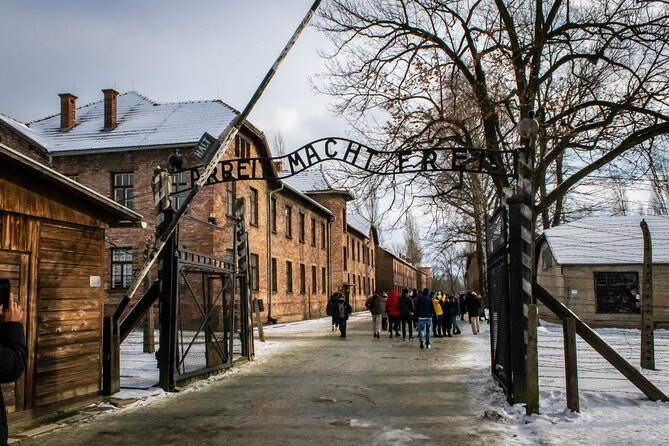
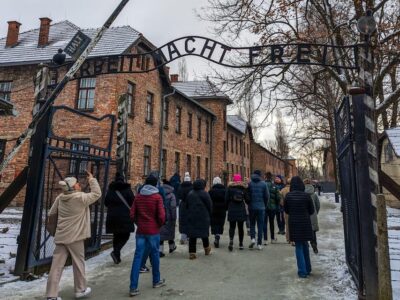
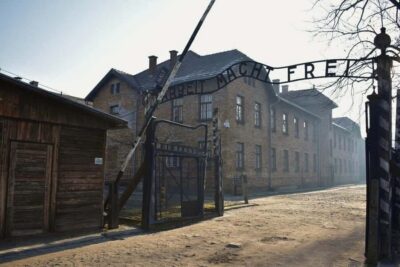
You enter beneath the infamous gate bearing the words Arbeit Macht Frei, translated as Work Sets You Free. The phrase was a Nazi lie, and seeing it in place is one of the first moments when the history becomes physical rather than abstract.
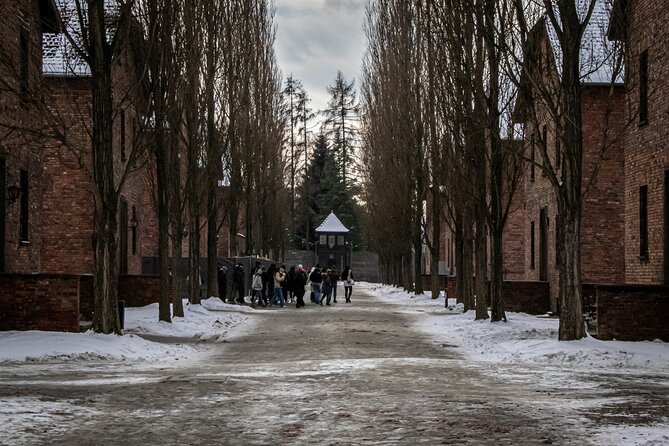
Auschwitz I contains original buildings, fences, watchtowers, roads, and the Death Wall. Several barracks now hold exhibitions with documents, photographs, and objects taken from prisoners when they arrived. These displays are powerful because they deal with individual lives, not only totals and dates.
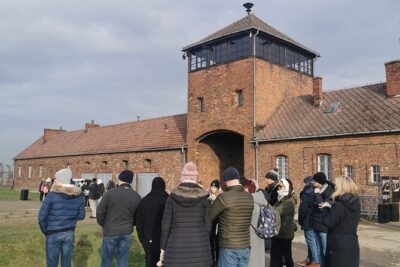
The standard guided visit takes roughly 1 hour and 45 minutes, though the precise pace can vary. You might see only a selection of the blocks rather than every exhibition. In a group, you follow the guide through the permitted route, often using headsets. The audio equipment generally helps, but corridors can be crowded and sound may become difficult to follow if several groups are moving nearby.
This is the part of the visit where a skilled guide matters greatly. Guides such as Krzysztof have been described as clear, respectful, and careful with difficult material. You need someone who can explain how the camp operated without turning suffering into a performance. The strongest guides give you facts, names, and context, while leaving room for silence.
Do not expect unlimited time to read every plaque. If you want to examine each exhibition at your own speed, a standard group visit may feel too short. The tour gives you an organized introduction, not a full scholarly study of every building.
The transfer to Birkenau
After Auschwitz I, you move to Birkenau, also called Auschwitz II. The sites are close, but you do not need to walk between them. Your private driver handles this part of the day, which is especially useful for anyone who has limited stamina.
There may be a short break between the two visits. The available time can be limited, so do not count on a leisurely meal. Food and drinks are available at restaurants or cafes at the sites, but queues can form. Carrying a small snack can be sensible, provided it fits within the museum’s strict bag limit.
A few more things to do in Kraków worth a look
- Krakow to Auschwitz Birkenau Guided Tour with Transfer and Ticket
★ 5.0 · 8,197 reviews - Krakow: Wieliczka Salt Mine Fast-Track Ticket & Guided Tour
★ 4.5 · 5,872 reviews - Auschwitz Birkenau Guided Tour with Ticket Hotel Pickup Small Van
★ 5.0 · 4,769 reviews - From Krakow: Wieliczka Salt Mine Tour & Skip the Line Ticket
★ 4.4 · 3,925 reviews
Birkenau: the rail ramp and enormous scale
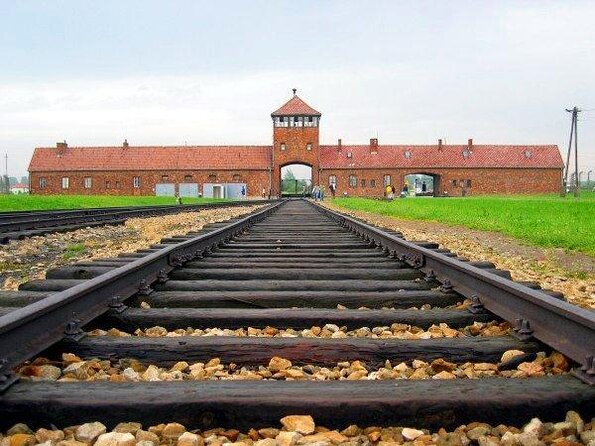
Birkenau is physically different from Auschwitz I. The grounds are much more open, and the scale is harder to take in. This was the largest camp in the Auschwitz complex, built on the site of the displaced village of Brzezinka.
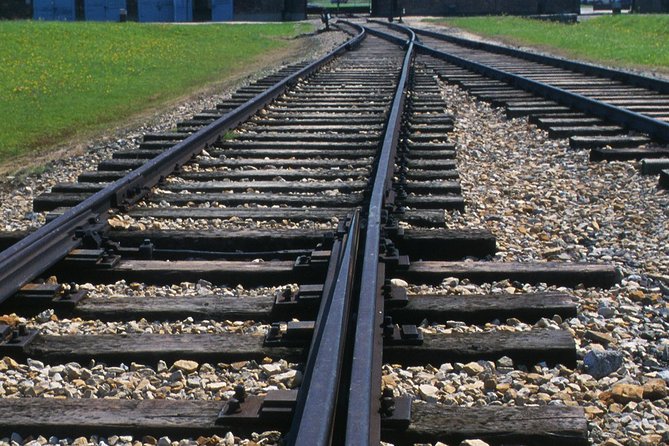
You see the railway ramp where many new arrivals were selected. In a matter of moments, families were divided and lives were directed toward forced labor or death. The preserved barracks, watchtowers, fences, and long lines of the camp make the site’s size clear.
The guided portion here usually lasts around 1 hour and 30 minutes. You may enter preserved barracks, see the conditions in which prisoners were held, and walk toward the ruined gas chambers and crematoria. The remains are important because the Nazi regime destroyed parts of the killing system as Soviet forces approached. What survives still conveys the purpose of the site.
Birkenau requires more walking than many people expect. The ground can be uneven, and the site is exposed to the weather. Wear sturdy, comfortable shoes. There are also stairs at parts of the wider visit. This is not a good day for thin soles, unstable footwear, or a tight schedule immediately afterward.
The open space also creates a different emotional effect from Auschwitz I. Auschwitz I places you inside rooms and exhibitions. Birkenau confronts you with distance, repetition, and scale. Both parts matter, and skipping Birkenau would leave out a major part of how the camp functioned.
How much time do you really get?
The advertised duration is about seven to eight hours. That includes pickup, the drive from Krakow, the museum visit, the transfer between sites, and the return journey.
In practical terms, expect about three hours of guided time inside the two memorial sites, with roughly 1 hour and 45 minutes at Auschwitz I and 1 hour and 30 minutes at Birkenau. The drive takes about 90 minutes in each direction. Add a short transition and bathroom break, and the full day can easily fill seven hours or more.
The guided portion can feel shorter because the subject matter is dense and the route is fixed. You may hear a great deal while seeing only a few blocks at Auschwitz I and one section of Birkenau. That is normal for a standard group visit, but it is worth understanding before paying for the private transfer.
The private vehicle does not turn the museum visit into a private tour. You share the guide with other people, and group size can vary. A medium-sized group with working headsets is manageable. A larger group can make it harder to hear, keep pace, or stop long enough to read information panels.
What the $214.32 price buys you
At $214.32 per person, this is not the budget way to reach Auschwitz-Birkenau. You are paying for convenience, a private round-trip vehicle, hotel pickup and drop-off, admission, and a guided museum visit in your chosen language.
The value depends on your priorities. If you are traveling with family, have an early or awkward hotel location, want to avoid coach transfers, or simply value a direct car, the price can make sense. The driver collects only your group and takes you straight to the site, then waits during the museum visit for the return journey.
The value is weaker if you mainly want the longest possible time inside the exhibitions. The standard museum visit remains a group experience, and you will not necessarily have time to inspect every block. Someone focused on detailed independent study may prefer a different ticket arrangement, if available, with more time at the memorial.
You are also paying for reduced travel stress. That may sound minor, but the drive, the distance between the two sites, and the need to arrive for a timed entry make dependable transport useful. Group discounts may be available, but the supplied price is listed per person, so check the total carefully for your party.
The emotional and physical demands
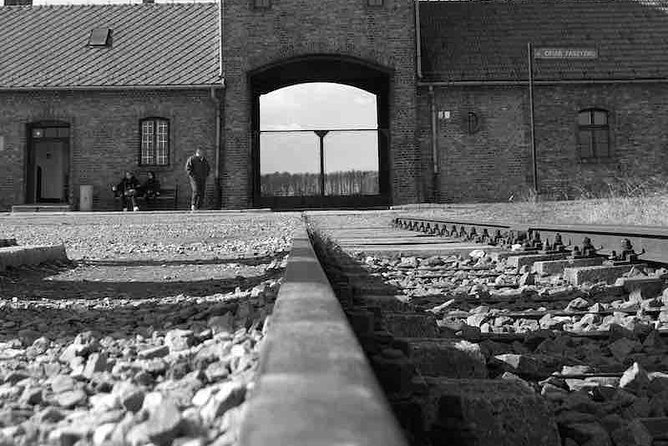
This is a difficult visit. The subject is genocide, imprisonment, starvation, forced labor, and mass murder. You may find the displays upsetting, and the guide’s calm delivery can make the facts feel even more immediate.
Go at a pace you can manage. There is no prize for acting unaffected, and you can step aside briefly if you need a moment. Do not schedule another major attraction immediately afterward.
Physically, plan for extensive walking over uneven ground. Birkenau is particularly spread out. The route also includes stairs in some areas. Most people can take part, but the tour is not a gentle stroll, and the private car only reduces the distance between Krakow, Auschwitz I, and Birkenau.
Bring only a small bag. The maximum permitted size is 30 by 20 by 10 centimeters. A large backpack or handbag may not be accepted inside, so pack light from the start.
Who will get the most from this tour?
I would choose this option if you want a clear, organized first visit and do not want to manage transport from Krakow. It suits couples, families, and small groups who value privacy on the road but accept a shared museum guide.
It also suits anyone who wants the two camp sites handled in one day. The driver removes the need to arrange a separate connection between Auschwitz I and Birkenau, and hotel drop-off means you can return without finding a taxi or public bus.
I would think twice if you want a slow, independent examination of every exhibition. The group timetable may move you along before you have read every panel. It is also a poor fit if you expect your private driver to be your main guide. The transport is private, but the historical guiding takes place at the memorial with a group.
Families should consider the emotional weight as well as the walking. The experience is listed as suitable for most people, but the material is not light, and younger children may find both the content and the long day difficult.
Small details that can make the day better
- Confirm the pickup time the day before, especially if you have an early departure in mind.
- Ask where to meet if your hotel is on a restricted street.
- Wear comfortable shoes with solid soles.
- Take water and a small snack, but keep your bag within the 30 by 20 by 10 centimeter limit.
- Keep your group together when moving between buildings.
- Pay attention to the meeting instructions at Birkenau. A missed connection can be stressful because the museum visit is split between two sites.
- Leave the evening free. You may want quiet time after returning to Krakow.
- If you need an especially slow visit, ask before booking how much independent time is allowed.
The booking is non-refundable and cannot be changed after purchase, so confirm your date, pickup details, and party size before paying.
Should you book the private transfer?
Book it if ease and reliable door-to-door transport matter more to you than having a fully private museum guide. The strongest parts are the direct car ride, included admission, the organized visit to both Auschwitz I and Birkenau, and the care shown by several drivers and museum guides.
Do not book it expecting a private historical tour from Krakow. The transport is private, but the camp visit is shared, the pace can be quick, and you may see only selected exhibitions.
For a first visit from Krakow, I think this is a practical choice for anyone who wants the day arranged from start to finish. Go with realistic expectations, light luggage, good shoes, and enough emotional space afterward.
FAQ
How long does the Auschwitz-Birkenau tour from Krakow take?
The experience lasts about seven to eight hours, including hotel pickup, the roughly 90-minute drive each way, the transfer between Auschwitz I and Birkenau, and the guided visits.
Is transportation private?
Yes. Your group receives private transportation from the Krakow pickup point to Auschwitz-Birkenau and back. The museum tour itself is a shared group visit.
Is admission to Auschwitz-Birkenau included?
Yes. Admission to the Auschwitz-Birkenau Memorial and Museum is included, along with the guided visit.
Is the tour offered in English?
Yes. An English-speaking professional driver is included, and the guided Auschwitz-Birkenau visit is available in the language selected at booking.
What size bag can I take inside the museum?
Backpacks or handbags must not exceed 30 by 20 by 10 centimeters. Pack as lightly as possible.
Is the tour refundable if I cancel?
No. The experience is non-refundable and cannot be changed for any reason after booking.
Just added in Kraków
- From Krakow: Guided Tour of Zalipie★ 4.6 · 30 reviews
- From Krakow: Zalipie Village Day-Tour★ 4.9 · 74 reviews
- Krakow: Zalipie Village Tour★ 4.6 · 8 reviews
- ZALIPIE – painted village, unique PRIVATE tour from Krakow★ 5.0 · 20 reviews
- From Kraków: Slovakia Treetop Walk Bachledka and Zakopane★ 5.0 · 73 reviews
- From Krakow: The Black Madonna of Czestochowa & John Paul II Family Home★ 5.0 · 28 reviews
- Energylandia Theme Park Full Day with optional Krakow Pickup★ 5.0 · 38 reviews
- Krakow City Tour on Scooter and Food Tasting with English Guide★ 5.0 · 84 reviews
Auschwitz-Birkenau Memorial Tours, compared.
Auschwitz-Birkenau Guided Tour & Hotel Pickup
Read the review →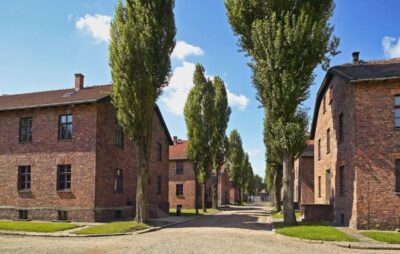
Auschwitz Guided Tour with Optional Hotel Pickup
Read the review →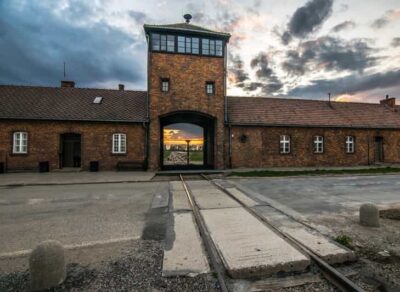
Auschwitz-Birkenau Guided Tour with Pickup & Lunch
Read the review →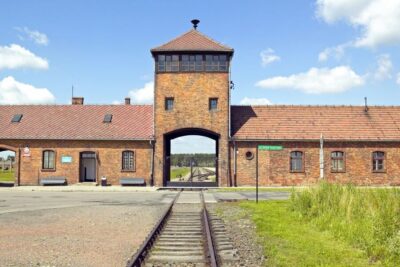
Krakow to Auschwitz Birkenau Guided Tour with Transfer and Ticket
Read the review →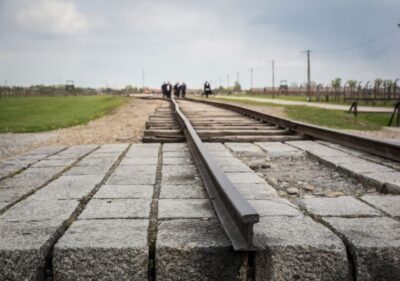
Auschwitz Birkenau Small Group Tour with Pickup
Read the review →Browse the lists this tour appears in