
Reviewed · OLD TOWN TOURS
Private 3-hour Poznan Old Town Tour
Poznan’s best introduction begins on Cathedral Island, where Poland’s early rulers may be buried, then crosses into an Old Town filled with Renaissance arcades, baroque churches, and the famous noon-striking billy goats. This private walking tour gives you a guide’s story for each place instead of leaving you to decode the city on your own.
I like the private format, since your group can focus on the subjects that matter most to you. I also like the route itself: it connects the origins of the Polish state with the everyday pleasure of a St. Martin croissant, while Joanna’s clear, helpful guiding has earned especially strong praise.
The main consideration is price. At $110.01 per person, this is not a budget walk, and optional admissions, including the Croissant Museum, cost extra. The value improves for a small group that wants personal attention and a well-shaped first look at Poznan.
Key points to know before booking
- Poland’s early story begins on Cathedral Island, home to the country’s oldest cathedral and possible tombs of its first rulers.
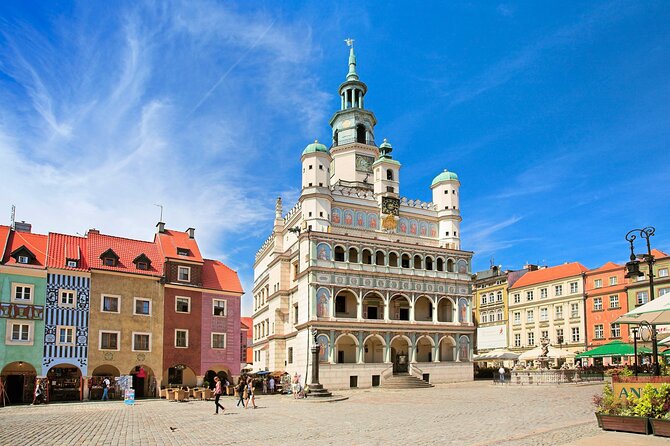
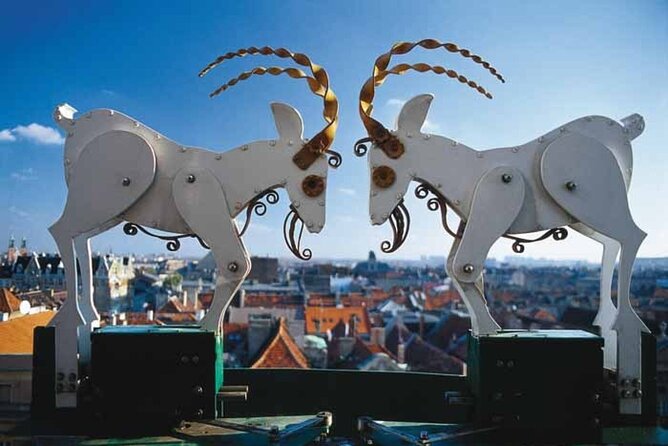
- The Old Market Square is the visual center, with Poznan’s ornate Renaissance Town Hall and its famous mechanical goats.
- Joanna is the named guide, praised for clear explanations, useful local information, and an easy manner.
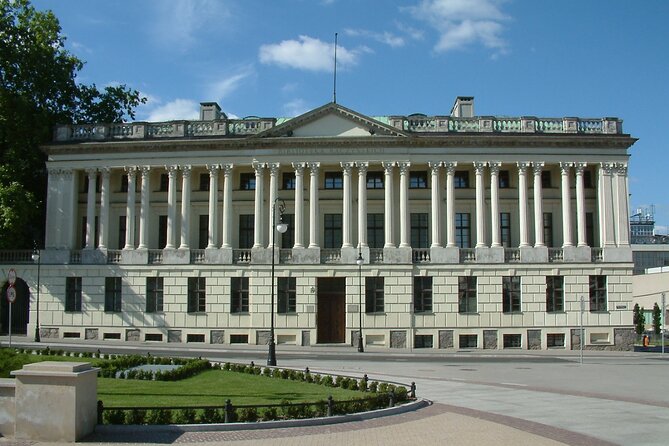
- The route ends near Freedom Square, placing you close to the National Museum, Raczynski Library, and Bazar Hotel.
- St. Martin croissants are part of the cultural lesson, but admission to the Croissant Museum is not included.
- This is a private three-hour walk in English, with free cancellation up to 24 hours before the start time.
Why Cathedral Island is the right place to begin
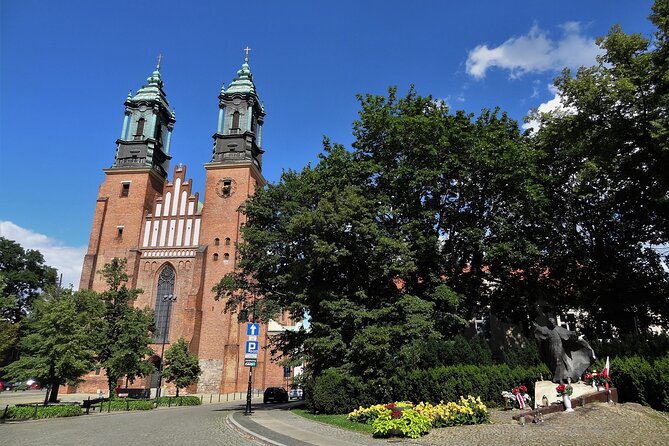
The tour starts at the Cathedral Basilica of Saints Peter and Paul on Ostrow Tumski, or Cathedral Island. This is not simply an attractive first stop. It is the place where Poznan’s story reaches back to the beginnings of the Polish state.
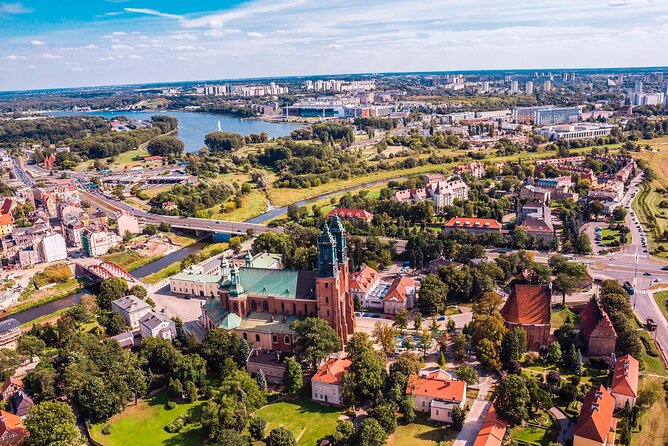
Cathedral Island sits between the Warta River and the Cybina River. A fortified settlement existed here by at least the ninth century, and the island is sometimes described as the birthplace of Poland. The cathedral’s vaults contain remnants of tombs believed to be connected with Mieszko I and Boleslaus the Brave, early rulers central to the country’s formation.
You have about 30 minutes here, with admission listed as free. That makes this opening section especially useful for setting the historical frame before the tour moves into the medieval and Renaissance city.
The island also links old foundations with modern architecture. The white Porta Posnania Interactive Heritage Centre is reached by a striking footbridge across the river. The center is part of Poznan’s Royal-Imperial Route and has received architectural awards, but the tour does not list an admission visit inside. You should think of this portion as an orientation to the island, its cathedral, and its place in the city’s larger story.
If you are interested in Polish history, this opening will likely be the most important part of the walk. If you mainly want colorful squares, food, and architecture, it may feel more serious at first, but it gives the rest of the tour a useful sense of place.
More old town tours in Poznań:
- Old Town Poznan: Guided Walking Tour in English
★ 4.6 · 78 reviews - Poznan Old Town and Top Attractions Private Walking Tour
★ 4.8 · 24 reviews - Old Town Poznan Walking Tour
★ 4.0 · 16 reviews
Reading Poznan through the Old Market Square
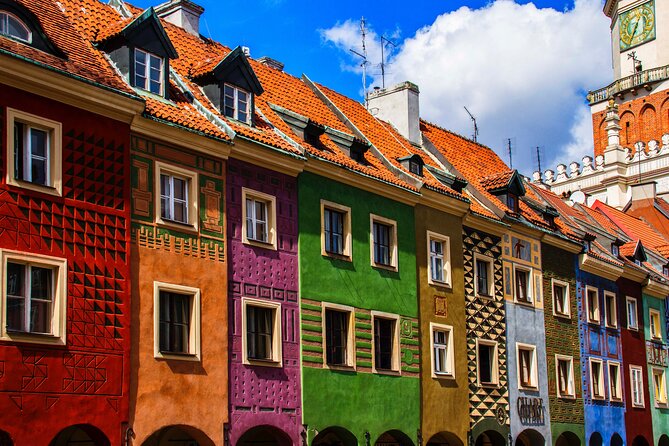
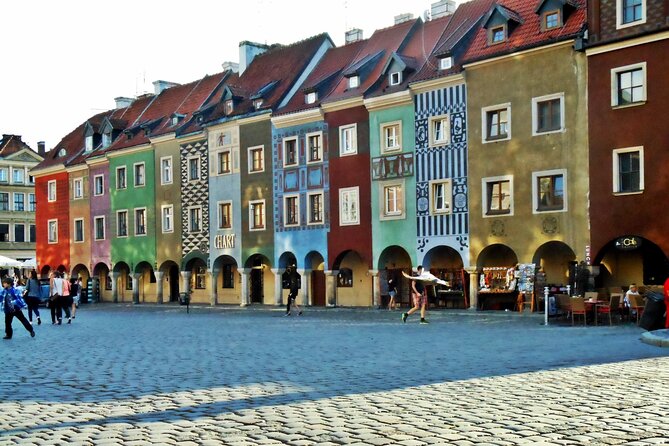
From Cathedral Island, the route continues toward Poznan Old Town, the area built within the former medieval city walls. Its center is the Old Market Square, a broad urban space lined with historic houses and anchored by the Town Hall.
This is where the city becomes easy to read at a glance. The square shows how trade, government, religion, and civic pride once fit together in a compact medieval center. Your guide can point out the buildings and explain how the city developed, rather than leaving you with a parade of names and dates.
The Old Town portion lasts about 45 minutes. That is enough time for a guided walk through the square and nearby streets, though not enough for a long museum visit or a leisurely stop in every church and building.
Look for the Royal Castle on Przemysl Hill at the western edge of the Old Town. The medieval castle has been reconstructed, and its tower offers a wide view over the city. The tour information presents it as part of the area, but it does not list a tower visit or admission. If that view matters to you, ask Joanna whether there is time or a separate ticket option during your visit.
The route then reaches Freedom Square, surrounded by 19th-century buildings including the National Museum, Raczynski Library, and Bazar Hotel. The tour ends at the Arkadia Building on Freedom Square, so you finish in a central location rather than returning to the starting point.
Poznan Town Hall and the noon goats
The Town Hall receives its own 15-minute stop, and it deserves that extra attention. Its three-story arcade loggia is one of the clearest examples of Renaissance civic design in Poznan. The building is more than a handsome backdrop for photographs. It is the city’s main symbol and a reminder of the wealth and confidence Poznan gained as a trading center.
At noon, two small billy goats appear on the tower and butt heads. This is one of the city’s most famous traditions, but the timing matters. If seeing the goats is important to you, check the tour start time carefully. A three-hour tour may pass the Town Hall at a different hour, and the supplied schedule does not promise a noon viewing.
Inside, the Town Hall houses the Museum of the History of the City of Poznan. Its main interior attraction is the Grand Hall, also called the Revival Hall. The ceiling and supporting sandstone pillars carry painted decoration, with crests, biblical symbols, mythological scenes, animals, and planets.
The listed visit to the Town Hall has no admission fee, but the tour also states that optional entry fees are not included. That means you should confirm whether the museum interior is part of your specific visit or simply discussed from the outside. The building’s exterior alone makes the stop worthwhile, but the interior would add another layer for anyone interested in art and civic history.
Inside Fara Church, Poznan’s baroque showpiece
The Parish Church of St. Stanislaus, usually called Fara Church, is one of the strongest visual stops on the route. You have about 20 minutes here, and admission is listed as free.
The church began as a Jesuit temple, with construction running from 1651 into the middle of the 18th century. Its design required parts of the city walls to be removed and the moat to be filled. That detail gives you a sense of the building’s scale and ambition. This was not a small neighborhood chapel quietly added to the street. It changed the medieval city around it.
Inside, expect a three-nave church with galleries over the side naves and large columns in the central nave. The main altar and entrance portal were designed by Pompeo Ferrari. Sculpture, painting, and molded decoration cover much of the interior, creating the grand visual effect associated with mature baroque church design.
The light is a major part of the experience. It filters through the decorated interior in a way that can make the church feel soft and hazy despite its monumental size. You do not need to be a specialist to appreciate it. This is a place where a guide’s explanation helps you notice how the parts work together.
Keep in mind that churches can have restricted access for services or religious events. The tour data does not provide a schedule, so the exact interior visit can depend on conditions that day.
A few more things to do in Poznań worth a look
- 3-Hour Guided Cycling Tour of Warsaw
★ 4.9 · 624 reviews - Warsaw Old Town 1.5-Hour or Full 3-Hour Segway Tour
★ 4.9 · 209 reviews - Warsaw: 3-Hour Panoramic City Bus Tour with Pickup
★ 4.5 · 169 reviews - Krakow: 3-Hour Small Group Tour on E-Bike
★ 4.8 · 135 reviews
The St. Martin croissant story
The final featured stop is the Croissant Museum, with about 45 minutes set aside for it. Admission is not included, so this is the clearest extra-cost part of the tour.
St. Martin croissants are not just a sweet snack with a local name. They are protected by the European Commission as a Protected Geographical Indication, which means the product follows specific regional standards. The pastry uses Danish-style dough, white poppy seeds, and usually icing.
At the museum, you can learn how the croissant became a symbol of Wielkopolska through an interactive presentation and an animated version of its story. The setting is part of the appeal: the museum occupies a Renaissance tenement on the Old Market Square beneath a painted wooden ceiling.
This stop gives the tour a welcome change of pace. Cathedral Island and Fara Church ask you to think about religion, power, and architecture. The croissant puts local identity on the table, literally and culturally.
You should also try to hear about other Poznan specialties. Pyra z gzikiem means a baked potato with a cottage cheese dip, and Poznan-style duck comes with potato dumplings, baked apple, and red cabbage. The tour does not include a meal, so plan to buy food separately if you want to turn the tasting lesson into lunch.
For many people, this food stop will be more memorable than another formal monument. It also gives you an easy way to continue exploring after the tour ends.
What the private format adds
A private tour means only your group participates. That matters in a city walk because the route includes several different subjects: early Polish statehood, Renaissance architecture, baroque art, local food, and modern cultural landmarks.
A large public group often requires a guide to keep moving at one fixed pace. Here, you can ask Joanna to explain a church detail, repeat a historical point, or spend more time on the city’s local customs. The tour is offered in English, and the strongest praise for Joanna focuses on exactly these qualities: she gives useful information, explains places clearly, and creates an easy conversation with the group.
The three-hour length is also practical. It is long enough to cover the major center without consuming a whole day, which leaves time for museums, food, or independent exploring. At the same time, the route has several stops, so you should expect a steady walking experience rather than a slow sightseeing afternoon.
The tour is listed as suitable for most participants and close to public transportation. No special physical requirements are stated, but the experience is a walking tour through several city areas. Wear shoes you can use comfortably for three hours, especially if you plan to continue around the Old Town afterward.
Is $110.01 per person a fair price?
The price requires an honest look. At $110.01 per person, this costs far more than a casual self-guided walk through the square. It also does not include optional entry fees, with the Croissant Museum specifically excluded.
The price makes more sense when you value a private guide and your group has several people sharing the experience. You are paying for a personal route through some of Poznan’s most important sites, not simply transportation or admission. The guide’s role is especially useful at Cathedral Island and Fara Church, where the meaning of the buildings is not always obvious from the outside.
For a solo visitor, the cost is harder to justify unless personal guiding is a high priority. For a couple, family, or group of friends, the price may feel more reasonable because the tour remains private and flexible.
I would also treat the tour as a first-day orientation rather than a complete visit to every attraction. You receive an overview of the city center and a clear sense of where to return. You will still need separate time and money for museum interiors, the castle tower, the Croissant Museum, and any meal or pastry tasting.
Who will get the most from this walk?
I would recommend this tour to you if you want a local guide to connect Poznan’s main sights into one story. It suits first-time visitors, history-minded couples, families who prefer a private pace, and anyone who wants help finding the city’s food traditions.
It is also a good fit if you have only a short stay. The route covers Cathedral Island, the Old Market Square, Town Hall, Fara Church, Freedom Square, and the croissant tradition in three hours.
You may want another option if you prefer to explore alone, dislike fixed routes, or want long museum visits. The schedule moves through several locations, and the listed times are short at the Town Hall and Fara Church. The tour is also less attractive if your main goal is to sample food, since the croissant museum admission and meals are extra.
The starting point is the Cathedral Basilica on Ostrów Tumski 17. The ending point is the Arkadia Building at Freedom Square. That one-way design is useful: you do not lose time walking back across town, and you finish near several central buildings.
Should you book the Private 3-hour Poznan Old Town Tour?
Book it if you want a personal English-language introduction to Poznan, especially one that combines the origins of Poland with the city’s architecture and food customs. Joanna’s calm, informative style is a strong reason to choose it, and the private setup gives your group room to ask questions.
Before paying, confirm what interior access is planned at the Town Hall and whether you want to add the Croissant Museum admission. If the extra cost fits your budget, this is a well-focused way to get your bearings and learn what makes Poznan different from other Polish cities.
The tour offers free cancellation until 24 hours before the local start time. That gives you useful flexibility, but changes or cancellations made inside that window are not refunded.
FAQ
How long is the Poznan Old Town Tour?
The tour lasts approximately three hours.
Is the tour private?
Yes. Only your group participates in the activity.
What language is the tour offered in?
The tour is offered in English.
Who is the guide?
The named guide is Joanna.
Where does the tour start?
It starts at the Basilica of Saints Peter and Paul at Ostrów Tumski 17, 61-001 Poznan, Poland.
Where does the tour end?
It ends at the Arkadia Building on Freedom Square, plac Wolności 11, 61-738 Poznan, Poland.
Are admission fees included?
Optional entry or admission fees are not included. The Croissant Museum specifically lists admission as not included, while the Cathedral Island, Old Town, Town Hall, and Fara Church stops list no admission fee.
Can I cancel for a full refund?
Yes. You can cancel at least 24 hours before the experience start time for a full refund. Cancellations or changes made less than 24 hours before the start time are not accepted for a refund.
Just added in Poznań
- The Birthplace of Poland: A Self-Guided Audio Tour of Poznań★ 4.5 · 13 reviews
- Private walking city tour in Poznan★ 4.0 · 9 reviews
- The Best of Poznan 4 Hour Guided Private Walking Tour★ 5.0 · 7 reviews
- Discover Poznan: Walk, Take a tram and have a traditional snack★ 5.0 · 4 reviews
- Poznan private tailor made tour with a local guide-driver★ 5.0 · 6 reviews
- Old Town Poznan Walking Tour★ 4.0 · 16 reviews
- Palace, Castle and Ancient Oaks – Rogalin and Kórnik guided tour from Poznan★ 5.0 · 4 reviews
- Poznan Private City Walking Tour from Cathedral Island★ 4.5 · 24 reviews
Old Town Tours, compared.
Bike Tour of Old Town, Jewish Quarter and the Ghetto
Read the review →

Sightseeing EcoCruise around the Old Town of Gdansk
Read the review →
Browse the lists this tour appears in