
Reviewed · TOURS IN POZNAŃ
The Birthplace of Poland: A Self-Guided Audio Tour of Poznań
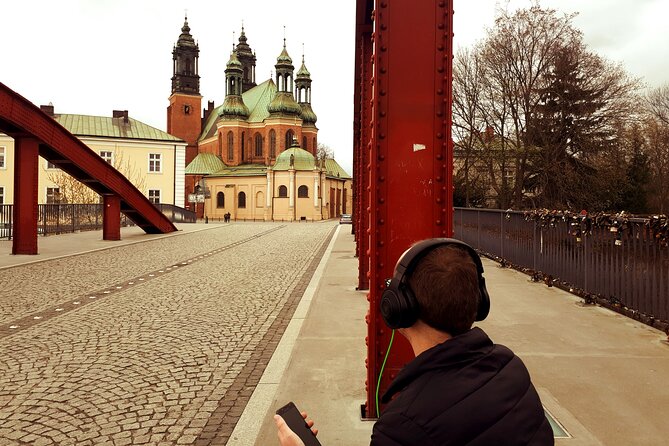
Poznań’s Cathedral Island is where Polish statehood took shape, and this self-guided walk gives you a clear route through that story. You begin beside a scale model of Ostrów Tumski and finish near the Lubrański Academy, passing churches, a restored bridge, old defensive works, and the colorful Śródka mural. I like the low price and the freedom to pause, restart, or walk slowly. I also like that the app works offline, which removes one common travel headache.
The main catch is that this is an audio app, not a person walking beside you. One user had trouble getting the guide to track their position, though support responded quickly and another download fixed the problem. Bring a charged smartphone and headphones, and test the route before setting off.
Key points at a glance
- A walk through Poland’s beginnings: Cathedral Island connects Mieszko’s palace site, Poznań Cathedral, and the early story of the Polish state.
- A practical 45 to 75 minutes: The route is short enough to fit into a busy day, but pauses and museum visits can make your outing longer.
- GPS-triggered English narration: The VoiceMap app plays the next section as you reach each location.
- Two districts, one connected route: You cross the Jordan Bridge from Ostrów Tumski into Śródka, a district that was once independent from the rest of Poland.
- Good value at $8.99: You get lifetime access, offline audio, maps, and geodata, but attraction tickets are extra.
- Best for independent walkers: You control the pace, though you must manage your phone, headphones, and directions yourself.
Why Cathedral Island is the right place to start
The walk takes place on Ostrów Tumski, usually called Cathedral Island, a compact part of Poznań surrounded by water. The setting matters because this is not just a route past attractive old buildings. It introduces the origins of Poland through the places connected with its earliest rulers and church leaders.
You start at the scale model of the island at Ostrów Tumski 9. The opening audio explains the area and gives you a basic introduction to how VoiceMap works. That is useful if you have never used a GPS audio tour, since the app is meant to guide you as you move rather than make you stop at a series of numbered signs.
The route is estimated at 45 minutes to 1 hour 15 minutes. The shorter time suits a brisk walk with limited stopping. If you pause to look closely at the buildings, take photos, or visit one of the museums, plan on spending longer in the area.
A few more things to do in Poznań worth a look
- Wroclaw: E-Car Tour and Audio Guide
★ 4.6 · 1,738 reviews - Krakow: Vistula River Sightseeing Cruise with Audio Guide
★ 4.4 · 820 reviews - From Krakow: Auschwitz-Birkenau and Self-Guided Day Tour
★ 4.1 · 576 reviews
The Church of Our Lady and Mieszko’s palace
One of the first important stops is the Church of Our Lady in Summo. The audio explains the church and points out what lies beneath it: the remains of Mieszko’s palace and palace chapel.
That detail gives the walk its strongest sense of place. You are not only hearing about a distant ruler. You are standing above the remains connected with the earliest center of power on the island. The tour does not require you to enter the church or an archaeological site, so the audio is especially useful here. It helps you understand what is below and around you even when you are simply walking outdoors.
I would pay attention at this point rather than rush ahead. The opening stops establish the central idea of the route: Poznań’s importance comes from the overlap of political authority, religion, and the island’s position within the city.
Poznań Cathedral, Poland’s oldest cathedral
The route then passes Poznań Cathedral, described as the oldest Polish cathedral. The audio provides background as you walk, making this one of the tour’s main historical anchors.
The cathedral is a good example of why an audio format can work well here. You can look at the building while the narration supplies the wider context, instead of reading a long panel or trying to balance a paper guide with your phone. Still, the tour only passes by the cathedral. Any interior visit, museum admission, or additional sightseeing is separate and not covered by the $8.99 price.
If you want more time inside, treat the audio walk as your introduction rather than your complete visit. The route gives you the story and orientation, while you decide how much time to spend on the building itself.
The Archbishop’s Palace and changing power
Next comes the Archbishop’s Palace. The narration covers the building and its many versions over time. That focus on change is helpful because historic buildings rarely have one simple identity. A palace may be altered, rebuilt, or used differently as political and religious power shifts.
This stop also adds variety. The route is not limited to one famous church. You move through the institutions that shaped Poznań, from royal and religious foundations to later civic and defensive structures.
The narration is in English, and the available information does not identify the narrator by name. The tone is designed to feel like a personal guide, with one user praising the pleasant voice and another saying the delivery made the walk feel like a guided tour. You should still remember that there is no live person available to answer questions along the way.
Same base, a different kind of day:
- Poznań Experience 2-Hours Guided Walking Tour
★ 5.0 · 155 reviews - Undercover City Games: Poznan
★ 5.0 · 88 reviews - Old Town Poznan: Guided Walking Tour in English
★ 4.6 · 78 reviews - Poznań: Private or Public Highlights Tour with a local guide
★ 5.0 · 66 reviews
Crossing the Jordan Bridge into Śródka
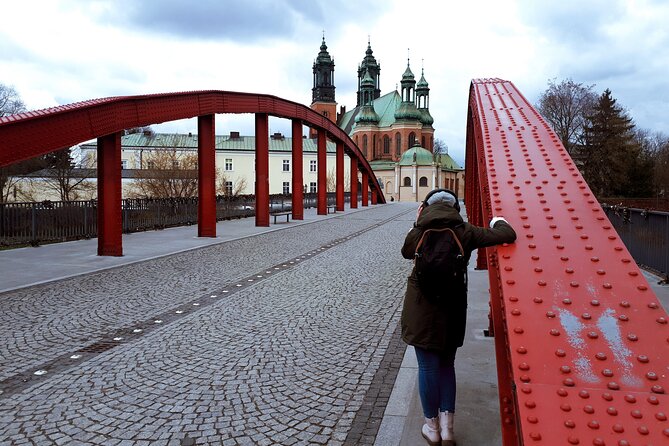
The Jordan Bridge is one of the route’s most useful transitions. The audio tells you how the bridge was built, destroyed, and rebuilt, eventually reconnecting Cathedral Island with the Śródka District.
That story gives the walk a physical sense of movement. You are not just hearing that two areas were connected. You cross between them yourself. The bridge also marks a change in the character of the route, from the island’s cathedral center to a district with its own history.
Śródka was once independent from the rest of Poland. That fact makes the district more than an extension of Ostrów Tumski. It had its own identity and development, and the audio helps you see the two areas as related but distinct places.
Śródka’s mural and Saint Margaret Church
In Śródka, the tour passes the Srodka mural, one of the first wall paintings of its type in Poland. This is a welcome visual break after the older religious and institutional buildings. You get a modern public artwork placed within a district whose story reaches back much further.
The mural is also the sort of stop that benefits from a walking route. Its meaning and position make more sense when you see it in relation to the surrounding streets. The audio gives you a reason to pause instead of treating it as a quick photo stop.
The route also passes Saint Margaret Church. The narration explains the church as you continue walking. With several churches on the route, the tour avoids making each stop feel identical by placing them within different parts of the island and Śródka story.
You can move at your own speed, stop for a break, and resume later. That flexibility was one of the strongest points in the available feedback. It is especially useful if you want to combine the route with lunch, coffee, or a museum visit, though food and drinks are not included.
Brama Poznania and the option to go further
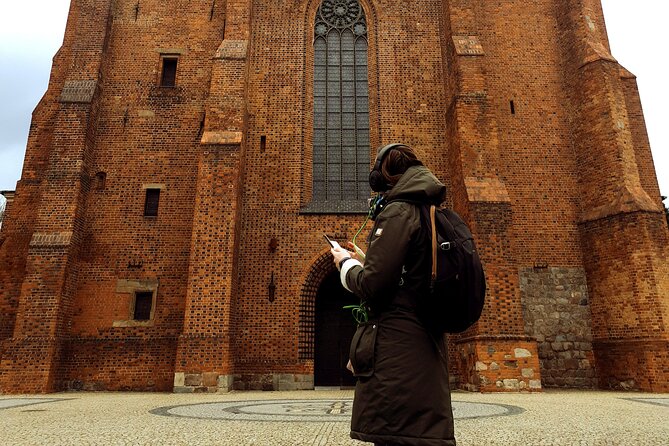
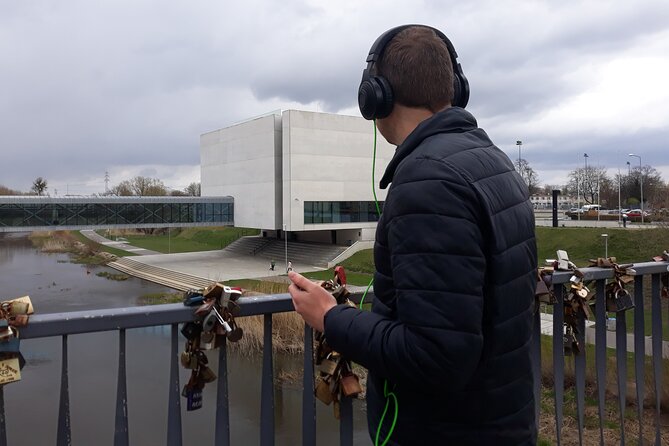
The route passes Brama Poznania, also called the Porta Posnania Heritage Center. This modern museum was created in 2014 to present the history and major themes connected with Cathedral Island and Śródka District.
For many people, this will be the point where the outdoor audio route suggests a natural next step. The tour gives you a quick introduction from outside, while the heritage center offers a separate museum experience. Entrance is not included, so check the admission details before treating it as part of your plan.
I like the way this stop broadens the route. The walk is not only about looking backward at medieval buildings. It also shows how Poznań presents and explains its past today. If your schedule allows, you might plan the audio tour first and decide afterward if you want the museum’s fuller treatment.
The Cathedral Lock and Prussian defenses
The Cathedral Lock is a 19th-century part of the Prussian fortification system. This stop shifts the story again, from early Polish statehood and church power to the later military history of the city.
It is an easy detail to miss if you walk the area without context. The fortifications may not carry the visual drama of the cathedral, but they explain how Poznań was shaped long after the early rulers and bishops. The audio makes the defensive system part of the route rather than leaving it as an unexplained piece of old infrastructure.
This is one reason I would not rush through the walk in 45 minutes. The route covers several layers of history, and each needs a moment to register. A brisk pace works, but you will get more from it if you allow short pauses at the locations that catch your interest.
Genius Loci and the last stretch
The tour passes Genius Loci, a modern museum that displays remains of the roughly thousand-year-old borough walls. It also uses 3D immersive films to present the site.
The museum adds an archaeological and multimedia angle to the walk. You see that the area’s past is not limited to grand churches and palaces. Walls, foundations, and remnants of everyday settlement also help explain how the borough developed.
Again, admission is not included. The audio walk tells you what the museum represents, but you will need a separate ticket if you choose to go inside. That makes the $8.99 price easy to understand: you are paying for the route and narration, not for a bundled series of attractions.
The walk ends in front of the Archdiocese Museum in Poznań, near the Lubrański Academy at Jana Lubrańskiego 1. The museum’s location is fitting because the institution played an important role in Poznań and the country from the 1500s through the 1700s. The endpoint also leaves you near another possible visit rather than dropping you in an unremarkable street.
How the VoiceMap format works in practice
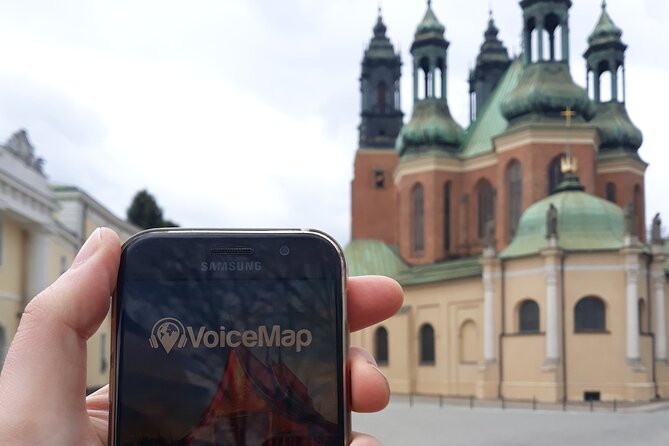
You receive access to the VoiceMap app for Android and iOS, with the audio, map, and geodata available offline. Download everything before you begin. Offline access is valuable because it lets you focus on the walk instead of watching your data connection.
The app uses your phone’s GPS location to play the appropriate guidance. One user found it easy to follow and liked that the next section played automatically. Another had no idea where the guide was and could not follow the route because of technical trouble. That contrast is important: the format can be smooth, but it depends on your phone, location settings, and a successful download.
I would take three simple precautions:
- Charge your phone before leaving.
- Download the tour while you have a reliable connection.
- Bring headphones, since they are not supplied.
If the app fails, VoiceMap support can be contacted by email or telephone. A technical problem was resolved within minutes after the user downloaded the tour again, and support offered a refund request after another person could not complete the experience. The cancellation policy itself is strict: the purchase is non-refundable and cannot be changed for any reason, so sort out technical access before you start.
What $8.99 gets you
At $8.99 per person, the tour is priced as a low-cost orientation rather than a full guided excursion. You get lifetime access in English, the VoiceMap app, and offline audio, maps, and geodata. That lifetime access gives the purchase some extra value if you want to repeat the route or listen again later.
The price does not include museum or attraction tickets, transportation, food, drinks, a smartphone, or headphones. Those omissions are reasonable for a self-guided walk, but you should budget for them if you want to enter Brama Poznania, Genius Loci, the Archdiocese Museum, or other sites along the way.
Compared with a live private guide, the cost is much lower. The tradeoff is clear: you gain privacy and flexibility, but lose conversation, personal recommendations, and the ability to ask questions. The experience is described as private, with only your group participating, but since it is audio-led, that means you are not joining a larger walking group rather than receiving a live private guide.
Who will get the most from this walk
I would choose this tour if you like to set your own pace and want a short historical route before exploring more of Poznań. It works well for an independent visit, a first look at Cathedral Island, or a spare morning when you want structure without committing to a scheduled group walk.
It is also a good fit if English is your preferred language, since that is the only language offered. Most people can participate, and the start and end points are near public transportation.
I would hesitate if you strongly prefer a live guide. The route covers serious historical material, and a person could explain confusing details or adapt the walk to your interests. I would also think twice if you are not comfortable troubleshooting a phone app. The GPS format is convenient when it works, but it is not completely foolproof.
Should you book this Poznań audio tour?
Book it if you want an affordable, self-paced introduction to the place where Poland’s early story took shape. The route packs a lot into 45 to 75 minutes: Mieszko’s palace remains, Poland’s oldest cathedral, the Archbishop’s Palace, the Jordan Bridge, Śródka, the mural, Saint Margaret Church, Brama Poznania, Prussian fortifications, Genius Loci, and the Archdiocese Museum.
Skip it if you need a live guide, included admissions, or a fully managed experience. For everyone else, $8.99 buys a useful route, offline access, and the freedom to pause whenever something catches your eye. Download it carefully, bring headphones, and leave extra time if you plan to enter the museums.
FAQ
How long does the self-guided audio tour take?
The tour takes approximately 45 minutes to 1 hour 15 minutes. Stops, photos, breaks, and museum visits can make your total time in the area longer.
What language is the tour offered in?
The tour is offered in English.
Where does the tour start?
It starts at the scale model of Ostrów Tumski at Ostrów Tumski 9, 61-109 Poznań, Poland.
Where does the tour end?
It ends in front of the Archdiocese Museum in Poznań, near the Lubrański Academy at Jana Lubrańskiego 1, 61-003 Poznań, Poland.
Do I need a smartphone and headphones?
Yes. A smartphone and headphones are not included. The tour uses the VoiceMap app for Android and iOS.
Can I use the tour without mobile data?
Yes. The audio, maps, and geodata can be accessed offline after downloading them through the VoiceMap app.
Are museum tickets included?
No. Entrance fees for museums and other attractions along the route are not included. Food, drinks, and transportation are also separate.
Just added in Poznań
- Private walking city tour in Poznan★ 4.0 · 9 reviews
- The Best of Poznan 4 Hour Guided Private Walking Tour★ 5.0 · 7 reviews
- Discover Poznan: Walk, Take a tram and have a traditional snack★ 5.0 · 4 reviews
- Private 3-hour Poznan Old Town Tour★ 5.0 · 5 reviews
- Poznan private tailor made tour with a local guide-driver★ 5.0 · 6 reviews
- Old Town Poznan Walking Tour★ 4.0 · 16 reviews
- Palace, Castle and Ancient Oaks – Rogalin and Kórnik guided tour from Poznan★ 5.0 · 4 reviews
- Poznan Private City Walking Tour from Cathedral Island★ 4.5 · 24 reviews
Tours in Poznań, compared.



Private or Public Highlights Tour with a local guide
Read the review →
Poznan Old Town and Top Attractions Private Walking Tour
Read the review →
Poznan Private City Walking Tour from Cathedral Island
Read the review →
Browse the lists this tour appears in