
Reviewed · OLD TOWN TOURS
Katowice Old Town Highlights Private Walking Tour
Katowice makes more sense when you see its coal-mining past beside its modern cultural buildings. This private walk links Market Square, Spodek, and the former mine site, then, on the longest option, takes you to the red-brick workers’ district of Nikiszowiec.
I like the personal format and the strong focus on history. Your guide can explain the city’s shift from a small Silesian settlement through German influence, industrial growth, war, and Communist rule. I also like the practical local advice, since the walk ends with tips on restaurants, cafes, pubs, and shops.
The main drawback is choice. The 2-hour tour covers the central sights but skips the mining site and Nikiszowiec. The 5-hour tour offers the fullest picture, but it requires public transport and a longer stretch of sightseeing.
Key points to know before booking
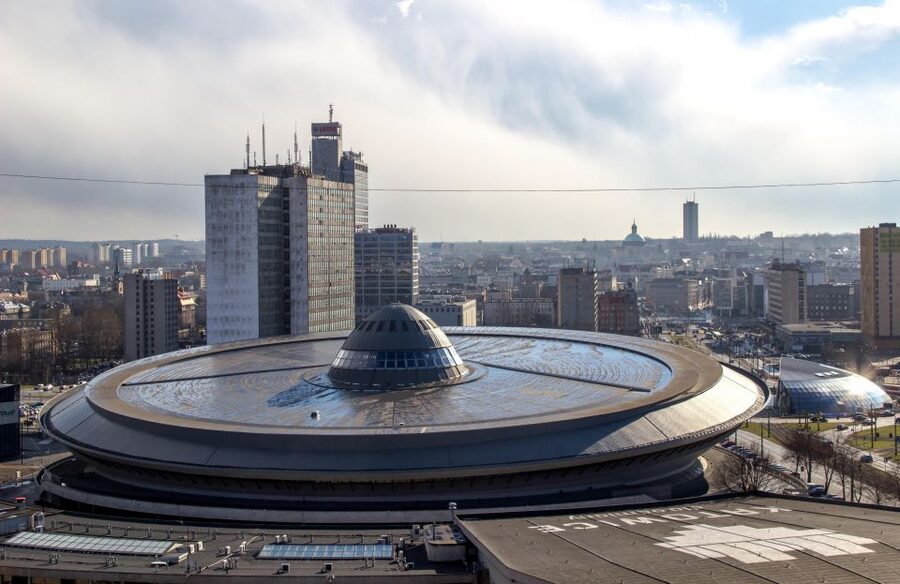
- Spodek is the striking finale: The flying-saucer-shaped arena gives the central walk a memorable ending.
- The 2-hour route stays in the city center: You see the Philharmonic, Plac Wolnosci, Market Square, Silesian Theatre, monuments, and Spodek.
- The 3-hour option adds coal-mining history: Walk through a former mine site and see the Warszawa II tower shaft.
- The 5-hour tour reaches Nikiszowiec: Two-way public transport tickets are included for this historic miners’ estate.
- Your guide sets the pace: This is a private tour, available in English, German, or Polish.
- The tour has a strong practical side: You receive suggestions for places to eat, drink, shop, and continue exploring.
Katowice told through coal, war, and culture
Katowice is not a postcard city built around one famous old quarter. Its appeal comes from the contrast between old streets, industrial remains, Soviet-era traces, and bold modern architecture.
That is why a guide adds real value here. A simple walk through the center can leave you wondering why the buildings look so different from one another. The tour gives you the connecting story: coal made the city wealthy, industry changed its size and character, and the twentieth century left visible marks on its public spaces.
The experience is private, so you can ask questions as you go. If the city’s industrial past interests you, ask for more detail at the former mine site. If you are mainly looking for orientation, your guide can keep the history moving and point out places to return to later.
The tour is offered with English, German, or Polish-speaking guides. The available information does not provide individual guide names, so your assigned guide will depend on the date and language you select.
More old town tours in Poland:
- Warsaw: Chopin Concert in the Old Town
★ 4.8 · 2,287 reviews - Warsaw: Old Town Highlights Walking Tour in English
★ 4.7 · 1,516 reviews - Old Town Krakow & Wawel Castle Walking Tour
★ 5.0 · 1,508 reviews
Starting at the Silesian Philharmonic
The meeting point is in front of the Silesian Philharmonic at Sokolska 2. Do not go inside the building. It is only the meeting place, and the staff there are not handling the tour.
The Philharmonic has been an important part of Silesian cultural life since 1945. Beginning here gives the tour an immediate sense of Katowice as more than an industrial center. Music, public culture, and civic life matter here too.
If your accommodation is in Katowice Old Town, pickup may be available. You must provide the full address when booking. If you do not provide it, or your accommodation is more than 1.5 kilometers from the meeting point, you meet the guide at the Philharmonic instead.
Plac Wolnosci and the Goldstein Palace
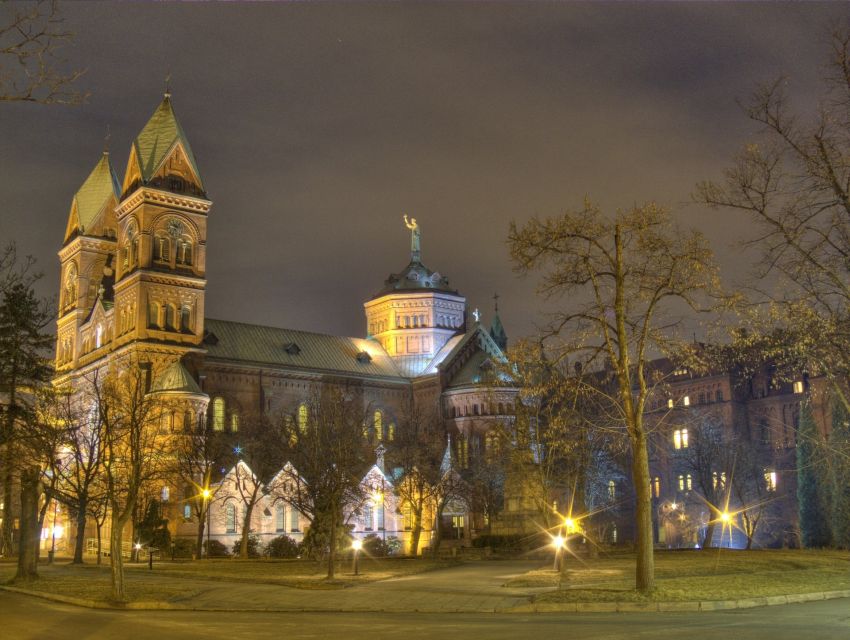
The first major stop is Plac Wolnosci, one of Katowice’s oldest squares. Its most eye-catching building is the Goldstein Palace, which gives the square a formal nineteenth-century character.
This is a useful early stop because it helps you picture Katowice before its modern cultural district took shape. The guide can place the square within the city’s German influence and industrial expansion, rather than treating the building as an isolated architectural curiosity.
You are still on foot at this stage, so comfortable shoes matter. The route is designed as a walking tour, and the amount of time spent at each stop can be adjusted more easily in a private group than on a large scheduled outing.
Three Maja Street and the Market Square
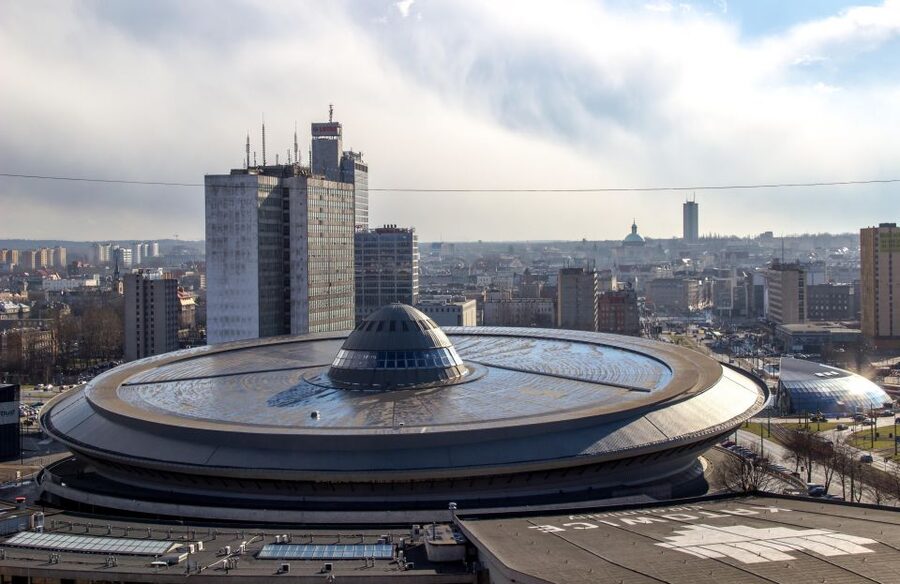
From Plac Wolnosci, the route follows 3 Maja Street toward the Market Square. This is one of the city’s best-known shopping streets and is described as one of the most expensive streets in Poland.
The street also helps explain Katowice’s changing fortunes. During the city’s industrial years, the central streets were lit with bright neon signs. Your guide uses the buildings and street plan to show how the city looked and felt during that period.
At Rynek, the Market Square, you see a mixture of historic and modern buildings. The point is not just to take photographs. You learn how the center changed over time and how Katowice has tried to give its central district a new public role.
This is also when the tour becomes useful for the rest of your stay. Your guide can suggest local restaurants, cafes, pubs, and shops. Since these recommendations are tailored to your interests, ask directly for a quiet coffee stop, a traditional meal, or an evening place to visit.
More walking tours in Poland:
- Creepy Krakow: 2-Hour City Walking Tour
★ 4.7 · 1,131 reviews - Gdańsk City Sights & History Guided Walking Tour in English
★ 4.8 · 876 reviews - Krakow: The Old Town Walking Tour
★ 4.8 · 794 reviews - Main Town Gdańsk Walking Tour
★ 5.0 · 644 reviews
The Silesian Theatre and the city’s public spaces
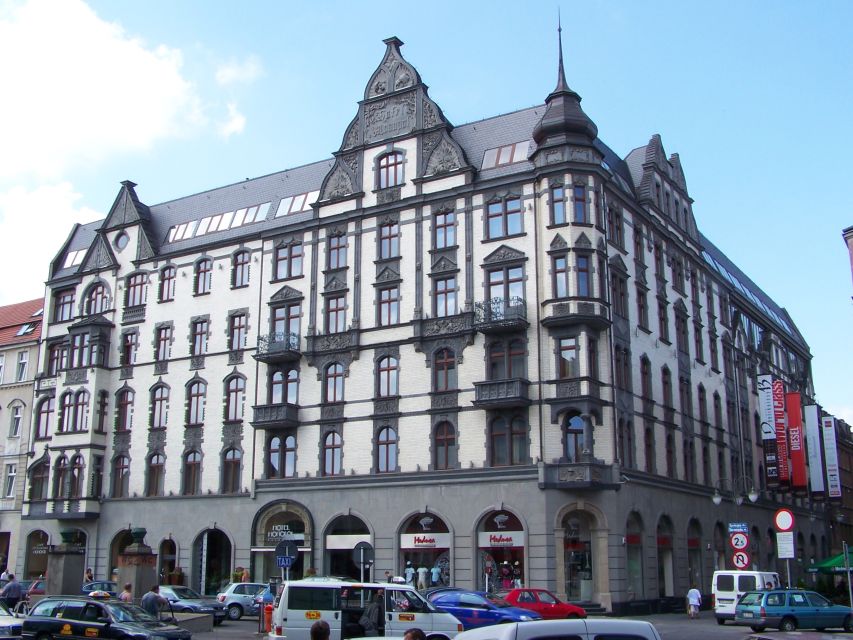
The Silesian Theatre is one of the central route’s important landmarks. Along with the Philharmonic, it shows the city’s long connection with music, drama, and public culture.
The theatre also sits within a wider story about civic identity. Katowice was shaped by different political powers and languages, and its public buildings reflect that complicated past. You may find this part of the walk especially useful if you want context rather than a quick list of dates.
The private format helps here. You can ask how the city’s German period, Polish identity, and industrial wealth affected its architecture and institutions. The guide is there to connect those subjects to what you are looking at, not simply to point out facades.
War memorials and the Silesian Insurgents’ Monument
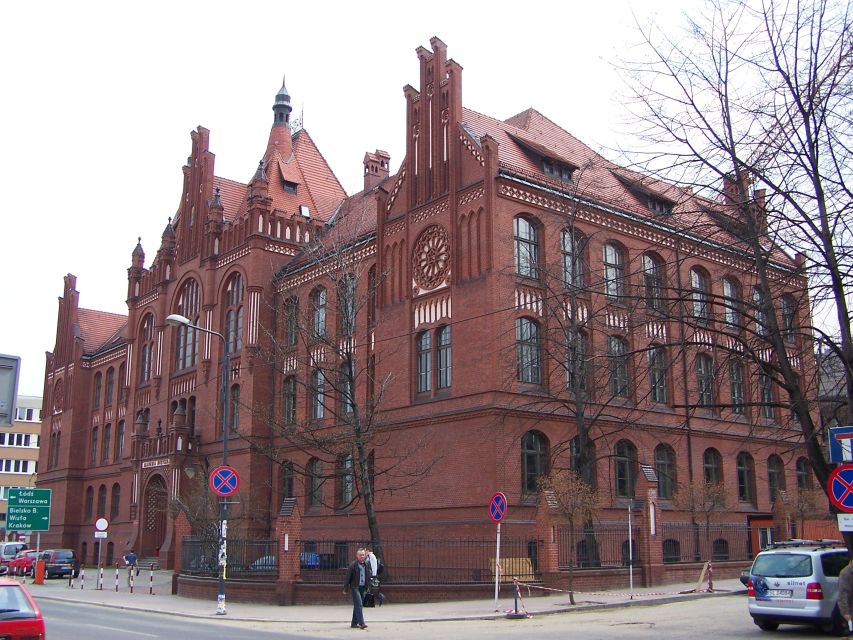
The route includes the WWII Monument to the Scouts of September and the Silesian Insurgents’ Monument. These stops bring the tour into the twentieth century, when Katowice and Silesia faced war, political change, and competing ideas about national identity.
The Scouts of September monument recalls the young people who fought at the beginning of WWII. The Silesian Insurgents’ Monument points to the region’s struggles and uprisings. Together, the monuments show that Silesian history is not only about mines and factories.
I would pay close attention here, even if memorials are not usually high on your list. They explain why local identity can feel distinct from a simple Polish national story. A guide can also give you the background needed to understand the monuments without reducing them to photo stops.
Spodek and the Katowice Cultural Zone
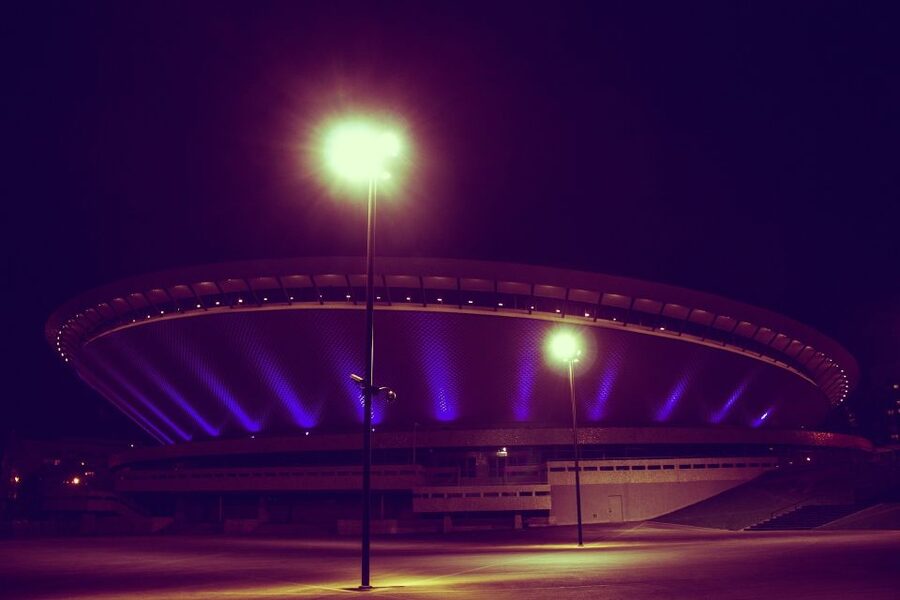
The central walk ends at Spodek, the city’s famous arena. Its unusual flying-saucer shape is one of Katowice’s most recognizable sights, and it makes a strong final stop for the 2-hour route.
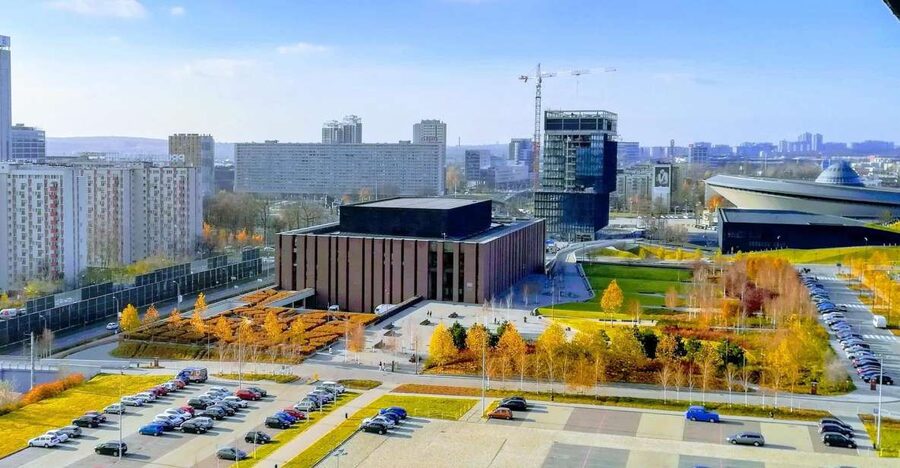
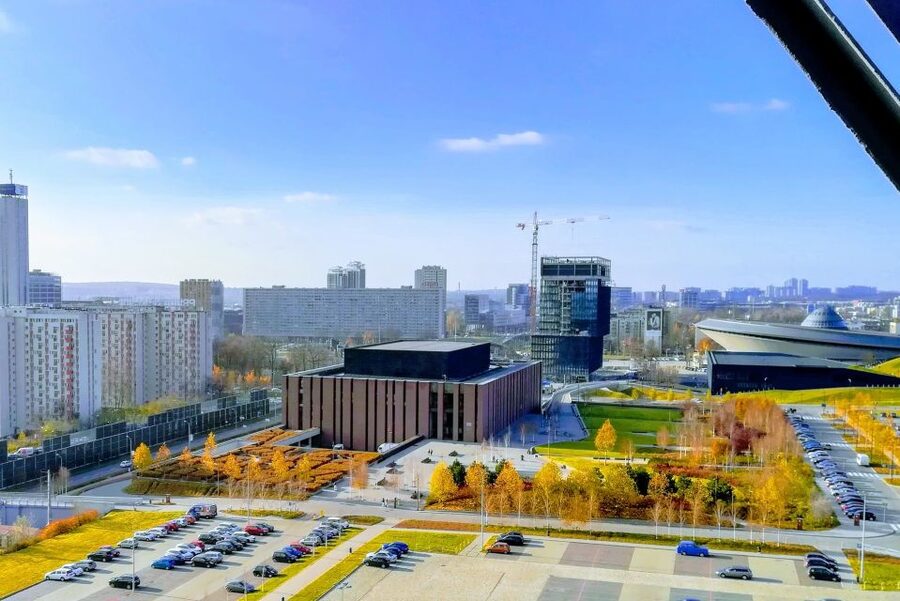
Spodek is part of the wider Katowice Cultural Zone, which also includes the International Congress Centre, the Polish National Radio Symphony Orchestra building, and the underground Silesian Museum. The 3-hour and 5-hour tours take you through this area.
The Cultural Zone is valuable because it shows how Katowice has reused and reimagined former industrial ground. Instead of seeing only old mining infrastructure, you see a city using cultural buildings to shape its next chapter.
Admission to the Silesian Museum is not included. The tour takes you through the area, but you should not assume that museum entry forms part of the experience. If you want to visit the museum inside, plan that separately.
The 3-hour option and the former coal mine
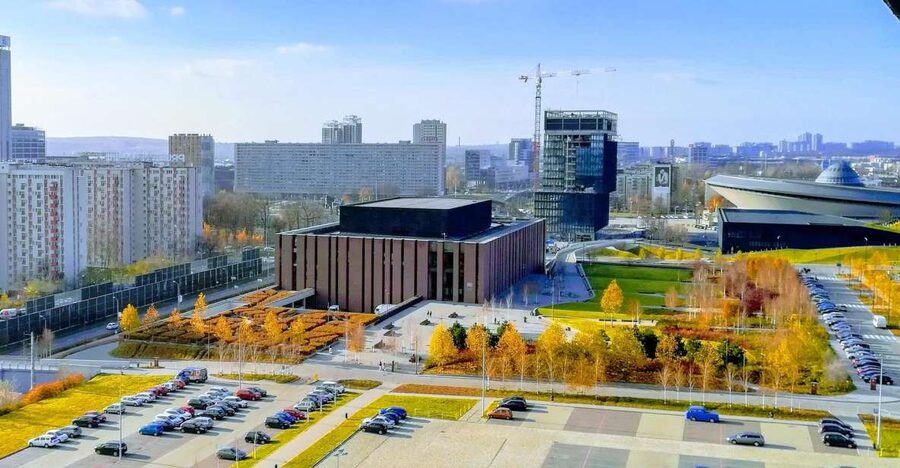
The 3-hour tour adds a former coal-mining site to the Old Town and Cultural Zone. This is the best middle choice if you want the city center plus a clear explanation of the industry that made Katowice important.
You see old mine infrastructure and the historic Warszawa II tower shaft. The guide explains the history of Silesian mining while you walk across the grounds. This gives the subject a physical setting, which is more useful than hearing about coal only in the center.
In summer, the tower shaft may offer an observation deck, depending on weather and opening conditions. An adult ticket costs 5 PLN, and it is not included. Treat this as an optional extra, not a guaranteed part of the route.
The 3-hour tour is likely the best value for many first-time visitors. You get more than a standard Old Town walk without committing to the longer transport trip to Nikiszowiec.
The 5-hour route to Nikiszowiec
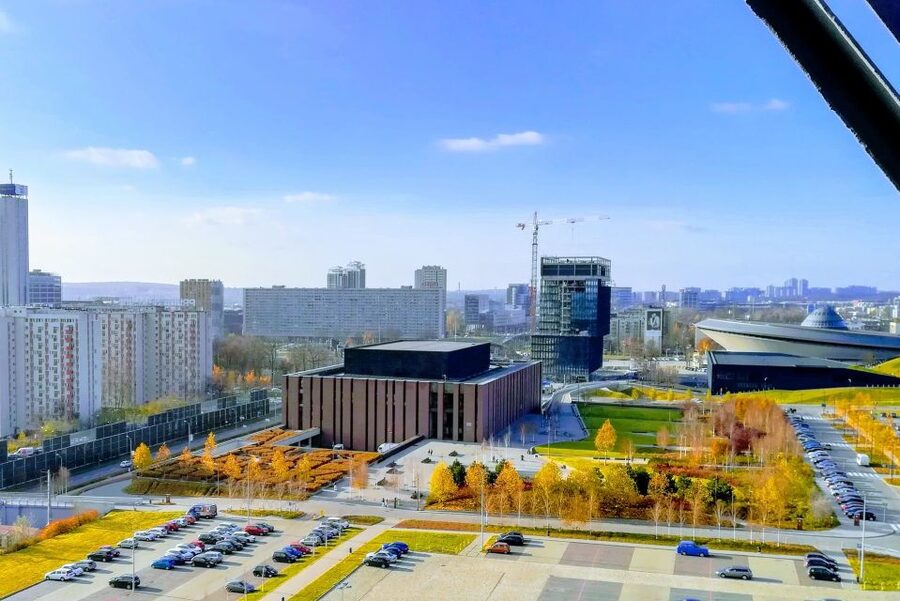
The 5-hour version includes the Old Town, Cultural Zone, former mine site, and Nikiszowiec. This is the fullest option and the one to choose if Katowice’s industrial story is your main reason for coming.
Nikiszowiec was built in the twentieth century as a working-class estate for miners’ families. Its red-brick buildings and planned layout give it a different feel from the city center. The district is recognized as a historical monument and forms part of the Industrial Monuments Route of Silesian Voivodeship.
The public transport connection is included, with two-way tickets from the city center. You need to allow for this change of setting and pace. The 5-hour tour is not simply a longer walk. It is a half-day route with transport and several separate areas.
Nikiszowiec is especially worthwhile if you want to see how mining affected everyday housing, not just machinery and shafts. The district gives a more human scale to the industrial story. You are looking at the place built for workers and their families, rather than only the companies and buildings that produced coal.
Choosing between two, three, and five hours
The 2-hour option works well if you have a short stay, a train connection, or limited walking time. It covers the central sights and gives you a useful first look at Katowice without trying to cover too much ground.
Choose the 3-hour tour if you want the best balance. You see the Old Town, Spodek, Cultural Zone, and former coal-mining site. It gives the city’s past and present equal weight.
Choose five hours if you want Nikiszowiec and have enough time for public transport. You will see more, but the pace is naturally more demanding. If you prefer slow stops, longer questions, and time for photographs, the private format helps, but this remains a substantial sightseeing session.
The listed price is $103 per person. For one person, that is a considerable cost for a walking tour. The value improves for a private group because the price buys a personal guide, flexible conversation, historical explanation, and, on the longest option, public transport tickets. It is less attractive if you only want a short orientation and are comfortable exploring central Katowice on your own.
Practical details that affect your day
The tour lasts two to five hours, depending on your choice, and starting times vary. Check availability before planning meals, museum visits, or train departures.
The activity is wheelchair accessible, but the 5-hour route includes public transport and attractions spread across different areas. If accessibility is important for your party, give your full accommodation details when booking and confirm the route arrangements in advance.
Free cancellation is available up to 24 hours before the tour for a full refund. You can also reserve now and pay later, which helps if your Katowice schedule is still changing.
Check your email the day before. Important meeting information may be sent then, and the meeting point is easy to misunderstand if you assume you should enter the Philharmonic.
Who will get the most from this tour?
I would choose this experience if you want history explained in place, rather than a quick list of buildings. It suits first-time visitors, architecture fans, people interested in mining, and anyone who wants a local introduction before exploring alone.
It is also a good choice for families or small groups with different interests. One person can ask about WWII, another about modern culture, and another about where to eat later. A private guide can usually adjust the emphasis better than a fixed group tour.
You may want a shorter option if your main aim is casual sightseeing. The 2-hour route has several major stops, but the central area does not include the former mine or Nikiszowiec. For those, you need the 3-hour or 5-hour version.
Should you book the Katowice Old Town Highlights tour?
Book it if you want to understand why Katowice looks the way it does. The strongest part is the connection between the Old Town, mining remains, memorials, cultural buildings, and Nikiszowiec.
My pick is the 3-hour tour for most visitors. It adds the former coal-mining site and Cultural Zone without requiring the longer trip. Choose five hours if Nikiszowiec is a priority, and choose two hours if you need a compact introduction.
The experience has a very high rating of 4.9 from 14 reviews, with particular praise for the guide’s strong grasp of Katowice’s past and the amount of information provided. That matches the tour’s main strength: it gives you a way to read the city, not just photograph it.
FAQ
Where does the tour start?
The meeting point is in front of the Silesian Philharmonic at Sokolska 2, 40-084 Katowice. Do not enter the building, since it is only being used as a meeting point.
Can I be picked up from my hotel?
Pickup is available from accommodations in Katowice Old Town. Provide your full address when booking. If the accommodation is more than 1.5 kilometers from the meeting point, you meet the guide at the Philharmonic.
What languages are available?
The tour is available with a live guide speaking English, German, or Polish.
Does every tour visit Nikiszowiec?
No. Nikiszowiec is included only in the 5-hour option. That option includes two-way public transport tickets from the city center.
Does the 2-hour tour include the former coal-mining site?
No. The former coal-mining site is included in the 3-hour and 5-hour tours, not the 2-hour tour.
Is entry to the Silesian Museum included?
No. The 3-hour and 5-hour tours pass through the Katowice Cultural Zone, which includes the underground Silesian Museum, but museum tickets are not included.
Is the observation deck at the Warszawa II tower shaft included?
No. In summer, the observation deck may open depending on weather conditions. An adult ticket costs 5 PLN and is paid separately.
Just added in Poland
- A unique walking tour of Jewish Warsaw — past and present★ 5.0 · 8 reviews
- Krakow: Zalipie Village Tour★ 4.6 · 8 reviews
- Tour from Warsaw: Wolf’s Lair, Hitler’s HQ Zones I and II★ 5.0 · 32 reviews
- Lodz: Jewish Heritage Private Tour★ 4.7 · 14 reviews
- Wolf’s Lair Private Day Trip from Warsaw★ 5.0 · 50 reviews
- Lodz Old Town Manufaktura Highlights Private Walking Tour★ 4.9 · 12 reviews
- Wolf’s Lair & Treblinka Tour in 1 day from Warsaw★ 5.0 · 37 reviews
- Lodz: Private City Walking Tour★ 4.2 · 10 reviews
Old Town Tours, compared.

Bike Tour of Old Town, Jewish Quarter and the Ghetto
Read the review →


Sightseeing EcoCruise around the Old Town of Gdansk
Read the review →
Browse the lists this tour appears in