
Reviewed · OLD TOWN TOURS
Katowice Old Town Walking Tour
Katowice is not a polished postcard city, and that is exactly the point. This private three-hour walk connects old tenements, churches, political buildings, monuments, and the famous Spodek arena into a clear story about Silesia, a region that changed hands and identities many times.
I like the focus on local culture rather than a checklist of monuments, and I like that the guide can explain both the city’s communist-era shopping centers and its present-day arts scene. The main drawback is the distance: 6.5 kilometers is a serious walk, and the $81.62 price is easier to justify for a private group than for one person traveling alone.
Key points about the Katowice walk
- A private English-language tour: Your group receives the guide’s full attention rather than joining a large crowd.
- 6.5 kilometers on foot: Wear supportive shoes and expect a steady city walk over roughly three hours.
- Silesian history in one route: The walk links Polish, German, Catholic, Protestant, industrial, and communist-era influences.
- Free-entry sights: The listed stops do not require admission tickets, keeping the cost focused on the guide and private format.
- A useful mix of old and new: You see historic churches and 19th-century tenements alongside Spodek and modern event spaces.
- A guide-led experience: Malwina is one guide associated with the tour, and her background in Silesian history and culture is a major part of the appeal.
Starting at the Silesian Theatre and Market Square
Meet at the Silesian Theatre, at Rynek 10, in the heart of Katowice. This is a practical starting point because the theater sits beside Market Square and close to public transportation.
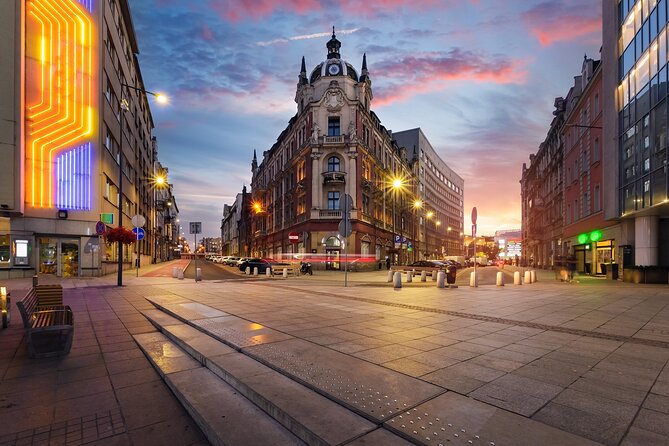
The opening section gives you the city’s basic framework. You see the Silesian Theatre, the Skarbek building, and Zenit, once a shopping dream for people living in communist Poland. These buildings help explain how Katowice moved from an industrial and administrative center into a modern regional capital.
The Market Square stop also includes some of the oldest buildings in the city. Do not expect a perfectly preserved medieval plaza like those in Krakow or Wroclaw. Katowice developed later and has a different look, with 19th-century urban buildings and layers from the industrial age.
That contrast is one of the walk’s strengths. Instead of pretending Katowice is something it is not, the route shows you a city shaped by industry, trade, political change, and postwar rebuilding.
The square is also described as a major place for eating, drinking, and nightlife in Silesia. That makes it useful for more than sightseeing. You can ask your guide about the area and return later if you want an evening meal or a drink close to the center.
More old town tours in Kraków:
- Old Town Krakow & Wawel Castle Walking Tour
★ 5.0 · 1,508 reviews - Krakow: Bike Tour of Old Town, Jewish Quarter and the Ghetto
★ 4.9 · 1,155 reviews - Krakow: The Old Town Walking Tour
★ 4.8 · 794 reviews
Church architecture and Silesian identity
The next stop is the Immaculate Conception Catholic Church, also known as Kosciol Mariacki. You have about ten minutes here, with time to study the exterior and enter to see works by leading Polish artists.
The church is important not only for its architecture but also for what it says about local religious life. Silesia has long had mixed cultural influences, and the route uses its churches to make that point visible rather than leaving it as an abstract history lesson.
You then reach the Academy of Music in Katowice for a short seven-minute stop. It is described as the most prestigious music academy in Poland. The stop is brief, but it adds another side of the city: Katowice is not only about coal, heavy industry, and political monuments. Music and performance are central to its modern cultural identity.
A good guide can make these quick stops useful by explaining how they fit the larger story. Malwina is praised for connecting Silesia’s changing borders and identities with the buildings you see. That approach should suit you if you prefer context over a string of dates and names.
The Silesian Parliament and local theater life
The route continues to the Silesian Parliament, the former seat of parliament for the autonomous Silesia Region. This is one of the most meaningful political stops on the walk because it points to Silesia’s special regional identity.
The region has not always fit neatly into a simple Polish story. Its history includes Polish and German influence, shifting borders, and a strong local sense of place. The parliament building gives your guide a natural setting for explaining those changes.
The stop lasts about ten minutes. That is long enough for an introduction, though not enough for an extensive architectural inspection. If you are especially interested in regional politics, ask questions while you are there. A private format gives you more room to shape the conversation than a standard group tour.
The route also includes a local theater known for its informal atmosphere. The supplied details do not give the theater’s name, so you should treat this as a cultural point along the walk rather than a formal theater visit. It helps show that Katowice’s arts life is not limited to grand institutions. Some of the city’s appeal comes from smaller, more relaxed venues and the people who use them.
The Cathedral of Christ the King
The Cathedral of Christ the King is another short stop, planned for about ten minutes. Its exterior has a Catholic appearance, while the interior is described as having a Protestant feel.
That unusual contrast supports one of the tour’s central ideas: Silesia’s spiritual and cultural identity has several sources. The building gives you a visual way to think about the relationship between Catholic traditions, Protestant influence, and the region’s changing population.
You should not expect a long interior visit or a full religious art tour. The schedule allows a brief look and an explanation. Still, the stop has value because it connects architecture to local history instead of treating the cathedral as a stand-alone photo stop.
The churches are also a practical reason to choose this walk over a purely outdoor city tour. You see how different buildings express the region’s past, and you get occasional breaks from walking in the open air. Admission is listed as free for the stop.
More walking tours in Kraków:
- Creepy Krakow: 2-Hour City Walking Tour
★ 4.7 · 1,131 reviews - Krakow: Kazimierz Jewish Quarter Walking Tour
★ 4.8 · 571 reviews - Kraków: Old Town & Wawel Castle Walking Tour in English
★ 4.8 · 532 reviews - Krakow: Evening Walking Tour with Spooky Stories
★ 4.7 · 500 reviews
From Miarka Square to Stawowa Street
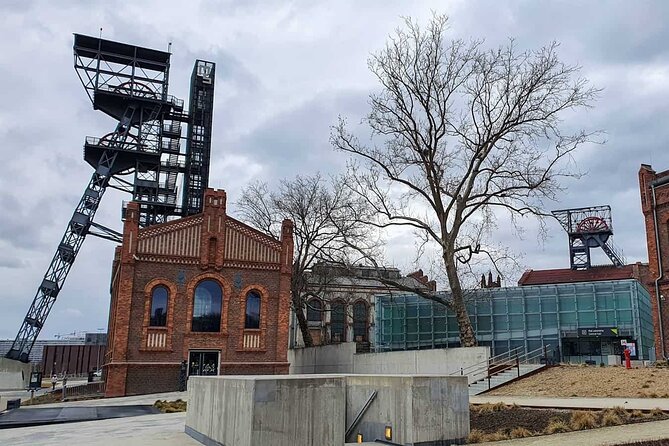
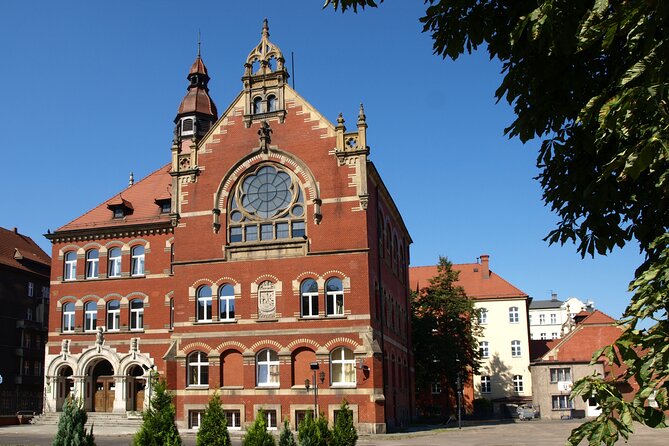
The longest section comes next. You pass through Miarka Square, Dworcowa Street, and 3 Maja Street before reaching Stawowa. This part takes about 30 minutes and gives you time to appreciate 19th-century tenements and see Katowice’s oldest high school.
For me, this is likely to be one of the most useful parts of the route. Grand monuments are easy to remember, but ordinary streets often explain a city better. The tenements show how Katowice grew as an urban center, while the school points to the institutions that helped shape local public life.
Stawowa adds a more everyday side of the city. The route moves through streets people use for shopping, meeting friends, and getting around. That makes the walk feel less like a museum visit and more like an introduction to present-day central Katowice.
You should keep the 6.5-kilometer total in mind here. The walk is not difficult in the sense of hiking or climbing, but it is long enough to tire you if you are not used to spending several hours on city streets. The operator asks for moderate physical fitness, and that is fair advice.
Silesian scouts, exhibitions, and public memory
Along the way, you pass a monument commemorating Silesian scouts who opposed the Nazis in 1939. This is a smaller historical point than the major Insurgents’ Monument, but it adds personal scale to the story.
Monuments to political movements can feel distant. A memorial connected to young scouts brings the experience closer to individual choices and local courage during wartime. The details provided do not specify a long stop here, so expect to see it as part of the route rather than receive a separate lecture lasting many minutes.
The walk also passes a venue used for art exhibitions, international meetups, and other events. Its name is not provided, but its role matters. Katowice is presented here as a city with an active public and cultural life, not simply a place to visit for industrial heritage.
This mix of memorials, theaters, schools, and event spaces is a good feature of the route. You see how history occupies ordinary streets, while contemporary culture keeps using the same central areas for new purposes.
The Silesian Insurgents’ Monument
The Silesian Insurgents’ Monument is one of the major highlights. It commemorates three Silesian uprisings and gives your guide another strong point for explaining the region’s complicated relationship with national borders and political power.
The monument is visually memorable, but its real value depends on explanation. Without context, you may understand that it honors uprisings but miss why those conflicts mattered to Silesia and Poland.
Plan on about ten minutes here. That is enough for photographs and a concise account of the events. Since this is a private tour, you can ask for more detail if the subject catches your interest, or move along if you prefer architecture and city life.
This is also where the tour’s theme becomes especially clear. Katowice is not presented as a city with one simple past. The route asks you to keep several identities in view at once: Polish, German, regional Silesian, religious, industrial, and modern urban.
Finishing at Spodek, Katowice’s famous symbol
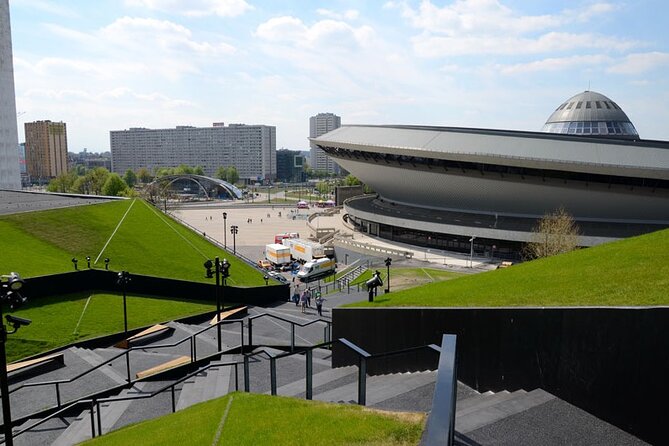
The final listed stop is Spodek, the flying-saucer-shaped arena that has become the symbol of Katowice. You spend about ten minutes here before returning to the meeting point.
Spodek gives the walk a strong ending because it looks so different from the churches, parliament building, and old tenements earlier in the day. It represents the city’s modern side and is easy to recognize in photographs.
The route does not include an event inside Spodek, so you should think of this as an exterior visit and city landmark stop. The tour ends back at the Silesian Theatre, making it simple to continue exploring from the center or use nearby public transportation.
Ending where you began is useful after a long walk. You do not need to arrange a ride back from an unfamiliar part of the city, and you can ask the guide for further suggestions before saying goodbye.
What the private format is worth
The listed price is $81.62 per person. That is not a budget-priced city walk, especially for a solo visitor. The value depends heavily on how many people are in your group and how much you want a tailored explanation of Katowice and Silesia.
For a couple or small group, the private format can make sense. You receive the guide’s attention, can ask questions about family history or regional politics, and do not need to keep pace with a large party. Group discounts may also improve the price per person.
For a solo visitor, the cost is harder to assess. The private setup means you receive all the attention, which can be excellent if you want a focused history lesson. But if you mainly want a quick orientation and a few photographs, a cheaper shared walk may offer better value.
The tour’s perfect rating comes from only five published ratings, so I would not treat that score as a guarantee. Still, the repeated strengths are clear: strong historical explanation, useful cultural context, and a guide who can make Silesia’s changing Polish and German connections understandable. Malwina is specifically praised for turning the walk into a learning experience rather than simply pointing out buildings.
Practical advice before you go
Book with the walking distance in mind. The route covers 6.5 kilometers over about three hours, so comfortable shoes matter more than smart clothing. There are no listed admission fees for the stops, but the price covers the private guided experience rather than an included meal or attraction ticket.
The tour is offered in English and uses a mobile ticket. Confirmation is sent within 48 hours, subject to availability. Service animals are allowed, and the route begins near public transportation at the Silesian Theatre.
Weather can affect the experience. The activity requires good weather, and a cancellation for that reason brings an offer of another date or a full refund. You can also cancel for a full refund up to 24 hours before the start time. Less than 24 hours before departure, refunds and changes are not accepted.
Who should book this Katowice tour
I would choose this walk if you want Katowice explained through its regional identity, not just its central sights. It suits history-minded visitors, architecture fans, and anyone trying to understand why Silesia feels distinct from other parts of Poland.
It is also a good choice if you prefer private guiding and expect to ask questions. The route gives you plenty to discuss, from communist-era commerce and church design to the Silesian uprisings and modern arts venues.
I would hesitate if you dislike long walks, want extensive time inside each church, or are watching every dollar. The 6.5-kilometer route moves through many stops, but several visits last only seven or ten minutes.
For a small group that wants a serious introduction to Katowice, I think the price can be fair. For a solo visitor on a tight budget, compare the cost against your interest in private attention. Book it when the story of Silesia matters as much to you as the sights themselves.
FAQ
Where does the Katowice Old Town Walking Tour start?
The tour starts at the Silesian Theatre, Rynek 10, 40-003 Katowice, Poland.
Where does the tour finish?
The activity ends back at the meeting point at the Silesian Theatre.
How long does the tour last?
The tour lasts approximately three hours.
How far do you walk?
You walk about 6.5 kilometers during the tour.
Is the tour private?
Yes. Only your group participates in the activity.
What language is the tour offered in?
The tour is offered in English.
Can I cancel for a full refund?
Yes. You can cancel at least 24 hours before the experience start time for a full refund. If poor weather or an insufficient minimum number of participants cancels the activity, you are offered another date or experience, or a full refund.
Just added in Kraków
- Wawel Castle, Old Town with St. Mary’s Church Guided Tour★ 5.0 · 3 reviews
- Wawel Castle, Old Town with St. Mary’s Church Guided Tour★ 5.0 · 5 reviews
- Wawel Castle, Cathedral, Old Town and St. Mary’s Basilica★ 4.8 · 13 reviews
- Wawel Castle, Cathedral, & Rynek Underground Tour with Lunch★ 4.5 · 10 reviews
- Wawel Castle & Cathedral Skip the Line Small Group Tour★ 5.0 · 3 reviews
- Wawel Castle and Cathedral Guided Tour★ 4.6 · 44 reviews
- Wawel Castle, Cathedral, Rynek Underground Tour with Lunch★ 5.0 · 3 reviews
- Wawel Castle and Cathedral Guided Tour★ 5.0 · 8 reviews
Old Town Tours, compared.
Bike Tour of Old Town, Jewish Quarter and the Ghetto
Read the review →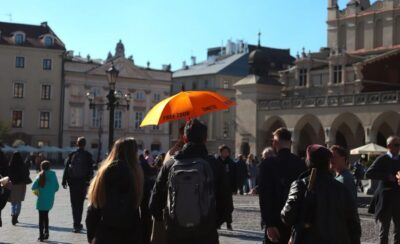


Sightseeing EcoCruise around the Old Town of Gdansk
Read the review →
Browse the lists this tour appears in