
Reviewed · OLD TOWN TOURS
Krakauer old town tour
Krakow’s Old Town is the rare European center where the royal route still feels like a route, not just a string of monuments. Over 150 minutes, you’ll walk from the medieval city gate to Wawel Hill, hearing about kings, scholars, dragons, and the city’s years as Poland’s capital. The preserved center is the main attraction, and the tour gives it a useful story.
I like the way the walk joins major sights instead of treating them as isolated photo stops. I also like the emphasis on places such as Collegium Maius, where you can connect Krakow’s streets with the city’s university and Copernicus. The main consideration is pace: one German-speaking booking noted that parts felt rushed, so anyone who wants long interior visits or quiet time at every stop may find 150 minutes tight.
Key points to know before you book
- The Royal Route links the city gate to Wawel Hill, giving the tour a clear sense of direction.
- The Main Market and Cloth Hall provide Krakow’s grandest urban setting and a good introduction to the city.
- St. Mary’s Basilica comes with the famous trumpeter tradition and a story tied to Krakow’s medieval defenses.
- Collegium Maius connects the Old Town with Krakow’s university life and the era of Copernicus.
- Wawel Castle courtyard and the dragon bring royal legend and Polish history together at the walk’s end.
- German is the tour language, and guide Monika has been praised for clear speech, humor, and strong command of the subject.
Starting between the Barbican and St. Florian’s Gate
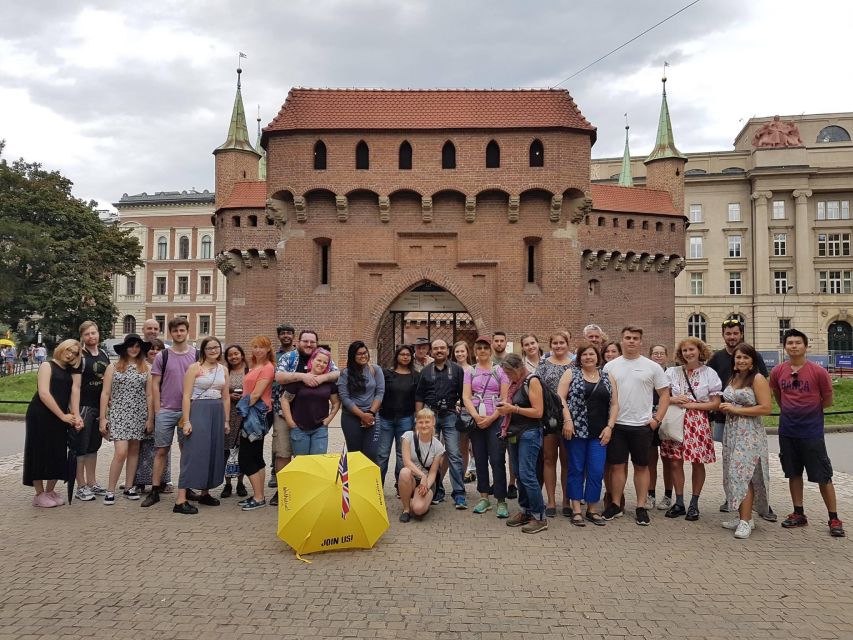
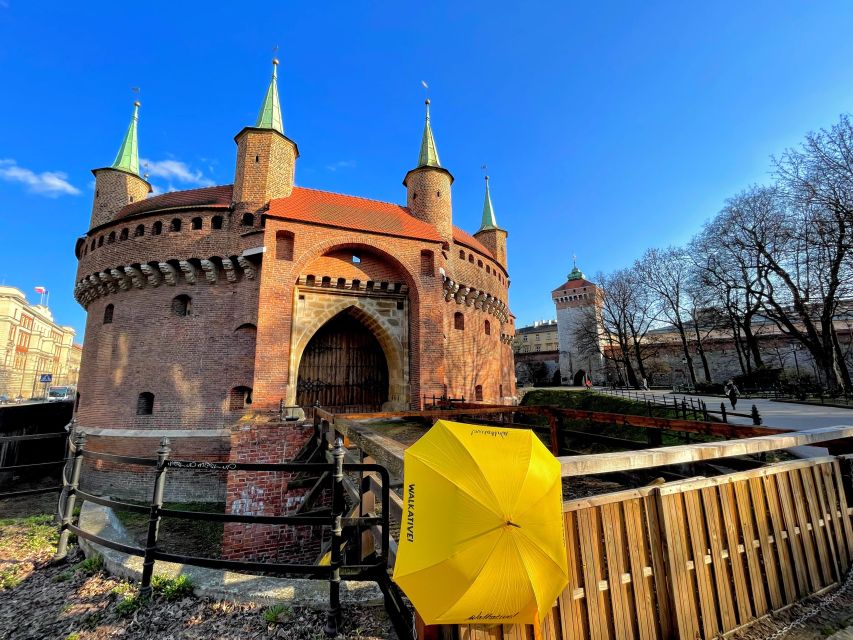
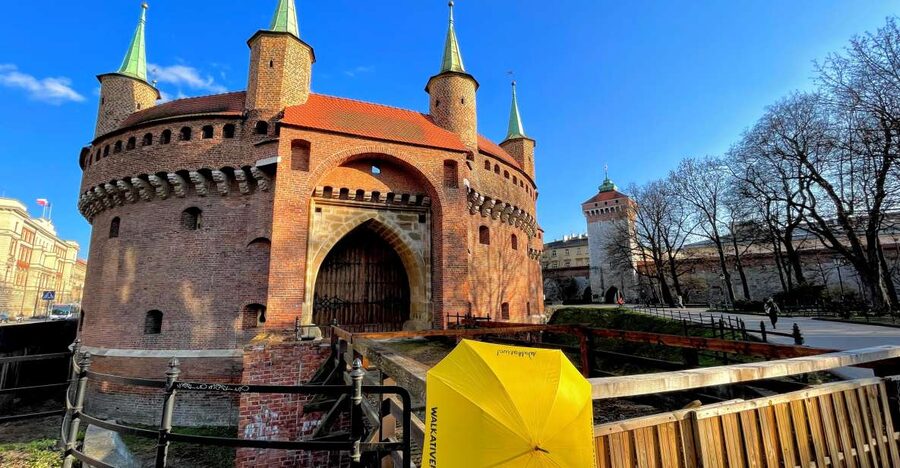
The meeting point is a small area between the Barbican and St. Florian’s Gate, the medieval entrance to Krakow. This is a sensible place to begin because you are already looking at two pieces of the city’s defensive system before the guide says a word.
The Barbican is a broad, fortified outpost built to protect the gate. St. Florian’s Gate then carried people into the walled city. From here, the route leads toward the center along the historic Royal Route, the path once used by kings, royal visitors, and ceremonial processions.
You should arrive with comfortable shoes. The walk lasts two and a half hours, and the Old Town’s value comes from moving through it on foot rather than seeing it from a vehicle. There is no hotel pickup or return transport, so plan to reach the starting point on your own and arrange your next stop after the walk.
The tour operates in any weather. If rain or cold sets in, the group uses shelter, but you should still dress for an outdoor city walk. Krakow weather can make the same route feel very different in December compared with summer.
More old town tours in Kraków:
- Old Town Krakow & Wawel Castle Walking Tour
★ 5.0 · 1,508 reviews - Krakow: Bike Tour of Old Town, Jewish Quarter and the Ghetto
★ 4.9 · 1,155 reviews - Krakow: The Old Town Walking Tour
★ 4.8 · 794 reviews
The Royal Route and Krakow’s medieval center
The Royal Route gives the experience its backbone. Rather than wandering without a clear plan, you follow the same general direction that once connected the city entrance with royal Wawel.
This is one of the strongest features of the walk. You can see how Krakow was organized: defenses at the edge, grand civic space at the center, university buildings nearby, and the royal complex above the river. The guide’s job is to connect those parts so the city feels like one place with a long, understandable story.
Krakow’s Old Town survived the Second World War with much of its historic center intact. That matters when you walk these streets. The buildings, street plan, churches, and public spaces do not simply recreate a medieval city. They form an old urban center that still feels continuous.
The area was included among the first UNESCO World Heritage sites, and both the Old Town and Wawel Castle belong to that protected setting. UNESCO status alone does not make a walk worthwhile, but here it points to something you can see directly: the old center has a strong overall character, not just a few famous buildings.
Main Market Square and the Cloth Hall
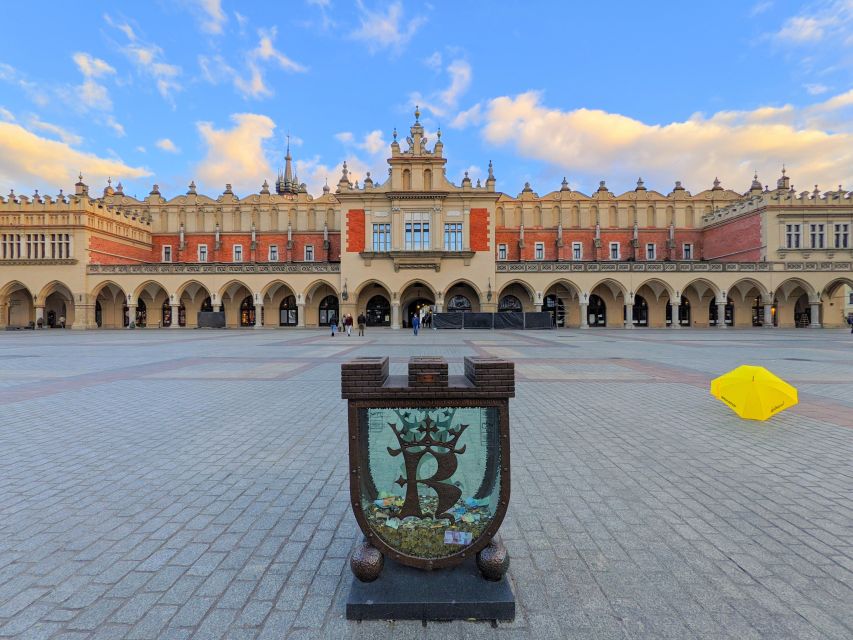
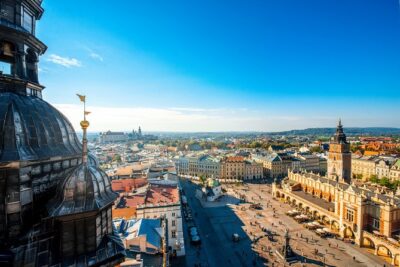
The Main Market is the visual center of Krakow. It is large, open, and lined with important buildings, making it a good place to pause and get your bearings.
The Cloth Hall occupies the middle of the square. Its name recalls the days when merchants sold cloth and other goods here, while its long form still helps explain how trade shaped the city. The square was not only a ceremonial space. It was a working market and a meeting point for commerce, politics, religion, and public life.
I like this stop because it puts scale to Krakow’s former importance. You are not looking at a small provincial town. You are standing in the center of a city that once served as the capital of a large European country.
The square can be busy, and that is both part of its appeal and a practical drawback. Your guide may need to speak over street noise and foot traffic. Keep close enough to hear the German commentary, especially when the group moves between stops.
St. Mary’s Basilica and the trumpeter’s call
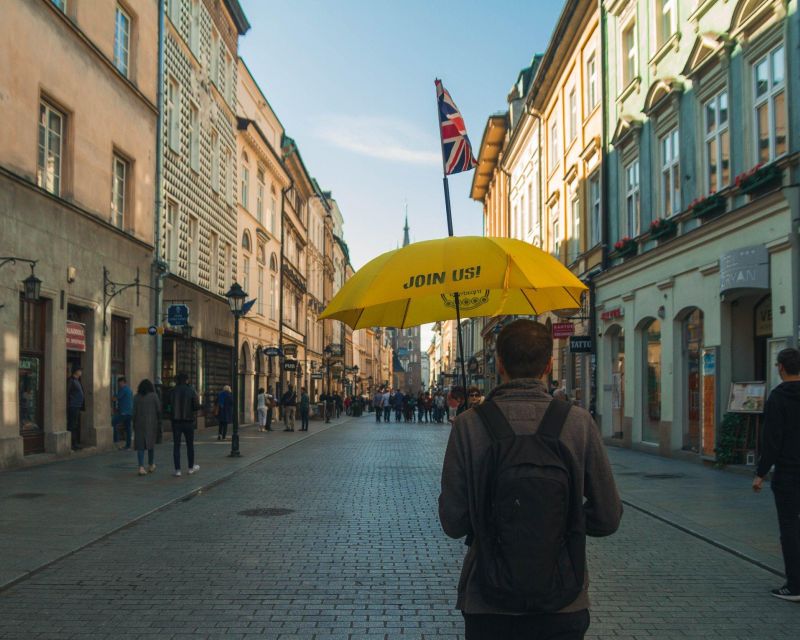
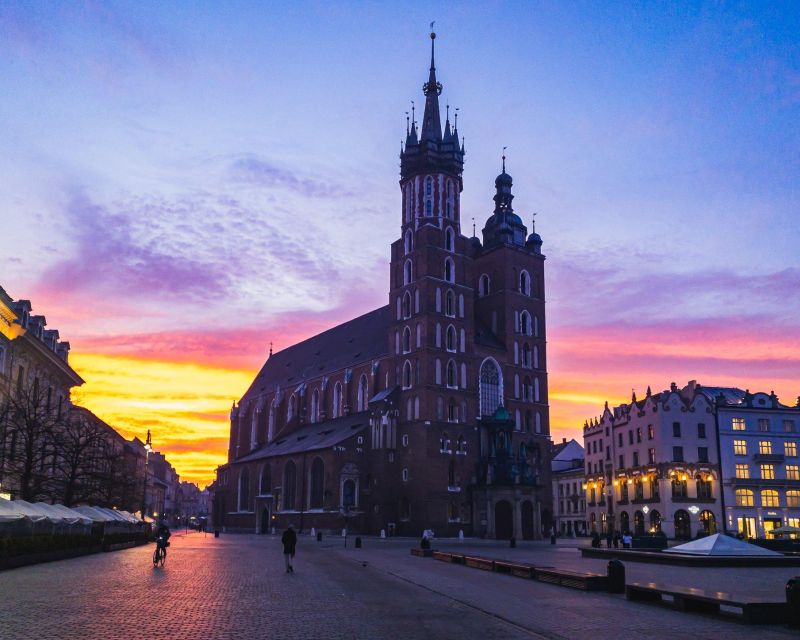
St. Mary’s Basilica faces the Main Market with two towers of different heights. That uneven profile is one of the easiest ways to recognize Krakow’s center.
The church is especially known for its trumpeter. The hourly signal, called the Hejnal, stops suddenly. The tradition is tied to a warning about an attack, though the legend has taken on a life of its own over the centuries.
This is a good example of what the tour does best. You are not only shown a church and told its name. You are given a story that explains why the sound matters to Krakow and why it remains part of the city’s daily rhythm.
The stop is also useful for understanding the balance between religious and civic life in the Old Town. The basilica faces the main public square, and its presence has shaped the city’s identity for generations.
Do not expect a long private visit inside every church or monument. The experience is mainly a guided walk, and the value comes from the guide’s explanations as you move through the city. If you want extended time for interior details, you may need to return independently.
Same base, a different kind of day:
- From Krakow: Auschwitz-Birkenau Guided Tour & Hotel Pickup
★ 4.5 · 33,358 reviews - From Krakow: Auschwitz-Birkenau Guided Tour & Hotel Pickup
★ 4.5 · 29,340 reviews - Krakow: Auschwitz Guided Tour with Optional Hotel Pickup
★ 4.5 · 15,280 reviews - Krakow–Zakopane: Cable Car, Chocholow Baths, Cheese & Vodka
★ 5.0 · 10,720 reviews
Collegium Maius and the age of scholars
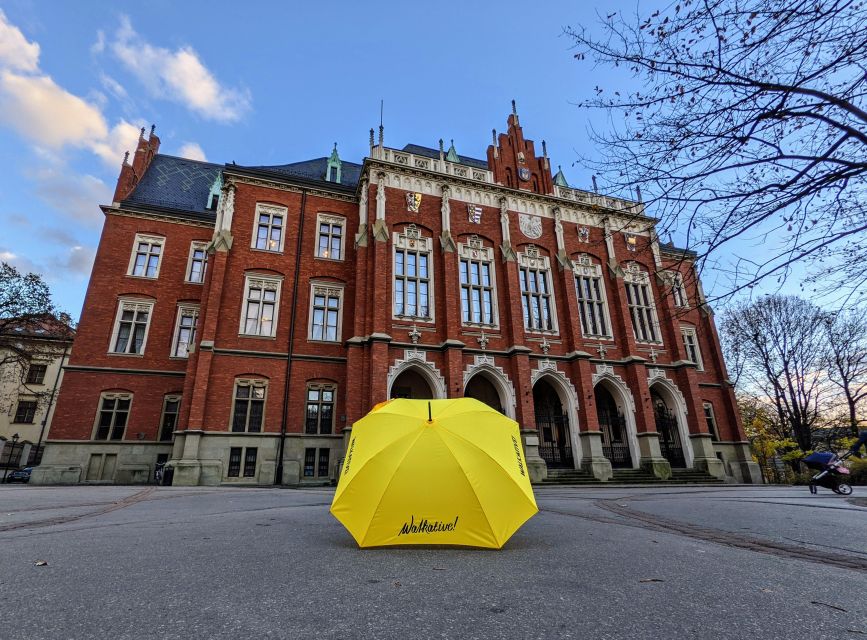
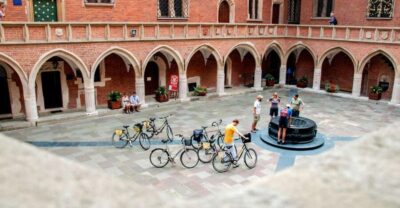
Collegium Maius is one of the most interesting stops because it shifts the focus from kings and churches to learning. It is the oldest building at the oldest university in Central and Eastern Europe, according to the tour information, and it helps explain why Krakow became a center for scholars as well as rulers.
The building connects to the city’s 15th and 16th century high point, when artists, scholars, and important figures from across Europe passed through Krakow. Copernicus studied in this university environment, and the guide uses that connection to place the famous astronomer within the actual streets and institutions of the city.
I especially value this part of the route because it prevents Krakow from becoming only a royal postcard. A city’s character also comes from its schools, students, teachers, and arguments. Collegium Maius gives you that side of Krakow in a clear, physical way.
A visit to Collegium Maius is included, but the available information does not promise a detailed museum tour or a long look through every room. Treat it as an important stop within a walking experience, not as a substitute for a separate university visit.
The Archbishop’s Palace and the papal window
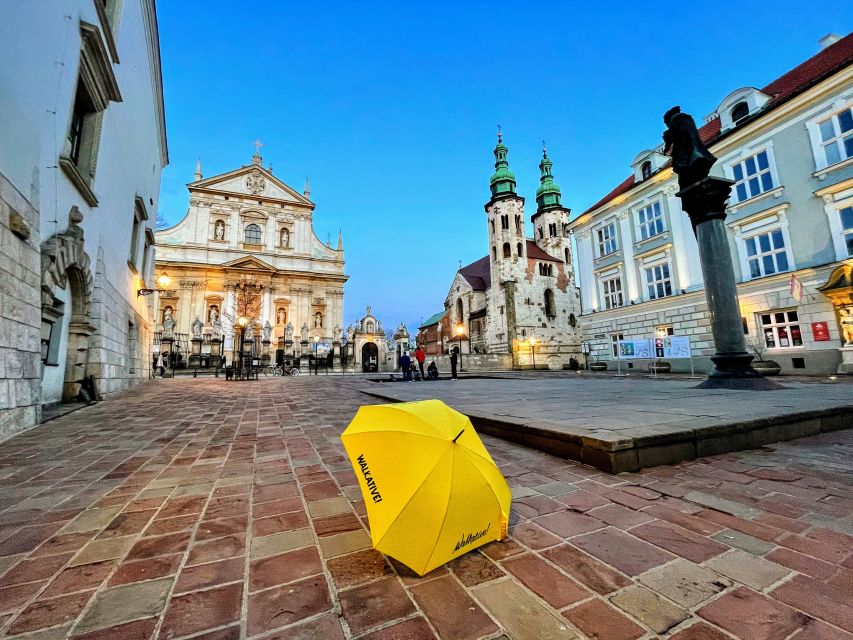
The route continues to the Archbishop’s Palace, known for its connection with Pope John Paul II. The papal window became a place where he appeared to people gathered outside during his time in Krakow.
This stop brings the city’s religious past into the modern era. Krakow is not only a medieval and royal center. It also played an important role in 20th century Polish Catholic life, and the palace helps make that link visible.
The guide can add meaning here by explaining why a window became so memorable. It is an ordinary architectural feature made important by public gatherings and personal memory. You may find this more moving if you already know something about John Paul II, but the location still offers a useful look at the connection between Krakow and the Catholic Church.
Wawel Hill, the Cathedral, and the castle courtyard
Wawel Hill is the high point of the walk, both physically and historically. The cathedral and castle complex served as the center of Polish royal power when Krakow was the capital.
The route includes the cathedral area and the castle courtyard. You will hear about the kings associated with Wawel and see the setting where royal ceremonies, religious life, and national memory meet.
The courtyard is a particularly good place for a guide-led explanation. You can take in the architecture while learning how the complex developed over time. Without context, Wawel can feel like a collection of grand walls and towers. With a clear story, the hill becomes the former seat of government and a symbol of Poland.
The castle is included in the experience, but the information provided specifies the castle courtyard rather than a full tour of the state rooms. Keep that distinction in mind when comparing this walk with a dedicated Wawel Castle entry ticket.
Wawel also rewards a little patience. The route gives you an introduction, but you may want to return later if you prefer to study the cathedral, castle interiors, or collections at your own speed.
The Wawel dragon and Krakow’s lighter side
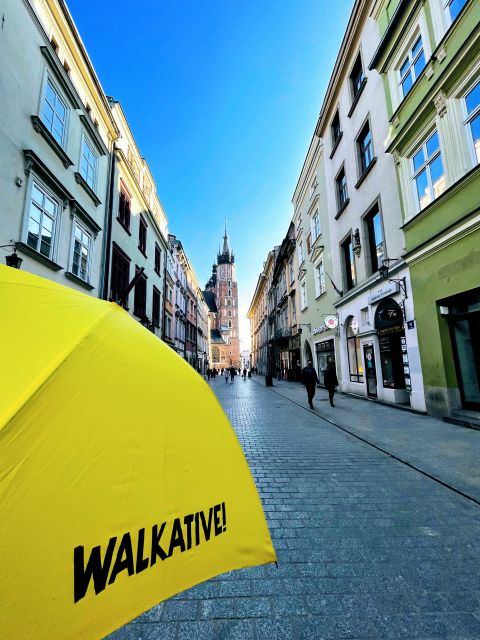
Near Wawel Hill, the route reaches the Wawel dragon. This legend is one of the city’s best-known stories, and it gives the walk a playful finish after the formal subjects of kings, churches, and university life.
The dragon also shows why local legends matter. They make a city easier to remember, especially when they are tied to a real place. You may come away remembering the royal complex not only as a political center but also as the home of a creature from Krakow’s oldest tales.
The tour promises more than these named stops, so the exact order and time spent at each point may vary. The guide builds a structured story through the Old Town, then uses Wawel and the dragon to close the arc from medieval defenses to royal power and popular legend.
What the German-language guiding is like
This is a German-language tour, not a multilingual walk. That is important when you compare options in Krakow. You should be comfortable following spoken German for two and a half hours.
Guide Monika received particular praise for clear German, humor, and confident presentation. That combination matters on a city walk. Facts alone can make a long route feel heavy, while humor helps keep the history moving.
The strongest feedback centers on the tour being informative and entertaining. At the same time, one booking described parts as fast or hurried, partly because another group was already waiting. I would read that as a useful warning for anyone who likes slow photography stops or long questions at every monument.
Stay near the guide, ask questions when the group pauses, and save extra photographs for the larger stops. If you need more time at St. Mary’s, Collegium Maius, or Wawel, plan to revisit those places after the walk.
Is $26 good value for 150 minutes?
At $26 per person, the price is reasonable for a focused introduction to Krakow’s central sights. You are paying for a live guide, a planned route, and historical context across the Old Town, university quarter, and Wawel complex.
The value is strongest if this is your first substantial look at Krakow. In one walk, you cover the medieval walls, Barbican, Main Market, Cloth Hall, St. Mary’s Basilica, Collegium Maius, Archbishop’s Palace, Wawel Cathedral, castle courtyard, and dragon.
The activity is also described as a Pay What You Wish walk, while a listed price of $26 is provided. Because those details do not fully match, check the current booking page before you confirm what payment is expected and when.
There is no snack, hotel pickup, or return transport. That keeps the focus on the walk itself and means you should budget separately for food and your onward plans. Free cancellation up to 24 hours before the start and the option to reserve now and pay later add flexibility, especially if your Krakow schedule may change.
Who should choose this Krakow walk?
I would choose this tour if you want a clear first orientation to Krakow and prefer stories over a checklist of photo stops. It suits anyone interested in Polish kings, medieval city planning, religious landmarks, university history, and local legend.
It is also a good fit for German-speaking visitors who want a live guide rather than an audio guide. The route covers the major center without requiring separate transport, and the accessible format makes it suitable for people looking for a wheelchair-accessible experience.
You may want a different plan if your priority is long time inside Wawel Castle, detailed art commentary, or a slow photography walk. The schedule is full, and the pace can pick up.
Should you book it?
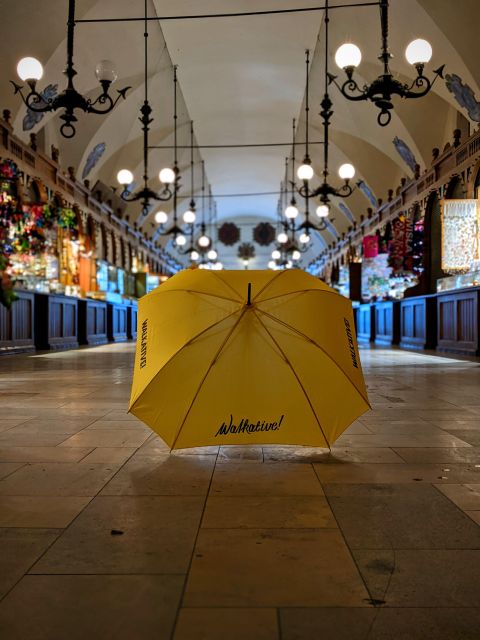
Book this Walkative Tours experience if you want Krakow’s Old Town to make sense quickly. The route brings together the city gate, Main Market, university, church, royal hill, and dragon in one 150-minute story, with a German-speaking guide such as Monika adding humor and context.
Skip it only if you already know the center well or want a specialist tour with extended interior visits. For a first visit, the price offers a practical introduction, and you can return afterward to spend more time inside the places that catch your interest.
FAQ
Where does the Krakow Old Town tour meet?
The meeting point is a small place between the Barbican and St. Florian’s Gate, the medieval entrance to the city.
How long does the tour last?
The tour lasts 150 minutes, or two and a half hours.
What language is the tour in?
The live tour guide speaks German. The available information identifies German as the tour language.
Is the tour wheelchair accessible?
Yes, the activity is listed as wheelchair accessible.
What happens if it rains or gets cold?
The tour operates in any weather. If rain or cold becomes a problem, the group uses a roof or other shelter.
Does the tour include Wawel Castle and Collegium Maius?
The experience includes a visit to Collegium Maius and the Wawel King’s Palace. At Wawel, the route specifically includes the hill, cathedral, and castle courtyard.
Just added in Kraków
- From Krakow: Guided Tour of Zalipie★ 4.6 · 30 reviews
- From Krakow: Zalipie Village Day-Tour★ 4.9 · 74 reviews
- Krakow: Zalipie Village Tour★ 4.6 · 8 reviews
- ZALIPIE – painted village, unique PRIVATE tour from Krakow★ 5.0 · 20 reviews
- Polish Folk Show and Dinner From Krakow★ 4.5 · 80 reviews
- From Kraków: Slovakia Treetop Walk Bachledka and Zakopane★ 5.0 · 73 reviews
- From Krakow: The Black Madonna of Czestochowa & John Paul II Family Home★ 5.0 · 28 reviews
- Energylandia Theme Park Full Day with optional Krakow Pickup★ 5.0 · 38 reviews
Old Town Tours, compared.
Bike Tour of Old Town, Jewish Quarter and the Ghetto
Read the review →

Sightseeing EcoCruise around the Old Town of Gdansk
Read the review →
Browse the lists this tour appears in