
Reviewed · NOWA HUTA & COMMUNISM TOURS
Krakow: Nowa Huta Guided Tour in Vintage Car
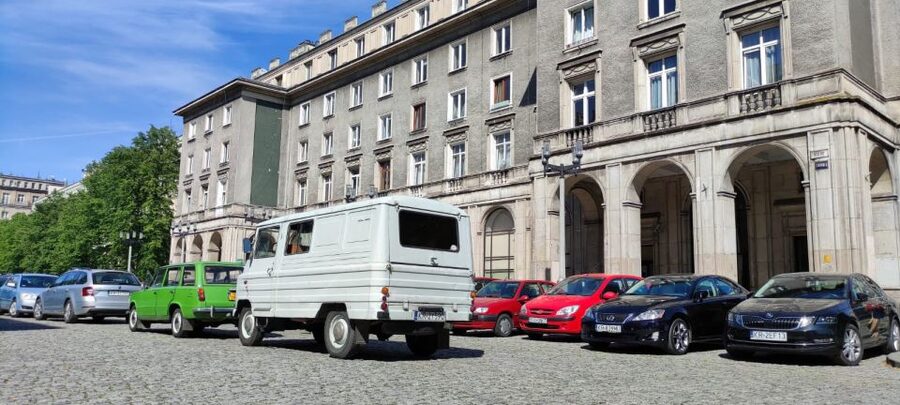
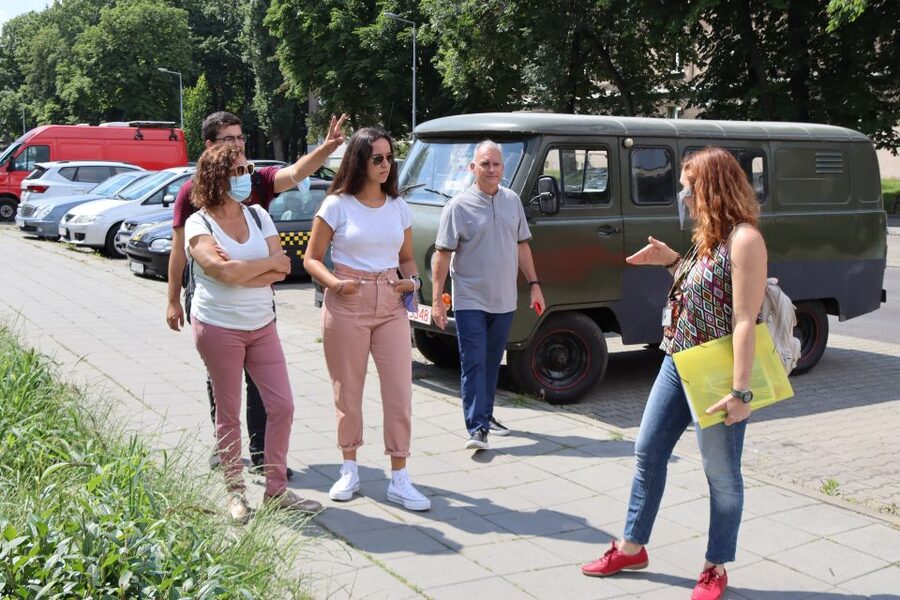
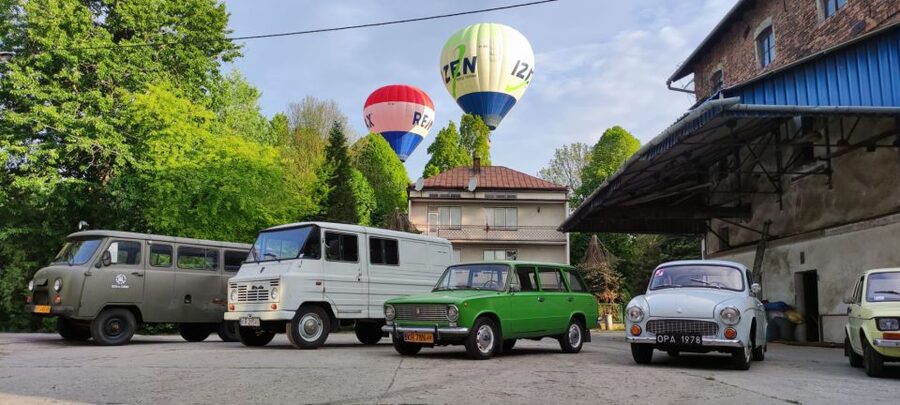
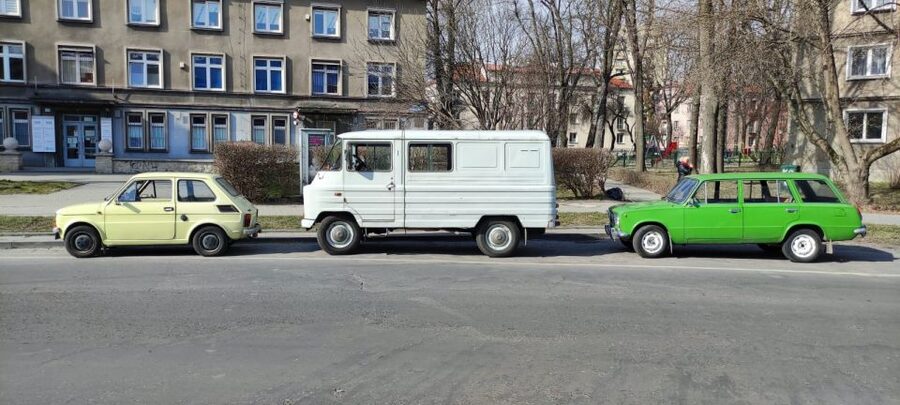
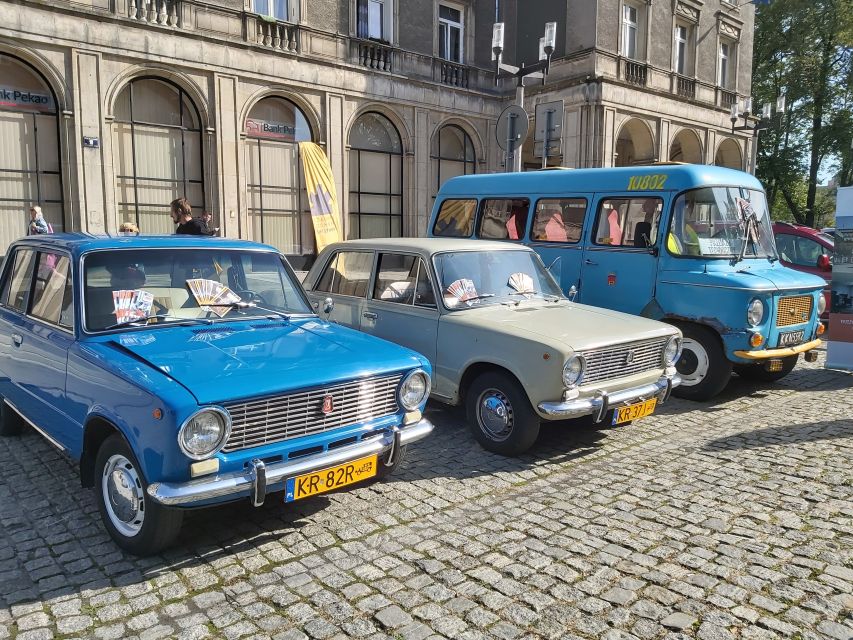
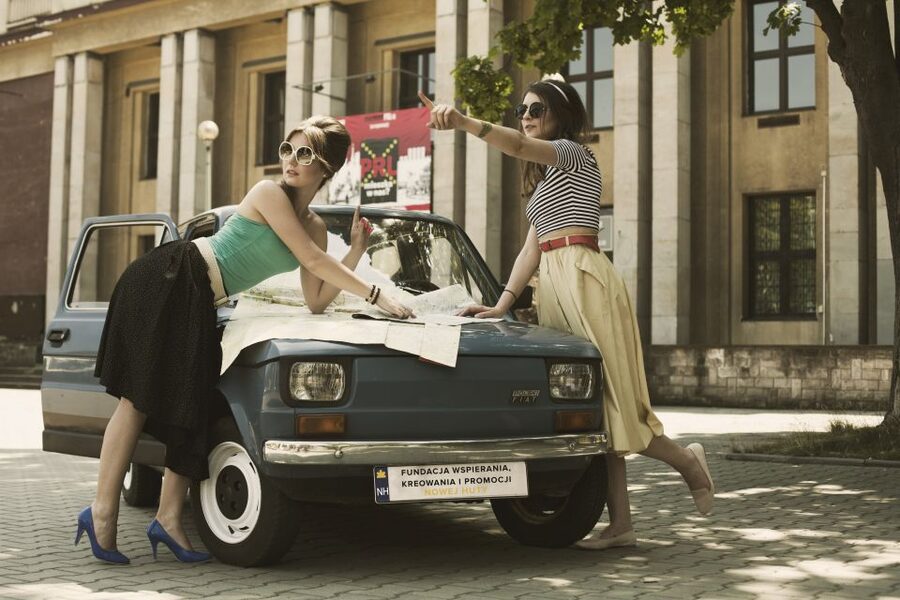
Nowa Huta was not an old Krakow district that slowly grew. It was built as a planned industrial city around a huge steelworks, with broad avenues, grand blocks, workers’ housing, and a political message on every corner. Seeing it from a green Lada, Polski Fiat 126, Nysa, Żuk, or UAZ van makes the setting feel wonderfully direct.
I like two things especially: the guide-led explanation turns plain-looking streets into readable history, and the optional steelworks offices and underground shelter give you places you could not understand from the outside. Guides such as Mateusz bring strong local knowledge and plenty of old photographs. The main drawback is the vintage car itself: space is tight, comfort varies, and one Lada had no working seatbelts, so ask about the vehicle before booking.
Key points to know before you book
- Nowa Huta is a planned communist city: Central Square, Roses Avenue, housing blocks, and monumental streets make the political design visible.
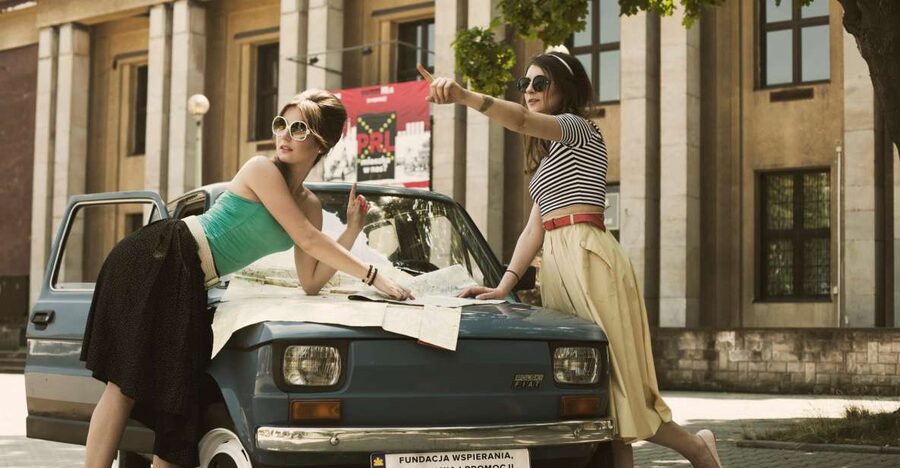
- The car is part of the lesson: A Polski Fiat 126 or old Lada is fun, eye-catching, and authentic, but not modern or spacious.
- The longer tour is the better history option: It adds either the former steelworks director’s offices or a Cold War bomb shelter.
- Local guides make the difference: Mateusz, also called Matthew by some English-speaking visitors, is praised for his energy, clear English, and personal connection to the area.
- The first church tells an important story: Our Lady Queen of Poland shows how residents pushed back against the officially atheist system.
- Lunch is an optional extra: The Polish meal option can include pierogi at a local-style restaurant, but food is not part of the standard tour.
Why Nowa Huta is worth leaving central Krakow for
Most Krakow sightseeing follows a familiar path through the Old Town, Wawel, and Kazimierz. Nowa Huta gives you a different Poland, one shaped after the Second World War by Soviet planning, industrial ambition, and communist control.
The district was created around the steelworks, known in Polish as Huta im. Lenina during the communist period. The factory needed workers, and the workers needed homes, shops, schools, public buildings, and transport. The result was an entire city built with a clear purpose rather than a medieval town that grew by accident.
That purpose is visible in the scale of the streets. Central Square, or Plac Centralny, was designed to feel important. The avenues are broad, the buildings are formal, and the early Socialist Realist architecture uses symmetry and heavy decoration to suggest order and power.
Your guide helps you read the details. Without that context, Nowa Huta can look like a large residential district with wide roads. With the history explained, the layout becomes a political document. You begin to see where the state wanted people to gather, how housing was allocated, and why certain buildings were given such grand treatment.
Other communist-era tours around Kraków:
- Legendary Private Nowa Huta Communism Tour with Crazy Guides
★ 5.0 · 262 reviews - Nowa Huta: Steelworks Administration Buildings/Shelters Tour
★ 4.9 · 160 reviews - Krakow: Private Nowa Huta Adventure Tour in Communist Cars
★ 4.9 · 114 reviews
Starting the ride in a communist-era car
Pickup is available from Krakow accommodation with the private option, though the historic center has vehicle restrictions. In that case, you may be asked to meet at a nearby point such as Plac Matejki, the Mikołaja Zyblikiewicza area, or Dajwór Street if you are staying in Kazimierz. You can also meet directly in Nowa Huta.
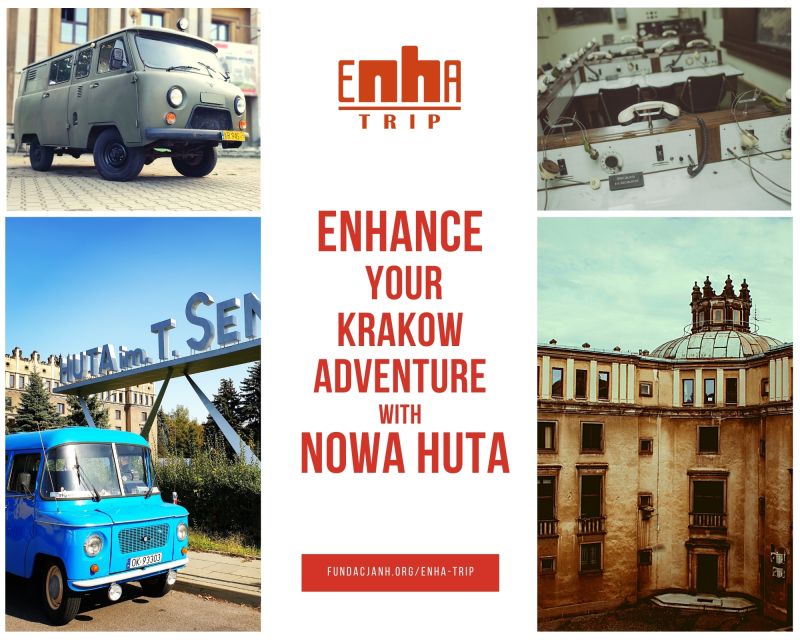
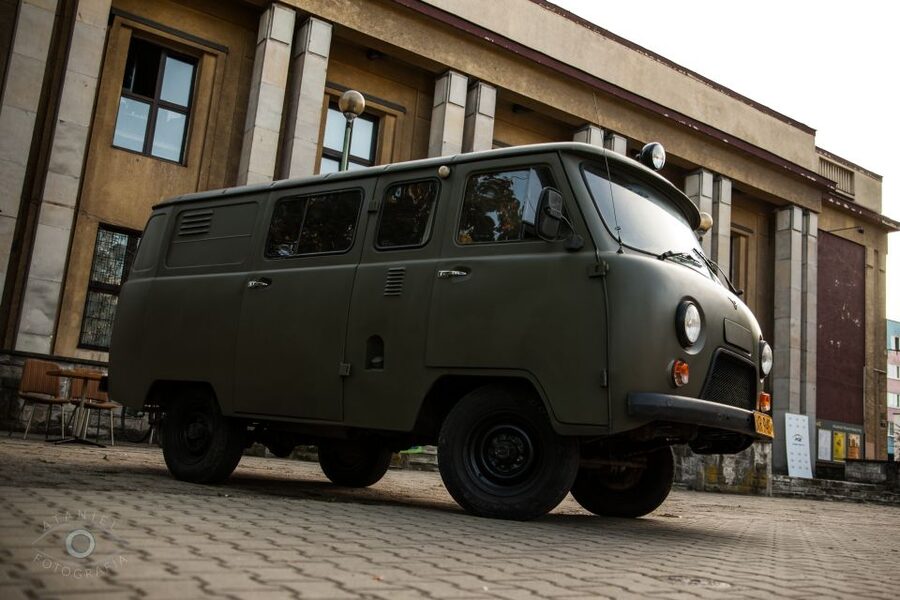
Look for an unusual old car rather than a standard tour vehicle. The available models can include a Polski Fiat 126, often called the Maluch, a Lada 2101, Syrena, Nysa, Żuk, or Soviet UAZ 452 army van. The exact car depends on the booking and day, so use WhatsApp to confirm the vehicle and meeting details.
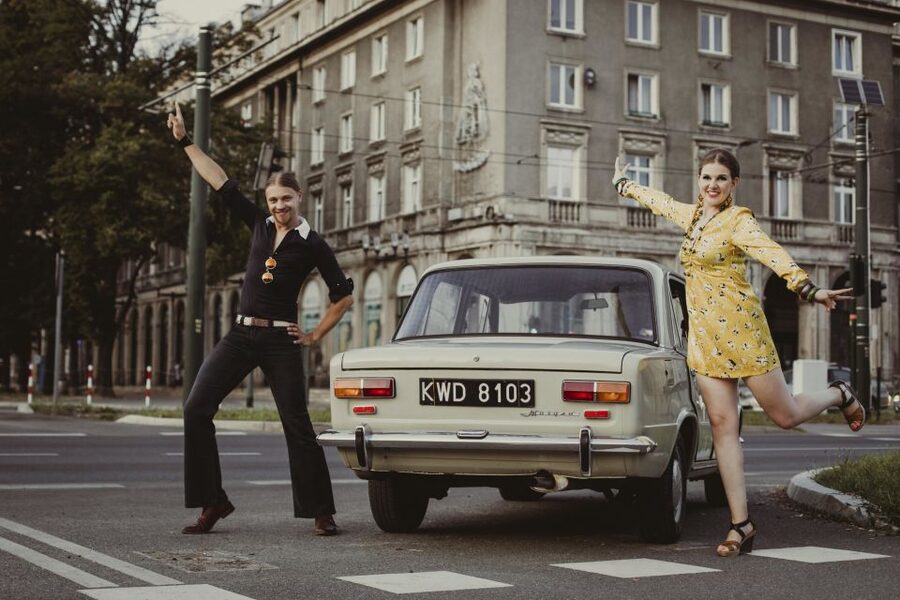
The car is not just decoration. It changes how you experience the district. You sit low, hear the older engine, and attract curious looks as you pass through Krakow. Several guides have used the journey to explain what these cars meant in everyday communist Poland, when owning a small Polski Fiat was a major event for an ordinary family.
The trade-off is practical. A Maluch is very small, and older cars do not offer the smooth ride or safety equipment of a modern minibus. A green Lada used on one tour had no working seatbelts. If you have mobility concerns, are tall, or strongly prefer modern comfort, ask which vehicle will be used before confirming.
Central Square and Roses Avenue
The first major walk usually takes place around Central Square. This is the best place to understand Nowa Huta’s urban plan. Your guide points out the broad avenues and the way the buildings frame the public space, then explains how the city was intended to function as a model workers’ settlement.
The style is often called Socialist Realism. It favors monumental forms, balanced facades, and a sense of permanence. The architecture was meant to communicate strength and collective purpose, not private taste. You may find some of it imposing, some of it severe, and some surprisingly elegant.
From here, the tour continues toward Roses Avenue, or Aleja Róż. This was once dominated by Poland’s largest statue of Lenin. The monument was deeply unpopular with many local residents and was eventually removed after being damaged by explosives. Your guide may show historical photographs, helping you compare the avenue as it looked under communist rule with the district you see today.
This stop also gives you a useful lesson in memory. The statue is gone, but the space still carries its political past. The guide explains how official symbols were placed in daily life and how residents responded to them. That is one reason this tour is more useful than simply walking through the district with a map.
The steelworks and its former offices
The steelworks was the reason Nowa Huta existed. It provided the jobs, the political story, and the need for an entire new city. The standard tour passes through the area, while the extended option can include the former director’s offices.
The offices are especially worthwhile because they show communist power at a human scale. Instead of only seeing monumental public buildings, you enter rooms connected with the people who ran the industrial project. Furniture, interiors, and work areas help you picture how authority operated behind the official slogans.
Access can depend on the option selected, so do not assume the steelworks interior is included in the shortest booking. If this is the part that interests you most, select the longer package that specifically includes the director’s offices and entrance ticket.
The industrial site is not polished into a conventional museum. That is part of its appeal. The atmosphere can feel stark and timeworn, and the visit is strongest for people who enjoy old equipment, institutional interiors, and the physical remains of twentieth-century politics.
A few more things to do in Kraków worth a look
- From Krakow: Auschwitz-Birkenau Guided Tour & Hotel Pickup
★ 4.5 · 33,358 reviews - From Krakow: Auschwitz-Birkenau Guided Tour & Hotel Pickup
★ 4.5 · 29,340 reviews - Krakow: Auschwitz Guided Tour with Optional Hotel Pickup
★ 4.5 · 15,280 reviews - Krakow: Auschwitz-Birkenau Guided Tour with Pickup & Lunch
★ 4.5 · 9,800 reviews
Choosing the underground bomb shelter
The extended tour can instead include a Cold War headquarters bomb shelter. These shelters were built with the fear of a nuclear conflict in mind. Going below ground makes the Cold War feel less like a chapter in a textbook and more like a real planning problem that shaped public buildings and cities.
The shelter visit is atmospheric, but it is also informative. You see how a city prepared for a possible World War III and how much effort went into maintaining emergency spaces. The underground setting adds a darker edge to the tour, especially when your guide explains how the rooms and systems were intended to work.
If you can choose only one extra, I would base the decision on your interests. Pick the director’s offices if you want the steelworks, administration, and everyday workings of communist industry. Pick the shelter if you are most interested in military planning, civil defense, and the fear that shaped the Cold War.
Some longer tours include both, depending on the package and schedule. Check the exact option at booking, since the shorter 150-minute version will not offer the same depth as the roughly four-hour experience.
The church that challenged the official story
Our Lady Queen of Poland Church is an important stop because it shows that Nowa Huta was not only a state-built workers’ city. Religion remained a powerful part of Polish life, even while the communist government promoted an officially atheist system.
The church visit helps balance the tour. You see the planned avenues and state architecture, then encounter a building connected with local religious life and resistance to the official line. The guide explains why getting a church built in Nowa Huta mattered to residents.
This is a photo stop and a guided visit, usually lasting around 20 minutes. It is not a full church tour, but it adds social and political context that the steelworks alone cannot provide.
How the timing works
The published duration ranges from 150 to 270 minutes. The basic route includes around 30 minutes in the car at the beginning, a walk at Central Square, short drives between stops, a substantial visit in the Ujastek area, the Armed Act museum or Soviet tank stop, the church, and the return journey.
The schedule is not a nonstop drive. You will get out and walk at several points. Central Square takes around 20 minutes, the church around 20 minutes, and the Ujastek visit can last about 90 minutes. The precise order can change, but you should expect a mix of driving, short walks, photographs, and explanation.
At Ujastek, you may visit the steelworks-related site or the selected shelter depending on your package. The Armed Act museum stop includes a chance to see and photograph a Soviet tank from the Second World War. It is a brief stop, but it adds a physical military object to a tour otherwise focused on architecture and politics.
The longer version is a better fit if you dislike hurried sightseeing. Guides such as Mateusz are known for answering questions at length, and a private or small-group setting gives you room to ask about housing, work, religion, propaganda, and daily life. The shortest option is fine if you mainly want the city layout and a taste of the history.
What the guide adds
The guide is the core of the experience. Nowa Huta’s meaning is not always visible from its streets, and the district is spread out enough that wandering alone can leave you with disconnected impressions.
Mateusz is frequently associated with this tour and has been praised for his fluent English, enthusiasm, and personal connection to the district. He grew up in the area and works with the Foundation of Positive Promotion of Nowa Huta, a local nonprofit group. That background gives the tour a more personal feel than a generic city excursion.
Expect old photographs, explanations of building use, and answers about how housing was assigned to single people, couples, and families. The guide can also explain how the district changed after communism and how residents relate to its past today.
The tone is generally lively rather than academic. That matters during a three-and-a-half-hour tour. The history covers propaganda, industry, religion, Soviet influence, military planning, and the decline of the steelworks, so a good guide keeps the subject clear without flattening it into a list of dates.
Price, comfort, and overall value
At about $75 per person, this is not the cheapest way to see a Krakow neighborhood. The value depends on what you want from the outing. You are paying for private or small-group transport, a specialist guide, an unusual vehicle, pickup and drop-off where available, and access to selected interiors when you choose the extended option.
The car alone would not justify the price for me. It is fun, photogenic, and memorable, but the novelty wears off after the first stretch of road. The value comes from combining it with a guide who can explain the city and from entering places such as the director’s offices or Cold War shelter.
The extended option usually makes the strongest case for the money. It adds the sites that turn the trip from a scenic drive into a fuller history lesson. Lunch can also be added, with one option including pierogi at a restaurant popular with local residents and styled in an older Polish manner.
Food and drinks are not included in the standard booking. Museum entrance fees outside the selected additions are also not included, so check the exact package rather than assuming every stop has been covered.
Who should book this Nowa Huta tour
I would recommend it most to anyone interested in twentieth-century Europe, communist Poland, architecture, industrial history, or unusual Krakow experiences. It also suits repeat visitors who have already seen the Old Town and want a part of the city that feels far removed from the usual sightseeing route.
Families with older children and teenagers may enjoy the car and tank, while history-minded adults will get the most from the offices and shelter. The guide’s stories make the subject accessible, even if you arrive knowing little about Polish communism.
You may want to skip it if you only have a few hours in Krakow and are visiting for medieval monuments, or if a cramped vintage car sounds uncomfortable. The tour is also less suitable for anyone who needs a fully modern vehicle unless the operator can confirm an appropriate car in advance.
Book the extended version if your interest is serious. For a lighter introduction, the shorter route still gives you the main square, Roses Avenue, the church, and the experience of crossing Krakow in a classic Polish car.
Should you book it?
Yes, if you want history with a physical sense of place. Nowa Huta is difficult to understand from a guidebook alone, while this tour connects the streets, steelworks, shelter, church, and vanished Lenin statue into one clear story.
My practical advice is to choose the longest option you can fit, confirm the car and pickup point through WhatsApp, and ask about seatbelts if that matters to you. The vintage vehicle is the hook, but the local guide and access to the former industrial interiors are what make the tour worth the cost.
FAQ
How long does the Nowa Huta vintage car tour last?
The available options last from 150 to 270 minutes. The longer version can take around three and a half to four hours, especially when it includes the steelworks offices or Cold War shelter.
What kind of car will be used?
The vehicle may be a Polski Fiat 126, Lada 2101, Syrena, Nysa, Żuk, UAZ 452, or another classic Polish or Soviet-era car. The exact model depends on availability.
Is hotel pickup included?
Pickup and drop-off are included when the private option is selected. Vehicles cannot reach every street in Krakow’s historic center, but nearby meeting points can be arranged.
Can I meet the guide directly in Nowa Huta?
Yes. You can arrange to meet the guide in Nowa Huta instead of using the pickup option.
Which languages are available?
The tour is offered in English, Polish, and Russian. Polish or Russian should be requested at least 48 hours ahead and depends on availability.
Does the tour visit the former steelworks offices?
The steelworks director’s offices are included only with the option that specifically lists that visit. The entrance ticket is included with that package.
Is the Cold War bomb shelter included?
The shelter is included with the extended option that lists the Cold War headquarters bomb shelter. Check the selected package because it is not part of every version.
Are food and drinks included?
Food and drinks are not included in the standard tour. A lunch option may be added, and it can include Polish food such as pierogi at a local restaurant.
Just added in Kraków
- From Krakow: Zalipie Village Day-Tour★ 4.9 · 74 reviews
- Krakow: Zalipie Village Tour★ 4.6 · 8 reviews
- ZALIPIE – painted village, unique PRIVATE tour from Krakow★ 5.0 · 20 reviews
- From Krakow: Guided Tour of Zalipie★ 4.6 · 30 reviews
- From Krakow: Ojców National Park & Ogrodzieniec Castle Tour★ 4.9 · 64 reviews
- Krakow: Axe Mate Club Shooting Range Entry Ticket★ 4.7 · 60 reviews
- Krakow: Axe Throwing Fun★ 4.9 · 70 reviews
- Krakow: Energylandia Park Entry Ticket and Optional Transfer★ 4.8 · 39 reviews
Nowa Huta & Communism Tours, compared.
Legendary Private Nowa Huta Communism Tour with Crazy Guides
Read the review →
Nowa Huta: Steelworks Administration Buildings/Shelters Tour
Read the review →
Private Tour: Warsaw’s Communist History by Retro Fiat
Read the review →
Private Nowa Huta Adventure Tour in Communist Cars
Read the review →Browse the lists this tour appears in