
Reviewed · WAWEL CASTLE TOURS
Krakow’s Essential Tour of the Old Town and Wawel Castle
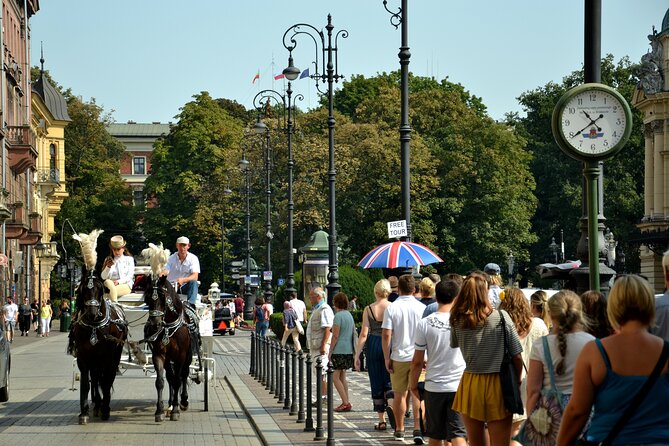
Krakow’s essential tour packs the city’s main historic sights into one walk, from the hourly trumpet call at St. Mary’s Basilica to the royal grounds of Wawel Castle. The guide handles the route while explaining the odd towers, vanished town hall, medieval shopping hall, and Poland’s difficult 20th-century past.
I like the mix of famous sights and small stories, especially the tale behind the basilica’s trumpeter and the stop at Bishop’s Palace. I also like the donation model, since the $3 booking charge is not the full cost. The main drawback is pace: you cover a lot in two and a half hours, but museum interiors and church admission are not included.
Key points to know before you book
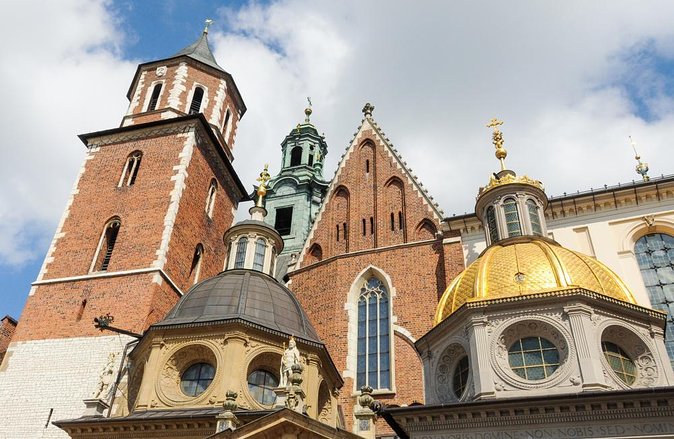
- The route connects Krakow’s core sights: You begin at the Main Market Square and finish at Wawel Castle, with no need to plan the Old Town route yourself.
- The stories reach beyond architecture: Expect discussion of World War II, communism, Polish rulers, university history, and Krakow’s social past.
- The $3 price needs explaining: This is a booking fee. The tour runs on donations, so you pay the guide what you feel the walk was worth.
- Guides bring different personalities: Bart, Slav, Slavek, Fran, and Krzysztof have all been praised for humor, clear speech, patience, and strong command of Polish history.
- It is a walking overview, not a museum tour: Entry fees are extra, and most stops are outdoor explanations with a few opportunities to look inside.
- Allow for a full 2 hours 30 minutes: There are many pauses, but you will still cover a fair amount of ground.
A smart first walk through Krakow
This is the sort of tour I would use near the beginning of a Krakow stay. It gives you a working map of the Old Town, then leads you toward Wawel, the city’s great royal complex. You see the key sights in a logical order rather than zigzagging between them with a guidebook in hand.
The route begins at Rynek Główny 4, on or beside Krakow’s enormous Main Market Square. It ends at Wawel Castle, about ten minutes from the square on foot. That point-to-point design is useful: you finish near one of Krakow’s most important attractions and can continue exploring there afterward.
The experience is listed at about two and a half hours. That sounds long enough to cover the essentials, and the stop timings explain how it works. Some explanations last only ten minutes, while major locations such as the square, Bishop’s Palace, and the basilica receive more attention.
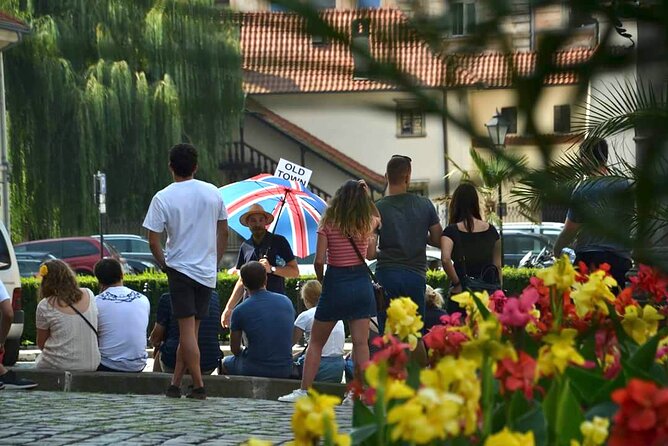
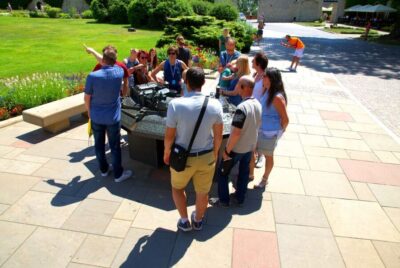
You should expect a walking tour with frequent stops, not a long indoor visit to each monument. The group can include up to 30 people, so the guide’s ability to speak clearly and gather everyone matters. The strongest guide comments point to Bart, Slav, Slavek, Fran, and Krzysztof as engaging leaders, but your assigned guide may be different.
More old town tours in Kraków:
- Old Town Krakow & Wawel Castle Walking Tour
★ 5.0 · 1,508 reviews - Krakow: Bike Tour of Old Town, Jewish Quarter and the Ghetto
★ 4.9 · 1,155 reviews - Krakow: The Old Town Walking Tour
★ 4.8 · 794 reviews
St. Mary’s Basilica and the sound from the tower
The first stop is St. Mary’s Basilica, one of the clearest landmarks on the square. The guide explains why its two towers are unequal and identifies the person who plays the hourly tune from the highest tower.
That tune is one of Krakow’s small rituals, and it gives the city a human scale. Instead of simply photographing a Gothic facade, you get a story connected to a sound you can hear during the rest of your visit.
The stop lasts about 15 minutes. Admission is not included, so do not expect this part of the walk to be an interior tour. If entering the basilica matters to you, plan a separate visit and check the available entry arrangements locally.
Rynek Główny: Krakow’s medieval center
The Main Market Square receives about 30 minutes, making it the longest stop on the early part of the route. The guide points out the square’s main attractions and explains its place in Krakow’s medieval city.
This is a good setting for orientation. You can look around and understand how the Cloth Hall, Town Hall Tower, St. Mary’s Basilica, and surrounding streets fit together. The square is large enough that a guide’s explanation helps you see it as a planned civic center rather than a collection of separate photo stops.
The tour does not include museum admission. That is reasonable for an overview, but it means you should not book this walk expecting extensive time inside the square’s buildings.
The theatre, Barbican, and old city entrance
The route continues to the Slowacki Theatre for about ten minutes. The guide explains why the theatre was not built in Poland and why it was considered more important than clean water in the city. That contrast gives the stop a social angle, bringing in public priorities and urban life rather than focusing only on dates and decorative details.
Next comes the Barbican, described as a 15th-century work of military architecture. This is a short stop of about ten minutes, but the building helps you picture Krakow as a defended medieval city.
You then pass through the 500-year-old main entrance to medieval Krakow. The supplied itinerary does not give this passage a numbered stop or a separate time, so treat it as part of the walking connection between sights. It is still useful: the route lets you follow the old line of entry rather than only seeing isolated monuments.
Other ways into Wawel from Kraków:
- Krakow: Wawel Castle & Cathedral Guided Tour
★ 4.7 · 2,111 reviews - Krakow: Wawel Royal Hill with Optional Castle and Cathedral
★ 4.2 · 1,220 reviews - Krakow: Wawel Castle and Cathedral Guided Tour
★ 4.6 · 595 reviews - Kraków: Old Town & Wawel Castle Walking Tour in English
★ 4.8 · 532 reviews
The Cloth Hall and the missing Town Hall
Sukiennice, or the Cloth Hall, receives another ten minutes. The guide explains the secrets of this medieval shopping center and what lies beneath it. That detail is particularly useful because the building is easy to view as a pretty market arcade without thinking about the older layers below the square.
The nearby Town Hall Tower is another brief but worthwhile stop. You hear why only a small part of the former Town Hall remains and what the site was known for in earlier times. This kind of explanation is exactly where a walking guide earns its keep. You can see the surviving tower, but you need context to understand the absent building.
Neither the Cloth Hall nor the Town Hall Tower includes an entrance ticket. If you want to shop inside the hall or visit a museum space, plan to do so separately.
Jagiellonian University and Poland’s wartime story
At Collegium Iuridicum, the guide introduces Jagiellonian University, one of the oldest universities in the world and Poland’s most prestigious. The stop is listed at about ten minutes and includes the chance to get inside.
The next university stop, Collegium Novum, shifts the focus toward the beginning of World War II. The guide discusses what happened to professors in Krakow and whether the city was destroyed. This is one of the tour’s more serious sections, and it gives you a better frame for understanding Krakow’s 20th-century story.
The walk is not only about kings and old walls. It also deals with institutions, education, occupation, and the survival of the city. I find that balance valuable, particularly if your only knowledge of Krakow comes from its postcard buildings.
Bishop’s Palace and the famous window
Bishop’s Palace receives about 15 minutes, and admission is listed as free. The focus here is the famous window associated with Pope John Paul II, along with Poland’s dramatic experience under communism.
The window is an easy sight to pass without context. A guide can explain why it matters and connect it to the country’s modern political and religious life. One guide was singled out for making this stop especially clear and well organized, which suggests that the location works best when the explanation goes beyond a simple identification.
This is also a useful pause before the final climb toward Wawel. You are still in the historic center, but the subject has moved from medieval trade and royal power to recent Polish memory.
Wawel Cathedral and the royal hill
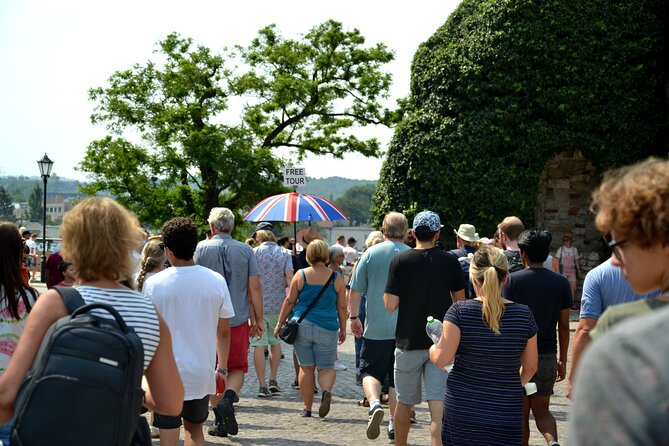
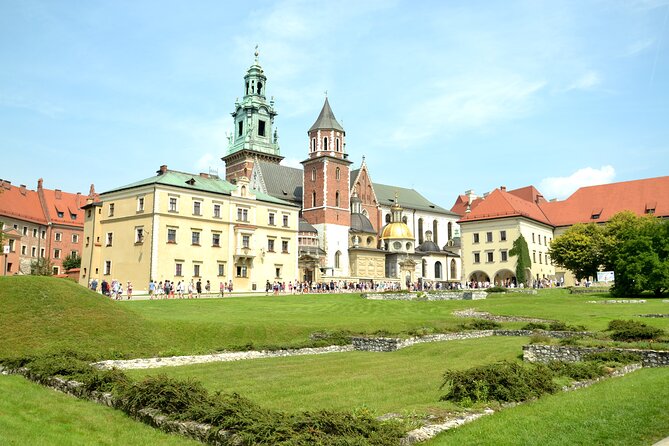
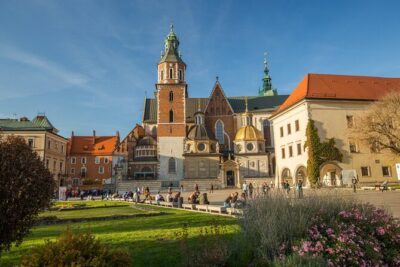
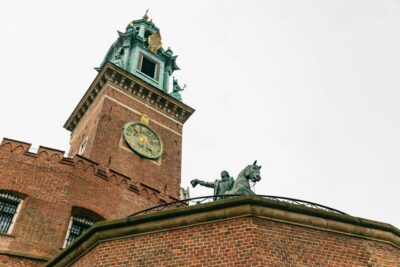
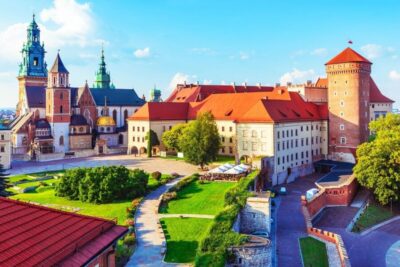
The final section brings you to Wawel Cathedral and Wawel Castle. The cathedral is presented as Poland’s national pantheon and the place where Polish rulers were crowned and buried. Its listed stop lasts about 15 minutes, though admission is not included.
The itinerary lists a second Wawel Cathedral stop of about ten minutes, but the description clearly shifts to the castle: where Polish rulers lived, why one part looks different from the rest, and other details of the royal residence. Think of this as the Wawel Castle portion of the walk, even though the wording is not perfectly clear.
Finishing at Wawel is one of the tour’s strongest practical features. You are left at Wawel Royal Castle, Wawel 5, rather than returned to the square. You can continue with the castle grounds, arrange an indoor visit, or walk back toward the center. Museum entrance fees are not part of the tour, so budget separately if you want to see the collections.
The castle section also gives the tour a satisfying shape. You begin with the ordinary civic life of the market square and end where Polish rulers lived, were crowned, and were buried.
What the guide adds to the experience
The best reason to choose this walk is the commentary. You are not simply ticking off Krakow’s sights. You are hearing why the buildings mattered, how the city changed, and how Poland’s past still shapes places you can see today.
The guide names that appear most often in the supplied feedback include Bart, Slav, Slavek, Fran, and Krzysztof, also called Chris. Their praised qualities are consistent: clear explanations, humor, steady pacing, patience, and enthusiasm for Polish history and archaeology.
That does not mean every group experience will feel identical. A guide may speak more quickly, spend more time on military history, or give a different amount of detail at each stop. The group limit of 30 also matters. A larger group can make questions and street crossings less personal than a private walk.
The tour is described as private in the overview, but the stated maximum is 30 participants. I would read that as a guided experience that may be shared, not assume a one-party private tour unless your booking confirmation says so.
Price, tipping, and what is not included
The advertised $3 is attractive, but it is not the complete tour price. The information states that the booking fee is only a reservation charge and that the walk operates on donations. You decide what to pay at the end.
That model can offer good value if you want a broad introduction without committing to an expensive private tour. It also means you should arrive with a realistic view of the payment arrangement. The guide’s service is not covered by the $3 alone.
Food and drinks are not included. Museum and church admission fees are also extra. The tour does include a licensed guide and sanitizers, but not transport, meals, or entry to the attractions listed along the way.
If you want a low-cost orientation followed by independent museum visits, this format works well. If you want every interior included in one fixed price, choose a different kind of tour.
Timing, meeting point, and small practical cautions
Meet at Rynek Główny 4 in Krakow. The end point is Wawel Royal Castle, Wawel 5. Mobile tickets are accepted, and confirmation is normally sent at booking. Bookings made within one hour of departure are subject to availability and may take longer to confirm.
One practical warning is worth noting: check the start time carefully. A booking issue once led to a group being told that the tour began at 10:30 rather than 10:00, creating a 40-minute wait. That may have been a platform timing error, but it is a good reason to verify the meeting time in your confirmation and arrive a little early.
Free cancellation applies if you cancel at least 24 hours before the local start time. Within 24 hours, the payment is not refunded, and changes are not accepted. Service animals are allowed, the meeting point is near public transport, and most people can take part.
You will walk a lot, though the frequent stops break up the distance. Wear sensible shoes and keep your phone charged for the mobile ticket. The route includes historic streets, public squares, and the approach to Wawel, so expect a city walk rather than a seated presentation.
Who should book this Krakow walk?
I would recommend it to first-time visitors who want the basic city layout quickly. It is also a good fit for families with older children and teenagers, since the stories cover battles, rulers, university life, World War II, and unusual city details rather than only church architecture.
It suits you if you like a guide who mixes facts with humor. It is less suitable if you prefer long, quiet time inside museums or want a slow photographic walk with few explanations.
The tour also works well for anyone arriving in Krakow with limited time. In 150 minutes, you see the central square, the old defenses, university buildings, Bishop’s Palace, the cathedral, and Wawel. You will not master every site, but you will know which ones deserve a return visit.
Should you book it?
Book this tour if you want a strong first look at Krakow, clear historical context, and a route that ends at Wawel Castle. The donation model offers appealing value, provided you understand that the $3 is only the booking fee and that entry tickets cost extra.
Skip it if you want a fully private experience guaranteed for your own party, detailed interior visits, or a fixed all-inclusive price. For most people seeking a lively introduction, the mix of famous sights, useful navigation, and stories about Poland’s difficult past makes this a sensible first-day choice.
FAQ
Where does the tour begin?
It begins at Rynek Główny 4 in Krakow, at the Main Market Square.
Where does the tour finish?
The tour ends at Wawel Royal Castle, Wawel 5. The castle is about ten minutes from the Main Market Square.
How long does the tour last?
The walk lasts approximately two hours and 30 minutes.
Is the tour private?
The overview describes it as private, but the stated maximum is 30 participants. Check your booking confirmation for the exact group arrangement.
What is included?
A licensed tour guide and sanitizers are included.
Are museum tickets included?
No. Museum entrance fees are not included.
Is food or drink included?
No. Food and drinks are not included.
Is the $3 the full tour price?
No. The $3 is a booking fee. The tour operates on donations, and you pay what you wish at the end.
Can I cancel for a refund?
Yes, if you cancel at least 24 hours before the local start time. Cancellations within 24 hours are not refunded.
Are service animals allowed?
Yes. Service animals are allowed, and the meeting point is near public transportation.
More castle tours from Kraków
- Krakow: Wawel Castle Guided Tour with Entry Tickets
★ 4.4 · 381 reviews - Historic Krakow : Old Town & Wawel Castle Walking tour
★ 5.0 · 318 reviews - Krakow: Wawel Castle and Cathedral Guided Tour
★ 4.7 · 273 reviews - Skip-the-Line Wawel Castle Chambers Private Tour
★ 4.7 · 262 reviews
Just added in Kraków
- From Krakow: Guided Tour of Zalipie★ 4.6 · 30 reviews
- From Krakow: Zalipie Village Day-Tour★ 4.9 · 74 reviews
- Krakow: Zalipie Village Tour★ 4.6 · 8 reviews
- ZALIPIE – painted village, unique PRIVATE tour from Krakow★ 5.0 · 20 reviews
- Dunajec River Gorge and Zakopane: Full-Day Trip from Krakow★ 4.6 · 57 reviews
- Zator: Energylandia Amusement Park Entry Ticket★ 4.6 · 58 reviews
- From Krakow: Full-Day Wadowice & Czestochowa Tour★ 4.9 · 77 reviews
- From Krakow: Ojców National Park & Ogrodzieniec Castle Tour★ 4.9 · 64 reviews
Wawel Castle Tours, compared.

Wawel Royal Hill with Optional Castle and Cathedral
Read the review →
Skip-the-Line Wawel Castle Chambers Private Tour
Read the review →Browse the lists this tour appears in