Reviewed · TOURS IN KRAKÓW
Nikiszowiec Industrial District Private Tour
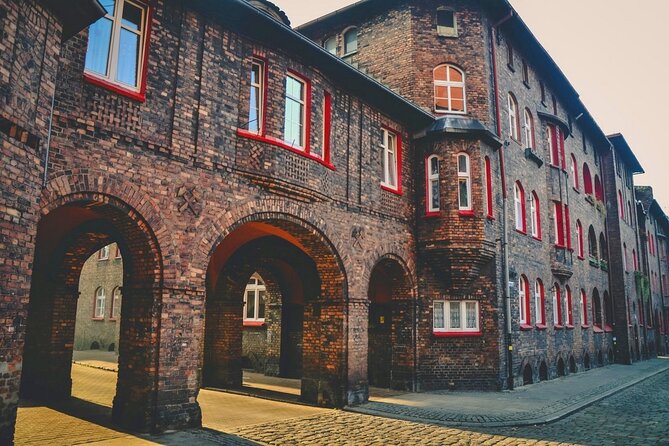
Nikiszowiec is not simply an old mining neighborhood. It is a carefully planned Silesian district where red brick housing, courtyards, industrial sites, local legends, and 20th-century political change all meet in one compact walk. You begin at St. Anne’s Church and finish inside a preserved flat at the Museum of Katowice History.
I like the tour’s private format, since your group can focus on the questions and subjects that interest you. I also like the range of stops: architecture, coal mining, the Silesian Uprisings, wartime changes, murals, watercolor, and everyday home life all have a place here. The main point to watch is logistics: the activity is associated with Krakow, but the actual meeting point is in Katowice.
Key points to know before booking
- Nikiszowiec in one focused walk: Cover the district’s plan, housing quarters, mining connections, schools, courtyards, and art.
- A private English-speaking tour: Only your group participates, with group discounts available.
- Guide Malwina may lead your visit: Her presentation and explanations receive especially warm praise in the supplied feedback.
- History beyond architecture: Learn about World War I, the Silesian Uprisings, World War II, interwar autonomy, and communism.
- Local art is central: See Janów Group works, colorful murals, Silesian legends, and the paintings of Grzegorz Chudy.
- A museum interior completes the picture: The final stop includes a typical Nikiszowiec flat and original artworks.
Why Nikiszowiec deserves more than a quick photo stop
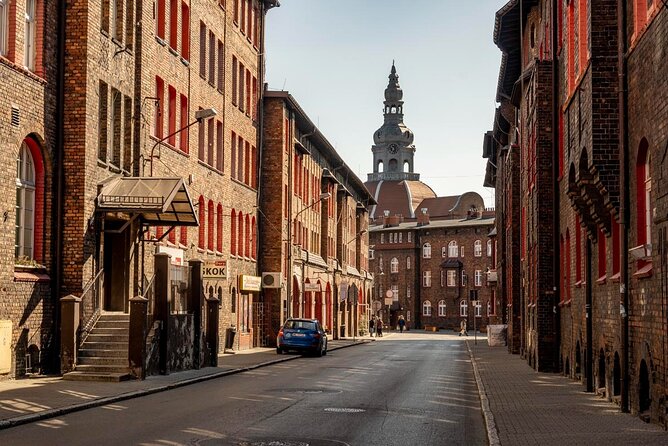
Many people first notice Nikiszowiec for its brick buildings and photogenic courtyards. That is a good reason to come, but it is not the whole story. The district was shaped around the needs of mining families, and the tour helps you read the place as a working neighborhood rather than a set of attractive facades.
At Liberation Square, you pass through the shared portals and learn how the quarters were arranged. The guide explains what different parts of the district were used for and how the buildings worked together. That matters because Nikiszowiec makes more sense once you understand its plan.
I especially like the way this tour moves between large subjects and small details. One moment you are discussing the autonomy of Silesia during the interwar period. A few minutes later, you are considering the daily routines of residents, the interior gardens, or the role of a former school.
The tour lasts about 2 hours and 45 minutes. That is long enough to give the district proper attention without turning the outing into a full-day history course. Since all participants are from your own group, you can ask for more detail on mining, art, family life, or political change.
A few more things to do in Kraków worth a look
- Krakow Airport Private Transfer
★ 5.0 · 2,227 reviews - Private Departure Transfer: Krakow City To Krakow Airport Balice
★ 4.5 · 367 reviews - Skip-the-Line Wawel Castle Chambers Private Tour
★ 4.7 · 262 reviews
Starting at St. Anne’s Church and Zillmanns Square
The meeting point is St. Anne’s Church at plac Wyzwolenia 21 in Katowice. The church is your first orientation point and the formal beginning of the walk. Admission here is free, as it is at nearly every outdoor stop.
From there, you reach the Square of Emil and Georg Zillmann, the architects behind Nikiszowiec. This ten-minute stop gives you the basic plan of the district and its nearby areas. It is a useful beginning because the rest of the walk keeps returning to the relationship between design and daily life.
The architects’ role is not treated as a footnote. Their planning helps explain why the district feels ordered, with repeated building forms, connected quarters, and shared spaces. You will have a better sense of what you are seeing later in the walk because the guide establishes the design idea early.
The pace should suit anyone who prefers a guided introduction before wandering alone. If you like to photograph every doorway or courtyard, you may want to take a few quick pictures and return later for a slower look. The schedule moves on after each short stop.
Liberation Square and the structure of the district
At Nikiszowiec, the tour passes through common portals in Liberation Square. Here, the guide explains the division into quarters, the purpose of each quarter, and the structure of the buildings.
This is one of the most useful parts for first-time visitors. Without explanation, an old industrial district can look like a collection of similar blocks. With the urban plan in view, the repeated forms become clues to how the community operated.
You also hear about the daily routines of the people who lived here. The tour does not treat the district as an empty historic display. It connects the buildings to work, family life, and the practical needs of residents.
That human focus is one of the tour’s strengths. You are not only learning when the district was built or who designed it. You are being asked to picture how the place functioned from morning to evening.
Inside the residential quarters and their gardens
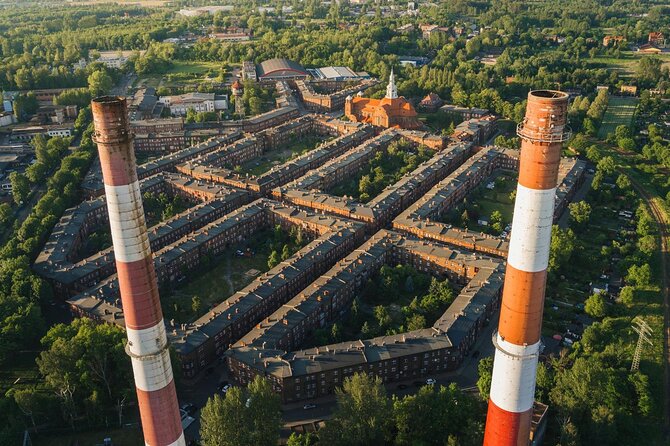
The next residential section takes about 30 minutes, making it one of the longer stops. You pass through several quarters and see interior gardens while the guide explains how life in Nikiszowiec changed over time.
The discussion includes World War I and the Silesian Uprisings. These subjects give the neighborhood a wider Silesian setting. The district was not separate from regional events, and its residents experienced the political and social changes affecting the area.
I like this part because it joins public history to domestic space. A courtyard or housing quarter can seem quiet today, but the guide uses it to explain how the inhabitants lived and how the district looked in earlier periods.
The outdoor portions are also where weather matters most. The activity requires good weather, and a poor-weather cancellation may lead to a different date or a full refund. Wear shoes suited to a walk and plan on spending most of the tour outside, since the schedule includes many exterior stops.
Same base, a different kind of day:
- From Krakow: Auschwitz-Birkenau Guided Tour & Hotel Pickup
★ 4.5 · 33,358 reviews - From Krakow: Auschwitz-Birkenau Guided Tour & Hotel Pickup
★ 4.5 · 29,340 reviews - Krakow: Auschwitz Guided Tour with Optional Hotel Pickup
★ 4.5 · 15,280 reviews - Krakow–Zakopane: Cable Car, Chocholow Baths, Cheese & Vodka
★ 5.0 · 10,720 reviews
The Silesian Embassy and the years of change
The stop at Łukasz Kohut’s Ślōnsko Ambasada, or Silesian Embassy, turns attention to the interwar years. Here, the guide explains the meaning of Silesia as an autonomous region and places Nikiszowiec within that political setting.
You also learn about Silesia during World War II and about the changes communism brought to the district. This creates a useful bridge between the neighborhood’s original mining purpose and its later identity.
The subject can be especially valuable if you have already seen Poland’s major historic centers and want a different regional story. One piece of feedback describes Silesia as markedly different from places such as Warsaw, Krakow, and Poznan. That is a fair reason to add Nikiszowiec to a Poland itinerary: it gives you a closer look at regional identity rather than a standard royal or wartime city route.
The tour does not present Nikiszowiec as frozen in one period. Instead, you follow the neighborhood through several political eras and see how those changes affected ordinary life.
Pułaski Shaft and the mining connection
At the Pułaski Shaft Complex, the focus shifts to the former coal mine where many Nikiszowiec residents worked. This is an important stop because the district’s housing and its industrial purpose cannot be separated.
You also see the historic railway that once carried industrial materials and people between Silesian industrial estates. The railway adds a practical detail to the mining story. Coal production needed workers, equipment, and transport, and this infrastructure helped connect the district with the wider industrial area.
The 20-minute stop gives the industrial side of Nikiszowiec more weight than a quick pass-by would. If you are interested in working-class neighborhoods, coal mining, or the development of industrial Silesia, this section may be one of your highlights.
Do not expect a long mine visit based on the listed program. The focus is on the former shaft complex and the railway, with the guide explaining their role. The tour is about the district as a whole, not an underground mining excursion.
Watercolors, legends, and the Janów artists
At Grzegorz Chudy’s watercolor atelier, you see contemporary paintings of Nikiszowiec, Katowice, and the Silesian region. The art also includes Silesian legends and mythical creatures.
This stop gives the tour a welcome change of pace. After architecture, politics, housing, and mining, you see how local identity is expressed through modern art. The paintings help connect the physical district with the stories people attach to it.
The tour then passes the historic Nikiszowiec school, a very short two-minute stop. The school is not a long interior visit, but its presence helps complete the picture of a planned residential community. Housing, work, education, and shared outdoor areas all appear in the route.
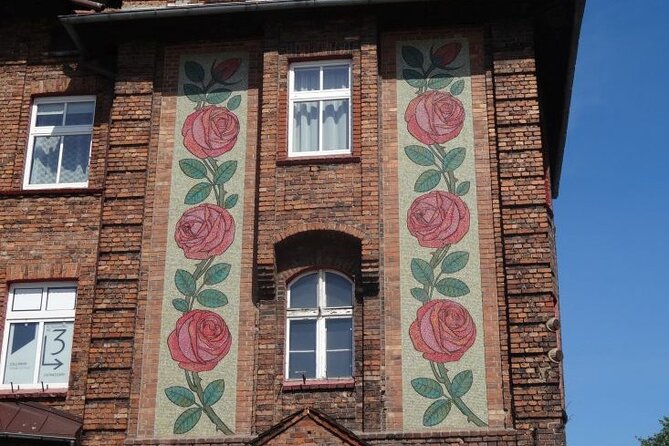
At the Square of Janów District Artists, the art moves outdoors. Colorful murals reproduce works by leading artists from Nikiszowiec. This is a good place to pause for pictures, though the 15-minute schedule means you should not count on a long, unhurried art visit.
The Janów Group is also important at the final museum stop. Together, the atelier, murals, and museum make art a major thread of the experience rather than a small extra.
The museum flat and the final indoor view
The Museum of Katowice History, City Ethnology Department, is the only stop with an admission ticket included. It is also the tour’s best chance to see what Nikiszowiec looked like from inside a home.
You see the interior of a typical district flat. That detail changes the way you view the outdoor quarters. Streets and courtyards show the public side of Nikiszowiec, while the apartment gives you a more intimate sense of domestic life.
The museum also displays original works by Janów Group artists. These paintings depict everyday and festive life in Nikiszowiec, adding scenes and emotion to the architectural story. You are not just looking at old buildings; you are seeing how residents and artists understood their own community.
Another highlight is the work of the so-called Silesian Salvador Dali, whose surrealistic art brings an unusual note to the final stop. This makes the museum visit more than a standard local-history display. It adds imagination and regional character to the closing section.
Because the tour ends back at the starting point, the museum is a satisfying final chapter rather than a separate detour. You finish with the district’s homes and art after seeing its planning, industry, politics, and public spaces.
Guide style and the value of a private walk
Guide Malwina is specifically named in the supplied feedback, and the comments point to her cheerful presentation, clear explanations, and strong command of the subject. The praise centers on how she connects the places to stories, rather than simply reciting dates.
That matters in Nikiszowiec. The district rewards context. A private guide can explain why a portal, railway, courtyard, school, or painting matters while you are standing in front of it.
The private format also gives you more control than a large group tour. Only your group participates, and group discounts are available. For a family or a small group of friends, the price can make more sense when divided among several people.
The listed price is $93.45 per person. For a solo visitor or a pair, that is not a bargain-priced city walk. The value improves if you want a private English tour, museum admission, and nearly three hours of focused interpretation rather than a short photo visit.
You should also factor in transport to Katowice. The activity information places it in Krakow, but the start and end point are both in Katowice. Public transportation is nearby, yet no transfer from Krakow is included in the described experience.
Who will enjoy this experience most
I would choose this tour if you want to understand Silesia as a distinct region of Poland. It suits you especially well if your interests include industrial history, architecture, local identity, political change, or art.
Families can also enjoy it. The walk includes visual details, murals, paintings, courtyards, and stories, and the private setup makes it easier to keep the pace comfortable for your own group. The supplied feedback specifically describes it as a good family outing.
It is less suitable if you want a fast overview of Katowice or a major museum-heavy day. Much of the experience takes place outdoors, and the tour spends time on regional subjects that may be unfamiliar. You need to be willing to walk, listen, and let the district unfold slowly.
Most people can participate, and service animals are allowed. The activity is near public transportation, but the material does not specify a route from Krakow, so confirm your travel plan before booking.
Practical details that affect your choice
The tour is offered in English and lasts approximately 2 hours and 45 minutes. Every stop is listed as free except the Museum of Katowice History, where admission is included.
Confirmation is sent within 48 hours of booking, subject to availability. The experience requires a minimum number of participants, so a cancellation for that reason leads to an alternative date or experience, or a full refund.
You can cancel for a full refund up to 24 hours before the start time. Changes or cancellations made inside that 24-hour window are not accepted for a refund. The cut-off follows local time.
Because weather can affect the experience, check the forecast before setting out. A poor-weather cancellation offers a different date or a full refund, which is useful protection for an outdoor walking tour.
Should you book the Nikiszowiec tour?
Book it if you want more than attractive brick buildings. The strongest reason to go is the combination of Silesian regional history and ordinary life, followed by the mix of former mining sites, courtyards, murals, paintings, and a preserved flat.
The tour is also a good choice for families and small groups who prefer a private guide. Guide Malwina’s praised presentation adds value, especially when the subject matter moves from architecture to the Silesian Uprisings, wartime change, communism, and local art.
Think twice if you are staying only in Krakow and do not want to arrange transport to Katowice. At $93.45 per person, the experience makes the most financial sense for a group that values personal guiding and several hours of focused attention.
For the right visitor, Nikiszowiec offers a side of Poland that major city sightseeing often misses. You see how work, home, regional politics, and art shaped one close-knit district, all in a manageable afternoon walk.
FAQ
Where does the Nikiszowiec tour start?
It starts at St. Anne’s Church, plac Wyzwolenia 21, 40-423 Katowice, Poland.
Where does the tour end?
The activity ends back at the same meeting point.
How long does the tour last?
The tour lasts approximately 2 hours and 45 minutes.
Is the tour offered in English?
Yes. English is the listed tour language.
Is this a private tour?
Yes. Only your group participates.
What is included in the admission?
The outdoor stops have no admission charge. Admission to the Museum of Katowice History, City Ethnology Department, is included.
Is public transportation available nearby?
Yes. The meeting area is near public transportation.
Are service animals allowed?
Yes. Service animals are allowed.
What happens if the weather is poor?
If poor weather causes a cancellation, you can choose a different date or receive a full refund.
Can I cancel for a full refund?
Yes. You must cancel at least 24 hours before the experience start time for a full refund.
Just added in Kraków
- Wawel Castle, Old Town with St. Mary’s Church Guided Tour★ 5.0 · 3 reviews
- Wawel Castle, Old Town with St. Mary’s Church Guided Tour★ 5.0 · 5 reviews
- Wawel Castle, Cathedral, Old Town and St. Mary’s Basilica★ 4.8 · 13 reviews
- Wawel Castle, Cathedral, & Rynek Underground Tour with Lunch★ 4.5 · 10 reviews
- Wawel Castle & Cathedral Skip the Line Small Group Tour★ 5.0 · 3 reviews
- Wawel Castle and Cathedral Guided Tour★ 4.6 · 44 reviews
- Wawel Castle, Cathedral, Rynek Underground Tour with Lunch★ 5.0 · 3 reviews
- Wawel Castle and Cathedral Guided Tour★ 5.0 · 8 reviews
Tours in Kraków, compared.
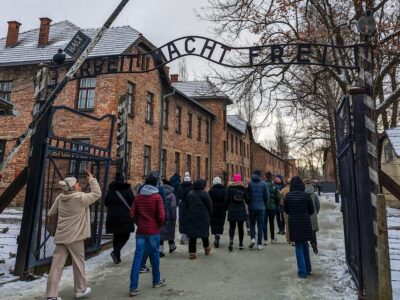
Auschwitz-Birkenau Guided Tour & Hotel Pickup
Read the review →
Auschwitz Guided Tour with Optional Hotel Pickup
Read the review →
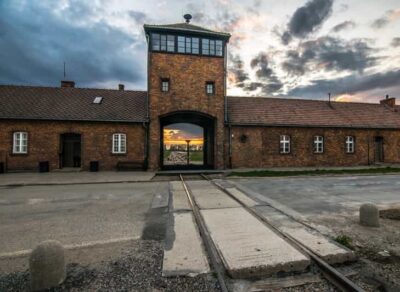
Auschwitz-Birkenau Guided Tour with Pickup & Lunch
Read the review →
Krakow to Auschwitz Birkenau Guided Tour with Transfer and Ticket
Read the review →