
Reviewed · AUSCHWITZ-BIRKENAU MEMORIAL TOURS
Oswiecim: Auschwitz-Birkenau Skip-the-Line Entry Tickets
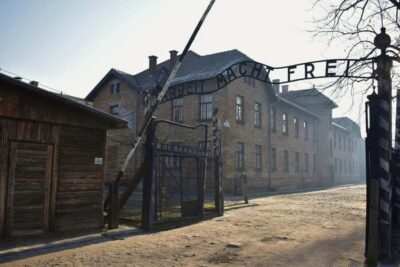
Auschwitz-Birkenau is not a sightseeing stop to rush through. This booked-entry visit takes you through Auschwitz I and Birkenau, from the gate marked Arbeit Macht Frei to the ruined gas chambers and the wooden barracks where prisoners were held in brutal conditions. The guide gives the place structure and context, which matters at a site this large and emotionally difficult.
I like the licensed English-speaking guide, headsets, and entry arranged in advance. I also like that the tour covers both camps rather than stopping at Auschwitz I, which is smaller and more polished for museum presentation. The main drawback is practical: the $81 price does not include transport, and the meeting point can be hard to spot in a crowded car park.
Key points to know
- Two separate camp sites: You visit Auschwitz I first, then Auschwitz II Birkenau, the much larger camp complex.
- About 210 minutes: Plan for roughly two hours at Auschwitz I and one hour at Birkenau, though the museum controls the exact pace.
- Skip-the-line entry: Your admission is booked, but you still pass through airport-style security.
- Guide support: A licensed English-speaking guide leads the visit, with headsets so you can hear clearly.
- Bring matching identification: Every participant’s full name must match the passport or ID shown at entry.
- No transport included: You must arrange your own way to the museum and between the two sites.
What the Auschwitz-Birkenau visit really covers
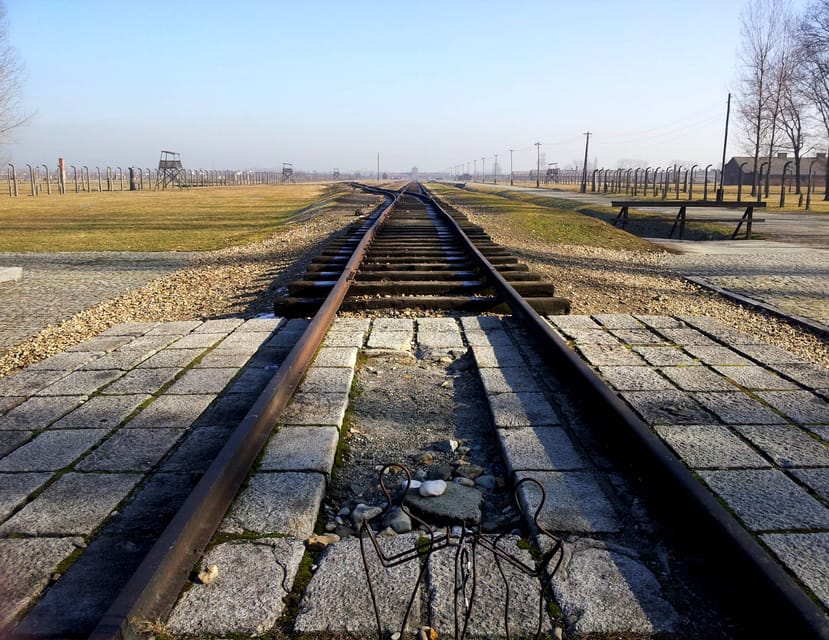
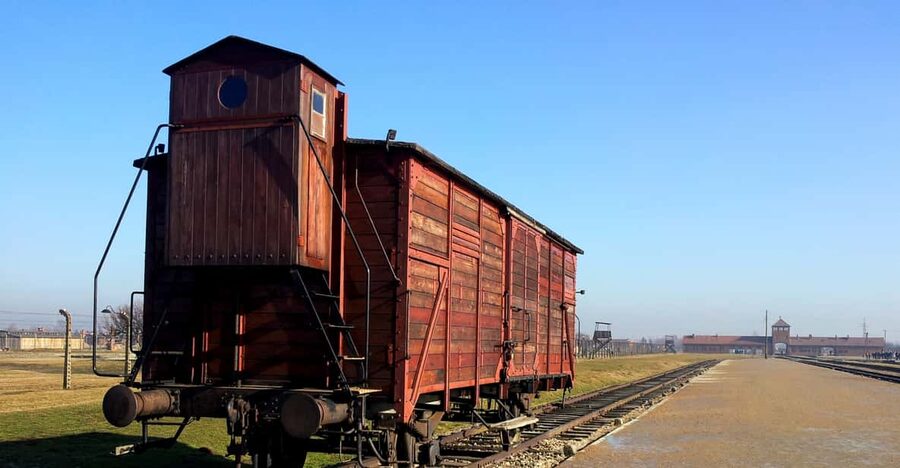
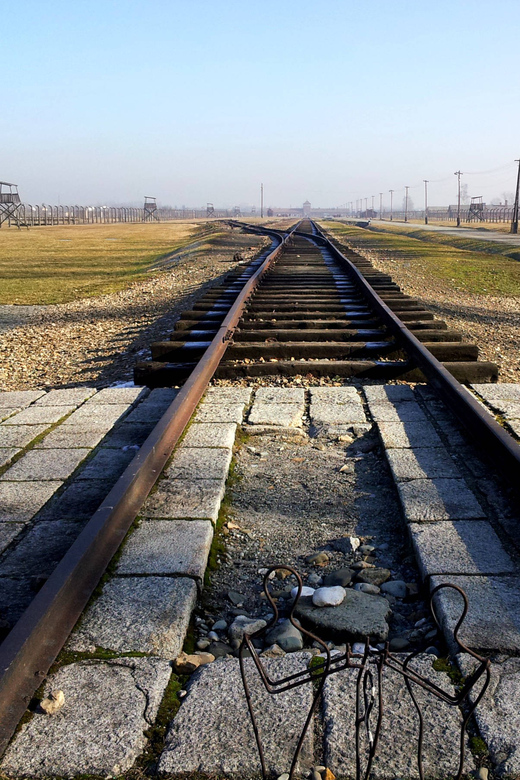
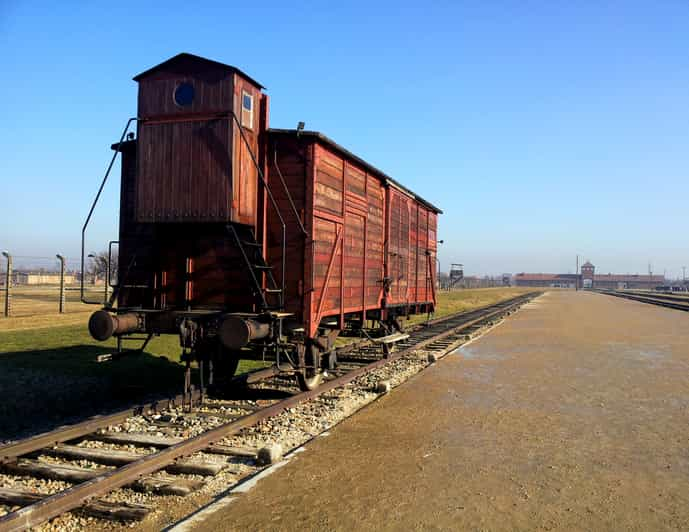
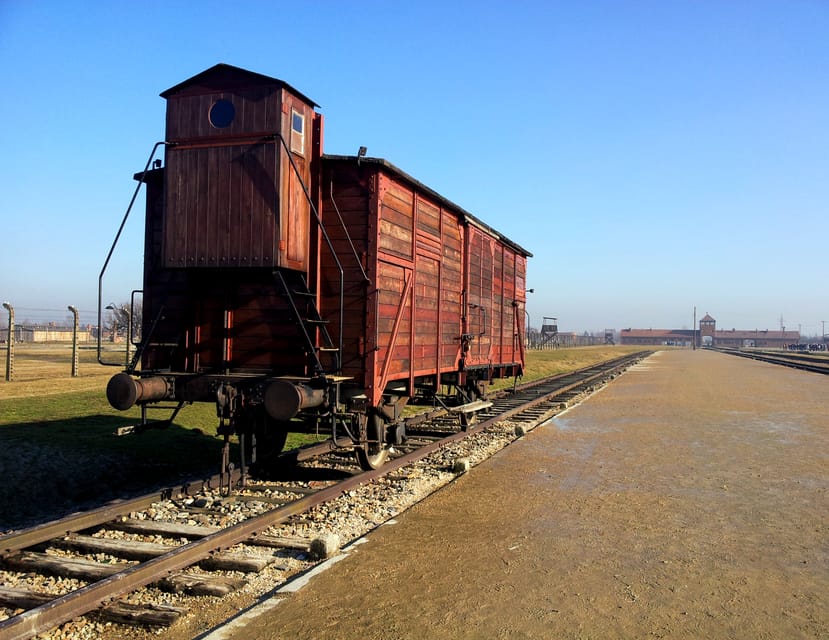
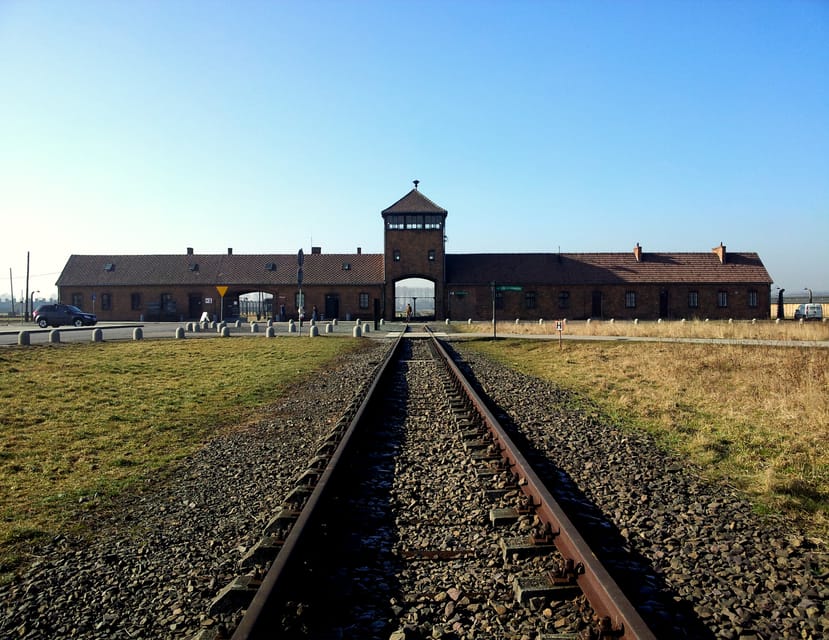
This experience takes you through two connected but distinct memorial sites. Auschwitz I is the former main camp, with brick blocks, museum displays, photographs, and surviving gas chamber and crematorium buildings. Birkenau is larger and more open, with wooden barracks, railway infrastructure, ruins, and a scale that is difficult to grasp from photographs alone.
The advertised duration is 210 minutes. The detailed plan describes about two hours at Auschwitz I and one hour at Birkenau, while the overall itinerary also refers to a 3.5-hour guided visit. Treat the timing as an estimate, not a promise. The museum’s visitor service controls the pace and the final duration.
That uncertainty is important when arranging transport, trains, or another Krakow activity. The booking information advises you to keep the whole day available because the museum can change the starting time according to its own availability. This is not the kind of tour where you should schedule a tight dinner reservation afterward.
Other ways to visit Auschwitz-Birkenau from Oświęcim:
- Auschwitz-Birkenau Skip-the-Line Guided Tour
★ 4.3 · 3,617 reviews - Auschwitz-Birkenau: Skip-the-Line Entry Ticket & Guided Tour
★ 4.4 · 3,052 reviews - Auschwitz-Birkenau Skip-the-Line Ticket and Guided Tour
★ 4.4 · 1,241 reviews
Auschwitz I, the brick blocks and the main gate
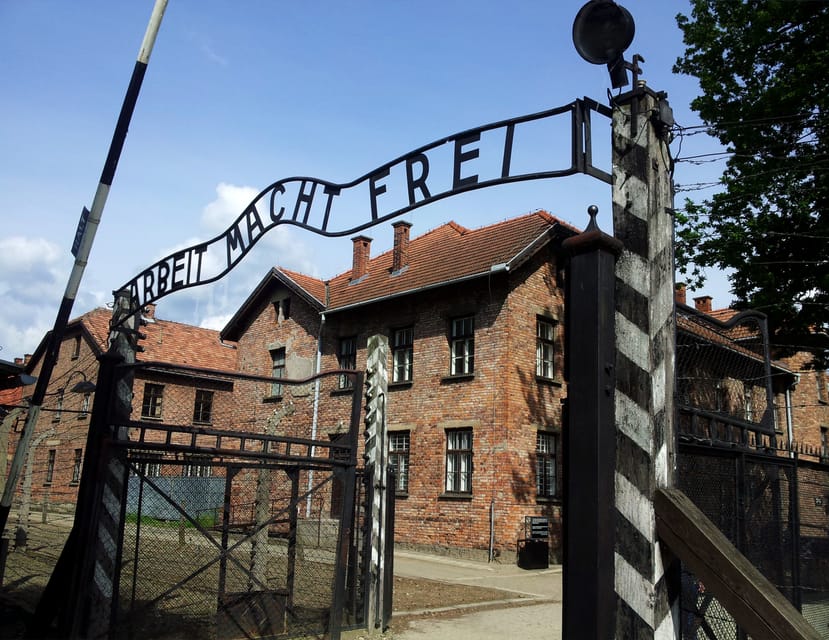
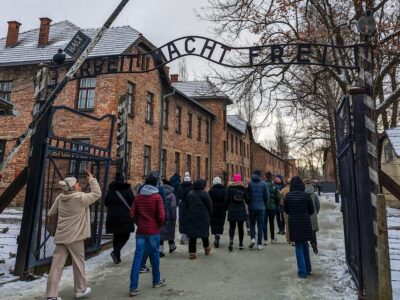
You begin near the luggage storage area beside the main entrance museum building. After security, you enter Auschwitz I through the famous gate with the inscription Arbeit Macht Frei. From there, the guide leads you through the former camp streets and brick blocks.
Auschwitz I has the more formal museum presentation of the two sites. Inside the blocks, you can expect historical photographs, prisoner records and belongings, displays about daily life, and reconstructions that show how the camp operated. The surviving gas chamber and crematorium buildings give the visit a physical focus that photographs cannot provide.
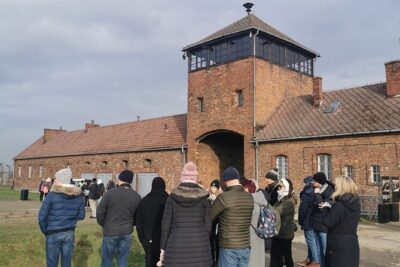
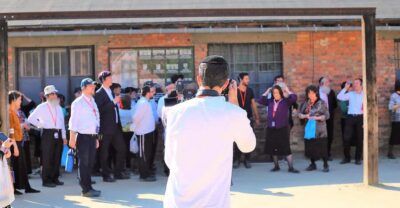
The guide’s role is especially useful here. The site contains a great deal of material, but you do not have to work out the meaning of every room or display on your own. With a headset, you can listen while standing with the group, even when other groups are nearby.
I would give this section your full attention rather than trying to photograph everything. The content is heavy, and the number of objects and images can become hard to process. The guide helps set a pace, but you should still expect a serious, emotionally demanding visit rather than a standard historical tour.
Birkenau, where the scale changes
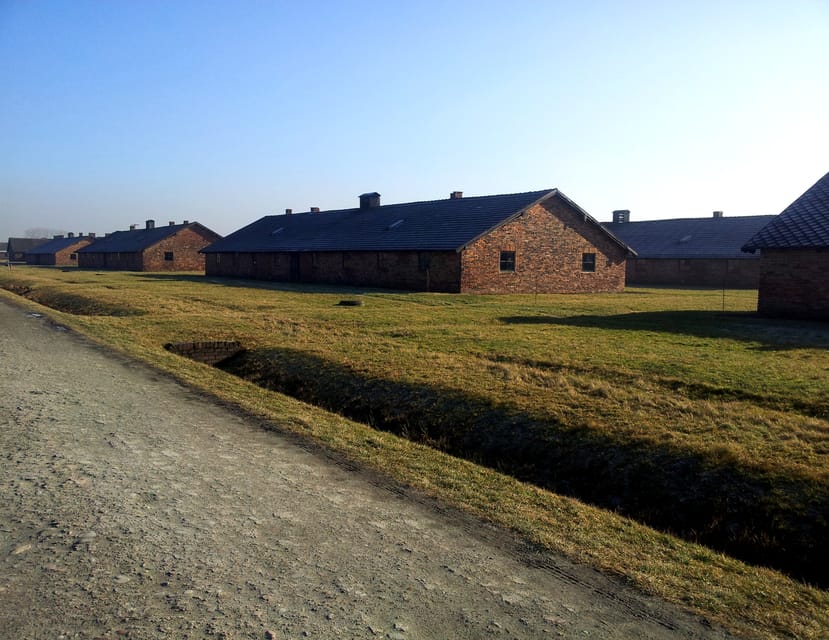
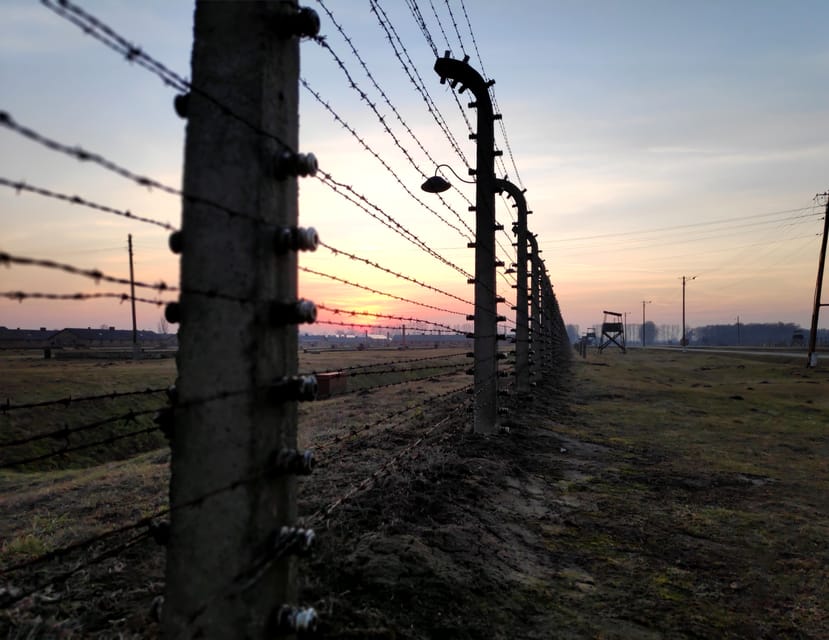
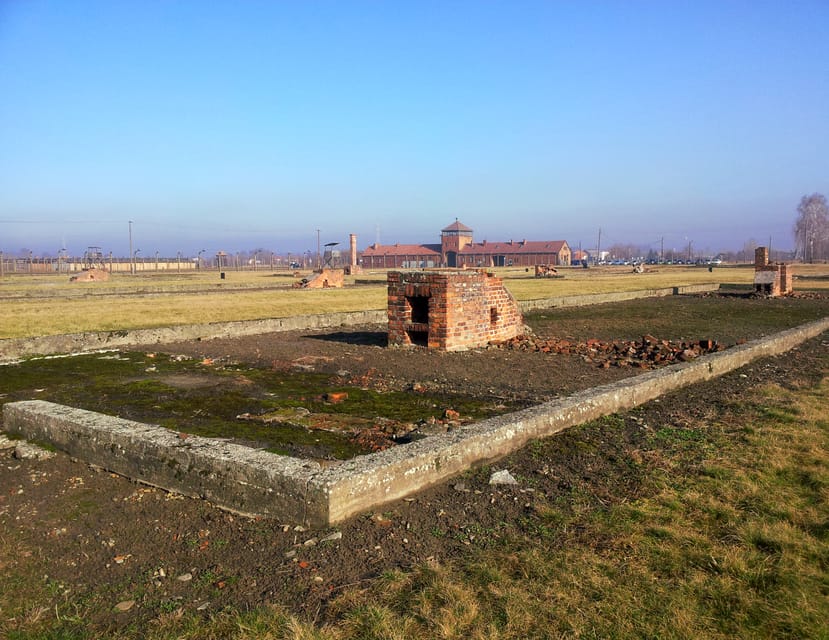
After Auschwitz I, the tour continues to Auschwitz II Birkenau for about an hour. This is where the physical size of the camp becomes clear. The site includes long lines of wooden barracks, open ground, ruins of gas chambers and crematoria, and the remains of the industrial killing system used by Nazi Germany.
The wooden blocks show the harsh conditions in which almost 1,000 people could be held in a single barrack. They are stark and basic, with little of the museum polish found at Auschwitz I. That contrast is part of what makes the second section so important: you are no longer moving through a sequence of indoor exhibitions, but across a vast former camp complex.
One hour gives you an introduction, not a full exploration. Birkenau is enormous, and the guided route covers only part of what you could see by walking farther on your own. A practical point raised by the tour details is that independent transport between Auschwitz I and Birkenau can give you more freedom afterward. If you arrive by car or use your own arrangements, you may be able to stay longer at Birkenau, subject to the memorial’s rules and opening conditions.
If you are tied to a return transfer, you may need to leave as soon as the guided portion ends. That is the biggest limitation for anyone who wants time to walk through more of the Birkenau grounds.
Why the guide matters at a place this large
Auschwitz-Birkenau is not difficult because it lacks information. It is difficult because it contains so much information, spread across two sites and many buildings. A licensed guide can connect the exhibits, buildings, and photographs so the visit does not become a series of disconnected rooms.
The guide leads you through the whole camp section covered by the group, explains what you are seeing, and uses a headset so you can hear without standing shoulder to shoulder with the guide. English is the stated tour language. One booking account identifies the guide as Suzanna, though the name was recalled with some uncertainty, so you should not assume a particular guide will lead your departure.
The tone should be suitably solemn. This is not a place for theatrical storytelling or a rushed list of dates. The best part of the guide service is its structure: you know where to look, what the surviving buildings mean, and why the two camps need to be understood together.
You should still allow yourself quiet time. A guide can explain the facts, but no one can tell you exactly how long you need to stand with a photograph, a barrack, or a ruin before moving on.
A few more things to do in Oświęcim worth a look
- Auschwitz-Birkenau: Skip-the-Line Entry Ticket & Guided Tour
★ 4.4 · 1,038 reviews - Auschwitz-Birkenau: Guided Tour and Skip-The-Line Ticket
★ 4.4 · 215 reviews - Auschwitz-Birkenau – Skip the Line Tickets
★ 3.5 · 29 reviews - From Krakow: Wieliczka Salt Mine Tour & Skip the Line Ticket
★ 4.4 · 3,925 reviews
The $81 price and what it buys you
At $81 per person, this is not the cheapest way to enter Auschwitz-Birkenau. The price includes admission to both memorial sites, a licensed guide in the chosen language, headsets, an English-speaking tour leader, and an English e-book for each participant.
The value depends on how much help you want. If you are visiting from outside Poland, have limited time, or do not want to manage museum entry procedures yourself, the booked ticket and guide can be worth the premium. The skip-the-line element also reduces one major unknown, although it does not remove security checks or guarantee that the museum will keep the initially suggested time.
The price does not include transportation. You must reach the museum yourself, arrange the movement between Auschwitz I and Birkenau if needed, and organize your return. This makes the package less convenient than a full Krakow departure with coach transport.
For a solo visitor or a small party already staying near Oswiecim, the arrangement may make sense. For someone based in Krakow, you should compare the total cost with a package that includes transport. The ticket itself may be convenient, but your real expense includes the journey there and back.
Meeting point and the risk of a confusing start
The stated meeting point is near luggage storage on the side of the main entrance museum building. That description is useful, but it may not be enough in a crowded car park.
One account describes difficulty finding the group at the start, even after arriving on time. Another says a coordinator named Daniel eventually located the participant, but the meeting felt more like luck than a clear system. You should arrive early, keep your phone available, and look carefully around the luggage storage and main entrance area.
A large visible sign, banner, or other group marker would make this easier, but you should not count on one. Save the provider’s contact information before arriving. If you are using a separate return transfer, confirm that meeting point too. A return pickup can be just as confusing as the first meeting.
This is a small logistical weakness, but it can have serious consequences at a timed memorial entrance. Missing the group may mean missing the booked visit.
Security, identification, and what to leave behind
Every participant must provide a full name during booking. The name must match the passport or identification document shown at the entrance. Bring that document with you, even if you normally travel around Poland without carrying it.
All visitors pass through airport-style security. Pets, weapons, sharp objects, alcohol, drugs, oversized luggage, large bags, and other prohibited items are not allowed. Pack lightly. The less you carry, the easier the security process and the walking between sites will be.
The information specifically asks you to bring a passport or ID card. Do not rely on a photo of your document unless the museum confirms that this is acceptable. A mismatch between the booking name and your identification can lead to refused entry.
Because you are walking through a memorial site, practical clothing and sensible shoes matter. The supplied information does not promise a particular surface or weather arrangement, so you should be ready for conditions that may change during the day.
Timing changes and the need for a flexible day
The starting hour you select is tentative and may change because of museum availability. This is the most important booking warning. You need to plan around the museum rather than build the museum into a tightly packed day.
Refunds are not accepted simply because the museum changes the time, so check your plans before booking. Do not reserve a train, airport transfer, or fixed restaurant booking immediately after the expected finish.
The advertised cancellation policy allows free cancellation up to 24 hours before the activity for a full refund. You can also reserve now and pay later, which helps if your schedule is still shifting. These policies make the booking less risky, but they do not solve the timing issue once the museum has assigned or changed your slot.
The actual pace and duration are controlled by the memorial’s visitor service. Your guide may be excellent, but cannot set the museum’s timetable or extend the official route whenever you wish.
Who will get the most from this experience
I would recommend this option to you if you want a guided introduction to both Auschwitz sites and prefer to have admission arranged before you arrive. It suits first-time visitors who want a clear route, English explanations, and help making sense of the museum displays.
It is also a good fit if you are comfortable arranging your own transportation. The package gives you the memorial visit, but not a Krakow transfer. You need to be confident about reaching Oswiecim, finding the meeting point, and moving between Auschwitz I and Birkenau.
You may prefer another arrangement if you want several hours to explore Birkenau after the guided visit. The one-hour Birkenau section is meaningful but limited, and the site is much too large to see fully in that time. Independent transport can give you more control, though you still need to follow museum rules and opening hours.
This is not a light family outing or a casual stop between attractions. The subject matter is painful, the pace can be demanding, and the museum has strict entry procedures. You should choose it because you want a serious memorial visit, not simply because it is a famous place to check off.
Should you book these Auschwitz-Birkenau tickets?
Book this experience if your priority is structured access to both camps with an English-speaking guide, and you are willing to arrange transport and keep your day open. The included headsets, booked admission, and guided route remove much of the uncertainty once you are inside.
Think twice if the $81 price feels high after adding transport, or if you need a guaranteed start and finish time. The unclear meeting point and possible schedule changes require patience. If you choose it, enter all names exactly as shown on identification, carry only a small bag, arrive early, and do not schedule anything important afterward.
For most first-time visitors, the guide and two-site coverage make this a useful way to approach Auschwitz-Birkenau. Just understand what you are buying: a carefully organized memorial visit, not a full-day exploration of every corner of Birkenau.
FAQ
Where does the tour start?
The meeting point is near the luggage storage area beside the main entrance museum building at Auschwitz I.
Does the ticket include transportation?
No. Transportation is not included. You must arrange your own way to the museum and between Auschwitz I and Auschwitz II Birkenau if needed.
How long does the experience last?
The listed duration is 210 minutes. The described visit includes about two hours at Auschwitz I and about one hour at Birkenau, but the museum controls the exact pace and duration.
Which sites are included?
The visit includes Auschwitz I and Auschwitz II Birkenau.
Is a guide included?
Yes. A licensed English-speaking guide leads the visit, and headsets are provided so you can hear clearly.
Is the ticket skip-the-line?
Yes. The activity includes skip-the-line access to the ticket line, but all visitors must still pass through airport-style security.
Do I need identification?
Yes. Bring a passport or ID card. Each participant’s full name must match the name provided during booking.
Can I bring a large bag?
No. Oversized luggage and large bags are not allowed. Pets, weapons, sharp objects, alcohol, and drugs are also prohibited.
Can the starting time change?
Yes. The booked time is tentative and may change according to museum availability. You are advised to keep the whole day free.
Can I cancel for a refund?
You can cancel up to 24 hours in advance for a full refund. The activity also allows you to reserve now and pay later.
Just added in Oświęcim
- Auschwitz-Birkenau: Fast-Track Ticket & Guided Tour No Transfers★ 3.5 · 17 reviews
- Auschwitz-Birkenau – Skip the Line Tickets★ 3.5 · 29 reviews
- RoundTrip from Krakow to Auschwitz + Entrance Tickets★ 4.9 · 10 reviews
- Krakow Auschwitz-Birkenau Memorial Guided Tour Meeting Point★ 4.7 · 20 reviews
- From Krakow: Wieliczka Salt Mine & Auschwitz Guided Trip★ 4.5 · 5 reviews
- From Krakow: Roundtrip Transportation to Auschwitz Birkenau★ 4.8 · 30 reviews
- Auschwitz-Birkenau Museum Tour from Krakow★ 4.6 · 25 reviews
- Auschwitz-Birkenau: Memorial Entry Ticket and Guided Tour★ 3.9 · 54 reviews
Auschwitz-Birkenau Memorial Tours, compared.
Auschwitz-Birkenau Guided Tour & Hotel Pickup
Read the review →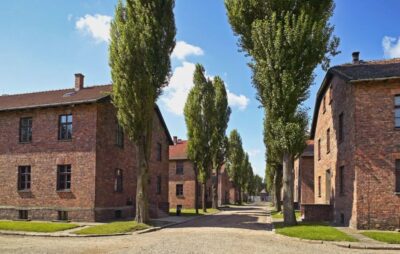
Auschwitz Guided Tour with Optional Hotel Pickup
Read the review →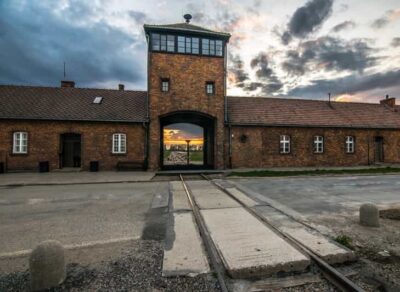
Auschwitz-Birkenau Guided Tour with Pickup & Lunch
Read the review →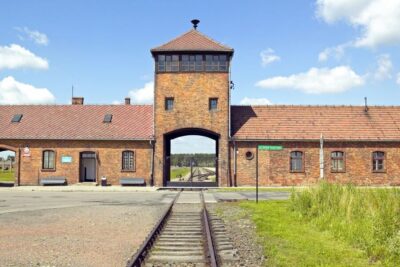
Krakow to Auschwitz Birkenau Guided Tour with Transfer and Ticket
Read the review →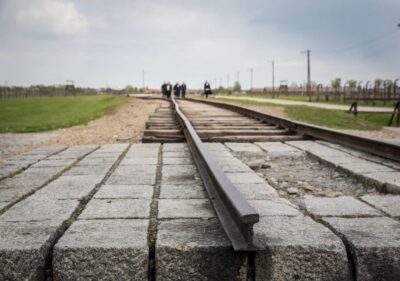
Auschwitz Birkenau Small Group Tour with Pickup
Read the review →Browse the lists this tour appears in