
Reviewed · CRUISES & BOAT TOURS
SUP Private Tour in Motlawa River
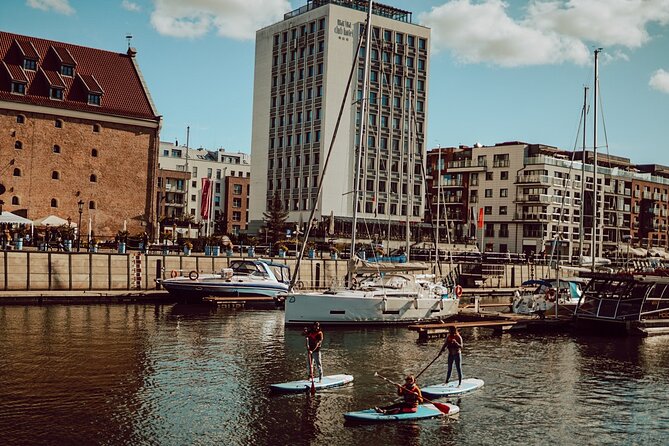
Gdańsk makes unusual sense from a paddleboard. The Motława puts you right beside the old embankment, the medieval Crane, former granaries, bridges, and waterfront gates. You get the city’s postcard views, but from a low and pleasantly active viewpoint.
I like the private format, since your group gets the guide’s attention instead of following a large crowd. I also like the way the tour mixes sightseeing with a simple outdoor activity. Guide Hania is a native Gdańsk resident who brings local knowledge to the route and explains the city through its river.
The main consideration is balance. SUP is accessible and does not require special skills, but you do need reasonable balance, and the tour depends on good weather. The river may also feel less relaxing if you are nervous on a board or unused to being watched from the busy waterfront.
Key points before you book
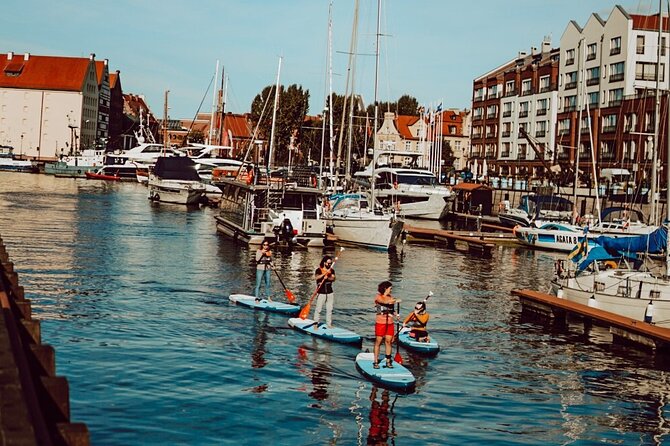
- Paddle beside Gdańsk’s best-known waterfront buildings: The Crane, Green Gate, and Mariacka Gate look especially close from the river.
- A private tour with Hania: Your group participates alone, and the guide can focus on your pace and questions.
- A history tour with an active twist: The route links the medieval port, grain trade, shipbuilding, bridges, and old defenses.
- Most equipment is supplied: You receive a SUP board, paddle, leash, and life vest.
- Plan for roughly two hours: The stated duration ranges from 1 hour 40 minutes to 2 hours 30 minutes.
- Weather matters: Poor conditions can lead to a new date or a full refund.
Gdańsk’s old port looks different from a SUP board
The Motława is one of the best places in Gdańsk to connect the modern city with its trading past. From the water, the buildings along Długie Pobrzeże rise directly above you, while bridges, gates, ships, and old warehouses create a changing view as you paddle.
You are not simply being carried past the sights. You help set the pace with each stroke, then pause near key landmarks while Hania explains what you are seeing. That makes this a good choice if a standard walking tour feels too familiar or if you want an active break between museums and churches.
The activity is not presented as a hard workout. The SUP format is described as fun and manageable without special training, although balance is important. You can expect some attention from people along the riverfront, too. Paddleboards are still an unusual way to see central Gdańsk, so this is not the quietest form of sightseeing.
The tour starts at Kamienna Grobla, at the address 80-700 Gdańsk, and returns there at the end. It is near public transportation, and the activity is private, with only your own group taking part. Departure times are available at a choice of hours, which helps if you want to fit the paddle around a museum, meal, or walking tour.
More boat tours in Gdańsk:
- Gdansk: City Cruise on Historical Polish Boat
★ 4.8 · 2,913 reviews - Gdańsk: Sunset Cruise on a Historic Polish Boat
★ 4.9 · 977 reviews - Gdansk: Guided Round-Trip Cruise to Westerplatte
★ 4.3 · 865 reviews
Długie Pobrzeże introduces the old Hanseatic port
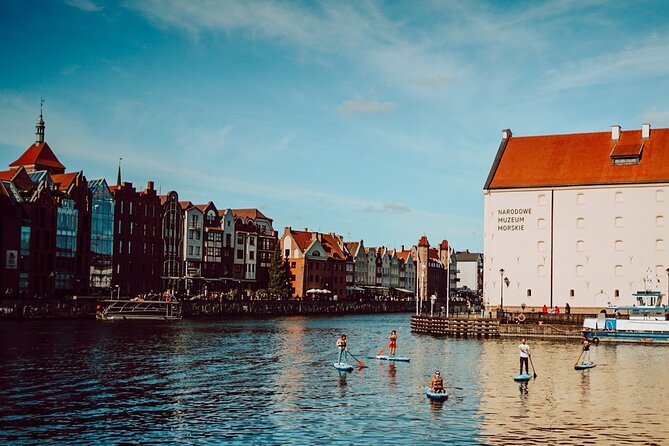
The first major stop is the Motława embankment, known as Długie Pobrzeże. This is where Gdańsk’s connection to the old Hanseatic trading world becomes easiest to read.
From the board, you see the waterfront at a different height than you would from the pavement. The embankment, historic façades, and river traffic form a compact introduction to the city’s port identity. You get about 15 minutes here, enough for an orientation and a closer look before moving along the water.
This part is valuable because it gives the rest of the tour a frame. Gdańsk’s wealth did not come from grand buildings alone. It came from ships, grain, warehouses, and access to the Baltic. The river is the thread connecting all those subjects.
The Crane and Green Gate reveal Gdańsk’s trading power
The Crane is one of Gdańsk’s defining symbols. It also represents how little remains of the city’s great trading age. Seen from the Motława, the historic lifting structure has a practical relationship with the water that is easy to miss from the street.
The stop lasts about 10 minutes and admission is free because the tour views the landmark from outside. You should not expect a museum visit or an interior tour here. The value is the close river view and the explanation of how the Crane fits into the old port.
Later, the route reaches the Green Gate, or Brama Zielona. Its four-arched waterfront façade was built as a palace for Polish monarchs, although no Polish king actually stayed there. The building also has a modern political connection: Lech Wałęsa had an office there before moving to the European Solidarity Centre.
The Green Gate is a fine example of how this paddle links several periods without leaving the river. You move from medieval trade to royal ambitions and then to modern Polish history. From the water, the building’s position beside the Motława is particularly clear.
Granary Island explains where the money came from
Wyspa Spichrzów, or Granary Island, is one of the most useful stops for understanding Gdańsk’s former wealth. For centuries, the island stored the grain that passed through the port and helped support the city’s trading power.
By 1643, the island had 315 granaries. Together, they could hold up to 250,000 tons of grain and serve more than 200 ships. Those numbers explain why Gdańsk became the largest harbour on the Baltic and one of Europe’s wealthiest cities.
You get about 10 minutes here. The route also lets you see the island’s current return to public use through major construction projects. That creates a useful contrast: old warehouses and trading wealth on one side, new development on the other.
This is one of the tour’s strongest history stops because the setting and subject match. You are looking at the former storage center while sitting on the waterway that made the trade possible. If you enjoy economic and urban history, pay close attention here.
Same base, a different kind of day:
- Gdańsk City Sights & History Guided Walking Tour in English
★ 4.8 · 876 reviews - Gdansk: Firearm Shooting Experience with Instructor
★ 4.8 · 866 reviews - Gdańsk: Sightseeing EcoCruise around the Old Town of Gdansk
★ 4.6 · 719 reviews - Main Town Gdańsk Walking Tour
★ 5.0 · 644 reviews
Wartka Bridge and Ołowianka keep the route moving
The Wartka footbridge opened in June 2017 and connects the Main Town near the Hilton hotel with Ołowianka. It is a short stop, around five minutes, but bridges are among the most enjoyable features of a river tour. From a SUP board, you get a direct sense of how the city crosses and uses the water.
Ołowianka Island gets its name from ołów, the Polish word for lead. Lead brought upriver from Silesia was stored here during the Teutonic period. Later, the island’s warehouses were used as granaries.
The waterfront buildings beside the Philharmonic Hall and the Royal Granary help make that past visible. You get roughly 10 minutes to take in the island and hear how its purpose changed over time. The stop is short, so do not expect a long walk or an extended visit to the Philharmonic Hall. This is a water-level view of the island and its buildings.
SS Soldek adds a close look at Polish shipbuilding
The SS Soldek is the first steamship built in Polish Gdańsk after 1945. Today it serves as a living museum, and the ship gives the route a strong twentieth-century chapter.
You spend about five minutes at this stop. That is enough for a look at the vessel from the river and an explanation of its place in Gdańsk’s postwar identity, but not enough for an interior museum visit. If you want to tour the ship itself, plan a separate visit at another time.
The Soldek also changes the mood of the route. Until this point, much of the story centers on medieval and early modern trade. The ship brings you into the period when Gdańsk remained tied to industrial work, shipbuilding, and Poland’s modern history.
Mariacka Gate and Cow Gate show the city’s old entrances
Brama Mariacka, or Mariacka Gate, is a shadowy Gothic gate with one of Gdańsk’s most attractive streets behind it. The five-minute stop gives you a glimpse of the passage from the river toward Mariacka Street.
From the water, the gate helps explain the old city’s relationship with the Motława. It was not a decorative waterfront backdrop added for tourists. These gates controlled movement between the river and the urban streets.
The route also passes Brama Krowia, or Cow Gate, at the Motława end of Ogarna Street. The name probably comes from the road used to drive cattle. Again, the stop is about five minutes, so the appeal is the quick connection between an old street name and the river entrance.
These shorter stops keep the paddle from becoming a long lecture. You see a series of small clues, each one showing how the city worked. The tradeoff is that you will not spend much time on land at any of these gates.
The old Motława fortifications finish the history lesson
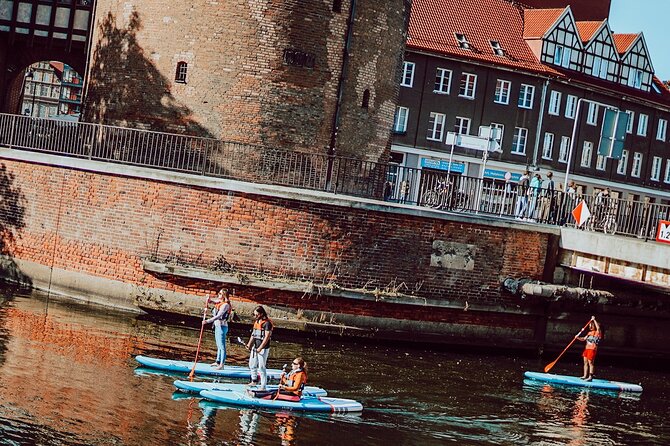
The final historical stop is the Motława Channel fortifications. Gdańsk was protected by a bastion fort, and a stone lock in the Motława could be used to flood the surrounding area.
You spend about 10 minutes seeing what remains. The fortifications are less immediately striking than the Crane or Green Gate, but they explain why control of the river mattered for defense as well as trade.
This ending gives the route a useful sense of purpose. The Motława carried grain and ships, but it also formed part of the city’s protection. A river could bring wealth, guide traffic, and help keep an enemy out.
What the private format changes
A private SUP tour is not the same as joining a large sightseeing boat. You are closer to the buildings, moving at your own group’s pace, and able to stop for explanations without a boatload of people competing for the guide’s attention.
Hania is identified as a native Gdańsk guide with a strong personal interest in her city. That matters on a route with many short stops. The best value comes from connecting the facts: why grain mattered, how the islands were used, what the gates controlled, and how the port changed after 1945.
The private setup should suit couples, families, friends, or a small group that wants an unusual city tour. It also works well for people who want to ask questions. Since only your group participates, you do not have to match the needs of a larger mixed party.
Still, private does not mean fully flexible in every way. The route and approximate timing are set around the river conditions and the listed sights. You should also be ready for the simple physical demand of standing, balancing, and paddling.
Price, equipment, and practical value
At $50.85 per person, the tour costs more than a basic walking route but includes a private experience and the main SUP equipment. You receive the board, paddle, leash, and life vest, so you do not need to arrange those items yourself.
The value is strongest if you want both sightseeing and an activity. You are paying for access to a different viewpoint, the guide’s attention, and a route that covers many central waterfront landmarks in roughly two hours. If you only want historical commentary, a walking tour may give you more time at each building. If you want to be on the water, this price is easier to justify.
Bring your own bottled water. It is not included, and you should not count on buying or receiving it as part of the activity. Wear clothing suited to warm-weather outdoor use and be prepared for the possibility of getting wet, although the supplied information does not specify changing facilities or storage.
The duration is listed as approximately 1 hour 40 minutes to 2 hours 30 minutes. That range is worth noting when planning the rest of your day. The tour includes many short stops, but river conditions, group pace, and explanations can affect the total time.
Balance, weather, and who should choose this
You do not need special SUP skills, but good balance is required. If you are comfortable trying a new activity and can manage a stable standing position, the experience should feel approachable. If you are unsure, ask about the activity before booking, since the supplied information does not give a detailed age, fitness, or swimming requirement.
Weather is the biggest practical variable. The experience requires good conditions, and poor weather can lead to a different date or a full refund. This makes it wise to avoid placing the tour at the very end of a tightly packed visit if the paddle is especially important to your plans.
The activity is offered in English. Confirmation is provided at booking, and the tour is near public transportation. Most people can participate according to the supplied information, but remember that this is an active river experience, not a passive boat ride.
I would choose this for someone who has already seen Gdańsk on foot and wants a new angle, or for a first-time visitor who likes history with movement. It is less suitable if you want long indoor visits, a guaranteed schedule in poor weather, or a completely dry and effortless outing.
Should you book this Motława SUP tour?
Book it if you want to see Gdańsk’s waterfront at close range and enjoy doing something more active than walking. The Crane, Green Gate, Granary Island, Ołowianka, SS Soldek, and the old gates create a well-connected route, and the private format gives the experience a personal feel.
I would be especially inclined to book if Hania is available as your guide. Her connection to Gdańsk adds local character to a route already packed with useful history. Just bring water, allow up to two and a half hours, and keep your schedule flexible in case of poor weather.
You can cancel for a full refund up to 24 hours before the start time. Cancellations or changes made less than 24 hours in advance are not refunded or accepted, and the activity may also be changed or refunded if the minimum group size is not reached.
FAQ
Where does the SUP tour start and finish?
The tour starts at Kamienna Grobla, 80-700 Gdańsk, Poland. It ends back at the same meeting point.
How long does the experience last?
The approximate duration is between 1 hour 40 minutes and 2 hours 30 minutes.
What equipment is included?
The tour includes a SUP board, paddle, leash, and life vest.
Is the tour private?
Yes. Only your group participates in the activity.
Is the tour offered in English?
Yes. English is one of the offered languages.
What happens if the weather is poor?
The experience requires good weather. If it is canceled because of poor conditions, you will be offered a different date or a full refund.
Just added in Gdańsk
- Gdansk, Gdynia, and Sopot: 8-Hour Private Sightseeing Tour★ 4.9 · 13 reviews
- Undercover City Games: Gdynia★ 5.0 · 34 reviews
- Private WW2 Tour of Westerplatte,Gdansk and Stutthof Including Lunch★ 5.0 · 12 reviews
- Whisky Tasting in Gdańsk★ 5.0 · 3 reviews
- Gdansk EVERYDAY Vodka Tasting Tour★ 5.0 · 6 reviews
- Westerplatte private tour led by Expert-Guide (door to door)★ 5.0 · 5 reviews
- Torun – City of Copernicus Private Tour★ 4.5 · 5 reviews
- TriCity Tour (Gdansk, Gdynia, Sopot) – PRIVATE (8h)★ 5.0 · 4 reviews
Cruises & Boat Tours, compared.
Traditional Galar Cruise on The Vistula River
Read the review →
Browse the lists this tour appears in