
Reviewed · RETRO & ELECTRIC CAR TOURS
Warsaw: 2.5-Hour Dark Side – Praga District by a Retro Bus
Warsaw’s Praga district gives you a very different city tour. Across the Vistula, old pre-war streets, courtyard shrines, former factories, street art, and stories of crime replace the polished center. You ride there in a 1980s retro bus, with a live guide turning the rougher edges of Warsaw into a readable story.
I like the human commentary, especially when guides such as Maks and Konrad bring humor and local context to the streets. I also like the hot chocolate stop at E Wedel and the chance to see Zabkowska, Brzeska, and Stalowa streets without having to work out the route yourself.
The main drawback is that the meeting point can be hard to find, and the vehicle depends on group size. Groups of more than eight use the full Jelcz cucumber bus, while smaller groups may ride in a Nysa mini bus. There is also some walking, and the tour is not suitable for wheelchair users.
Key points to know before you book
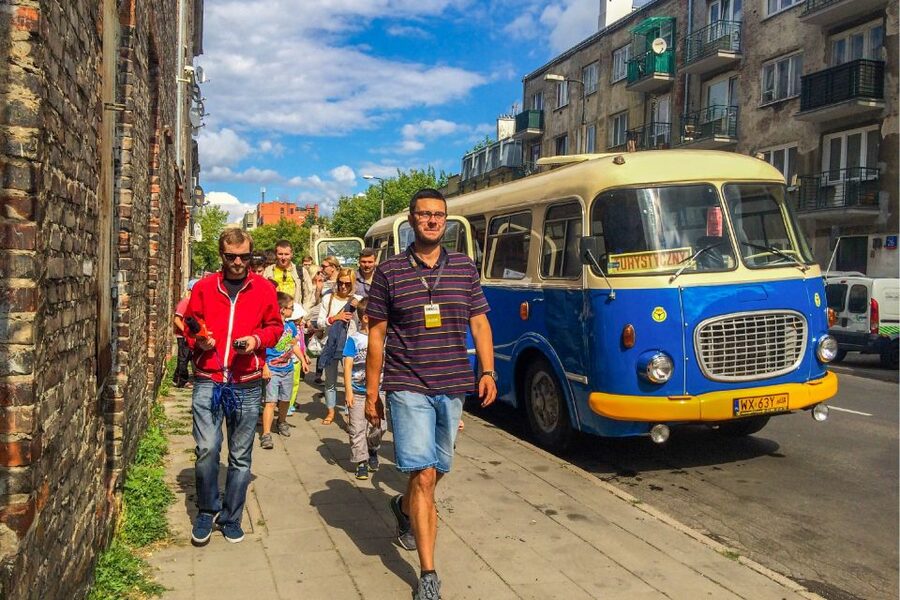
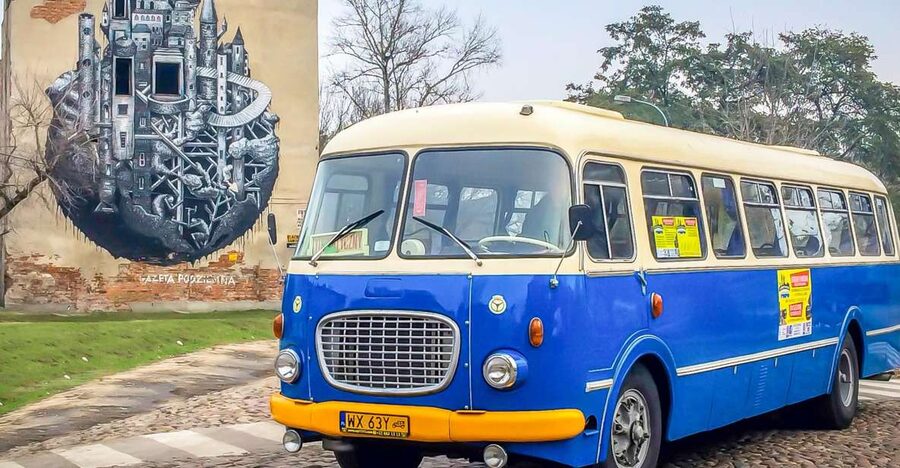
- Ride a real 1980s bus: Larger groups use the famous Jelcz cucumber, while groups of up to eight use a smaller Nysa retro bus.
- Meet at 11:00 on Saturday: The departure point is by the Tourist Information office at the Palace of Culture and Science.
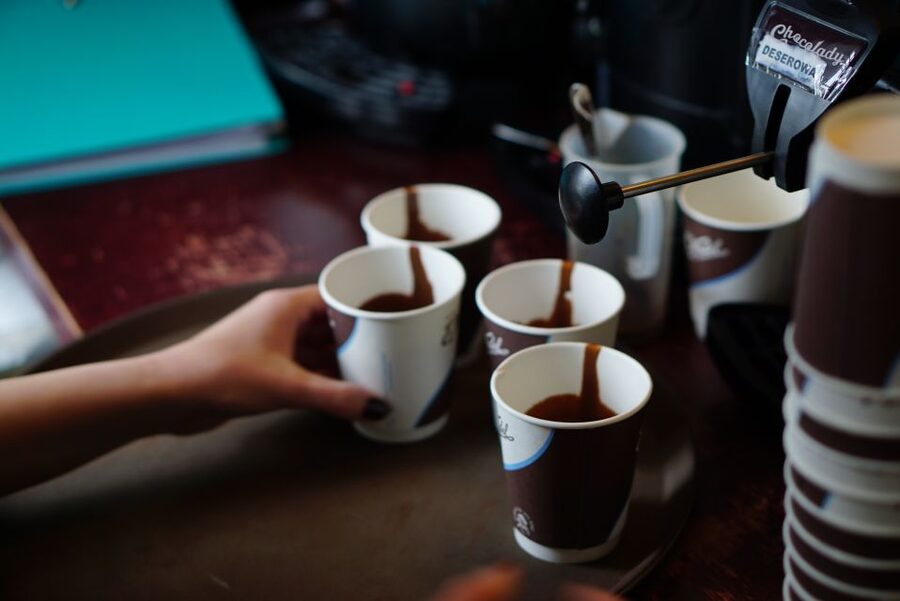
- Taste E Wedel hot chocolate: The stop adds a pleasant break and introduces one of Warsaw’s best-known confectionery stories.
- See Praga’s old courtyards: Colorful shrines, pre-war buildings, and narrow streets show a side of Warsaw missed by standard city tours.
- Hear the district’s darker stories: The guide explains Praga’s reputation for crime, its old marketplaces, and its changing identity.
- Expect a few short walks: Comfortable shoes matter, especially in warm weather.
Why Praga deserves a separate tour
Most first visits to Warsaw focus on the rebuilt Old Town, the Royal Route, museums, and the Palace of Culture and Science. Those places matter, but they do not tell the whole city’s story.
Praga sits on the eastern side of the Vistula. It escaped some of the wartime destruction that erased much of central Warsaw, so parts of the district retain older streets and buildings. The result is not a picture-perfect open-air museum. You see worn façades, patched walls, active streets, courtyards, and signs of redevelopment side by side.
That mix is the point. The tour does not present Praga as a simple success story or a place frozen in the past. It explains why the area was once seen as Warsaw’s most dangerous district, then shows you the factories, art, cafés, restored buildings, and cultural life that have changed its reputation.
I find this kind of tour useful early in a Warsaw visit. It gives you context for the city’s divisions, its wartime losses, and its postwar changes. It also helps you decide if you want to return to Praga later for a slower walk.
Other sightseeing runs by little car around Warsaw:
- Private Tour: Warsaw City Sightseeing by Retro Fiat
★ 5.0 · 562 reviews - Discover the Dark Side of Warsaw in Praga District by Retro Bus
★ 5.0 · 327 reviews - Private Tour: Warsaw’s Jewish Heritage by Retro Fiat
★ 5.0 · 208 reviews
The retro bus is part of the attraction
The transport is not just a way to get from one stop to the next. The old bus shapes the whole experience.
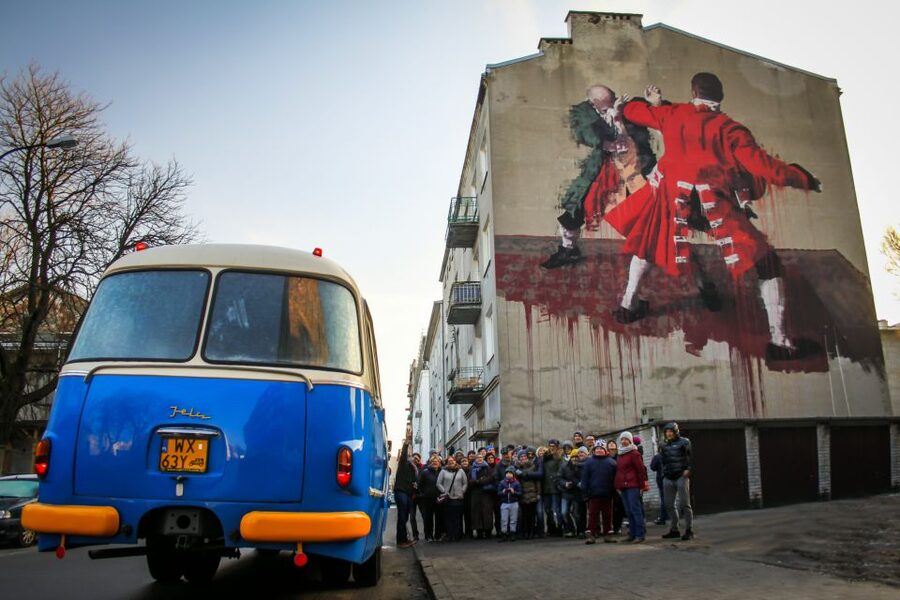
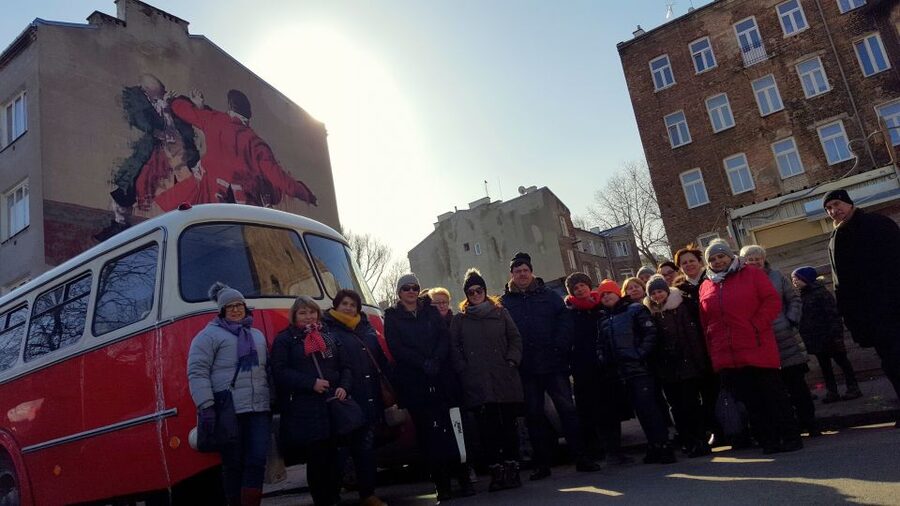
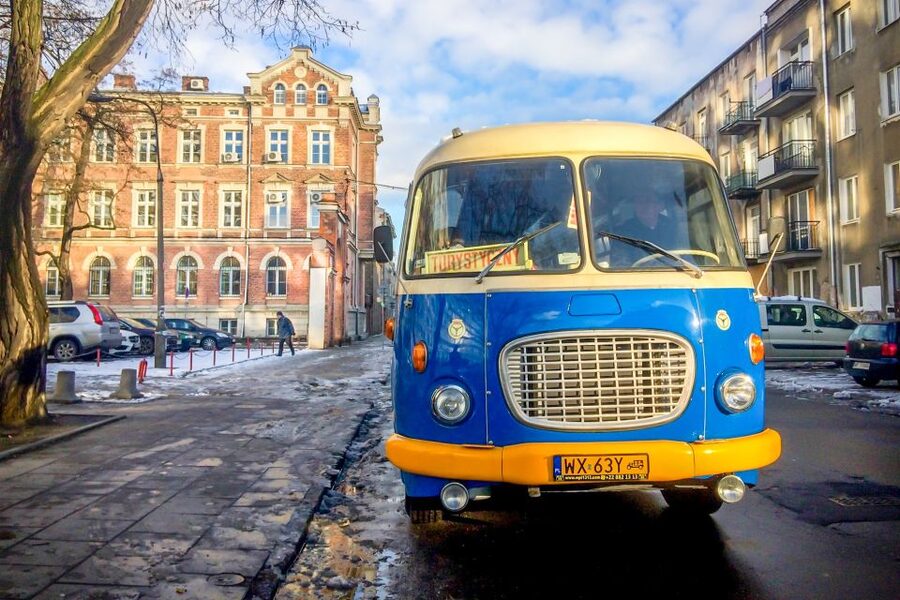
If the group is larger than eight, you ride in a Jelcz bus, often nicknamed the cucumber because of its rounded shape. It is a preserved 1980s coach, and its age gives the trip a strong sense of place. If the final group has eight people or fewer, the operator uses a Nysa mini retro bus instead.
That distinction matters if you have your heart set on the full Jelcz. The smaller vehicle still provides the retro feel, but the exact bus cannot be guaranteed. One small group found the Nysa perfectly suitable, while another visitor specifically praised the comfort of the larger old bus.
The coach is more comfortable than you might expect, but it is still an older vehicle. If you sit at the back, the sound system may matter. One visitor missed some commentary because of nearby conversation and weak audio. I would sit as close to the guide as possible, especially if the bus is full.
Meeting at the Palace of Culture and Science
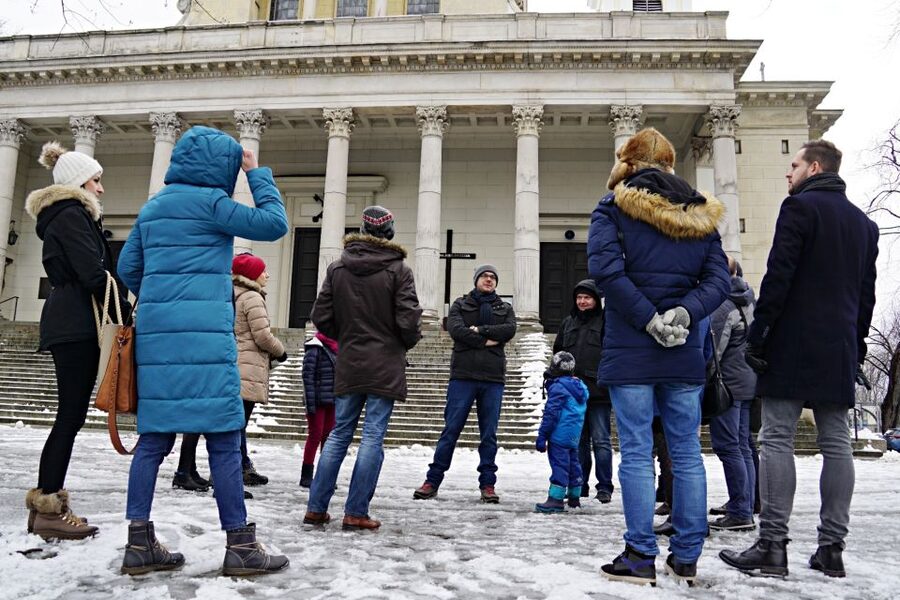
The tour begins at 11:00 on Saturday in front of the Palace of Culture and Science, near the Tourist Information office. The stated meeting point is useful, but it has caused confusion.
Some people have expected to meet directly at the front of the building, only to find the bus in a nearby car park. GPS directions have also been described as unreliable. Give yourself extra time and look for the actual retro vehicle rather than relying only on the map pin.
The location is central and easy to combine with other Warsaw sights. You can use the Palace of Culture and Science as your fixed landmark, then check the area around the Tourist Information point before departure. This is one small part of the tour where a clearer sign or marker would help.
Crossing the Vistula into Praga
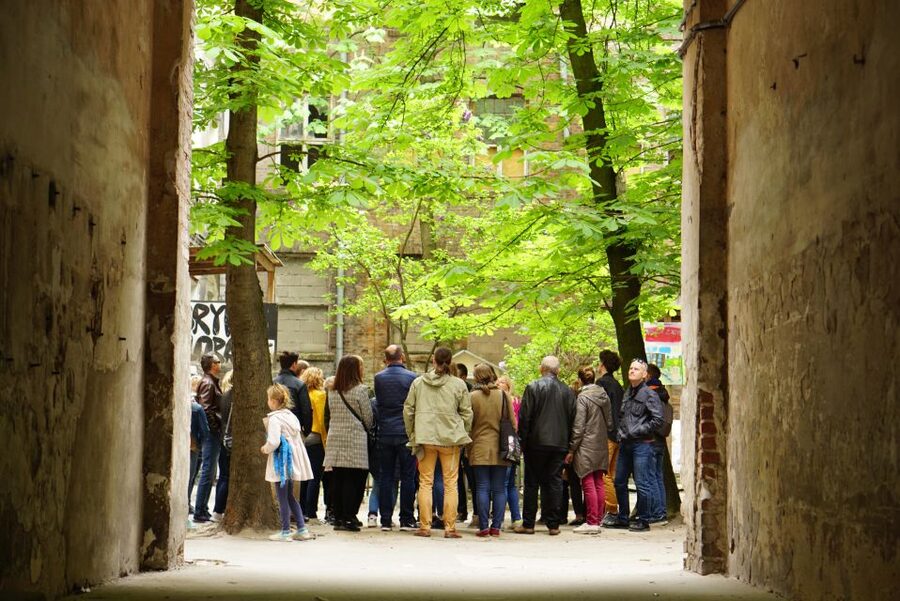
The bus crosses the Vistula, creating a simple but useful transition in the story. You leave the rebuilt center and enter a district with a different architectural feel and a more complicated reputation.
Your English-speaking guide provides live commentary throughout the ride. The best guides on this route, including Maks, Konrad, and earlier guides such as Paweł, Rafał, and Marcin, have been praised for clear English, humor, and the ability to answer questions. The guide is the key to the experience because many of the streets will not explain themselves.
You may pass ordinary residential areas before reaching the stops. That is helpful. It keeps the tour from becoming a string of isolated sights and shows how historic buildings sit within a living neighborhood.
Same base, a different kind of day:
- Warsaw: Chopin Concert in the Old Town
★ 4.8 · 2,287 reviews - Warsaw: Traditional Galar Cruise on The Vistula River
★ 4.6 · 1,640 reviews - Warsaw: Old Town Highlights Walking Tour in English
★ 4.7 · 1,516 reviews - Warsaw Concert: Chopin – Painted by Candlelights with Wine
★ 4.8 · 1,442 reviews
E Wedel and the hot chocolate stop
The first stop after crossing the river is a chocolate factory associated with E Wedel, a company that has been producing sweets in Warsaw since the mid-19th century. You hear the company’s story and receive a cup of hot chocolate.
This is a modest stop, not a full factory tour. If you expect to walk through production rooms and watch chocolate being made, you may find it limited. A past visitor specifically wished for a more detailed factory visit.
Still, the break works well in a 150-minute outing. The hot chocolate gives you time to pause, warm up in cold weather, and connect the tour to a Polish brand with a long Warsaw story. It also breaks up the bus ride before the more architectural and historical stops.
Basilica of the Sacred Heart of Jesus
The next stop is the Basilica of the Sacred Heart of Jesus, one of the district’s most imposing religious buildings. Its design was inspired by the Basilica of Saint Paul in Rome.
The church gives the tour a useful change of tone. Praga is often presented through crime stories, rough reputations, and industrial remains, but this stop shows its religious and architectural side. Your guide explains what to notice rather than leaving you to guess why the building matters.
You should expect a short visit rather than an extended religious tour. Modest clothing and respectful behavior are sensible whenever a church is part of a sightseeing route.
Koneser, from vodka factory to cultural complex
Koneser is one of the more interesting stops because it connects Praga’s industrial past with its newer identity. The site was once a vodka factory. The guide explains what was produced there and what occupies the complex now.
This is a good example of the district’s change. An old industrial setting can carry traces of its working past while serving a new cultural or commercial purpose. The contrast helps you understand why Praga feels different from the carefully rebuilt center.
The stop is also useful if you want to return later. The tour gives you a first look and enough background to recognize Koneser as more than an attractive collection of old brick buildings. You may decide to come back when you have more time.
The Praga Bermuda Triangle
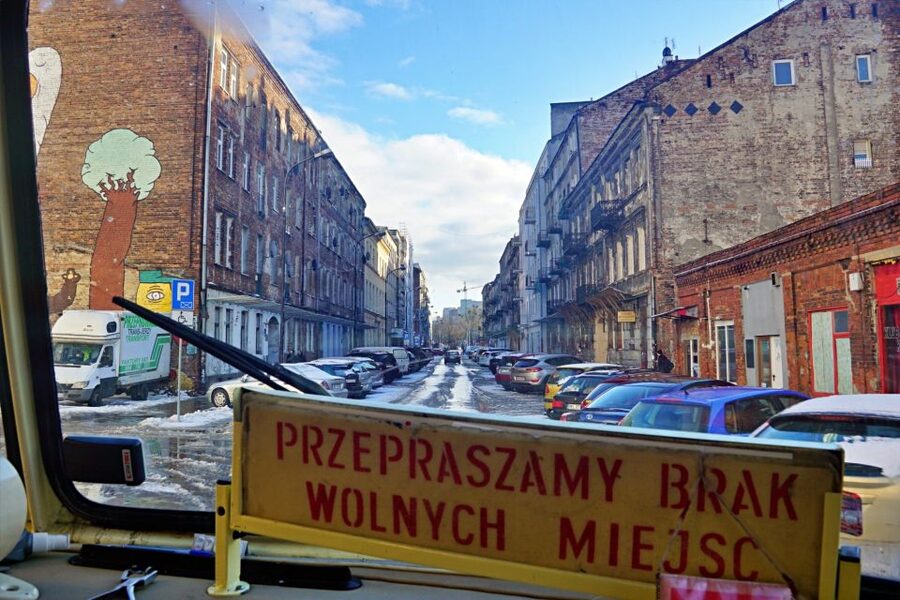
The tour then reaches the area known as Praga’s Bermuda Triangle. The guide explains where the nickname came from and uses the area to discuss Praga’s reputation for crime and hardship.
The name may sound theatrical, but the route uses it to introduce real social history rather than scare tactics. You see streets and courtyards that once had a reputation far worse than the area has today. The guide’s tone matters here. The strongest guides use humor without turning local hardship into a joke.
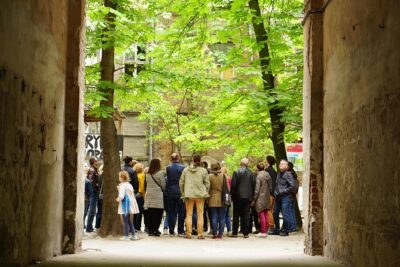
This section also shows authentic pre-war architecture. Look for enclosed courtyards, worn walls, old stairways, and small colorful shrines. These details are easy to miss if you pass through Praga alone, especially when you do not know which entrances are worth a glance.
There is some walking at this point. The route is not a long hike, but you should wear comfortable shoes. In hot Warsaw weather, the walking can feel more demanding than the itinerary suggests.
Zabkowska, Brzeska, and Stalowa streets
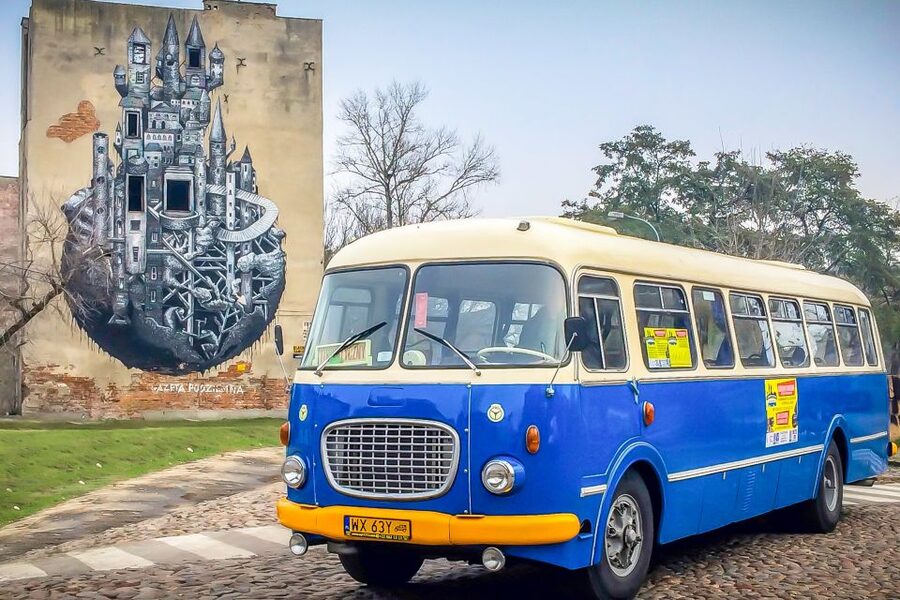
The streets of Zabkowska, Brzeska, and Stalowa give you the clearest sense of Praga’s visual character. You see older buildings, street art, courtyards, and signs of a neighborhood that has not been polished into a single style.
The street art is one of the tour’s strongest visual elements. Your guide points out impressive examples and explains how they fit into the area. This is better than simply passing murals from a bus window because you can connect the artwork with the district’s architecture and changing public image.
Film lovers may recognize parts of Praga from Roman Polański’s The Pianist. The guide also points out other film connections. The setting works on screen because the district retains a rougher, older appearance than much of central Warsaw.
Do not expect every street to look restored or picturesque. That is part of the value, but it may not suit you if you want only polished façades and postcard views. I would come ready for visual contrasts: faded walls beside new work, grand buildings beside neglected corners, and old shrines within busy urban blocks.
The guide makes or breaks the afternoon
This tour depends more on the person holding the microphone than on the bus. The strongest comments consistently praise Maks and Konrad for lively delivery, clear English, humor, and strong cultural context.
A good guide can explain why a marketplace once sold everything from jeans and diplomas to Kalashnikov rifles, then connect that story to the district’s past without making the whole tour feel like a crime show. The guide also keeps the stops moving, answers questions, and helps you see the difference between genuine history and a dramatic local nickname.
One guide has even been praised for helping a visitor with a mobility scooter. That does not make the tour fully accessible, since it is listed as unsuitable for wheelchair users, but it shows that the human service can be thoughtful.
The group size changes the feel. A very small English-language group can feel almost like a private tour. One group had only four English-speaking participants, and another had eight people in total. Larger departures feel more like a classic bus tour. If you want a smaller group, you can ask about availability, but the advertised price does not guarantee a particular group size.
Is $41 a fair price?
At $41 per person, the tour is not the cheapest way to see Praga. You are paying for 150 minutes of transport, a live English guide, a retro vehicle, several stops, and hot chocolate.
I think the price is fair if you value interpretation and convenience. Reaching Praga independently costs less, but you would need to plan the route, work out which streets and courtyards matter, and supply your own historical context. The bus also lets you cover more ground before returning to central Warsaw.
The value is strongest for a first visit, a short stay, or anyone who wants to understand the district rather than simply photograph it. It is weaker if you dislike group transport, prefer long independent walks, or want a proper factory tour at E Wedel.
Free cancellation up to 24 hours before departure and the option to reserve now and pay later make the booking less risky. Pets are not allowed.
Who should book this Praga tour?
I would recommend it to you if you have already seen Warsaw’s best-known central sights and want a less predictable afternoon. It suits adults, older children who can manage a little walking, history fans, film fans, and anyone who enjoys a guide with a sense of humor.
It is also a good choice for a Saturday morning because the 11:00 departure leaves the rest of the day open. The 2.5-hour length is long enough to give Praga shape without taking over your entire day.
I would hesitate if you need step-free access, dislike uneven walking, or are set on riding the Jelcz bus specifically. Groups of eight or fewer may receive the Nysa mini bus instead. If you are sensitive to sound, sit near the guide and avoid the back when possible.
Final verdict: book it for context, not polish
Book this tour if you want Warsaw explained through its less polished streets. The retro bus is memorable, the hot chocolate is a welcome touch, and the route covers places you might not choose on your own.
The real reason to book is the guide. Maks and Konrad have made especially strong impressions with their fluent English, humor, and ability to connect Praga’s past with its present. Just allow extra time to find the bus, wear comfortable shoes, and treat the tour as an introduction rather than a complete exploration of the district.
FAQ
Where does the Praga tour begin?
The meeting point is by the Tourist Information office at the Palace of Culture and Science in Warsaw. The listed Google location is 52.23081290854057, 21.005298793209906.
What time does the tour start?
The tour runs every Saturday morning at 11:00 AM.
How long does the experience last?
The tour lasts 2.5 hours, or 150 minutes.
What language is the tour conducted in?
The tour is conducted in English, with a live English-speaking guide.
Which bus will I ride?
Groups with more than eight participants use a Jelcz cucumber retro bus. Groups of up to eight use a Nysa mini retro bus.
Is hot chocolate included?
Yes. The tour includes a cup of hot chocolate at the E Wedel chocolate stop.
Does the tour include walking?
Yes. A small amount of walking is involved, so comfortable shoes are recommended.
Is the tour suitable for wheelchair users?
No. The activity is listed as unsuitable for wheelchair users.
Are pets allowed?
No. Pets are not allowed on the tour.
Can I cancel the booking?
Yes. You can cancel up to 24 hours in advance for a full refund. You can also reserve now and pay later.
Just added in Warsaw
- A unique walking tour of Jewish Warsaw — past and present★ 5.0 · 8 reviews
- Tour from Warsaw: Wolf’s Lair, Hitler’s HQ Zones I and II★ 5.0 · 32 reviews
- Wolf’s Lair Private Day Trip from Warsaw★ 5.0 · 50 reviews
- Wolf’s Lair & Treblinka Tour in 1 day from Warsaw★ 5.0 · 37 reviews
- Warsaw: The Original Pub Crawl★ 4.5 · 97 reviews
- Warsaw: Gun Shooting Experience with Transfers★ 4.8 · 97 reviews
- Jewish Warsaw Walking Tour★ 5.0 · 95 reviews
- Krakow and Auschwitz Small Group Tour from Warsaw with Lunch★ 4.5 · 111 reviews
Retro & Electric Car Tours, compared.
Private Tour: Warsaw City Sightseeing by Retro Fiat
Read the review →
Discover the Dark Side of Warsaw in Praga District by Retro Bus
Read the review →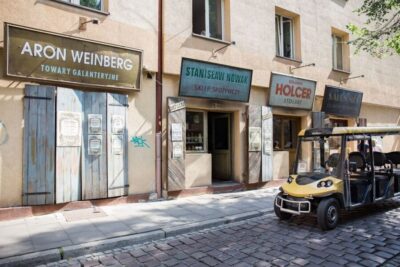
Private Tour: Warsaw’s Jewish Heritage by Retro Fiat
Read the review →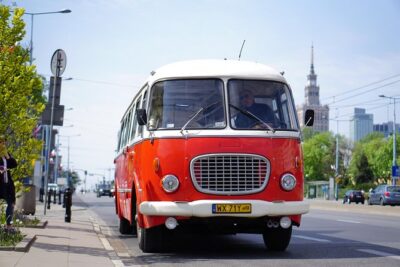
Private Historical Tour of Warsaw by a Retro Fiat with Pickup
Read the review →Browse the lists this tour appears in