
Reviewed · CITY TOURS
Warsaw: Behind the Scenes City Tour with Hotel Pickup
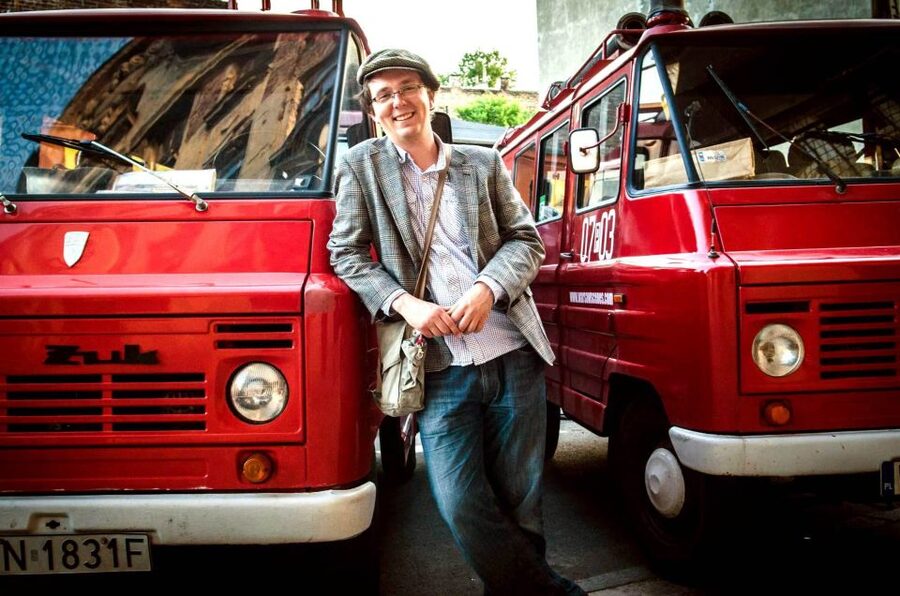
Warsaw’s story makes more sense when you see the city from a rattling, old-school Żuk minibus, not just from the polished streets around the Old Town. This three-hour tour takes you to the former Jewish Ghetto, uprising sites, rebuilt Muranów, and Praga, where Warsaw’s past and present sit side by side.
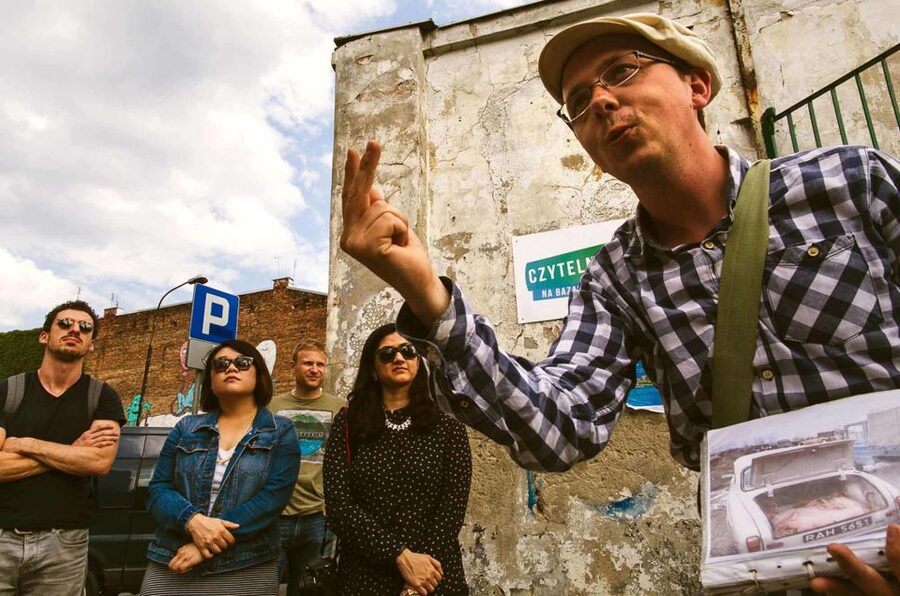
I like the way the tour connects major events to ordinary streets, buildings, and neighborhoods. I also like the small groups, with up to eight people per minibus, since guides such as Marcin, Konrad, and Mariusz have room to answer questions and adjust the conversation to your interests.
The main drawback is comfort. These historic vehicles do not have air conditioning, and some do not have seat belts. You will also walk at each stop, so wear good shoes and do not bring large luggage.
Key points to know before booking
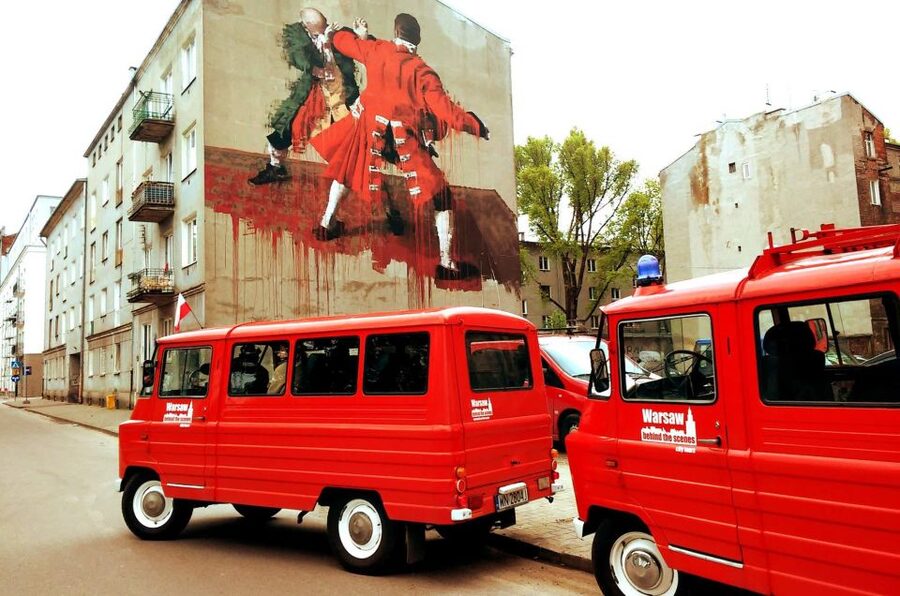
- Ride in a genuine communist-era Żuk: The vehicle is part of the experience, not just transport between sights.
- See the former Jewish Ghetto and uprising sites: The tour gives difficult chapters of Warsaw’s history a clear setting.
- Cross the Vistula to old Praga: This district escaped much of the wartime destruction and now mixes old buildings with murals and creative workshops.
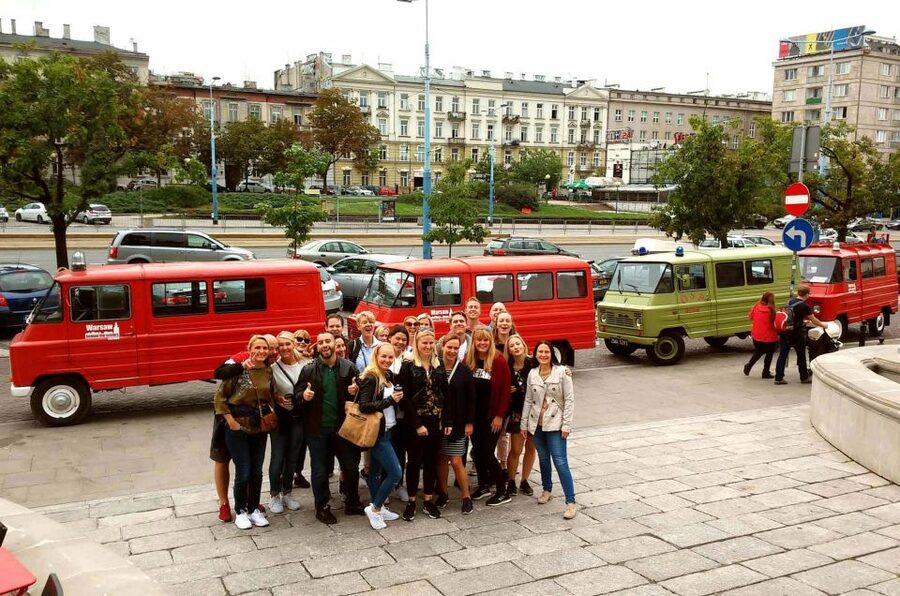
- Expect a small group: Each minibus holds up to eight passengers, with five vehicles available.
- Hotel pickup simplifies the morning: Pickup and return are included for accommodations within 1 kilometer of central Warsaw.
- Plan for walking and basic vintage-car comfort: The minibus has heating in winter, but no air conditioning, and some vehicles lack seat belts.
Why the old Żuk minibus matters
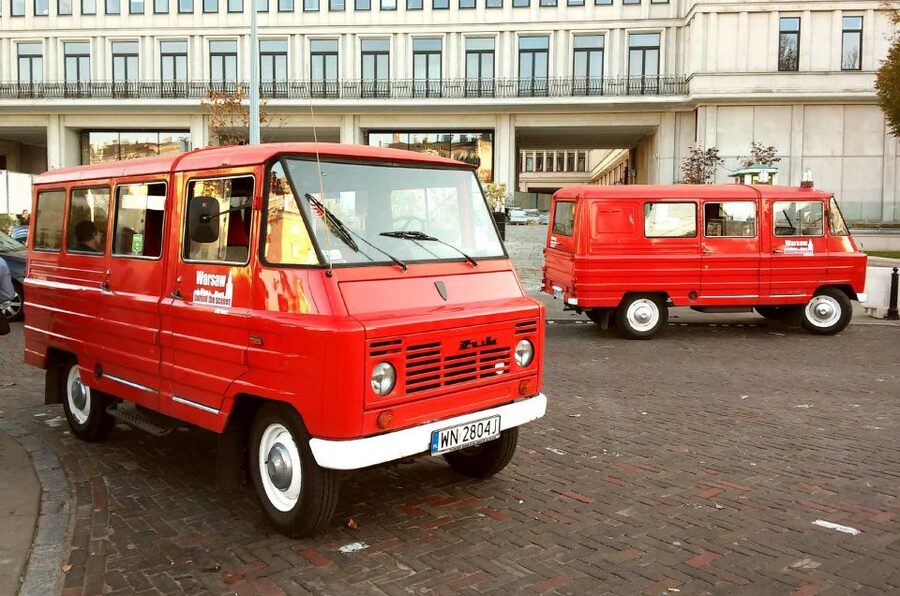
The Żuk is not a luxury vehicle. It is a piece of Poland’s recent past, and that gives the ride a useful sense of place. You are not simply being moved from one photo stop to another. You are riding in a vehicle linked to the era when Poland lived under communist rule.
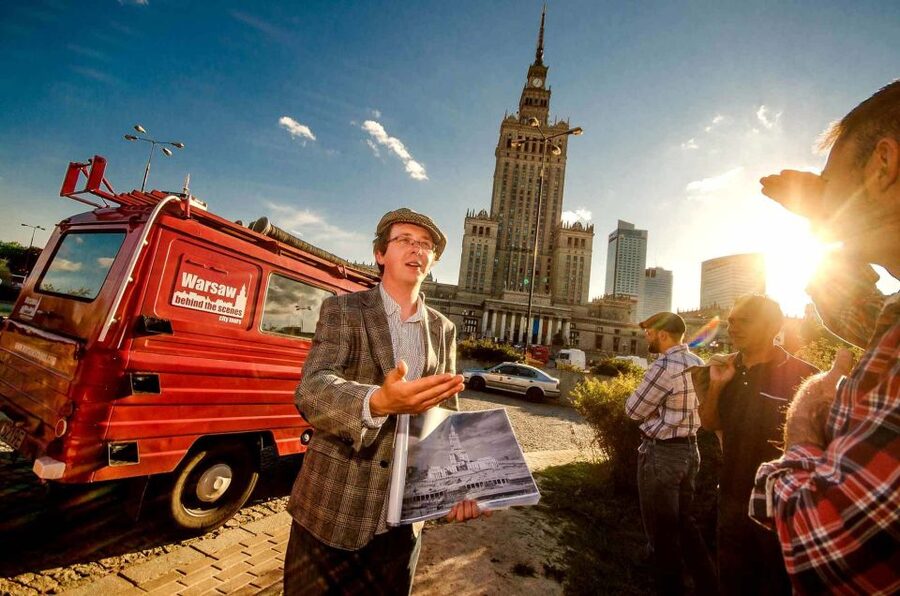
The small bus also changes the mood. With no more than eight passengers, the guide can speak in a conversational way rather than deliver a long speech to a crowd. Marcin has been praised for mixing humor with serious history, while Konrad is known for adapting the tour to individual interests. Mariusz has also led the experience, and the strongest pattern is clear: the guide matters as much as the route.
The vehicle is used mainly to connect the stops, so do not expect three hours of continuous driving. You will get out and walk at several locations. That is important because Warsaw’s story is written across blocks and courtyards, not only at formal museums and monuments.
A few more things to do in Warsaw worth a look
- Warsaw: City Sightseeing Hop-On Hop-Off Bus Tour
★ 3.6 · 1,415 reviews - Private Tour: Warsaw City Sightseeing by Retro Fiat
★ 5.0 · 562 reviews - Warsaw: Afternoon Public City Tour with Pickup and Drop-off
★ 4.4 · 421 reviews
Warsaw before and after the war
The tour begins with a broad introduction to Warsaw. This opening helps you understand the city before reaching the more painful chapters. You learn how the pre-war city developed, how World War II destroyed it, and how much of what you see today was rebuilt after the war.
Warsaw can be confusing at first glance. The Old Town looks historic, but much of it was reconstructed after the war. Broad avenues and large residential districts reflect post-war planning rather than the medieval city. A good guide helps you separate original fabric from careful reconstruction and explains why the city feels both old and new.
This overview is especially useful if you have only a few days in Warsaw. Instead of memorizing isolated monuments, you begin to see the city in periods: pre-war Warsaw, wartime destruction, communist reconstruction, and the fast changes that followed 1989.
The subject matter is serious, but the tour is not presented as a gloomy lecture. Guides have been praised for keeping the conversation warm, interactive, and even funny when the subject allows. That balance matters on a history tour that covers occupation, resistance, death, and political repression.
Walking through the former Jewish Ghetto
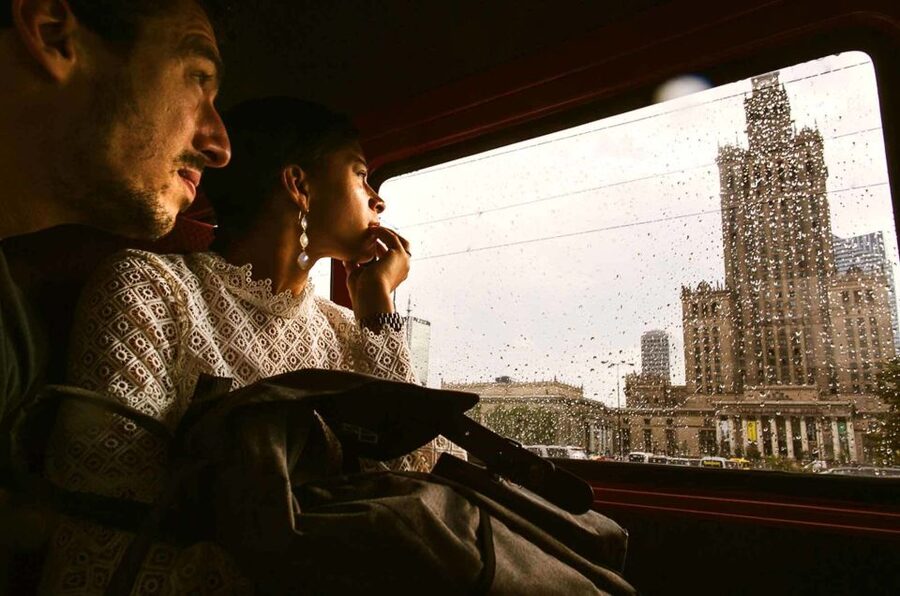
One of the most important parts of the route takes you into the area of the former Jewish Ghetto. The surviving traces can be easy to miss if you walk alone. Streets have changed, buildings have disappeared, and later development has altered the area. A guide gives you the historical map that is no longer visible on the ground.
You will hear about Jewish life before the war, the Nazi occupation, and the destruction of the ghetto. The experience is valuable because it places the history within the modern city. You are not viewing an isolated memorial from a distance. You are seeing how a normal neighborhood was transformed by persecution and war.
The pace here should suit visitors who want context rather than a quick checklist of monuments. The guide can point out what remains, explain what has been rebuilt, and connect the district to the wider story of Warsaw. If you prefer a light sightseeing ride with little historical detail, this section may feel heavy. If you want to understand the city, it is essential.
Wear comfortable shoes. The minibus brings you close to the sites, but you will be walking between points, and the old vehicle is not designed as a fully accessible sightseeing coach.
Muranów and the work of rebuilding
The Muranów district shows what happened after the war. Warsaw did not simply restore every street to its former shape. Planners had to work with ruins, rubble, political goals, and an urgent need for housing.
This makes Muranów one of the most useful places for understanding post-war Warsaw. The neighborhood reveals how planners built a new district over the remains of the old one. Its streets and apartment blocks reflect both practical rebuilding and the ideology of the communist period.
The guide explains how Soviet influence shaped new neighborhoods and grand avenues. You will see why some parts of Warsaw feel monumental, open, and planned on a very large scale. You also learn how those choices still affect daily life and the city’s appearance.
I like this part because it moves beyond the simple story of destruction followed by recovery. Rebuilding was not only an act of repair. It also created a new Warsaw, with a different political system and a different idea of how a capital should look.
Same base, a different kind of day:
- Warsaw: Chopin Concert in the Old Town
★ 4.8 · 2,287 reviews - Warsaw: Traditional Galar Cruise on The Vistula River
★ 4.6 · 1,640 reviews - Warsaw: Old Town Highlights Walking Tour in English
★ 4.7 · 1,516 reviews - Warsaw Concert: Chopin – Painted by Candlelights with Wine
★ 4.8 · 1,442 reviews
Praga, the old district across the Vistula
After crossing the Vistula River, the tour reaches Praga. This district escaped much of the wartime destruction that damaged the western side of Warsaw, so it can offer a stronger sense of older street patterns and original buildings.
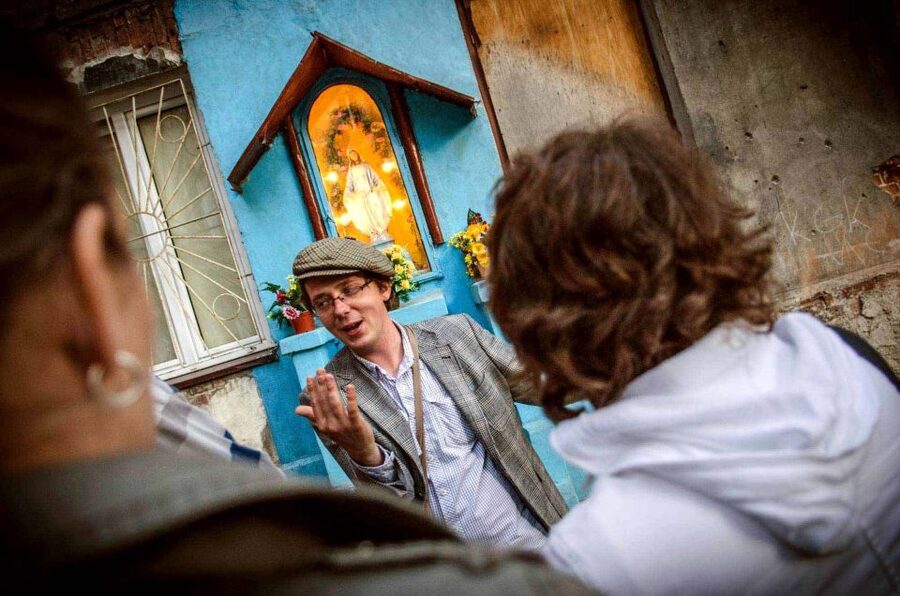
Praga once had a rough reputation. Today, it is associated with murals, workshops, independent creative spaces, and original architecture. The contrast is part of its appeal. You can see signs of a difficult past alongside newer cultural activity.
Do not expect Praga to look uniformly polished. Its character comes from the mix of worn facades, older structures, changing streets, and newer projects. That unevenness is precisely why a guided visit helps. Your guide can explain what you are seeing instead of leaving you to decide whether a building is historic, neglected, or newly repurposed.
The district also gives the tour a welcome change of tone. After the former Ghetto and the wartime sites, Praga shows Warsaw as a living city that has continued to change. Its story did not end in 1945 or 1989.
Warsaw under communism and after 1989
The tour also looks at daily life under communist rule. This is not just a political history lesson. The period can be read in the buildings, avenues, housing districts, and planning decisions around you.
The Żuk helps here. Riding in a vehicle from that era makes the discussion more tangible, even if the ride is less smooth than a modern minibus. You can ask about how the city worked, how neighborhoods were planned, and how Warsaw changed once communist rule ended.
The final section turns toward modern Warsaw. Since 1989, the capital has grown quickly, with new business districts, cultural activity, and renewed interest in older neighborhoods. The point is not to claim that every problem has vanished. It is to show how a city almost destroyed in the twentieth century became a modern European capital in a remarkably short period.
That last connection is one of the tour’s strengths. You finish with more than a collection of wartime facts. You understand why Warsaw has so many layers and why its modern identity is tied to both memory and reinvention.
What the guide adds to the experience
This tour depends heavily on the guide. The route is worthwhile, but the guide is the person who turns streets into history.
Past guides have included Marcin, Konrad, Mariusz, Mark, Artur, Lukas, and Wojtek. The consistent qualities to look for are clear English, warmth, flexibility, and a willingness to make the tour conversational. Several guides have adjusted the route or discussion when visitors had already seen certain sights or wanted more detail about a particular period.
That flexibility is more useful than it may sound. Warsaw has many museums and memorials, and you may arrive with questions from an earlier visit. A guide who listens can avoid repeating what you already know and fill in the gaps.
The tour also works well for solo visitors and couples. A small group makes conversation easier, and the minibus creates a shared setting without the distance of a large coach. On quiet dates, the group may be very small, possibly even just two people, though you should not book on the assumption that it will be private.
Price, group size, and overall value
At $129 per person, this is not the cheapest way to see Warsaw. You are paying for a three-hour guided experience, hotel pickup and return within 1 kilometer of the city center, an English-speaking guide, and a distinctive vehicle.
The price makes the most sense if you want interpretation rather than transport. A standard city ride may show you more famous landmarks, but it is less likely to explain how the Jewish Ghetto, Muranów, Praga, communist planning, and modern development connect.
The group limit also matters. A maximum of eight people per minibus is far more personal than a large coach. You can hear the guide clearly, ask questions, and spend less time waiting for a crowd to gather.
There are limits. Food is not listed among the current inclusions, so do not assume lunch or drinks are part of the booking. Older outings connected visitors with local food, but you should treat that as an occasional extra rather than a guaranteed feature.
Free cancellation up to 24 hours before departure and the option to reserve now and pay later reduce the risk of booking early. Still, check the available start times and provide complete accommodation details for pickup.
Comfort, clothing, and access
The Żuk vehicles are historic, which is both the attraction and the compromise. They have heating for winter, but no air conditioning. In warm weather, the cabin may feel uncomfortable, and some vehicles do not have seat belts because they are historic vehicles permitted under Polish law.
You will also get out and walk at the stops. Choose comfortable shoes and clothing suited to the weather. Leave large bags and luggage behind, since they are not allowed.
The tour is not suitable for wheelchair users. Children must be taller than 150 centimeters to book online. For a child under that height, contact the operator first to ask about a mandatory booster seat under Polish law.
Who should book this tour?
I would choose this tour early in a Warsaw visit if you want a strong city overview with real historical depth. It gives you a framework for later visits to museums, memorials, and neighborhoods.
It suits adults and older children who can manage walking and a three-hour history-focused outing. It is especially good for people interested in World War II, Jewish history, communist-era Poland, architecture, and urban change.
You may prefer another option if you need a wheelchair-accessible vehicle, dislike old transport, want air conditioning, or are looking mainly for famous postcard sights. The route favors context and lesser-known districts over a simple list of landmarks.
Should you book the Żuk tour?
Book it if you want Warsaw explained through its neighborhoods, not just photographed from the Old Town. The former Ghetto, Muranów, Praga, and the communist-era planning story give you a much clearer sense of why the city looks as it does.
The best reason to go is the combination of a skilled English-speaking guide and a tiny group in an unmistakable old vehicle. The main caution is comfort: this is a historic ride with walking, not a polished coach tour.
For most first-time visitors with three hours to spare, I think the price is fair when you value local explanation and a route you would struggle to create alone. Book it early in your stay, bring good shoes, leave your large bag at the hotel, and let the Żuk introduce you to the less obvious Warsaw.
FAQ
How long does the Warsaw Żuk tour last?
The tour lasts three hours. Check the available dates for current starting times.
Is hotel pickup included?
Yes. Pickup and drop-off are included for accommodations within 1 kilometer of Warsaw’s city center. Provide your full accommodation details when booking.
How many people fit in each minibus?
Each historic minibus holds up to eight passengers. The operator has a fleet of five minibuses.
What language is the tour offered in?
The tour is conducted in English by a live English-speaking guide.
Can children under 150 centimeters join?
Online booking is available for children over 150 centimeters. For a child under 150 centimeters, contact the operator in advance to ask about a mandatory booster seat.
Is the tour suitable for wheelchair users?
No. The experience is not suitable for wheelchair users. It also includes walking at the stops, and large bags or luggage are not allowed.
Just added in Warsaw
- Warsaw Zoo Skip-the-Line Entry Ticket with Private Transport★ 4.8 · 3 reviews
- Warsaw Private Wilanow Palace & Garden Tour★ 4.6 · 30 reviews
- Warsaw: Vodka Tour★ 4.4 · 18 reviews
- Warsaw Wolf’s Lair with St. Lipka and Mamerki Private Guided★ 4.2 · 3 reviews
- Warsaw Uprising and WWII Old Town Walking Tour with Museum★ 4.7 · 15 reviews
- Warsaw Old Town UNESCO HERITAGE walking tour in English★ 4.5 · 23 reviews
- Warsaw: Private Vodka Tasting Night with Snacks and Pickup★ 5.0 · 7 reviews
- Warsaw: Skip-the-Line Royal Castle Guided Tour★ 4.9 · 79 reviews
City Tours, compared.
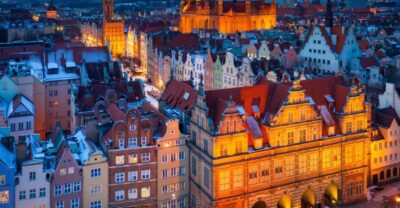
Gdańsk City Sights & History Guided Walking Tour in English
Read the review →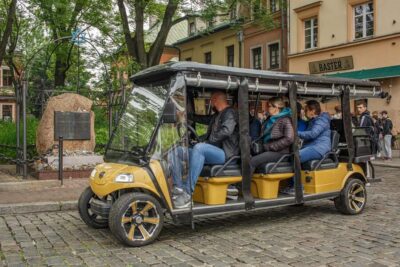
Extended City Sightseeing Tour – Eco Buggy Golf Cart
Read the review →
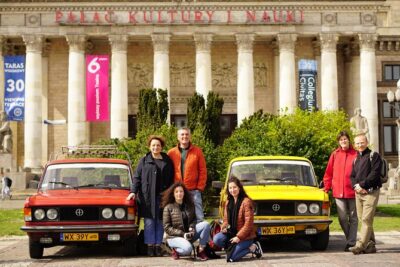
Private Tour: Warsaw City Sightseeing by Retro Fiat
Read the review →Browse the lists this tour appears in