
Reviewed · WAWEL CASTLE TOURS
Kraków: Old Town & Wawel Castle Walking Tour in English
Kraków’s Old Town is the kind of place where a short walk can take you from medieval city walls to royal courtyards, university halls, church towers, and a dragon’s cave. This 150-minute English walking tour links the city’s main sights in a sensible order and explains how Kraków became one of Central Europe’s great historic centers.
I like the route’s range: you see famous places such as St. Mary’s Basilica and Wawel Castle, but also get smaller details about Collegium Maius, the papal window, and the old defensive walls. I also like the guides’ lively style, with Maciek, Max, Victoria, Chris, and Big Tom all praised for mixing solid facts with humor.
The main consideration is pace. You cover a lot of ground on foot, and the tour does not include interior visits to the castle or churches. One participant also found that elderly family members fell behind and missed parts of the commentary, so this is best for people who can walk steadily with the group.
Key points to know before booking
- A complete Royal Route walk: Begin at the Barbican and St. Florian’s Gate, then continue through the Old Town toward Wawel Hill.
- Strong guide-led storytelling: Guides such as Maciek, Max, Victoria, and Big Tom are praised for clear explanations, humor, and enthusiasm.
- Historic courtyards included: The tour visits the courtyards of Collegium Maius and the Wawel Royal Palace.
- No full castle tour: You see Wawel Hill, the Cathedral, and the castle courtyard, but the experience is mainly outdoors.
- Good first-day orientation: Several guides offer tips about what to see, where to eat, and how to plan the rest of your Kraków stay.
- A long city walk: Wear comfortable shoes and allow for a short rest or bathroom break during the route.
Starting between the Barbican and St. Florian’s Gate
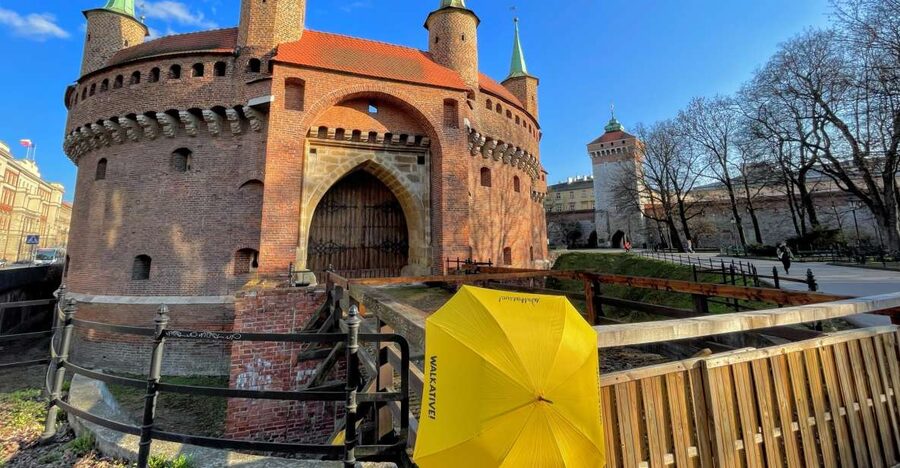
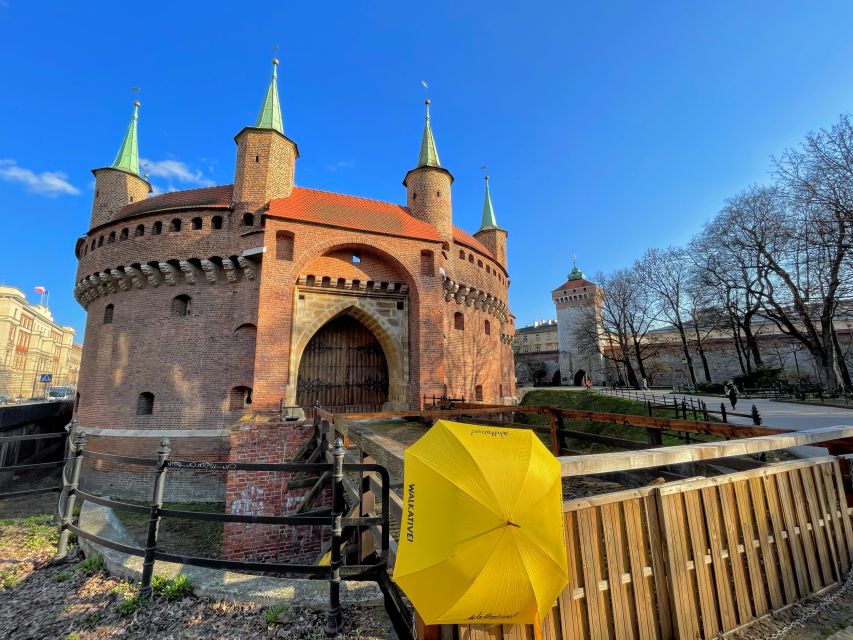
The meeting point is a small space between Kraków’s Barbican and St. Florian’s Gate. It is a fitting place to begin because these structures immediately show how the medieval city was protected and entered.
The Barbican is a round defensive fortification built outside the old city walls. St. Florian’s Gate was one of the main entrances through the medieval defenses. From here, the route moves into the preserved Old Town, where the streets and major landmarks still follow the shape of the old city.
This opening also gives you useful orientation. Instead of starting in the middle of a square with no sense of direction, you begin at the northern edge of the historic center and walk south toward the former royal seat. By the end, you have crossed the main historic spine of Kraków.
The Old Town survived the Second World War with much of its historic core intact. That does not mean every building has an untouched story, but it does mean you can read the city’s medieval plan through its gates, streets, squares, churches, and university buildings.
More old town tours in Kraków:
- Old Town Krakow & Wawel Castle Walking Tour
★ 5.0 · 1,508 reviews - Krakow: Bike Tour of Old Town, Jewish Quarter and the Ghetto
★ 4.9 · 1,155 reviews - Krakow: The Old Town Walking Tour
★ 4.8 · 794 reviews
Main Market Square and the Cloth Hall
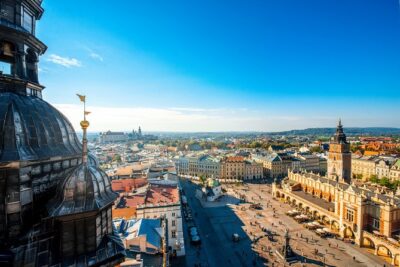
The walk leads to Kraków’s Main Market Square, one of the central stops on the route. This vast square is framed by important buildings, including the Cloth Hall and St. Mary’s Basilica.
The Cloth Hall recalls Kraków’s role as a trading center. Its name comes from the merchants who sold cloth here, but the square has long served more broadly as the commercial and social heart of the city. Your guide can help you see the square as more than a pleasant place for photographs. It was a working center of trade, ceremony, politics, and public life.
This is also where the scale of old Kraków becomes clear. The square is large enough to feel grand, yet the surrounding streets remain compact and easy to explore on foot. A guide helps connect the open space with the smaller lanes that lead away from it.
The route does not turn into a shopping stop, and snacks are not included. That is useful to know if you want to browse the Cloth Hall or stop for a coffee afterward. The tour is focused on the city’s story rather than free time.
St. Mary’s Basilica and the trumpet call
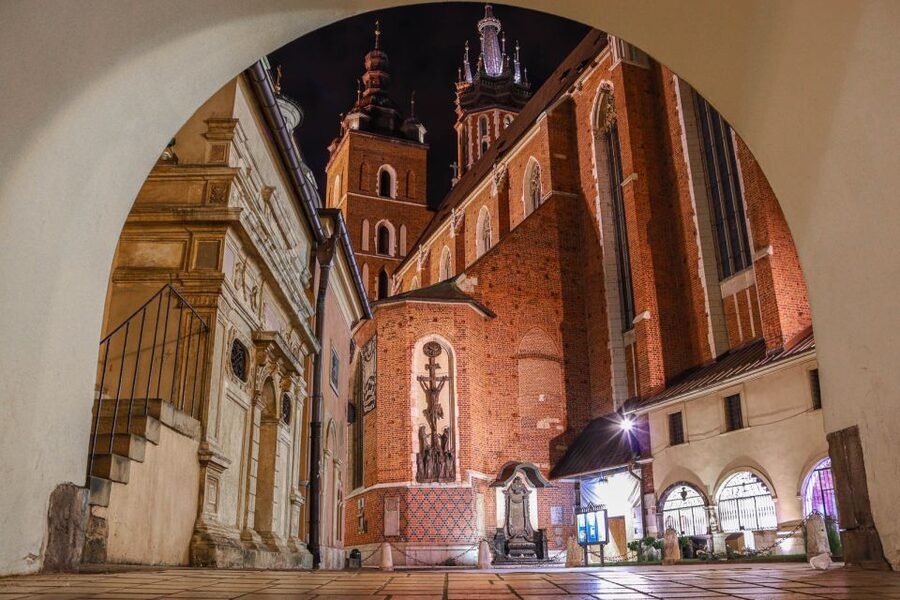
St. Mary’s Basilica is one of Kraków’s most recognizable landmarks. Its uneven towers give the Main Market Square a strong visual anchor, and the church is tied to one of the city’s best-known traditions, the trumpeter’s call.
The guide explains the story behind the interrupted signal and why the call is connected with Kraków’s defenses. This is the sort of detail that can pass unnoticed if you only photograph the church from the square. The story gives the building a human scale and helps you connect a present-day ritual with the city’s medieval past.
You should expect the tour to focus on the exterior and the surrounding history rather than offer a long interior visit. If seeing the church’s interior is important to you, set aside separate time before or after the walk.
The guides are generally praised for making complicated subjects easy to follow. Chris is described as humorous and welcoming, while Victoria is noted for pitching information clearly and using humor without losing the main facts. That style matters here, since Kraków’s story includes royal politics, religion, war, academic life, and changing borders.
Collegium Maius and Kraków’s academic past
One of the more rewarding stops is Collegium Maius, the oldest building of the Jagiellonian University, described on the tour as the oldest university in Central-Eastern Europe. You visit its courtyard, which adds a quieter and more intimate stop to a route otherwise centered on major public landmarks.
The courtyard helps explain Kraków as a place of learning, not only a former royal capital. Artists, scholars, and political leaders passed through the city, and the university shaped its place in European intellectual life. The tour also connects the building with Nicolaus Copernicus, who walked these streets during his studies.
This part of the tour is especially useful if you like architecture and institutions rather than only famous names. The courtyard gives you a chance to slow down and look at the building’s details while your guide sets them in their historical context.
The stop also breaks up the walk. Several people appreciated that the route included opportunities to sit or take a short coffee and bathroom break. The exact timing can vary, but a break is built into the experience often enough to make the 150 minutes more manageable.
More walking tours in Kraków:
- Creepy Krakow: 2-Hour City Walking Tour
★ 4.7 · 1,131 reviews - Krakow: Kazimierz Jewish Quarter Walking Tour
★ 4.8 · 571 reviews - Krakow: Evening Walking Tour with Spooky Stories
★ 4.7 · 500 reviews - Krakow Old Town Guided Walking Tour
★ 4.5 · 438 reviews
The Archbishop Palace and the papal window
The route continues toward the Archbishop Palace, associated with John Paul II and the famous papal window. This stop brings modern Polish religious and political memory into a walk that has already covered the medieval city.
The building is linked with Karol Wojtyła, who later became Pope John Paul II. The papal window became a place where he addressed people gathered outside during visits to Kraków. Your guide uses the site to connect local events with Poland’s wider twentieth-century story.
This is one reason the tour works better with a guide than with a simple map. A building can look quiet and ordinary until you learn why people gathered there and what it means to the city. The route moves across several centuries without treating Kraków as a collection of disconnected monuments.
If you prefer a tour that stays only with medieval architecture, this stop may feel like a change of subject. I see it as a useful addition because it shows that Kraków’s importance did not end when the royal court moved elsewhere.
Walking up Wawel Hill
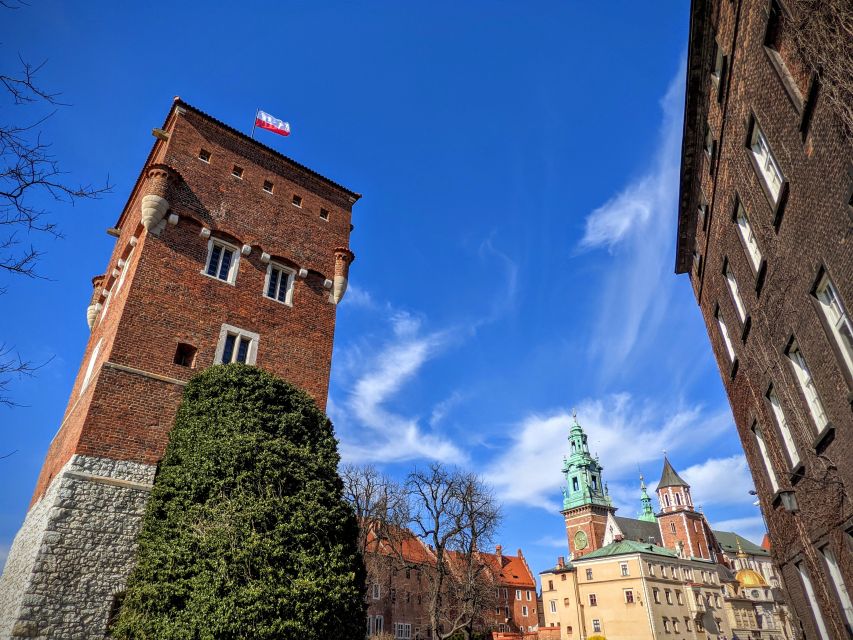
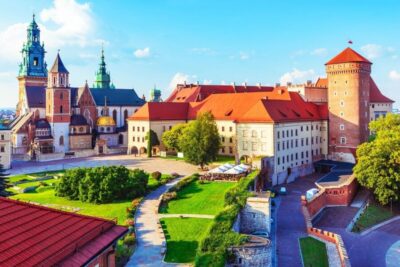
The approach to Wawel Hill marks the second major half of the tour. Wawel is closely tied to Poland’s kings, national identity, religious life, and legends. The hill contains the Cathedral and Royal Castle, and its position above the Vistula gives the area a different feel from the tight streets around the Main Market Square.
The walk explains why Wawel became the symbolic center of royal Poland. You are not simply looking at a castle on a hill. You are seeing the place where rulers were crowned, buried, remembered, and woven into the story of the country.
The tour includes the courtyard of the Wawel Royal Palace. That is a valuable inclusion because the courtyard lets you see the castle’s architecture up close without requiring a full museum ticket or a long indoor visit.
There is an important limit here: this is not a full Wawel Castle interior tour. You will not spend 20 or 30 minutes touring the palace rooms as part of this booking. One participant specifically wanted more time inside Wawel, so plan a separate castle visit if royal chambers, art collections, or detailed interiors are high on your list.
Wawel Cathedral and the royal story
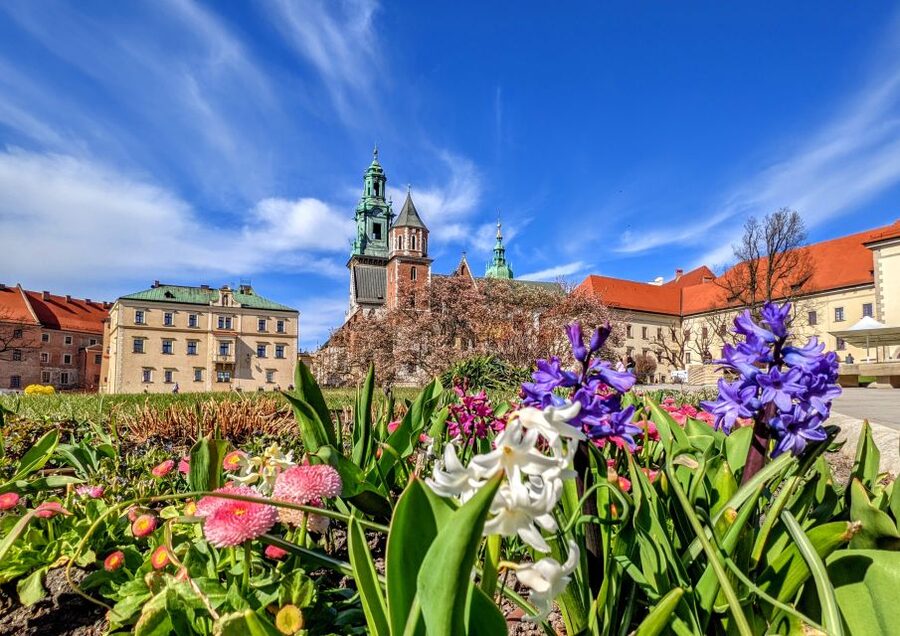
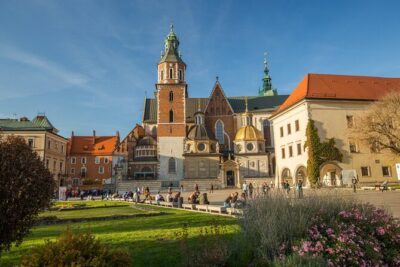
Wawel Cathedral sits beside the Royal Castle and is central to Poland’s religious and royal history. The tour places the cathedral within the wider story of Wawel Hill, rather than treating it as an isolated church.
The guide’s role here is to explain who used the site, why it mattered, and how the cathedral and castle worked together. You get a clearer sense of Wawel as a national complex, not just a scenic viewpoint.
Because the tour is outdoors and time is limited, the amount of time at the cathedral may depend on the group and the guide’s presentation. If you want a close look at the interior, tombs, chapels, or museum collections, you should return on your own.
That limitation is fair for a general introduction. In 150 minutes, the route covers a remarkable number of sites. The trade-off is breadth over detailed indoor access.
Meeting the Wawel Dragon
The Wawel Dragon adds a lighter ending to the historic route. The legend is part of Kraków’s identity, and the dragon gives the tour a story that is easy to remember after the more complicated sections on dynasties, religion, and war.
A good guide uses the legend not as a throwaway children’s tale but as a way to show how cities build stories around their landmarks. The dragon is also a welcome change of mood after the formal setting of the castle and cathedral.
The tour’s title promises kings, castles, and dragons, and this final part delivers the dragon element without turning the experience into a fantasy-themed activity. You still finish with a sense of how folklore fits into the city’s public memory.
The guide style: facts with a sense of humor
The strongest part of this experience is the guide-led explanation. The most praised guides include Maciek, Max, Victoria, Big Tom, Chris, Lucy, Jacek, Damian, Tom, and Michal. Their approaches differ, but the common thread is clear speech, strong command of Kraków’s story, and a willingness to answer questions.
Maciek is repeatedly described as witty and passionate about history. Max is praised for covering Polish history, art, architecture, and city life while adding dry humor. Big Tom is noted for handling a large group clearly and keeping people engaged.
The humor is not just decoration. Several guides use jokes to make dates, names, and political changes easier to remember. If you have found historical tours dull in the past, this style may make a real difference.
The exact guide will depend on the departure time and staffing, so you should not book on the assumption that one particular person will lead your walk. Still, the range of strong guide names suggests a consistent approach across the company.
Pace, breaks, and walking comfort
Two and a half hours is long enough to cover the main sights but short enough to fit into a first day in Kraków. You should expect continuous walking through the Old Town and up toward Wawel Hill.
The pace has generally been described as comfortable, with enough stops to hear the explanation. A short coffee or bathroom break may occur around the middle. Several guides also make room for sitting when possible.
Still, this is not a slow stroll for every ability level. The group may move on before everyone has reached the next point, and one person with elderly parents found that they missed information when they fell behind. If your group includes anyone who needs frequent pauses, tell the guide early and stay close at each move.
Comfortable shoes are sensible. The exact surface varies across the route, and the tour includes enough standing and walking that light footwear matters more than dressing up for the castle.
The activity is listed as wheelchair accessible, but you should still consider your own mobility needs because the route covers historic outdoor areas and includes movement between several districts of the Old Town.
Is $26 good value?
At $26 per person, the tour offers a practical introduction to Kraków at a reasonable price. You are paying for a local English-speaking guide, a planned route, a coherent narrative, and access to the courtyards of Collegium Maius and the Wawel Royal Palace.
The value is strongest if you are visiting for a short stay or want help making sense of the city before exploring alone. In 150 minutes, you see the main historic spine and learn how the landmarks connect.
The price does not cover snacks, hotel pickup, or drop-off. It also does not include a full visit inside Wawel Castle or a detailed church tour. Those omissions are not a problem if you view the walk as an orientation. They matter more if you want museum interiors and long visits at each site.
The booking also comes with free cancellation up to 24 hours before the start time, and you can reserve now and pay later. The tour is described as a general pay-as-you-wish format, with the booking amount covering the reservation and guide payment. Check the final booking terms carefully so you understand the payment arrangement.
Who should book this Kraków walk?
I would choose this tour for a first visit to Kraków, especially if you want the city’s main landmarks explained in one sitting. It suits couples, families with older children, solo visitors, and anyone who prefers a guide with a lively presentation.
It is also a good choice early in your stay. One person wished they had taken the tour at the start because the guide’s suggestions about food and other places would have helped with the rest of the visit.
You may want something else if your priority is entering every major building, examining art collections, or moving at a very slow pace. In that case, use this walk as an introduction and return independently to Wawel Castle, St. Mary’s Basilica, or Collegium Maius.
Should you book it?
Yes, if you want a well-organized first look at Kraków with plenty of context and a guide who can make history entertaining. The route covers the essential Old Town sights, reaches Wawel Hill, includes two important courtyards, and adds useful stories that are easy to miss when walking alone.
Book it with comfortable shoes and realistic expectations. You are getting a broad outdoor tour, not a full castle admission or museum visit. For most first-time visitors, the balance of landmarks, history, humor, and price makes this a strong way to get your bearings fast.
FAQ
How long does the Kraków Old Town and Wawel Castle tour last?
The tour lasts 150 minutes, or two and a half hours.
What language is the tour conducted in?
The tour is conducted in English with a live English-speaking guide.
Where is the meeting point?
Meet in the small space between Kraków’s Barbican and St. Florian’s Gate.
Which main sights are included?
The route includes the medieval city walls, Barbican, St. Florian’s Gate, Main Market Square, Cloth Hall, St. Mary’s Basilica, Collegium Maius, Archbishop Palace, the papal window, Wawel Hill, Wawel Cathedral, the Wawel Royal Palace courtyard, and the Wawel Dragon.
Can I visit the interiors of Wawel Castle?
The tour includes the courtyard of the Wawel Royal Palace, but it is not a full interior castle tour.
Are Collegium Maius and Wawel Palace courtyards included?
Yes. The activity includes visits to the courtyards of Collegium Maius and the Wawel Royal Palace.
Is the tour wheelchair accessible?
The activity is listed as wheelchair accessible.
Can I cancel the booking for a refund?
You can cancel up to 24 hours in advance for a full refund.
More castle tours from Kraków
- Krakow: Wawel Castle Guided Tour with Entry Tickets
★ 4.4 · 381 reviews - Krakow’s Essential Tour of the Old Town and Wawel Castle
★ 5.0 · 340 reviews - Historic Krakow : Old Town & Wawel Castle Walking tour
★ 5.0 · 318 reviews - Krakow: Wawel Castle and Cathedral Guided Tour
★ 4.7 · 273 reviews
More Wawel tours from Kraków
- Krakow: Wawel Castle & Cathedral Guided Tour
★ 4.7 · 2,111 reviews - Krakow: Wawel Royal Hill with Optional Castle and Cathedral
★ 4.2 · 1,220 reviews - Krakow: Wawel Castle and Cathedral Guided Tour
★ 4.6 · 595 reviews - Krakow: Wawel Hill Audioguide Tour
★ 4.2 · 512 reviews
Just added in Kraków
- From Krakow: Guided Tour of Zalipie★ 4.6 · 30 reviews
- From Krakow: Zalipie Village Day-Tour★ 4.9 · 74 reviews
- Krakow: Zalipie Village Tour★ 4.6 · 8 reviews
- ZALIPIE – painted village, unique PRIVATE tour from Krakow★ 5.0 · 20 reviews
- Krakow: Energylandia Park Entry Ticket and Optional Transfer★ 4.8 · 39 reviews
- Krakow: Guided Craft Beer Tour★ 4.4 · 38 reviews
- Ojcow National Park: Full-Day Trip from Krakow★ 4.0 · 29 reviews
- Dunajec River Gorge from Krakow★ 4.0 · 33 reviews
Wawel Castle Tours, compared.
Wawel Royal Hill with Optional Castle and Cathedral
Read the review →
Skip-the-Line Wawel Castle Chambers Private Tour
Read the review →Browse the lists this tour appears in