
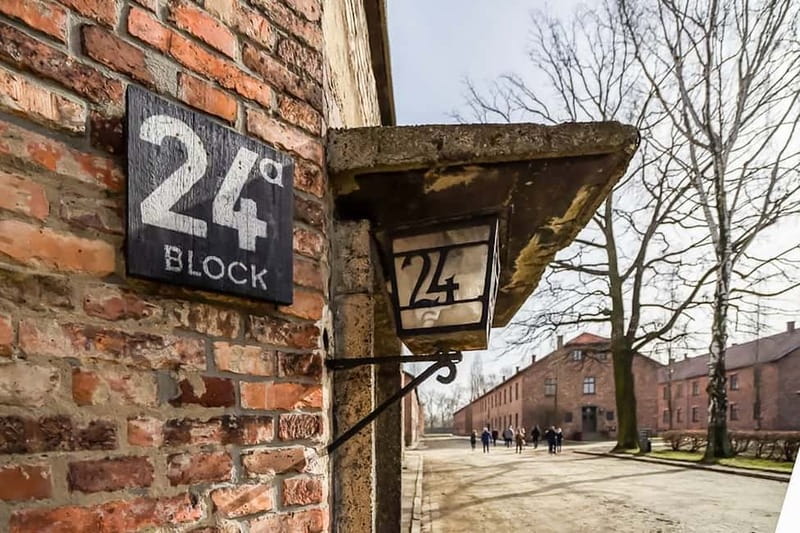
Reviewed · AUSCHWITZ-BIRKENAU MEMORIAL TOURS
Auschwitz-Birkenau Skip-the-Line Guided Tour
Auschwitz-Birkenau is not a sightseeing stop you simply check off. It is a place for listening, learning, and taking stock. This 3.5 to 4-hour guided visit gives you the structure you need, moving from Auschwitz I to the much larger Birkenau site with an official guide and pre-booked entry.
I like two things here: the transfer between camps is arranged, and the guide-led format helps you understand what you are seeing rather than wandering through it alone. I also like the headsets at Auschwitz I, which make it easier to follow the guide in a group. The main drawback is that your chosen start time may change the day before, and that change does not qualify for a refund.
Key points at a glance
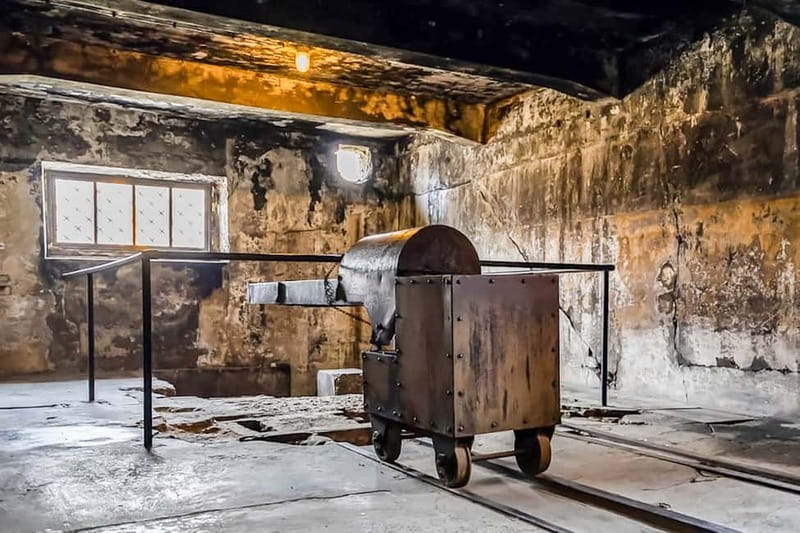
- Auschwitz I and Birkenau in one visit: See both parts of the memorial, not just the famous entrance gate.
- Official museum guide: Hear the site explained by a guide authorized by Auschwitz-Birkenau.
- About four hours on site: Allow 1.5 to 2 hours at Auschwitz I and roughly 60 to 75 minutes at Birkenau.
- Short camp transfer included: A bus or coach ride of about 10 minutes connects the two locations.
- Meeting point at Męczeństwa Narodów 14: Look for the logo board on the main building.
- Optional lunch box: The selected option includes sandwiches, fruit, a wafer, and 500 milliliters of water.
Why a guided Auschwitz visit matters
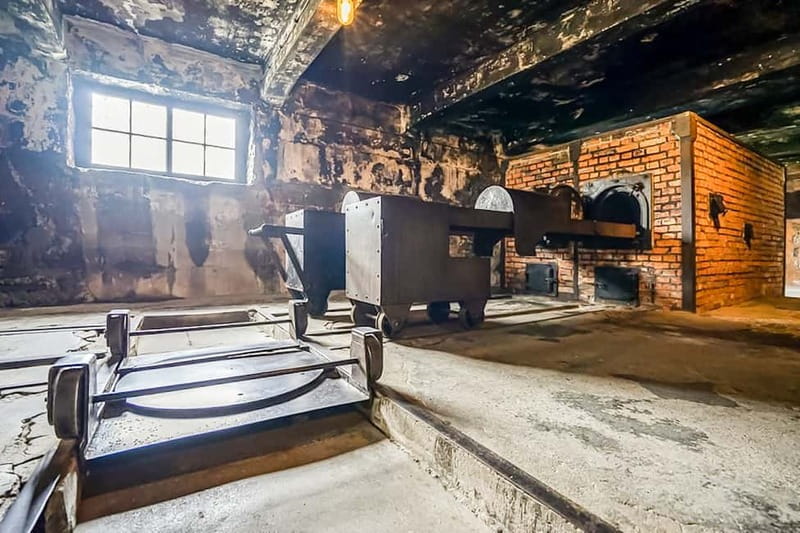
Auschwitz-Birkenau is a memorial and museum, not a conventional attraction. The buildings, barracks, photographs, objects, and open spaces require context. Without it, you may see a great deal but understand far less.
Your official guide leads you through Auschwitz I and Auschwitz II-Birkenau, explaining the role of each site and placing what you see within World War II and the Holocaust. The strongest guides bring personal care to the subject. Guides named Jacob, Peter, Magdalen, and Martin have been singled out for clear explanations, strong storytelling, and a respectful tone.
That matters here. A good guide knows when to explain, when to pause, and how to keep the group moving without making the visit feel rushed or casual. This is a serious subject, and the best part of the tour is not the number of facts. It is the way those facts help you grasp the scale and human cost of what happened.
Other ways to visit Auschwitz-Birkenau from Poland:
- From Krakow: Auschwitz-Birkenau Guided Tour & Hotel Pickup
★ 4.5 · 33,358 reviews - From Krakow: Auschwitz-Birkenau Guided Tour & Hotel Pickup
★ 4.5 · 29,340 reviews - Krakow: Auschwitz Guided Tour with Optional Hotel Pickup
★ 4.5 · 15,280 reviews
Meeting at Męczeństwa Narodów 14
The meeting point is at Męczeństwa Narodów 14, marked by a logo board on the main building. A local host meets you there, helps you get oriented, and gives practical advice about the museum before you enter.
That small handoff is useful. Auschwitz has strict entry arrangements, and a clear meeting point removes some of the worry from a visit that already carries emotional weight. The activity ends back at the meeting point, though the transport arrangement between Auschwitz and Birkenau is part of the tour itself.
Bring your passport or identity card. You will need it for entry. Oversize luggage is not allowed, and short skirts are prohibited. Leave pets, alcohol, and drugs behind. Wear comfortable shoes, since you will spend several hours walking and standing.
Parking is not included. A charge of about 45 Polish złoty has been reported for cars at the meeting area, so add that to your budget if you are driving.
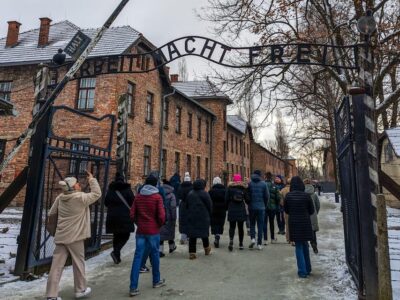
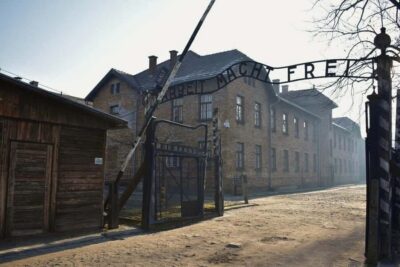
Entering Auschwitz I through the Arbeit Macht Frei gate
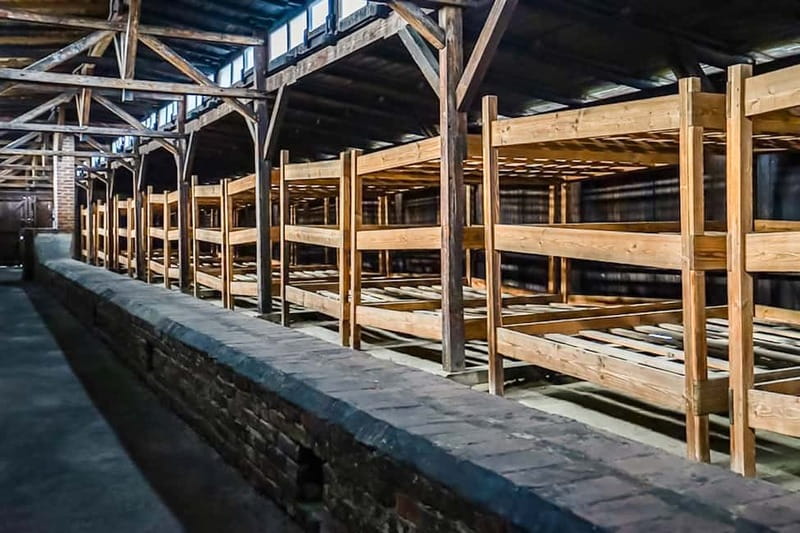
The first main stop is Auschwitz I, the original camp complex. You pass through the familiar Arbeit Macht Frei gate, then follow the guide through the museum grounds and buildings.
The visit here lasts about 1.5 to 2 hours. That is enough time for a focused introduction to the camp, its prisoners, and the system of persecution created by the Nazi regime. The buildings and museum displays make the site feel specific. You are not dealing with an abstract chapter in a textbook. You are seeing a place where real people were imprisoned, stripped of their rights, and murdered.
At Auschwitz I, the headsets are especially helpful. The guide can speak while the group spreads out slightly, and you can hear the explanation without needing to stand shoulder to shoulder. The guide stops at regular points, so you can look, listen, and keep your bearings.
The pace is determined partly by the memorial’s visitor service. Your guide and the tour operator cannot control every pause or queue inside the museum. That means the advertised four-hour schedule is a useful guide, not a promise that every minute will run exactly as planned.
The 10-minute transfer to Birkenau
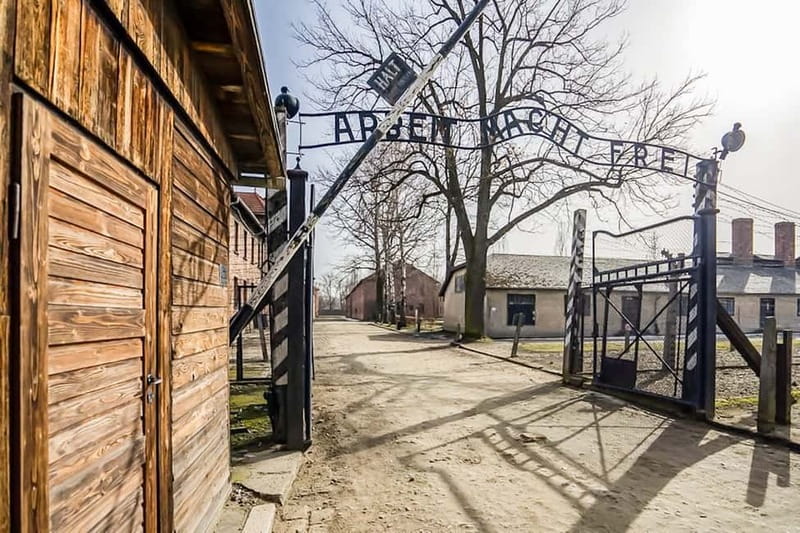
A short bus or coach transfer takes you from Auschwitz I to Auschwitz II-Birkenau. The ride lasts about 10 minutes and is included in the activity.
This transfer is more than a convenience. The two sites are separate, and arranging the move yourself would add another task to an already demanding day. The coach keeps the group together and lets the tour continue without a long break.
If you prefer to leave directly from Birkenau, communication with the local team is important. The operator has helped visitors coordinate this, but do not assume the tour ends wherever you choose. Confirm your plan with the staff before separating from the group.
A few more things to do in Poland worth a look
- From Krakow: Wieliczka Salt Mine Tour & Skip the Line Ticket
★ 4.4 · 3,925 reviews - Krakow: Schindler’s Factory Skip-the-Line Ticket
★ 4.4 · 3,105 reviews - Auschwitz-Birkenau: Skip-the-Line Entry Ticket & Guided Tour
★ 4.4 · 3,052 reviews - Schindler’s Factory in Krakow: Guided Tour & Skip the Line Ticket
★ 4.5 · 1,714 reviews
Walking through Birkenau for 60 to 75 minutes
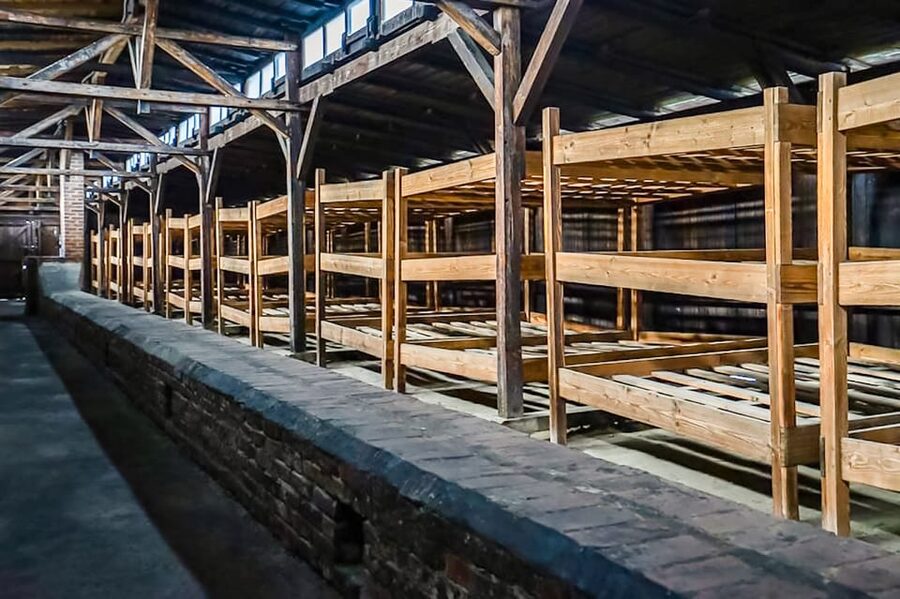
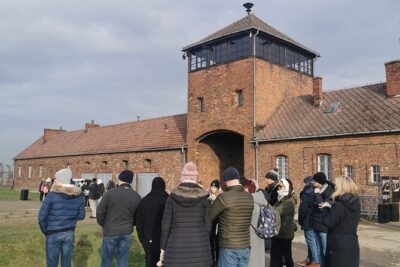
Birkenau is much larger in scale than Auschwitz I. The visit here lasts about 60 to 75 minutes, with a short break of roughly 15 minutes listed in the schedule.
This part of the tour gives you a different sense of the camp system. At Auschwitz I, the museum buildings and displays create a concentrated, indoor visit. At Birkenau, the open grounds and surviving structures make distance and scale more apparent. You will walk between key areas while the guide explains what they meant and how the camp operated.
The group may spread out more at Birkenau. Headsets are not always used there, and one visitor noted that it became harder to hear and keep up. If you are older, walk slowly, or tire easily, stay near the guide and tell the staff early. The tour is not adapted for wheelchair use, and anyone with mobility concerns should go with someone who can provide help.
Comfortable footwear is not a minor tip. You will walk across a large site, and the subject itself makes it tempting to focus on the guide rather than your feet. Good shoes make it easier to give the visit your full attention.
What the $53 price really covers
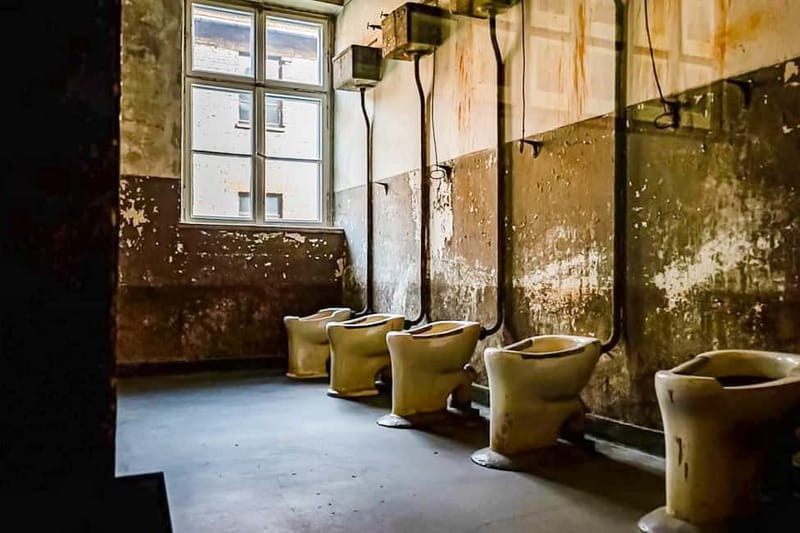
At about $53 per person, this is not the cheapest way to visit Auschwitz-Birkenau. It is a fair price if you value a pre-booked museum entry, an official guide, a headset, a local host, and transport between the two camps.
The real value is reduced uncertainty. You do not need to work out how to move from Auschwitz I to Birkenau, find a separate guide, or manage each entry step by step. The guide also gives the visit shape, which is valuable at a place where the amount of information can feel overwhelming.
The price does not include transport from Krakow or any other city, parking, or standard food and drinks. If you are coming from Krakow, arrange that longer journey separately. A lunch box is available only if you select that option. It includes two bread-roll sandwiches, with meat, vegetarian, or vegan choices, plus an apple, banana, dark chocolate wafer, and 500 milliliters of still water.
For a half-day memorial visit, I would compare the cost with the price and effort of arranging each part independently. If you already have transport and know the museum system well, the package may be less important. For most first-time visitors, the guide and camp transfer do useful work.
The biggest planning issue: your start time can move
The most important booking warning is the schedule. Your preferred tour time is not guaranteed because entry depends on the memorial’s guide reservation system.
The operator may contact you the day before with a new time. Some bookings have shifted from morning to midday or afternoon. The change may be manageable, but you should keep the whole day flexible. A time change does not qualify for a refund, so avoid pairing this activity with a train, flight, or another fixed appointment.
The exact meeting time is also sent 24 hours before the tour. Check your messages carefully, including WhatsApp if that is how the operator contacts you. The tour is much easier when you know the final time and meeting instructions before setting out.
The emotional pace of the visit
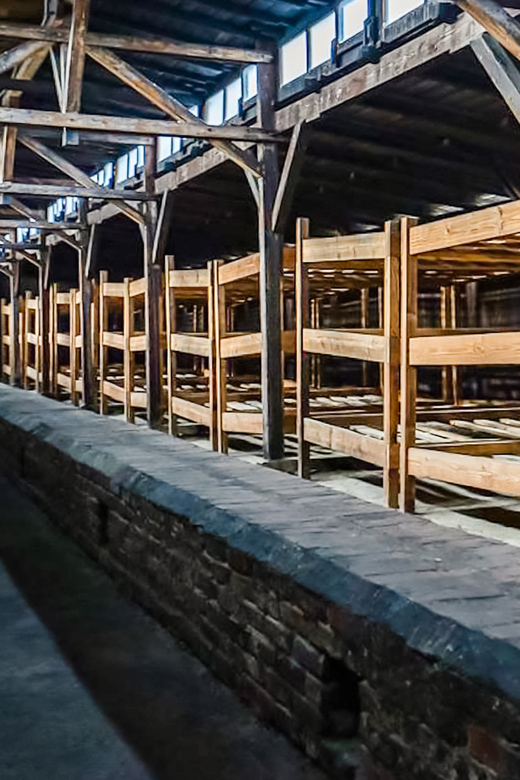
You should expect an emotionally heavy experience. That is not a flaw in the tour. It is part of visiting a memorial to mass murder.
The guide’s tone makes a large difference. Strong guides such as Jacob, Peter, Magdalen, and Martin have been praised for explaining the camp clearly while keeping the focus on people, not spectacle. The best moments are often the quiet ones, when a factual explanation helps you understand the meaning of a building, object, or empty space.
Do not plan a packed evening afterward if you can avoid it. Give yourself time to think. The schedule includes a short break, but this is not a light museum outing with long café stops. The tour aims to cover both camps in one concentrated visit.
Who this tour suits best
I would choose this experience if you want a structured first visit to Auschwitz-Birkenau and prefer not to manage the entry and transfer details yourself. It is also a good fit if you want an official guide rather than a self-guided visit.
It suits visitors who can walk and stand for several hours, follow a group pace, and keep their schedule open until the final meeting time is confirmed. The English, German, and French language options make it useful for a broad range of visitors.
You may want a longer visit if you have a strong interest in the subject or want more time at individual displays. One visitor who took the four-hour tour later expressed interest in an eight-hour version. This shorter option gives you the main sites and essential context, but it cannot cover every detail.
Practical advice before you go
Keep these points in mind:
- Bring your passport or identity card.
- Wear comfortable shoes and clothing suited to several hours of walking.
- Do not bring oversize luggage, pets, alcohol, or drugs.
- Keep the day open because the start time can change.
- Check the final meeting time 24 hours before the visit.
- Stay close to the guide at Birkenau, where hearing the commentary may be harder.
- Select the lunch-box option if you want food and water arranged in advance.
- If you need mobility help, bring someone who can assist you.
Cancellation is free up to 24 hours before the tour for a full refund, and you can reserve now and pay later. Those terms help, but they do not remove the need to plan around the possible schedule change.
Should you book the Auschwitz-Birkenau guided tour?
Book it if you want the two camps explained in one organized visit, with official museum guidance and transport between sites. The guides are the main reason to choose this format, while the pre-booked entry and local host take care of practical details that can otherwise distract from the memorial.
Think twice if you need a guaranteed morning departure, require wheelchair access, or want a slow, full-day study of the museum. For a first visit, though, the $53 price is reasonable for what it includes. Keep your day flexible, bring identification, wear sensible shoes, and arrive ready to listen.
FAQ
How long does the Auschwitz-Birkenau tour last?
The tour lasts about 3.5 to 4 hours. You spend about 1.5 to 2 hours at Auschwitz I and 60 to 75 minutes at Auschwitz II-Birkenau, with travel time between the sites.
Where does the tour begin?
It begins at Męczeństwa Narodów 14. Look for the logo board on the main building.
Does the tour include transport between Auschwitz and Birkenau?
Yes. A bus or coach transfer between the two camps takes about 10 minutes and is included.
Is transportation from Krakow included?
No. Transportation to the meeting point from Krakow or another city is not included.
What languages are available?
The tour is available with a live guide in English, German, or French.
Can I choose my exact start time?
You can select a preferred time, but it is not guaranteed. The museum reservation may require a change, and the operator sends the confirmed meeting time 24 hours before the visit.
What should I bring?
Bring your passport or identity card and wear comfortable shoes. Oversize luggage, pets, short skirts, alcohol, and drugs are not allowed.
Just added in Poland
- A unique walking tour of Jewish Warsaw — past and present★ 5.0 · 8 reviews
- Highlights of Gdańsk, Gdynia and Sopot 1-day Private Tour★ 4.9 · 59 reviews
- Torun: Private Walking Tour of a Medieval Town★ 4.9 · 16 reviews
- Gdansk Sopot and Gdynia 3 Cities Private Full-Day Tour★ 5.0 · 56 reviews
- Międzyzdroje: Baltic Park of Miniatures Entry Ticket★ 4.3 · 19 reviews
- ZALIPIE – painted village, unique PRIVATE tour from Krakow★ 5.0 · 20 reviews
- Evening Cruises in Toruń★ 4.9 · 50 reviews
- Luxury airport transfer from Lodz to Warszawa Chopin Airport★ 5.0 · 6 reviews
Auschwitz-Birkenau Memorial Tours, compared.
Auschwitz-Birkenau Guided Tour & Hotel Pickup
Read the review →
Auschwitz Guided Tour with Optional Hotel Pickup
Read the review →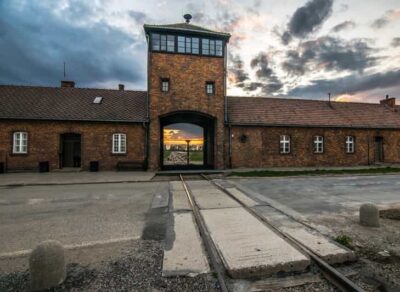
Auschwitz-Birkenau Guided Tour with Pickup & Lunch
Read the review →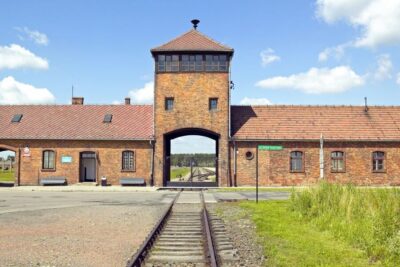
Krakow to Auschwitz Birkenau Guided Tour with Transfer and Ticket
Read the review →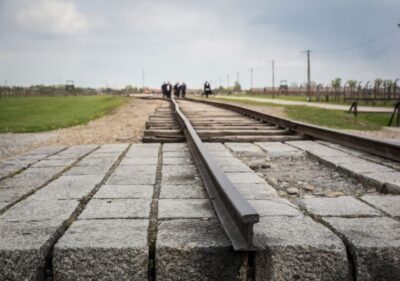
Auschwitz Birkenau Small Group Tour with Pickup
Read the review →Browse the lists this tour appears in