
Reviewed · CYCLING TOURS
Bike Tour Gdansk – Standard
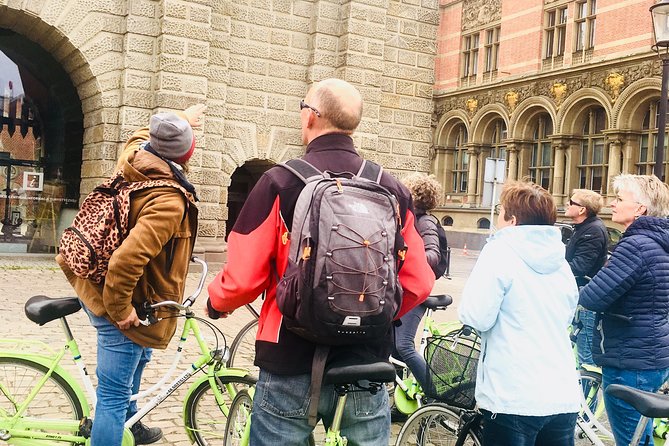
Gdańsk’s story is unusually easy to follow by bike. In about two hours, you move from Neptune’s Fountain and the medieval center to the shipyard where the Solidarity movement helped bring down communism, then back toward the Motława River and the city’s famous Crane. The route links grand old monuments with places tied to modern Poland.
I like the local guide’s personal angle, especially the chance to hear about Polish traditions, everyday life, and local ways of thinking rather than getting only dates and architectural labels. I also like the private format, since your group can ask questions and request more focus on art, politics, wartime history, or city life.
The main consideration is time. Several stops last only five or ten minutes, so this is a brisk orientation rather than a series of museum visits. The tour also depends on good weather, and the listed price of $43.05 per person makes the most sense if you value a personal guide and a broad first look at Gdańsk.
Key points to know before you book
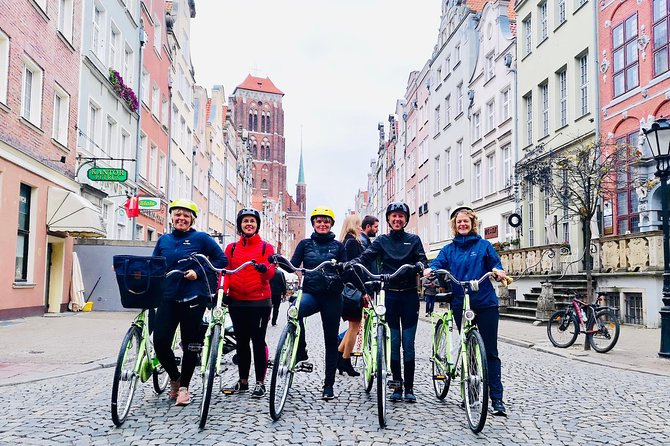
- The route connects old Gdańsk with modern Polish history, from Dluga Street to the Solidarity shipyard.
- You ride with a local guide, who can adapt the experience to your interests and explain local customs.
- The private format keeps the pace flexible, with only your group taking part.
- St. Mary’s Church and the European Solidarity Centre are listed with admission included, while several other sites are viewed from outside or require separate admission.
- The two-hour schedule is active but not rushed on the bike, with short stops at many major sights.
- Weather matters, since poor conditions can lead to a new date or a full refund.
Why a bicycle is a smart way to meet Gdańsk
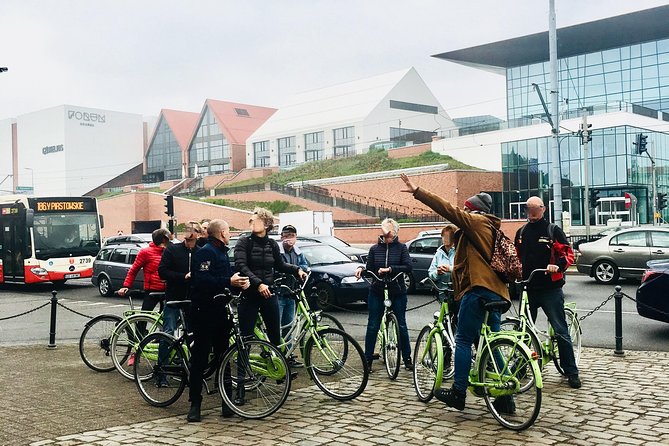
Gdańsk’s main sights are spread across several connected areas. The historic center is compact, but the Solidarity sites and shipyard sit beyond the prettiest streets, while the Motława waterfront and granary island create another natural section of the city.
A bike lets you cover these areas without turning the outing into a long walk. You get a broad sense of how the city fits together, then you can return later to the places that deserve more time. I find this especially useful on a first day, when you want orientation before choosing which museums and churches to enter.
The experience is described as relaxed rather than athletic. You should still be comfortable riding for roughly two hours, but the focus is sightseeing and conversation, not speed or distance. Since the group is private, you can ask the guide to spend more time on a subject that catches your attention, within the limits of the schedule.
The guide is a local who was born in Gdańsk. That detail matters here. Gdańsk is not simply a collection of handsome streets. Its identity has been shaped by Polish traditions, wartime destruction, the port, shipbuilding, and the political changes of the 1980s. A local voice can connect those subjects in a way a standard route may not.
More cycling tours in Gdańsk:
- Gdańsk: Highlights Bike Tour
★ 4.9 · 173 reviews - Gdansk Highlights Bicycle Tour
★ 5.0 · 65 reviews - Gdansk Private Bike Tour
★ 5.0 · 36 reviews
Dluga Street opens with Gdańsk’s postcard center
The ride begins at Kołodziejska 7, in the central part of Gdańsk, and quickly reaches Dluga Street. This is the city’s grand historic corridor, filled with the kind of architecture that makes you stop often, even when you are trying to keep to a schedule.
The first ten-minute stop includes Neptune’s Fountain and the Town Hall. Neptune is one of Gdańsk’s best-known symbols, and the fountain gives you an immediate landmark for understanding the old city. The Town Hall adds political and civic weight to the view, reminding you that these streets were once the center of public and commercial life.
You will not have time here for a long architectural study. Instead, listen for the guide’s explanation of how the street fits into Gdańsk’s story and use the stop to get your bearings. Admission is not included for this part, so treat it as an exterior introduction rather than a scheduled interior visit.
St. Mary’s Church packs art into ten minutes
St. Mary’s Church is one of the most important stops, but the planned ten minutes is short. The church contains several notable works, including Memling’s The Last Judgment, the Beautiful Madonna sculpture, a basket chandelier dating from 1490, and the famous astronomical clock.
That list tells you why the stop deserves attention. The church is not only a large medieval building. It also holds art and objects that reward a closer look. The astronomical clock, in particular, gives the guide a chance to point out details you might miss while moving through the interior on your own.
Admission is included here. Still, ten minutes will not allow a full visit to everything inside. If church art matters to you, make a note to return independently. During the bike tour, focus on the guide’s chosen highlights and the feeling of moving through one of Gdańsk’s major religious spaces.
The European Solidarity Centre explains modern Poland
The European Solidarity Centre is a key reason to choose this route instead of a purely medieval city tour. You will learn why this place matters to Polish people and how the Solidarity movement became tied to the collapse of the communist system.
The subject is serious, but the short stop gives you a useful introduction rather than a complete museum visit. Admission is listed as included, which adds value, although the schedule still leaves little time for a detailed examination of the displays. If you want to understand the political story properly, plan a separate visit later.
I especially like this part because it prevents Gdańsk from becoming only a pretty old town. The city’s modern identity is tied to workers, political resistance, and the struggle for change. The guide’s own explanation of the 1980s is likely to be one of the most useful parts of the ride. The strongest praise in the available feedback focused on the interesting commentary about the Solidarity period, and that emphasis fits the route well.
Same base, a different kind of day:
- Gdansk: City Cruise on Historical Polish Boat
★ 4.8 · 2,913 reviews - Gdańsk: Sunset Cruise on a Historic Polish Boat
★ 4.9 · 977 reviews - Gdańsk City Sights & History Guided Walking Tour in English
★ 4.8 · 876 reviews - Gdansk: Firearm Shooting Experience with Instructor
★ 4.8 · 866 reviews
The shipyard brings the Solidarity story to its source
The Gdańsk Shipyard is closely linked with the Solidarity movement and the end of communist rule in Poland. Seeing the shipyard after the European Solidarity Centre gives the political story a physical setting.
This is not simply another old building to photograph. It is a working place with a major role in Poland’s recent past. The guide can help you connect the shipyard with the people and events discussed at the Solidarity Centre.
The stop is scheduled for ten minutes. That is enough for an explanation and an outside look, but not enough for a detailed tour of the whole area. I would listen carefully here, since the context is more important than the amount of time spent standing still. The value comes from understanding why this industrial site matters.
The World War II Museum gets a brief introduction
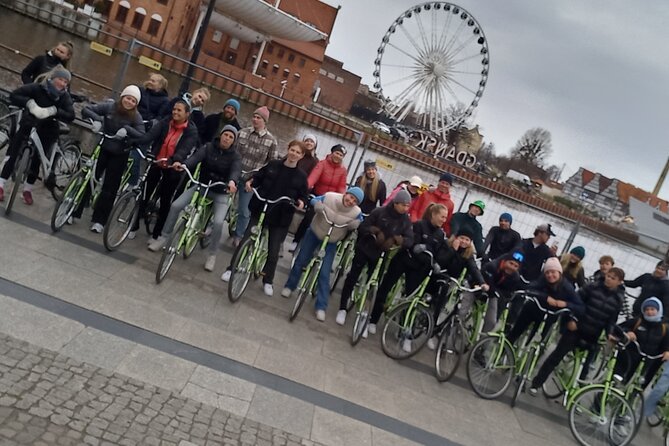
The route also passes the Museum of the Second World War, with a five-minute stop. The instruction to visit it is direct, but admission is not included and the schedule does not allow a full museum visit.
That makes this a prompt to return, not a substitute for entering. The museum is part of Gdańsk’s wider wartime story, and its location helps place that story within the modern city. If you have a strong interest in World War II, you should set aside separate time for the museum before or after the bike tour.
The short stop can still be useful. It shows you where the museum is and lets the guide explain why it belongs on your Gdańsk list. Just do not expect to see the collection during the five-minute visit.
Golden Gate and Green Gate frame the old city
The Golden Gate, or Zlota Brama, receives five minutes. Its allegorical statues represent Peace, Freedom, Wealth, Fame, Piety, Justice, and Concord. Those figures give the gate a clear symbolic purpose, not just a decorative one.
The stop is quick and admission is not included. Take time to look above the passageway, where the statues are easy to miss if you are watching only the street. The guide’s explanation should help turn a brief photo stop into a small lesson in civic ideals.
Later, the route reaches the Green Gate, or Brama Zielona, which leads toward the Green Bridge. This is another five-minute stop, with no admission included. Together, the two gates help define the old city’s ceremonial edge and give you a sense of how people entered and moved through historic Gdańsk.
Granary Island shows the city’s scars and renewal
Wyspa Spichrzów, or Granary Island, is described as the historic heart of Gdańsk. It was destroyed during World War II, so the stop adds an important layer to the city’s appearance. What you see today cannot be understood without knowing what was lost and rebuilt.
The visit lasts five minutes, with admission included as listed. In practice, the value is the guide’s explanation and the chance to view the island from the route. This is a good place to ask how war changed the city and how Gdańsk has dealt with rebuilding its historic identity.
Because the stop is brief, do not expect a long architectural walk. Instead, look across the area and think about the contrast between the old name, the wartime destruction, and the city you see now. That contrast is one of the most meaningful ideas on the tour.
The Motława crossings add a practical local touch
The route includes the footbridge over the Motława to Ołowianka, if the bridge is open. The wording matters: this part is conditional. You should not book the tour expecting that the crossing will always be available.
If it is open, the bridge adds a change of pace and a different view of the waterfront. The stop lasts about five minutes and admission is included. It is a small feature, but it shows how the tour responds to the city as it is on the day rather than following a rigid script.
The Motława area also leads naturally to the Crane, one of Gdańsk’s defining symbols. The Crane is a strong visual reminder of the city’s port and trading past. Admission is not included, so the scheduled visit is best understood as an exterior look and explanation.
You will want to pause for photographs here, but keep the schedule in mind. The route covers many sights, and the Crane is one of several short stops rather than a full museum visit.
What the private format really adds
A private tour means only your group participates. That gives you room to ask questions and request emphasis on subjects that matter to you. The experience is also described as customizable, so you can discuss your interests and preferences with the guide.
The available information does not promise a specific guide by name, so you should not book expecting a particular person. What is clear is that the guide is a Gdańsk local who was born in the city and plans to share personal experiences, Polish traditions, and local ways of thinking.
That is a useful distinction. A private tour is not automatically better than a group tour, but it can be better value when you want conversation instead of a fixed speech. It also suits families, couples, or friends who prefer to set their own questions and move at a comfortable pace.
The tour offers group discounts, which may improve the price for a larger party. At $43.05 per person, the cost is fair if you use the guide for orientation and local context. It is less attractive if you expect long museum visits, extensive cycling, or included entry to every attraction.
Timing, tickets, and weather
The experience lasts about two hours and returns to the starting point at Kołodziejska 7. Since several stops take five minutes and the longest take ten, much of the time is spent riding between sights and listening while moving through the city.
Admission is included for St. Mary’s Church, the European Solidarity Centre, Granary Island, and the Motława footbridge when it is open, as listed. Admission is not included for Dluga Street, the World War II Museum, the Golden Gate, the Crane, and the Green Gate. The descriptions do not promise full interior visits at every stop, so check the guide’s plan if entering a particular attraction is important to you.
You receive confirmation when booking, and a mobile ticket is available. Most people can participate, but you should be comfortable riding a bicycle for the length of the activity.
The tour requires good weather. If poor conditions cancel it, you can choose another date or receive a full refund. You can also cancel without charge up to 24 hours before the start time. Inside that 24-hour window, the payment is not refunded and changes are not accepted.
Who should book the Gdańsk bike tour?
I would choose this tour if I had limited time in Gdańsk and wanted the city’s major themes in one outing. It gives you the old center, religious art, wartime reminders, the shipyard, Solidarity, and the riverfront without requiring a full day of walking.
It is also a good fit if you prefer local conversation to a recorded audio guide. The strongest part is likely the explanation of Solidarity and the 1980s, especially because the guide’s own connection to Gdańsk can add personal context.
I would look elsewhere if you want to spend an hour inside the World War II Museum, study every church detail, or tour the shipyard at length. The five- and ten-minute stops are introductions. You will need to return on your own for the places that catch your attention.
The modest rating of 3.8 from eight reviews suggests a mixed overall response, so I would keep expectations practical. This is a private city overview, not a specialist museum tour. Its appeal lies in the route, the local perspective, and the chance to see a lot without wearing out your feet.
Should you book it?
Book it if you want a private, flexible first look at Gdańsk and value the connection between the old town and the Solidarity shipyard. The route is particularly useful for first-time visitors who want to understand both the city’s monuments and its role in modern Polish history.
Skip it if your priority is long time inside museums or a detailed architectural study. At $43.05 per person, the price works best when you treat the ride as a guided orientation and use the rest of your stay to revisit the places that deserve more time.
FAQ
How long does the Bike Tour Gdansk Standard last?
The tour lasts approximately two hours.
Where does the tour begin?
The meeting point is Kołodziejska 7, 80-836 Gdańsk, Poland.
Where does the tour end?
The activity ends back at the meeting point.
Is this a private tour?
Yes. Only your group participates in the activity.
Is the route customizable?
Yes. The tour can be adjusted to your interests and preferences.
Is the guide a local?
Yes. The guide is described as someone born in Gdańsk who shares local experiences, Polish traditions, and local ways of thinking.
What sights are included on the route?
The route includes Dluga Street, St. Mary’s Church, the European Solidarity Centre, Gdańsk Shipyard, the World War II Museum, the Golden Gate, Granary Island, the Motława footbridge if open, the Crane, and the Green Gate.
Is admission included at every stop?
No. Admission is listed as included for St. Mary’s Church, the European Solidarity Centre, Granary Island, and the Motława footbridge if it is open. Admission is not included for Dluga Street, the World War II Museum, the Golden Gate, the Crane, or the Green Gate.
Can I cancel for a full refund?
Yes. You can cancel at least 24 hours before the start time for a full refund. Cancellations within 24 hours are not refunded.
What happens if the weather is poor?
The experience requires good weather. If it is canceled because of poor conditions, you can choose another date or receive a full refund.
Just added in Gdańsk
- Gdansk, Gdynia, and Sopot: 8-Hour Private Sightseeing Tour★ 4.9 · 13 reviews
- Undercover City Games: Gdynia★ 5.0 · 34 reviews
- Private WW2 Tour of Westerplatte,Gdansk and Stutthof Including Lunch★ 5.0 · 12 reviews
- Whisky Tasting in Gdańsk★ 5.0 · 3 reviews
- Gdansk EVERYDAY Vodka Tasting Tour★ 5.0 · 6 reviews
- Westerplatte private tour led by Expert-Guide (door to door)★ 5.0 · 5 reviews
- Torun – City of Copernicus Private Tour★ 4.5 · 5 reviews
- TriCity Tour (Gdansk, Gdynia, Sopot) – PRIVATE (8h)★ 5.0 · 4 reviews
Cycling Tours, compared.
Complete Cracow Bike Tour (small group of maximum 15 people!)
Read the review →
Bike Tour of Old Town, Jewish Quarter and the Ghetto
Read the review →
Full Bike Tour – the Old Town, Jewish Qtr & the Ghetto NEW BIKES
Read the review →
Bike Tour of the Old Town, Kazimierz, and the Ghetto
Read the review →

Half-Day Warsaw City Sightseeing Bike Tour for Small Group
Read the review →Browse the lists this tour appears in