
Reviewed · JEWISH QUARTER & GHETTO TOURS
Full Bike Tour – the Old Town, Jewish Qtr & the Ghetto NEW BIKES
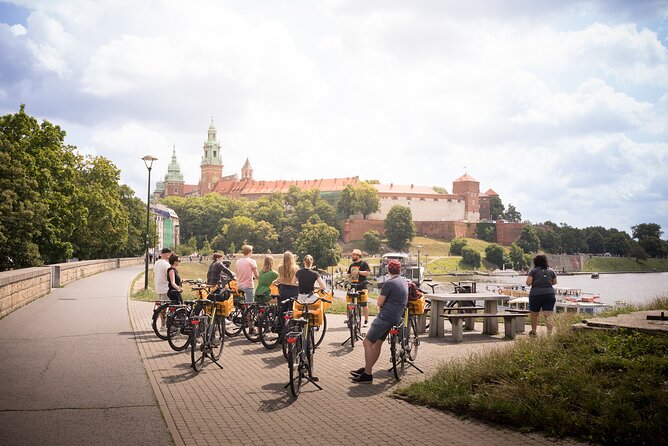
Krakow reveals itself especially well from a bicycle. In three to four hours, you can pedal from the medieval Main Market to Wawel Hill, along the river, through Kazimierz, and into the former Jewish Ghetto. The route covers far more ground than a walking tour, while still letting you stop for stories and legends.
I like the mostly flat route and the access to bike lanes where cars cannot follow. I also like the personal feel: guides such as Chris, Thomas, Alex, and Krzysztof are praised for clear history, good humor, and practical suggestions for the rest of your stay. The main consideration is pace. You see many places, but some stops are brief, so serious photographers may want a separate sightseeing day.
Key points before you book
- See four distinct parts of Krakow: The route links the Old Town, Wawel Hill, Kazimierz, and the former Jewish Ghetto.
- Ride a mostly flat course: You do not need to be highly athletic, but you should be comfortable cycling for more than three hours.
- Expect a personal guide: Chris, Thomas, Alex, Mike, and Krzysztof are among the guides named in the tour feedback.
- Visit Schindler-related places: The ride includes Plac Bohaterow Getta, the Pharmacy Under the Eagle, and Oskar Schindler’s former factory.
- Keep the cost in perspective: At $35.07 per person, the tour gives you a citywide orientation, bike use, a guide, and about half a day of sightseeing.
- Plan around the weather: Rain ponchos are available if needed, but poor weather can lead to a new date or a full refund.
Why a bicycle works so well in Krakow
Krakow’s key sights are spread across a compact but varied area. You can walk between some of them, but the Old Town, Wawel Hill, Kazimierz, and Podgorze, where the former Jewish Ghetto stood, make a long day on foot.
A bicycle gives you a better sense of how these areas fit together. You move through the city rather than simply appearing at one monument after another. The ride uses cycle paths and car-free stretches, and the route is mostly flat. One guide described the cycling as easy enough for people who simply enjoy riding, even if they are not especially fit.
That said, three to four hours in the saddle is still a real activity. You will stop often for explanations, but this is not a sightseeing bus with long periods of sitting. Wear comfortable clothes and shoes, and bring water if you prefer having your own supply. Food and drinks are not included.
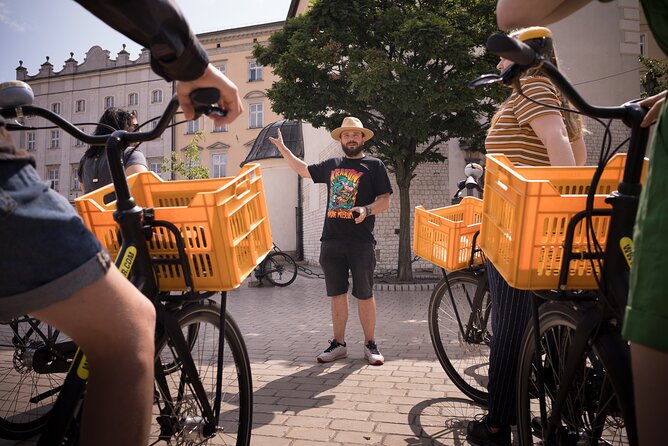
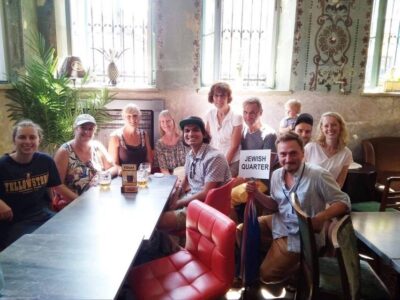
The group limit is 15 people. That is large enough to create a social outing, but small enough for questions and conversation with the guide. The strongest part of the experience is the human element. Chris, a Krakow native who also runs the business, is known for using personal stories alongside political, cultural, and social history. Thomas is praised for speaking several languages, including French. Alex and Krzysztof are also singled out for lively explanations.
More old town tours in Kraków:
- Old Town Krakow & Wawel Castle Walking Tour
★ 5.0 · 1,508 reviews - Krakow: Bike Tour of Old Town, Jewish Quarter and the Ghetto
★ 4.9 · 1,155 reviews - Krakow: The Old Town Walking Tour
★ 4.8 · 794 reviews
Starting on Sławkowska Street
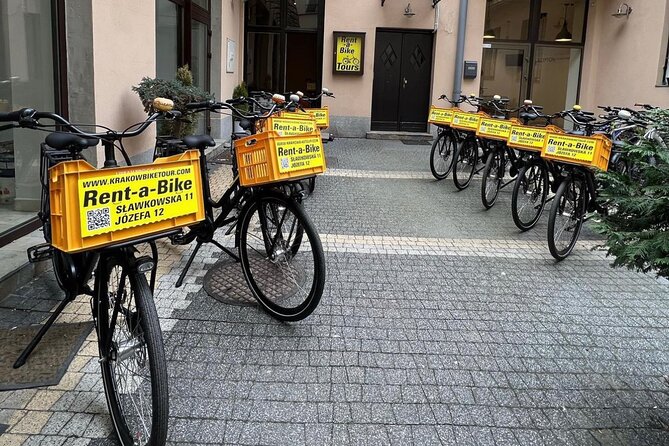
The tour begins at KrakowBikeTour.com, the Old Town bike shop at Sławkowska 11. Staff fit you with a bicycle, explain how it works if needed, and provide a toilet before departure. The bike, local guide, taxes, and a rain poncho if necessary are included.
This first part is short, but it matters. Take a moment to check the seat and brakes before the group leaves. The bikes receive frequent praise for being comfortable and well maintained, although one person felt the bike quality could be better. That mixed note is worth keeping in mind, even though the wider pattern is positive.
The tour ends back at the same shop. That makes it easy to continue exploring the Old Town afterward, return to your hotel, or stop for food nearby.
Main Market Square and the medieval Old Town
The first major section takes you into Stare Miasto, Krakow’s Old Town. You ride through the Main Market Square, a broad medieval space surrounded by historic buildings and city life.
The guide points out the Cloth Hall, once the center of Krakow’s trade in cloth and other goods. You also see the Town Hall Tower and St. Mary’s Basilica. The famous trumpet call from St. Mary’s tower is tied to a local legend, and the guide explains the story as part of the stop.
This is a good place to get your bearings. The square is not only a pretty opening scene. It helps explain how Krakow grew as a trading city and why the Old Town remains the center of its public life.
The scheduled stop is about 15 minutes, so you should not expect time to tour the basilica or browse the Cloth Hall in detail. The bike tour gives you the outline and the useful background. I would return later if you want photographs, shopping, or a closer look inside.
Collegium Maius and Krakow’s university tradition
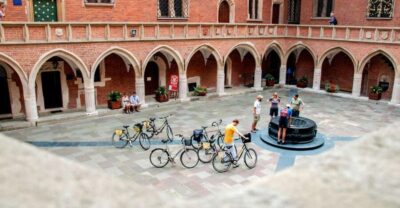
The route continues to Collegium Maius, the oldest building of Jagiellonian University. Its Gothic architecture makes it easy to recognize, but the key detail is its connection with Nicolaus Copernicus, who studied at the university.
The stop lasts about 15 minutes. Your guide provides context about the university and its place in Polish intellectual life, but entrance is not listed as part of the tour. Think of this as an exterior visit and introduction, not a museum tour.
I like this stop because it adds a different side of Krakow. The city is not only royal castles and wartime memory. It is also a university town with centuries of scholarship behind its handsome courtyards and buildings.
Other Jewish-heritage walks around Kraków:
- Krakow: Schindler’s Factory & Ghetto Guided Tour
★ 4.7 · 1,694 reviews - Krakow: Jewish Quarter and Former Ghetto Tour
★ 4.9 · 1,441 reviews - Krakow: Kazimierz Jewish Quarter Walking Tour
★ 4.8 · 571 reviews - Krakow: Kazimierz, Schindler’s Factory & Ghetto Guided Tour
★ 4.8 · 460 reviews
Wawel Dragon and the royal hill
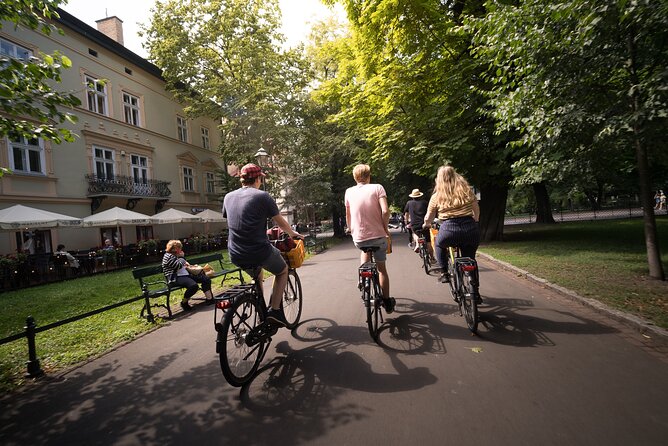
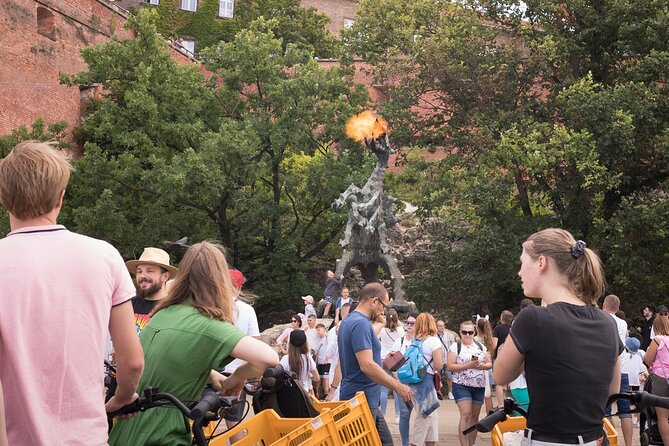
From the Old Town, you head toward the Vistula and the Monument of the Wawel Dragon. The guide tells the old story of the monster that terrorized Krakow and the clever craftsman who defeated it with a trick.
It is a light, memorable story, and a useful change of pace after the university stop. The dragon is one of the city’s best-known legends, especially for families and first-time visitors.
You then pause at Wawel Hill, the former seat of Polish kings. The castle complex carries enormous national importance, and the hill gives the guide a chance to explain Krakow’s role in Poland’s political past. Admission to Wawel Royal Castle is not included, so the tour focuses on the setting and story rather than an interior visit.
If Wawel is high on your list, plan a separate visit. The bike tour lets you understand why the hill matters and shows you where to return, but 15 minutes is not enough for the castle rooms, cathedral, and exhibitions.
A scenic ride toward Kazimierz
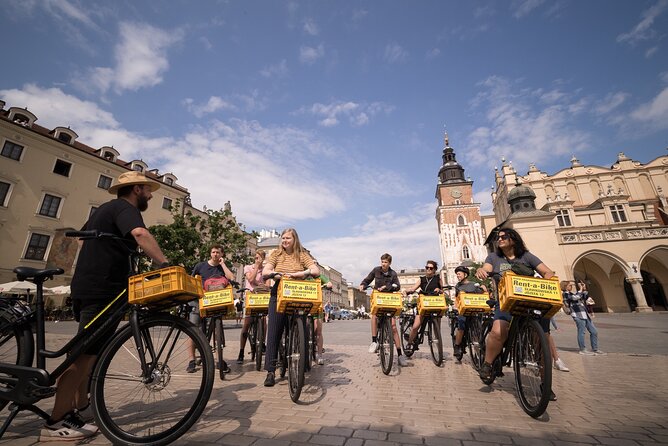
One of the best transitions comes after Wawel. You follow some of Krakow’s nicer bike lanes and enjoy open views along a pleasant cycle path.
This section gives the tour breathing room. Instead of stopping at another monument right away, you simply ride and watch the city change. It is also where the bicycle feels most useful. A walking group would cover the same route more slowly, while a bus could not offer the same close view of the streets and paths.
The route then reaches Kazimierz, the former Jewish district. Before World War II, this was a center of Jewish life in Krakow. Today it is filled with cafes, galleries, restaurants, and popular local gathering spots.
The guide’s job here is to explain both periods without reducing the district to a collection of film locations or trendy addresses. You hear about the Jewish community that lived here, the destruction caused by the war, and the area’s later renewal.
Kazimierz, the Jewish market, and Szeroka Street
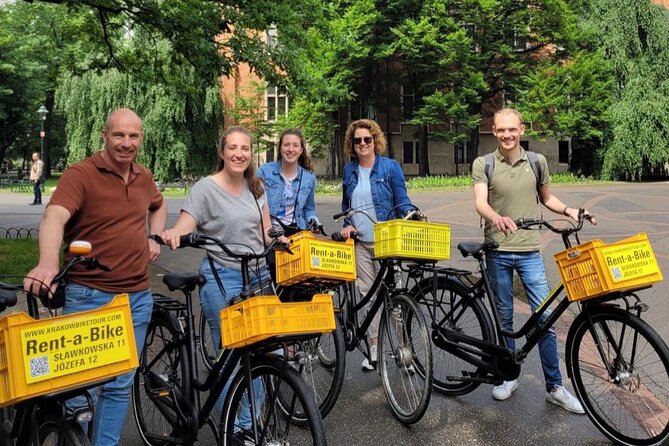
The stop at the old Jewish market adds an everyday detail to the larger story. Before the war, it was associated with kosher meat trading. Today, the area is known for zapiekanka, a toasted open-faced baguette topped much like a small pizza.
Food is not included, but this is a useful place to remember for later. If you want to try Krakow’s famous street snack, return after the ride rather than trying to eat during the guided stop.
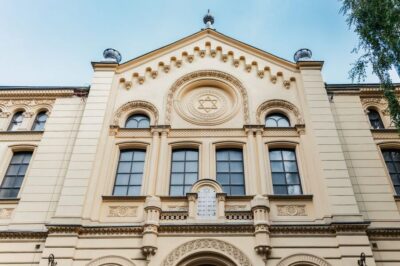
Szeroka Street was once among the most important and prestigious streets in Krakow’s Jewish quarter. It also appeared in Steven Spielberg’s Schindler’s List, which brought international attention to several Krakow locations.
A film connection can be interesting, but the real value is the street’s historical role. The guide helps place the buildings and public spaces in the life of the former community. The stop is again around 15 minutes, so listen closely and mark places you want to revisit on foot.
A small practical tip: one person specifically recommended looking at the doorway of number 11. Details like this are easy to miss from a bicycle, so keep your eyes open when the group pauses.
The former Jewish Ghetto and Schindler’s factory
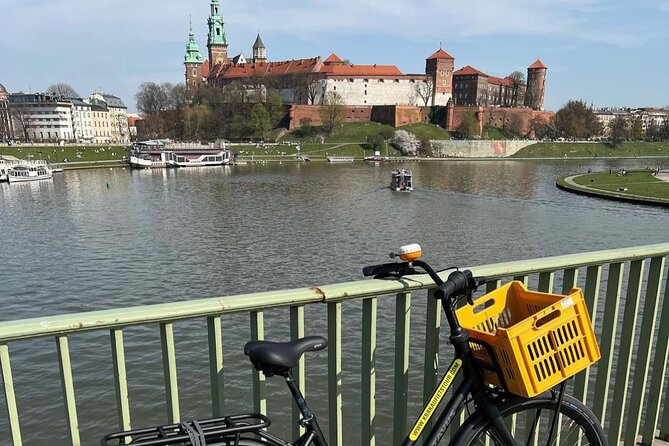
The tour then crosses into the area connected with the wartime Jewish Ghetto. At Plac Bohaterow Getta, you see the memorial dedicated to the victims of the ghetto. The square is also associated with the Pharmacy Under the Eagle, an important wartime site.
This is the most serious part of the ride. The memorial requires a slower, more respectful approach than the playful dragon story or the food stop in Kazimierz. Your guide provides the basic setting and points out places connected with the ghetto’s history.
The route continues to Oskar Schindler’s former enamel factory. Schindler saved more than 1,000 Jewish lives during World War II, and his story became widely known through Spielberg’s film.
Admission to the factory museum is not included. The bike tour shows you the building and explains why it matters, but you need a separate ticket if you want to enter. I recommend treating the exterior stop as a preview. If the wartime history is central to your Krakow visit, set aside extra time for the museum itself.
This part of the itinerary is one reason the tour offers more than a standard Old Town ride. You see how Krakow’s story extends beyond royal monuments and attractive squares.
Planty Park and the medieval city gates
After the heavier material, the route returns toward the Old Town through Planty Park. This green belt follows the line of Krakow’s former medieval walls and gives you a calm ride around the historic center.
It is a pleasant final stretch. You can cycle without the pressure of traffic and watch the city’s old core pass through trees and paths. The scheduled ride is about 10 minutes, so it is more of a transition than a park visit.
The final sights are the Barbican and St. Florian’s Gate. The Barbican is one of the remaining pieces of Krakow’s medieval defenses, while St. Florian’s Gate was once the main entrance into the city.
Admission to the Barbican is not included. Again, the guide gives you a useful introduction and helps you decide if you want to return for a closer look. St. Florian’s Gate is included as an exterior stop, and its location makes sense as the end of the city circuit.
What the $35.07 price really buys you
At $35.07 per person, this is good value if you want a broad first look at Krakow. Your fee covers the bicycle, local guide, taxes, and a rain poncho if needed. It does not cover meals, drinks, Wawel Castle, Schindler’s factory, or the Barbican.
The value is not in museum access. It is in the amount of ground you cover and the stories that connect the sights. In about half a day, you see the Old Town, university quarter, Wawel, Kazimierz, the former ghetto, Planty Park, and the medieval gates.
I would book this early if your dates are fixed. The experience is often reserved about 20 days ahead, and the maximum group size is 15. Confirmation arrives at booking, and free cancellation is available up to 24 hours before the start time.
The tour depends on good weather. If poor conditions force cancellation, you can choose another date or receive a full refund. If the minimum number of participants is not reached, the same options apply.
Who will get the most from this ride
I would choose this tour at the start of a Krakow stay. It gives you a city map in your head and highlights places you may want to revisit at a slower pace. The guides also offer suggestions for what to do after the ride.
It suits adults, families with older children, and anyone who likes history but does not want to spend the entire day inside museums. Children must be accompanied by an adult, and most people can take part.
You should be comfortable cycling for three to four hours. The route is mostly flat and the pace is described as relaxed, but you will still be on a bicycle for much of the experience. If you prefer frequent photo stops, tell yourself in advance that this is an overview. Several stops last about 15 minutes, and the guide needs to keep the group moving.
Should you book the Krakow bike tour?
Book it if you want to cover Krakow’s major districts in one outing, value a local guide, and enjoy an easy ride more than a formal museum schedule. The strongest reasons are the wide route, the personal storytelling from guides such as Chris and Thomas, and the chance to connect Kazimierz and the former ghetto with the Old Town.
Skip it if you want long visits inside Wawel Castle, Schindler’s factory, or the Barbican, since entry is not included and the stops are short. For most first visits, though, this is a smart way to get oriented, stay active, and find the places worth exploring on your own afterward.
FAQ
How long does the Krakow bike tour last?
The tour lasts approximately three to four hours. Individual sightseeing stops usually last about 10 to 15 minutes, with cycling between them.
What areas does the tour visit?
The route includes Krakow’s Old Town, Main Market Square, Collegium Maius, Wawel Hill, Kazimierz, the former Jewish Ghetto, Planty Park, the Barbican, and St. Florian’s Gate.
Is bicycle use included in the price?
Yes. Bicycle use, a local guide, local taxes, and a rain poncho if necessary are included.
Are museum admissions included?
No. Admission to Wawel Royal Castle, Oskar Schindler’s former factory museum, and the Barbican is not included.
Where does the tour begin and end?
It begins at KrakowBikeTour.com, Old Town Shop, Sławkowska 11, Krakow. The activity ends back at the same meeting point.
Is the tour offered in English?
Yes. The tour is offered in English and uses a mobile ticket.
How large is the group?
The maximum group size is 15 people.
What happens if it rains?
The tour requires good weather. Rain ponchos are available if necessary, but if poor weather causes cancellation, you can receive a full refund or choose a different date.
More cycling tours in Kraków
- Complete Cracow Bike Tour (small group of maximum 15 people!)
★ 5.0 · 1,322 reviews - Highlights of Krakow Bike Tour – Small group
★ 5.0 · 662 reviews - Krakow: Bike Tour of the Old Town, Kazimierz, and the Ghetto
★ 4.9 · 350 reviews - Hidden Krakow Bike Tour
★ 5.0 · 275 reviews
Just added in Kraków
- From Krakow: Guided Tour of Zalipie★ 4.6 · 30 reviews
- From Krakow: Zalipie Village Day-Tour★ 4.9 · 74 reviews
- Krakow: Zalipie Village Tour★ 4.6 · 8 reviews
- ZALIPIE – painted village, unique PRIVATE tour from Krakow★ 5.0 · 20 reviews
- Dunajec River Gorge and Zakopane: Full-Day Trip from Krakow★ 4.6 · 57 reviews
- Zator: Energylandia Amusement Park Entry Ticket★ 4.6 · 58 reviews
- From Krakow: Full-Day Wadowice & Czestochowa Tour★ 4.9 · 77 reviews
- From Krakow: Ojców National Park & Ogrodzieniec Castle Tour★ 4.9 · 64 reviews
Jewish Quarter & Ghetto Tours, compared.
Bike Tour of Old Town, Jewish Quarter and the Ghetto
Read the review →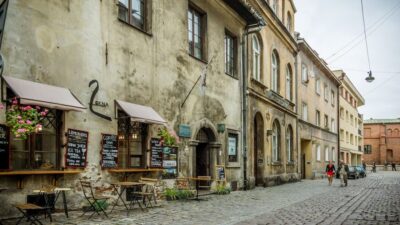
Warsaw Ghetto Private Walking Tour with Hotel Pickup
Read the review →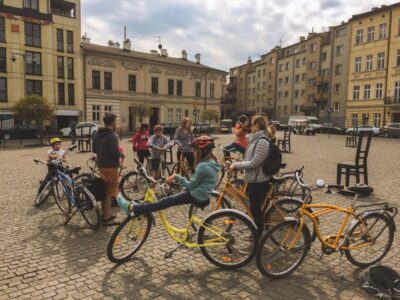
Bike Tour of the Old Town, Kazimierz, and the Ghetto
Read the review →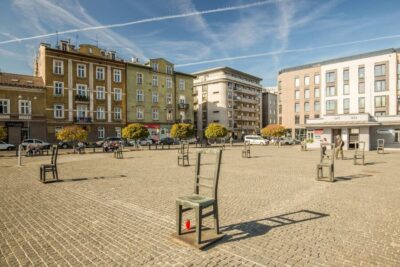
Jewish Quarter and Ghetto Electric Golf Cart Tour
Read the review →Browse the lists this tour appears in