
Reviewed · CYCLING TOURS
Gdansk Highlights Bicycle Tour
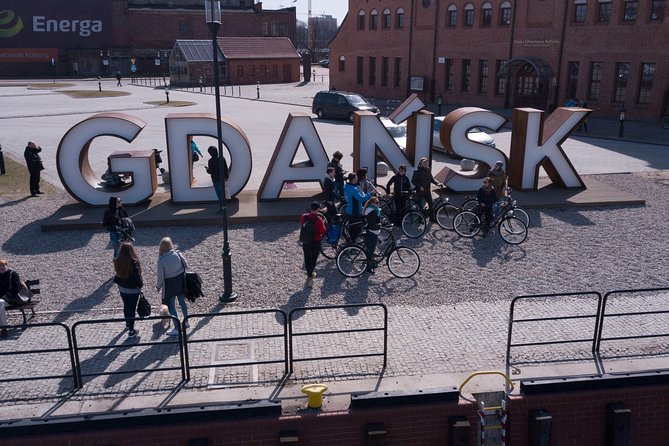
Gdańsk’s story is too big for its postcard center. This three-hour bike ride takes you from Neptune’s Fountain and St. Mary’s Church to the shipyard where Solidarity helped bring down communism, then out to the port, Lower Town, and old fortifications. You cover much more ground than you could on foot, while still stopping often for photos and short talks.
I like the mix of major sights and overlooked districts, and I like that the tour explains how a city nearly destroyed in World War II was rebuilt in an older style. The main caution is simple: Gdańsk is an active city, so you need to be comfortable riding while watching pedestrians, cars, and other cyclists.
Key points to know before you book
- The route connects several eras: medieval Gdańsk, wartime destruction, communist industry, and the Solidarity movement.
- You ride beyond the Old Town: the shipyard, Ołowianka, Lower Town, and St. Gertrude Bastion add real depth to the visit.
- Frequent stops keep the ride easy: talks usually last between five and fifteen minutes, with time for pictures.
- The guides shape the experience: guides including Lukas, Bożena, Kasper, Olga, Patrick, and David have led this route.
- Bikes and e-bikes are available: the bikes have been described as comfortable and well maintained, with helmets for those who want one.
- The tour suits casual riders: the route has been described as relaxing rather than physically demanding, but you still need basic cycling confidence.
Why a bike is a smart way to see Gdańsk
Gdańsk’s best-known sights sit close together, but its most important modern stories are farther out. A walking tour can cover the Main Town well, yet reaching the shipyard, old port, Lower Town, and seventeenth-century defenses takes more time and effort.
The bicycle solves that problem. You can see the grand center, then move quickly to places that explain how Gdańsk became the city it is today. I especially like this kind of route early in a visit because it gives you a useful map in your head. Afterward, you will know which streets and districts deserve a slower return visit.
The pace is built around stops rather than nonstop riding. The listed talks range from about five minutes at a landmark to fifteen minutes at Sala BHP, the building tied to the Solidarity movement. That makes the tour more of a moving history lesson than a workout.
The route is also broad in subject. You hear about German rule and the 1939 invasion, wartime damage, postwar rebuilding, communist industry, the 1980 strikes, and the city’s older architectural layers. That range is the real value here. You are not simply ticking off monuments.
More cycling tours in Gdańsk:
- Gdańsk: Highlights Bike Tour
★ 4.9 · 173 reviews - Gdansk Private Bike Tour
★ 5.0 · 36 reviews - Gdansk Private Bike Tour
★ 5.0 · 21 reviews
Starting at Chlebnicka Street and Neptune’s Fountain
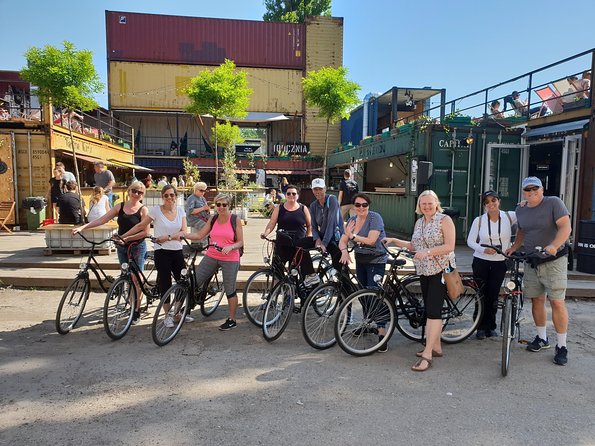
The tour begins at Poland By Locals, at Chlebnicka 19/20, near the center of Gdańsk. The listed start time is 10:00 a.m., and the activity returns to this same meeting point after roughly three hours.
The first major stop is Neptune’s Fountain, where the guide introduces the history of Gdańsk. This is a good opening because the fountain sits among the city’s most recognizable historic buildings, making it easy to place the old center on a map.
Expect a short talk of about ten minutes, followed by time for photographs. The stop is not just a photo opportunity. It gives the guide a chance to explain why Gdańsk looks so distinctive and how its identity has been shaped by trade, war, political change, and reconstruction.
Golden Gate and the rebuilt city
The Golden Gate, or Złota Brama, receives a shorter stop of about five minutes. The focus here is the city’s rebuilding after World War II.
That subject deserves more than a quick glance. Much of central Gdańsk was badly damaged, yet the restored streets and façades were shaped to reflect the historic city. The result can look timeless if you do not know what happened in the twentieth century.
I find this one of the most useful themes on the route. A casual walk through the center might leave you thinking the old streets survived intact. The guide helps you read the buildings as part of a major reconstruction effort, not just as old scenery.
St. Mary’s Church, a massive brick landmark
The stop at St. Mary’s Church lasts about five minutes. It is presented as the world’s largest brick church, an impressive claim that gives the building immediate scale and importance.
The short stop is enough for an introduction and photographs, but it is not a full church visit. If you want to study the interior, monuments, or details at length, plan to return on your own. That is not a flaw in the bike tour. A route covering this much ground has to keep moving.
The church also works well as a marker within the old center. You get a sense of how dense and grand medieval Gdańsk was before the tour shifts toward the city’s wartime and industrial stories.
Same base, a different kind of day:
- Gdansk: City Cruise on Historical Polish Boat
★ 4.8 · 2,913 reviews - Gdańsk: Sunset Cruise on a Historic Polish Boat
★ 4.9 · 977 reviews - Gdańsk City Sights & History Guided Walking Tour in English
★ 4.8 · 876 reviews - Gdansk: Firearm Shooting Experience with Instructor
★ 4.8 · 866 reviews
The Polish Post Office and the human side of World War II
The Museum of the Polish Post Office is the next major history stop, with about ten minutes devoted to the site and to World War II. The focus is on what the conflict meant in real terms, rather than treating the war as a distant date on a timeline.
This is a valuable change of tone after the formal architecture of the center. The post office connects the city’s large political story to a specific place and the people caught in the opening stages of the war.
Do not expect a long museum visit within the standard schedule. The stop is designed as an introduction. If wartime Gdańsk is a main interest, mark the museum for a separate visit and use the bike tour to understand where it fits into the city.
Gdańsk Shipyard and the road to Solidarity
The tour then reaches the Gdańsk Shipyard, one of its most important stops. Here the guide explains the role of the shipyard as a powerful state company during the communist period.
This is where the route moves from architecture into living political history. The shipyard was not just an industrial workplace. It became a center of protest and organized opposition, leading to the Solidarity movement and the wider challenge to communist rule.
The next stop, Sala BHP, allows about fifteen minutes for the story of Solidarity, the strikes, and Lech Wałęsa. This is the longest listed talk, and that extra time makes sense. The subject needs names, causes, and sequence. You learn how the strikes developed and why the events mattered beyond Poland.
For many people, this will be the most memorable part of the tour. One guide, Lukas, has been praised for explaining the 1980s strikes and their connection to the end of communism in 1989. Other named guides, including Kasper and Patrick, have also led the route with a mix of facts, questions, humor, and occasional role-play.
The quality of a history stop depends heavily on the guide, and this is especially true here. Poland’s recent past can be complicated and emotionally charged. A good guide makes it understandable without turning the ride into a lecture. The available guide feedback points to a friendly, engaged approach, but individual guides will naturally have different styles.
Ołowianka and the old port
After the shipyard, the route reaches Ołowianka and Gdańsk’s Old Port. The listed stop is short, about five minutes, so think of it as a scenic pause and a chance to understand the waterfront’s role.
The port helps connect the city’s architecture to its commercial past. It also gives the ride a change of scenery after the serious shipyard discussion. You can take photographs, look across the water, and get a clearer sense of how the city grew around its waterways.
This stop is one reason the bicycle works so well. You can move between the center and port without spending much of the tour walking the same busy streets.
Lower Town, green space, and a quieter side of Gdańsk
Dolne Miasto, or Lower Town, is a particularly useful part of the route. The tour presents it as an original district and highlights its greener character.
Many short city tours stay in the polished center. Lower Town gives you a different feel, with more space and a less formal setting. It helps you see Gdańsk as a real city with neighborhoods, not only as a collection of historic façades.
The stop lasts about ten minutes. You might find this part especially appealing if you have already seen the Main Town and want something less expected. It also gives the ride a welcome pause from major monuments and political history.
St. Gertrude Bastion and the old defenses
The final listed stop is St. Gertrude Bastion, an original seventeenth-century fortification. The guide spends about ten minutes here.
The bastion shows how Gdańsk protected itself before modern warfare changed the shape of cities. It also gives you one more layer of the city’s past, linking military planning to the urban districts you have already crossed.
Because this is near the end of the ride, it works as a useful final piece. You have seen the medieval center, wartime sites, industrial Gdańsk, the port, and a quieter neighborhood. The fortification reminds you that the city’s story began long before the twentieth century.
The guides and the feel of the ride
The tour is offered in English and has a maximum group size of 15 people. That is small enough for questions and basic group contact, without promising the intimacy of a private tour.
Guides named in the tour feedback include Lukas, Patrick, Bożena, Kasper, Olga, and David. Bożena has been singled out for covering the center, islands, and a little nature in a calm three-hour route. Olga has been praised for adjusting the pace, answering questions, and suggesting a good lunch place afterward. These details suggest that the experience is not delivered as a fixed speech with no room for conversation.
Still, guide style can vary. Some guides may lean more toward dates and political context, while others may add humor or personal stories. If you have a particular interest, such as Solidarity, World War II, architecture, or local food, tell the guide early.
The route has also worked well for older riders. A group in its 60s completed it without trouble, and the cycling has been described as easy and relaxing. That does not mean you can treat it like a sightseeing bus. You need to balance, brake, steer, and stay alert in a city shared with cars and pedestrians.
Bikes, helmets, and physical effort
The available bikes have been described as modern, comfortable, functional, and well maintained. E-bikes have also been available, according to tour feedback. Helmets are provided for people who want or need one.
The route is not presented as physically demanding. Most of the effort comes from being in the saddle for around three hours, not from steep climbs or fast riding. A basic ability to ride a bicycle should be enough for the easy pace described.
The main practical issue is city cycling. One clear caution is to stay alert around other people, vehicles, and busy streets. If you are a nervous cyclist, have not ridden for years, or dislike sharing roads and paths, this may not feel as carefree as a walking tour.
On the other hand, the bicycle can make the day easier for people who find long walks tiring. One rider specifically found it easier to cover the city by bike than on foot. That is a fair point: the route covers a wide area, but the stops break the effort into manageable sections.
Is $43.18 a fair price?
At $43.18 per person, the tour is not the cheapest way to see Gdańsk’s center. But the value comes from the range of places covered and the historical explanation between them.
You are paying for roughly three hours with a local English-speaking guide, a bicycle, and access to a route that reaches well beyond the usual old-center circuit. The listed stops do not charge an admission fee, and the tour is not built around long indoor museum visits. Its value is in orientation, transport, and interpretation.
I think the price makes sense if this is your first visit or if you have only a short stay. You can see the main landmarks, understand the shipyard and Solidarity, and get a sense of Lower Town and the port in one morning.
It is less useful if you only want a slow architectural tour or a long museum visit. In that case, walking independently may give you more time at each site.
The tour is booked about 24 days ahead on average, so advance planning is sensible during popular travel periods. Confirmation arrives at booking, and free cancellation is available up to 24 hours before the start time. The tour depends on good weather. If poor weather cancels it, you are offered another date or a full refund.
Who should book this Gdańsk bike tour?
I would choose this tour for a first visit, especially if you want context before exploring alone. It also fits friends and families who can ride comfortably and prefer an active morning to a bus or long walking route.
It is a strong match for anyone curious about twentieth-century Poland. The shipyard and Sala BHP give the tour a purpose beyond sightseeing, while the old center and fortifications keep the route varied.
You should think twice if you want a museum-heavy experience, a private guide, or a completely quiet ride away from traffic and pedestrians. The group can include up to 15 people, and the city sections require attention.
Should you book it?
Book it if you want a fast, useful introduction to the whole city, not just the most photographed streets. The best reason to go is the combination of Gdańsk’s rebuilt center with the shipyard and Solidarity story. Few short activities connect those subjects as neatly.
For the best experience, ride early in your stay, ask questions at the shipyard, and note which museums or neighborhoods you want to revisit. If you can ride a bicycle and stay alert in city traffic, the $43.18 price buys a lot of ground, strong orientation, and a clear explanation of why Gdańsk matters.
FAQ
Where does the Gdańsk bicycle tour start and finish?
It starts at Poland By Locals, Chlebnicka 19/20, 80-830 Gdańsk, Poland. The activity ends back at the same meeting point.
What time does the tour begin?
The listed start time is 10:00 a.m.
How long does the bicycle tour last?
The tour lasts approximately three hours.
Is the tour offered in English?
Yes. The tour is offered in English.
How many people can join the tour?
The maximum group size is 15 people.
Can I cancel for a full refund?
Yes. You can cancel at least 24 hours before the local start time for a full refund. Cancellations or changes made less than 24 hours before the start are not accepted for a refund. If poor weather cancels the tour, you are offered another date or a full refund.
Just added in Gdańsk
- Highlights of Gdańsk, Gdynia and Sopot 1-day Private Tour★ 4.9 · 59 reviews
- Gdansk Sopot and Gdynia 3 Cities Private Full-Day Tour★ 5.0 · 56 reviews
- Gdansk Private Bike Tour★ 5.0 · 21 reviews
- Gdansk Private Polish Beer Tasting Tour at Best Pubs & Bars★ 4.8 · 22 reviews
- Gdansk Traditional Food Tour with Old Town Sightseeing★ 4.5 · 27 reviews
- Gdansk Private Bike Tour★ 5.0 · 36 reviews
- Gdansk: 4-Hour Polish Food Tour★ 4.9 · 35 reviews
- Delicious Gdańsk Food Tour in Poland★ 4.5 · 59 reviews
Cycling Tours, compared.
Complete Cracow Bike Tour (small group of maximum 15 people!)
Read the review →
Bike Tour of Old Town, Jewish Quarter and the Ghetto
Read the review →
Full Bike Tour – the Old Town, Jewish Qtr & the Ghetto NEW BIKES
Read the review →
Bike Tour of the Old Town, Kazimierz, and the Ghetto
Read the review →
Half-Day Warsaw City Sightseeing Bike Tour for Small Group
Read the review →Browse the lists this tour appears in