
Reviewed · NOWA HUTA & COMMUNISM TOURS
Nowa Huta Steel Mill Administration Buildings and Shelters with local NGO
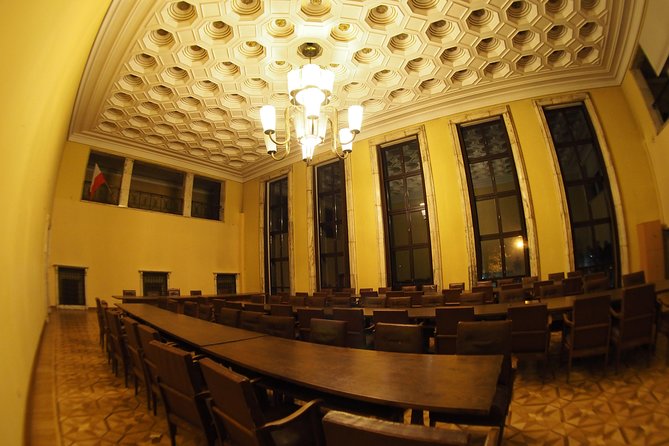
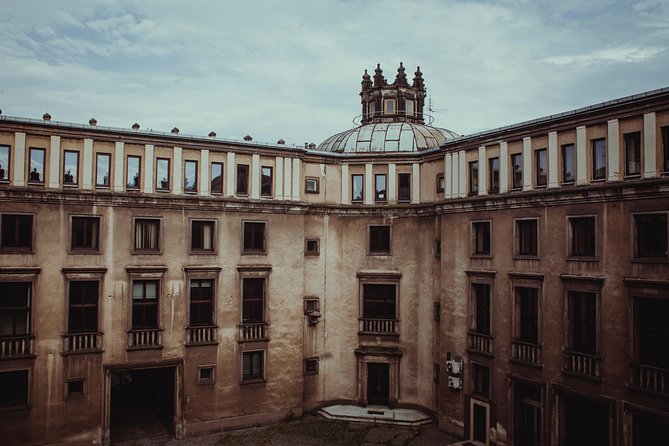
The most striking part of this Nowa Huta tour is not a polished museum. It is the chance to walk through largely abandoned steelworks offices that still show the grand, formal style of 1950s Socialist Realism. You’ll enter rooms, corridors, and an underground Cold War shelter with a local guide who explains how the plant shaped daily life in communist Poland.
I like the authentic, untouched feel of the buildings, and I like the way the tour links architecture to working life, state power, and propaganda. The historic tapes from the steelworks radio station add an especially human touch. The main drawback is that the site is old and partly neglected, so you should expect an urban-exploration setting rather than a tidy museum.
Key points to know
- See the former Lenin Steelworks administration buildings, including offices and meeting rooms left with many period objects.
- Go underground into a Cold War bomb shelter, one of the most memorable parts of the visit.
- Hear historic recordings from the steelworks radio station, which bring the factory’s daily world closer.
- Learn from an English-speaking local guide, with Mateusz particularly noted for his detailed knowledge and family connection to the plant.
- Expect a small group of no more than 15 people, making it easier to ask questions and hear the guide.
- Plan about 90 minutes to two hours, with no hotel pickup and a meeting point at Ujastek 1.
Entering the former Lenin Steelworks
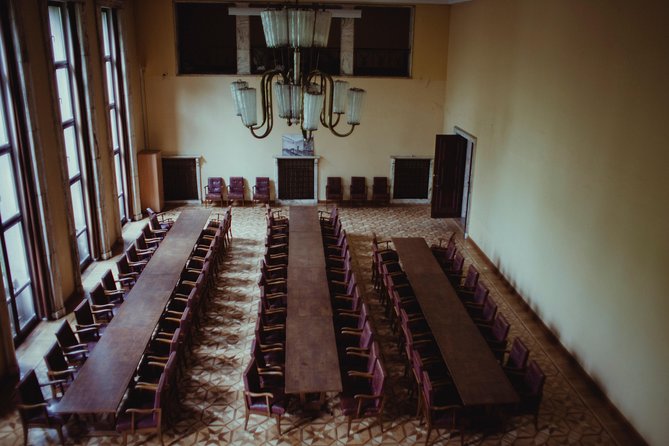
Nowa Huta was built as a planned industrial city beside Krakow, and the steelworks was its economic and political center. This experience takes you beyond the broad avenues and monumental public spaces to the plant’s former administrative buildings at Ujastek 1.
The visit focuses on the offices where the steelworks was managed. These were not plain factory sheds. Their formal rooms and imposing details reflect the Socialist Realist style favored by the communist state in the 1950s. The architecture was meant to communicate order, strength, authority, and the importance of industrial labor.
You can expect to move through administrative rooms, corridors, offices, and meeting spaces. Many parts of the building have been left in a worn condition, which is central to the experience. Paint may be aged, objects may look out of place, and the building is beginning to show its years. I find that more useful than a freshly restored setting because you can see the passage from state-run industrial monument to neglected former workplace.
The buildings were used into the 2000s, so not every object belongs to the early communist period. You may see material from several decades, including items from later years. Some objects have also been gathered and arranged as part of the exhibition, so you should not assume every piece was found exactly where it was originally used.
That distinction matters. This is not a time capsule preserved in perfect condition. It is a historic building with original features, collected objects, and layers from different periods. The guide helps you sort out what you are seeing and why it matters.
Other communist-era tours around Kraków:
- Krakow: Nowa Huta Guided Tour in Vintage Car
★ 4.9 · 277 reviews - Legendary Private Nowa Huta Communism Tour with Crazy Guides
★ 5.0 · 262 reviews - Nowa Huta: Steelworks Administration Buildings/Shelters Tour
★ 4.9 · 160 reviews
Socialist Realist design in working spaces
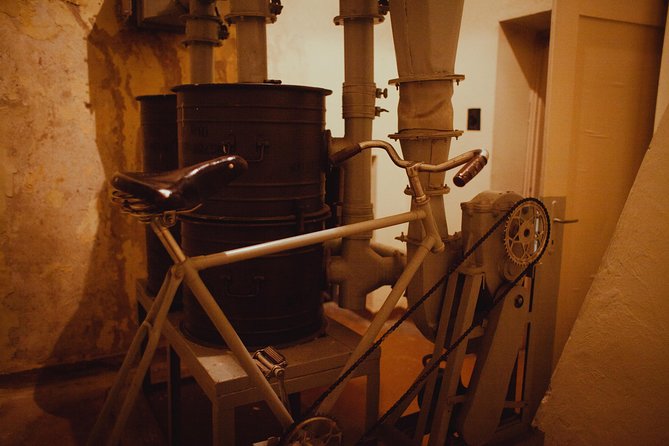
The architecture is one of the strongest reasons to book this visit. Socialist Realism was not only about statues and public monuments. It also shaped workplaces, government offices, and industrial institutions.
As you walk through the administration buildings, look for the sense of ceremony built into spaces designed for management. The scale and decoration were meant to give the steelworks a role far larger than that of an ordinary factory. It was part of the communist state’s industrial ambition and a major symbol of Poland’s postwar development.
The tour also helps explain the contrast between the administrative buildings and areas intended for ordinary workers. That difference can prompt useful questions about status, access, and the way the system presented itself. One point worth keeping in mind is that not every gap in quality or design can automatically be blamed on communism. Industrial workplaces in other political systems could also have sharp divisions between management and labor.
That balance makes the tour more worthwhile. You are not simply shown an old building and told what to think. The best guides, including Mateusz, explain the setting with clear historical detail and a personal sense of connection. His family ties to the steelworks give the story added depth, though the guide assigned to your departure may vary.
Offices, meeting rooms, and traces of everyday work
The administration buildings offer a different view of communist Poland from the usual museums. Instead of focusing only on national leaders and major political events, the tour places you inside the machinery of a large workplace.
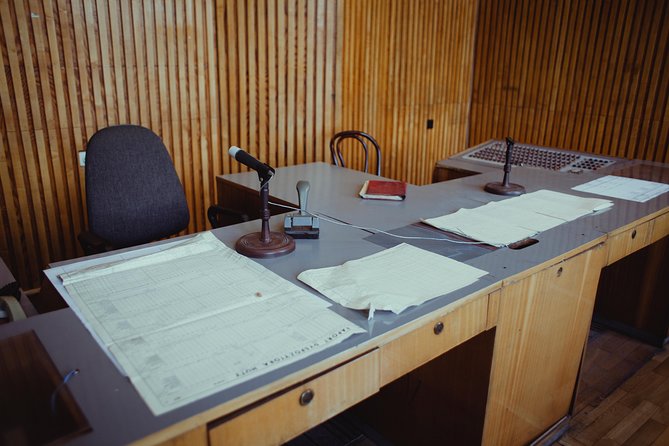
You will see rooms that once supported the running of the steelworks. Offices and meeting rooms help you picture how decisions were made, how employees were managed, and how a huge industrial operation fit into the planned economy. The setting makes the abstract idea of a state-owned factory easier to understand.
The preserved objects are part of the appeal. Some rooms have furnishings and equipment that help create a sense of past use. Other displays may have been collected by the local organization that operates the tour. I would treat the objects as clues rather than assume every item is in its original place.
The building has also been used as a setting for films. That adds another layer to the visit, particularly if you enjoy locations that still have an unfinished, slightly eerie quality. You are not walking through a recreated set. You are seeing real administrative spaces with signs of age and changing use.
You should wear sensible shoes and be prepared for a moderate amount of walking. The physical requirement is not extreme, but the activity is not designed as a short, fully polished museum visit. The listed guidance asks for a moderate level of physical fitness, and children must be accompanied by an adult.
Going below ground into the Cold War shelter
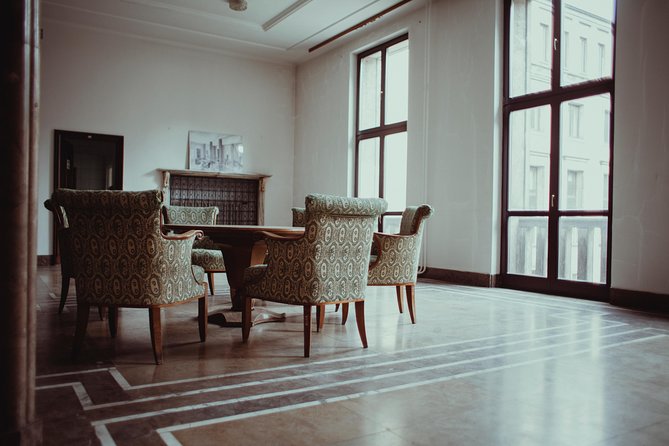
The underground shelter is the tour’s most unusual feature. It shows how the steelworks prepared for the threat of war and reflects the fear that shaped public life during the Cold War.
You will go through underground passages and bunker areas beneath the administrative site. The atmosphere changes quickly from grand offices above ground to practical, enclosed spaces below. The contrast is powerful: the upper rooms present authority and industrial confidence, while the shelter reveals anxiety about military attack and nuclear conflict.
The shelter is also one of the parts where good guiding matters most. Bare concrete, corridors, and old infrastructure can be hard to interpret on their own. The guide connects the space to the larger political climate and explains why such shelters were built into major workplaces.
This section may be less comfortable for anyone who dislikes enclosed or uneven spaces. The tour data does not promise step-free access or special accessibility arrangements, so you should consider the physical nature of the building before booking. If you have concerns, contact the provider before paying.
Same base, a different kind of day:
- From Krakow: Auschwitz-Birkenau Guided Tour & Hotel Pickup
★ 4.5 · 33,358 reviews - From Krakow: Auschwitz-Birkenau Guided Tour & Hotel Pickup
★ 4.5 · 29,340 reviews - Krakow: Auschwitz Guided Tour with Optional Hotel Pickup
★ 4.5 · 15,280 reviews - Krakow–Zakopane: Cable Car, Chocholow Baths, Cheese & Vodka
★ 5.0 · 10,720 reviews
Radio tapes, theater, and the human side of the plant
The steelworks was not only a production site. It was also a social world, with its own institutions, information channels, and culture.
Historic recordings from the steelworks radio station help you hear that world rather than only look at it. Radio inside a large factory could carry announcements and shape the daily rhythm of workers. The recordings offer a direct connection to the voices and communication systems of the plant.
The tour also includes attention to a worker’s theater and other parts of the complex. These details are important because they show how industrial life extended beyond the furnace and office. A large state factory could provide work, housing, entertainment, and a sense of identity, while also placing workers within a tightly managed political system.
This is where the tour moves beyond architecture. You can see how the steelworks affected the surrounding city and how the official story of industrial progress was presented to employees. If you are interested in social history, these details may stay with you longer than the decorative features of the offices.
Why the guide makes a real difference
The site would be difficult to understand without interpretation. You can see an old office building by yourself, but you cannot easily tell which rooms mattered, how the factory operated, or how Nowa Huta changed over time.
The guide’s role is to connect details. You may hear about the steelworks’ communist-era origins, its later history, architectural choices, and the way life in Nowa Huta varied across different decades. The strongest part of the guiding is its enthusiasm without theatrical overstatement.
Mateusz is the guide name most closely associated with this experience. He is described as having family ties to the plant and a detailed understanding of its story. One especially personal touch reported from the experience was a ride in his Lada, but you should not expect that as part of the standard tour. Treat it as an occasional kindness, not a promised feature.
The tour is offered in English and is limited to 15 people. That is a useful size for a building with many rooms and narrow interior areas. You can usually stay close enough to hear the explanation and ask about objects that catch your attention.
A realistic look at the condition of the buildings
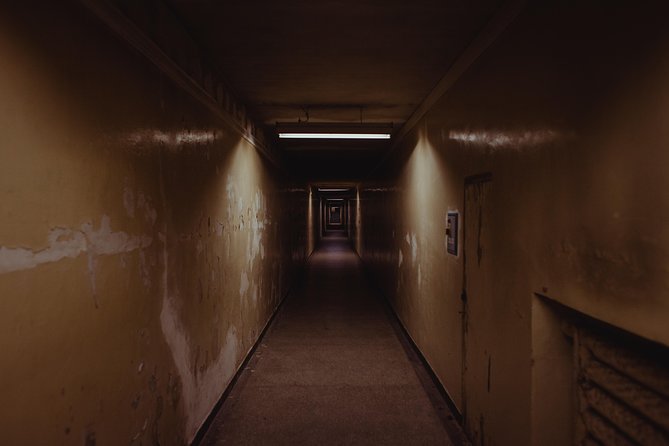
The atmosphere is appealing precisely because the site is not over-restored. The administration buildings have been largely unused for more than a decade, and parts of the interior are showing their age.
That condition creates a strong sense of place, but it also means you should adjust your expectations. You will not get polished floors, neat labels in every room, or the controlled lighting of a standard museum. Some objects may look worn, and the exhibition arrangement can feel informal.
For me, that is a fair trade for access to a building that still feels connected to its former purpose. You can see how a room was altered, abandoned, or reused instead of viewing a perfect reconstruction. If you like abandoned buildings, industrial history, or film locations, the rough edges are part of the appeal.
If you prefer clean presentation and a strictly chronological exhibition, you may find the setting less satisfying. The tour runs for roughly one and a half to two hours, which is long enough to cover a lot of ground. It may feel lengthy if your main interest is only the architecture.
Price, timing, and getting to Ujastek 1
The price is about $27.63 per person. I consider that reasonable for a small-group visit to a site you would not normally be able to explore independently, especially since it includes a local professional guide and access to both the administration buildings and underground shelter.
The value depends on your interests. If you want a quick overview of Nowa Huta, a general city tour may give you more context for less time. If you want access to the former steelworks interiors, detailed interpretation, and a Cold War shelter, this experience offers something more specific.
The meeting point is Ujastek 1 in Krakow, at the site of the former steelworks. The directions note the opposite side of the street, so read the meeting instructions carefully and allow time to find the correct side. Hotel pickup and drop-off are not included.
The location is near public transportation. You will need to make your own way there and return afterward. Confirmation is provided when you book, and the tour is generally booked about 19 days ahead, so I would not leave it until the final day of your Krakow stay if this is high on your list.
Free cancellation is available if you cancel at least 24 hours before the start time. Changes or cancellations made inside that window are not accepted for a refund.
Who should book this Nowa Huta experience?
I would recommend it most strongly if you enjoy:
- Communist and Cold War history
- Industrial sites and former workplaces
- Socialist Realist architecture
- Abandoned or partly preserved buildings
- Small-group tours with a strong local guide
- The social history of ordinary workers, not only famous political figures
It is also a good choice if you have already seen Krakow’s central sights and want to understand the city’s postwar identity. Nowa Huta gives you a very different picture of Krakow from the Old Town, Wawel, and the former Jewish quarter.
I would be more cautious if you want a short, polished museum visit or have difficulty walking through old buildings. The tour is not presented as fully accessible, and the physical condition of the site is part of its character.
Should you book the steelworks tour?
Book it if you want a close look at communist Poland through buildings that still carry the marks of their working life. The combination of Socialist Realist offices, underground shelter, factory radio recordings, and personal guiding gives the experience more substance than a simple photo stop.
I especially like that it shows several sides of Nowa Huta: state power, industrial ambition, worker culture, Cold War fear, and the later decline of the site. The price is fair for the access and small group size.
Skip it if abandoned interiors do not appeal to you, or if you want every exhibit carefully restored and labeled. For the right visitor, though, this is one of Krakow’s most distinctive history outings. Ask for Mateusz if he is available, wear practical shoes, and allow close to two hours rather than trying to squeeze it between tightly timed attractions.
FAQ
Where does the tour begin and end?
The tour begins and ends at Ujastek 1, 31-752 Krakow, Poland, at the former steelworks site. The meeting instructions note the opposite side of the street.
How long does the experience last?
The visit lasts approximately one hour and 30 minutes to two hours. The main stop is listed as a two-hour visit.
What language is the tour offered in?
The experience is offered in English.
What will I see during the visit?
You will visit the former Nowa Huta steelworks administration buildings, offices, meeting rooms, and an underground Cold War-era bomb shelter. The experience also includes a worker’s theater, historic steelworks radio recordings, and other preserved or collected objects.
Is hotel pickup included?
No. Hotel pickup and drop-off are not included. You must make your own way to and from Ujastek 1.
How many people can join the tour?
The tour has a maximum of 15 travelers.
Is the tour suitable for children?
Children must be accompanied by an adult.
Can I cancel for a full refund?
Yes. You can cancel for a full refund up to 24 hours before the experience starts. Cancellations or changes made less than 24 hours before the start time are not accepted for a refund.
Just added in Kraków
- Wawel Castle, Old Town with St. Mary’s Church Guided Tour★ 5.0 · 3 reviews
- Wawel Castle, Old Town with St. Mary’s Church Guided Tour★ 5.0 · 5 reviews
- Wawel Castle, Cathedral, Old Town and St. Mary’s Basilica★ 4.8 · 13 reviews
- Wawel Castle, Cathedral, & Rynek Underground Tour with Lunch★ 4.5 · 10 reviews
- Wawel Castle & Cathedral Skip the Line Small Group Tour★ 5.0 · 3 reviews
- Wawel Castle and Cathedral Guided Tour★ 4.6 · 44 reviews
- Wawel Castle, Cathedral, Rynek Underground Tour with Lunch★ 5.0 · 3 reviews
- Wawel Castle and Cathedral Guided Tour★ 5.0 · 8 reviews
Nowa Huta & Communism Tours, compared.
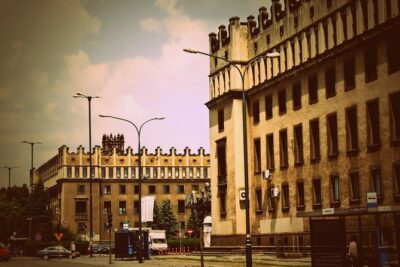
Legendary Private Nowa Huta Communism Tour with Crazy Guides
Read the review →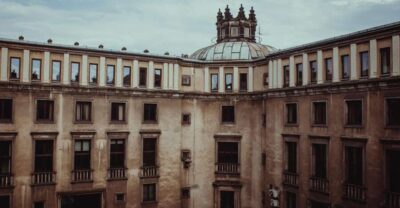
Nowa Huta: Steelworks Administration Buildings/Shelters Tour
Read the review →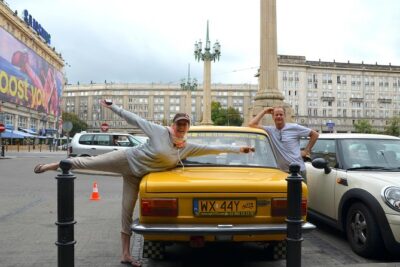
Private Tour: Warsaw’s Communist History by Retro Fiat
Read the review →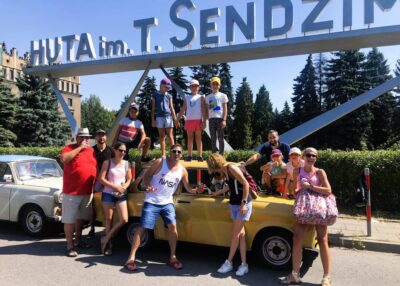
Private Nowa Huta Adventure Tour in Communist Cars
Read the review →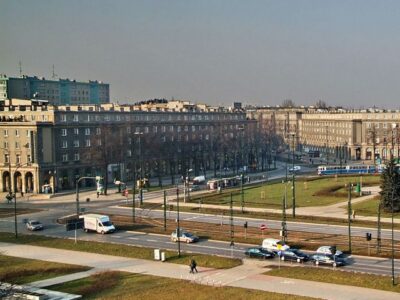

Browse the lists this tour appears in