
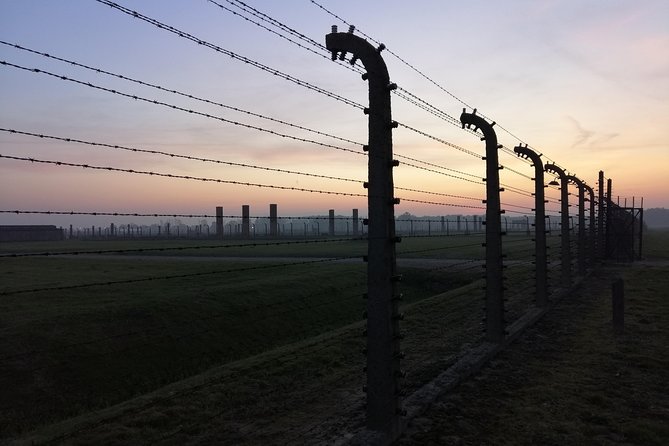
Reviewed · AUSCHWITZ-BIRKENAU MEMORIAL TOURS
From Warsaw Auschwitz and Krakow one day tour by train with pick up and drop off
Auschwitz-Birkenau is the reason to take this demanding day trip. You leave Warsaw before sunrise, ride the train to Krakow, continue to the former camps at Oswiecim and Brzezinka, then return to Warsaw late at night. The day is long, but it gives you access to one of Poland’s most important sites without changing hotels.
I like the careful transport handoffs, especially the help boarding the trains and the pickup at each end of the day. I also like the chance to see Krakow’s Main Market Square, Wawel Hill, St. Mary’s Basilica, and the Cloth Hall, even if only briefly. The main drawback is simple: this is a 16-hour day, and delays or confusion can make the schedule feel rushed.
Key points to know before booking
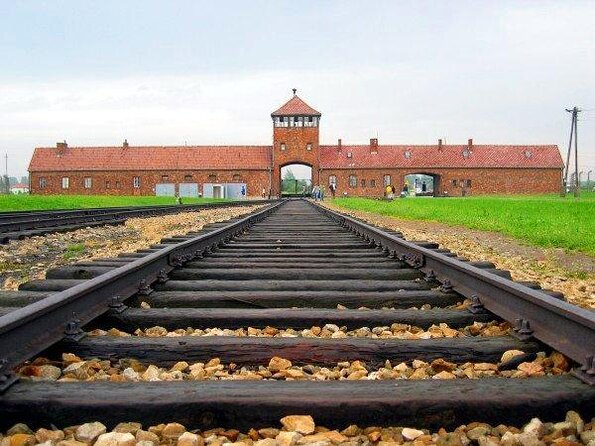
- Auschwitz and Birkenau receive about three hours, with an English-speaking museum guide and admission included.
- The train plan uses an early express service, listed at 5:35 a.m. from Warsaw, with a return train listed at 8:47 p.m. from Krakow.
- You get roughly three hours in Krakow, mainly for independent sightseeing in the Old Town.
- Pickup and drop-off assistance is a major benefit, especially for solo visitors and anyone uneasy with Polish train stations.
- Premium train upgrades cost 100 PLN, about 25 EUR, and may add faster service, Wi-Fi, power outlets, and better onboard food options.
- The schedule leaves little room for error, so a late train, late passenger, traffic, or a museum delay can cut into your sightseeing time.
Why this Warsaw to Auschwitz day trip is worth considering
This tour solves a real travel problem. Auschwitz-Birkenau is not around the corner from Warsaw, and arranging trains, local transport, museum entry, and a return journey on your own takes planning. Here, a driver helps you reach Warszawa Centralna, assists with the correct train, and connects you with transport from Krakow to the museum.
That convenience matters most if you have only a few days in Poland. You can see Krakow’s historic center and visit Auschwitz without packing up your hotel room or spending a night elsewhere. I also like that the return driver can meet you in Warsaw and take you back to your accommodation, rather than leaving you to find a taxi after a very late arrival.
The tradeoff is energy. You spend about six to seven hours in transit, depending on train and road conditions. You may begin around 4:00 or 5:00 a.m. and get back to Warsaw late in the evening. This is a practical transport solution, not a relaxed sightseeing day.
Other ways to visit Auschwitz-Birkenau from Warsaw:
- Warsaw: Tour to Krakow and Auschwitz by Train with Pickup
★ 4.6 · 603 reviews - From Warsaw: Guided Tour to Auschwitz-Birkenau and Krakow
★ 4.4 · 363 reviews - From Warsaw: Auschwitz-Birkenau Tour by Car
★ 4.5 · 215 reviews
The early train from Warszawa Centralna
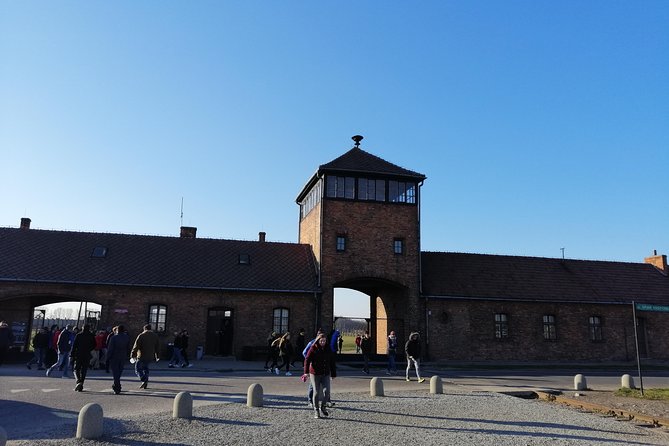
The listed meeting point is Warszawa Centralna at Al. Jerozolimskie 54. Pickup may be available from your address, but you need to write that address in the reservation and wait for confirmation. The pickup time depends on the train assigned to you.
The standard plan includes an express train at 5:35 a.m. from Warsaw and a return train at 8:47 p.m. from Krakow. Staff members such as Kris have been praised for arriving on time, carrying a name card, and staying with passengers until they board the correct train. That kind of help is useful when the station is busy and you are working on very little sleep.
A premium train option costs an additional 100 PLN, about 25 EUR. The upgrade can be worthwhile on a day this long. It may provide Wi-Fi, power outlets, a bar car, and better food service. One practical approach is to use the premium service in the morning, when a more comfortable ride helps you start the day, or on the return if you expect to sleep.
Check the final plan carefully. You receive the full schedule and meeting instructions one day before the tour. Train times, pickup details, and meeting points matter here because the day depends on several separate connections.
Three hours in Krakow’s Old Town
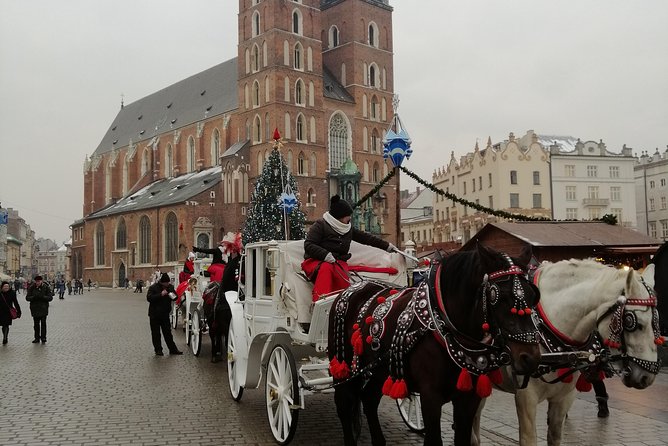
Krakow is not just a transfer point. You get about three hours to explore the historic center independently, usually after the Auschwitz visit. That is enough time to walk the Main Market Square, see the exterior of St. Mary’s Basilica, browse the Cloth Hall, and make your way toward Wawel Hill.
The Main Market Square is the center of the Old Town and one of the largest medieval squares in Europe. It is a good place to get your bearings quickly because many major sights, cafes, restaurants, bars, and horse-drawn carriages gather around it. The Town Hall Tower and Krakow Barbican are also within the broader Old Town area.
Wawel Hill requires more time than this tour really gives you. The cathedral and Royal Castle carry major importance in Polish history, since Wawel served as the formal seat of the Polish monarchy until 1611 and hosted royal coronations. You can walk up to the hill and see the setting, but do not count on a full interior visit unless the day’s timing specifically allows it.
This free time is self-guided. You receive a map and suggestions for the Old Town, but you do not get a dedicated Krakow sightseeing guide as part of the budget arrangement. That is fine if you enjoy setting your own pace. It is less satisfying if you expected a narrated city tour.
Plan your Krakow stop before departure. Choose two or three sights, decide where you want to eat, and leave time to return to the agreed meeting point. One of the common frustrations on this route is not having enough information about where to rejoin the group or how much free time remains.
Entering Auschwitz and Birkenau
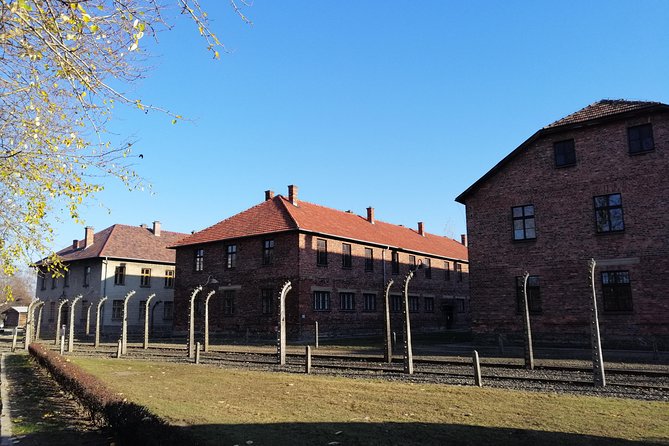
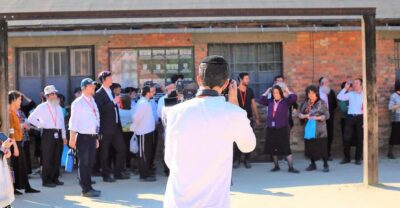
The central part of the day is the guided visit to Auschwitz-Birkenau State Museum. Admission is included, and the guided portion lasts about three hours. This is a serious historical site, not a casual attraction, and the visit can be physically and emotionally demanding.
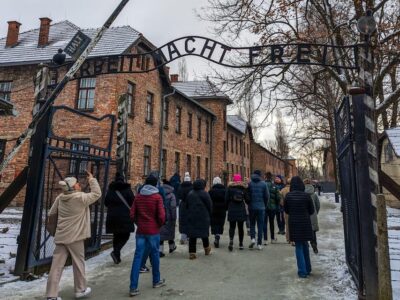
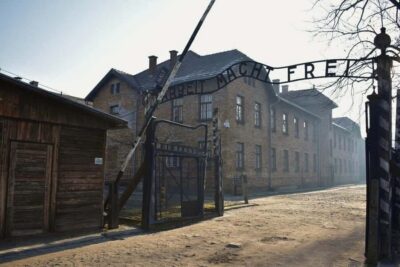
Auschwitz was established by Nazi Germany near Oswiecim in 1940. The museum preserves evidence of mass murder, imprisonment, and the organized destruction of human life. You may see Block 11, known as the Death Block, and the Wall of Death. The museum grounds also include a gas chamber associated with killings carried out from 1940 to 1943.
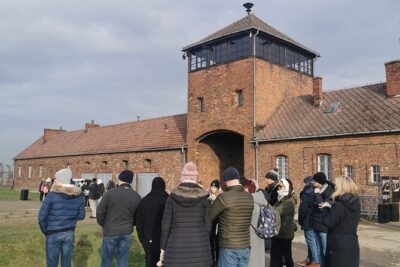
The second part is Auschwitz II-Birkenau, about three kilometers away at the former village of Brzezinka. Its enormous scale makes the history difficult to grasp from photographs alone. The Gate of Death, the railway area, barracks, and open grounds show how the camp functioned as part of a continent-wide system of deportation and murder.
The site was listed as a UNESCO World Culture and National Heritage Site in 1979. More important than the designation is the chance to encounter the preserved place directly, with an official guide explaining what you are seeing. Guides such as Jacek and Milek have been praised for clear English, strong command of European history, and the ability to answer questions.
Expect plenty of walking and standing. One account describes nearly four hours on foot between the two camp sites, though the official visit is listed at about three hours. Wear practical shoes and bring water. The grounds can be crowded, and the entrance process may involve a long line even when your admission is arranged.
Same base, a different kind of day:
- Warsaw: Chopin Concert in the Old Town
★ 4.8 · 2,287 reviews - Warsaw: Traditional Galar Cruise on The Vistula River
★ 4.6 · 1,640 reviews - Warsaw: Old Town Highlights Walking Tour in English
★ 4.7 · 1,516 reviews - Warsaw Concert: Chopin – Painted by Candlelights with Wine
★ 4.8 · 1,442 reviews
The guide makes a major difference
The museum guide is not the same person as the driver. Your local driver gets you to the site and manages the route. An Auschwitz museum guide then leads the historical visit, usually through both Auschwitz and Birkenau.
That distinction helps set expectations. You are not hiring a private historian for the entire day. The strongest part of the narration comes from the museum guide, whose job is to explain the exhibits, buildings, prisoner experience, deportations, and camp system.
Several guides received strong praise for their English and clear explanations. Jacek was described as courteous and especially good at explaining the historical and geographic setting. Milek was also praised for answering questions and presenting the material well. Names can change, so do not book solely on the expectation of meeting one particular guide.
The quality of the visit can be affected by practical issues. A faulty microphone once made it difficult for part of a group to hear, and one group felt the guide moved too quickly after falling behind schedule. Renovation work can also limit access to some buildings. These are not reasons to skip Auschwitz, but they explain why the experience may not feel perfectly controlled.
The museum sets the operating rules and time limits. The tour company cannot freely extend your visit or change every part of the route. If you want hours to read every sign slowly, this tight schedule may disappoint you.
Drivers, transfers, and possible weak points
The transport system is the tour’s greatest strength when it works well. You may be picked up at your hotel, taken to the station, helped onto the train, met in Krakow, driven to Auschwitz, returned to Krakow, and met again after the return train to Warsaw.
Drivers such as Maciej, Kris, and Michal have been praised for punctuality, friendliness, and problem-solving. One driver waited through a train delay and arranged a replacement transfer so a passenger could reach the museum admission window. Those details matter because a missed connection can damage the entire day.
The road segment from Krakow to Auschwitz takes roughly 90 minutes each way in many accounts. Traffic can stretch that further. One itinerary included a group of only seven in a clean minivan, while other transport arrangements placed different language groups in the same vehicle.
This is where the experience can become uneven. Some passengers found the shared ride confusing because announcements were made in Italian before the English group separated for its museum guide. Others encountered loud radio music or an uncomfortable vehicle temperature. A late bus from Krakow once reduced the time available at Birkenau.
The listing describes the activity as private for you and your party, but the transport and museum portions can involve other participants or shared arrangements. Ask for clarification before booking if a fully private vehicle and private guide are important to you.
How much value do you get for $182.23?
At $182.23 per person, this is not the cheapest way to see Krakow or Auschwitz. You are paying for coordination more than luxury. The price covers train tickets on the listed standard service, assistance at the stations, local transfers, museum admission, the English-speaking Auschwitz tour, and return handling in Warsaw.
For a solo visitor, the value is easier to see. Organizing the same day requires several tickets, a Krakow to Auschwitz connection, a timed museum entry, and a reliable way back to the train. One missed step could mean losing the museum visit altogether.
For two or more people who are comfortable with Polish rail travel, the price may feel high. You could arrange a Warsaw to Krakow trip independently and spend more time in Krakow, perhaps staying overnight. That option gives you a calmer schedule but removes the convenience of door-to-door support.
The premium train upgrade is a separate value decision. I would consider it if you want a more comfortable ride, need power outlets, or plan to eat on the train. It is less important if you intend to sleep and are watching the total cost.
Who will get the most from this day?
I would choose this tour if Auschwitz is a priority and you have no spare night for Krakow. It suits solo visitors, first-time visitors to Poland, people who dislike navigating unfamiliar stations, and anyone who wants the main logistics handled in one booking.
It also works well for history-focused families with older children, provided everyone understands the serious nature of the museum. The walking, standing, early departure, and emotional weight are real. You need to be comfortable with a full day on the move.
I would not choose it if Krakow is your main goal. Three hours only gives you a taste of the Old Town, and Wawel Castle deserves more time than this schedule allows. I would also avoid it if you need a slow pace or dislike fixed appointments.
Book as early as possible. Museum capacity can sell out weeks ahead, and availability is not guaranteed until the tickets are confirmed. In one documented case, a museum booking was canceled when additional guides were not released, although a full refund was provided. That possibility is worth understanding before you build your entire Poland itinerary around this day.
Should you book the Warsaw to Auschwitz tour?
Book it if your priority is seeing Auschwitz from Warsaw in one organized day. The combination of train help, local transfers, museum entry, English guidance, and return drop-off removes a great deal of stress.
Go in knowing that this is a demanding schedule, not a leisurely city break. Confirm the pickup address, watch for the final plan sent the day before, ask exactly where you meet in Krakow, and consider the premium train if comfort matters. If you can spare an extra night, staying in Krakow would be more relaxed. If you cannot, this tour offers a practical, purposeful way to make the visit.
FAQ
How long does the tour last?
The experience lasts about 16 hours. It includes the train journey from Warsaw to Krakow, road transfers to Auschwitz-Birkenau, about three hours in Krakow, the museum visit, and the return to Warsaw.
Where does the tour start?
The listed meeting point is Warszawa Centralna at Al. Jerozolimskie 54, 00-019 Warszawa. Pickup from your address may be possible if you provide it during booking and the operator confirms it.
What time is the train from Warsaw?
The standard itinerary lists an express train leaving Warsaw at 5:35 a.m. The exact pickup time depends on the train selected for your booking.
What time is the return train from Krakow?
The listed return express train leaves Krakow at 8:47 p.m. The final plan sent one day before the tour should provide the exact details.
Is Auschwitz admission included?
Yes. Admission to Auschwitz-Birkenau and the guided museum visit are included in the tour price.
How much time do I get in Krakow?
You get about three hours for independent sightseeing in Krakow Old Town. The plan includes sights such as the Main Market Square, Wawel Hill, St. Mary’s Basilica, the Cloth Hall, the Town Hall Tower, and the Krakow Barbican.
Is the tour offered in English?
Yes. The tour is offered in English, including an English-speaking guide at Auschwitz-Birkenau. The individual driver and guide may vary.
Can I cancel the booking?
You can cancel up to 24 hours before the experience starts for a full refund. Cancellations or changes made less than 24 hours before the start time are not accepted for a refund.
Just added in Warsaw
- A unique walking tour of Jewish Warsaw — past and present★ 5.0 · 8 reviews
- Tour from Warsaw: Wolf’s Lair, Hitler’s HQ Zones I and II★ 5.0 · 32 reviews
- Wolf’s Lair Private Day Trip from Warsaw★ 5.0 · 50 reviews
- Wolf’s Lair & Treblinka Tour in 1 day from Warsaw★ 5.0 · 37 reviews
- Jewish Warsaw Walking Tour★ 5.0 · 95 reviews
- Warsaw: The Original Pub Crawl★ 4.5 · 97 reviews
- Warsaw: Gun Shooting Experience with Transfers★ 4.8 · 97 reviews
- Segway Tour Warsaw: Old Town Tour – 1,5-Hour of Magic!★ 5.0 · 112 reviews
Auschwitz-Birkenau Memorial Tours, compared.
Auschwitz-Birkenau Guided Tour & Hotel Pickup
Read the review →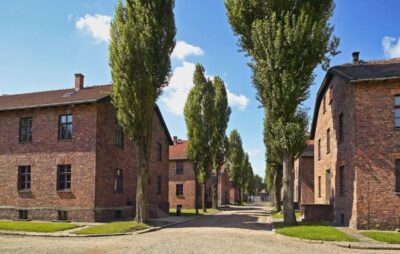
Auschwitz Guided Tour with Optional Hotel Pickup
Read the review →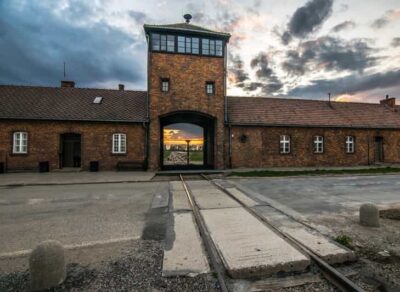
Auschwitz-Birkenau Guided Tour with Pickup & Lunch
Read the review →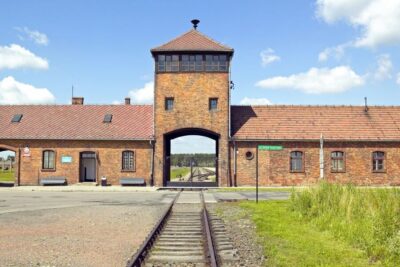
Krakow to Auschwitz Birkenau Guided Tour with Transfer and Ticket
Read the review →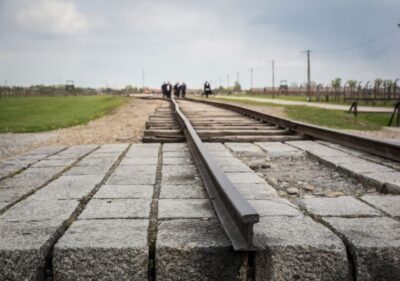
Auschwitz Birkenau Small Group Tour with Pickup
Read the review →Browse the lists this tour appears in