
Reviewed · WALKING TOURS
Life Behind the Iron Curtain Warsaw Walking Tour
Warsaw’s communist past is easy to miss beneath its rebuilt streets and modern shops. This 2.5-hour walk makes that recent history visible, taking you from Constitution Square along Marszałkowska Street to the Palace of Culture and Science. The strongest part is the link between buildings and ordinary life, from censorship and party control to food shortages and travel permits.
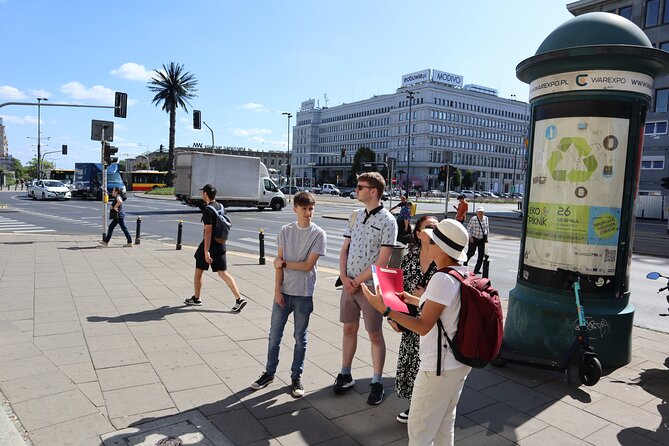
I like the small maximum group of 10, which should make it easier to hear the guide and ask questions. I also like the personal angle brought by guides such as Olivia and Agnieszka, who explain how communist rule affected their families and how its effects still shape Poland.
The main drawback is that this is a walking tour with several stops spread across central Warsaw. It is not a good fit if you have trouble walking long distances, and the Palace of Culture viewing terrace costs an additional 28 PLN.
Key points at a glance
- Constitution Square sets the political scene: See the planned center of the Polish People’s Republic and learn how architecture served ideology.
- Marszałkowska Street reveals the scale of state power: Its broad roadway was designed for parades, marches, and public display.
- Mysia Street turns censorship into a physical place: The Free Speech Memorial leads into stories of surveillance, censorship, and espionage.
- Daily shopping gets equal billing with politics: The former Cedet department store helps explain shortages and the struggle to buy basic goods.
- The tour connects past and present: Former Communist Party offices, railway stations, and socialist buildings now serve different purposes.
- The final stop is Warsaw’s most loaded landmark: The Palace of Culture and Science remains both a useful city reference point and a controversial symbol.
Why this walk makes communist Warsaw easier to read
I find this tour useful because it does not treat the Polish People’s Republic as a distant chapter in a textbook. The route uses ordinary streets and recognizable buildings to explain how power worked in daily life.
You are not simply looking at old architecture. You are asking why a square was built on such a grand scale, why one street was wide enough for mass parades, and why a department store became a place where getting basic goods could take patience and luck.
That approach matters in Warsaw. The city was heavily damaged during the Second World War and later rebuilt under a new political system. Some communist-era buildings remain in altered form, while others now house banks, ministries, shops, or transport facilities. A guide helps you notice details that would otherwise pass as background scenery.
The personal stories also give the subject more weight. Olivia has explained her family’s experience of communist Warsaw, while Agnieszka, also referred to as Aga, brings a cheerful style and plenty of stories. Another account describes Oliwia explaining what she learned from her parents and grandparents, including the long effect of the period on people who lived through it. The exact guide may vary, but the tour’s strength is this mix of public history and family memory.
More walking tours in Warsaw:
- Warsaw: Old Town Highlights Walking Tour in English
★ 4.7 · 1,516 reviews - Warsaw: Old Town Guided Walking Tour
★ 4.9 · 599 reviews - Half-Day Polish Food Walking Tour with Guide and Dinner
★ 4.5 · 381 reviews
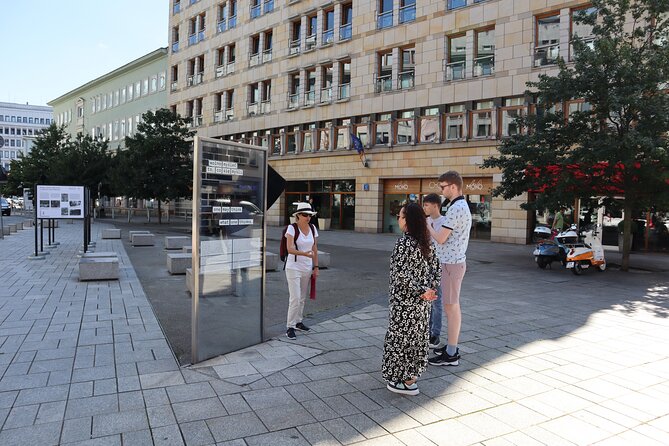
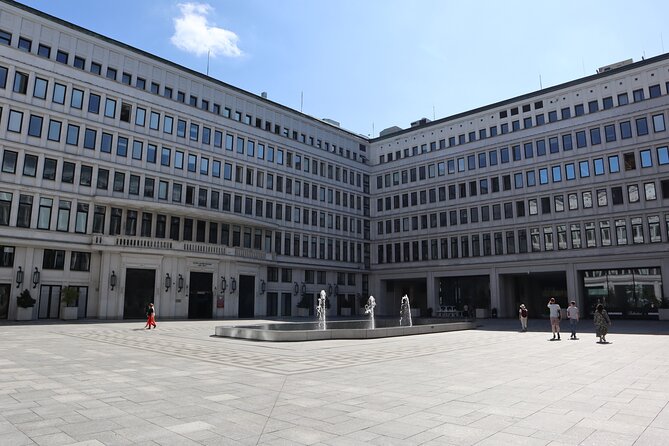
Constitution Square and the planned socialist capital
The walk begins at Plac Konstytucji, or Constitution Square. You spend about 20 minutes here, with no admission fee.
This was meant to become the new city center of the Polish People’s Republic. The setting gives your guide room to explain socialist urban planning, the purpose of monumental buildings, and the way the state wanted public space to look and feel.
I would pay close attention here to scale. Large squares and broad avenues were not only practical design choices. They allowed the government to stage parades, demonstrations, and official celebrations. The architecture was meant to suggest order, strength, and a collective society.
This is also a good opening stop because it introduces socialist realism before you encounter more examples. You learn what the style was trying to communicate and why buildings were given such a formal, imposing appearance.
The square is free to visit, but the pavement, open space, and city traffic mean you should wear comfortable shoes. The meeting point is Constitution Square, so check the exact location before setting out.
Marszałkowska Street and public displays of power
From Constitution Square, the group continues along Marszałkowska Street for about 20 minutes. This broad avenue was used for parades and marches, and the guide points out one of the most iconic places connected with the Polish People’s Republic.
This section helps you understand how streets can become political stages. A normal road carries people to work and shops. A road designed for mass processions also carries a message about the state and its ability to organize huge public events.
I like this part because it shifts the focus from a single square to the wider city plan. You begin to see central Warsaw as a series of spaces shaped by government priorities. The street itself becomes evidence of how the authorities wanted citizens to move, gather, and look at the city.
The route is not a museum corridor. You are walking through an active part of Warsaw, so modern traffic and everyday activity continue around the historic sites. That can make the experience feel more grounded, though it also means you should not expect a quiet heritage walk.
The Ministry of Agriculture and socialist realism
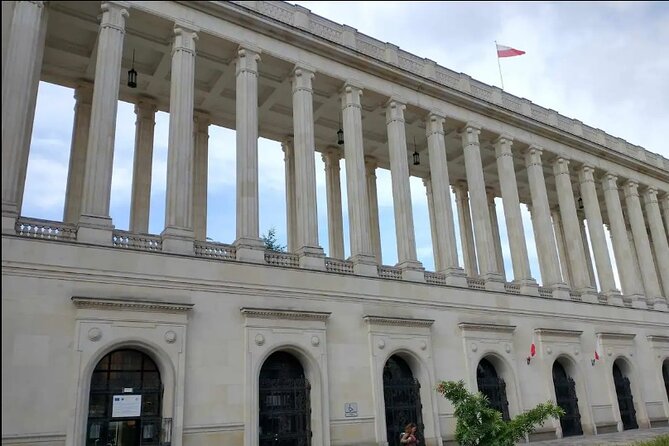
The next stop is the Ministry of Agriculture and Rural Development, where the group spends about 15 minutes. This building is presented as a clear example of socialist realism.
Here, your guide explains the visual rules of the style and why government buildings were designed in that manner. This is where the opening discussion at Constitution Square becomes more concrete. You can connect the political goals of the era with the look of the buildings themselves.
The stop is especially helpful if you are not familiar with architectural terms. Rather than simply labeling a building socialist realist, the guide explains what to look for and how the design served the government’s message.
There is no entry fee. The value comes from interpretation, not access to an interior. You should expect to view the building from the public route and discuss its purpose and appearance with the guide.
Same base, a different kind of day:
- Warsaw: Chopin Concert in the Old Town
★ 4.8 · 2,287 reviews - Warsaw: Traditional Galar Cruise on The Vistula River
★ 4.6 · 1,640 reviews - Warsaw Concert: Chopin – Painted by Candlelights with Wine
★ 4.8 · 1,442 reviews - Warsaw: City Sightseeing Hop-On Hop-Off Bus Tour
★ 3.6 · 1,415 reviews
Mysia Street, censorship, and the Free Speech Memorial
Mysia Street is one of the most thought-provoking parts of the walk. The group spends about 20 minutes here, near the Free Speech Memorial, discussing censorship and espionage.
This stop gives the tour a human edge. Political control was not only about ministries and grand squares. It also affected what people could read, publish, discuss, and discover. The memorial provides a physical point for a conversation about free expression and the systems used to limit it.
The inclusion of espionage adds another layer. You are encouraged to think about how information moved through a society where official messages were carefully controlled. That makes Mysia Street more than a quick photo stop.
I would give this section your full attention. It is easy to look at a memorial and move on, but the explanation is what gives it meaning. The guide’s use of visual aids should help connect the place to the broader story.
Former Communist Party headquarters at Nowy Świat 6/12
At Nowy Świat 6/12, you spend about 15 minutes outside the building that now houses the Banking and Finance Center. During the Polish People’s Republic, this was the headquarters of the Communist Party and a place from which the country was managed.
The change in function is the key detail. A building once tied to one-party government now has a different public role. That contrast helps you think about how Warsaw has reused, renamed, and reinterpreted its communist-era spaces.
This stop also keeps the history practical. Instead of discussing the Communist Party only as an abstract institution, you see where its central work took place. The guide can connect the address to the political decisions and administrative power that affected the entire country.
There is no admission fee, and the tour does not suggest an interior visit. You are looking at the building as part of the city and learning how its role has changed.
Cedet and the challenge of buying everyday goods
The former Central Department Store Cedet is one of the most relatable stops. The group spends about 15 minutes here discussing shopping during the Polish People’s Republic.
Political history can feel remote, but everyone understands the frustration of trying to buy ordinary necessities. This stop explains why daily shopping was one of the hardest parts of life during the period. The building becomes a starting point for discussing supply problems and the difficulty of finding everyday goods.
I value this part because it moves beyond leaders, ministries, and monuments. It asks what the system felt like at street level. A government may promise an organized society, but the daily test is whether people can obtain what they need.
The former store also helps show how commercial buildings can carry social memory. It was not simply a place to browse. It was connected to the practical problem of getting goods in a controlled economy.
Railway stations and movement under state control
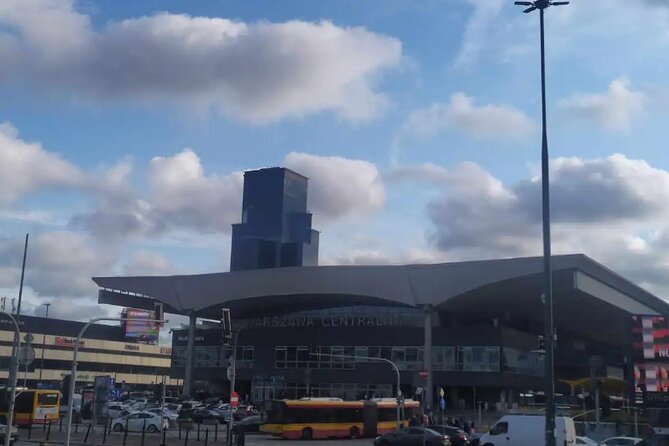
The route then reaches Warsaw Central Railway Station and the Downtown Railway Station. This stop lasts about 15 minutes and covers local, regional, and international travel during the Polish People’s Republic.
Rail travel offers another practical way to understand the period. Movement was not only about getting from one city to another. It was also tied to borders, access, administration, and the difference between domestic and international journeys.
The two stations let the guide compare transport within Poland with travel beyond the country. You can look at places designed for crowds while considering how freely people could actually move.
As with several stops, the point is not a station tour. You do not receive an admission experience inside a railway museum. Instead, the active stations provide a setting for the discussion, and their modern use sits beside the memory of earlier travel conditions.
The Palace of Culture and Science as the final argument
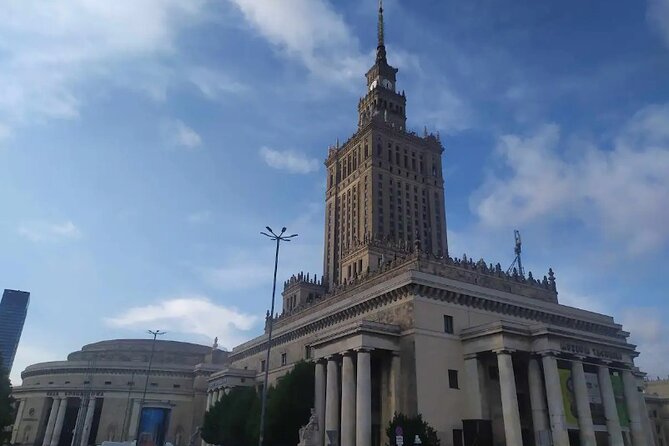
The walk ends near the Palace of Culture and Science, with about 30 minutes devoted to this symbolic and controversial building. The official end point is near Emilii Plater 54, close to the palace.
This is a fitting finish because the building gathers many themes from the tour: power, public symbolism, architecture, memory, and changing political meaning. Your guide explains what you need to know about the palace and why it remains controversial.
The building is also a useful reminder that history does not vanish when governments change. The palace still dominates central Warsaw, even though the political system that gave it meaning is gone. Some people see it as an important landmark, while others associate it with Soviet influence and imposed power.
You can add the viewing terrace for 28 PLN. That cost is not included in the tour price. If you want a high view over central Warsaw, it may be worth considering, but the walking tour itself finishes with the discussion outside, so you do not need to pay the extra fee to complete the experience.
What the $28.57 price gives you
At $28.57 per person, the tour is priced as a focused small-group history walk rather than a simple orientation stroll. You get roughly two and a half hours with a guide, visual aids, a pre-tour information pack, and suggestions for places to eat, drink, and visit afterward.
The value depends on how much context you want. If you only want to photograph the Palace of Culture and see a few major streets, you can visit much of the route independently. But the buildings do not explain themselves. The guide connects them to censorship, party control, shopping, transport, architecture, and family experience.
The group limit of 10 is another reason the price makes sense. A smaller group should make it easier to hear on city streets and ask about subjects that are personal or politically sensitive.
The viewing terrace costs extra, but that is clearly separate from the walk. I would treat it as an optional add-on rather than a hidden part of the price.
Timing, walking, and practical planning
The tour is offered in English and uses a mobile ticket. Confirmation is provided at booking, and the activity is near public transportation.
You should allow 2 hours and 30 minutes for the route. The stops themselves take between 15 and 30 minutes, with walking between them. The tour is not recommended if you have problems walking long distances, so comfortable footwear matters.
The route begins at Constitution Square and ends near the Palace of Culture and Science. That makes it easy to continue with other central Warsaw plans afterward, though you should not book a tightly timed activity immediately after it. The final discussion may be the part you want to linger over.
Service animals are allowed, and most people can participate. The small group size is capped at 10, which is useful for a subject that benefits from questions and conversation.
You can cancel for a full refund up to 24 hours before the start time. Changes or cancellations made less than 24 hours before the start time are not accepted for a refund, and the cut-off follows Warsaw local time.
Who will get the most from this Warsaw walk
I would choose this tour if you want to understand how communism shaped ordinary Polish life, not just see its monuments. It is particularly useful if you are interested in architecture, censorship, political memory, shopping shortages, railway travel, or the way Warsaw has reused former state buildings.
It also suits you if you like history explained through family stories. Olivia’s accounts of her family, and Agnieszka’s warm, story-led approach, show the value of a guide who can connect large events with personal memory.
You may want something else if you prefer a tour focused on medieval Warsaw, royal history, food, or wartime destruction. This walk stays centered on the Polish People’s Republic and its continuing effect on the city.
Should you book the Life Behind the Iron Curtain Warsaw Walking Tour?
Book it if you want a clear, human explanation of Warsaw’s communist period and are happy to spend two and a half hours on foot. The route covers more than famous buildings: it shows how politics reached into architecture, speech, shopping, work, and travel.
The best reason to go is the guide’s ability to make ordinary places meaningful. The main caution is the walking distance and the extra 28 PLN for the palace terrace. For a small group, an English-speaking guide, visual aids, and a route packed with context, the $28.57 price offers solid value.
FAQ
How long does the Life Behind the Iron Curtain Warsaw Walking Tour last?
The tour lasts approximately 2 hours and 30 minutes.
Where does the tour start?
It starts at Constitution Square, Plac Konstytucji, 00-647 Warszawa, Poland.
Where does the tour finish?
The tour ends near the Palace of Culture and Science, close to Emilii Plater 54, 00-901 Warszawa, Poland.
Is the tour offered in English?
Yes. The tour is offered in English.
How large is the tour group?
The maximum group size is 10 people.
Is admission to the Palace of Culture and Science viewing terrace included?
No. Entry to the viewing terrace costs 28 PLN and is not included.
Is the tour suitable for people with walking difficulties?
The tour is not recommended for people who have problems walking long distances.
Can I cancel for a full refund?
Yes. You can cancel at least 24 hours before the start time for a full refund. Cancellations or changes made less than 24 hours before the start time are not accepted for a refund.
Just added in Warsaw
- Warsaw Zoo Skip-the-Line Entry Ticket with Private Transport★ 4.8 · 3 reviews
- Warsaw Private Wilanow Palace & Garden Tour★ 4.6 · 30 reviews
- Warsaw: Vodka Tour★ 4.4 · 18 reviews
- Warsaw Wolf’s Lair with St. Lipka and Mamerki Private Guided★ 4.2 · 3 reviews
- Warsaw Uprising and WWII Old Town Walking Tour with Museum★ 4.7 · 15 reviews
- Warsaw Old Town UNESCO HERITAGE walking tour in English★ 4.5 · 23 reviews
- Warsaw: Private Vodka Tasting Night with Snacks and Pickup★ 5.0 · 7 reviews
- Warsaw: Skip-the-Line Royal Castle Guided Tour★ 4.9 · 79 reviews
Walking Tours, compared.
Gdańsk City Sights & History Guided Walking Tour in English
Read the review →
Browse the lists this tour appears in