
Reviewed · OLD TOWN TOURS
Warsaw: Old Town Guided Walking Tour
Warsaw’s Old Town looks old, but much of it was rebuilt after World War II. That tension between beauty and destruction gives this tour its real force. In two hours, you move from royal power and medieval walls to the Warsaw Ghetto and the 1944 Uprising, with the city’s remarkable recovery always in view.
I like the strong mix of landmarks and human stories, especially the stops tied to Jewish Warsaw and the Uprising. I also like the practical local advice on Polish restaurants, cafés, and a traditional pastry shop. The drawback is pace: two hours covers a lot, so you will hear plenty but have little time to linger at each stop.
I also like the small-group limit of roughly 25 to 30 people and the use of quieter paths away from the busiest streets. The main thing to watch is the payment wording: the $13 fee covers the reservation and guide payment for a pay-as-you-wish format, so read the terms carefully before booking.
Key points to know before you book
- A rebuilt Old Town with a difficult past: Learn how Warsaw’s historic center was destroyed and reconstructed.
- More than pretty squares: The route includes royal sites, the Barbican, Jewish heritage markers, and the 1944 Uprising Monument.
- Guides with personality: Anthony, Antek, Antoni, Thomas, and other guides are praised for clear English, humor, and strong storytelling.
- A fast but useful two hours: You cover a wide area, so this is best for orientation rather than long visits inside monuments.
- A valuable city introduction: The tour connects royal Warsaw, wartime destruction, Jewish history, and modern Polish identity.
- Easy meeting point: Look for the guide with a white umbrella beside Sigismund’s Column in Castle Square.
Why Warsaw Old Town needs a walking tour
If you visit Warsaw on your own, you can easily admire the colorful facades and grand squares without grasping what happened here. This tour gives the buildings a timeline. Medieval defenses, royal ambitions, Nazi destruction, Jewish resistance, the Warsaw Uprising, and postwar rebuilding all fit into one compact walk.
That context matters because Warsaw’s Old Town is not simply a preserved medieval quarter. It was almost entirely destroyed during World War II and later rebuilt with great care. The result looks historic, but its story is modern and painful. A guide can point out where that story appears in the streets, monuments, and rebuilt facades.
I would book this early in your stay. The route gives you a useful map of the center, and the guide’s suggestions for places to eat and drink can help shape the rest of your visit. You also get a first look at both the Old Town and New Town, two areas that are easy to confuse when you are finding your way around.
More old town tours in Warsaw:
- Warsaw: Chopin Concert in the Old Town
★ 4.8 · 2,287 reviews - Warsaw: Old Town Highlights Walking Tour in English
★ 4.7 · 1,516 reviews - Warsaw: Chopin Concert at Historical Venue in Old Town
★ 4.7 · 445 reviews
Starting at Sigismund’s Column and Castle Square
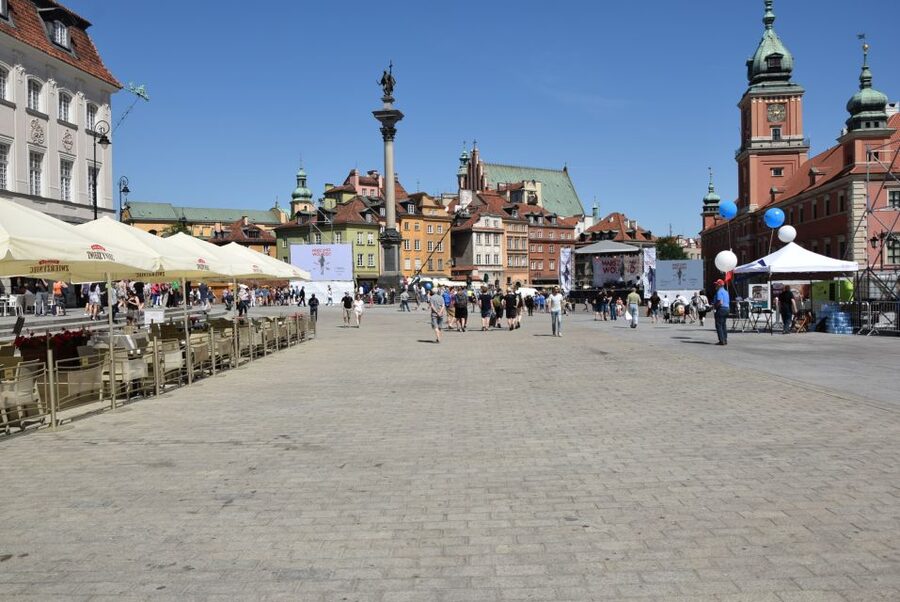
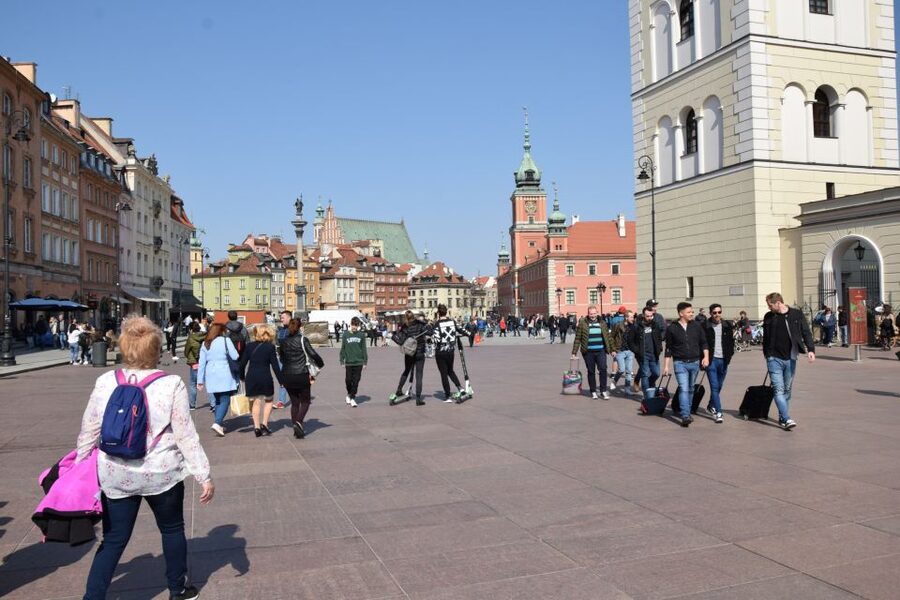
The meeting point is easy to find: Castle Square, in front of the 22-meter-high Sigismund’s Column. Arrive five to ten minutes early and look for the white umbrella. This is a sensible meeting point, with a large open space and one of Warsaw’s most recognizable landmarks.
Sigismund III Vasa moved Poland’s capital from Kraków to Warsaw, and the column gives the tour an immediate royal opening. From here, you can see the Royal Castle and the route into the Old Town. The guide begins with the big picture, then leads you into streets where the details become more personal.
This first stop also helps you understand the city’s layers. The square presents Warsaw as a capital of kings, but the nearby monuments and later stops will show how strongly war shaped the city. I appreciate that the tour does not treat the royal story as the whole story.
Royal Castle Gardens and the royal center
The walk includes the Royal Castle Gardens and a stop connected with the Royal Castle. You should expect an exterior-focused visit rather than a full indoor castle tour, since the experience lasts only two hours and the itinerary moves on quickly.
The gardens offer a calmer setting after the open space of Castle Square. They also give you a different view of the castle, with room to discuss the royal court and the importance of Warsaw as Poland’s political center. If you want to tour the castle rooms in detail, plan a separate visit.
This is one of the places where the tour’s format matters. You receive background and orientation, but you are not spending an hour examining paintings or royal apartments. That is a fair trade for a route that also reaches New Town, Jewish heritage sites, and the Uprising Monument.
Market Square, the Mermaid, and the narrowest facade
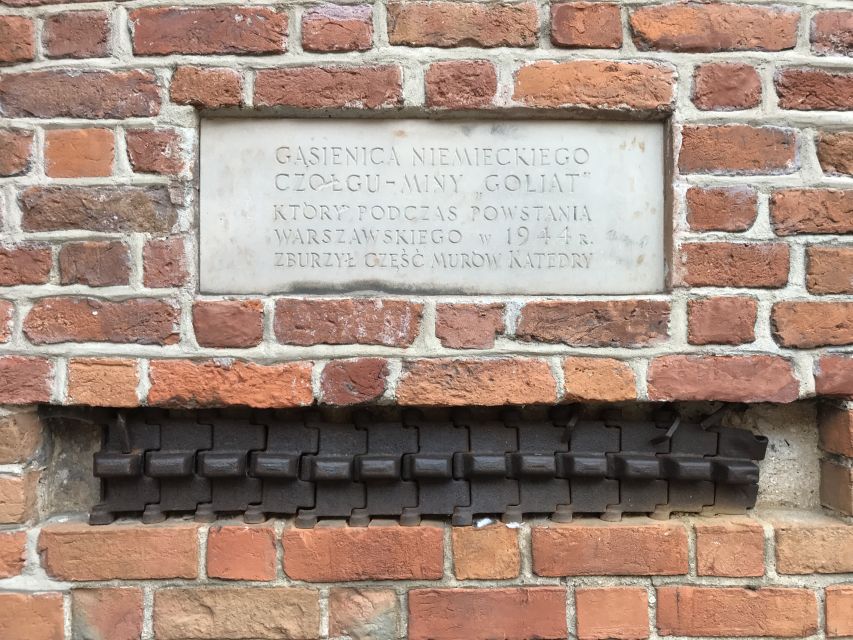
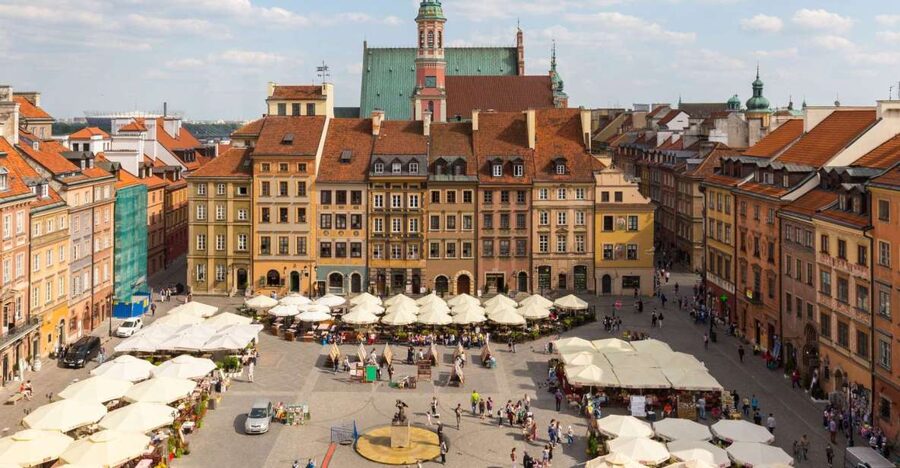
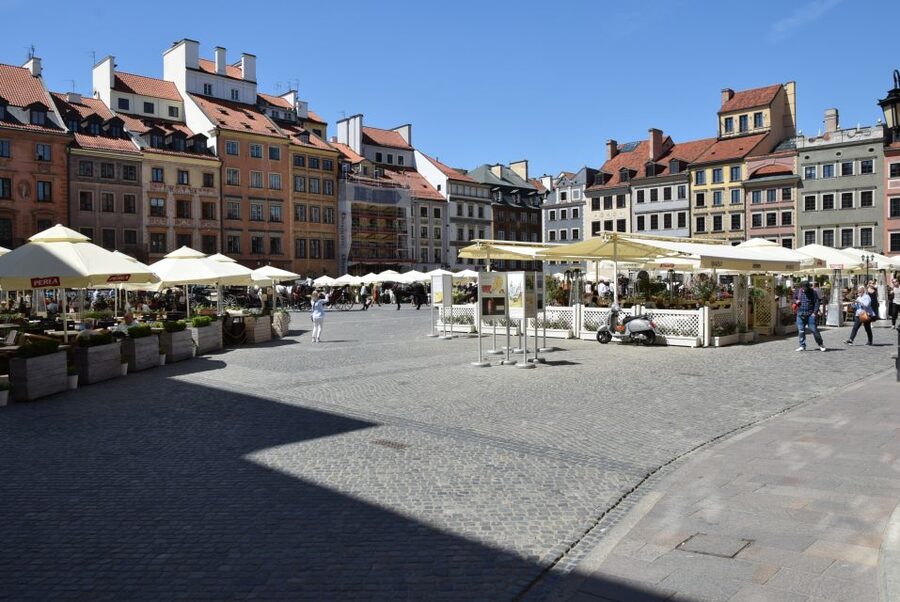
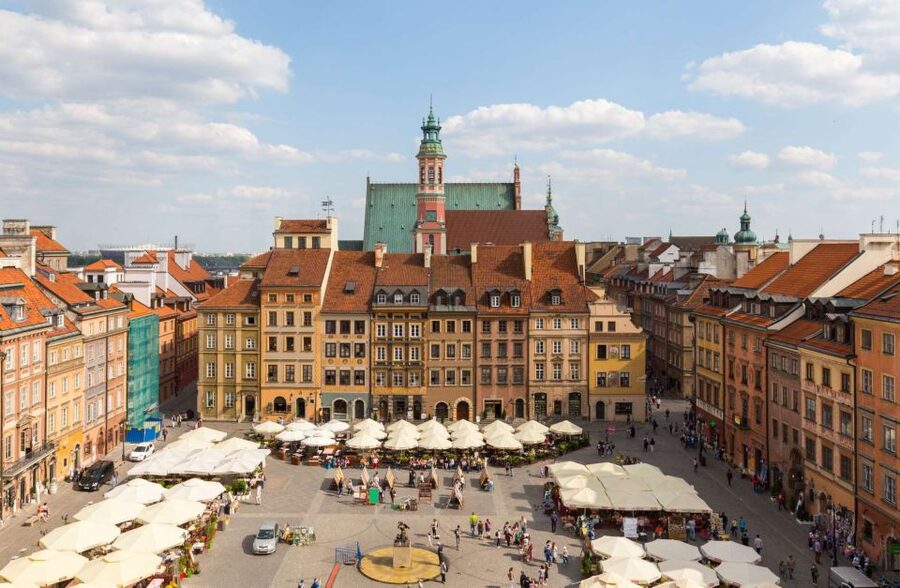
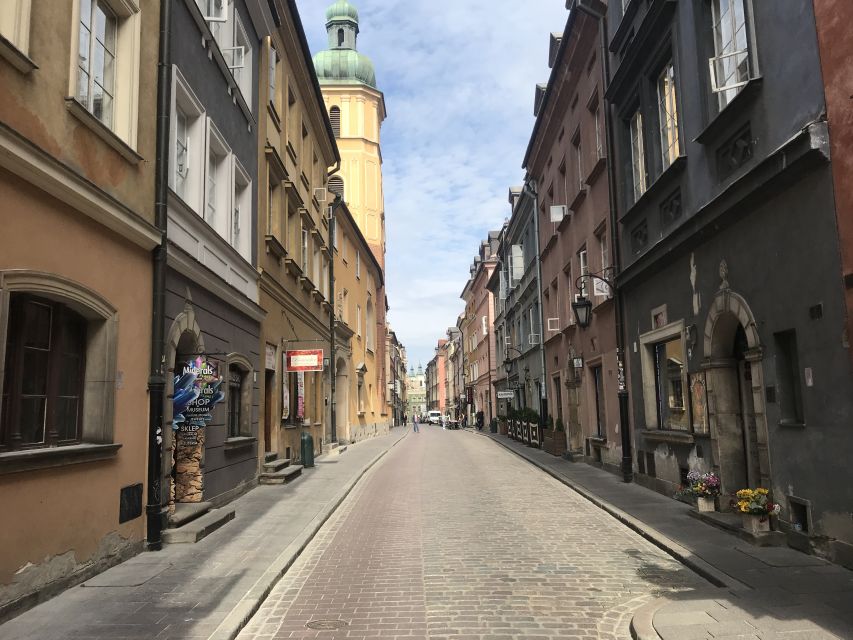
The Old Town Market Square is the visual heart of the walk. Colorful buildings frame the square, and the Warsaw Mermaid statue gives you the classic photo stop. The guide explains the symbol and points out details you might miss while taking pictures.
The square can be busy, especially at popular times, but the guide uses less crowded routes where possible. That is helpful if you want to hear the story instead of simply following a group through the center. You will still have time for photos, but the tour keeps moving.
Another small stop is the narrowest house façade. It is the sort of detail that gives a walking tour its charm. You may pass it without noticing on your own, while a guide can explain why this unusual bit of architecture fits Warsaw’s compact historic streets.
The tour also reaches St. John’s Cathedral and the Jesuit Church. These buildings offer a change of mood and show the religious side of the Old Town. Since the schedule is tight, expect explanation from outside or brief stops rather than a long architectural study.
More walking tours in Warsaw:
- Half-Day Polish Food Walking Tour with Guide and Dinner
★ 4.5 · 381 reviews - Warsaw: Warsaw Ghetto Private Walking Tour with Hotel Pickup
★ 4.9 · 369 reviews - Old Town Warsaw Walking Tour
★ 4.5 · 333 reviews - Warsaw: Jewish History Guided Walking Tour in English
★ 4.7 · 324 reviews
Medieval defenses at the city wall and Barbican
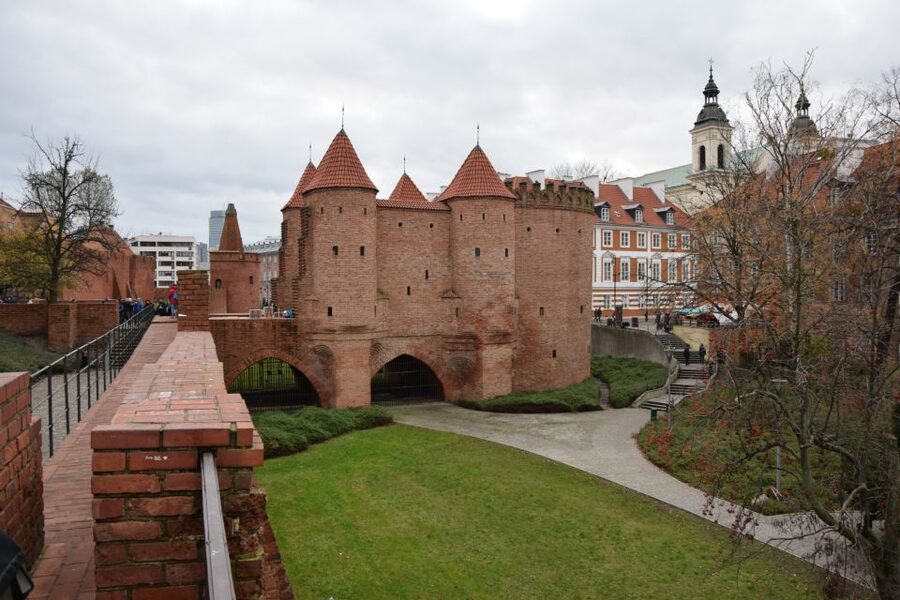
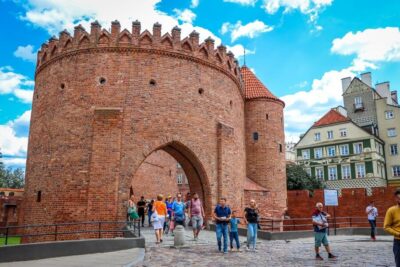
The remaining city wall and the Barbican help you picture Warsaw as a fortified town. These structures are more than a quick photo backdrop. They show the older shape of the city and make it easier to understand why the Old Town developed as a compact, protected center.
The Barbican is a strong visual stop, with curved brickwork and a clear sense of defense. Your guide can connect it to the medieval city while also explaining how much of what you see has been restored or rebuilt. That distinction is important in Warsaw, where reconstruction is part of the city’s identity.
I find this section particularly useful for visitors who want more than a sequence of attractive buildings. The walls explain the physical city. The later monuments explain the emotional city.
The Old Town viewing terrace
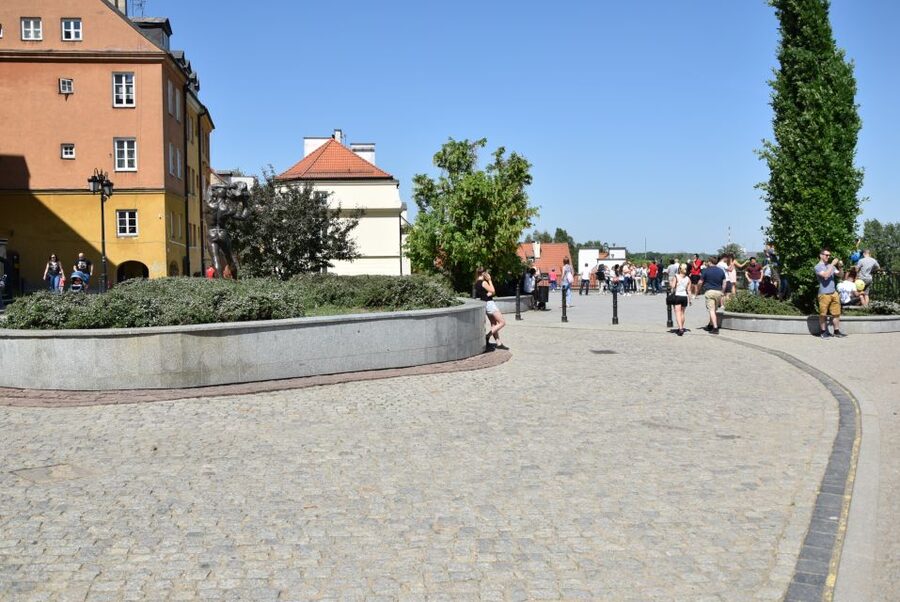
A viewing terrace gives you a wider look at the river and Warsaw’s cityscape. After walking through narrow lanes and enclosed squares, the open view helps you place the Old Town within the larger capital.
This is also a practical pause for photographs. You can take in the contrast between the historic center and the broader city beyond it. The exact amount of time here depends on the group and the guide, so do not count on a long sit-down break.
The walk is still active, with several stops ahead. Comfortable shoes are sensible, and you should dress for the weather. People have taken the tour in rain, snow, heat, and freezing winter conditions, and the guide may adjust the pace or pause in shade when possible. Still, this is an outdoor walking tour from beginning to end.
New Town and Marie Curie’s Warsaw
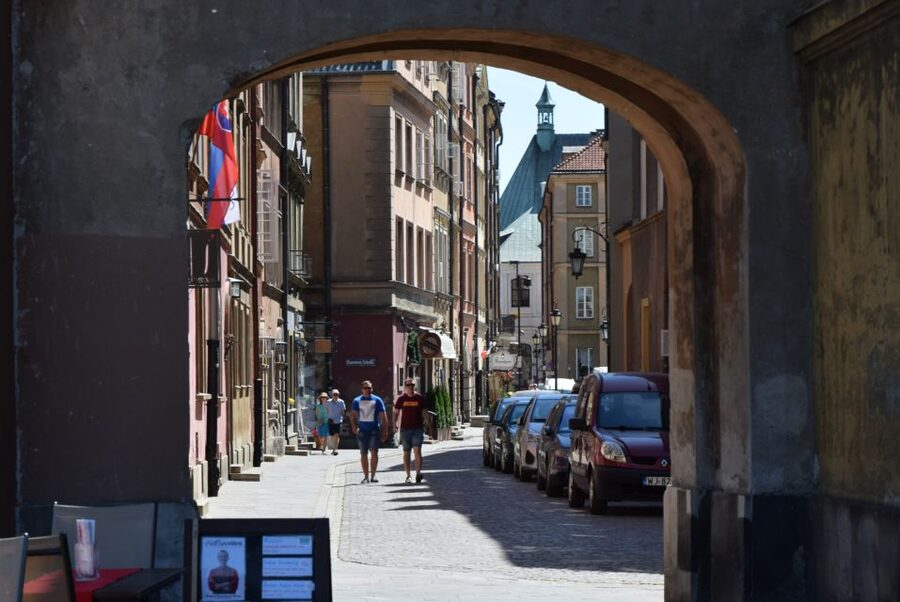
The route continues into New Town, often called Nowe Miasto. This area gives you another view of central Warsaw, with its own streets, squares, and historic character. It also helps prevent the tour from becoming a single loop around the Market Square.
A stop near Marie Curie’s birthplace adds a personal story to the city’s wider history. The scientist was born in Warsaw and later became famous for her work in France. This part of the route connects local identity with an international figure, and it gives the guide a chance to show that Warsaw’s story is not only about kings and wars.
The New Town section is also useful for planning. The guide can suggest places to eat and visit after the tour, including cafés and a traditional pastry shop in the Old Town. Write down recommendations as you go, since the tour covers enough ground that it can be hard to remember every name later.
Jewish Warsaw and the Ghetto boundary
The stop at the Warsaw Ghetto boundary markers changes the tone of the walk. Here, the guide explains the history of Warsaw’s Jewish community, the creation of the ghetto, and the destruction carried out during the Nazi occupation.
This is not a light sightseeing stop, and it should not be treated as one. The value is in understanding that Jewish Warsaw was once a major part of the city’s social and cultural life. The surviving markers and memorial sites point to a world that was violently destroyed.
The tour also covers the Jewish Uprising of 1943. That event is separate from the larger Warsaw Uprising of 1944, and the distinction is important. A good guide helps you keep the two events clear, explains who fought and when, and shows how both belong to the city’s wartime story.
Several guides, including Anthony and Thomas, are praised for handling this material with care while still keeping the presentation accessible. Some use photographs, figures, family stories, or personal connections to make the history easier to grasp. Humor may appear elsewhere on the walk, but the serious stops receive the respect they require.
The Warsaw Uprising Monument at Krasinski Square
The tour finishes at the Warsaw Uprising Monument on Krasinski Square, with about 15 minutes devoted to a guided explanation. This is an effective ending because it gathers many of the tour’s themes in one place: courage, occupation, resistance, loss, and the city’s refusal to disappear.
The 1944 Warsaw Uprising was a major armed attempt by the Polish underground to liberate the city before Soviet forces took control. The event ended in destruction and enormous loss of life, and Warsaw suffered further devastation afterward. Your guide explains the basic sequence and why the uprising remains central to Polish memory.
The monument is powerful because it is not an abstract memorial. The figures appear to emerge from the ruins, linking the fighters to the broken city around them. From here, the tour ends at Plac Krasińskich, where you can continue exploring or pause to consider what you have seen.
I like ending here instead of returning to the Market Square. You finish with a serious piece of history rather than a final souvenir photo. It also gives you a clear next step: continue on foot, find lunch, or visit another museum if you want more detail.
What the guides do best
The strongest part of this experience is the guiding style. Anthony, also referred to as Antony or Antek in different bookings, is repeatedly praised for combining humor with clear historical explanation. Thomas receives similar praise for making a long and painful story easy to follow without flattening its seriousness.
Other guides named in bookings include Magda, Andrew, Bratek, and Gavel. Individual styles will vary, but the consistent pattern is a friendly, well-prepared guide who answers questions and keeps the group involved. Some guides share family stories, while others use photographs, statistics, and personal anecdotes.
This matters on a walking tour covering so much ground. Facts alone can blur together. A guide with a relaxed manner helps you remember why a site matters, not just what happened there.
The humor deserves a small warning. Some guides use dry or dark humor, particularly when discussing the absurdities of war and occupation. Many people find that it makes the material easier to absorb, but if you prefer a solemn presentation throughout, the style may not suit you.
Price, group size, and the pay-as-you-wish detail
At $13 per person, the tour offers strong value if you want a broad introduction to Warsaw in two hours. You see royal landmarks, the Old Town Market Square, New Town, Jewish heritage sites, defensive walls, a viewing terrace, and the Warsaw Uprising Monument. Booking each sight separately would not give you the same connected story.
The group is limited to roughly 25 to 30 people, which is modest for a public walking tour but not truly private. You should be able to hear the guide, though the group may spread out on narrow streets or around popular photo stops.
Pay close attention to the payment arrangement. The booking fee covers the reservation and the guide’s payment within a general pay-as-you-wish tour format. That wording can cause confusion, so confirm what is included and how the guide is compensated before you arrive.
Free cancellation is available up to 24 hours before the start time, and you can reserve now and pay later. English and German tours are offered. Start times can change, so check your confirmation carefully. One booking involved confusion between a 10:00 and 10:30 start, which is an avoidable problem if you verify the time before setting out.
Who should book this Warsaw walking tour
I would recommend it to first-time visitors, short-stay visitors, and anyone who wants Warsaw’s major stories tied together quickly. It also suits people who like history explained with humor rather than delivered as a long lecture.
You should book it if you want an overview before choosing museums and longer visits. It is especially useful for understanding the difference between the Jewish Uprising of 1943 and the Warsaw Uprising of 1944.
I would be more cautious if you want extended time inside the Royal Castle, churches, or museums. This is not an indoor sightseeing tour, and the pace can be brisk. It also requires you to remain outdoors for two hours, so winter travelers should bring warm clothing and summer visitors should prepare for sun or rain.
Final verdict: a smart first walk in Warsaw
This tour earns its high rating because it gives you more than the postcard version of Warsaw. You see the Mermaid, the Market Square, royal gardens, church facades, and the Barbican, but you also confront the destruction of the Jewish community and the tragedy of the 1944 Uprising.
I would book it for the first morning or afternoon of a Warsaw stay. You will leave with a clearer sense of direction, a useful list of food stops, and a better understanding of why this beautiful Old Town is also a reconstructed memorial to survival.
FAQ
Where does the Warsaw Old Town walking tour begin?
It begins in Castle Square, in front of the 22-meter-high Sigismund’s Column. The guide carries a white umbrella, and arriving five to ten minutes early is sufficient.
Where does the tour finish?
The tour finishes at Plac Krasińskich 01, 00-238 Warszawa, near the Warsaw Uprising Monument.
How long is the walking tour?
The tour lasts two hours.
Which languages are available?
The tour is offered in English and German.
What sights are included?
The route includes Castle Square, the Royal Castle Gardens, the Royal Castle area, Old Town Market Square, the narrowest house façade, St. John’s Cathedral, the Jesuit Church, the city wall and Barbican, a viewing terrace, New Town, Marie Curie’s birthplace, Warsaw Ghetto boundary markers, and the Warsaw Uprising Monument.
What does the $13 price cover?
The $13 price covers the reservation fee and the guide’s payment within the general pay-as-you-wish tour format. Check the booking terms so you understand the payment arrangement before joining.
Just added in Warsaw
- A unique walking tour of Jewish Warsaw — past and present★ 5.0 · 8 reviews
- Tour from Warsaw: Wolf’s Lair, Hitler’s HQ Zones I and II★ 5.0 · 32 reviews
- Wolf’s Lair Private Day Trip from Warsaw★ 5.0 · 50 reviews
- Wolf’s Lair & Treblinka Tour in 1 day from Warsaw★ 5.0 · 37 reviews
- Warsaw: Gun Shooting Experience with Transfers★ 4.8 · 97 reviews
- Jewish Warsaw Walking Tour★ 5.0 · 95 reviews
- Warsaw: The Original Pub Crawl★ 4.5 · 97 reviews
- Warsaw: 3-Hour Guided City Highlights Tour by Segway★ 4.9 · 102 reviews
Old Town Tours, compared.

Bike Tour of Old Town, Jewish Quarter and the Ghetto
Read the review →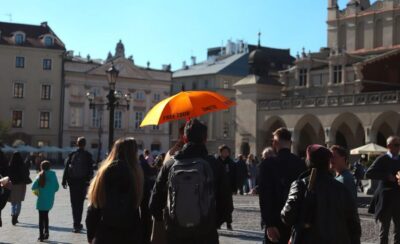


Sightseeing EcoCruise around the Old Town of Gdansk
Read the review →
Browse the lists this tour appears in