Reviewed · TOURS IN WARSAW
Offbeat Warsaw: Explore the Edgy & Artsy Praga District
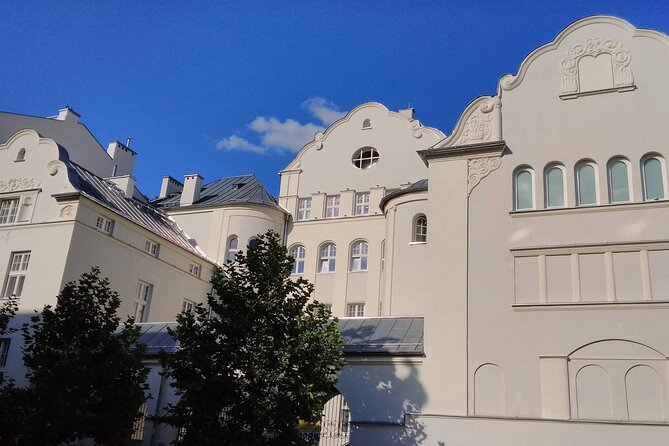
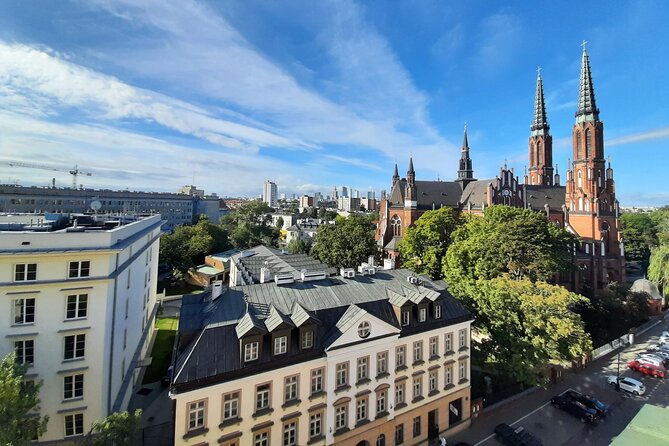
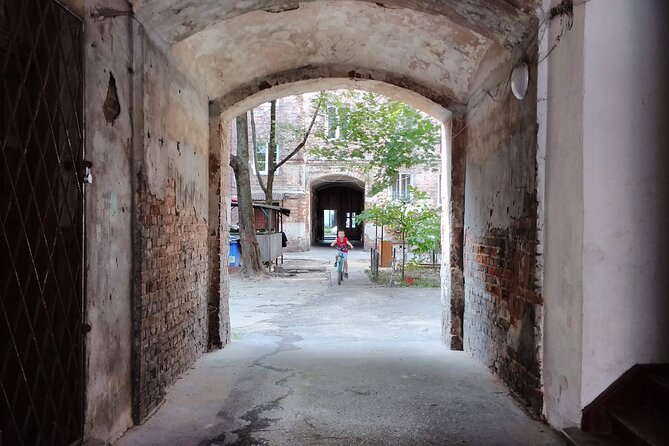
Praga gives you a different Warsaw: less polished, more local, and full of old courtyards, murals, film locations, and traces of Jewish and Communist-era life. With guide Łukasz, you walk from St. Florian’s Cathedral toward Bohema, hearing short stories that make the streets easier to read.
I like the small group of no more than 10, which leaves room for questions and personal tips. I also like the route’s mix of serious history and everyday Praga, from the former Jewish orphanage and synagogue site to cafes, street art, and a former cosmetics factory.
The main consideration is that this is a brisk, two-hour walk with no included meal or indoor admission. Some streets and courtyards retain a rough edge, and one published comment found parts of the district uncomfortable at night, so keep the tour’s daytime timing in mind.
Key points about the Praga walking tour
- Start at St. Florian’s Cathedral: Meet at plac Weteranów 1863 Roku at 1:00 pm for an east-bank introduction to Warsaw.
- See Praga’s local character: The route includes music traditions, old courtyards, murals, cafes, and market scenes that are easy to miss alone.
- Follow Warsaw’s Jewish story: Visit the former site of the Praga Synagogue and the building associated with a Jewish orphanage.
- Recognize film locations: Mała Street was used for The Pianist, adding a visual link between the modern neighborhood and wartime Warsaw.
- Compare architectural eras: See a 17th-century chapel, an early Communist housing estate, 19th-century buildings, and new construction at Bohema.
- Finish beside public transport: The walk ends at Bohema, near Szwedzka metro station and a tram stop serving the Old Town area.
Why Praga is worth two hours
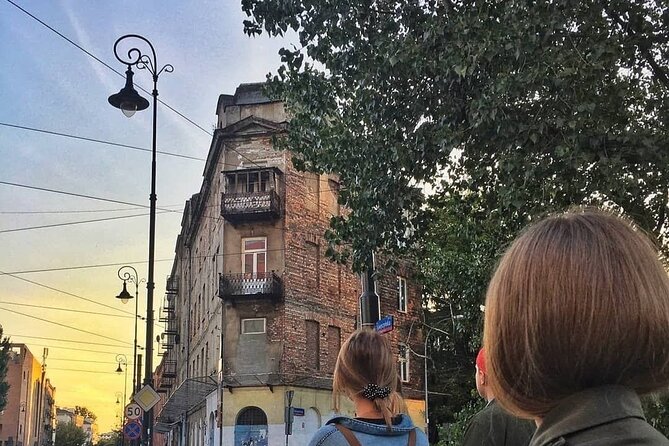
Warsaw’s Old Town is the obvious first stop, but Praga gives you a different sense of the city. Located across the Vistula, it avoided much of the destruction that erased central Warsaw during World War II. That does not make every building old, and it does not make the district a preserved museum. Instead, you get a patchwork of surviving structures, Communist-era housing, modern development, painted walls, cafes, and working streets.
That mix is the reason I find this route useful. You are not simply checking off grand monuments. You are learning how Warsaw grew around ordinary people, local businesses, religious communities, artists, factories, and apartment blocks.
Łukasz’s role matters here. Praga is best understood through small details: a building’s former use, a local nickname, a story tied to a courtyard, or the reason a street became associated with artists and cafes. The tour’s strongest feature is the guide’s local focus. Several of the supplied comments praise his English, his ability to answer questions, his flexibility, and the practical Warsaw suggestions he gives for the rest of your stay.
The group limit of 10 is a real advantage. In a large group, a courtyard or mural can become a quick photo stop. In a small group, you can ask why a place matters, request a restaurant tip, or spend a little longer on a detail that catches your eye.
Other trips people book in Warsaw:
- Warsaw: Chopin Concert in the Old Town
★ 4.8 · 2,287 reviews - Warsaw: Traditional Galar Cruise on The Vistula River
★ 4.6 · 1,640 reviews - Warsaw: Old Town Highlights Walking Tour in English
★ 4.7 · 1,516 reviews
Starting beneath St. Florian’s towers
You meet at plac Weteranów 1863 Roku, in front of St. Florian’s Cathedral. The first stop takes about 10 minutes and gives you a clear starting point for the district.
This is a practical meeting place because it is easy to identify, and it puts you directly into Praga rather than beginning with a long transfer from central Warsaw. Arrive ready to walk. The tour is offered in English and lasts about two hours, so there is little wasted time.
The route is not built around admission tickets. Each listed stop is free, which keeps the price focused on the guide and the walking experience rather than entry fees. You should still expect to pay for any food, drinks, or purchases you make along the way.
Praga’s music, Jewish past, and older streets
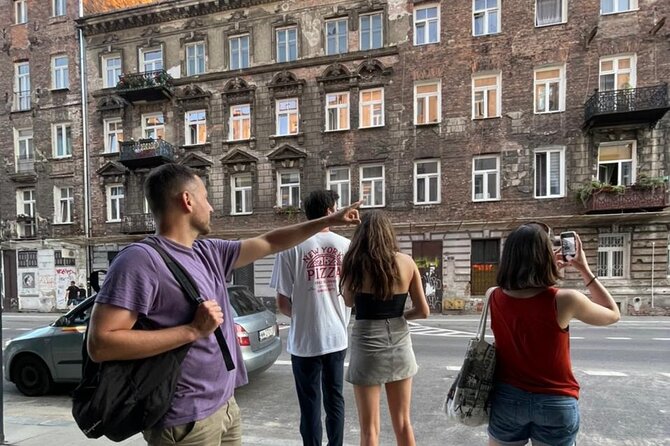
The Monument to Praga Music Bands takes only about five minutes, but it introduces a distinctly local tradition. This is not a national monument of the usual grand sort. It points to the neighborhood’s street music culture and the role that small bands played in everyday Praga life.
That kind of stop is useful because it gives the district a human scale. You begin to see Praga not only as a collection of old buildings, but as a place shaped by music, neighbors, and informal public life.
The next stops turn toward Jewish history. Teatr Baj occupies the former Jewish Orphanage, a detail that can be easy to miss if you walk past on your own. The route then reaches the former site of the Praga Synagogue, dating from the 1830s.
These are brief stops, about five minutes each, so do not expect a long museum presentation or an interior visit. Their value comes from the context Łukasz supplies and from seeing how Jewish history is woven into the current streetscape. You are looking at places that may not announce their past loudly. A guide helps you connect the address in front of you with the community that once used it.
The itinerary also includes a 19th-century park. Its name is not specified, so you should treat this as a short outdoor passage rather than a major park visit. It gives the walk a pause between buildings and adds another layer to the district’s older urban fabric.
The Loreto Chapel and a Communist housing experiment
The Chapel of Our Lady of Loreto is one of the route’s most unusual stops. Dating from the 17th century, it is described as the oldest historical monument in Praga. The visit lasts about 10 minutes, giving you more time here than at the smaller monument and history stops.
This is where the route moves beyond the popular image of Praga as murals and rough-edged streets. The chapel reminds you that the district’s story reaches much further back than the 20th century. Its age also helps explain why Praga can feel layered rather than uniform.
From there, the walk reaches Jagiellońska 44, associated with one of Warsaw’s first Communist-era housing estates. The buildings were designed by prominent Polish avant-garde architects, so this is a strong stop for anyone interested in design, planning, or postwar city life.
You may not find the architecture conventionally pretty, but that is not the point. This stop shows how Warsaw tried to solve housing needs and express new political and artistic ideas after the war. It also creates a useful contrast with the chapel. Within a short walk, you move from a 17th-century religious building to a planned housing project from the Communist period.
The 10-minute stop should be long enough for explanation and photographs. Bring a wider view of architecture with you. The best part of this route is the contrast between styles, not one perfect postcard building.
Same base, a different kind of day:
- Warsaw Concert: Chopin – Painted by Candlelights with Wine
★ 4.8 · 1,442 reviews - Warsaw: City Sightseeing Hop-On Hop-Off Bus Tour
★ 3.6 · 1,415 reviews - Warsaw: POLIN Museum of the History of Polish Jews Ticket
★ 4.7 · 1,142 reviews - #1 Pub Crawl Warsaw with Optional Premium 1 Hour Open Bar
★ 5.0 · 790 reviews
Walking through The Pianist’s Praga
Mała Street is connected with The Pianist, making it a memorable stop for film fans and for anyone interested in Warsaw’s wartime story. The stop lasts about 10 minutes.
Film locations can sometimes feel thin when separated from the movie, but here the connection adds another way to look at the street. You can compare the real setting with the dramatic image created on screen, while Łukasz explains the local context.
The important point is that the tour does not treat the film location as a substitute for history. It sits among Jewish sites, older buildings, and the wider story of wartime Warsaw. If you have seen The Pianist, this part should carry extra weight. If you have not, the location still works as an example of how Praga’s streets have been used to represent difficult chapters in the city’s past.
You should also expect a walking tour rather than a staged film experience. There is no admission ticket or special set access listed. You are seeing the street itself and learning why it was chosen.
Stalowa Street, murals, cafes, and everyday Praga
Stalowa gets the longest stop on the route, about 15 minutes. It is known for cafes, bars, galleries, and street art, making it the liveliest part of the walk in terms of modern local culture.
This is where you can take some of your best photographs. Look for painted walls, changing shopfronts, and the contrast between older buildings and newer creative businesses. The route also highlights authentic market scenes, so keep your camera ready, but be respectful when photographing people and small businesses.
I like this part because it gives you a chance to test the district against the stories you have just heard. Praga is not frozen in the past. It is changing, and cafes, galleries, and murals show how artists and small businesses are shaping its current identity.
At the same time, do not expect a polished entertainment quarter. The appeal is the mixture of old and new. Some streets may feel worn, and the neighborhood can look different from the postcard version of Warsaw. That is part of the point, but it may not suit you if you want a tidy, monument-heavy sightseeing walk.
The tour operator can also suggest cafes and restaurants in the area. That is particularly useful because the walk ends away from the main Old Town sights. If you want to stay in Praga for food or a drink, ask Łukasz for a current recommendation rather than choosing at random.
From Konopacki’s palace to Bohema
The Pałacyk Ksawerego Konopackiego is tied to the former residence of the person who founded the neighborhood. It is a short, five-minute stop, but it helps explain Praga’s beginnings and development.
This is another example of the route’s approach. Instead of giving you only the famous landmarks, it points to a building connected with the person behind the district. The stop may be brief, but it adds a useful question: who shaped this part of Warsaw, and why did it grow here?
The final stop is Fabryka Schichta Bohema, a former 19th-century cosmetics factory complex now used as a multi-purpose hub. It combines industrial architecture with contemporary buildings, making it a fitting end to a route about change.
Bohema also solves a practical problem. You do not finish in an isolated side street with no clear way back. Szwedzka metro station is nearby, and a tram stop about 400 meters away can take you toward Castle Square in the Old Town. That makes it easy to continue sightseeing, return to your accommodation, or stay for food in Praga.
The ending is worth noting when you plan your day. Since the tour begins at 1:00 pm and lasts about two hours, you can schedule a morning in the Old Town, enjoy lunch before meeting, and still have time afterward for Bohema or nearby streets.
What the $42.14 price gives you
At $42.14 per person, this is not a bargain public walking tour, but the value depends on how you use the guide. You are paying for a two-hour English-language experience, a maximum group size of 10, and local interpretation across several parts of Praga.
Because every stop is free, the main product is Łukasz’s knowledge of the streets and his ability to connect places that might otherwise seem unrelated. The price makes more sense if you want a focused introduction, enjoy asking questions, and plan to use his suggestions for the rest of your Warsaw stay.
It is less compelling if you prefer to wander alone, read plaques, and spend a long time inside museums. This route has no listed entrance admissions, meal, or included snack. Budget separately for anything you buy at a cafe or market.
The small group also improves the value for solo visitors and couples. You get a better chance to speak directly with the guide than you would on a large city walk. Several supplied comments praise Łukasz’s flexibility, including one custom day that combined Praga with other Warsaw sights, food stops, and a return to the visitor’s apartment. That longer custom format is separate from this two-hour route, but it suggests you can ask about additional options.
Who should book this walk
I would choose this tour if you have already seen, or plan to see, Warsaw’s Old Town and want a neighborhood with a different feel. It suits you if you like street art, architecture, Jewish history, film locations, local stories, and urban change.
It is also a good fit for photographers. You get murals, old facades, courtyards, market scenes, industrial buildings, and the visual contrast between Stalowa Street and Bohema.
History-focused visitors should appreciate the route’s range, but keep your expectations in check. This is not a full Jewish history tour, a museum tour, or a detailed account of Warsaw’s wartime destruction. It gives you several important places and a guide to connect them.
Families and older walkers can generally participate, since the activity is a standard walking tour and most people can take part. Still, you should be comfortable walking for about two hours and standing at outdoor stops. The published information does not provide a detailed accessibility assessment, so ask the provider if you have specific mobility needs.
Praga’s changing character is part of its appeal, but it also calls for normal city awareness. The supplied information includes a comment about some areas feeling unsafe at night. The tour runs in the afternoon and ends near public transport, which is helpful. I would follow that daytime pattern rather than treating the route as a late-night wandering plan.
Free cancellation is available up to 24 hours before the 1:00 pm start time. Changes or cancellations inside that window are not accepted for a refund, and the experience requires a minimum number of participants. Confirmation arrives when you book.
Should you book Offbeat Warsaw?
Book it if you want Warsaw beyond the Old Town and prefer a guide who tells short local stories instead of delivering a list of dates. The mix of Jewish history, a film location, avant-garde housing, murals, cafes, and Bohema gives you a clear picture of why Praga feels different.
I especially like the small group, the useful transport ending, and Łukasz’s practical help with cafes and other Warsaw plans. I would skip it only if your time is extremely short, you want major sights only, or you dislike walks where the neighborhood can look rough around the edges.
For most visitors with at least two days in Warsaw, this is a worthwhile way to spend an afternoon. It shows you a side of the city that is easy to miss on your own, while leaving enough time afterward to keep exploring.
FAQ
Where does the Praga walking tour begin?
The tour begins at plac Weteranów 1863 Roku in front of St. Florian’s Cathedral in Warsaw.
What time does the tour start?
The start time is 1:00 pm.
Where does the tour end?
The tour ends at Fabryka Schichta Bohema, at Szwedzka 20 in Warsaw.
How long does the experience last?
The walking tour lasts approximately two hours.
What language is the tour offered in?
The tour is offered in English.
How much does the tour cost?
The listed price is $42.14 per person.
How many people can join the tour?
The group has a maximum of 10 travelers.
Does the tour include admission tickets?
The listed stops have free admission. No paid entrance ticket is included or required for the route described.
Is public transportation available at the end?
Yes. Szwedzka metro station is near Bohema, and a tram stop about 400 meters away can take you toward Castle Square and Warsaw’s Old Town.
Can I cancel for a full refund?
Yes. You can cancel at least 24 hours before the experience start time for a full refund. Cancellations or changes made less than 24 hours before the start are not accepted for a refund.
Just added in Warsaw
- Warsaw Zoo Skip-the-Line Entry Ticket with Private Transport★ 4.8 · 3 reviews
- Warsaw Private Wilanow Palace & Garden Tour★ 4.6 · 30 reviews
- Warsaw: Vodka Tour★ 4.4 · 18 reviews
- Warsaw Wolf’s Lair with St. Lipka and Mamerki Private Guided★ 4.2 · 3 reviews
- Warsaw Uprising and WWII Old Town Walking Tour with Museum★ 4.7 · 15 reviews
- Warsaw Old Town UNESCO HERITAGE walking tour in English★ 4.5 · 23 reviews
- Warsaw: Private Vodka Tasting Night with Snacks and Pickup★ 5.0 · 7 reviews
- Warsaw: Skip-the-Line Royal Castle Guided Tour★ 4.9 · 79 reviews
Tours in Warsaw, compared.
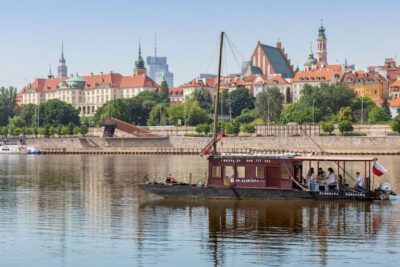
Traditional Galar Cruise on The Vistula River
Read the review →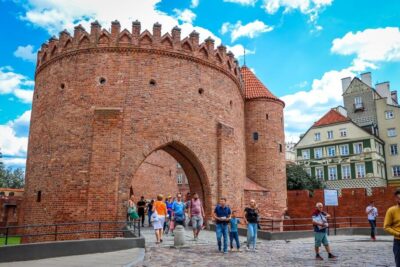
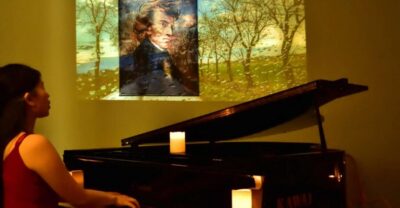
Warsaw Concert: Chopin – Painted by Candlelights with Wine
Read the review →
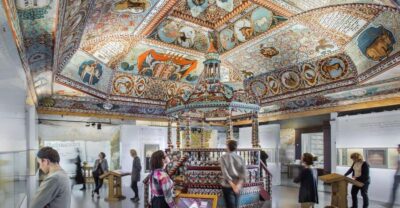
POLIN Museum of the History of Polish Jews Ticket
Read the review →
#1 Pub Crawl Warsaw with Optional Premium 1 Hour Open Bar
Read the review →