
Reviewed · WALKING TOURS
Warsaw: 2-Hour Praga Walking Tour
Praga gives you a Warsaw that feels less polished and more revealing. Across the Vistula from the Old Town, this former trade and factory district keeps traces of pre-war life, communist housing, wartime damage, and a newer crop of galleries and restaurants. The bullet-marked tenement houses are especially striking, as are the film locations connected with Roman Polanski’s The Pianist.
I like this tour for two clear reasons: Marzena brings history down to street level, and the route links architecture with real human stories, including the Warsaw Zoo director and his wife, who helped save hundreds of Jews from the Warsaw Ghetto. The main consideration is time. Two hours goes quickly, so this is a focused introduction rather than a full exploration of Praga.
Key points to know before you book
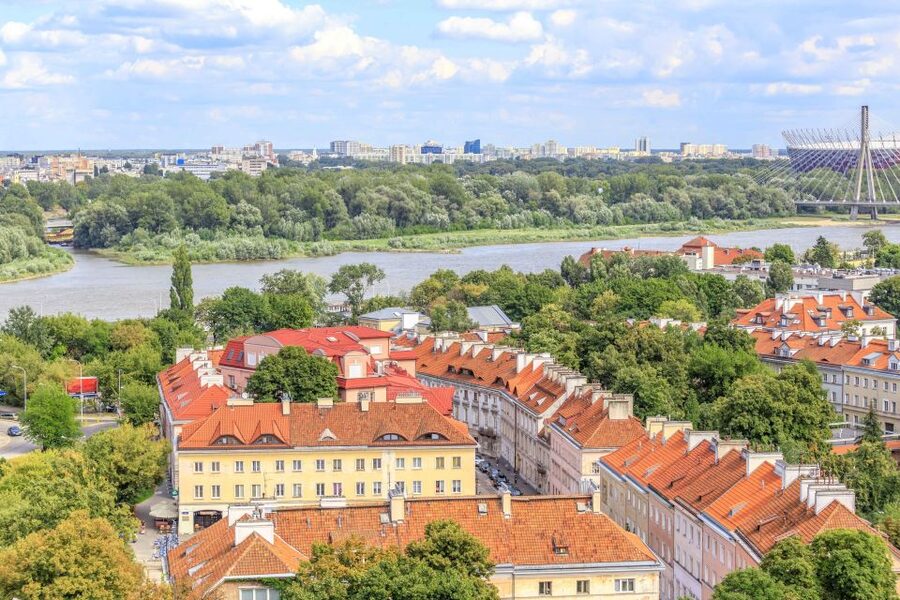
- See a less polished Warsaw: Praga shows pre-war tenements, communist apartment blocks, and post-industrial buildings side by side.
- Walk through The Pianist locations: The route includes streets used for Roman Polanski’s Oscar-winning film.
- Hear the Warsaw Zoo rescue story: Your guide explains how the zoo director and his wife helped people escape the Warsaw Ghetto.
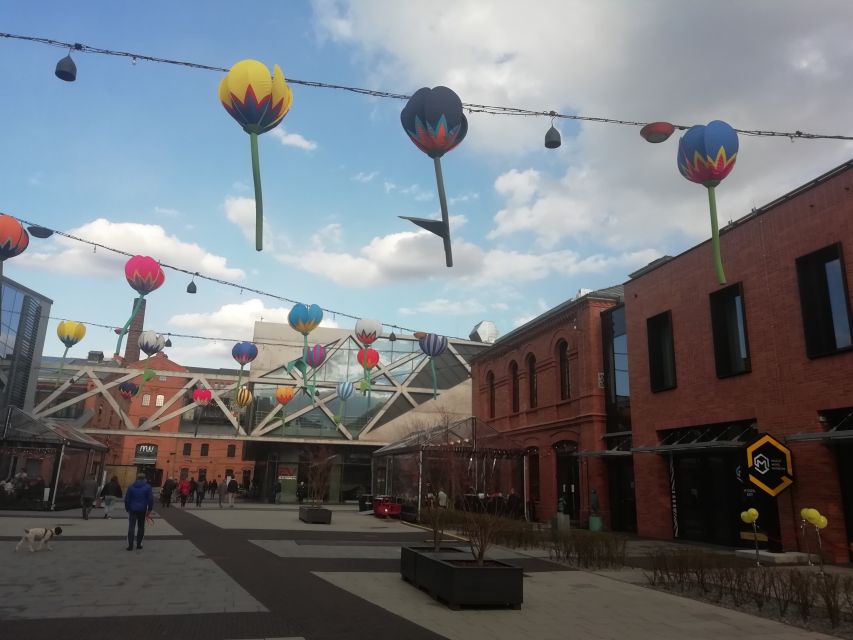
- Visit Koneser: The former vodka factory complex now houses creative businesses, galleries, designers, and restaurants.
- Expect a private two-hour walk: You get a guide for your own group, with English, German, or Polish available.
- Meet guide Marzena: Her clear explanations and patience with questions are among the strongest features of this experience.
Why Praga feels different from central Warsaw
Praga sits on the right bank of the Vistula, only a short distance from Warsaw’s Old Town, yet it has a different look and mood. For centuries, trade and industry shaped the district. Christians, Jews, and Orthodox residents lived alongside one another, and the area became an important trading center before the war.
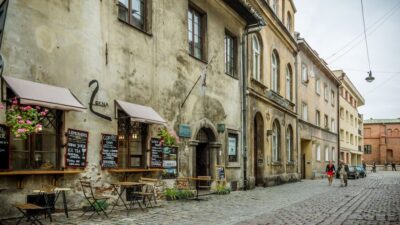
That past is still visible in the street plan and surviving buildings. You do not get a tidy procession of restored monuments here. Instead, you see layers of Warsaw at once: old tenement houses, gray communist blocks, industrial sites, and newer creative spaces occupying buildings with rougher edges.
That mix is the point. Praga is not presented as a perfect old quarter. It is a district that changed, suffered, adapted, and kept going. I find that more useful than a tour that shows only polished facades.
The guide also explains how Praga became a symbol of free trade during the communist period. That detail gives the neighborhood economic meaning, not just visual character. You begin to understand why markets, small businesses, factories, and informal trade mattered so much here.
More walking tours in Warsaw:
- Warsaw: Old Town Highlights Walking Tour in English
★ 4.7 · 1,516 reviews - Warsaw: Old Town Guided Walking Tour
★ 4.9 · 599 reviews - Half-Day Polish Food Walking Tour with Guide and Dinner
★ 4.5 · 381 reviews
Starting at the Metropolitan Cathedral
The meeting point is in front of the Metropolitan Cathedral of Maria and Magdalena, at aleja Solidarności 52. The guide waits near the exit from the M2 subway with a PolinTours sign.
This is a practical starting point because you can reach it by public transport, and the cathedral gives you an immediate landmark. Before setting off, make sure you are at the correct subway exit and allow a little time to orient yourself. The meeting instructions are specific, but a large station area can still cause confusion if you arrive at the last moment.
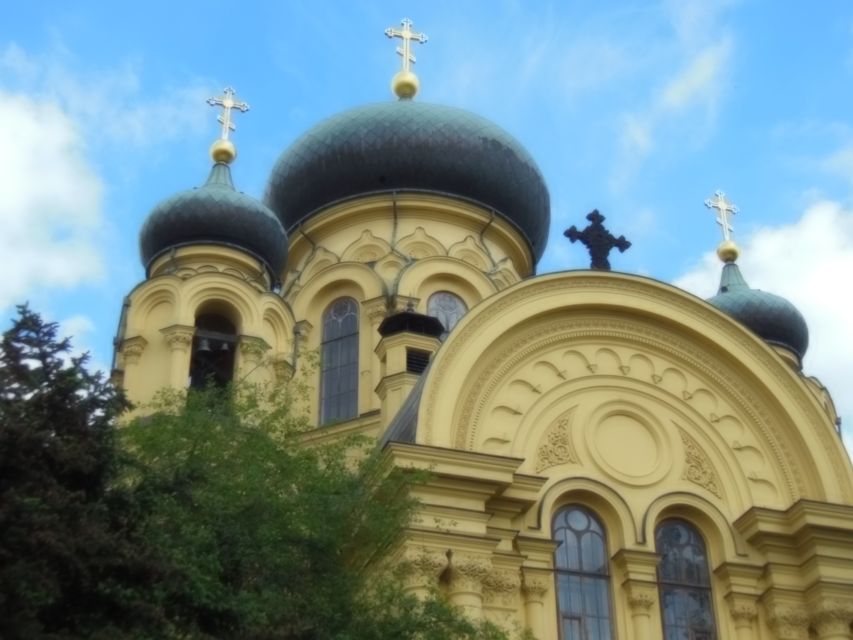
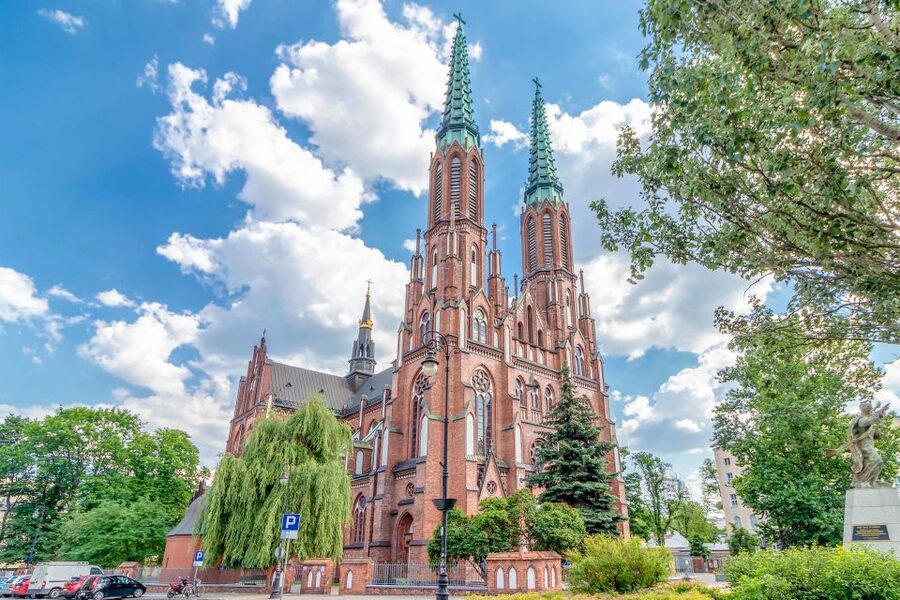
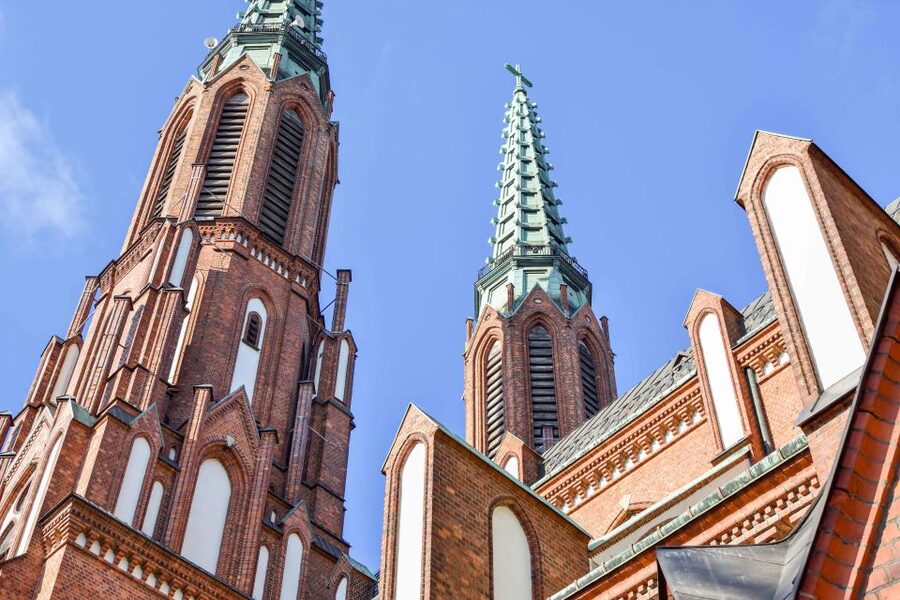
St. Florian Cathedral is one of the important sights included during the walk. Its presence helps frame Praga as a district shaped by several faiths and communities. The route also includes an Orthodox church, on the site of a former synagogue and ritual bath. That single location says a great deal about the area’s changing population and the losses caused by war and political change.
You will not be touring interiors as part of the stated inclusions, so think of these places mainly as historical markers along the walking route. The value comes from the explanation around them.
Pre-war streets and bullet-marked tenements
The most memorable part of this experience is likely the walk through streets lined with older tenement houses. Some still show bullet holes, physical traces of the fighting and violence that shaped Warsaw.
These marks are not decorative history. They help you picture how much damage the city endured and why surviving sections of pre-war Praga matter. Warsaw was rebuilt on a huge scale after the war, but parts of Praga retained more of the older street fabric than many areas across the river.
Your guide connects the buildings to the people who lived and traded here. You hear about entrepreneurs who helped turn Praga into a major pre-war commercial center. This makes the architecture easier to read. A worn facade is not just an old wall. It may have been part of a shop, workshop, apartment house, or trading route.
The walk is also useful if you want to see how history appears in ordinary streets. There is no need for a grand monument to make the past visible. A patched wall, a surviving block, or a building with damage around its openings can say plenty when you know what to look for.
Wear comfortable shoes. The tour lasts only two hours, but it is a continuous walk, and the route includes streets rather than a single museum or indoor attraction. Sunglasses, a hat, and sunscreen are sensible in sunny weather.
The Warsaw Zoo story and wartime choices
One of the tour’s strongest human stories concerns the director of the Warsaw Zoo and his wife. During the German occupation, they helped save hundreds of Jews from the Warsaw Ghetto.
The story adds emotional weight without pulling the tour away from Praga’s physical setting. You learn how people connected with the zoo used their position and surroundings to help those in danger. It is a reminder that Warsaw’s wartime history is not only about destruction. It is also about difficult choices, courage, and quiet acts of help.
I especially like this part because it gives you a personal scale for a period that can otherwise feel too large to grasp. Instead of hearing only about armies, ghettos, and destroyed districts, you hear about individuals and the risks they took.
The exact telling depends on your guide, but the tour promises an authentic account of the zoo director and his wife. Marzena has been praised for making history accessible and for answering questions patiently, so this is a good moment to ask for clarification if you want more context.
Same base, a different kind of day:
- Warsaw: Chopin Concert in the Old Town
★ 4.8 · 2,287 reviews - Warsaw: Traditional Galar Cruise on The Vistula River
★ 4.6 · 1,640 reviews - Warsaw Concert: Chopin – Painted by Candlelights with Wine
★ 4.8 · 1,442 reviews - Warsaw: City Sightseeing Hop-On Hop-Off Bus Tour
★ 3.6 · 1,415 reviews
Różycki Bazaar and the old trading spirit
Różycki Bazaar is another key stop. The market represents Praga’s long connection with commerce and informal trade.
The tour uses the bazaar to explain more than what you can see from the pavement. You hear how local entrepreneurs helped make the district a trading hub before the war and how trade later took on special importance during the communist era.
Do not book this walk expecting a long shopping visit or a food tour. Lunch, food, and drinks are not included, and the experience is built around history and walking. The bazaar is best understood as part of the district’s story, not as a scheduled meal stop.
For me, this is one reason the tour has value. It explains why Praga developed its particular character instead of treating the market as a quick photo opportunity.
The street band monument and everyday Praga
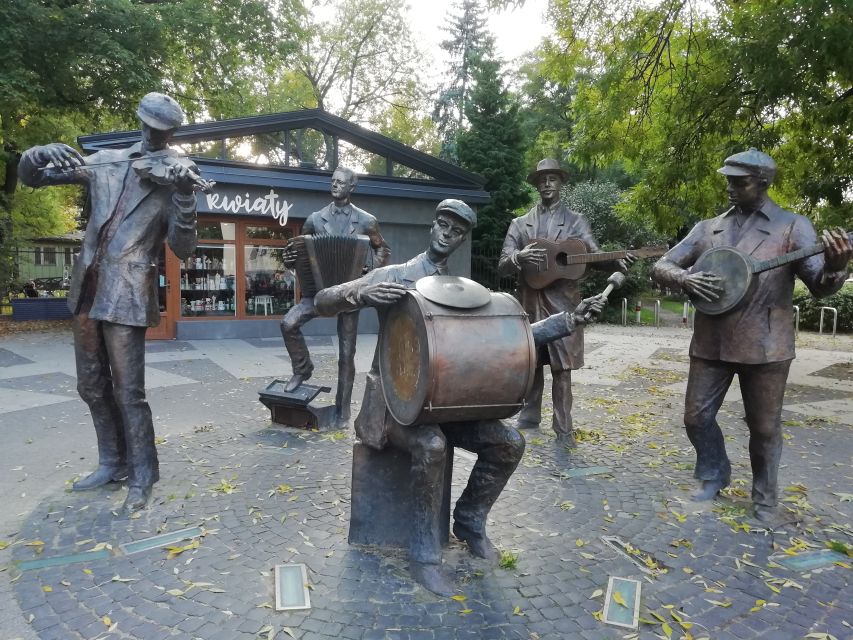
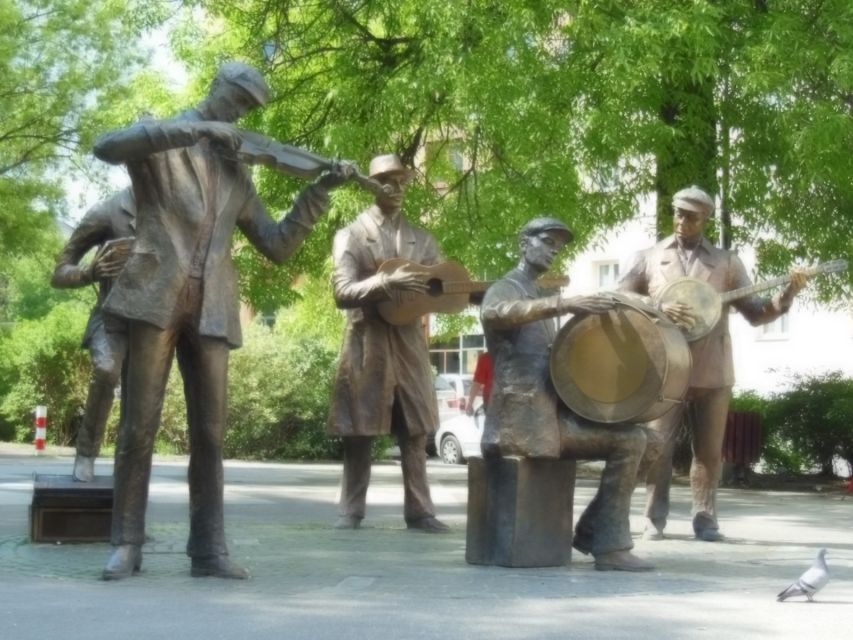
The monument to the Praga Street Band brings the tour back to local culture and neighborhood identity. It represents the everyday side of the district, where music and public life existed alongside trade, factories, and apartment houses.
This is a smaller sight than a cathedral or factory complex, but smaller does not mean unimportant. A neighborhood monument can show how residents remember themselves. It adds variety to the route and keeps the tour from becoming only a lesson in wartime damage.
Because this is a private group, you can ask your guide to explain details that catch your attention. Several reviews single out Marzena’s willingness to answer questions, including questions about architecture and the district’s social history. That flexibility is useful on a route with many different subjects.
Koneser and the post-industrial turn
The Koneser vodka factory complex shows how Praga has changed in recent years. Once an industrial site, it now contains art galleries, boutique designers, restaurants, and other creative businesses.
This part of the route helps you understand the district’s present-day appeal. Old factory buildings can gain a new purpose without losing every trace of their former work. At the same time, the tour does not pretend that new businesses erase the area’s past.
You should see Koneser as a stop for architecture and urban change, not as a vodka tasting. Food and drinks are not included, and the experience does not promise entry to particular shops, galleries, or restaurants. Its strength is the contrast between the former factory complex and the older working district around it.
If you like cities in transition, this will probably be one of your favorite sections. You can see how industrial buildings become part of a newer cultural and commercial quarter. If you prefer only historic interiors and fully restored monuments, the post-industrial sections may feel less focused.
Walking through The Pianist locations
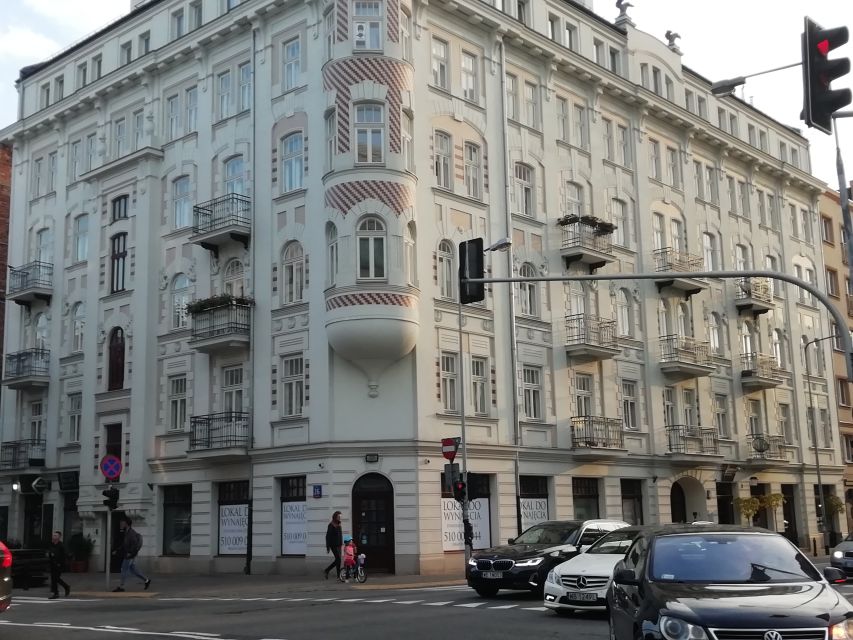
The route also visits streets used in Roman Polanski’s Oscar-winning film The Pianist. For film fans, this adds a clear reason to choose the Praga walk over a general Warsaw city tour.
The film connection works best because the streets are presented as real places with their own history, not just as movie backdrops. You can consider how the production used Praga’s surviving older buildings to represent wartime Warsaw.
Do not expect a film museum or a large display of movie memorabilia. The attraction is standing in the actual streets and hearing how they fit into the film’s visual world. If you have seen The Pianist, the locations may sharpen your sense of place. If you have not, the streets still matter for their architecture and wartime traces.
This is also a good example of the tour’s wider method. It combines popular culture with serious history, then brings both back to the buildings in front of you.
What the $69 price gets you
At $69 per person, this is not the cheapest way to spend two hours in Warsaw. The price makes more sense if you value a private guide, a focused route, and the ability to ask questions without joining a large group.
You are paying for the guide rather than for admissions, transport, lunch, or drinks. A private format can be particularly useful if your group has a strong interest in architecture, wartime Warsaw, film locations, or social history. You can ask for more detail instead of following a fixed lecture.
The value is less clear if you mainly want a quick orientation or are happy to explore streets independently with a guidebook. Praga has plenty to see from the outside, and two hours cannot cover every corner.
Still, the route brings together several subjects that are easy to miss on your own: the former synagogue and ritual bath site, the zoo rescue story, the bazaar’s role in trade, communist-era housing, Koneser, and The Pianist locations. That concentration gives the fee a reasonable basis for a first visit.
Who will get the most from this walk
I would choose this tour if you have already seen Warsaw’s Old Town and want a different side of the city. It also suits first-time visitors who want their Warsaw history connected to ordinary streets rather than presented only through grand monuments.
The walk is a good fit for:
- Film fans interested in The Pianist locations
- People drawn to wartime history and personal rescue stories
- Visitors interested in architecture, markets, and industrial reuse
- Private groups who want to ask many questions
- Anyone who wants to understand how Praga changed under communism and after it
It may be less suitable if you want a relaxed café outing, an indoor museum tour, or a food-focused experience. The schedule is compact, and the route covers serious subjects. You should also leave large bags and oversize luggage behind. Pets, smoking, alcohol, and drugs are not allowed.
The tour is offered in English, German, and Polish. The strongest feedback centers on Marzena, who is described as clear, patient, and engaging. One booking problem did involve a last-minute change from 10 a.m. to 2 p.m., so confirm the start time before setting out.
Should you book the Praga walking tour?
Book it if you want to see Warsaw beyond the postcard center and prefer a guide who can connect buildings with people, politics, film, and memory. The private format and Marzena’s patient explanations are the main reasons to pay for this experience rather than simply walk Praga alone.
Skip it if you need a longer tour, included food, or entry into several attractions. Two hours gives you a strong introduction, not a complete study of the district.
For most visitors with an interest in the real texture of Warsaw, this is a worthwhile use of an afternoon or morning. It shows you a neighborhood where damage, survival, trade, faith, industry, and new creative life remain close together.
FAQ
Where does the Praga walking tour meet?
The meeting point is in front of the Metropolitan Cathedral of Maria and Magdalena at aleja Solidarności 52, 03-402 Warszawa. The guide waits at the exit from the M2 subway with a PolinTours sign.
How long does the tour last?
The walking tour lasts two hours.
Is this a private tour?
Yes. The activity is offered for a private group.
Which languages are available?
The tour is available in English, German, and Polish.
What sights are included on the route?
The route includes St. Florian Cathedral, an Orthodox church on the former site of a synagogue and ritual bath, Różycki Bazaar, the Praga Street Band monument, and the Koneser vodka factory complex.
Does the tour visit locations from The Pianist?
Yes. The walk includes streets used for filming Roman Polanski’s Oscar-winning movie The Pianist.
Is food or lunch included?
No. Lunch, food, and drinks are not included.
What should I bring?
Bring comfortable shoes, sunglasses, a sun hat, and sunscreen.
Can I cancel the booking?
You can cancel up to 24 hours in advance for a full refund. You can also reserve now and pay later.
Just added in Warsaw
- Warsaw Zoo Skip-the-Line Entry Ticket with Private Transport★ 4.8 · 3 reviews
- Warsaw Private Wilanow Palace & Garden Tour★ 4.6 · 30 reviews
- Warsaw: Vodka Tour★ 4.4 · 18 reviews
- Warsaw Wolf’s Lair with St. Lipka and Mamerki Private Guided★ 4.2 · 3 reviews
- Warsaw Old Town UNESCO HERITAGE walking tour in English★ 4.5 · 23 reviews
- Warsaw: Private Vodka Tasting Night with Snacks and Pickup★ 5.0 · 7 reviews
- Warsaw Uprising and WWII Old Town Walking Tour with Museum★ 4.7 · 15 reviews
- Warsaw: Skip-the-Line Royal Castle Guided Tour★ 4.9 · 79 reviews
Walking Tours, compared.
Gdańsk City Sights & History Guided Walking Tour in English
Read the review →
Browse the lists this tour appears in