Reviewed · TOURS IN WARSAW
Warsaw Praga — where modern, traditional, and bohemian meet
Praga is where Warsaw gets wonderfully untidy. Across the river from the polished Old Town, you’ll find old factories, Orthodox churches, film locations, murals, and streets that still feel connected to neighborhood life. This 2.5-hour walk gives you a useful look at the city’s less formal side.
I like the route for two clear reasons: it connects street art with serious history, and it takes you to places you would be unlikely to understand from a quick solo stroll. I also like the guide-led storytelling, especially with Oliwia, whose dry wit, personal connection to Warsaw, and easy English have made this tour a favorite for many people.
The main drawback is the walking. The route covers about 3.5 kilometers, and most of the value comes from being outdoors and on foot. If long walks are difficult for you, this may not be the right Warsaw outing, even though the experience is listed as wheelchair accessible.
Key points to know before you book
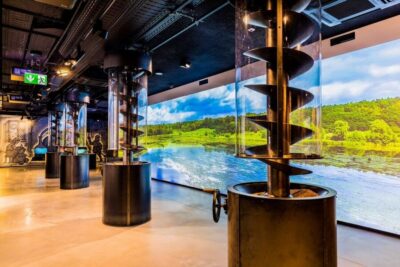
- Praga Koneser brings the district’s vodka-making past into the present with a visit to the old factory complex.
- Stalowa Street is known as the street of films, making this a strong choice for anyone interested in Warsaw on screen.
- Two major churches give the walk an important religious and architectural focus.
- Murals and the Warsaw Fight Club artwork add a modern edge to streets shaped by older traditions.
- Oliwia is a highly praised guide, known for clear English, local knowledge, humor, and an obvious love of Warsaw.
- The $32 price is reasonable if you want context and stories, not just a list of buildings.
Why Praga makes a better second look at Warsaw
Most first-time visits to Warsaw begin in the Old Town, the Royal Route, or the city center. That is sensible, but it can leave you with a tidy version of Warsaw. Praga gives you a different view: more local, more uneven, and full of contrasts between older buildings and newer creative spaces.
This district sits on the opposite side of the Vistula River from the historic center. The tour’s appeal is not a single famous monument. It is the way the stops fit together. You move from murals to churches, from a street associated with films to a former vodka factory, then finish near one of the city’s most important cathedrals.
I like that balance. You are not spending two and a half hours looking only at grand architecture. You are also not getting a vague walk through an arts district with no historical backbone. The route shows how Praga has retained older customs and buildings while taking on new art, culture, and business.
The experience is especially useful after you have seen central Warsaw. It helps explain why the city cannot be reduced to its reconstructed Old Town or postwar modern center.
Other trips people book in Warsaw:
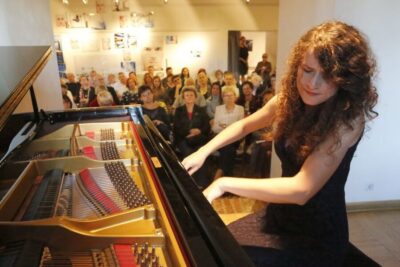
- Warsaw: Chopin Concert in the Old Town
★ 4.8 · 2,287 reviews - Warsaw: Traditional Galar Cruise on The Vistula River
★ 4.6 · 1,640 reviews - Warsaw: Old Town Highlights Walking Tour in English
★ 4.7 · 1,516 reviews
Starting at Strzelecka 46 and moving toward Konopacka
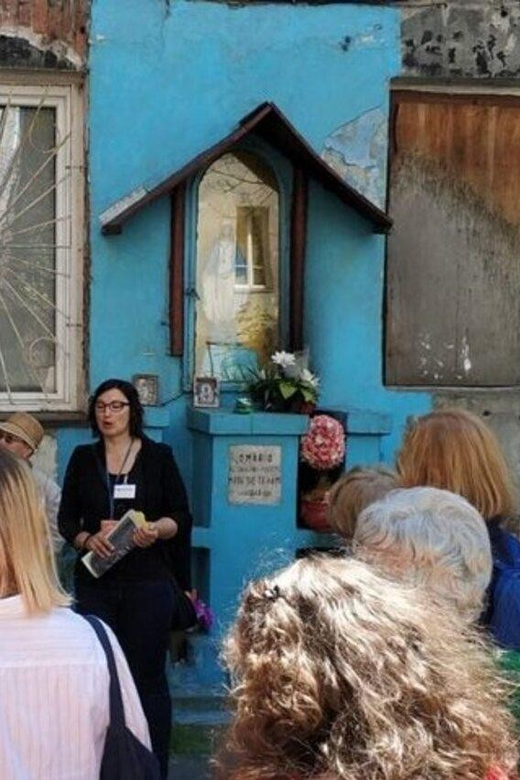
The walk begins at Strzelecka 46, with the guide easy to identify by a white and green umbrella. That simple meeting-point detail matters in a neighborhood where you may not want to spend the first ten minutes searching your phone for the right doorway.
The first guided stop is around Konopacka, with about ten minutes set aside for the area. You can expect the guide to establish the basic character of Praga here and begin connecting everyday streets with the district’s past.
This is a good opening because the tour does not start with a grand church or a polished attraction. Instead, you begin in the neighborhood itself. You get a sense of Praga as a place people live, work, and pass through, rather than a museum arranged for visitors.
The supplied tour information does not promise interior visits at every stop, so plan on an outdoor walking experience. The value comes from what the guide points out and explains as you go.
Warsaw Fight Club murals and the art of reading a street
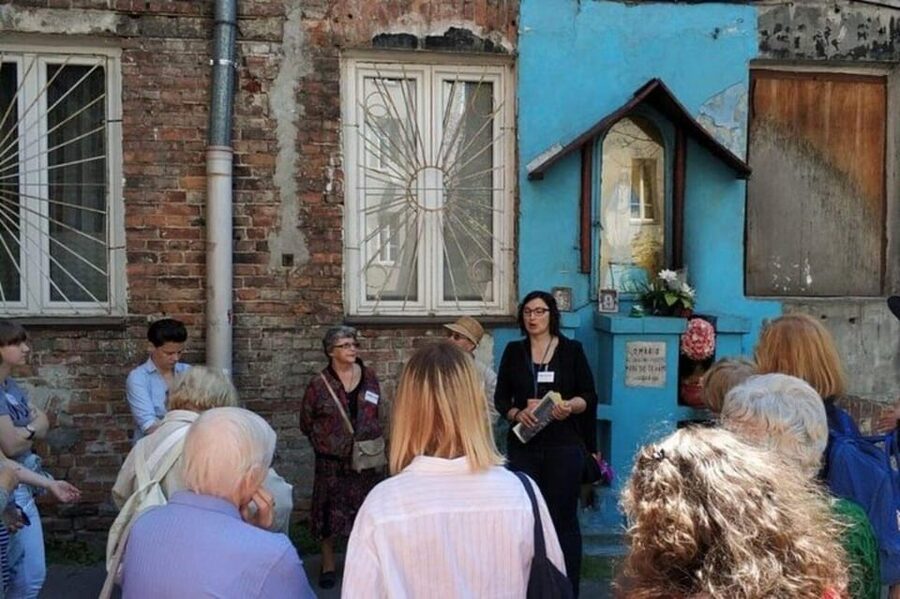
The next stop is the Warsaw Fight Club murals, with around ten minutes of guided explanation. Street art can be easy to glance at and forget, especially when you are walking without context. A guide can explain what makes a particular wall worth your attention and how the art fits the neighborhood.
I like this part because it keeps the tour from becoming a simple architectural walk. Praga’s identity is also visible in its painted walls and public art. The tour highlights work by world-famous artists, so you get a chance to see how contemporary art has become part of the district’s public face.
The murals also help set up one of the tour’s main themes: old and new sharing the same streets. You may be looking at artwork made in recent years while standing in an area shaped by much older traditions and difficult periods in Warsaw’s past.
Do not expect a gallery-style visit with a long indoor presentation. This is a short street stop, and its strength is the combination of visual detail and local explanation.
Stalowa Street, Warsaw’s film set in plain sight
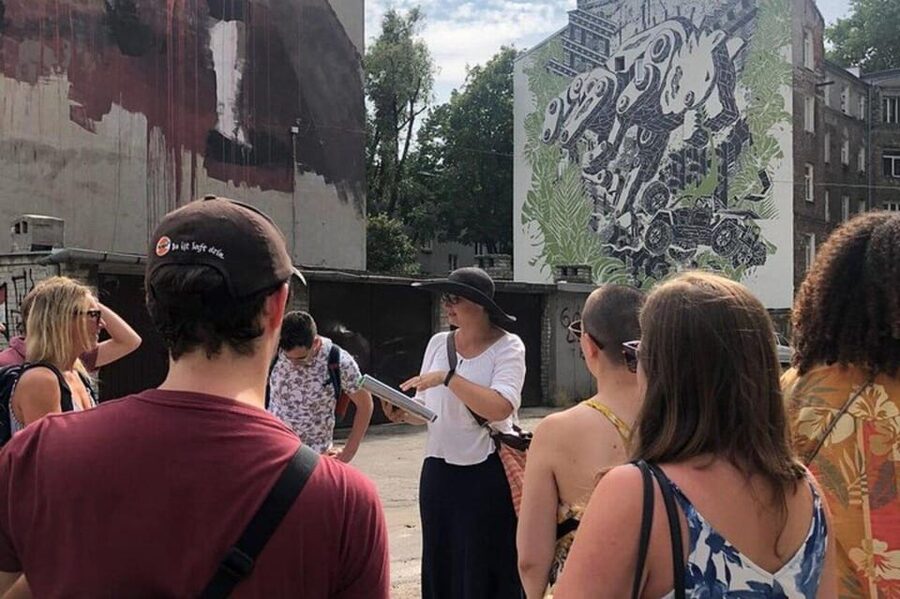
Stalowa Street receives about 15 minutes on the route and is known as the street of films. This is one of the most distinctive parts of the walk, especially if you enjoy seeing how real neighborhoods become settings for movies.
The tour includes stories about where a film recognized among the BBC’s 100 Greatest Movies of the 21st Century was shot. It also connects Praga with the true story that inspired The Zookeeper’s Wife. These details give the street more weight than a simple photo stop.
I like the film connection because it changes the way you look at ordinary buildings. A street can appear rough, modest, or familiar, yet carry a visual quality that directors find useful. The guide helps you notice those details instead of passing through without a second thought.
At the same time, film history should not be the only reason you choose this tour. The stop is relatively brief, and the experience is still a neighborhood walk first. If you want a dedicated movie-location tour with long scene-by-scene analysis, this may feel light. If you want film stories folded into a broader Warsaw experience, it fits well.
Same base, a different kind of day:
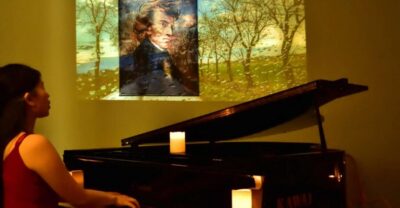
- Warsaw Concert: Chopin – Painted by Candlelights with Wine
★ 4.8 · 1,442 reviews - Warsaw: City Sightseeing Hop-On Hop-Off Bus Tour
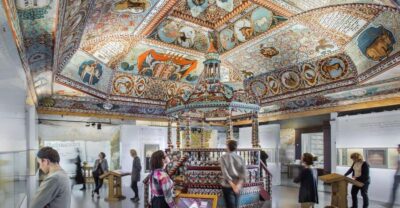
★ 3.6 · 1,415 reviews - Warsaw: POLIN Museum of the History of Polish Jews Ticket
★ 4.7 · 1,142 reviews - #1 Pub Crawl Warsaw with Optional Premium 1 Hour Open Bar
★ 5.0 · 790 reviews
St. Mary Magdalene and Warsaw’s Orthodox tradition
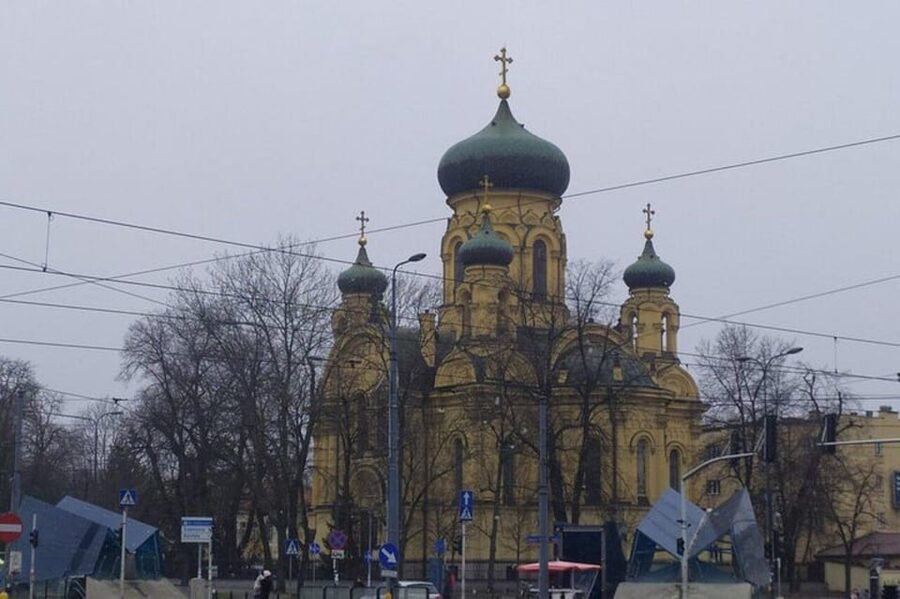
The Metropolitan Cathedral of Saint Mary Magdalene gets about ten minutes. This is one of the most important Orthodox churches in Warsaw and gives the walk a strong religious and cultural focus.
The building helps you see a side of Warsaw that can be missed if you focus only on Catholic churches and reconstructed historic landmarks. Its presence reflects the district’s long connection with Eastern Christian traditions and gives the tour a wider view of the city’s identity.
You should pay attention to the guide’s explanation here rather than treating the cathedral as a quick exterior photograph. The tour is designed to show why the church matters, not simply to add another monument to the list.
Ten minutes is enough for an introduction, but it is not a full architectural study. If you want a long interior visit or detailed religious art tour, check the exact plan with the provider before booking. The supplied details describe a guided stop, not an extended church visit.
Praga Koneser and the old vodka factory
Praga Koneser is the tour’s most obvious link between industrial history and modern Warsaw. The route spends about 15 minutes here, introducing the old vodka factory and the role of vodka in Polish culture.
This is a smart stop for a walking tour because the site gives you something concrete to understand. Instead of hearing only that Praga has changed, you see a former industrial place being used in a newer way. The experience also answers one of the tour’s promised questions: where you can learn about Poland’s best-known drink.
I appreciate that the tour treats vodka as more than a drinking tip. It is part of Polish social and economic life, and the factory gives the subject a physical setting. You get a clearer sense of how production, local identity, and redevelopment can meet in one place.
The scheduled time is short, so keep your expectations sensible. This is not advertised as a long tasting session or a full museum visit. It is a guided introduction to the factory complex and its place in Praga. If vodka is your main interest, you may want to ask whether additional time inside the center is possible.
The Praga courtyard orchestra monument
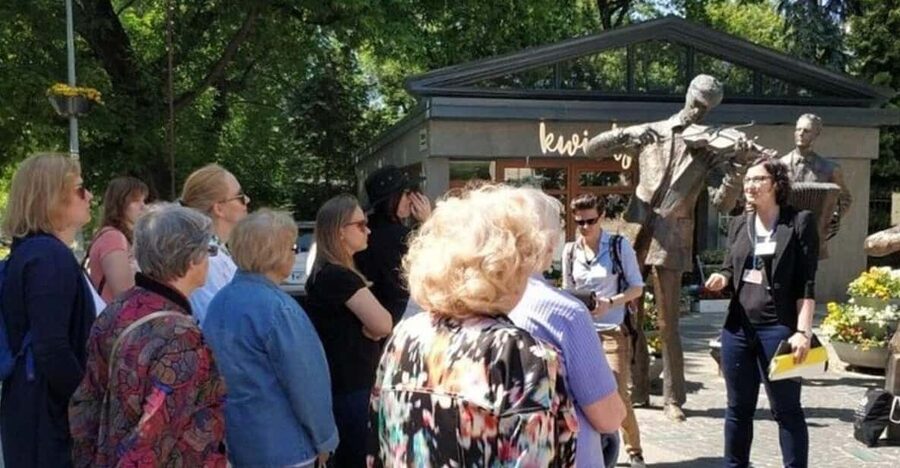
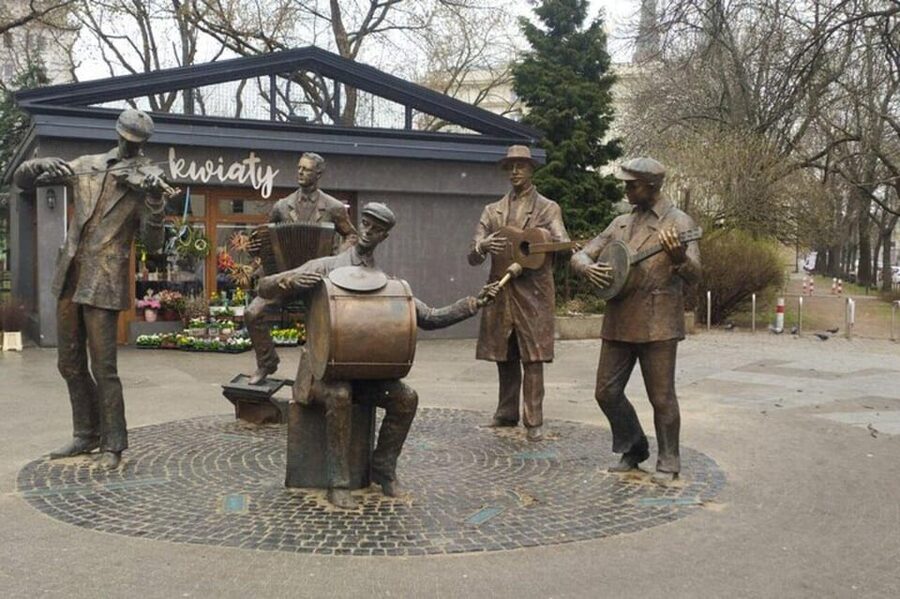
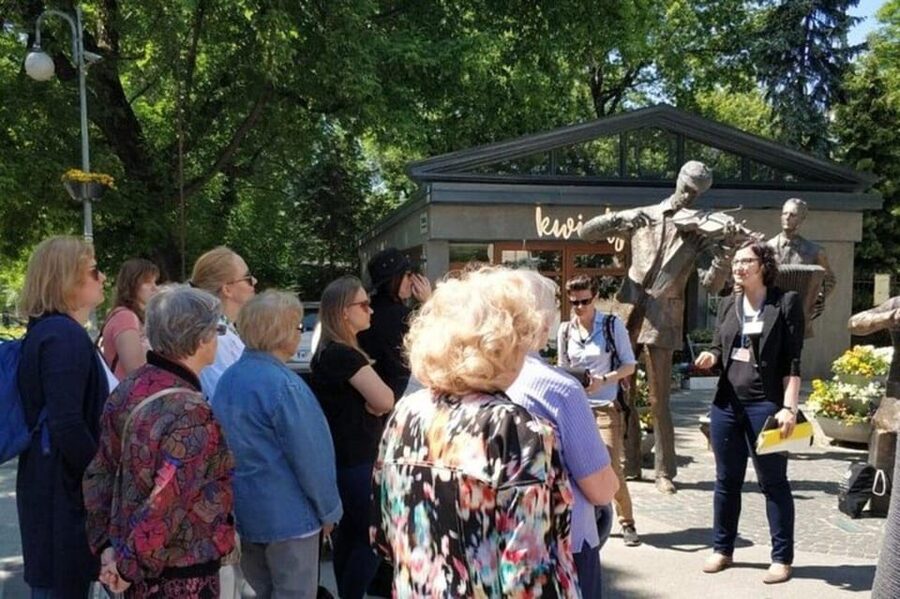
The Pomnik Praskiej Kapeli Podwórkowej, or monument to the Praga courtyard band, receives about ten minutes. This stop adds a more personal and neighborhood-centered note to the route.
The monument points toward the everyday culture of Praga, not just its churches, factories, and street art. It helps explain the district as a place with its own traditions and local character.
I like this kind of stop because it keeps the tour from becoming too grand. Warsaw’s story is not only about national events and famous buildings. It is also about music, social life, and the customs associated with ordinary streets.
The monument may be less instantly impressive than a cathedral or factory, but that is exactly why a guide helps. Without an explanation, you could easily walk past it. With context, it becomes part of the reason Praga feels different from Warsaw’s central tourist zones.
Finishing at St. Florian’s Cathedral
The route ends at the Cathedral of Saint Michael the Archangel and Saint Florian the Martyr. This gives the walk a formal architectural finish after the looser sequence of murals, factory buildings, and neighborhood monuments.
The cathedral is an important landmark on the Praga side of Warsaw. It also creates a useful contrast with St. Mary Magdalene earlier in the route. You see two significant churches connected with different religious traditions, all within one district walk.
Ending here works well because the tour closes with a building that helps gather the earlier themes: faith, identity, history, and the rebuilding of Warsaw. The experience begins in ordinary streets and ends at a major civic and religious landmark.
Again, the listed itinerary describes a guided stop rather than a guaranteed extended interior visit. If seeing the inside is important to you, ask about the day’s access and timing.
What the guide adds to the experience
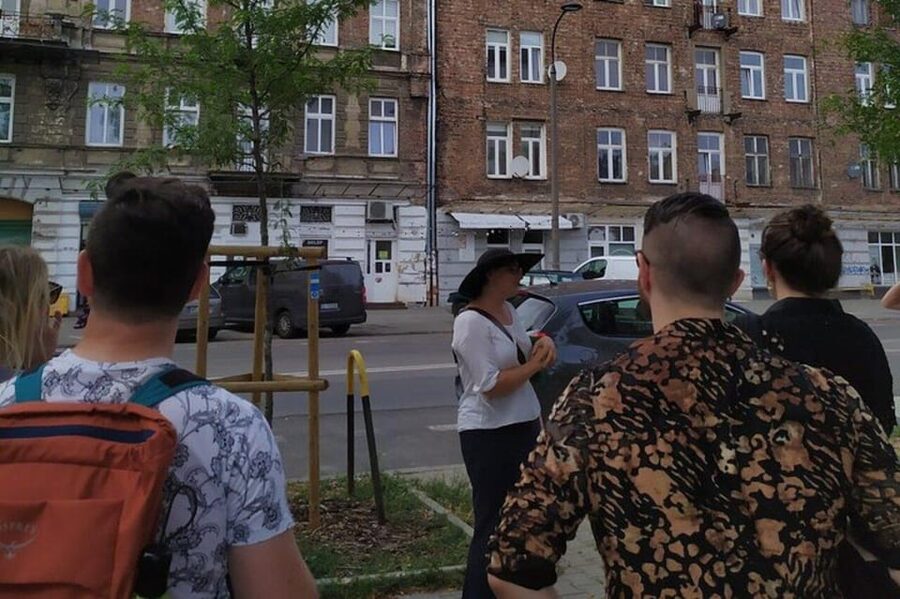
The tour is conducted in English, and the guide is central to its value. Oliwia is specifically praised for making the history of Praga informative and entertaining while answering questions across a wide range of subjects.
That matters here because several stops need interpretation. Murals, a former vodka factory, a courtyard-band monument, and an architectural mystery from postwar Warsaw do not explain themselves. A strong guide turns separate sights into a story about how the city changed and how people adapted.
Oliwia has also led other Warsaw walks covering the historic heart and life behind the Iron Curtain. That makes this tour a good fit if you want to build a wider picture of the city across several walks. Her personal connection to Warsaw adds a local voice, while her fluent English makes the historical detail accessible.
The tour can be arranged privately or in a small group. A private format should suit you if you want to ask many questions or adjust the pace, though the supplied details do not state a separate private-tour price.
Is $32 a fair price for 150 minutes?
At $32 per person, the tour is priced as a guided neighborhood walk rather than a major attraction package. You are paying for about 150 minutes, a route of roughly 3.5 kilometers, an English-speaking guide, visual aids, and practical recommendations for places to eat, drink, and visit afterward.
I think the price makes sense if you value context. You could walk past some of these sites alone for free, but you would miss much of the film background, the story behind the murals, the explanation of Orthodox Warsaw, and the reason Koneser matters.
The value is also stronger if you are tired of repeating the same Old Town circuit in every European capital. This tour gives you a different kind of Warsaw experience, with more attention to local streets and cultural contrasts.
It is less compelling if you want included admissions, a meal, transport, or a long indoor museum visit. Those are not part of the stated package. Think of the fee as paying for access to a guide’s interpretation and route planning.
Practical details for choosing the right day
The walk lasts approximately two and a half hours and covers about 3.5 kilometers. Wear shoes suitable for continuous walking, and allow enough time to move between stops without rushing.
The activity is listed as wheelchair accessible, but it is also not recommended for people who have trouble walking long distances. Those two details can both be true, since accessible participation does not remove the physical demands of a 3.5-kilometer outdoor route. If mobility is a concern, contact the provider before booking and ask whether the route can be adapted.
You receive an information pack before the tour with frequently asked questions, useful links, and additional suggestions. That is helpful if you want to place the walk early in your Warsaw stay and use the guide’s recommendations for the rest of your visit.
Free cancellation is available up to 24 hours before the tour for a full refund, and you can reserve now and pay later. Those options are useful when your Warsaw plans are still changing.
Who should book this Praga walk?
I would choose this tour if you have already seen Warsaw’s central sights or want to see a more unusual side of the city from the start. It suits people interested in street art, film, religious architecture, industrial sites, and local stories rather than only famous monuments.
It is also a good choice for repeat visitors. The route has enough specific material, including the movie locations, Koneser, and the two cathedrals, to feel different from a standard city introduction.
Families and mixed-interest groups may like the variety, though the walking distance deserves attention. People who prefer a slow café stop every few blocks may find the pace more demanding, since the schedule moves through several locations in 150 minutes.
The strongest reason to book is the guide. Oliwia’s personal connection to Warsaw and lively delivery appear to be a major part of why this experience works. A good guide is particularly important in Praga, where many of the best details are easy to miss.
Should you book it?
Book this tour if you want Warsaw beyond the Old Town, with a guide who can connect murals, movie streets, Orthodox traditions, local music, and the old vodka factory into one clear story.
Skip it if you dislike walking, need a long indoor program, or want a tour focused only on grand landmarks. For most visitors with two and a half hours to spare, the $32 cost is a fair trade for a more personal and less predictable look at Warsaw.
FAQ
Where does the Warsaw Praga tour begin?
The tour begins at Strzelecka 46. Look for a guide carrying a white and green umbrella.
Where does the tour finish?
The route finishes at the Cathedral Parish of Saint Michael the Archangel and Saint Florian the Martyr in Warsaw.
How long is the tour?
The tour lasts approximately 150 minutes, or two and a half hours.
How far do you walk?
The route covers approximately 3.5 kilometers.
What language is the tour conducted in?
The tour is conducted in English.
How much does the tour cost?
The listed price is $32 per person.
Is the tour wheelchair accessible?
The activity is listed as wheelchair accessible. It is also not recommended for people who have problems walking long distances, so contact the provider about your specific needs before booking.
Can I book a private tour or small group?
Yes. Private and small-group options are available.
Can I cancel the tour for a refund?
Yes. You can cancel up to 24 hours in advance for a full refund. You can also reserve now and pay later.
Just added in Warsaw
- Warsaw Zoo Skip-the-Line Entry Ticket with Private Transport★ 4.8 · 3 reviews
- Warsaw Private Wilanow Palace & Garden Tour★ 4.6 · 30 reviews
- Warsaw: Vodka Tour★ 4.4 · 18 reviews
- Warsaw Wolf’s Lair with St. Lipka and Mamerki Private Guided★ 4.2 · 3 reviews
- Warsaw Old Town UNESCO HERITAGE walking tour in English★ 4.5 · 23 reviews
- Warsaw: Private Vodka Tasting Night with Snacks and Pickup★ 5.0 · 7 reviews
- Warsaw Uprising and WWII Old Town Walking Tour with Museum★ 4.7 · 15 reviews
- Warsaw: Skip-the-Line Royal Castle Guided Tour★ 4.9 · 79 reviews
Tours in Warsaw, compared.
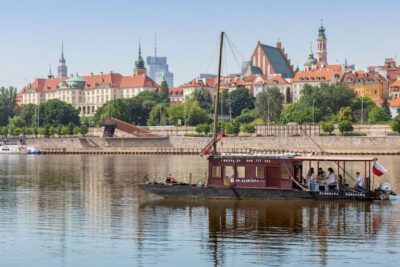
Traditional Galar Cruise on The Vistula River
Read the review →
Warsaw Concert: Chopin – Painted by Candlelights with Wine
Read the review →
POLIN Museum of the History of Polish Jews Ticket
Read the review →
#1 Pub Crawl Warsaw with Optional Premium 1 Hour Open Bar
Read the review →