
Reviewed · WALKING TOURS
Gdańsk City Sights & History Guided Walking Tour in English
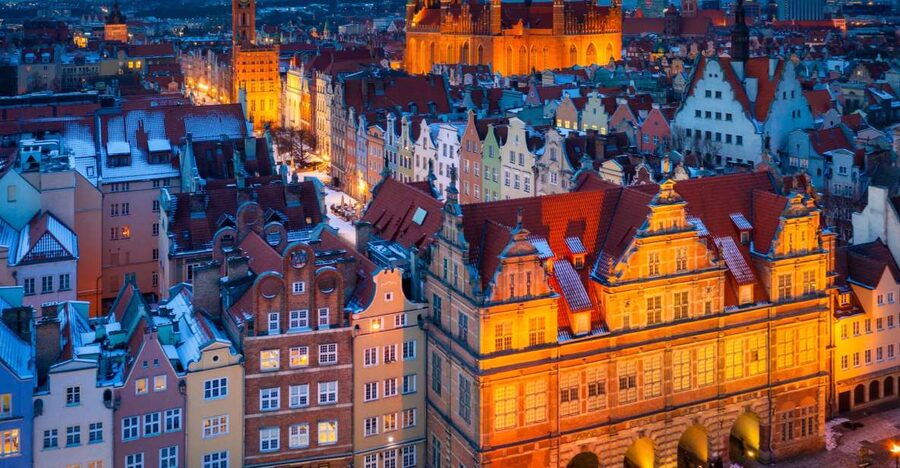
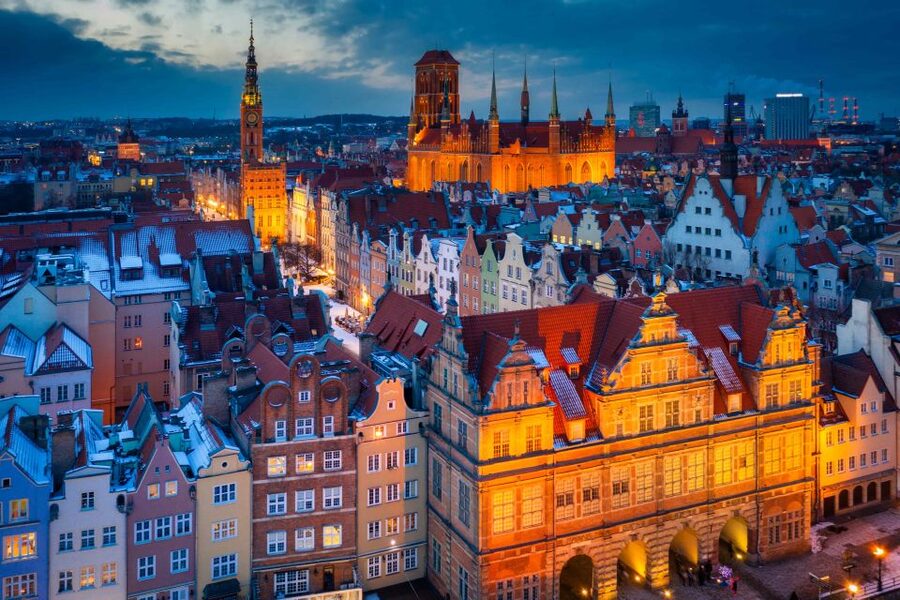
Gdańsk’s prettiest streets carry some of Poland’s hardest stories. This 150-minute walking tour takes you from the Golden Gate through Long Market, past Neptune’s Fountain and St. Mary’s Basilica, then down to the harbor and the great Żuraw crane. Along the way, your guide connects grand merchant houses with WWII, communism, and the Solidarity movement.
I like two things here. First, the route gives you the city’s essential sights without wasting time on transport. Second, the guides bring personality to the past. Tufi, Sandra, Kate, Marcin, Philip, and others are praised for clear English, humor, and a real feel for Gdańsk.
The main drawback is the size of the general group, which can make busy stops harder to manage. The tour also runs rain or shine, and winter in Gdańsk can be fiercely cold, so your coat matters more than your camera.
Key points to know before you book
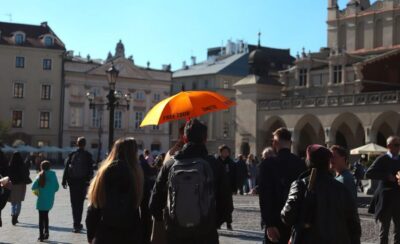
- Golden Gate starting point: Look for the yellow umbrella at Złota Brama, but check which side of the gate your group is using.
- Royal route through the Old Town: You follow streets once used by Poland’s kings, lined with reconstructed merchant houses.
- Strong historical range: The guide covers medieval trade, WWII, the city’s independence struggles, communism, and Solidarity.
- Three major city symbols: You see Neptune’s Fountain, St. Mary’s Basilica, and the medieval Żuraw harbor crane.
- Weather matters: The tour runs in all conditions, though guides have used indoor stops and coffee breaks to help groups warm up.
- Good value at $26: The price covers the reservation and guide payment for the general walking tour, with private options available through the provider.
A royal road through a rebuilt city
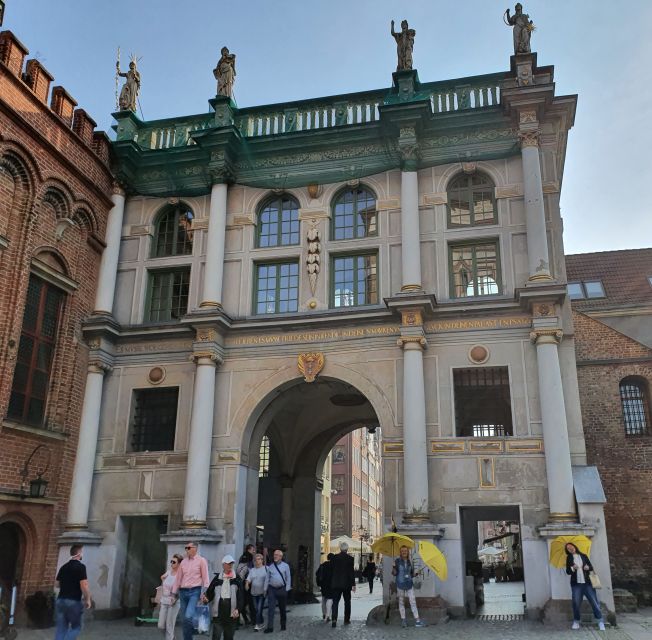
Meet your English-speaking guide at the Golden Gate, or Złota Brama, one of Gdańsk’s best-known entrances. Look for the yellow umbrella. The meeting point is central, but the gate has more than one side, so the clearest practical tip is to arrive a few minutes early and confirm you are with the right group.
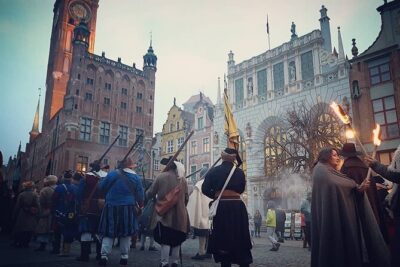
From here, the route follows the old ceremonial way used by Polish kings. That detail gives the walk a useful shape. You are not simply moving from one attraction to another. You are following the spine of the historic center, where power, trade, religion, and civic pride once met.
The first lesson is that Gdańsk has never been only one thing. Polish, German, and Dutch influences appear in its architecture, trade, and political story. The city’s position on the Baltic made it wealthy, contested, and unusually outward-looking.
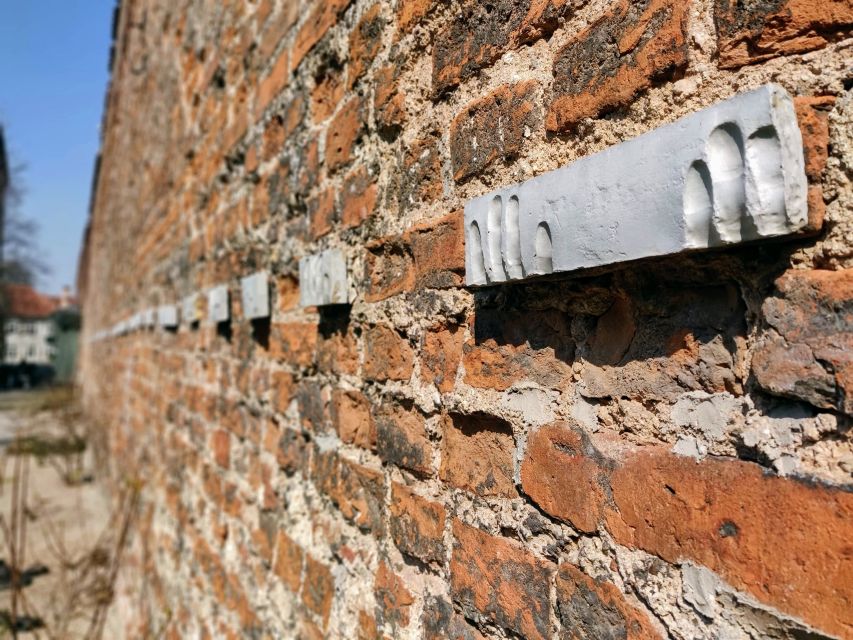
That background helps you read the buildings. The tall, narrow merchant houses are not just colorful scenery. They reflect a city built around commerce, with grand fronts designed to show status and wealth. Much of the historic center was destroyed during World War II, so the streets you see today are the result of painstaking reconstruction.
That can surprise you. Gdańsk’s Old Town looks old, but much of what you see was rebuilt after the war. A good guide helps you understand the difference between surviving fabric and careful restoration without letting the point turn into a dry architecture lecture.
More walking tours in Gdańsk:
- Main Town Gdańsk Walking Tour
★ 5.0 · 644 reviews - Discover Gdansk Walking Tour
★ 5.0 · 495 reviews - Gdańsk: Old Town Private Walking Tour with Legends and Facts
★ 4.9 · 245 reviews
Long Market and Neptune’s Fountain
The walk soon reaches Long Market, or Długi Targ, the broad street and square at the heart of the historic center. This is where Gdańsk’s public life and merchant wealth are easiest to picture. The façades are elaborate, colorful, and tightly packed, creating one of the city’s most memorable views.
Neptune’s Fountain is the obvious focal point. The sea god is a fitting symbol for a port whose fortunes depended on the Baltic. Your guide explains how the fountain fits into Gdańsk’s civic identity, rather than treating it as a quick photo stop.
I like this part of the tour because it gives you a visual introduction to the city before the heavier history arrives. You can admire the details, take photos, and begin to understand why Gdańsk became one of the Baltic’s wealthiest cities.
The trade story also gives context to the city’s later political struggles. Gdańsk was prosperous, strategically placed, and accustomed to negotiating its own interests. Its long push for independence did not begin in the twentieth century. It reaches back through centuries of changing rulers and competing identities.
Your guide may also point out details you could easily miss on your own. Several people have praised guides for showing them smaller features and less obvious spots along the route. That is one reason to take this walk early in your stay, when it can help you plan the rest of your time.
St. Mary’s Basilica and the moving clock
St. Mary’s Basilica is one of the tour’s biggest visual moments. Its brick Gothic construction gives it a different character from the stone churches many people associate with medieval Europe. It is described as the largest brick Gothic church in the world, and its scale is hard to grasp until you are standing beside it.
The guide discusses the basilica’s place in Gdańsk’s religious and civic life, then gives you time to look up at the brickwork and absorb the size of the building. The route does not depend on a long interior visit, so check the day’s timing if entering the church is a priority for you.
A particularly nice touch is the chance to see the figures move on the church clock at noon, when the schedule works out. Guides have timed the route for this moment, and some have used the clock as a small highlight within the larger story. It is a good example of what a live guide adds: timing, local awareness, and a sense of occasion.
The basilica is also where the history can feel less abstract. The building survived the city’s destruction, while much of the surrounding center had to be rebuilt. Looking at its brick walls while hearing about war and reconstruction brings the city’s losses into sharper focus.
The walk is not designed as a detailed church tour. If you want a close look at every chapel, memorial, or tower feature, you will need extra time later. For a first visit, though, it gives you a strong orientation and a reason to return.
The Żuraw crane and Gdańsk’s working harbor
The route continues toward the water, where rivers and canals help explain Gdańsk’s success. The city’s history is tied to shipping, storage, and trade, and the harbor makes that connection visible.
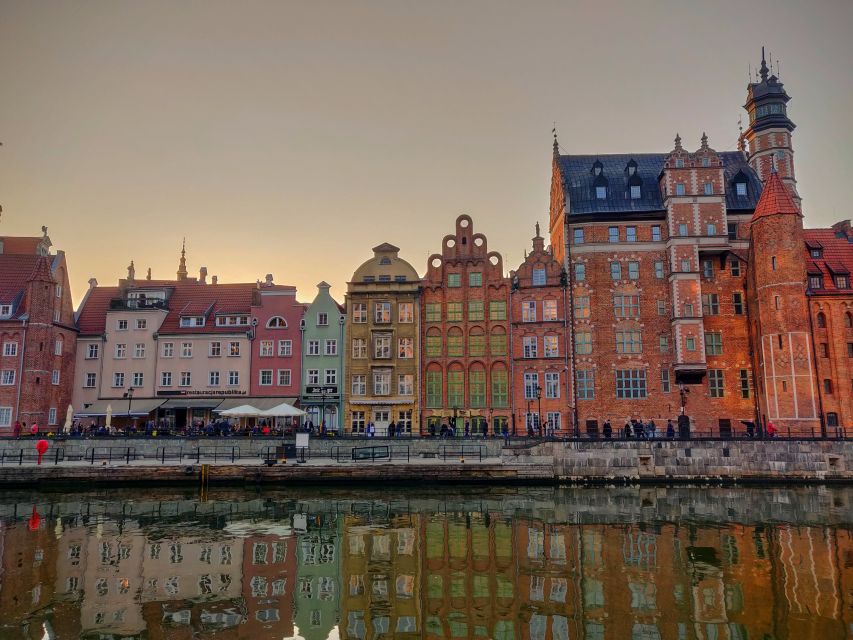
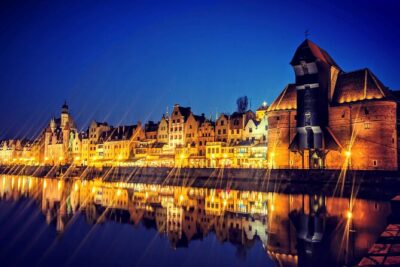
The Żuraw crane is the key stop. This medieval treadwheel crane is one of Gdańsk’s defining symbols and is described as the largest of its kind in the world. Its heavy timber structure looks unlike the polished townhouses behind you. That contrast is useful: Long Market shows the wealth created by trade, while Żuraw shows the machinery that made port commerce possible.
Your guide explains how the crane worked and why it mattered. A treadwheel crane relied on human power inside large wheels, a reminder that preindustrial trade was a physical business. Goods did not move by magic. They were lifted, hauled, stored, and loaded by hand.
The harbor portion is also a welcome change of pace after the decorated streets. You see open water, working routes, and the city’s connection to the Baltic. It is a good place to take photographs, though the waterfront can feel exposed in cold or wet weather.
The tour includes rivers and canals as part of the walk, but it is not a boat trip. If you want a longer harbor experience, you will need to arrange that separately. This tour’s job is to explain why the water shaped Gdańsk, not to provide transport on it.
Same base, a different kind of day:
- Gdansk: City Cruise on Historical Polish Boat
★ 4.8 · 2,913 reviews - Gdańsk: Sunset Cruise on a Historic Polish Boat
★ 4.9 · 977 reviews - Gdansk: Firearm Shooting Experience with Instructor
★ 4.8 · 866 reviews - Gdansk: Guided Round-Trip Cruise to Westerplatte
★ 4.3 · 865 reviews
WWII, the post office, and a city caught in conflict
The most serious part of the walk concerns World War II. Gdańsk, then known internationally as Danzig, was at the center of the tensions that helped trigger the war. Your guide explains how the conflict began in and around the city, giving the grand political story a local setting.
The subject can be painful, but it is essential. Gdańsk’s handsome reconstruction means you could easily focus only on the façades and miss the violence that reshaped the city. The tour makes that history part of the streets rather than leaving it to a museum visit.
The battle connected with the Polish Post Office is one especially powerful episode. Guides have used it to explain the courage, danger, and human cost behind the opening days of the war. This is the kind of story that gives a face to a date in a textbook.
The route does not turn into a full WWII tour, and that is both a strength and a limit. You get a clear account of the city’s wartime role within a wider Gdańsk introduction. If your main reason for visiting is military history, plan a separate visit to the relevant museums and memorial sites.
Still, the balance works well for most people. You see the city’s beauty, then learn why so much of it is reconstructed. The past is not treated as a decoration. It explains what you are looking at.
From postwar control to Solidarity
The tour then moves into the postwar period and the communist era. Gdańsk’s story did not end with rebuilding. The city became a major center of opposition to communist rule, and its workers helped shape events far beyond Poland.
Your guide explains the Solidarity movement and its role in the eventual fall of communism in the Eastern Bloc. This part is especially valuable because it links the city’s older demand for self-rule with a modern political movement. Gdańsk’s push for independence was not one isolated chapter. It kept returning in new forms.
The best guides make this material easy to follow by telling it as a sequence of local choices, conflicts, and consequences. Kate has been praised for making centuries of history clear within a few hours, while Tufi is often singled out for energetic storytelling and personal touches. Sandra, Marcin, Philip, and Paul have also been praised for combining facts with humor and a strong sense of place.
You should not expect a university lecture. The tone is conversational, and questions are welcome. That matters when the subject covers several centuries in one afternoon. A guide who can explain a complex political shift in plain English is worth far more than a long list of dates.
The amount of information can feel heavy at times. One guide may give you more detail than you can retain, especially near the end of the walk. I suggest noting the names of places that interest you and returning later, rather than trying to remember every fact.
Pace, group size, and cold-weather planning
The tour lasts two and a half hours, which is long enough to cover the main center without feeling like a rushed photo circuit. The pace is generally relaxed, with time for questions and pictures.
You should still expect a real walking tour. Wear comfortable shoes and weather-appropriate clothing. The tour runs in rain, snow, and cold. Several winter groups dealt with freezing temperatures, including severe wind chill, and the guides adapted with indoor explanations, coffee breaks, or a short stop for mulled wine and coffee.
That flexibility is important. A guide who keeps talking outdoors in bad weather may technically complete the route but make the experience miserable. The strongest guides have brought groups inside for part of the commentary and timed stops carefully. One group even had a pause to warm up before continuing.
Summer brings a different issue: crowding. The general group can become large, and a big cluster is harder to hear and manage at popular sights. If you prefer a quieter walk or want to set the pace, ask about a smaller private tour after booking.
The tour is wheelchair accessible, according to the activity information. Because it covers public streets and busy historic areas, it is still sensible to confirm any specific mobility needs before you go.
The $26 question: what value do you get?
At $26 per person, this is a strong-value introduction to Gdańsk. You get 150 minutes with a live English-speaking guide, a route through the city’s major sights, and historical context that would take far longer to assemble on your own.
The value is not only the number of landmarks. It is the connection between them. Neptune’s Fountain makes more sense after you understand Baltic trade. The merchant houses make more sense after you learn about wartime destruction. The Żuraw crane makes more sense after you see how the harbor supported the city’s wealth.
The price covers the reservation fee and the guide’s payment for the general walking tour. That point is worth understanding before you arrive, since the format may resemble a free walking tour to someone who has not read the booking details. If you want a smaller private experience, contact the provider after booking to arrange it.
Hotel pickup and drop-off are not included. That is no problem for most people staying near the center, since the meeting point is at the Golden Gate, but you need to make your own way there.
Free cancellation is available up to 24 hours before the start, and you can reserve now and pay later. Those terms are useful if your plans around Gdańsk are still shifting.
Who should take this Gdańsk walk?
I would choose this tour for a first visit, especially if you want the city to make sense before exploring it independently. It is also a good fit for anyone who likes architecture but wants more than pretty façades.
History-minded visitors will get the most from the WWII and Solidarity sections. The tour also suits families and mixed-age groups because the guide can adjust the explanation, answer questions, and add humor.
It is less ideal if you dislike group tours, need a very slow pace, or want detailed access inside every major building. The general format is social and sometimes large. For a more personal experience, ask about a private option.
Try to book it near the start of your stay. You will leave with a mental map of Long Market, St. Mary’s Basilica, the harbor, and the surrounding streets. You will also have restaurant and sightseeing suggestions from a guide who knows how visitors actually use their time in Gdańsk.
Should you book the Gdańsk City Sights and History Walking Tour?
Yes, for most first-time visitors. At $26, the tour gives you the city’s essential sights and the political story that makes them meaningful. Its strongest feature is the quality of the guiding: names such as Kate, Tufi, Sandra, Marcin, Philip, and Paul come up often for good reason, with clear English, humor, strong local feeling, and the ability to explain difficult history without losing the group.
Book it if you want a well-shaped introduction and do not mind walking in a general group. Bring warm or rainproof clothing, arrive at the Golden Gate early, and remember that the yellow umbrella is your marker. Skip it only if you prefer exploring alone or already have a detailed plan for Gdańsk’s historic center.
FAQ
Where does the walking tour begin?
The meeting point is the Golden Gate, or Złota Brama, in Gdańsk. Look for a yellow umbrella.
How long does the tour last?
The tour lasts 150 minutes, or two and a half hours.
What language is the tour in?
The live tour is conducted in English.
What sights are included?
The route includes Long Market, Neptune’s Fountain, St. Mary’s Basilica, the Żuraw treadwheel crane, Gdańsk’s rivers and canals, and historic areas connected with WWII and Solidarity.
Is hotel pickup included?
No. Hotel pickup and drop-off are not included.
Is the tour wheelchair accessible?
Yes. The activity is listed as wheelchair accessible.
Does the tour run in bad weather?
Yes. The tour takes place rain or shine, so bring clothing suited to the forecast.
What does the $26 price cover?
The price covers the walking tour, reservation fee, and guide’s payment for the general group tour.
Can I book a private tour?
Yes. If you prefer a smaller private tour, contact the provider after booking to arrange it.
Can I cancel for a refund?
Yes. You can cancel up to 24 hours in advance for a full refund. You can also reserve now and pay later.
Just added in Gdańsk
- Gdansk Sopot and Gdynia 3 Cities Private Full-Day Tour★ 5.0 · 56 reviews
- Highlights of Gdańsk, Gdynia and Sopot 1-day Private Tour★ 4.9 · 59 reviews
- Gdansk Traditional Food Tour with Old Town Sightseeing★ 4.5 · 27 reviews
- Gdansk: 4-Hour Polish Food Tour★ 4.9 · 35 reviews
- Gdansk Private Bike Tour★ 5.0 · 36 reviews
- Delicious Gdańsk Food Tour in Poland★ 4.5 · 59 reviews
- Gdansk: Legendary Burger and Zywiec Beer at Hard Rock Cafe★ 4.2 · 32 reviews
- Malbork Castle Tour from Gdansk★ 4.5 · 52 reviews
Walking Tours, compared.
Browse the lists this tour appears in