
Reviewed · OLD TOWN TOURS
Gdańsk: Old Town Private Walking Tour with Legends and Facts
Gdańsk’s story is unusually packed into a walkable center: medieval merchants, seafaring trade, wartime destruction, and the Solidarity movement that helped bring down communist rule in Poland. This private tour connects those chapters with a licensed guide, rather than leaving you to decode the city’s grand façades on your own.
I like the flexible route choices, from a focused two-hour introduction to a six-hour history-heavy walk. I also like the personal touch: guides such as Kaja, Krzysztof, Gabriella, and Weronika have been praised for clear explanations, local tips, and adjusting the walk to suit a group’s interests.
The main drawback is the price, about $107 per person. That is a serious spend for a walking tour, especially for a couple or family, and the shorter options do not include the European Solidarity Centre. You pay for a private guide, not simply a checklist of sights.
Key points at a glance
- St. Mary’s Basilica: Enter one of the world’s largest brick churches and see its grand interior, organ, altar, and royal chapel.
- A classic Royal Route: Walk from Upland Gate through Golden Gate, Długa Street, Long Market, and Green Gate.
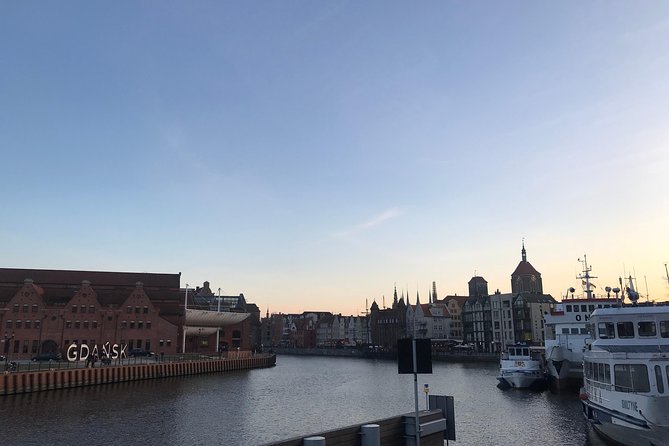
- Motława River islands: The three-hour route adds Wyspa Spichrzów and Ołowianka, including the red-brick Baltic Symphony Hall.
- St. Bridget’s amber altar: The four-hour option adds a church tied to the Solidarity movement and its striking regional amber artwork.
- Solidarity in context: The six-hour route reaches the shipyard memorial and European Solidarity Centre with a skip-the-line ticket.
- Private, multilingual guiding: Choose from English, Polish, German, French, Spanish, Italian, Russian, Norwegian, or Swedish.
Starting beneath Gdańsk’s High Gate

The walk begins at the tourist information sign beneath the High Gate, or Brama Wyżynna, at Wały Jagiellońskie 2A. It is about eight minutes from Gdańsk’s Main Railway Station, so the meeting point is practical if you have just arrived by train.
If you stay within about 1.5 kilometers of the meeting point in Gdańsk Old Town, pickup at your accommodation can be arranged. Give the accommodation address when booking if you want this option. Otherwise, go directly to the High Gate.
The route begins at a useful place to get your bearings. Gdańsk can feel confusing at first because the areas called Old Town and Main Town are not always used in the same way by visitors and tour companies. Your guide can explain the city’s layout as you move through it, which is more useful than staring at a map.
Check your email the day before for final meeting information. The activity is wheelchair accessible, though a private walking tour naturally involves time on city streets and historic areas.
More old town tours in Gdańsk:
- Gdańsk: Sightseeing EcoCruise around the Old Town of Gdansk
★ 4.6 · 719 reviews - Gdansk Old Town 2-Hour Walking Tour
★ 4.5 · 94 reviews - Gdansk Traditional Food Tour with Old Town Sightseeing
★ 4.5 · 27 reviews
From Upland Gate to Long Market
The first part follows Gdańsk’s ceremonial route through some of the city’s most recognizable architecture. From Upland Gate, you continue toward the Golden Gate and then along Długa Street toward Long Market.
This is the postcard side of Gdańsk, but the guided explanation gives the façades more meaning. Look for the tall, narrow townhouses with decorative fronts, each reflecting the city’s trading wealth and changing political influences. The route is easy to enjoy without a guide, yet the details can pass quickly if you do not know where to look.
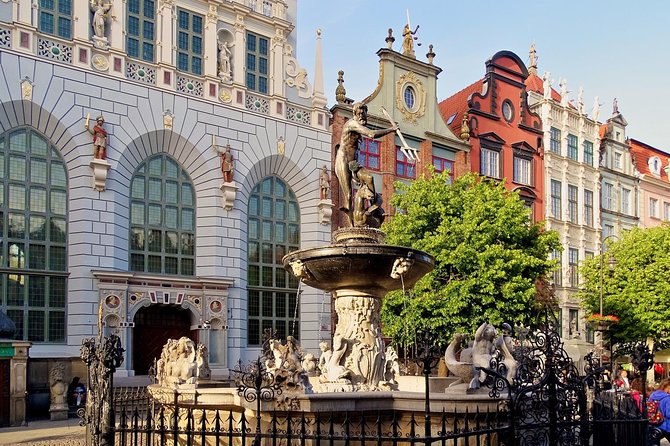
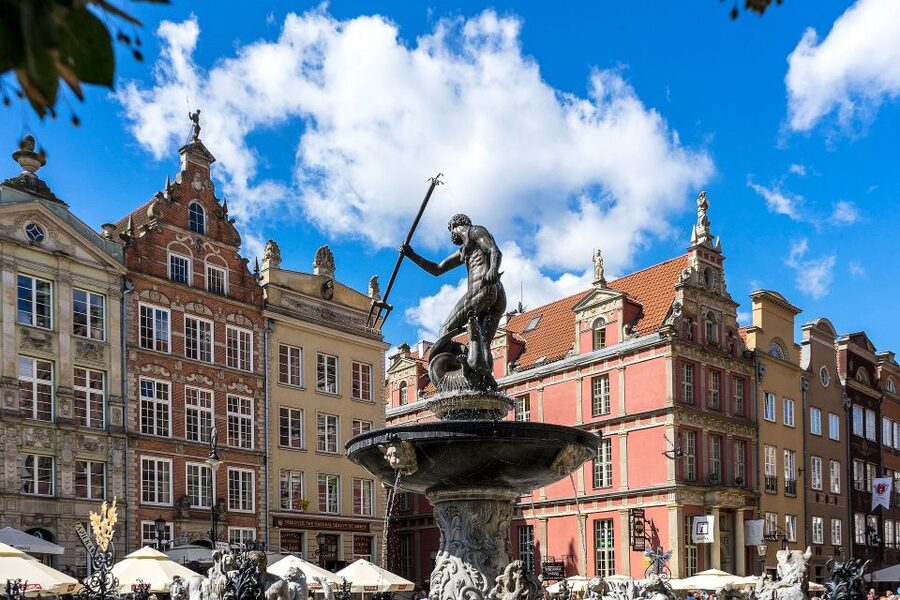
At Long Market, Gdańsk’s visual drama reaches its peak. You see the Town Hall, the Golden House, and Neptune’s Fountain, a 17th-century landmark that has become one of the city’s best-known symbols.
The guide’s role here is not just to name buildings. You can ask how merchants used this part of town, why the façades look so varied, and which legends belong to local tradition. The tour promises both facts and legends, so this section should appeal to families and first-time visitors who want history without a dry lecture.
Artus Court and the merchant city
Artus Court, or Dwór Artusa, was once a meeting place for Gdańsk’s merchants. Today it operates as a branch of the Gdańsk History Museum, with local history and art collections.
This stop helps explain why Gdańsk grew so wealthy. The city was not simply a pretty port. Its public buildings and merchant halls show how trade shaped civic life and how much importance the city placed on status, ceremony, and business.
Depending on timing and the selected route, the visit focuses on the exterior or includes the relevant accessible areas described for the tour. Ask your guide how much interior time is planned if Artus Court is a priority for you. The published tour specifically includes sightseeing at the major landmarks, while the included church entry is clearer and more consistent.
Neptune’s Fountain is close by, making this a natural place to pause for photographs. It can be one of the busier parts of the route, so a private guide is useful when you want to stop briefly without losing the thread of the walk.
Green Gate and the Motława River
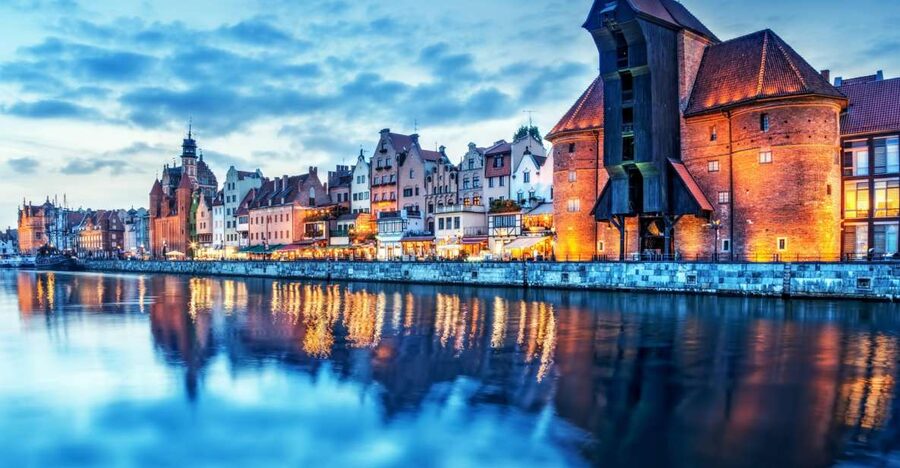
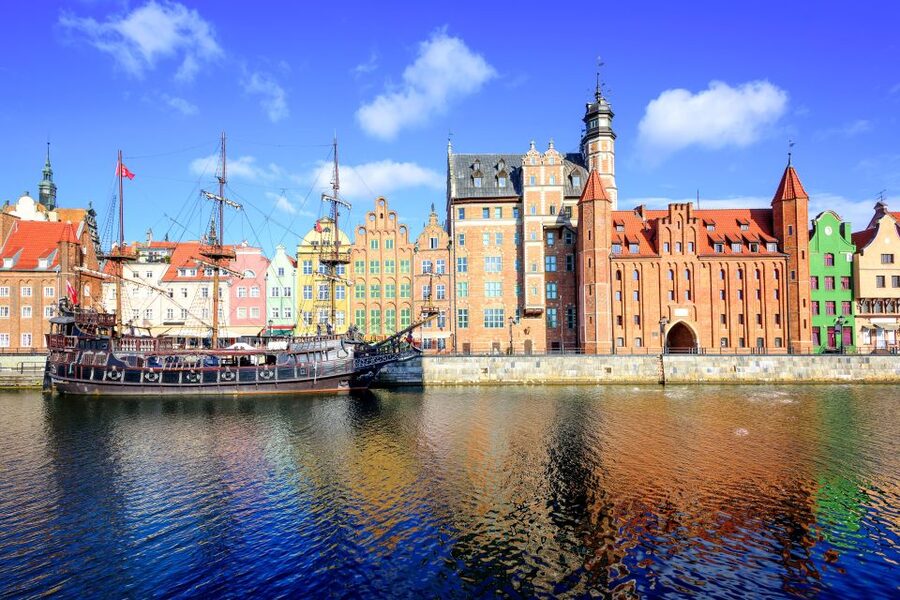
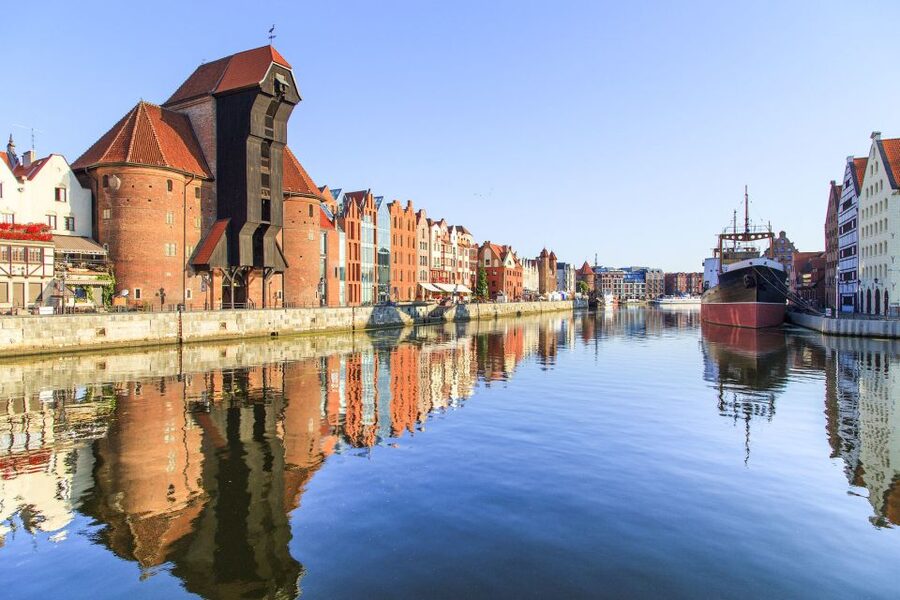
The route continues to Green Gate, where you get a scenic view toward the Motława River. This is where Gdańsk’s identity as a port city becomes easier to picture.
The riverfront gives you a change of pace after the formal streets of Długa and Long Market. You can see how water, warehouses, bridges, and merchant routes shaped the city. Your guide may also point out places worth returning to later for food, drinks, or photographs.
The two-hour route ends at the Great Armoury, a fine example of Renaissance architecture. This is a sensible endpoint for a short introduction because you have covered the principal ceremonial center without rushing through every side street.
Choose two hours if you have a tight schedule, a short stop in Gdańsk, or want practical orientation before exploring independently. You also receive tips about local restaurants, pubs, and souvenir shops, which can make the tour useful beyond its final stop.
More walking tours in Gdańsk:
- Gdańsk City Sights & History Guided Walking Tour in English
★ 4.8 · 876 reviews - Main Town Gdańsk Walking Tour
★ 5.0 · 644 reviews - Discover Gdansk Walking Tour
★ 5.0 · 495 reviews
Inside St. Mary’s Basilica
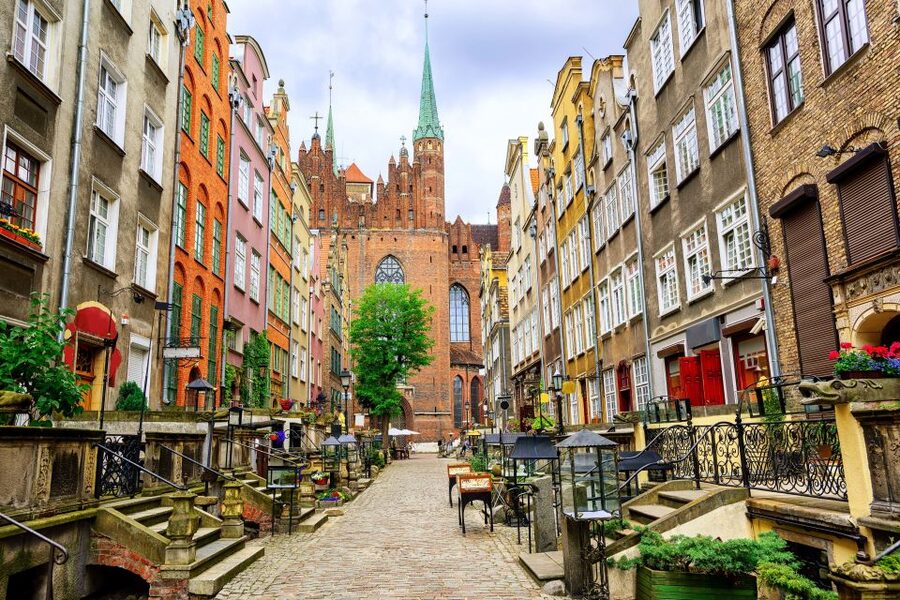
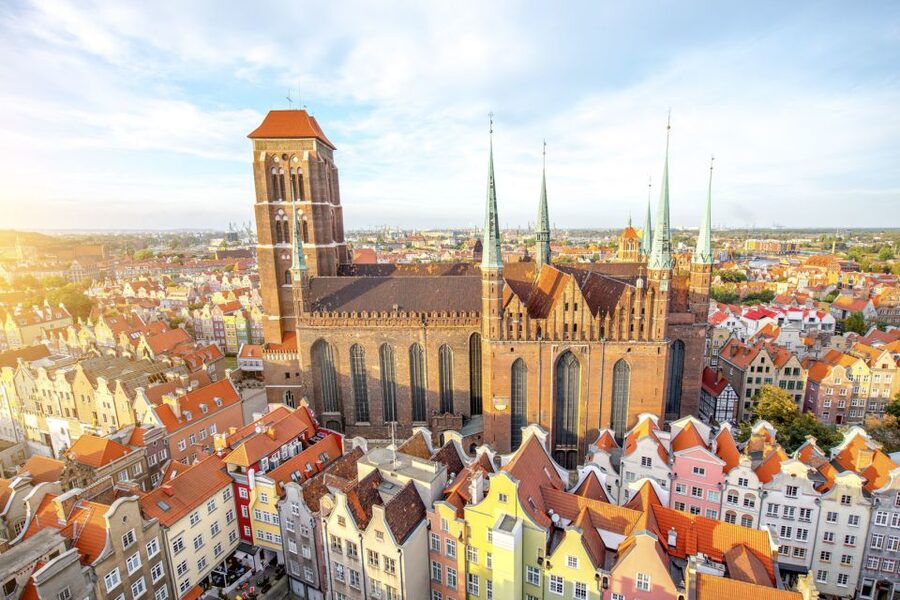
St. Mary’s Basilica is one of the strongest parts of the walk. The soaring brick church is among the largest brick churches in the world, and its scale changes the mood of the tour.
Inside, you can see the grand hall church, ornate altar, organ set, and royal chapel. Entry to the free parts of the church is included on all tour options, so even the two-hour version has an important interior visit rather than only an outside look.
I would pay attention to the contrast between the exterior’s severe brick mass and the interior’s devotional details. Your guide can explain what you are seeing and place the church within Gdańsk’s religious and civic story.
Because this is an active church, the atmosphere may be quieter and more restrained than the open squares outside. Keep that in mind if your group prefers a fast pace. For many visitors, though, the church is the point where the city’s architecture becomes more than scenery.
The three-hour route across Motława’s islands
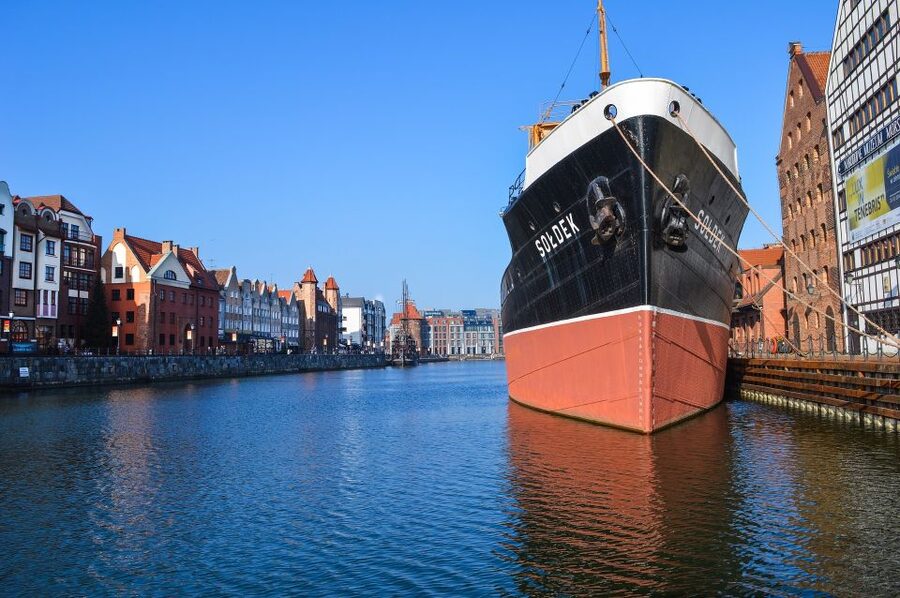
Add the three-hour option if you want more than the central route but do not need the full political history program. This version extends to the Motława River islands, including Wyspa Spichrzów and Ołowianka.
Wyspa Spichrzów, once associated with storage and trade, now combines redeveloped areas with old brick structures and warehouse ruins. The contrast is valuable. You see both the remains of Gdańsk’s commercial past and the way former industrial spaces are being brought back into city life.
Ołowianka adds another riverside perspective. The red-brick Baltic Symphony Hall is one of the island’s key sights and gives the route a cultural finish beyond the medieval center.
This option is a good middle ground for people who want more local context and a longer walk, but who are not primarily visiting Gdańsk for 20th-century political history. The added hour also gives your guide more room to answer questions and suggest places to explore later.
St. Bridget’s Church and the amber altar
The four-hour version adds St. Bridget’s Church, one of the more unusual stops on the tour. Its importance is tied not only to religious art but also to the Solidarity movement.
During martial law, the church served as a sanctuary for Solidarity leaders. One of its large doors shows scenes connected with the August 1980 events through the imposition of martial law in December 1981.
That visual record gives you a direct way into a complicated period. Instead of hearing only dates and political names, you can study the scenes represented on the door and ask your guide about their meaning.
The church also contains religious objects and a remarkable amber altar. Amber is strongly associated with the Baltic region, so this is a particularly Gdańsk way to connect local material culture with religious craftsmanship.
The four-hour route makes sense if you like architecture and politics in equal measure. It does require more walking and more concentration, so it may feel too detailed if you simply want an introductory city stroll.
The six-hour route and Gdańsk’s Solidarity story
The six-hour option adds the part of Gdańsk most important to understanding modern Poland. The route extends from the historic center toward the Main Town and shipyard area.
You visit the Monument to the Fallen Shipyard Workers of 1970. It commemorates workers killed during anti-communist riots and provides a sober counterpoint to the decorative streets of the center.
The European Solidarity Centre then gives the movement a full setting. Its exhibits explain the Solidarity protests and the trade union movement that helped begin the end of communist government in Poland. A skip-the-line ticket is included with the six-hour route.
If you care about European political history, this is the option I would choose. The museum adds structure to the story, while the outdoor monument and older churches show how those events connect to real places in Gdańsk.
The tradeoff is time. Six hours on foot is a substantial commitment, and the full program covers several different periods. You will get more from it if you have already read a little about Solidarity or are willing to ask questions along the way.
What the private format adds
A private tour gives you more control than a large group walk. You can ask for extra time at a church, move faster through a stop that does not interest you, or ask for suggestions based on your plans for the rest of the day.
One particularly useful feature is the chance to adjust the walk after the guide understands your interests. If you care about architecture, local traditions, food, or modern politics, say so early. Guides such as Kaja have been described as warm, clear, and willing to adapt, while Krzysztof has been praised for answering questions fully and never making the group feel rushed.
The guide is a licensed Gdańsk professional and can lead in nine languages: English, Polish, German, French, Spanish, Italian, Russian, Norwegian, or Swedish. Language availability depends on the selected booking, so choose carefully.
A private tour also works well for families. A guide such as Gabriella has been praised for involving children in the explanations rather than speaking only to adults. Legends, fountains, doors, and unusual buildings give younger visitors things to look for during the walk.
Is $107 per person good value?
At around $107 per person, this is not the cheapest way to see Gdańsk. The value improves when you are traveling as a small private group and want a tailored explanation rather than a basic orientation.
The price includes a private walking tour, a licensed guide, entry to the free parts of St. Mary’s Church, and, on longer routes, the specified church and museum tickets. The six-hour version includes a skip-the-line ticket to the European Solidarity Centre, which makes the higher price easier to justify for history-focused visitors.
For a solo traveler, the cost may feel steep. For a family or group that would otherwise book several separate activities, private guiding can be more reasonable, especially if you use the restaurant and pub advice afterward.
Think of the options as different tours, not merely different lengths:
- Two hours for the core center and first-day orientation.
- Three hours for the center plus Motława islands.
- Four hours for the islands, St. Bridget’s Church, and the amber altar.
- Six hours for the full route and Solidarity Centre.
Free cancellation up to 24 hours before the start and reserve-now, pay-later booking make the arrangement more flexible. Still, read the final email carefully, particularly if you expect pickup from your accommodation.
Who should book this Gdańsk walk?
I would choose this tour if you want a guide who can connect medieval trade, church art, port life, and Poland’s communist past in one continuous experience.
The two-hour route suits first-time visitors, cruise-style stopovers, and anyone who wants a clear introduction before exploring alone. The three-hour option is better if the Motława waterfront matters to you.
Choose four hours for a fuller Old Town experience with St. Bridget’s Church and the amber altar. Choose six hours if the Solidarity movement is one of your main reasons for visiting Gdańsk.
You should think twice if you dislike long walks, prefer to explore entirely on your own, or only want quick photographs of the main square. The tour gives you stories and context, so it works best when you want to understand why the city looks and feels the way it does.
Should you book it?
Yes, if you value a private guide, clear historical explanation, and the freedom to shape the pace. I especially recommend the six-hour version for anyone interested in Poland’s modern history, and the four-hour version for a strong balance of architecture, local material culture, and Solidarity connections.
If your time is limited, book the two-hour walk without feeling that you have missed everything. It covers the essential central route, St. Mary’s Basilica, river views, and useful local advice.
The tour’s greatest strength is its human scale. Gdańsk is easy to photograph but harder to read. A good guide helps you see the merchant city, church city, port city, and Solidarity city as parts of one place.
FAQ
Where does the tour meet?
The meeting point is in front of the tourist information sign under the High Gate, Brama Wyżynna, at Wały Jagiellońskie 2A, 80-887 Gdańsk. It is about eight minutes from the Main Railway Station.
Is accommodation pickup available?
Pickup is available from accommodation in Gdańsk Old Town within about 1.5 kilometers of the meeting point. Provide your accommodation address when booking. If it falls outside that area, the itinerary may be changed accordingly.
How long does the walking tour last?
You can choose a two, three, four, or six-hour option. Starting times depend on availability.
Which languages are available?
The tour can be conducted in Spanish, French, Italian, English, German, Polish, Russian, Norwegian, or Swedish. Select the desired language when booking.
What is included on every tour?
Every option includes a private walking tour of Gdańsk Old Town, a licensed guide, and entry to the free parts of St. Mary’s Church.
Is St. Bridget’s Church included?
St. Bridget’s Church is included in the four-hour and six-hour options. These routes include regular entry tickets.
Is the European Solidarity Centre included?
It is included in the six-hour option, which also provides a skip-the-line ticket.
Is the tour wheelchair accessible?
Yes, the activity is listed as wheelchair accessible.
Can I cancel the booking?
You can cancel up to 24 hours in advance for a full refund. Reserve-now, pay-later booking is also available.
Just added in Gdańsk
- Gdansk Sopot and Gdynia 3 Cities Private Full-Day Tour★ 5.0 · 56 reviews
- Highlights of Gdańsk, Gdynia and Sopot 1-day Private Tour★ 4.9 · 59 reviews
- Gdansk Highlights Bicycle Tour★ 5.0 · 65 reviews
- Gdansk Traditional Food Tour with Old Town Sightseeing★ 4.5 · 27 reviews
- Gdansk: 4-Hour Polish Food Tour★ 4.9 · 35 reviews
- Gdansk Private Bike Tour★ 5.0 · 36 reviews
- Delicious Gdańsk Food Tour in Poland★ 4.5 · 59 reviews
- Gdansk: Legendary Burger and Zywiec Beer at Hard Rock Cafe★ 4.2 · 32 reviews
Old Town Tours, compared.
Bike Tour of Old Town, Jewish Quarter and the Ghetto
Read the review →


Sightseeing EcoCruise around the Old Town of Gdansk
Read the review →
Browse the lists this tour appears in