
Reviewed · NOWA HUTA & COMMUNISM TOURS
From Krakow: Nowa Huta Premium Tour
Nowa Huta was built as Poland’s model socialist city, but its most revealing story is not found in a textbook. It is written in the broad Central Square, the planned housing blocks, the steelworks offices, the bunker-like tunnel, and the church that residents fought to build. This tour gives you a useful second view of Krakow, far from the usual Old Town route.
I like the local English-speaking guide and the mix of outdoor sights with indoor stops. The tunnel adds a genuine sense of discovery, while the Lord’s Ark Church shows how daily life did not fit neatly into the Communist plan. The main drawback is the price, $111 per person, for a tour with about three hours of sightseeing and two hours of driving.
Key points
- Central Square and Avenue of Roses: See the planned heart of Nowa Huta and learn how the district developed from 1949 to 1989.
- Steelworks offices: Enter part of Tadeusz Sendzimir Steelworks, a major reason the district was built.
- Underground tunnel: Visit a concealed bunker-like space that gives the Communist era a more personal, physical feel.
- Lord’s Ark Church: See the first church built in Nowa Huta and the clash between official ideology and local religious life.
- Soviet IS-2 tanks: Finish with an unmistakable military reminder outside the Museum of the Armed Act.
- Hotel pickup and included admissions: Transport, tickets, insurance, and an English-speaking guide are included, but food is not.
Why Nowa Huta changes your view of Krakow
Most first visits to Krakow focus on the medieval center, Wawel Castle, and the old Jewish quarter. Nowa Huta offers a different Poland. It is Krakow’s largest district, planned and built from the late 1940s through 1989 as a socialist ideal city tied to heavy industry.
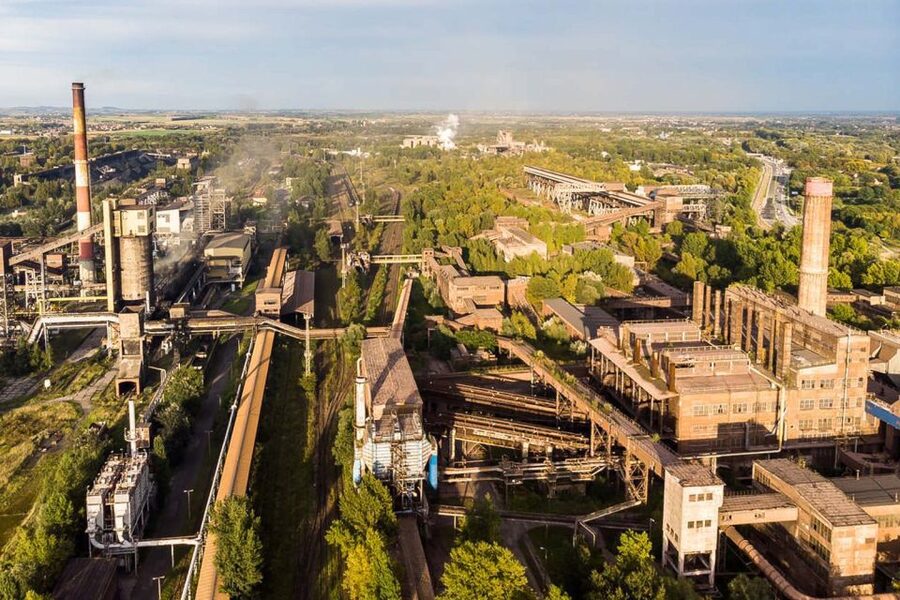
That idea shaped everything around you. Streets and public spaces were laid out on a grand scale. Housing was planned for workers. The steelworks was not simply a factory on the edge of town. It was the economic engine behind the district and a central part of its identity.
I find this kind of visit useful because it replaces a simple picture of Communist Poland with something more human. You see official planning, industrial power, ordinary housing, religion, military symbols, and the way a planned city changed after the political system changed.
The tour does not ask you to admire the old system. It helps you understand what it tried to build, why Nowa Huta mattered, and what remains today. If you want only pretty streets and famous monuments, this may not be your best half-day. If you like history that is still visible in the streets, it is a strong choice.
Other communist-era tours around Kraków:
- Krakow: Nowa Huta Guided Tour in Vintage Car
★ 4.9 · 277 reviews - Legendary Private Nowa Huta Communism Tour with Crazy Guides
★ 5.0 · 262 reviews - Nowa Huta: Steelworks Administration Buildings/Shelters Tour
★ 4.9 · 160 reviews
The ride from Krakow to Central Square
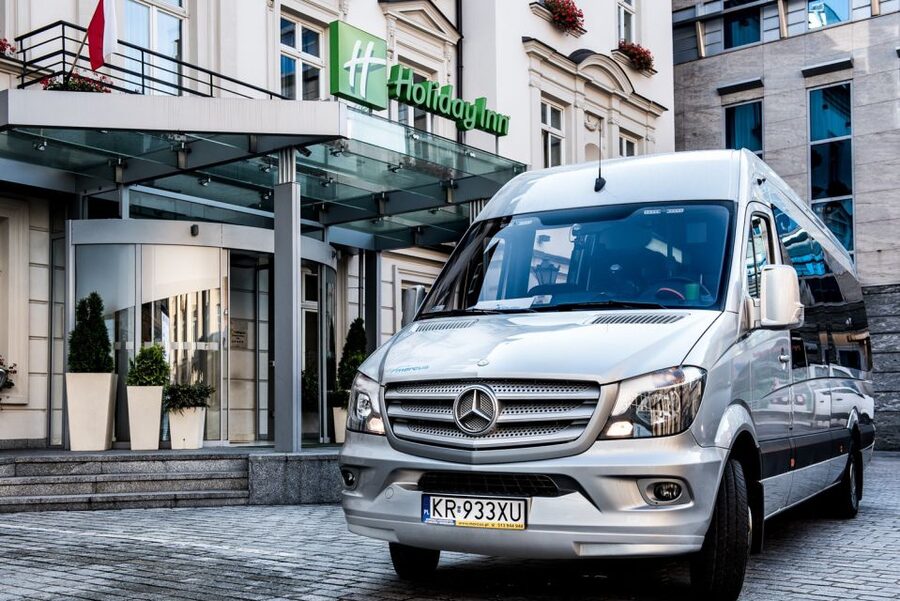
The day begins with pickup outside your hotel or accommodation at the time shown on your final confirmation. The published route also gives Pawia 3 as the pickup and return point, so check the confirmation carefully if you are not being collected directly at your accommodation.
The ride to Nowa Huta takes about 30 minutes in a comfortable car. That transfer matters more than it may seem. Nowa Huta is not a quick walk from Krakow’s central sights, and arranging transport yourself would add time and planning to a district that is easier to understand with a guide.
The full activity lasts five hours, but the guided sightseeing is listed at roughly three hours. About an hour is spent in the vehicle, including the return journey, with another short transfer between Central Square and the main Nowa Huta stops. Think of this as a focused half-day outing, not a full-day industrial archaeology expedition.
Food is not included, so eat before departure or plan around the tour. Large bags and luggage are not allowed, and comfortable shoes are important. You will be walking outside and moving through historic buildings and an underground space.
Central Square, the planned heart of Nowa Huta
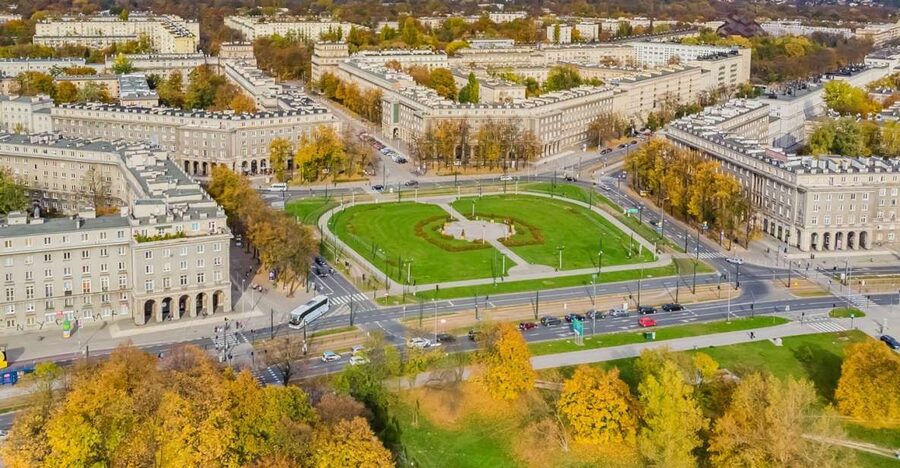
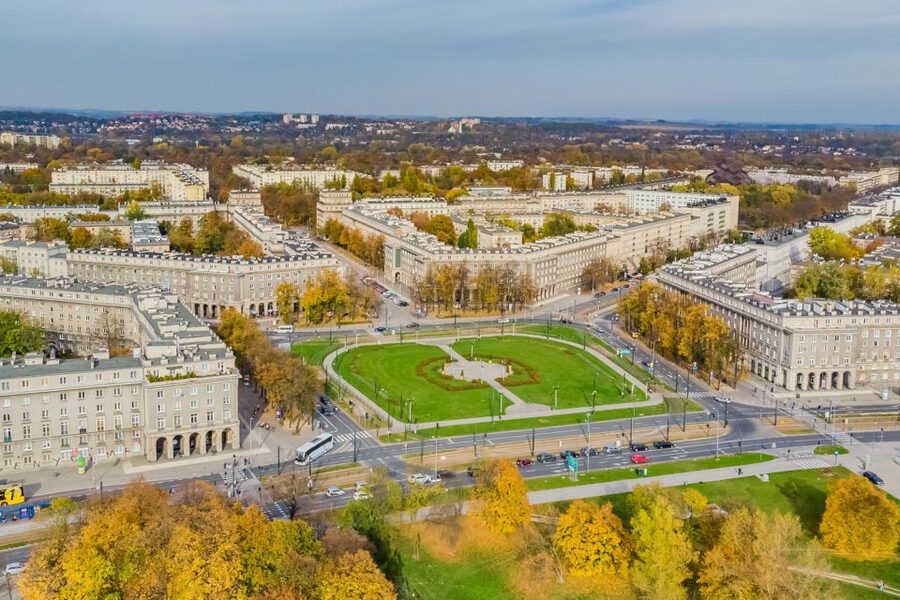
Your first major stop is Central Square, the symbolic center of Nowa Huta. Allow about 30 minutes here with the guide. The broad open space helps you understand the scale of the original plan better than a photograph can.
This is where the guide begins explaining how the district developed between 1949 and 1989. You will hear about the intended socialist city and the way its public spaces, housing areas, and industrial purpose fit together.
The value of Central Square is context. Without it, the later stops might seem like a collection of unrelated Communist-era buildings. With it, you can read Nowa Huta as a complete project, one meant to serve workers and express the ideals of the period.
Do not expect a polished historic center. Nowa Huta is interesting precisely because it feels like a working district rather than a preserved monument. The architecture is part of the lesson. Its scale can feel imposing, and some visitors may find it less immediately charming than Krakow’s old streets.
That is also why a guide matters here. A short walk around the square alone would show you buildings, but not necessarily explain why this particular place was created or how its role changed.
Avenue of Roses and the architecture of an ideal city
After Central Square, the tour continues along Avenue of Roses. This is where the architecture gets closer to everyday life. Instead of looking only at monumental public space, you see how the district was organized for people who lived and worked there.
The guide discusses the design of Nowa Huta and points out features that are easy to miss if you pass through without context. The avenue helps connect the large political idea with ordinary housing and daily movement through the district.
I like this part because it slows the tour down. The Communist era was not only speeches, factories, and military hardware. It was also apartment blocks, broad avenues, shared public areas, and the practical question of how a new city would function.
You should keep your expectations realistic. The information provided does not promise entry into private homes or a detailed interior tour of residential buildings. The focus is on the public layout and architecture, explained during a guided walk.
Same base, a different kind of day:
- From Krakow: Auschwitz-Birkenau Guided Tour & Hotel Pickup
★ 4.5 · 33,358 reviews - From Krakow: Auschwitz-Birkenau Guided Tour & Hotel Pickup
★ 4.5 · 29,340 reviews - Krakow: Auschwitz Guided Tour with Optional Hotel Pickup
★ 4.5 · 15,280 reviews - Krakow–Zakopane: Cable Car, Chocholow Baths, Cheese & Vodka
★ 5.0 · 10,720 reviews
Tadeusz Sendzimir Steelworks and the working city
The next major stop is Tadeusz Sendzimir Steelworks. You spend time wandering through offices connected with the steelworks before heading to the underground tunnel.
This is an important stop because it gives the district an economic backbone. Nowa Huta was not designed as an abstract architectural experiment. The steelworks was central to the reason the city was built and to the lives of the people who came to work there.
The office interiors add a useful layer. Public squares and avenues can tell you what the planners wanted people to see. Offices hint at the administrative machinery behind the project. They also make the history more tangible than a quick exterior photograph.
The exact condition and extent of the accessible areas can vary, so expect a historic site rather than a fully restored museum. That may be part of its appeal. You are seeing a working and administrative environment connected to the district’s original purpose, not a theatrical reconstruction.
The tour’s transfer time is short here, listed at about 15 minutes by car from Central Square. That keeps the outing practical and leaves the bulk of the visit for the places that explain Nowa Huta most clearly.
The underground tunnel and the stories below ground
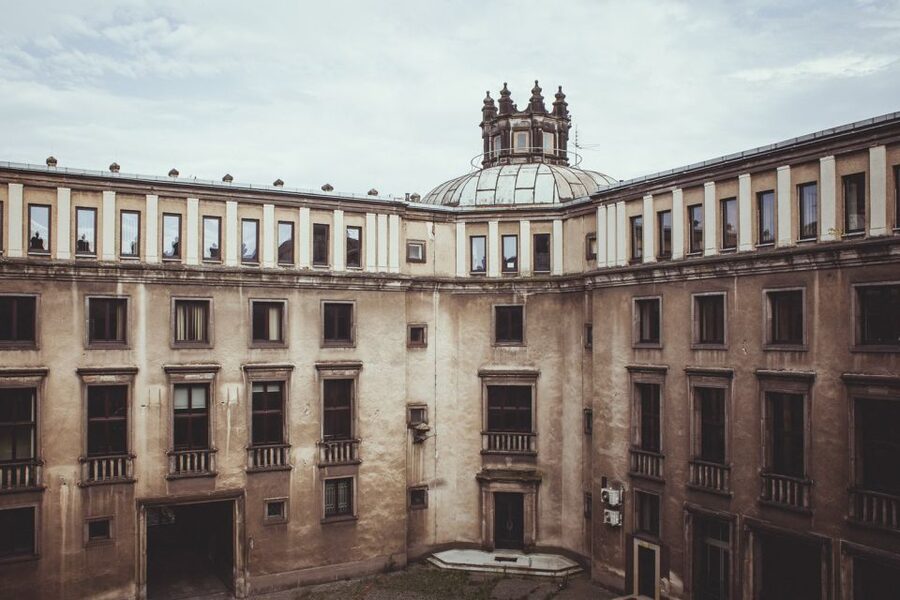
The underground tunnel is one of the most distinctive parts of the day. After visiting the steelworks offices, your guide takes you below ground to see a concealed tunnel and learn more about Nowa Huta’s secrets.
This stop gives the tour a physical change of mood. Above ground, the district’s history is visible in grand planning and industrial buildings. Below ground, you encounter the defensive side of the period, including the fears and preparations that shaped Communist-era public life.
The underground setting also puts more weight on the guide’s storytelling. One customer specifically praised the guide’s passion during the bunker visit, describing the experience as a kind of time machine. That is useful advice: this is not a stop to rush through with a quick photo. Give the explanation your attention.
The tunnel may be uncomfortable for anyone who dislikes confined or uneven spaces. The tour is not recommended for people with limited mobility, and it is unsuitable for wheelchair users, people with back problems, pregnant women, and people with heart problems. Wear sturdy, comfortable shoes and avoid bringing luggage or a large bag.
Lord’s Ark Church and the limits of official planning
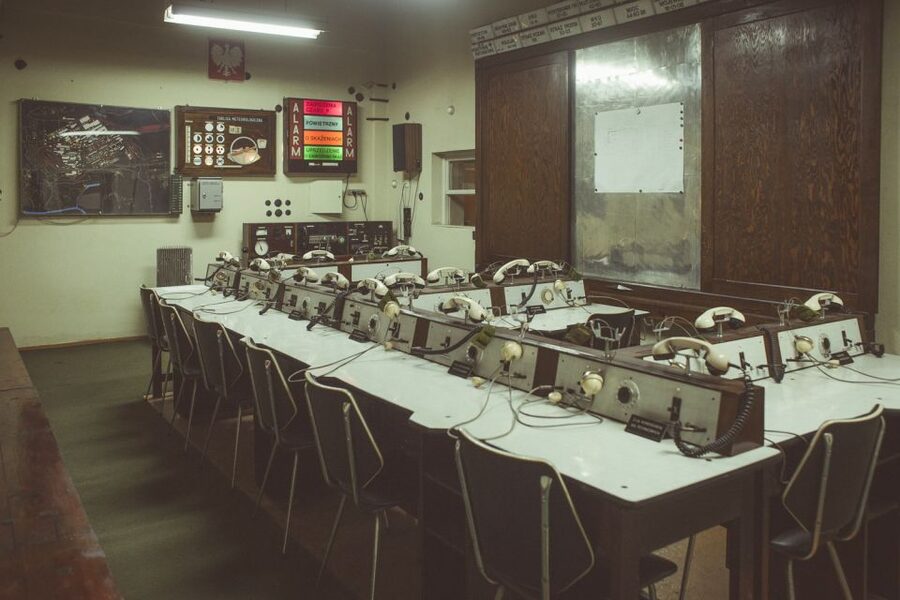
Back above ground, the tour visits Arka Pana, or Lord’s Ark Church. It was the first church built in Nowa Huta, and its presence carries special meaning in a district planned under an officially atheist Communist government.
This stop gives the tour a needed human and social dimension. The steelworks represents labor and state industry. The church represents faith, community, and the determination to create space for religious life inside a city designed around socialist ideals.
The church also keeps the tour from becoming a simple parade of old Communist structures. You are not just looking at what the authorities built. You are also seeing how local residents shaped the city and challenged the limits of the original plan.
The available details do not specify a service schedule, interior access rules, or how long you remain inside. Treat it as a guided historical stop, and follow your guide’s instructions about entering and appropriate behavior.
Soviet IS-2 tanks and the military reminder
The final Nowa Huta sight is a pair of real Soviet IS-2 tanks in front of the Museum of the Armed Act. They are among the district’s most recognizable landmarks and provide a direct, visual finish to the tour.
The tanks are not subtle. After the broad square, workers’ offices, tunnel, and church, they bring the political and military background into sharp focus. You can see how public memory in Nowa Huta includes both the ideals of the planned city and the force behind the system that built it.
This is a good final stop because it gathers several strands of the tour in one image: industry, government, defense, and public symbolism. It is also an easy sight to understand even if this is your first serious look at Polish Communist history.
The visit ends with transport back to Krakow, with the route listed as returning to Pawia 3. The ride takes about 30 minutes, giving you time to think over the contrast between Krakow’s old center and its socialist-era district.
What $111 includes, and what it does not
At $111 per person, this is not a low-cost bus ride. The price includes hotel pickup, a comfortable vehicle, an English-speaking guide, admission fees, tickets, and insurance. Those inclusions matter because Nowa Huta is spread out, and several of the stops are not places you would easily connect on foot from central Krakow.
The value depends on how much interpretation you want. If you already know the political and architectural background of postwar Poland, you may find the cost high for a five-hour activity with roughly three hours of sightseeing. If you are new to the subject, the transport and guide can make the price easier to justify.
You are paying for access to a less familiar part of Krakow as well as for movement between several sites. The steelworks offices and underground tunnel are especially important to the calculation, since they add experiences that a simple self-guided drive around Central Square would not provide.
There is no meal included. That is a small point, but it affects the practical budget. Plan your food separately rather than expecting a café break or lunch as part of the schedule.
Who will get the most from this tour
I would recommend this outing to you if you have already seen Krakow’s main historic center and want to understand the city beyond its postcard buildings. It suits people interested in Polish history, urban planning, industrial sites, military history, architecture, and the everyday effects of political systems.
It is also a good match if you prefer a guide who can connect separate places into one story. The strongest feedback about the experience centers on the guide’s passion and the way the history came alive through photographs, site visits, the steelworks, the church, and the bunker.
The tour is less suitable if you want a relaxed scenic drive or a food-centered experience. It includes walking, historic interiors, an underground tunnel, and a subject that can be politically and emotionally heavy. You also need comfortable footwear and reasonable physical ease on foot.
The tour is offered in English. One past booking involved a request for a French-speaking guide that could not be met, although the English guide worked to provide explanations. If you need another language, confirm it before booking rather than assuming it will be available.
Should you book the Nowa Huta Premium Tour?
Book it if you want to see the part of Krakow that explains postwar Poland rather than simply decorating it. The combination of Central Square, Avenue of Roses, steelworks offices, an underground tunnel, Lord’s Ark Church, and Soviet tanks gives you a clear and varied introduction to Nowa Huta.
I would be more cautious if your schedule is tight, your budget is limited, or you are uncomfortable with underground spaces and walking. At $111, the tour makes the most sense when you value a dedicated guide and included transport over the lowest possible price.
For most history-minded visitors, it is a worthwhile half-day addition after Krakow’s famous sights. You will leave with a broader picture of the city, and probably a few questions about how an ideal city changes once real people begin living in it.
FAQ
How long does the Nowa Huta tour last?
The activity lasts five hours, including transportation from Krakow and back. The guided sightseeing portion is listed as about three hours.
Where does the tour start?
The route lists Pawia 3 as the pickup and return point. Hotel or accommodation pickup is also included, with the exact time and arrangement provided in your final confirmation.
What language is the tour conducted in?
The live tour guide speaks English. A French guide is not guaranteed, so confirm language needs before booking.
Is food included?
No. Food is not included in the tour price.
What should I bring?
Bring comfortable shoes. Large bags and luggage are not allowed.
Is the tour suitable for wheelchair users?
No. The tour is not suitable for wheelchair users or people with limited mobility. It is also not recommended for pregnant women or people with back or heart problems.
What is included in the $111 price?
The price includes hotel pickup, an English-speaking guide, admission fees and tickets, transport, and insurance.
Just added in Kraków
- Wawel Castle, Old Town with St. Mary’s Church Guided Tour★ 5.0 · 3 reviews
- Wawel Castle, Old Town with St. Mary’s Church Guided Tour★ 5.0 · 5 reviews
- Wawel Castle, Cathedral, Old Town and St. Mary’s Basilica★ 4.8 · 13 reviews
- Wawel Castle, Cathedral, & Rynek Underground Tour with Lunch★ 4.5 · 10 reviews
- Wawel Castle & Cathedral Skip the Line Small Group Tour★ 5.0 · 3 reviews
- Wawel Castle and Cathedral Guided Tour★ 4.6 · 44 reviews
- Wawel Castle, Cathedral, Rynek Underground Tour with Lunch★ 5.0 · 3 reviews
- Wawel Castle and Cathedral Guided Tour★ 5.0 · 8 reviews
Nowa Huta & Communism Tours, compared.
Legendary Private Nowa Huta Communism Tour with Crazy Guides
Read the review →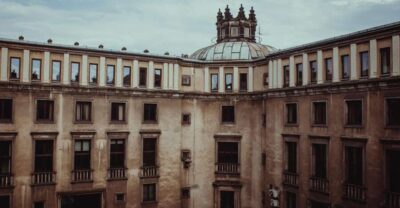
Nowa Huta: Steelworks Administration Buildings/Shelters Tour
Read the review →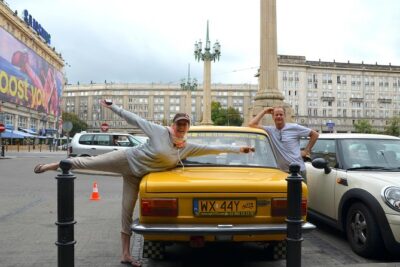
Private Tour: Warsaw’s Communist History by Retro Fiat
Read the review →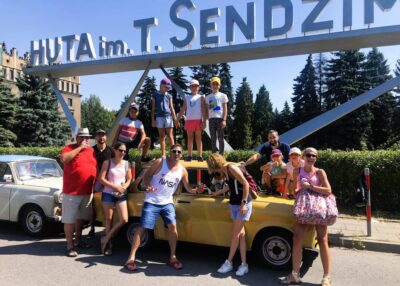
Private Nowa Huta Adventure Tour in Communist Cars
Read the review →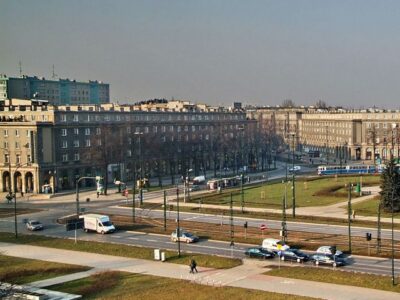

Browse the lists this tour appears in