
Reviewed · RYNEK UNDERGROUND TOURS
Krakow: Rynek Underground Museum Skip-the-line Guided Tour
Beneath Krakow’s Main Square sits a whole buried city: old streets, market stalls, graves, walls, and objects left behind by the people who built medieval Krakow. This underground archaeological museum uses films, holograms, touchscreens, and sound to bring that vanished market back to life.
I like two things right away: admission is included, so you avoid the ticket line, and a local guide can explain why each broken wall or small artifact matters. The meeting point is also easy to reach once you locate the entrance at Rynek Główny 1.
The main caution is pace. There is a lot to absorb in about 90 minutes, and a large group can make it hard to hear. If you prefer to linger over every display, an independent visit may suit you better.
Key points to know before you book
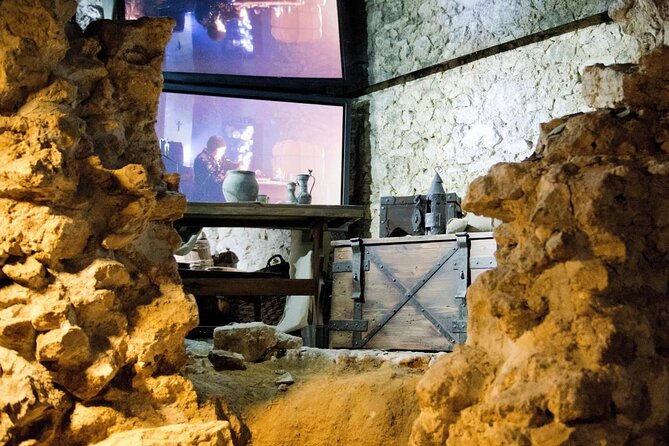
- Medieval Krakow lies beneath the Main Square: Walk among archaeological remains several meters below the modern market.
- The museum uses more than glass cases: Holograms, films, touchscreens, and recreated sounds show how the old market worked.
- The guide adds the historical thread: You’ll hear about merchants, craftsmen, religion, burial customs, and Krakow’s role in Central European trade.
- The tour is conducted in one language: Choose English when booking, since mixed-language tours are not offered.
- Groups can reach 29 people: Headsets are supplied for groups of 15 or more, but crowded rooms may still affect how clearly you hear.
- Arrive 10 minutes early: Late arrivals cannot join after the group leaves, and the ticket is not refunded.
Krakow’s Main Square has a second story below ground
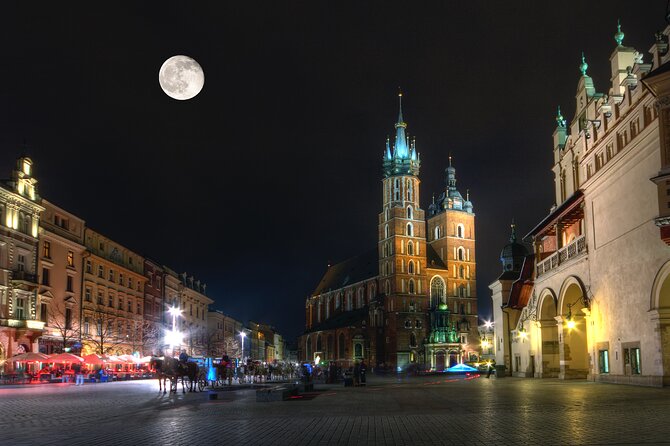
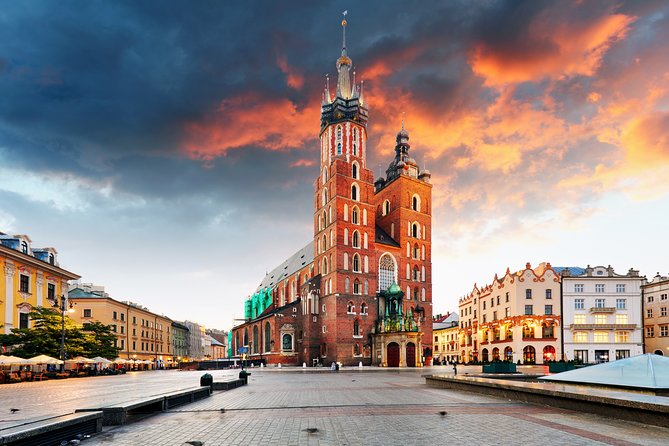
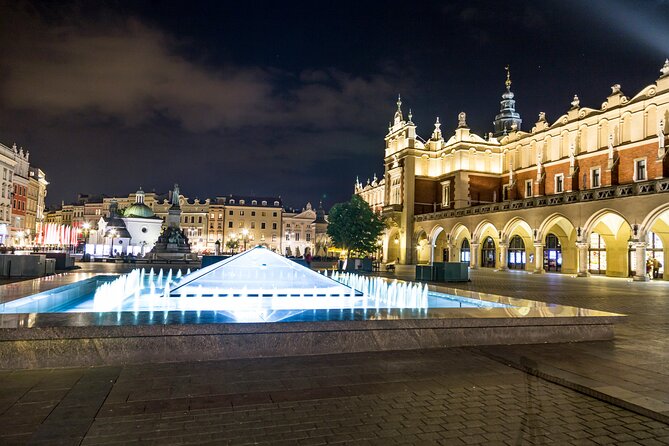
The Rynek Underground Museum is one of Krakow’s most unusual places to visit because the setting does much of the work. You start beside the Main Square, with St. Mary’s Basilica and the Cloth Hall above you, then descend into a world that was once buried beneath everyday city life.
This is not a traditional museum where you simply walk past rows of objects. The underground route covers nearly 4,000 square meters and follows paths through archaeological remains. You’ll see traces of old streets, merchant areas, foundations, and objects connected with the people who lived and worked around the square.
I like the contrast between the busy modern market overhead and the quiet, low-lit rooms below. It helps you picture the square as a working center of trade rather than just a handsome postcard view.
The museum’s excavation revealed layers of Krakow’s past. The displays show how the level of the city changed over time and how earlier streets and structures were gradually covered by later building work. That simple fact gives the whole visit its sense of discovery: you are not looking at a replica buried for effect, but at remains found beneath one of Poland’s most important public spaces.
Other trips under the market square in Kraków:
- Krakow: Rynek Underground Museum Guided Tour
★ 4.6 · 1,122 reviews - Krakow: UNESCO Underground Boat Expedition & Salt Mine Tour
★ 4.7 · 197 reviews - Krakow: Guided Tour of Rynek Underground
★ 4.6 · 113 reviews
What you see during the 75-minute underground route
The main portion of the visit lasts about 1 hour and 15 minutes, followed by roughly 15 minutes at the museum and square area. The full experience is advertised at around 1 hour and 30 minutes.
Your guide leads you along the underground paths, stopping at archaeological remains and displays that explain the development of Krakow. The focus is not just on kings and grand buildings. You’ll hear about ordinary trade, daily work, religious customs, travel, and the practical business of running a medieval market.
One of the more striking sections deals with 11th-century burials. These remains add a human scale to the museum. Instead of seeing only walls and objects, you are reminded that this was a lived-in city, with generations of people born, working, worshipping, and buried here.
You’ll also see traces of earlier streets and market structures. These help explain how Krakow functioned as a trade center. Merchants and travelers passed through with goods, while local craftsmen made and sold products around the square. The displays connect those activities to the physical remains under your feet.
The guide’s role is especially useful here. A fragment of pavement may not mean much without context. With an explanation of where it led, who used it, or how it relates to later layers of the city, the archaeological evidence becomes easier to follow.
Multimedia scenes make old Krakow easier to picture
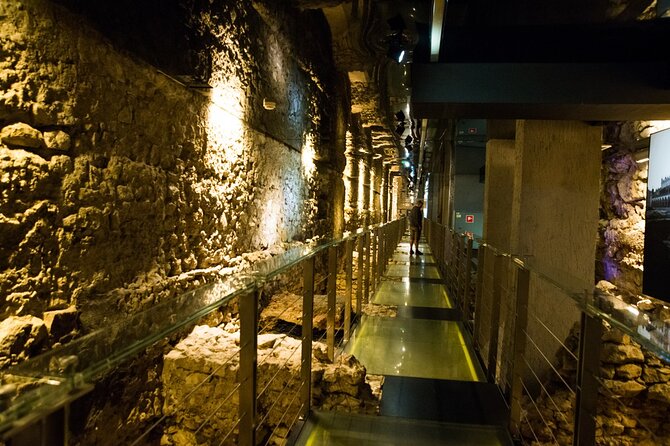
The museum makes strong use of technology. Films, touchscreens, holograms, and sound effects recreate the old market, including merchants calling out, carts moving over rough streets, and the general noise of commerce.
I find these features helpful because archaeological sites can sometimes feel abstract. A wall is still a wall, but a projected scene or short film can suggest how the space once worked. The technology does not replace the original remains. It gives them a setting.
The displays also help explain changes in the square through different periods. You may see how streets shifted, how construction altered the ground level, and how the market changed as Krakow grew.
Not every visitor will enjoy the same balance between artifacts and multimedia. If you mainly want quiet archaeology, some of the interactive sections may feel busy. If you want a clear picture of how the medieval city looked and sounded, they are a real advantage.
The museum itself is modern, well organized, and generally easy to follow. Its dim lighting suits the underground setting, though it also means you need to pay close attention to the guide and displays.
Why a guide can make a real difference
The value of the guided option depends heavily on the guide you receive. The strongest guides keep the route moving while giving you enough background to understand what you are seeing. Guides named Olga, Magda, Pauline, Joanna, and Alicia have led departures, and the best accounts of the experience single out guides who were clear, engaging, and good at pointing visitors toward the most important objects.
A good guide can connect several subjects that might otherwise seem separate. A burial tells you something about religious customs. A market object points to trade. A street surface shows how the city was built and rebuilt. Together, these details explain the growth of Krakow far better than a quick walk through isolated exhibits.
The guide can also direct your attention to features you might miss. One particularly worthwhile spot lets you look upward through a glass ceiling toward St. Mary’s Basilica and the Main Square. It is a clever link between the city above and the archaeological world below. Do not assume every guide will point it out, so keep an eye open for it.
The weaker side of the guided format is that not every explanation will suit every group. Some guides may spend too long on side comments or repeat information. Others may move quickly through sections that deserve more time. English ability and presentation style can vary.
For a group of 15 or more, headsets are provided. That helps, but it does not solve every problem in a crowded room. You may still need to stay close to the guide, particularly when several groups are moving through the same space.
A few more things to do in Kraków worth a look
- Auschwitz-Birkenau Museum and Memorial Guided Tour from Krakow
★ 4.5 · 1,510 reviews - Krakow Schindler’s Factory Museum Guided Tour in English
★ 4.5 · 650 reviews - Krakow: Auschwitz Birkenau Museum Guided Tour with Pickup
★ 3.6 · 544 reviews - Museum of illusions Entry Ticket
★ 4.5 · 521 reviews
Is the museum better with a guide or on your own?
This depends on how you like to visit museums. If you enjoy history but want someone to explain the connections, I think the guided option is worthwhile. The museum contains plenty of visual material, yet the archaeological meaning is not always obvious at first glance.
You’ll get more from the remains if you understand why the old streets matter, how the market operated, and what the artifacts reveal about daily life. The guide can also help you decide which sections deserve your attention when the route feels full of information.
On the other hand, independent visitors have more control. You can stop at a touchscreen, reread a panel, or return to an object without worrying about the group moving on. Some people find the guided pace too quick, especially when several exhibits are introduced in a short time.
The practical choice is simple:
- Choose the guided tour if you want structure, interpretation, and the convenience of included admission.
- Visit independently if you prefer silence, slow reading, and the freedom to skip or revisit displays.
- Choose the tour for a first visit if you want a clear introduction to the site.
- Choose an independent visit if you already know Krakow’s medieval story and mainly want to inspect the museum’s design and objects.
At $35 per person, the tour is not the cheapest way to spend an hour and a half in Krakow. You are paying for the ticket, the reserved entry arrangement, and the guide’s time. The price makes the most sense when the guide is strong and the skip-the-line benefit saves you a wait during a busy period.
Group size, timing, and finding the entrance
The maximum group size is 29 people. That is not a tiny private tour, and you should set your expectations accordingly. A group of 20 or more can feel crowded in narrow areas, especially when another group is nearby.
The meeting point is the Rynek Underground Museum at Rynek Główny 1, 31-042 Kraków. The location is directly beneath the Old Town’s Main Square and near public transportation, but finding the exact meeting desk can take a moment. Give yourself time to identify the entrance and check in.
Arrive 10 minutes before departure. This matters more than usual because latecomers cannot join after the group has gone inside, and the ticket cannot be refunded in that situation.
The tour is offered in English, and each group uses only one language. Select English when booking rather than expecting a multilingual departure.
The experience ends back at the meeting point. That makes it easy to continue sightseeing around the Main Square, visit St. Mary’s Basilica, walk through the Cloth Hall, or stop for coffee nearby. One practical note: the museum’s coffee shop may not be open at every tour time, but there are other places around the square.
Who will enjoy the underground museum most?
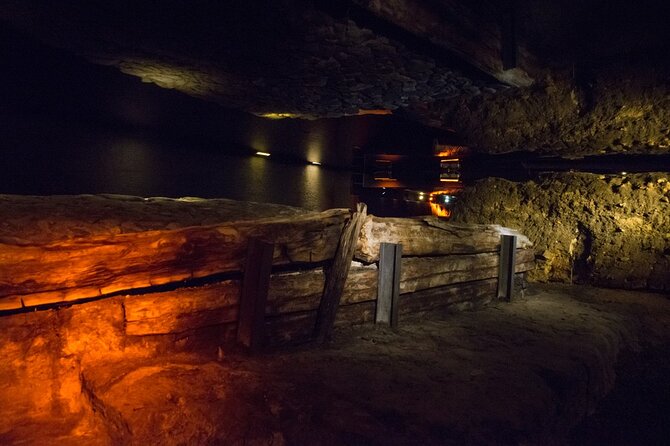
This is a good choice for anyone who likes archaeology, city history, and museums that explain how ordinary life worked. You do not need specialist knowledge. The guide and multimedia displays provide the basic setting, while the remains give you something real to examine.
I would especially recommend it if you have already seen the Main Square above ground. After visiting the underground museum, the basilica, Cloth Hall, and surrounding streets make more sense. You begin to notice that Krakow’s center is not just a collection of attractive buildings. It is a city built in layers.
Families with older children may enjoy the interactive displays, but very young children could lose interest during the historical explanations. The visit is not designed as a children’s activity, and some sections require quiet attention.
History fans may wish the tour lasted longer. There is enough material here for a slower visit, particularly if you want to read every display. The guided route gives you a useful overview, but it may not satisfy someone who wants to study each artifact closely.
The museum is also a good rainy-day or cold-weather option. It is underground, modern, and generally warmer than many visitors expect. Bring comfortable shoes, since you’ll be walking through a sizable museum rather than standing in one gallery.
What makes the site worth seeing
The strongest part of the experience is the combination of original archaeological remains and modern explanation. You are not simply looking at old stones, and you are not watching a purely digital recreation. The museum places the two together.
The reconstructed scenes of medieval trade help you picture the calls, carts, goods, and movement that filled the market. The artifacts then give those scenes weight. A small object can tell you about work, travel, religion, or the materials available to people living in Krakow centuries ago.
The museum also offers a different view of urban history. You see how a central square can change while keeping the same role. Above you, people still meet, shop, worship, and cross the square. Below you, the remains show earlier generations doing much the same thing in a very different setting.
The experience is less about one spectacular object than about assembling a picture from many details. That means your enjoyment will depend on patience and interest. If you want a quick visual attraction, you may find the museum slow. If you like understanding how a city grew, it is one of Krakow’s most rewarding indoor stops.
Cancellation and booking flexibility
You can cancel for a full refund up to 24 hours before the scheduled start time. Cancellations or changes made less than 24 hours before the experience are not refunded or accepted.
The tour also requires a minimum number of participants. If the operator cancels because that minimum is not reached, you are offered another date or experience, or a full refund.
The tour is booked around 16 days ahead on average. That suggests you should not leave it until the final day of a short Krakow visit, especially if you need a particular time.
FAQ
Where does the Rynek Underground Museum tour begin?
The tour begins at the Rynek Underground Museum, Rynek Główny 1, 31-042 Kraków, Poland, beneath Krakow’s Main Square.
How long does the experience last?
The experience lasts approximately 1 hour and 30 minutes. The underground portion takes about 1 hour and 15 minutes, followed by around 15 minutes at the museum and Main Square area.
Is admission included?
Yes. Admission to the Rynek Underground Museum is included in the tour price, along with the skip-the-line entry arrangement.
What language is the tour offered in?
The tour is offered in English. Group tours use one language only, so select English when booking.
How large can the group be?
The maximum group size is 29 participants. Headsets are provided when the group has 15 or more people.
What happens if I arrive late?
You should arrive 10 minutes before the start time. Once the group has departed, latecomers cannot join, and the ticket cannot be refunded.
Should you book this Krakow underground tour?
I would book it if you want a guided introduction to Krakow’s buried market, prefer having the archaeological details explained, and value included admission with a set schedule. The museum is especially useful early in your Krakow visit because it gives the Main Square above you a clearer sense of time and place.
I would skip the guide and visit independently if you read quickly, like to linger, or dislike moving with a group. At $35, the guided option earns its price only when you make use of the commentary.
For most history-minded visitors, this is a worthwhile stop. Just arrive early, stay close enough to hear, and keep watch for the glass ceiling view toward St. Mary’s Basilica. That small moment neatly connects the Krakow you see today with the much older city beneath it.
Just added in Kraków
- From Krakow: Guided Tour of Zalipie★ 4.6 · 30 reviews
- From Krakow: Zalipie Village Day-Tour★ 4.9 · 74 reviews
- Krakow: Zalipie Village Tour★ 4.6 · 8 reviews
- ZALIPIE – painted village, unique PRIVATE tour from Krakow★ 5.0 · 20 reviews
- From Kraków: Slovakia Treetop Walk Bachledka and Zakopane★ 5.0 · 73 reviews
- From Krakow: The Black Madonna of Czestochowa & John Paul II Family Home★ 5.0 · 28 reviews
- Energylandia Theme Park Full Day with optional Krakow Pickup★ 5.0 · 38 reviews
- Krakow City Tour on Scooter and Food Tasting with English Guide★ 5.0 · 84 reviews
Rynek Underground Tours, compared.
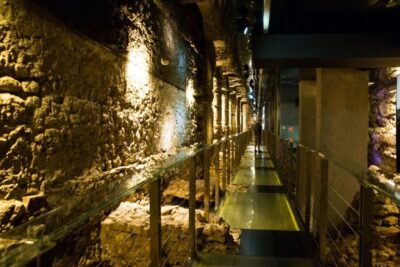
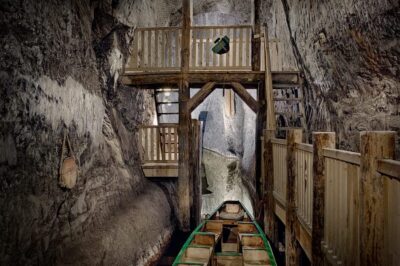
UNESCO Underground Boat Expedition & Salt Mine Tour
Read the review →Browse the lists this tour appears in