
Reviewed · WALKING TOURS
Life Behind the Iron Curtain Warsaw Walking Tour
Warsaw’s communist past is easiest to understand not in a museum case, but out on the street, where huge squares, parade routes, grand buildings, and ordinary shops still show how the system tried to shape daily life. This 2.5-hour walking tour connects those places with stories about empty stores, censorship, rationing, travel restrictions, and the odd tricks people used to get by.
I like two things in particular: the route keeps the focus on ordinary Polish life, not only on political leaders, and guides such as Oliwia and Agnieszka bring personal family stories and dry humor to the subject. The main consideration is the 3-kilometer walk, which may feel long if you have trouble walking distances.
Key points to know
- Constitution Square shows the planned communist city center, with grand proportions built for state ceremonies.
- Marszałkowska Street explains the role of parades and public display in communist Warsaw.
- The Free Speech Memorial brings censorship and espionage into the story, rather than leaving them as abstract Cold War topics.
- Socialist realism looks impressive to modern eyes, but the style carries memories that many Poles do not find charming.
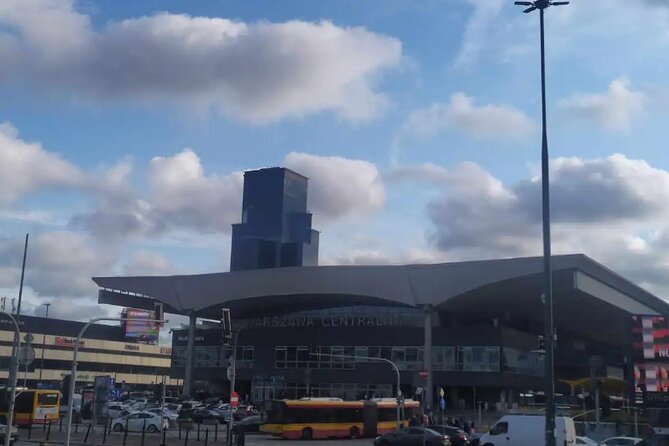
- Central Station and the Palace of Culture reveal the mixed legacy of the era, from useful public buildings to symbols of Soviet power.
- The small-group setting suits questions, especially when you want to connect political decisions with family life and daily routines.
Why this communist Warsaw walk works
The strongest part of this experience is its sense of scale. You are not simply told that communist authorities wanted to control public life. You see the wide streets, oversized squares, formal buildings, and official symbols that made that control visible.
At the same time, the tour does not treat the period as a grim museum piece. The stories cover the absurd side of the system too. You hear how people bought goods when shops were nearly empty, why the phrase what can I get you? could become a joke, and how citizens used ingenuity and humor to make life a little more manageable.
That balance matters. A tour about communism can become a list of dates and political slogans. This one is built around the gap between what the state wanted to project and what people actually experienced. The result is more useful if you are trying to understand Poland today, not just memorize facts about the Cold War.
The route is in English, and guides named Oliwia, also spelled Olivia in some information, and Agnieszka are associated with the experience. Their style is conversational and personal. Oliwia is especially noted for dry humor, a strong affection for Warsaw, and family connections to the subject. Agnieszka brings a similarly personal approach and takes time with questions.
More walking tours in Warsaw:
- Warsaw: Old Town Highlights Walking Tour in English
★ 4.7 · 1,516 reviews - Warsaw: Old Town Guided Walking Tour
★ 4.9 · 599 reviews - Half-Day Polish Food Walking Tour with Guide and Dinner
★ 4.5 · 381 reviews
Constitution Square, the city center that never quite was
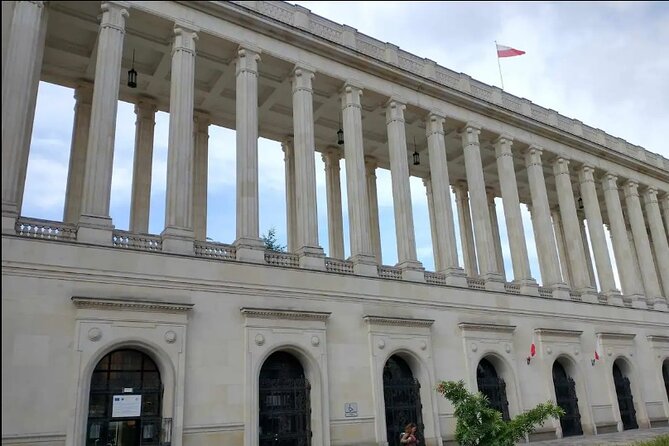
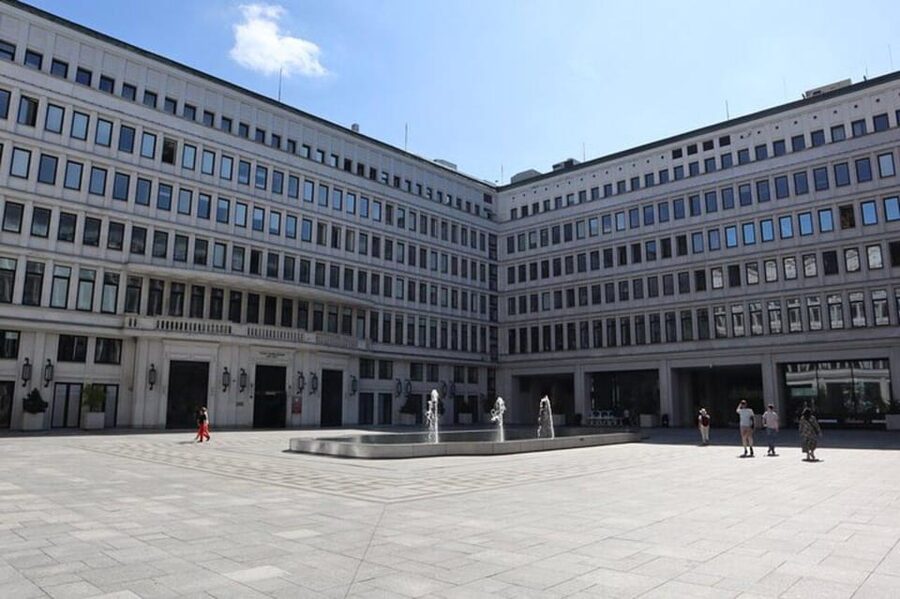
The tour begins at Constitution Square, a broad urban space designed to serve as a new center for Warsaw. It is an ideal starting point because the square immediately shows how architecture can serve politics.
The proportions are large, formal, and made for crowds. This was not an intimate neighborhood plaza. It was designed for ceremonies, public gatherings, and the kind of state display in which the individual mattered less than the mass.
You will spend about 15 minutes here. That may sound brief, but a good guide can use the space to explain the planning logic behind communist Warsaw before moving into the more personal stories. Look closely at the surrounding buildings and decorative details. This is where socialist realism becomes easier to understand.
Socialist realism favored clear, heroic images and architecture that presented the state as orderly, strong, and confident. Many people today find the buildings handsome or even grand. The important point is that appearance and memory do not always match. A style that looks attractive to you may remind a Polish listener of an unwanted political system.
That tension is one of the tour’s best teaching tools. You are encouraged to look at the buildings with fresh eyes, but also to ask what they represented when they were built.
Marszałkowska Street and the theater of public life
From Constitution Square, the walk continues along Marszałkowska Street, one of the central avenues used for parades and marches. The route covers the street in roughly 15 minutes, with the guide explaining how its width and placement supported public spectacle.
A broad avenue can be practical, but it can also send a message. Here, scale helped create an image of order and power. Organized crowds could move through the city, and the state could present its version of unity to the public.
I find this stop useful because it shifts the focus from individual buildings to the city as a stage. You can begin to see why communist planners favored open spaces and long sightlines. They were not designing only for traffic or convenience. They were also designing for ceremonies, speeches, and marches.
The street also helps explain one of the tour’s larger themes: official Warsaw and everyday Warsaw did not always line up. The buildings and parades suggested control. Daily life involved shortages, queues, workarounds, and private jokes that were rarely visible in the official picture.
The Free Speech Memorial and the price of saying too much
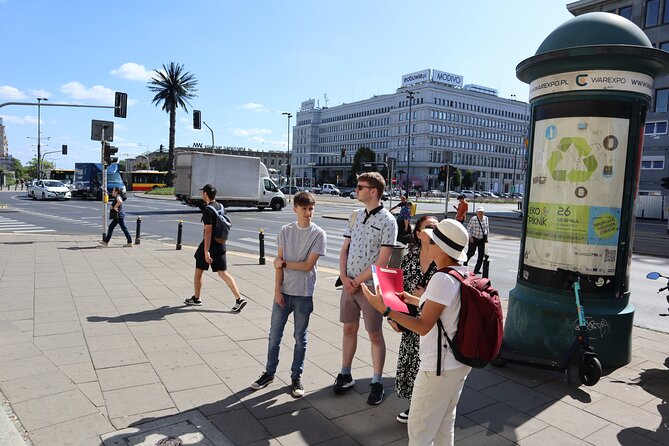
The Free Speech Memorial gives the tour a sharper political edge. Here, the conversation turns to censorship, underground publishing, and espionage. The stop lasts about 15 minutes, giving you time to connect public speech with the practical risks of communicating under a restrictive system.
The value of this stop is that it makes censorship concrete. It was not only about banning a book or controlling a newspaper. It affected what people could say in public, what could be printed, which facts were safe to repeat, and how much trust people could place in official information.
The guide also discusses espionage, adding another layer to the Cold War setting. You get a sense of how secrecy shaped both state institutions and private behavior. The subject can sound remote when described only in terms of rival blocs. It becomes more human when connected to conversations, printed material, and the need to judge who could be trusted.
This is a good place to ask questions. The small-group or private format should make it easier to pause when a particular topic interests you. If you want a simple overview with no discussion, the stop may feel more detailed than necessary. If you want to understand how political control reached into ordinary communication, it earns its place on the route.
Same base, a different kind of day:
- Warsaw: Chopin Concert in the Old Town
★ 4.8 · 2,287 reviews - Warsaw: Traditional Galar Cruise on The Vistula River
★ 4.6 · 1,640 reviews - Warsaw Concert: Chopin – Painted by Candlelights with Wine
★ 4.8 · 1,442 reviews - Warsaw: City Sightseeing Hop-On Hop-Off Bus Tour
★ 3.6 · 1,415 reviews
The former Communist Party headquarters
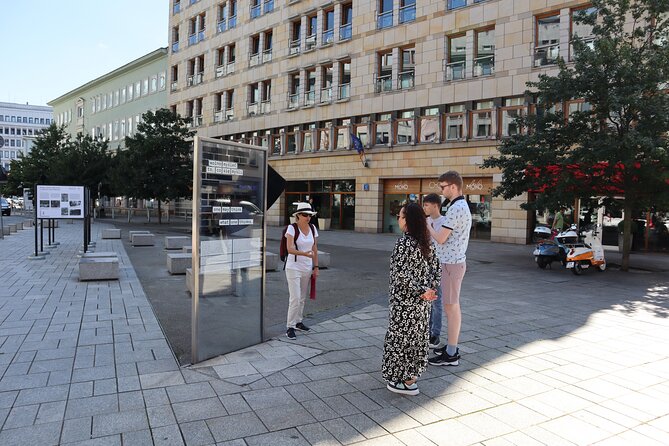
The stop at Centrum Bankowo Finansowe points to the former location of the Communist Party headquarters. You spend about 10 minutes here, enough to place the institution within the city rather than treating it as a distant name from a textbook.
The guide uses the location to explain where political authority operated and how that power related to the streets around it. The contrast is important. The party headquarters represented central control, while the rest of the walk keeps returning to the ways people adapted, joked, waited, and found solutions within that system.
This stop is less about an elaborate interior visit and more about context from the street. You should not expect a long building tour or a museum collection here. Its value comes from knowing what the site represented and seeing how close it was to the public spaces, shops, and transport points used by ordinary residents.
Cedet and the puzzle of empty shops
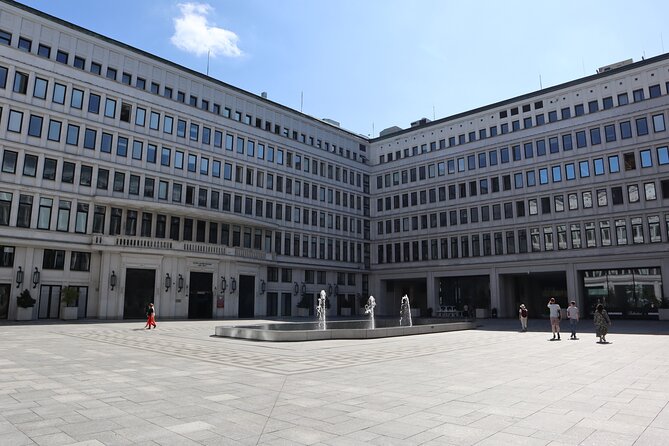
The former Central Department Store Cedet is one of the more approachable stops because it connects political economics with shopping. The tour spends around 15 minutes here, discussing how people managed to buy things when stores could be completely empty.
This is where the experience turns from grand plans to daily problem-solving. A system could promise abundance while failing to keep basic goods on shelves. People responded with patience, contacts, substitutions, and humor. The guide also explains why asking what can I get you? became one of the period’s great jokes.
You will get more from this stop if you think about shopping as a social system, not just a commercial activity. Finding an item could depend on timing, personal connections, or knowing where to look. The details help explain why the official language of the period could sound so different from lived experience.
The building also continues the discussion of socialist design. You may find its architecture appealing, but the guide gives you the local memory needed to see why some Poles view the style with less affection.
Central Station and the limits on movement
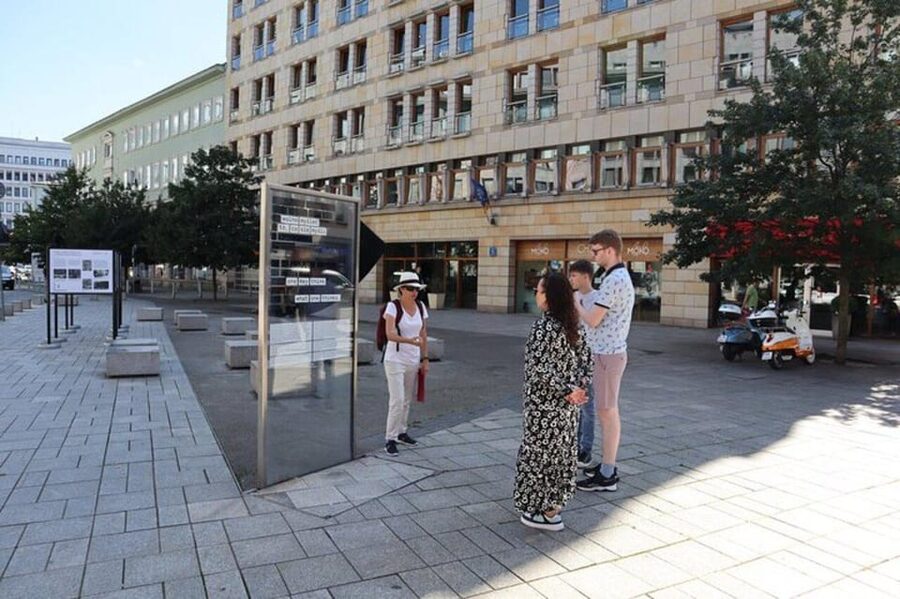
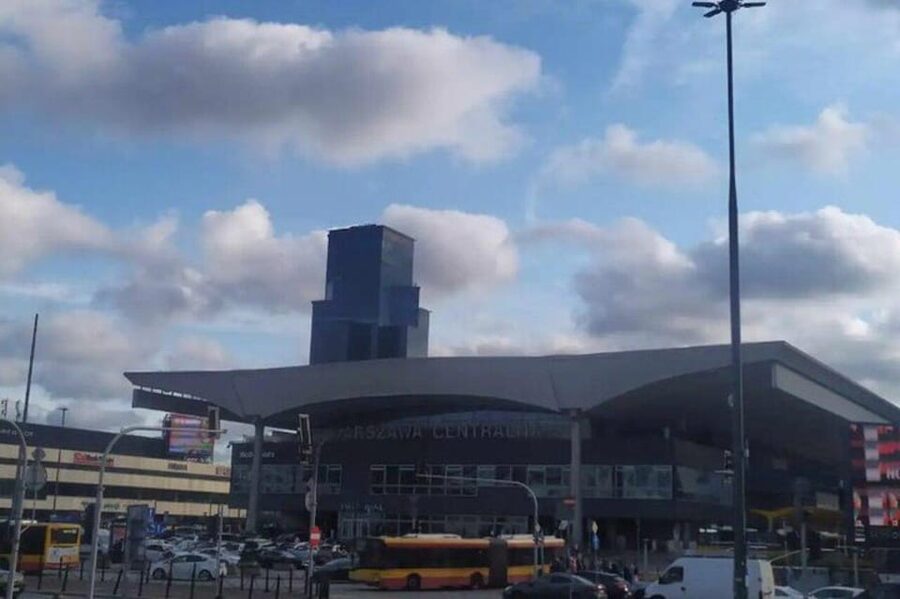
At Warsaw Central Station, the tour spends about 10 minutes examining transport and travel. The station is a natural place to discuss how the state tried to limit how far Poles could go.
Travel restrictions were not only a matter of geography. They affected opportunity, family contact, work, and a person’s sense of the outside world. A railway station suggests movement, yet the political system could make crossing a border difficult or impossible for many people.
This stop adds variety to the walk. After squares, offices, and shops, you are looking at a building linked to departure and arrival. That makes the point about restricted travel especially clear. The ability to move through a city did not necessarily mean the ability to move freely beyond the country.
The stop is short, so the guide’s storytelling matters. You may want to ask about how travel rules affected ordinary families or what people did when official routes were closed. The tour’s wider focus on ingenuity gives those questions a useful place.
The Palace of Culture and Science, Warsaw’s most disputed symbol
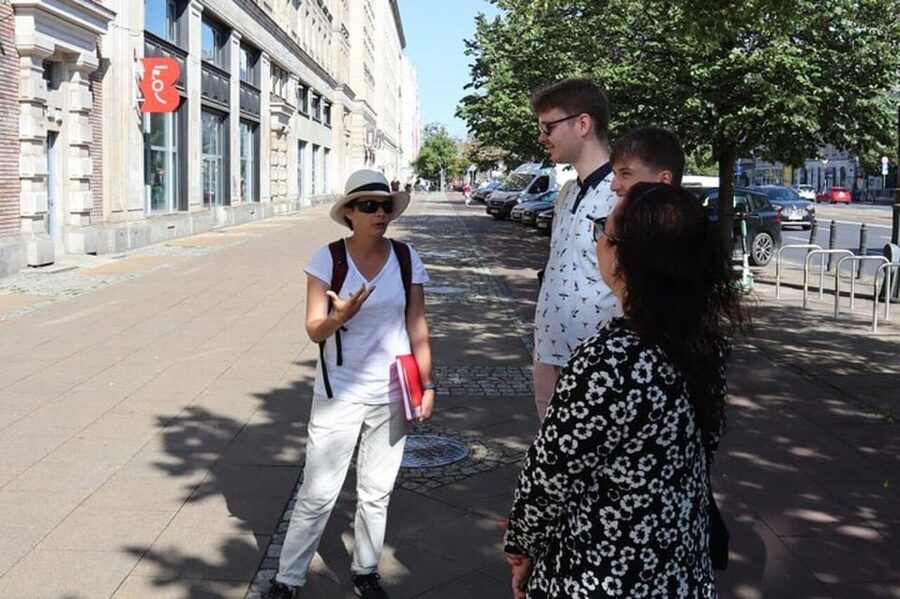
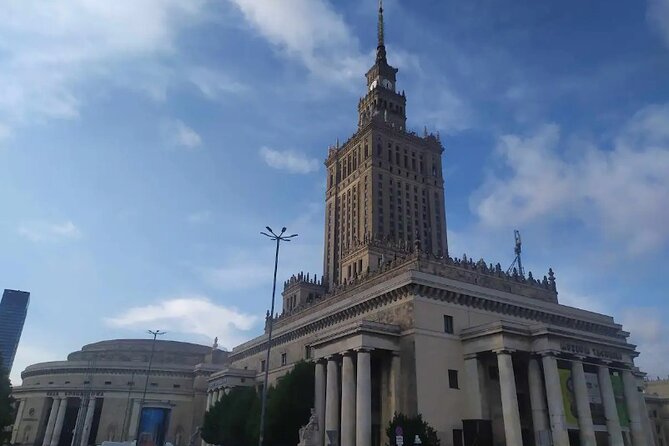
The walk ends near the Palace of Culture and Science, with the final stop lasting about 15 minutes. This is the tour’s biggest visual landmark and one of the most controversial buildings in Warsaw.
The palace is difficult to read in a single way. It is large, formal, and impossible to miss. For some people, it represents education, public events, and the practical institutions housed inside it. For others, it remains a powerful reminder of Soviet influence and an unwanted gift from an oppressive era.
That disagreement explains why the building is controversial for more than one reason. The tour uses it to pull together the main ideas from the walk: impressive architecture, political symbolism, public spectacle, and the difference between official purpose and personal memory.
You can pay separately to visit the viewing terrace. The terrace is not included in the $32 tour price, so treat it as an optional extra rather than part of the walking experience. The tour itself finishes at Emilii Plater 54, near the palace area, which makes it convenient to continue exploring central Warsaw afterward.
What the $32 price includes
At $32 per person, this is a sensible price for a 150-minute guided walk, especially if you value interpretation more than entrance tickets. The route covers about 3 kilometers and links several places that would be easy to pass without understanding their purpose.
You are paying mainly for the guide’s ability to connect architecture, politics, economics, censorship, and personal experience. There are no major admission fees built into the walk. The Palace of Culture and Science viewing terrace costs extra, but you can skip it if you are watching your budget.
The tour also includes a Warsaw information pack before the walk, with frequently asked questions, useful links, and suggestions for places to eat, drink, and visit. Visual aids are included too. Those extras are practical because the communist period can involve unfamiliar names, organizations, and systems.
I would judge the value by the guide’s storytelling rather than by the number of stops. If you only want to photograph socialist buildings, you can walk much of the route yourself. If you want to understand why those buildings look as they do and how people lived around them, the guided format earns the price.
Group size, pace, and practical comfort
Private and small-group options are available. I would choose a smaller group if you are interested in asking questions about censorship, family life, or the long-term effects of communism. The intimate format also suits the personal storytelling that makes this experience work.
The meeting point is Constitution Square. Look for a guide with a white and green umbrella. That detail matters in a large urban space, so arrive with enough time to orient yourself.
The walk lasts about 150 minutes and covers approximately 3 kilometers. You should wear comfortable shoes and be ready to spend most of the time outside. The tour is listed as wheelchair accessible, but it is not recommended if you have problems walking long distances.
The pace can be adapted to conditions. A guide has taken care to stop in the shade on warm days, and the walk includes enough pauses for explanation. Still, this is not a short stroll between nearby monuments. Check the distance before booking, especially if you prefer seated sightseeing.
Free cancellation is available up to 24 hours in advance, and you can reserve now and pay later. Those terms give you useful flexibility when planning a city break.
Who should book this Warsaw experience?
I would recommend this tour to anyone who wants more than a quick look at the Palace of Culture and Science. It is particularly useful if you are visiting Warsaw for the first time and want a framework for understanding the city’s postwar center.
It suits people interested in twentieth-century European politics, architecture, censorship, economics, and social change. It also works well for families, provided everyone is comfortable with the walking distance. The humor keeps the subject from becoming relentlessly heavy.
You do not need specialist knowledge. The guide explains the basic setting while adding details about shopping, travel, work, propaganda, and family experience. If you already know a great deal about Polish communism, you may value the personal stories and street-level examples more than the broad political outline.
The main mismatch would be for someone seeking interiors, museum collections, or a fast list of famous sights. This is an outdoor storytelling walk. Its strength lies in the links between places, not in entry to attractions.
Should you book the Life Behind the Iron Curtain tour?
I would book it if you want to understand how communism shaped ordinary life in Warsaw, not just how it shaped government. The best parts are the contrast between grand socialist architecture and everyday shortages, plus the guides’ personal and often funny explanations.
Choose a private or small group if you want plenty of questions. Add the Palace of Culture viewing terrace only if the extra fee suits your plans. Otherwise, the walking tour already gives you a strong look at the city center’s political design and the human improvisation that existed behind it.
Skip it if 3 kilometers on foot is too much or if your interest stops at photographs of Warsaw’s landmarks. For everyone else, the $32 price buys a useful, grounded explanation of a difficult period, delivered with enough humor to make the subject memorable.
FAQ
How long does the Life Behind the Iron Curtain Warsaw Walking Tour last?
The tour lasts approximately 150 minutes, or 2.5 hours.
How far does the walking route go?
The route covers approximately 3 kilometers through central Warsaw.
Where does the tour begin?
The tour begins at Constitution Square. Look for the guide holding a white and green umbrella.
Where does the tour finish?
The tour finishes at Emilii Plater 54, near the Palace of Culture and Science area.
Is the Palace of Culture and Science viewing terrace included?
No. Entry to the viewing terrace is not included in the tour price.
What language is the tour conducted in?
The tour is conducted in English with a live guide.
Just added in Warsaw
- Warsaw Zoo Skip-the-Line Entry Ticket with Private Transport★ 4.8 · 3 reviews
- Warsaw Private Wilanow Palace & Garden Tour★ 4.6 · 30 reviews
- Warsaw: Vodka Tour★ 4.4 · 18 reviews
- Warsaw Wolf’s Lair with St. Lipka and Mamerki Private Guided★ 4.2 · 3 reviews
- Warsaw Uprising and WWII Old Town Walking Tour with Museum★ 4.7 · 15 reviews
- Warsaw Old Town UNESCO HERITAGE walking tour in English★ 4.5 · 23 reviews
- Warsaw: Private Vodka Tasting Night with Snacks and Pickup★ 5.0 · 7 reviews
- Warsaw: Skip-the-Line Royal Castle Guided Tour★ 4.9 · 79 reviews
Walking Tours, compared.
Gdańsk City Sights & History Guided Walking Tour in English
Read the review →
Browse the lists this tour appears in