
Reviewed · NOWA HUTA & COMMUNISM TOURS
Nowa Huta – a guided tour of a utopian socialist city
Nowa Huta is a city built around an idea: create a new socialist citizen, far from the religious traditions of old Kraków. The result is a fascinating mix of grand Stalinist planning, workers’ housing, political symbolism, church resistance, and streets that still carry the marks of Poland’s communist past. Central Square and Avenue of Roses give you the clearest first look at that plan.
I like this tour for two reasons. First, the guide connects buildings and monuments to the political struggle behind them, so you are not simply looking at concrete and wide streets. Second, the walk reaches places many Kraków visitors miss, including the site of the battle for the cross and the first church built in this intended godless city. The main drawback is practical: you must arrange your own transport from central Kraków, and two hours gives you a strong introduction rather than a full exploration.
Key points to know before you book
- Central Square was once named for Lenin, a detail that captures the district’s original political purpose.
- Avenue of Roses was Nowa Huta’s representative street, planned to show off the ideals of the new socialist city.
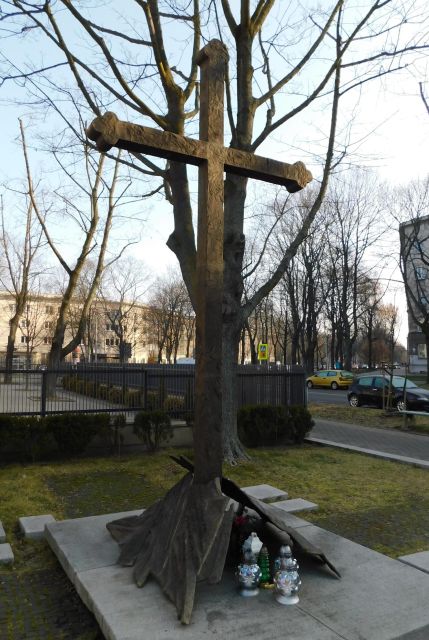
- The battle for the cross reveals how strongly Catholic faith challenged communist control.
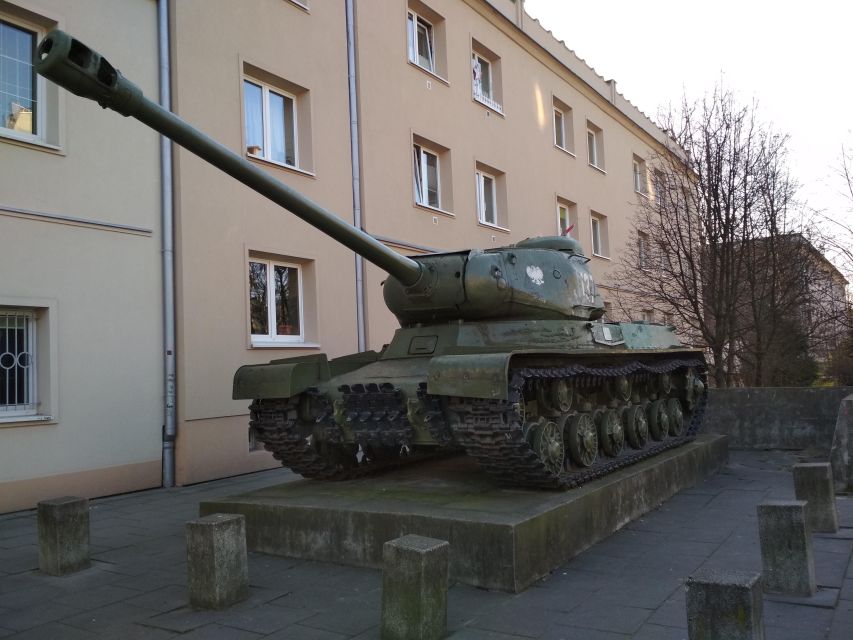
- The IS-2 tank monument reflects the military and industrial symbolism built into public space.
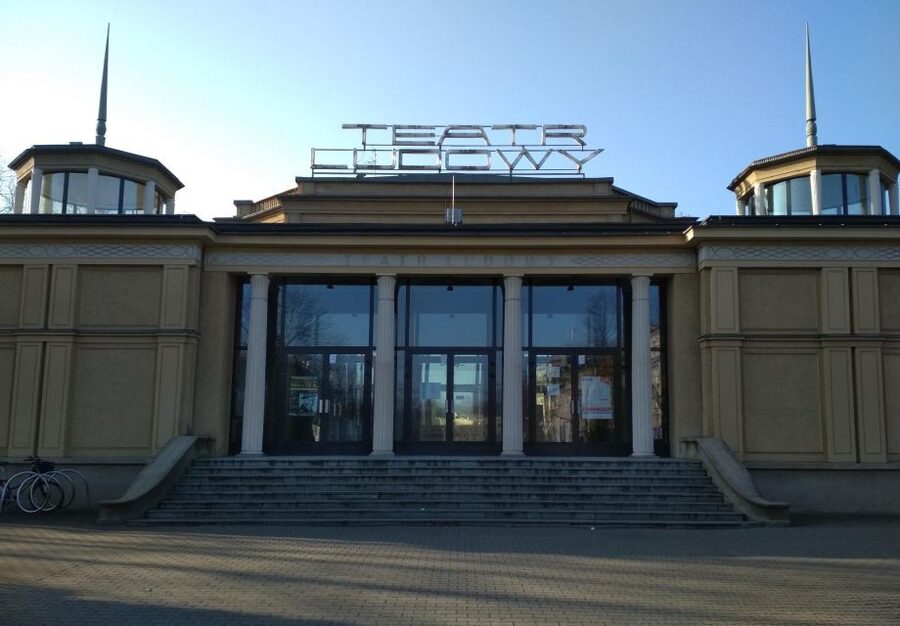
- Ludowy Theatre adds a cultural stop to a route otherwise focused on politics, housing, and religion.
- The $69 price covers a licensed private guide, while transport and gratuities cost extra.
Why Nowa Huta feels so different from Kraków
The name Nowa Huta means new steel mill. After the Second World War, Poland’s communist government planned a huge steelworks and a residential district for its workers. This was not just an industrial project. It was meant to create a new kind of city and, in the eyes of the government, a new kind of person.
Old Kraków represented religion, inherited traditions, historic institutions, and anti-socialist feeling. Nowa Huta was designed as its opposite. The government imagined residents who trusted communist ideals rather than religious belief, and who identified with the steelworks and the modern working class.
That makes the district useful for understanding Poland’s postwar history. You can see the political message in the broad avenues, monumental buildings, formal squares, and carefully planned public spaces. Yet you also see where that message failed. Catholic symbols, Solidarity activity, and local resistance became part of Nowa Huta’s story.
I like this kind of tour because the subject is not locked away in a museum. The history is spread across ordinary streets. A square tells you about official power. A church tells you about resistance. A theatre shows how culture fitted into the plan. The guide’s role is to connect those pieces.
Other communist-era tours around Kraków:
- Krakow: Nowa Huta Guided Tour in Vintage Car
★ 4.9 · 277 reviews - Legendary Private Nowa Huta Communism Tour with Crazy Guides
★ 5.0 · 262 reviews - Nowa Huta: Steelworks Administration Buildings/Shelters Tour
★ 4.9 · 160 reviews
Starting at the Solidarity monument
The meeting point is beside the Solidarity monument with the Polish words Bądź wierny, idź, meaning be faithful, go. This is a fitting place to begin because Solidarity helped turn public space into a place of political expression.
Look for the guide waiting by the monument. The tour is led in English by a licensed private guide, and the supplied information identifies the guide as the key part of the experience, but does not provide a guide’s name. One verified booking described the guide as great and the area as fascinating. That matches the main value here: Nowa Huta is much easier to read with someone explaining why its monuments and streets were planned as they were.
The meeting point also gives you a quick sense of the tour’s tone. This is not a standard sightseeing circuit of royal buildings and famous paintings. It is a walk through political memory, where the meaning of a monument can change depending on which government placed it there and which residents later challenged it.
Central Square and the 40-minute opening lesson
Central Square receives the longest single stop, about 40 minutes, and it deserves that time. It was once called Lenin Square, a name that made the political purpose of the district plain. The square was designed as a major public center, not simply as a convenient open space for nearby residents.
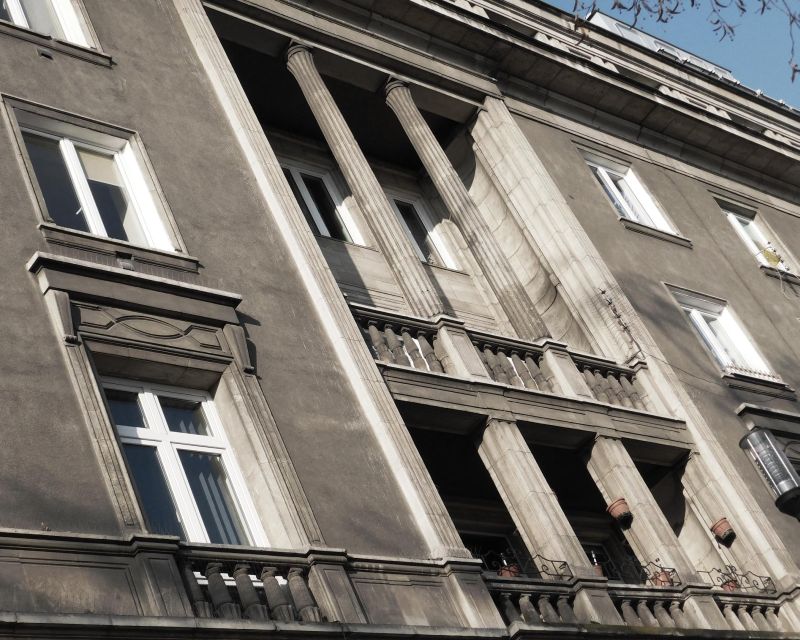
Here, your guide explains the construction history and the utopian thinking behind Nowa Huta. The surrounding architecture reflects the monumental neo-classical style associated with the Stalinist era. The scale is deliberate. Grand proportions and formal design were meant to suggest order, strength, and the importance of the socialist state.
This is the place to pay attention to the contrast between the official vision and daily life. A government could plan an ideal city on paper, but its residents still brought personal beliefs, family traditions, and religious loyalties with them. Central Square helps you see how architecture was used to shape public behavior and public feeling.
Forty minutes may sound long for one square, but the time is useful if you care about context. Without an explanation, you may notice large buildings and open space but miss the connection between urban design and communist ideology. If you prefer quick photo stops, this portion may feel slow. If you enjoy understanding why a place looks the way it does, it is one of the strongest parts of the walk.
Avenue of Roses and the city’s official face
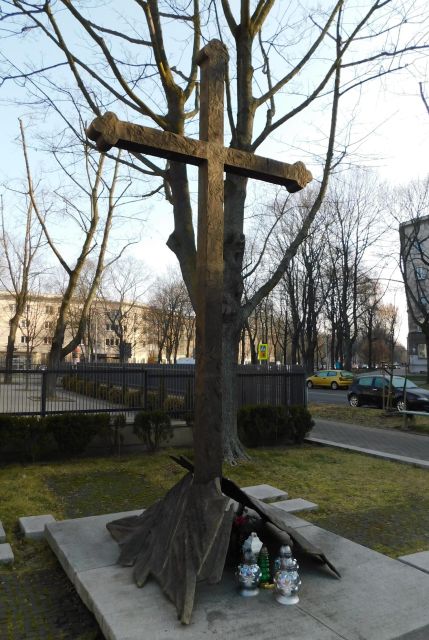
From Central Square, the route continues along Avenue of Roses, the representative street of Nowa Huta. The name sounds gentle, but the street carries a serious political purpose. It was planned as one of the district’s most important public-facing spaces, a place where the new city could present itself with confidence.
The avenue helps you understand how Nowa Huta was supposed to contrast with old Kraków. Instead of medieval layers and religious landmarks, the new district offered planned streets, monumental architecture, and a clear sense of state direction.
The guided portion here lasts about 15 minutes. That is enough to place the avenue within the larger design of Nowa Huta without letting the walk become a long architectural lecture. I would listen for the way the guide explains the relationship between the avenue, the square, and the wider workers’ district.
You may find that the most interesting detail is not one building but the overall arrangement. The city was planned to communicate an idea before anyone spoke. Its scale and order were part of the message.
A few more things to do in Kraków worth a look
- From Krakow: Auschwitz-Birkenau Guided Tour & Hotel Pickup
★ 4.5 · 33,358 reviews - From Krakow: Auschwitz-Birkenau Guided Tour & Hotel Pickup
★ 4.5 · 29,340 reviews - Krakow: Auschwitz Guided Tour with Optional Hotel Pickup
★ 4.5 · 15,280 reviews - Krakow: Auschwitz-Birkenau Guided Tour with Pickup & Lunch
★ 4.5 · 9,800 reviews
The IS-2 tank monument and industrial identity
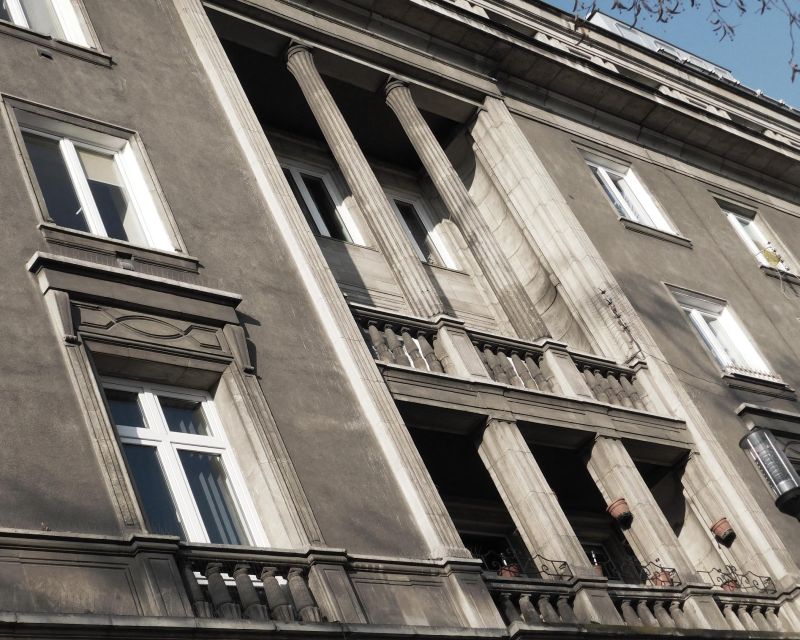
The stop at the IS-2 tank monument lasts about 10 minutes. It is brief, but it adds a different layer to the tour. Nowa Huta was built around steel production, and industrial labor was central to the district’s identity. A tank monument brings military history and heavy industry into the same public story.
This stop also reminds you that communist public spaces often carried several messages at once. A monument could honor military power, celebrate technical achievement, and reinforce the authority of the state. The guide can place the tank within the larger story of Nowa Huta rather than treating it as an isolated object.
Do not expect a long museum visit here. It is an outdoor stop within a walking route, best understood as a short pause that supports the bigger theme. If you are interested in how governments use monuments, it earns its place. If your main interest is church history or architecture, the next part of the route will likely be more meaningful.
The church that challenged a godless city
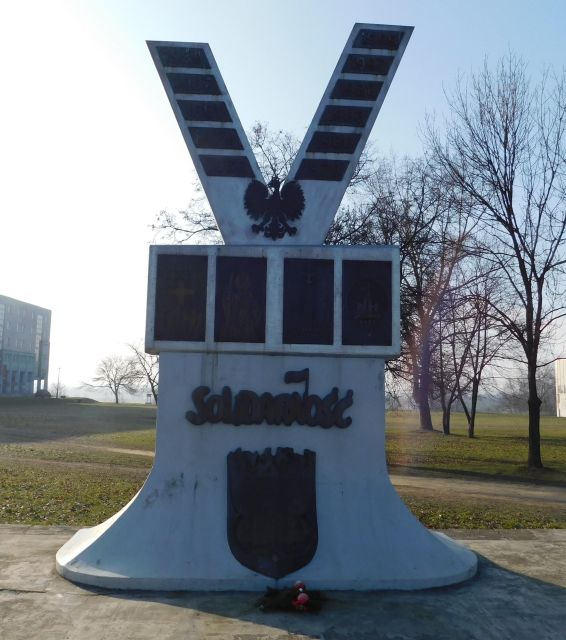
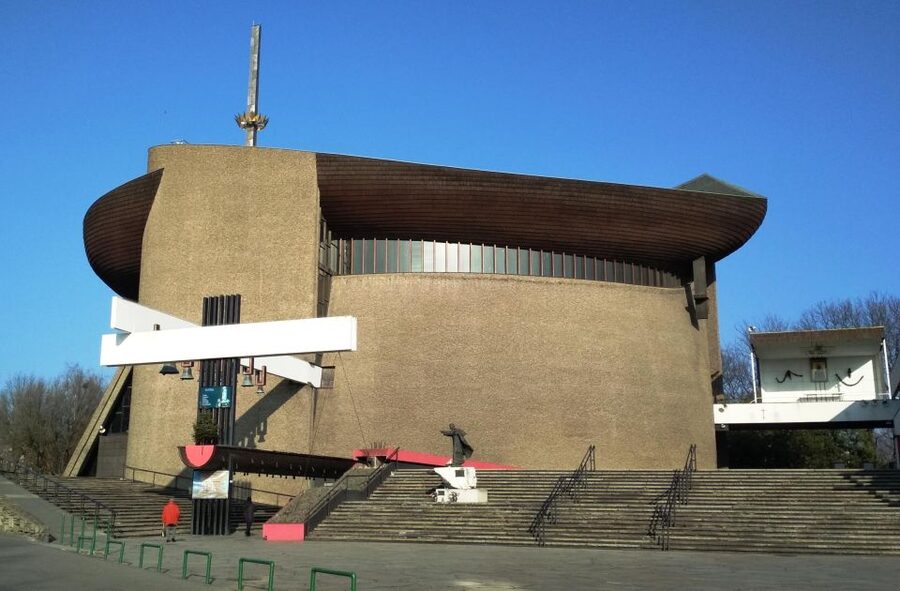
The stop at Our Lady Queen of Poland Church lasts about 20 minutes. It is one of the tour’s most important moments because it shows the clash between communist planning and Catholic belief.
Nowa Huta was intended to be a city without God. Yet its residents wanted a church, and the struggle over religious space became a major part of the district’s history. The route includes the site of the battle for the cross and the first church in the planned city. That story changes the way you view the earlier streets and squares.
The church is not simply a religious stop. It represents the limits of state power. The government could plan housing, factories, avenues, and public monuments, but it could not fully control what residents believed or demanded. The battle for the cross shows how a symbolic object could become the focus of a much larger conflict over public life.
I especially like this part of the route because it gives you a human scale. Central Square can feel monumental and official. The church story brings in ordinary residents, faith, protest, and persistence. It also helps explain why Nowa Huta became an important setting for opposition to communist rule.
The supplied information does not say that the tour enters the church, so you should think of this as a guided stop connected with the building and its setting, not assume a lengthy interior visit. The guide’s explanation is the main reason this stop matters.
Ludowy Theatre and the final 35 minutes
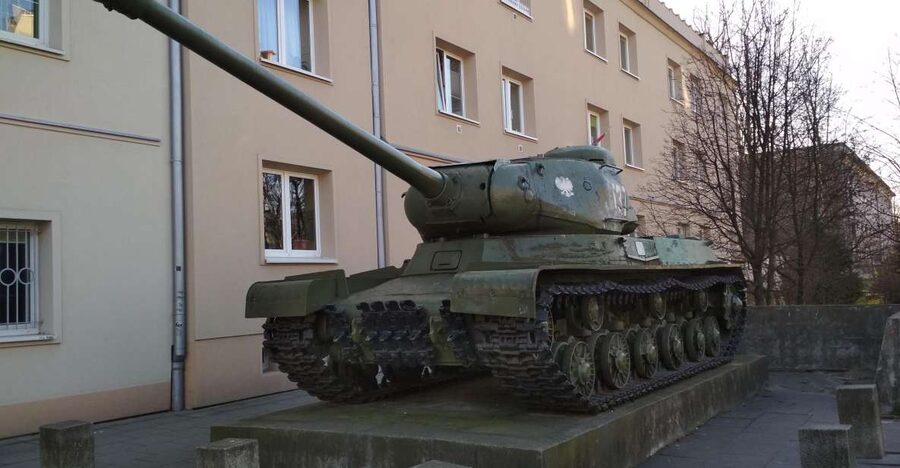
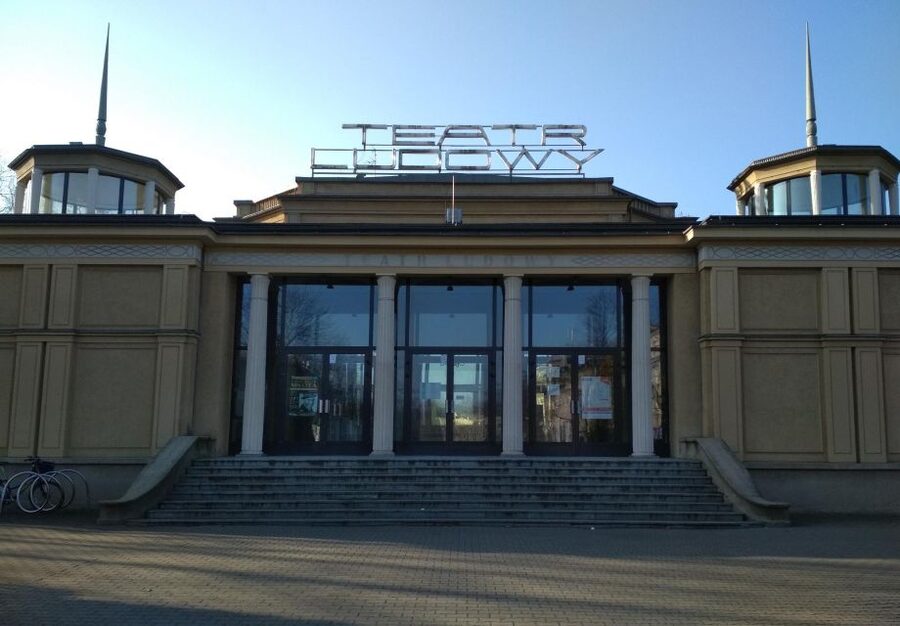
Ludowy Theatre receives about 35 minutes, making it the final major stop before returning to the Solidarity monument. This gives the route a cultural dimension. Nowa Huta was not only a place to house steelworkers. It was also meant to provide the institutions of a complete socialist city.
A theatre belongs to that vision. Culture could educate, entertain, and support the values the state wanted to promote. At the same time, theatres and other cultural institutions could become places where ideas were interpreted, questioned, or received in ways officials could not fully control.
This stop helps prevent the tour from becoming a simple story of buildings versus churches. Nowa Huta was a working city with public culture, planned amenities, and a strong civic identity. The theatre shows how the communist government tried to create a full social world, not merely an industrial zone.
With 35 minutes here, you should have time for a substantial explanation of the theatre and its place in the district. The route then returns to the Solidarity monument, bringing the walk back to the political struggle introduced at the beginning.
What the $69 price buys you
At $69 per person, this is not the cheapest way to see a few outdoor sights. The price pays for a licensed private guide and a focused two-hour explanation of a complicated subject. For me, the value depends on your interest in history and architecture.
If you simply want to photograph Central Square and Avenue of Roses, you could see those public spaces without booking a tour. The guide becomes worthwhile when you want to understand why the district was built, what it was meant to replace, and how residents pushed back against its original ideology.
The route covers seven named points, including the starting and finishing monument, with 40 minutes at Central Square, 15 minutes on Avenue of Roses, 10 minutes at the tank, 20 minutes at the church, and 35 minutes at Ludowy Theatre. That is a well-defined program for a short visit.
Transport from central Kraków is not included, so add that cost and time to your plans. The price also does not include gratuities. The tour allows cancellation up to 24 hours before the start for a full refund, and you can reserve now and pay later, which is useful if your Kraków schedule is still shifting.
Who will get the most from this walk
I would recommend this experience to you if you enjoy political history, urban planning, architecture, religion, or the story of life under communism. It is also a good choice if you have already seen Kraków’s historic center and want a very different side of the city.
The tour suits curious adults and older children who can follow a serious historical explanation. The subject includes state ideology, religious conflict, military symbols, and Solidarity, so it is more thoughtful than playful.
You may want to skip it if you have only a short time in Kraków and want to focus on the Old Town, Wawel, or major art collections. Nowa Huta is not a quick add-on from the central sights, and the experience depends on walking through a district rather than entering a series of famous attractions.
Wear comfortable shoes and allow enough time to reach the meeting point by the Solidarity monument. Since transportation is not included and exact starting times depend on availability, check the schedule before you commit to another Kraków activity.
Should you book the Nowa Huta walk?
Book it if you want Kraków beyond its medieval center. The strongest parts are the explanation of Central Square, the story of the battle for the cross, and the way the guide links Stalinist architecture with Solidarity and religious resistance.
At $69, it offers good value for a private, guided introduction to a difficult subject, but only if you want interpretation rather than a quick photo walk. The route is short, focused, and practical. It will not show every corner of Nowa Huta, yet it gives you enough context to understand why this planned socialist city remains one of Kraków’s most revealing districts.
FAQ
How long does the Nowa Huta tour last?
The walking tour lasts two hours.
What language is the tour conducted in?
The tour is conducted in English by a live guide.
What is included in the price?
The price includes a licensed private guide.
Is transportation from central Kraków included?
No. Transportation from the city center to Nowa Huta is not included.
Where does the tour begin?
The meeting point is beside the Pomnik Solidarności Bądź wierny, idź monument. Look for the guide waiting by the monument.
Which main places does the tour visit?
The route includes Central Square, Avenue of Roses, the IS-2 tank monument, Our Lady Queen of Poland Church, Ludowy Theatre, and the Solidarity monument.
Does the tour include a church visit?
The route includes Our Lady Queen of Poland Church and the site connected with the battle for the cross. The supplied tour details do not specify whether the guide takes you inside.
Can I cancel the booking for a refund?
Yes. You can cancel up to 24 hours in advance for a full refund. You can also reserve now and pay later.
Just added in Kraków
- Wawel Castle, Old Town with St. Mary’s Church Guided Tour★ 5.0 · 3 reviews
- Wawel Castle, Old Town with St. Mary’s Church Guided Tour★ 5.0 · 5 reviews
- Wawel Castle, Cathedral, Old Town and St. Mary’s Basilica★ 4.8 · 13 reviews
- Wawel Castle, Cathedral, & Rynek Underground Tour with Lunch★ 4.5 · 10 reviews
- Wawel Castle & Cathedral Skip the Line Small Group Tour★ 5.0 · 3 reviews
- Wawel Castle and Cathedral Guided Tour★ 4.6 · 44 reviews
- Wawel Castle, Cathedral, Rynek Underground Tour with Lunch★ 5.0 · 3 reviews
- Wawel Castle and Cathedral Guided Tour★ 5.0 · 8 reviews
Nowa Huta & Communism Tours, compared.
Legendary Private Nowa Huta Communism Tour with Crazy Guides
Read the review →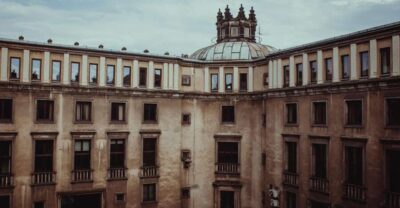
Nowa Huta: Steelworks Administration Buildings/Shelters Tour
Read the review →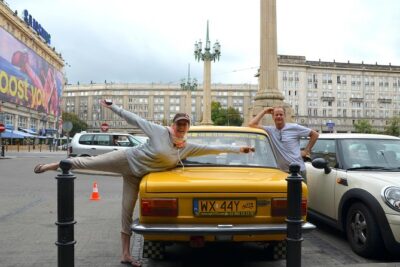
Private Tour: Warsaw’s Communist History by Retro Fiat
Read the review →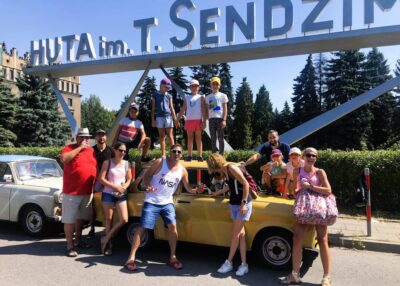
Private Nowa Huta Adventure Tour in Communist Cars
Read the review →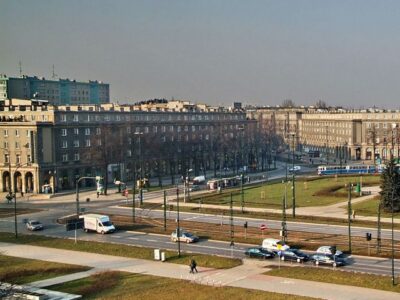

Browse the lists this tour appears in