
Reviewed · TOURS IN WARSAW
Warsaw at War 1939-1945: A Self-guided Audio Tour
Warsaw’s wartime story is told best on foot, where memorials, rebuilt streets, and quiet public squares show how much the city lost and how much it recovered. This self-guided walk links the Little Insurgent memorial, the Tomb of the Unknown Soldier, and other central landmarks with narration about Poland’s fight against both Nazi Germany and Soviet Russia.
I like the freedom to stop for lunch, photos, the Vodka Museum, or a wander through Saxon Garden without holding up a group. I also like the low price and offline maps, which make this a practical choice for exploring alone. The main drawback is navigation: the audio is easy to follow for many people, but the map arrow may not always make your next turn clear, and the off-route alert can sound when you simply cross the street.
Key points to know before you go
- A 3-kilometer route through central Warsaw: Allow about 90 minutes, though you can pause whenever you wish.
- A serious wartime focus: Hear about the Warsaw Uprising, child soldiers, Nazi occupation, Soviet control, and Poland’s long fight for independence.
- Three especially meaningful stops: The Little Insurgent memorial, the Tomb of the Unknown Soldier, and Józef Piłsudski’s statue anchor the walk.
- No live guide or group timetable: VoiceMap directs you through your phone, making the walk useful for solo visitors and independent pairs.
- Offline access is included: Download the audio, map, and route data before setting out.
- Navigation needs attention: Keep the map open when approaching turns, and expect the route warning to be sensitive.
Why this short walk tells a larger Warsaw story
This is not simply a tour of wartime monuments. It is a walk through the way Warsaw remembers destruction, resistance, and national identity.
The title points to 1939 through 1945, but the final stop reaches back to the earlier struggle led by Józef Piłsudski. That choice makes sense. To understand Poland’s wartime position, you need some idea of its long fight to regain and defend independence after years of Russian control.
The narration also places Poland between two powerful enemies. Nazi Germany invaded from the west, while Soviet Russia shaped events from the east. The story is not presented as a single battle or a single date. Instead, you get a short route through the political and military pressures that shaped modern Warsaw.
The tone is serious, but the format keeps it approachable. Professional audio production, music, and sound effects are used to give the walk a more dramatic feel. You can listen with earbuds, headphones, or a small speaker if you are walking with a few companions.
I would treat the sound design as an added layer, not a substitute for looking around. Put the phone away when the directions are clear, then pay attention to the buildings, open spaces, memorials, and rebuilt streets around you.
A few more things to do in Warsaw worth a look
- Warsaw’s Old Town A Self-Guided Audio Tour
★ 4.5 · 10 reviews - Wroclaw: E-Car Tour and Audio Guide
★ 4.6 · 1,738 reviews - Krakow: Vistula River Sightseeing Cruise with Audio Guide
★ 4.4 · 820 reviews
Starting near St. Anne’s Church and Warsaw Old Town
The walk begins at St. Anne’s Academic Church, at Krakowskie Przedmieście 68, just outside Warsaw’s famous Old Town. This is a useful starting point because you are already close to one of the city’s most important historic areas, yet the tour does not require you to spend the whole time inside a museum or behind a guide carrying a flag.
The first section sets the scene for Warsaw’s wartime experience. The city you see today is not a simple survival story. Much of Warsaw was destroyed during World War II, and the city’s modern appearance reflects years of rebuilding and remembrance.
The route covers about 3 kilometers. That is a manageable distance for most people, but remember that the tour is a walking experience rather than an audio lecture you can enjoy from a café. Wear comfortable shoes and leave room in your schedule for pauses.
You can stop along the way for photographs or food. The route passes areas where you might choose a restaurant, visit the Vodka Museum, or wander through Saxon Garden. These additions are not included in the $9.99 price, but they let you shape the afternoon around your own interests.
The Little Insurgent and the Warsaw Uprising
One of the most affecting points on the route is the memorial known as Mały Powstaniec, or the Little Insurgent. It honors the children who fought and died during the Warsaw Uprising of 1944.
The memorial brings the scale of the uprising into sharp focus. Military history often uses troop numbers, battle plans, and political decisions. This monument points instead to the human cost, including the children who became part of the resistance and paid for it with their lives.
This is a good place to pause the audio and look carefully at the memorial before moving on. The subject is difficult, and the stop deserves more than a quick photograph.
The wider Warsaw Uprising story is central to the walk. You hear about the Polish effort to resist German occupation and protect the country’s identity, even as the city faced overwhelming danger.
For me, this is where the tour’s focus on honor and sacrifice has the most weight. It does not reduce Warsaw to a collection of ruins or heroic slogans. The memorial helps you consider who bore the burden of resistance, and how young some of those people were.
From wartime suffering to a city rebuilt
The tour presents Warsaw as a city that rose again after World War II. That idea can sound neat and tidy, but the route’s memorials make clear that rebuilding did not erase the suffering.
Warsaw today has art, culture, elegant public spaces, and restored historic areas. Yet those sights exist alongside reminders of invasion, occupation, mass death, and political control. The audio helps connect the attractive city around you with the destruction that came before it.
That contrast is one reason I would choose a walking tour over a purely indoor history presentation. You are not only hearing about the past. You are moving through the present city while considering how much of it had to be rebuilt.
The narration also addresses the two major powers that shaped Poland’s wartime fate: Nazi Germany and Communist Russia. This makes the experience useful for anyone who knows the basic dates but wants a clearer sense of Poland’s position between larger states.
The route is short, so it cannot explain every event in detail. Think of it as a well-focused introduction to Warsaw’s wartime memory, with enough background to make later museum visits and independent sightseeing more meaningful.
Same base, a different kind of day:
- Warsaw: Chopin Concert in the Old Town
★ 4.8 · 2,287 reviews - Warsaw: Traditional Galar Cruise on The Vistula River
★ 4.6 · 1,640 reviews - Warsaw: Old Town Highlights Walking Tour in English
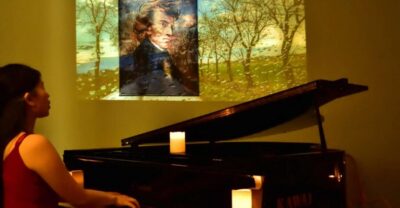
★ 4.7 · 1,516 reviews - Warsaw Concert: Chopin – Painted by Candlelights with Wine
★ 4.8 · 1,442 reviews
The Tomb of the Unknown Soldier
The walk pauses at the Tomb of the Unknown Soldier, one of Warsaw’s most solemn memorials. You hear about the monument’s history and its purpose as a place of respect for Polish soldiers who died fighting for their country.
A particularly striking detail is that the tomb contains ashes and soil from 20th-century battlefields where Polish soldiers lost their lives. That gives the monument a national scope. It is not dedicated to one battlefield alone, but to the many places where Polish soldiers died.
This stop works best if you give yourself a quiet moment. The audio provides context, but the setting also asks for simple attention. Look at the memorial, notice the open space around it, and let the idea of many battlefields gathered into one place settle in.
The Tomb of the Unknown Soldier also balances the Little Insurgent memorial. The earlier stop focuses on young resistance fighters in Warsaw. Here, the focus expands to soldiers lost across the wider history of Poland’s 20th-century wars.
You do not need an entrance ticket for the walk itself. If you decide to enter a museum or another attraction along the way, that admission is separate.
Saxon Garden, side trips, and room to wander
The route gives you permission to explore beyond the audio. That matters because a self-guided tour should not make you choose between following instructions and enjoying the city.
Saxon Garden is a natural place to add time if you want a calmer break. You might pause there, take photographs, or simply stop listening for a few minutes. The audio remains available, so you can resume when you are ready.
You may also choose lunch at one of the city’s restaurants or visit the Vodka Museum. These are optional additions, not scheduled tour stops. They can easily extend the outing beyond 90 minutes.
I like this flexible design for a first visit to Warsaw. A live group tour tends to keep moving, while this format lets you respond to the city as you find it. You can spend longer at a memorial that matters to you, or move on if you need a break.
The tradeoff is that you must manage your own time. There is no guide to answer a follow-up question, suggest a nearby café, or get the group back on course. You receive the content and route, then make the decisions yourself.
Ending with Józef Piłsudski
The final stop is the statue of Marshal Józef Piłsudski at Plac Marszałka Józefa Piłsudskiego. The tour closes with a figure remembered as a political and military hero of Polish independence.
Piłsudski fought to free Poland from Russian control and is associated with the defeat of Lenin’s Red Army at the gates of Warsaw in 1920. That event took place well before the 1939 to 1945 period, but it gives the ending a wider frame.
The final message is that Poland’s wartime struggle did not appear out of nowhere. Independence, invasion, resistance, and national survival were connected across decades.
Ending at Piłsudski’s statue also makes practical sense. You finish in a central public square rather than at an isolated site. From there, you can continue sightseeing on your own, though no onward route is provided as part of the experience.
How the VoiceMap format works in practice
You receive lifetime access to the tour through the VoiceMap application. The package includes offline audio, maps, and geodata, so you can download what you need before walking and avoid depending on a strong mobile signal during the route.
Start the tour in the app at St. Anne’s Church, then follow the spoken instructions. The system is designed to guide you as you move through the streets, with narration linked to your location.
The strongest practical feature is independence. You do not need to join at a fixed departure time, and there is no requirement to keep pace with a group. The listed operating hours cover every day and all hours, so you can begin when it suits your schedule.
Navigation is the weak point. Keep the map visible when you approach an intersection, and do not assume the audio alone will always make the next turn obvious. The route alert may be overly sensitive, even warning you when you are on the opposite side of the street.
That is not a dealbreaker, but it changes how I would use the app. Download the route first, bring headphones, and glance at the map at each turn. If your group has several people, one person can manage the phone while everyone else listens.
The experience allows up to 10 participants, though it is not presented as a live group tour. Service animals are allowed, and the activity is near public transportation. Most people can participate, but the route is still a 3-kilometer urban walk.
Is $9.99 good value?
At $9.99 per person, this is inexpensive for a 90-minute city experience. You are paying for a focused route, professional narration, sound effects, music, the app, and lifetime access rather than for a human guide or museum admission.
The value is strongest if you want structure but dislike fixed schedules. You can use the tour once during your visit, then return to the audio later because access does not expire.
It is also useful for solo visitors. A self-guided route can feel less awkward than joining a group when you want to stop often, take pictures, or read at your own pace.
The value is lower if you want conversation or detailed question-and-answer time. There is no live guide, and tickets, food, drinks, transport, and museum entry are not included.
One other point matters: the booking is non-refundable and cannot be changed for any reason. Since the price is modest but the terms are firm, book only when you are reasonably sure you can use it.
Who will enjoy this Warsaw walk?
I would recommend it most to:
- History-minded visitors who want a clear introduction to Warsaw’s wartime experience.
- Solo visitors and independent pairs who prefer to set their own pace.
- First-time visitors who want a short route through central sights before choosing longer museum visits.
- Families with older children who can manage a 90-minute walk and listen with earbuds or headphones.
- Visitors on a tight budget who want more context than a simple monument walk provides.
You may want something else if you prefer a live expert, detailed questions, or a route built around museum interiors. The sensitive navigation can also frustrate you if you want to keep your phone in your pocket from start to finish.
My advice before starting
Download the audio, map, and route data before you leave. Bring charged headphones, keep the phone accessible, and use the map at turns rather than relying only on the spoken directions.
Allow more than 90 minutes if you want to stop at Saxon Garden, eat lunch, take photographs, or visit the Vodka Museum. The stated duration covers the basic walk, not every possible detour.
Most of all, give the memorials time. The Little Insurgent and the Tomb of the Unknown Soldier are not just navigation points. They are the heart of the experience.
Should you book Warsaw at War 1939-1945?
Book this walk if you want a low-cost, flexible introduction to Warsaw’s wartime story and are comfortable guiding yourself with a phone. Its best features are the strong focus on Polish resistance, the meaningful memorial stops, offline access, and freedom to pause.
Skip it if you need a human guide or flawless turn-by-turn navigation. For an independent visitor who wants a serious history walk without a fixed schedule, $9.99 is a fair price, provided you plan around the sensitive route alerts and the non-refundable booking terms.
FAQ
How long does the tour take?
The walk takes approximately 90 minutes and covers about 3 kilometers. You can pause at any time, so stops for food, photographs, museums, or gardens will make the outing longer.
Where does the tour begin?
It begins at Kościół Akademicki św. Anny, or St. Anne’s Academic Church, at Krakowskie Przedmieście 68 in Warsaw.
Where does the tour end?
It ends at the statue of Józef Piłsudski at Plac Marszałka Józefa Piłsudskiego.
Is a live guide included?
No. This is a self-guided audio tour delivered through the VoiceMap application.
Is the tour available offline?
Yes. Lifetime access includes offline audio, maps, and geodata.
What language is offered?
The tour is offered in English.
Are entrance fees included?
No. The walking tour itself has no admission ticket, but museum tickets and entrance fees for other attractions along the route are not included.
Just added in Warsaw
- Warsaw Zoo Skip-the-Line Entry Ticket with Private Transport★ 4.8 · 3 reviews
- Warsaw Private Wilanow Palace & Garden Tour★ 4.6 · 30 reviews
- Warsaw: Vodka Tour★ 4.4 · 18 reviews
- Warsaw Wolf’s Lair with St. Lipka and Mamerki Private Guided★ 4.2 · 3 reviews
- Warsaw Uprising and WWII Old Town Walking Tour with Museum★ 4.7 · 15 reviews
- Warsaw Old Town UNESCO HERITAGE walking tour in English★ 4.5 · 23 reviews
- Warsaw: Private Vodka Tasting Night with Snacks and Pickup★ 5.0 · 7 reviews
- Warsaw: Skip-the-Line Royal Castle Guided Tour★ 4.9 · 79 reviews
Tours in Warsaw, compared.

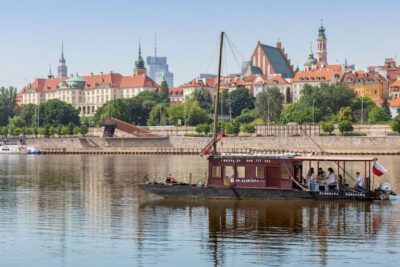
Traditional Galar Cruise on The Vistula River
Read the review →
Warsaw Concert: Chopin – Painted by Candlelights with Wine
Read the review →
POLIN Museum of the History of Polish Jews Ticket
Read the review →
#1 Pub Crawl Warsaw with Optional Premium 1 Hour Open Bar
Read the review →
Browse the lists this tour appears in