
Reviewed · TOURS IN WARSAW
Warsaw Behind the Scenes – small group tour with hotel pickup
Warsaw’s most revealing stories often sit beneath ordinary apartment blocks and busy streets. This tour follows those stories from the former Jewish Ghetto to Praga, then on to the rebuilt communist capital and the democratic city that emerged after 1989. I like the use of old photographs, and I like the quirky Żuk minibus, which turns simple transfers into part of the experience. The main drawback is that the subject matter is often grim, so this is not a light sightseeing ride.
I also like the hotel pickup, the small vehicle, and the chance to reach parts of Warsaw that a standard city tour may skip. Guides such as Marcin, Tom, Artur, Mark, and Jan are praised for clear English, strong storytelling, and a willingness to answer questions. Check your hotel eligibility carefully, and expect walking at each stop rather than a full tour from inside the vehicle.
Key points at a glance
- The former Jewish Ghetto comes first: Muranów, Chłodna Street, and Nowolipki give the tour its emotional core.
- A vintage Żuk adds character: The old Polish minibus is fun and memorable, though some vehicles lack air conditioning and seat belts.
- Praga offers a different Warsaw: This surviving prewar district has old courtyards, Belle Époque buildings, and a creative local feel.
- Old photographs make lost Warsaw visible: Guides use images to show how the city looked before and after its destruction.
- Hotel pickup saves time: The tour collects and returns you to selected hotels, with exact timing confirmed after booking.
- The history connects across centuries: You move from Nazi occupation and the uprisings to Soviet control, Solidarity, and modern Warsaw.
Why this three-hour tour shows the Warsaw beneath the rebuilt city
Warsaw can confuse you at first. Its Old Town looks historic, yet much of it was reconstructed after World War II. Wide avenues and modern apartment blocks sit beside fragments of prewar streets. The city is not one neat historical layer. It is a place rebuilt, reshaped, and rebuilt again.
This tour gives you a useful frame for understanding that change. It begins with a short introduction to Poland and Warsaw, then moves through the former Jewish Ghetto, wartime destruction, Praga’s surviving streets, communist-era planning, and the political changes of 1989.
I would place it early in your stay. Several stops are easier to understand once you know the basic sequence of events, and the ride helps you get your bearings across a wide area of Warsaw. It is especially useful if you want more than the Royal Route and reconstructed Old Town.
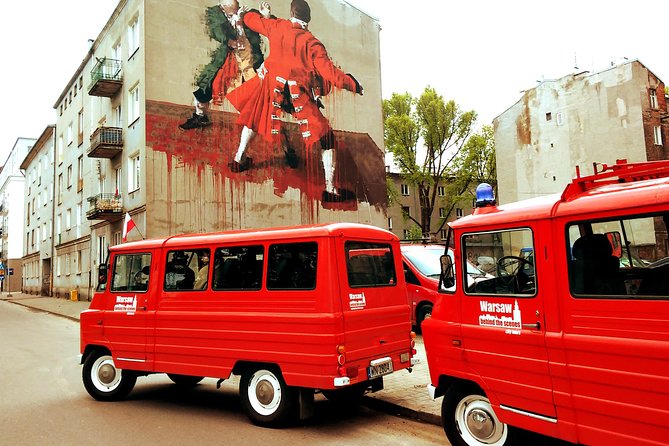
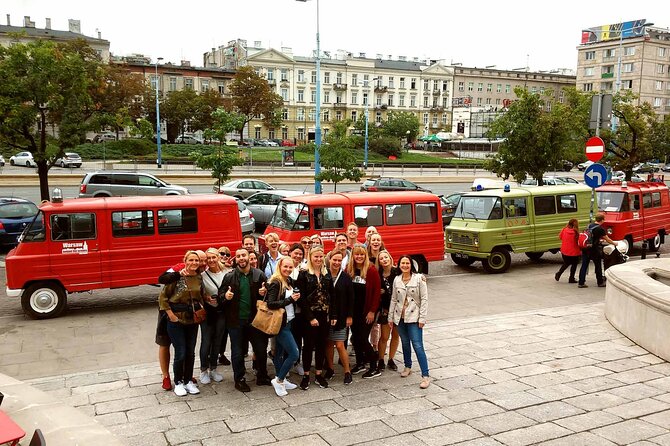
The format is practical. A guide drives you between locations, but you get out and walk at each stop. The vehicles hold up to eight people each, and the operator has a fleet of five minibuses. The overall activity can reach 39 people, so the exact feel may depend on how many vehicles are running that day. Still, each individual Żuk provides a much smaller setting than a full-size coach.
Other trips people book in Warsaw:
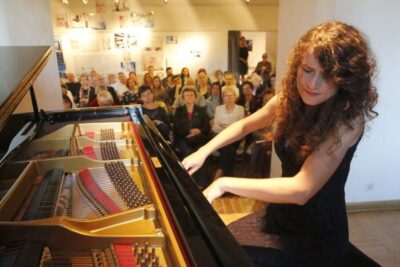
- Warsaw: Chopin Concert in the Old Town
★ 4.8 · 2,287 reviews - Warsaw: Traditional Galar Cruise on The Vistula River
★ 4.6 · 1,640 reviews - Warsaw: Old Town Highlights Walking Tour in English
★ 4.7 · 1,516 reviews
Muranów and the ground beneath the Jewish Ghetto
The first major historical stop is Muranów. Today, it looks mainly like a postwar residential district. That ordinary appearance is exactly what makes the place so difficult to read without a guide.
Muranów was built over the former Jewish Ghetto, created by Nazi Germany in 1940. The ghetto was sealed off from the rest of Warsaw, and its population was subjected to starvation, disease, forced labor, and deportations. After the war, the district was destroyed and later rebuilt, leaving modern streets over a site marked by absence.
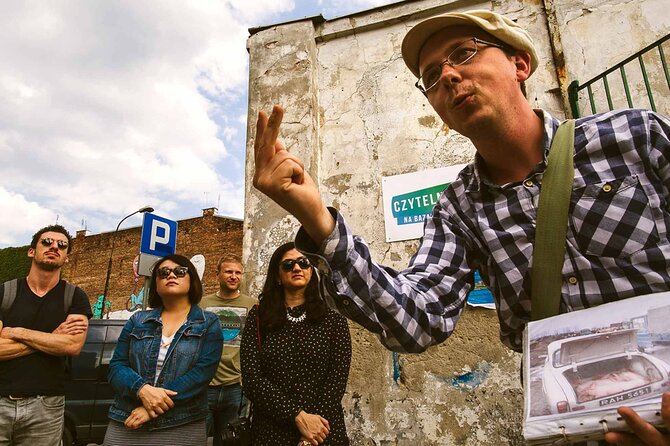
Your guide explains how the neighborhood was laid out and how little of the old physical city remains. This is where the old photographs matter. They help you picture streets, buildings, and people that are no longer visible in the present-day blocks.
The stop lasts about 20 minutes, so expect a focused explanation rather than a museum visit. That is useful if you want the city itself to serve as the setting, but it also means the guide must cover painful and complex events in a short time. If you have not studied Warsaw’s wartime history before, listen closely during the opening introduction.
Chłodna Street and the bridge shown in The Pianist
At Chłodna and Żelazna Streets, the tour turns to one of the most recognizable locations connected with the ghetto. A wooden footbridge once crossed high above the road, allowing people to move between two sealed sections while traffic continued below.
The bridge became widely known through the film The Pianist. You will not see the original structure today. Instead, your guide uses historical photographs to show its height, design, and role in the divided ghetto.
This is a good example of the tour’s method. It does not simply point at a street corner and give you a date. It asks you to compare the current road with an image of the vanished city. That comparison can make the history feel more immediate, though the stop is brief at about 15 minutes.
Do not expect a preserved wartime site at every location. Much of Warsaw’s story is presented through photographs, explanation, and careful attention to what is no longer there. That is one reason a strong guide matters so much.
Nowolipki and the Warsaw Ghetto Uprising
At Nowolipki, the focus shifts to the Warsaw Ghetto Uprising of 1943. Jewish resistance fighters made a final armed stand against deportation. The fighting lasted several weeks before the ghetto was destroyed.
The guide explains how the uprising is remembered and how its story fits into the modern city. This part of the tour is not a military sightseeing stop. It is a lesson in resistance, terror, and the deliberate destruction of a community.
I appreciate that the tour keeps the political and human context together. You are not given only a list of dates. You are shown how the events affected the city and why memorials, empty spaces, and later buildings carry meaning.
The subject can be heavy, particularly early in the day. Families with older children may find it valuable, but parents should decide if the wartime content suits their group. Children under 150 centimeters also require special planning because Polish law requires a booster seat, and availability must be checked with the operator in advance.
Same base, a different kind of day:
- Warsaw Concert: Chopin – Painted by Candlelights with Wine
★ 4.8 · 1,442 reviews - Warsaw: City Sightseeing Hop-On Hop-Off Bus Tour
★ 3.6 · 1,415 reviews - Warsaw: POLIN Museum of the History of Polish Jews Ticket
★ 4.7 · 1,142 reviews - #1 Pub Crawl Warsaw with Optional Premium 1 Hour Open Bar
★ 5.0 · 790 reviews
Bielańska and the destruction of Warsaw
The next stop broadens the story beyond the Jewish Ghetto. At Bielańska, the guide discusses the wider war, Poland’s postwar political fate, and the Warsaw Uprising of 1944.
The political background matters. Agreements between the Western Allies and Stalin left Poland under Soviet control, while many Poles hoped the 1944 uprising could help change that outcome. After the uprising failed, Nazi forces systematically destroyed much of Warsaw. About 85 percent of the city was destroyed before the Red Army entered the ruins in January 1945.
That figure is hard to grasp from a guidebook. You see the rebuilt city around you, but the tour keeps returning to the fact that the present-day capital is largely a postwar creation. The stops help explain why Warsaw can look both historic and new at the same time.
This portion is also why I would not treat the tour as a simple hop-on sightseeing loop. Its value lies in connecting places that may seem unrelated. A street corner, an apartment district, and a river crossing all become part of the same long story.
Praga Północ, the part of Warsaw that survived
Crossing the Vistula brings you to Praga Północ, one of the most distinctive sections of the tour. Much of Praga survived the war in better condition than the central districts, so it preserves older buildings, courtyards, and traces of prewar Warsaw.
The contrast is immediate in historical terms. In Muranów and the central districts, the emphasis is on destruction and reconstruction. In Praga, you see more of the old street pattern and older building stock. Belle Époque façades and traditional courtyards give the area a different feel from the planned postwar center.
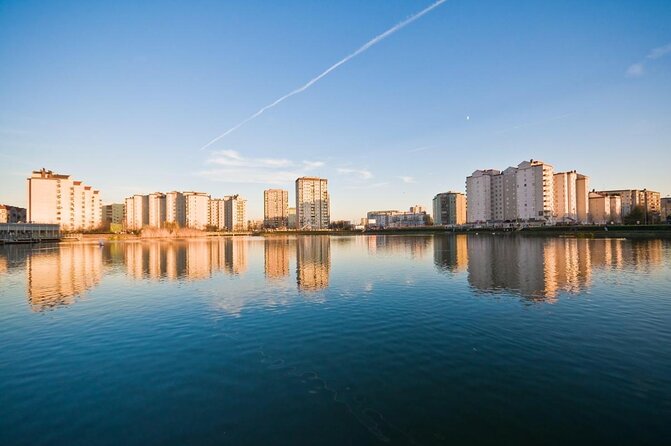
Praga was once overlooked by many sightseeing routes. It is now known for its creative energy, but it has not been completely reshaped for mass tourism. That makes the 30-minute stop useful for seeing how ordinary urban life can survive beside major historical narratives.
The river views add a welcome change of pace after the concentration of wartime material. You get a sense of Warsaw as a living city, not only as a memorial to destruction. The guide also discusses how the district has changed, so you can consider both its local identity and its newer cultural reputation.
Central Warsaw and the communist rebuilding project
Back in Śródmieście, the tour examines the former headquarters of the Polish Communist Party and the challenge of rebuilding Warsaw after 1945.
Architects wanted to create a modern, efficient capital from the ruins. Their plans, however, had to fit Soviet-inspired political demands. The result was a city shaped by practical needs, ideology, limited resources, and the desire to make a new start.
This is one of the more useful parts of the tour for understanding central Warsaw. You see why some streets feel broad and planned, why certain buildings look imposing, and why the city’s postwar identity cannot be separated from communist rule.
The stop lasts about 30 minutes, giving the guide room to explain more than the building itself. I would use this time to ask questions about daily life under communism, since the subject is not only about architecture. Several guides, including Marcin, Tom, Mark, and Artur, are praised for answering questions and adjusting the conversation to the group.
1989 and the city after communism
The final part brings the story to 1989, when the Solidarity movement and Pope John Paul II played important roles in ending communist rule in Poland.
Warsaw then entered another period of sharp change. Democracy and capitalism altered the city’s institutions, economy, buildings, and daily life. The tour ends by showing how the present city grew from all the earlier breaks and compromises.
That conclusion gives the route a clear shape. You begin with the prewar and wartime city, move through occupation and destruction, see surviving Praga, examine communist rebuilding, and finish with the return to democracy.
The tour does not claim to explain every part of Warsaw. Three hours is enough for a broad framework, not a full study of Polish history. If you want detailed Jewish history, the POLIN Museum would add much more depth. One useful approach is to take this tour first, then visit a museum afterward, when the streets and events already have a place in your mind.
The Żuk minibus, walking, and comfort
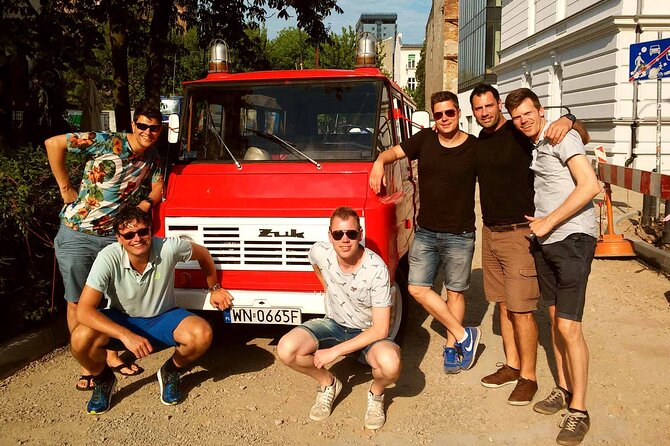
The old Żuk is part of the charm. It is a historic Polish minibus associated with the communist era, and it gives the ride a physical connection to the period discussed on the tour. Guides such as Tom, Marcin, and Mark have been singled out for making the vehicle part of the storytelling rather than treating it as a plain transfer van.
You should also understand its limits. Classic vehicles do not all have air conditioning, and some do not have seat belts, which is permitted for historic vehicles. Heating is available during winter, but summer comfort may depend on the particular vehicle and the weather.
The minibuses are mainly used to move between locations. You will walk at the stops, so wear comfortable shoes and clothing suited to the forecast. Rain does not cancel the historical content, but wet weather may make outdoor explanations and walking less pleasant.
Hotel pickup and drop-off are available only for listed hotels. After booking, the operator sends the exact pickup time through the Viator message system because several hotels may be served. If your hotel is not on the list, contact the operator for a nearby pickup point instead of assuming collection is included.
Is $133.08 a fair price?
At $133.08 per person, this is not the cheapest way to see Warsaw. The value comes from the combination of a private-feeling small vehicle, hotel transport, an English-speaking guide, and access to several districts spread across the city.
Public transport and a self-guided walk will cost far less. You can also visit many central sights independently. What you cannot easily reproduce is the route’s combination of former ghetto locations, old photographs, Praga, communist planning, and a guide who connects them in one sitting.
The price makes the most sense if you are in Warsaw for a short stay, want historical context quickly, or prefer not to work out the city’s geography yourself. It is less convincing if you mainly want famous monuments, indoor museums, or a relaxed scenic ride.
The tour is recommended by all listed participants and has a 5 out of 5 rating from 228 reviews. The strongest pattern is clear: guides are praised for their English, warmth, humor, detailed explanations, and ability to respond to questions. That human element is central to the value. A good guide can turn a bleak street corner into a meaningful place; a rushed or less engaging guide would make the same route feel much thinner.
Who should book this Warsaw tour?
I would choose it for a first or second day in Warsaw, especially if you want to understand the city before exploring it on foot. It suits adults interested in World War II, Jewish history, architecture, Polish politics, and everyday life under communism.
It also suits people who like unusual transport. The Żuk is not a luxury vehicle, but it is memorable and fits the subject better than a modern coach.
You may want a different activity if you dislike serious historical material, need guaranteed air conditioning, require seat belts in every vehicle, or want a slower museum-based program. The tour moves through many subjects in roughly three hours, so it favors breadth and local orientation over long time at any single site.
Cancellation is free up to 24 hours before the start time. Changes or cancellations inside that window are not accepted, so keep the deadline in mind when arranging your Warsaw plans.
Should you book Warsaw Behind the Scenes?
Book it if you want to see how Warsaw’s wartime destruction, communist rebuilding, and modern identity fit together. The route is strongest when paired with a guide who uses photographs well, and the highly praised guides named Marcin, Tom, Artur, Mark, Jan, and others appear to bring the subject to life with care and humor.
The main decision is comfort versus character. The vintage minibus may be warm, cramped, or short on modern safety features, but it is also what gives the tour its personality. If you can accept that tradeoff, this is a strong introduction to the less obvious parts of Warsaw, particularly Muranów, Chłodna Street, and Praga Północ.
FAQ
How long does the Warsaw Behind the Scenes tour last?
The tour lasts approximately three hours. The schedule includes several short historical stops and longer visits in Praga Północ and central Warsaw.
What time does the tour start?
The listed start time is 10:00 am. The operator confirms the exact pickup time after booking because the vehicle collects people from different hotels.
Is hotel pickup included?
Pickup and drop-off are available for hotels included on the operator’s hotel list. If your hotel is not listed, contact the operator to arrange the most convenient pickup point.
Is the tour offered in English?
Yes. The tour is offered in English.
How many people fit in each minibus?
Each minibus accommodates up to eight passengers. The operator has a fleet of five minibuses, and the overall activity can include a maximum of 39 people.
Is the tour suitable for children?
Children over 150 centimeters can be booked online. Children under 150 centimeters require a booster seat under Polish law, so you must contact the operator in advance to check availability.
Are the vintage minibuses air-conditioned and equipped with seat belts?
The classic vintage minibuses are not equipped with air conditioning, and some do not have seat belts. This is permitted for historic vehicles. All vehicles have heating for winter use.
Just added in Warsaw
- A unique walking tour of Jewish Warsaw — past and present★ 5.0 · 8 reviews
- Tour from Warsaw: Wolf’s Lair, Hitler’s HQ Zones I and II★ 5.0 · 32 reviews
- Wolf’s Lair Private Day Trip from Warsaw★ 5.0 · 50 reviews
- Wolf’s Lair & Treblinka Tour in 1 day from Warsaw★ 5.0 · 37 reviews
- Warsaw: The Original Pub Crawl★ 4.5 · 97 reviews
- Warsaw: Gun Shooting Experience with Transfers★ 4.8 · 97 reviews
- Jewish Warsaw Walking Tour★ 5.0 · 95 reviews
- Krakow and Auschwitz Small Group Tour from Warsaw with Lunch★ 4.5 · 111 reviews
Tours in Warsaw, compared.
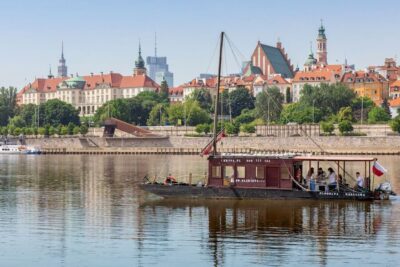
Traditional Galar Cruise on The Vistula River
Read the review →
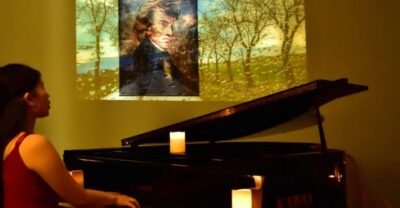
Warsaw Concert: Chopin – Painted by Candlelights with Wine
Read the review →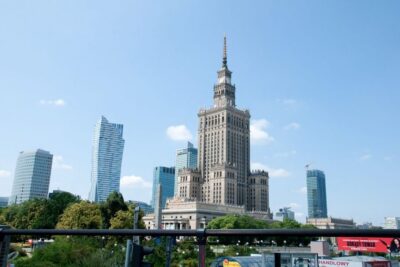
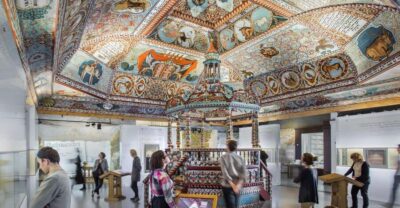
POLIN Museum of the History of Polish Jews Ticket
Read the review →
#1 Pub Crawl Warsaw with Optional Premium 1 Hour Open Bar
Read the review →
Browse the lists this tour appears in