
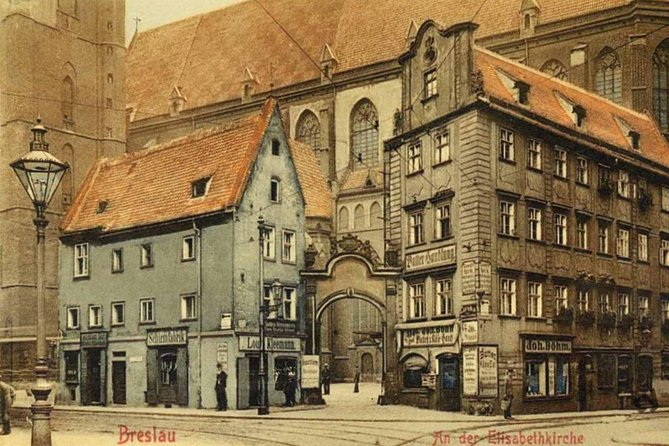
Reviewed · CITY TOURS
Wroclaw different – secrets of the city, 2 hours. 3-9 people
Wroclaw’s secrets are tucked into courtyards, bridges, cellars, and legends, not just displayed on its grand squares. This private two-hour walk links the Old Town with Cathedral Island, giving you a quick look at both famous sights and less obvious corners.
I like the small group size, limited to 3 to 9 people, and the guide’s ability to adjust the pace and answer questions. I also like the unusual subjects: a sinner’s bell, a naked fencer, Nobel winners, and a head in a wall. The main drawback is time. Two hours moves quickly, and the €6 charge for the Hexenbrücke stairs is not included.
Key points at a glance
- Rynek begins the story: Spend about 40 minutes around Wroclaw’s Market Square, Old Town Hall, medieval pillory, and Piwnica Świdnicka cellar.
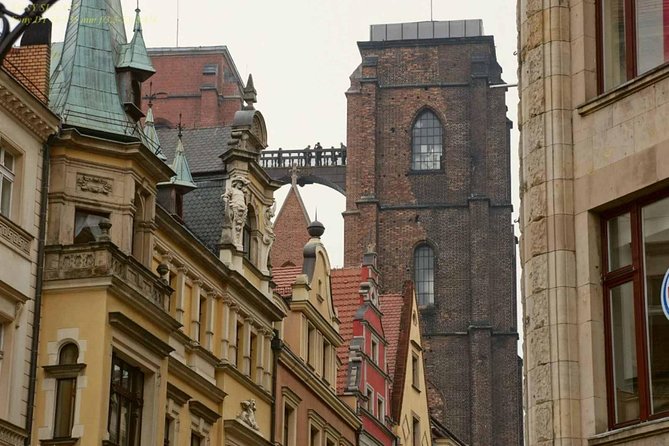
- Witch’s Bridge adds a city view: The Most Pokutnic stop includes the Legend of the Sinner’s Bell and access to the Hexenbrücke stairs for an extra €6.
- Small groups keep the walk personal: Only your group participates, with space for questions and changes in pace.
- The University stop is packed with odd details: Learn about student life in Breslau and Wroclaw, Polish and German Nobel Prize winners, and the naked fencer.
- Cathedral Island finishes the walk: The final 40 minutes cover the cathedral, local legends, and the old island setting.
- The route runs from center to island: You begin at Piwnica Świdnicka in Rynek and finish at Ostrów Tumski.
Why this Wroclaw walk feels different
Many city walks stay on the obvious route between the Market Square and major churches. This one uses those landmarks as a frame for stranger stories and local details. You still see important architecture, but the guide also points toward the legends and small features that can pass unnoticed when you walk alone.
The tour is offered in English and is private to your group. That matters here because the subject is broad. You can ask about German Breslau, modern Wroclaw, church art, university life, or the legends tied to the city. The guide is described as smiling, precise, willing to match your pace, and ready to answer questions. A second account highlights the use of side alleys that you might not find on your own.
The group size is 3 to 9 people. That is large enough for a shared outing but small enough for the guide to keep the conversation moving. If your party has different walking speeds or wants more time at one landmark, the private format gives you a better chance of getting that adjustment than a large public walk.
The price is $52.42 per person. For a two-hour private tour, the value depends heavily on how many people are in your group. A couple pays more per person than a group of eight or nine, while a larger party gets the benefit of a dedicated guide without sharing the walk with strangers. You are paying for interpretation and a private format, not for entry to a long list of attractions.
A few more things to do in Wrocław worth a look
- Wroclaw: 2-Hour Private Guided Tour by Electric Car
★ 4.8 · 805 reviews - Wroclaw: Private Old Town Guided Walking Tour (2 hours)
★ 4.8 · 275 reviews - Wroclaw: Guided City Night Tour (2 hours)
★ 4.6 · 21 reviews
Rynek: Gothic architecture and old city stories
The walk begins at Restauracja Piwnica Świdnicka, at Rynek Ratusz 1A. This puts you directly in Wroclaw’s Market Square, a useful place to start because several of the city’s most recognizable sights sit close together.
The first section lasts about 40 minutes. The Old Town Hall is the centerpiece. It is a Gothic building with a detailed exterior and an important place in Wroclaw’s old civic life. The tour presents it as the most beautiful Gothic building in present-day Poland, a strong claim, but one that gives you a clear reason to slow down and examine the stonework rather than simply pass through the square.
You also see the medieval pillory. It is an easy feature to miss among the larger buildings, yet it gives the square a more complicated past. A market square was not only a place for trade and public gatherings. It was also a setting for public authority and punishment.
The stop includes Piwnica Świdnicka, the oldest restaurant in Wroclaw. Since the meeting point is at the restaurant, the tour begins with a direct connection to one of the city’s long-running food and social spaces. The guide’s job here is not just to identify buildings, but to connect the square’s architecture with the people and activities that once filled it.
No admission ticket is included or needed for this portion of the walk. That keeps the opening simple. You can focus on the square, the exterior sights, and the guide’s explanations without stopping for an entry procedure.
Most Pokutnic and the Hexenbrücke fee
The next stop is Most Pokutnic, known in English through the name Witch’s Bridge. The visit lasts about 20 minutes and centers on the Legend of the Sinner’s Bell.
This is where the tour’s title makes sense. Instead of treating Wroclaw as a collection of dates and architectural labels, the guide uses stories to explain how people have remembered particular places. The bridge also gives you a view of the city, adding a change in perspective after the ground-level streets around Rynek.
There is one practical detail to handle before you book. Entry to the Hexenbrücke stairs is not included and costs €6 per person. The tour information specifically lists the stairs as the paid part, so you should allow for that extra charge if you want to go up. If you prefer to avoid the fee, the stop still includes the legend and the city view, but the full stair experience would not be part of your visit.
This is also a spot where the two-hour schedule can feel tight. You have 20 minutes here, and the route still has three more substantial stops. If you enjoy views and want time for photographs, tell the guide early. The private setting may make it easier to adjust the pace, but there is only so much time in the tour.
St. Elizabeth’s Church and the angels overhead
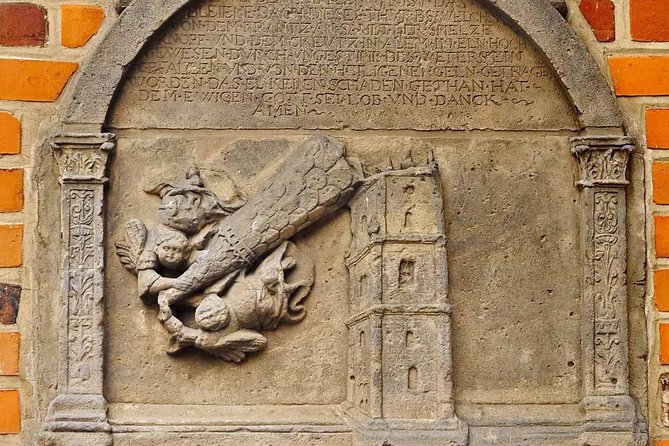
The Church of St. Elizabeth of Hungary receives about 10 minutes. It is a short stop, but the details are distinctive.
The church is connected with Engler’s organ and altar houses. The tour also points out the highest tower in Wroclaw and the story of the angels saving the church. These details give you several ways to look at the building: as a place of worship, as a work of architecture, and as a setting for local stories.
Ten minutes is enough for an introduction, not an extended visit. If church interiors are your main interest, you should treat this as a fast orientation rather than a long study session. The stop has no admission fee, which keeps the pace easy and avoids another paid entry.
The mention of Engler’s organ is especially useful for visitors who might otherwise focus only on the exterior. You are given a reason to look upward and inward, not just toward the tower. The altar houses add another small detail for the guide to point out as the group moves through the church area.
Same base, a different kind of day:
- Wroclaw: E-Car Tour and Audio Guide
★ 4.6 · 1,738 reviews - Wrocław: Old Town and Ostrów Tumski Walking Tour in English
★ 4.8 · 311 reviews - Old Town Wrocław Walking Tour
★ 5.0 · 249 reviews - Wroclaw: City Tour Sightseeing By Golf Cart Shared Or Privat
★ 4.8 · 189 reviews
University of Wroclaw: Breslau, Nobel winners, and the naked fencer
The University of Wroclaw is another 10-minute stop, but it covers a wide range of subjects. The guide discusses student life in both Breslau and Wroclaw, linking the city’s German and Polish identities.
This is one of the tour’s best stops for understanding how names and political borders shape a city. Breslau and Wroclaw refer to different periods and identities connected to the same place. The short explanation helps you see Wroclaw as a city with more than one cultural chapter.
The stop also includes Polish and German Nobel Prize winners. That detail connects the university to a broader intellectual story, while the naked fencer adds the kind of odd local feature that makes a walking tour memorable. You may not remember every date from a city visit, but an unusual statue or story can help fix the place in your mind.
The 10-minute limit means the guide will keep this section focused. If you have a particular interest in the university or in the history of Breslau, use the private format to ask a question while you are there. The tour is not designed as a full university visit, and the information provided does not include admission to an interior space.
Cathedral Island and the final 40 minutes
The last section takes you to Ostrów Tumski, or Cathedral Island, where the tour ends. This is the longest stop after Rynek, with about 40 minutes devoted to the island and its cathedral.
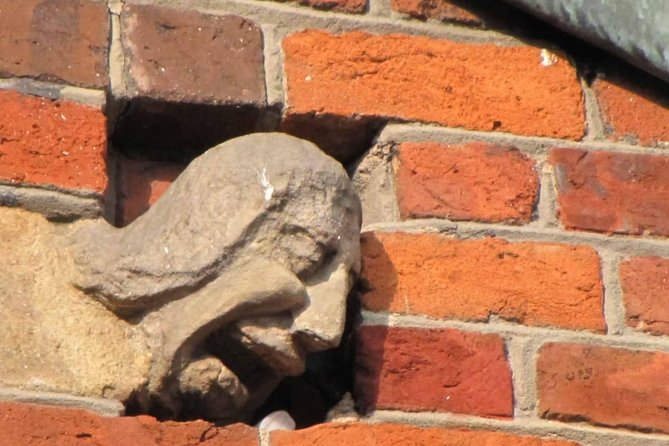
Cathedral Island gives the walk a different mood from the commercial center. The route shifts from the Market Square’s civic buildings and restaurant cellar to religious landmarks and older local traditions. The cathedral is the central sight, while the guide adds legends about the head in the wall and Silesian dumplings.
Those subjects show the range of the tour. You are not only looking at stonework and church architecture. You are also hearing how unusual stories and food traditions help people explain a place. Silesian dumplings connect the tour to regional culture, while the head in the wall provides a more curious and slightly eerie local detail.
Ending here is practical. You do not return to Rynek, so you should plan your next stop from Cathedral Island. The tour finishes at Ostrów Tumski, Wroclaw, and the end point is not the same as the starting point. That is useful if you want to continue exploring the island, but less convenient if you need to return immediately to a hotel near the Market Square.
The walk is near public transportation, and most people can participate. Still, the Hexenbrücke stairs involve an extra paid entry, so consider your comfort with stairs before adding that part.
What the private format really gives you
The guide is provided only for your group. This is the clearest difference between this experience and a standard public city walk. You do not have to fit into a large group’s questions, and the guide can respond to your interests.
The feedback supplied about the experience gives two useful clues about the guiding style. The guide is described as precise, cheerful, and able to adapt to the group’s rhythm. The guide also uses alleys that are easy to miss if you follow only the main streets.
That does not mean every minute will be customized. The route has five named stops and a fixed two-hour length, so the guide must keep moving. But the small group gives you a better setting for questions and quick changes than a large tour would.
This format suits you best if you like stories, want a guide to connect several periods of history, and prefer a short private orientation early in your stay. It is less suitable if you want long interior visits, extended photography time, or a slow architectural study of each building.
Timing, price, and practical planning
The advertised duration is approximately two hours. The planned stops add up to 120 minutes: 40 minutes in Rynek, 20 minutes at Most Pokutnic, 10 minutes at St. Elizabeth’s Church, 10 minutes at the university, and 40 minutes on Cathedral Island.
That schedule is efficient. It also leaves little spare time. Arrive ready to walk, and avoid planning a tight appointment immediately afterward. The final stop is on Cathedral Island, not back at the original meeting point.
At $52.42 per person, the price is easiest to justify for a group of several people. You receive a professional guide for your party, an English-language route, and a private experience linking the central square with Cathedral Island. The value is lower if you only want a quick list of sights, since many of the stops are viewed without an included admission.
The only stated entry charge is the Hexenbrücke stairs, at €6 per person. Group discounts are available, though the exact discounted price is not specified. Confirmation is provided at booking, and free cancellation is available if you cancel at least 24 hours before the local start time. Changes or cancellations made less than 24 hours ahead are not accepted for a refund.
Who should book this Wroclaw experience?
I would choose this walk for a first visit when I wanted a quick sense of how Wroclaw fits together. You get the civic heart at Rynek, a church, the university, a city view, and Cathedral Island in one compact route.
It also suits families and small groups who want a guide to keep the pace flexible. The unusual stories should help hold attention better than a long sequence of dates. The English-language service makes it useful for anyone who wants local explanation without arranging several separate visits.
I would be more cautious if your priority is museum time or detailed church interiors. The schedule gives most stops only 10 minutes, and the tour does not include a broad set of paid entries. You are buying a guided city walk, not a series of full building visits.
Should you book it?
Book this tour if you want a private, story-led introduction to Wroclaw that reaches beyond the main square. The small group, English-language guide, side alleys, Cathedral Island finish, and unusual subjects give it a clear purpose.
Skip it if you want to move slowly, avoid stairs, or spend most of your time inside historic buildings. For everyone else, the route offers a useful balance: major sights to anchor your map, local legends to make them memorable, and enough flexibility to ask questions along the way.
FAQ
How long does the Wroclaw tour last?
The tour lasts approximately two hours.
How many people can join the private tour?
The experience is designed for groups of 3 to 9 people. Only your group participates.
What language is the tour offered in?
The tour is offered in English.
Where does the tour begin?
The meeting point is Restauracja Piwnica Świdnicka Wrocław, Rynek Ratusz 1A, 50-106 Wrocław, Poland.
Where does the tour end?
The tour ends at Ostrów Tumski, also known as Cathedral Island, in Wroclaw.
Is entry to the Hexenbrücke stairs included?
No. Entry to the Hexenbrücke stairs costs €6 per person and is not included.
Just added in Wrocław
- Wroclaw to Rock City in Adrsprach★ 4.5 · 10 reviews
- Wroclaw to Rock City Adrspach in Czech Republic Private Tour including tickets★ 4.5 · 8 reviews
- Wroclaw to Project Riese and Gross Rosen Museum – WW2 Tour including tickets★ 5.0 · 13 reviews
- Wroclaw to Project Riese and Ksiaz Castle Private Tour★ 5.0 · 10 reviews
- Delicious Wroclaw Vodka Tour★ 5.0 · 14 reviews
- Wroclaw to Rock City in Adsprach and Church of Peace in Świdnica Private Tour★ 5.0 · 3 reviews
- Wroclaw to Prague Day Trip★ 5.0 · 5 reviews
- Wroclaw Old Town Highlights Private Walking Tour★ 4.0 · 5 reviews
City Tours, compared.
Gdańsk City Sights & History Guided Walking Tour in English
Read the review →
Extended City Sightseeing Tour – Eco Buggy Golf Cart
Read the review →
Private Tour: Warsaw City Sightseeing by Retro Fiat
Read the review →Browse the lists this tour appears in