
Reviewed · MUSEUMS
Krakow: Museum of Living Butterflies 2+1
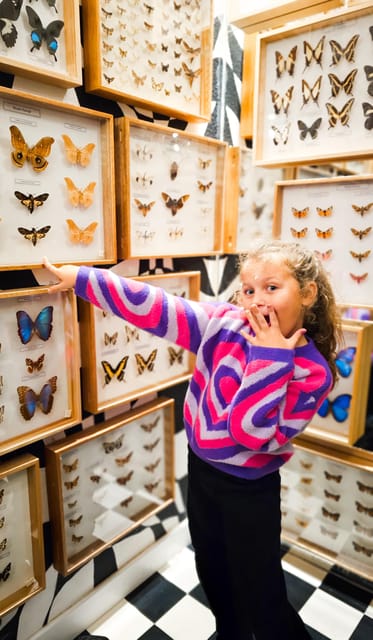
The most striking part of Krakow’s Museum of Living Butterflies is the chance to see these insects as living creatures, not just pinned specimens behind glass. You can study their colors, wing patterns, movement, and delicate scales while learning how butterflies fit into the wider natural world.
I like two things here: the worldwide range of species, and the chance to connect beauty with useful science. You can also take photographs, which makes the visit more rewarding than a quick look at display cases. The main consideration is that this is a self-guided museum visit, not a guided tour, and some areas may be difficult for visitors with mobility impairments.
Key points at a glance

- Living butterflies from around the world: See local and exotic species in one compact museum visit.
- More than pretty wings: Learn about Lepidoptera, anatomy, life cycles, scales, and ecosystem roles.
- Photo-friendly visit: Photography is allowed, but flash is prohibited to protect the butterflies.
- Small-group pricing: The $36 rate covers up to three people, making it better value for a pair or small family than for one person.
- Flexible one-day admission: You can use the admission on the selected day, with starting times shown when you check availability.
- Simple, independent format: Admission includes all exhibition areas, but no guide, food, or beverages.
Seeing butterflies as living animals
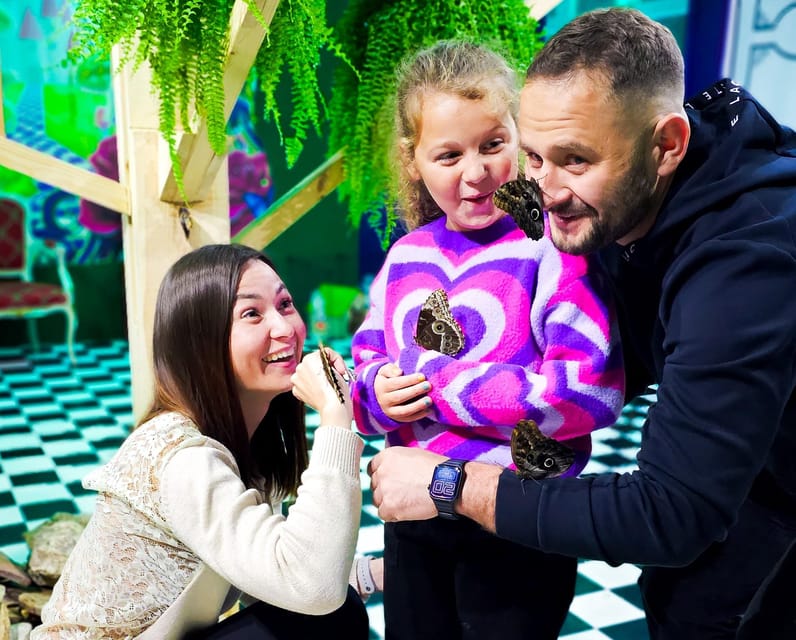
A butterfly museum can mean two very different things. Some focus on preserved specimens, where the pleasure comes from comparing wings and markings. Krakow’s Museum of Living Butterflies puts the emphasis on live insects, so you get a more immediate sense of how they move, rest, feed, and use their wings.
That difference matters. A preserved specimen lets you inspect a pattern closely, but a living butterfly gives you behavior as well as color. One may sit still long enough for a photograph, while another may move quickly through the exhibition area. I would plan to slow down rather than rush from one display to the next.
The collection includes species from different parts of the world, with both local and exotic examples. The exact mix may vary, as living collections are not fixed displays, but the central appeal remains the same: you can compare butterflies that share the same basic body plan while looking very different in color, size, and wing pattern.
For families, this creates an easy starting point for questions. Why are some wings bright? Why do others blend into their surroundings? Which butterflies are active in daylight, and which kinds are active at night? The museum gives you the subject matter to explore without requiring specialist knowledge.
A few more things to do in Kraków worth a look
- Auschwitz-Birkenau Museum and Memorial Guided Tour from Krakow
★ 4.5 · 1,510 reviews - Krakow: Rynek Underground Museum Guided Tour
★ 4.6 · 1,122 reviews - Krakow Schindler’s Factory Museum Guided Tour in English
★ 4.5 · 650 reviews
What you learn about Lepidoptera
The educational side of the museum reaches beyond naming colorful insects. Butterflies and moths belong to the order Lepidoptera, a group defined in part by wings covered in tiny scales. Those scales create the familiar patterns and colors you see when light catches a wing.
This is a useful detail to notice during the visit. A butterfly’s wing can look painted from a distance, but its appearance comes from countless small scales. The museum helps you look more closely at a feature that is easy to admire but easy to overlook.
You can also learn about the butterfly life cycle. The subject includes the change from one stage to the next, rather than treating the adult butterfly as the whole story. That makes the visit especially useful for children, since it links a recognizable flying insect with the less familiar stages that come before it.
Anatomy is another focus. You can use the living collection to connect what you learn in the educational material with a real insect in front of you. The experience does not depend only on reading a label. You are encouraged to observe body shape, wings, coloring, and movement together.
The museum also explains the place of butterflies in ecosystems. That adds weight to what might otherwise be a purely visual stop. Their diversity is not only something to admire. It is part of the natural variety the museum wants you to understand and help protect.
A visit built around observation

Since no guided tour is included, you set your own pace. That is good news if you want time for photographs or prefer to read only the subjects that interest you. It also means you should not expect a guide to lead you from one section to the next or answer questions throughout the visit.
I would make the first pass slowly. Look at the butterflies before reaching for your camera. Notice which species are easy to spot, which colors repeat across different insects, and how the living displays differ from one another.
Then take a second look at the educational material. The information on anatomy, life cycle, wing scales, and day-active or night-active species will make the visual part more meaningful. You will have a better idea of what you are seeing instead of simply collecting photographs.
The visit is valid for one day, with available starting times shown during booking. The supplied information does not give a fixed visit length, so you should check the selected time before planning the rest of your Krakow day. It is best treated as a focused museum stop rather than an all-day attraction.
There is also no food or drink included. That is not a major issue for a short museum visit, but it matters if you are planning a full afternoon around it. Eat before or after, and keep your attention on the butterflies while inside.
Photography without flash
Photography is included as part of the experience, and colorful butterflies give you plenty to look at through a camera. A photograph can also help you compare wing patterns later, especially if you take time to notice species that look similar at first glance.
The strict rule is simple: do not use flash. Flash photography is prohibited inside the museum to protect the butterflies. Check your camera or phone before entering, and switch off automatic flash rather than relying on a last-second adjustment.
You should also bring patience. A living butterfly does not pose on command, and the most attractive angle may appear only briefly. The museum’s photo opportunity is best understood as a chance to observe and wait, not as a guarantee of a perfect close-up.
I like that photography is allowed without turning the visit into a photo-only exercise. The educational material gives you a reason to put the phone down and look at the insects themselves. If you are visiting with children, you can make a small game of spotting colors and patterns before taking pictures.
Same base, a different kind of day:
- From Krakow: Auschwitz-Birkenau Guided Tour & Hotel Pickup
★ 4.5 · 33,358 reviews - From Krakow: Auschwitz-Birkenau Guided Tour & Hotel Pickup
★ 4.5 · 29,340 reviews - Krakow: Auschwitz Guided Tour with Optional Hotel Pickup
★ 4.5 · 15,280 reviews - Krakow–Zakopane: Cable Car, Chocholow Baths, Cheese & Vodka
★ 5.0 · 10,720 reviews
What the $36 group price means
Admission costs $36 per group of up to three people. For three visitors, that works out to $12 each. For two, it is $18 each. A solo visit costs the full group rate, so this option makes the most financial sense for a couple, parent with two children, or three friends.
That pricing is worth considering carefully. The experience is not a long guided excursion with transport, meals, or several scheduled stops. You are paying for access to the museum and its exhibition areas, along with the chance to observe and photograph the living collection.
For a small group, the value improves because one booking covers everyone. It also keeps the visit private in the practical sense that you are not being placed in a large tour group with a guide. Still, if you are alone and want a long museum experience, the cost may feel high compared with the likely length of a focused visit.
The package includes admission and access to all exhibition areas. It does not include a guided tour, food, or beverages. That clear division helps you judge the price honestly: this is a compact educational attraction, not a full-service outing.
The option to reserve now and pay later is useful if your Krakow plans are still shifting. You can hold the place without paying immediately, and free cancellation is available up to 24 hours in advance for a full refund. Check the exact terms shown at booking, especially if your schedule may change.
Access, walking, and comfort
The museum is wheelchair accessible in most areas, but some sections may be challenging for people with mobility impairments. If full access is important to you, contact the provider before booking and ask about the specific areas you expect to use.
Comfortable shoes are recommended because the visit involves a lot of walking. That may sound minor, but it affects how much attention you can give the displays. You will enjoy the butterflies more if you are not distracted by tired feet.
The information does not specify seating, rest points, or the exact layout. For that reason, I would avoid making a tight connection immediately after the museum. Give yourself enough time to move through the exhibition areas at an easy pace and to stop for photographs.
Families should also think about the age and patience of their children. The live butterflies offer an immediate visual hook, while the life cycle, anatomy, and ecosystem material adds substance. Younger children may focus on movement and color; older children can get more from the science.
Who will enjoy this most
I would choose this museum for anyone who likes nature, photography, or unusual indoor attractions. It also suits visitors looking for a break from Krakow’s historic streets and major monuments, especially when you want something quieter and more focused.
It is a strong pick for a small family group. The three-person limit fits the price neatly, and the subject is easy to understand without preparation. Adults who already know something about insects can still enjoy comparing species and examining the wing scales and patterns.
The visit is less suitable if you want a guide, a large collection of historical objects, or a full itinerary with transport and meals. It also may not be ideal for someone who dislikes enclosed insect displays or needs every part of an attraction to be fully wheelchair accessible.
The clearest praise for the experience is its unusual nature and its ability to add to your understanding. That combination is important. The museum is not only a place to look at beautiful wings, and it is not a classroom without visual appeal. You get both, as long as you take time with the exhibits.
How to make the most of your time
Before you arrive, check the available starting times and select a schedule that does not force you to hurry. Since the admission is valid for one day rather than tied to a long, fixed program, you have some flexibility, but the exact timing still matters for your wider plans.
Bring a phone or camera if you want photographs, then turn off the flash. Wear comfortable shoes and avoid planning a meal inside, since food and beverages are not included.
During the visit, try this simple order:
- First, watch the living butterflies without taking pictures.
- Next, compare local and exotic species and notice their different colors and patterns.
- Then, read about Lepidoptera, wing scales, anatomy, and the life cycle.
- Finally, take photographs of the butterflies that caught your attention.
This approach keeps the visit from becoming a quick walk past bright wings. It also helps you remember what you saw. The museum’s educational aim is tied to protecting biodiversity, so the strongest experience combines observation with a little curiosity.
Should you book the Museum of Living Butterflies?
Book it if you want a short, distinctive Krakow activity that combines living nature with basic science. The $36 price is reasonable for up to three people, particularly when shared by a small family or pair, and the photo permission adds value for visitors who enjoy recording unusual sights.
I would hesitate only if you need a guided experience, have serious mobility concerns, or are booking alone and expect a long attraction for the price. For everyone else, this is an easy independent visit with a clear purpose: see butterflies from around the world, understand more about them, and leave with a better sense of why their variety deserves protection.
FAQ
How much does admission cost?
Admission costs $36 per group of up to three people.
How long is the admission valid?
The admission is valid for one day. Starting times can be checked when you look at availability.
Are guided tours included?
No. Guided tours are not included, so you visit the museum independently.
Can I take photographs inside?
Yes. Photography is allowed inside the museum, but flash photography is not permitted.
Why is flash photography prohibited?
Flash photography is not allowed to protect the butterflies.
Is the museum wheelchair accessible?
The museum is wheelchair accessible in most areas, but some sections may be challenging for people with mobility impairments.
Should I wear comfortable shoes?
Yes. Comfortable shoes are recommended because the visit involves a lot of walking.
Are food and drinks included?
No. Food and beverages are not included in the admission.
Just added in Kraków
- Wawel Castle, Old Town with St. Mary’s Church Guided Tour★ 5.0 · 3 reviews
- Wawel Castle, Old Town with St. Mary’s Church Guided Tour★ 5.0 · 5 reviews
- Wawel Castle, Cathedral, Old Town and St. Mary’s Basilica★ 4.8 · 13 reviews
- Wawel Castle, Cathedral, & Rynek Underground Tour with Lunch★ 4.5 · 10 reviews
- Wawel Castle & Cathedral Skip the Line Small Group Tour★ 5.0 · 3 reviews
- Wawel Castle and Cathedral Guided Tour★ 4.6 · 44 reviews
- Wawel Castle, Cathedral, Rynek Underground Tour with Lunch★ 5.0 · 3 reviews
- Wawel Castle and Cathedral Guided Tour★ 5.0 · 8 reviews
Museums, compared.
Auschwitz-Birkenau Museum and Memorial Guided Tour from Krakow
Read the review →
POLIN Museum of the History of Polish Jews Ticket
Read the review →

Krakow Schindler’s Factory Museum Guided Tour in English
Read the review →
Auschwitz Birkenau Museum Guided Tour with Pickup
Read the review →
Browse the lists this tour appears in