
Reviewed · SCHINDLER'S FACTORY TOURS
Krakow: Schindler’s Factory Tour & Skip-the-Line Entry
Krakow’s Schindler Factory is less a shrine to one man than a carefully staged account of a city under Nazi rule. You’ll walk through recreated streets, watch wartime film on a tram, see Schindler’s preserved office, and follow the changing lives of Polish and Jewish residents from 1939 to 1945. The museum puts daily life beside large historical events, which makes the subject easier to grasp.
I like two things especially: the theatrical design by stage designer Michał Urban and theatre director Łukasz Czuj, and the way the tour connects Schindler’s factory with Krakow’s wider wartime story. Skip-the-line entry also saves useful time. The main drawback is that some visitors find the tour more about Krakow during the occupation than about Oscar Schindler himself, and a fast guide may leave you wanting more time with the written displays.
Key points to know before you go
- Schindler’s office is preserved inside the former factory administration building, giving the visit a direct link to the man made famous by Schindler’s List.
- The museum covers both Polish and Jewish life, as well as the Nazi occupation that shattered Krakow’s long Polish-Jewish connections.
- The permanent exhibition uses theatrical spaces, including a recreated city, a tram, a Jewish apartment, and the Hall of Choices.
- A guide leads the 90-minute visit, with tours offered in English, German, French, Italian, and Spanish.
- The $49 price includes entry and a professional guide, but not food or drinks.
- Bring your passport or ID, and leave food, drinks, luggage, and large bags behind.
What this Schindler Factory visit is really about
The name Schindler draws many people here, naturally. Steven Spielberg’s film made the factory and its owner famous, but the museum’s focus is broader. You’ll learn how Krakow changed under Nazi occupation, how public and private life were controlled, and how both Polish and Jewish residents faced a violent break with the city’s past.
That distinction matters. If you arrive expecting a museum devoted only to Oscar Schindler, you may feel the visit moves away from him too often. If you want a fuller account of Krakow from 1939 to 1945, the wider scope is a strength.
I appreciate that the exhibition does not treat wartime history as a string of dates and military movements. It shows the city through apartments, streets, workplaces, photographs, personal accounts, films, and objects. You get a sense of what occupation did to ordinary routines, not just what happened in government offices or on battlefields.
The exhibition also places Poles, Jews, and Nazi occupiers within the same story. That approach gives you useful context, though the subject is painful and the presentation can be emotionally heavy. Plan this visit for a time when you can give it your attention.
More Schindler's Factory tours from Kraków:
- Krakow: Oskar Schindler’s Factory Entry Ticket & Guided Tour
★ 4.2 · 3,793 reviews - Krakow: Schindler’s Factory Tour with Entrance Ticket
★ 4.5 · 3,182 reviews - Krakow: Schindler’s Factory Skip-the-Line Ticket
★ 4.4 · 3,105 reviews
Entering at Lipowa 4 and meeting your guide
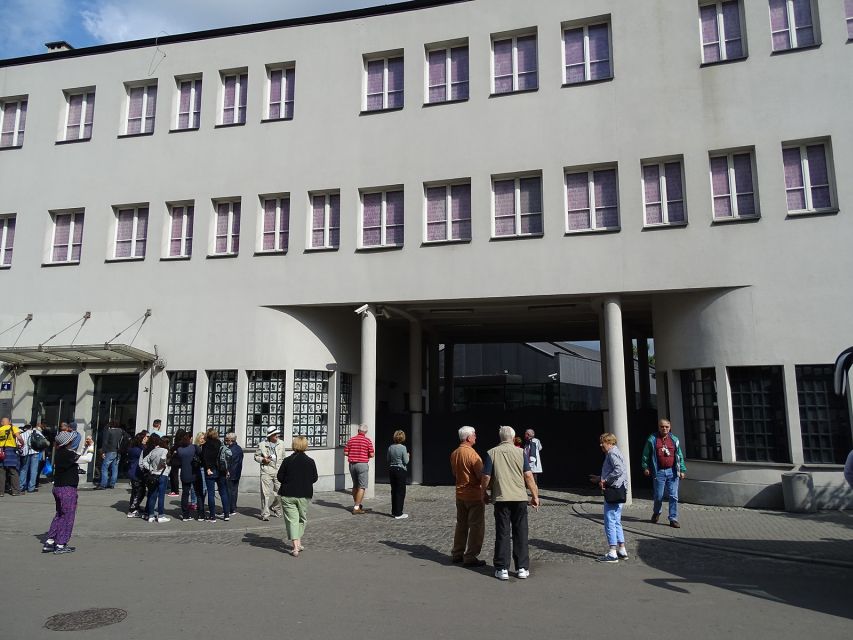
The meeting point is Lipowa 4, Krakow, at the front entrance of the museum. Look for the guide holding an excursion.city sign. The tour lasts about 90 minutes, so arrive ready to begin promptly.
Your entrance fee and professional guide are included in the $49 price. The skip-the-line element is useful because it takes care of admission arrangements and gives you more time for the museum itself. It does not turn the visit into a private tour, and group size can vary. One past booking had only three people, which made it easy to ask questions and move at a comfortable pace.
The guide’s quality matters here. Strong guides have been praised for clear English, friendly explanations, patience, and the ability to answer questions. One particularly useful detail for anyone with limited walking speed is that a guide has been willing to slow down rather than rush through the galleries.
The walking pace can still affect your visit. A guide who keeps talking while you are reading may make it hard to study every panel. You can politely ask for a short pause, or step back briefly to finish a display. This is a guided museum visit, not a quiet self-guided hour.
Tours are offered in English, German, French, Italian, and Spanish. At booking, choose the language that lets you follow a serious subject without strain.
Schindler’s office and the enamel factory connection
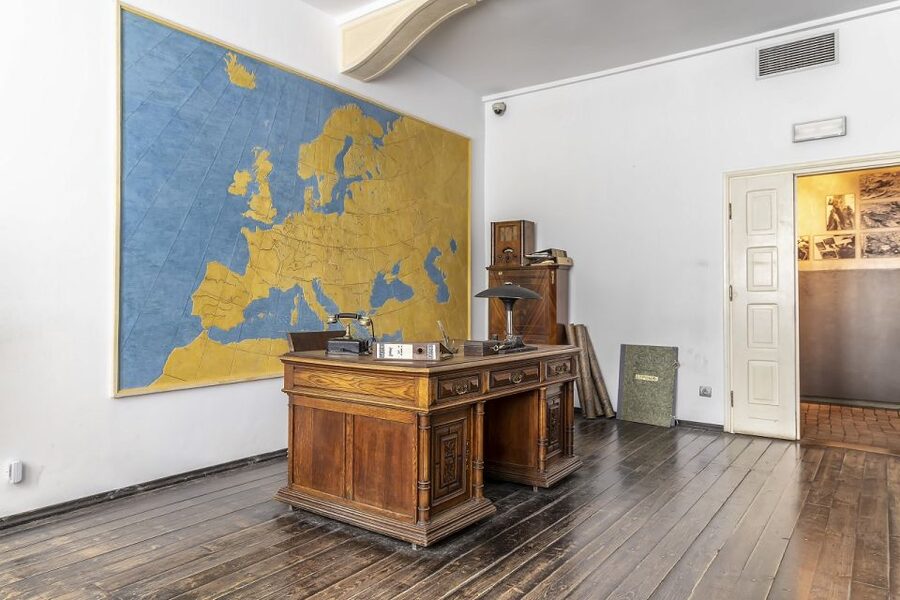
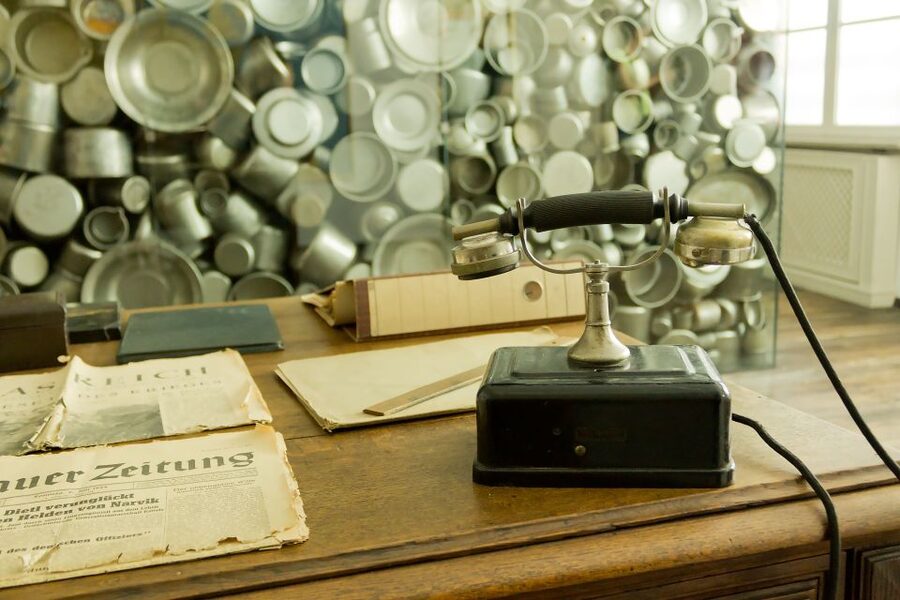
One of the first details that gives the museum its emotional force is Schindler’s preserved office in the former administration building. This is the clearest physical link between the museum and the factory owner portrayed in the film.
You will also see the Survivor’s Ark, a striking installation made from thousands of enamel pots. The pots recall the factory’s production and connect industrial work with the people whose lives were caught up in the occupation.
These objects work best when you already understand that the museum is not trying to build a simple hero story. Schindler’s actions are part of the setting, but the exhibition keeps returning to the city and its people. The factory is a doorway into the period, not the whole subject.
That can surprise fans of Schindler’s List. The film connection helps you recognize the place, but you should not expect a recreation of every scene or a room-by-room film exhibit. The museum uses the factory as the setting for a larger account of Krakow during the war.
A recreated Krakow built for the senses
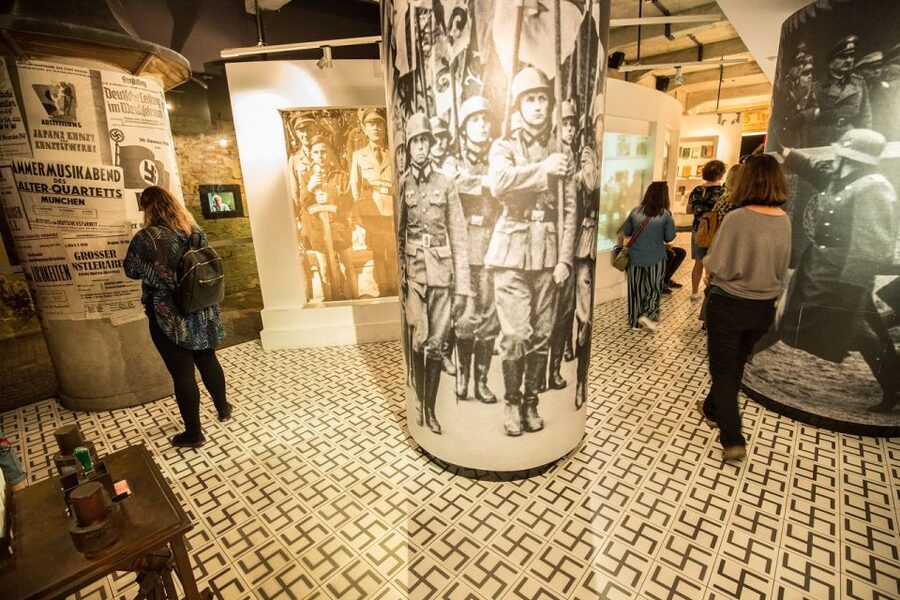
The permanent exhibition has a theatrical quality that sets it apart from a standard gallery of cases and labels. Stage designer Michał Urban and theatre director Łukasz Czuj helped shape a museum that uses rooms, objects, sound, film, and recreated urban spaces.
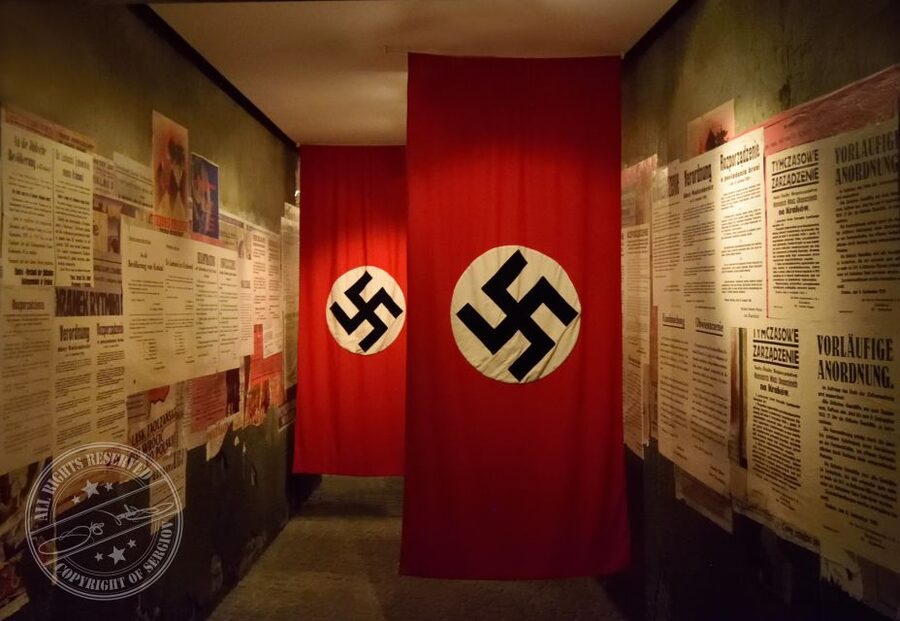
You’ll wander through a recreation of Krakow’s historical city space. The design is meant to show the city as people experienced it, with normal routines interrupted by new rules, fear, and violence. Instead of seeing wartime Krakow only through a timeline, you move through a physical setting that suggests how occupation changed familiar places.
I like this approach because it gives the information a human scale. A paragraph about restrictions can feel remote. A reconstructed street or apartment gives you a setting in which to picture those restrictions affecting a family, a neighbor, or a shopkeeper.
There is a tradeoff. The theatrical scenes may feel more memorable than the written explanations, but the museum still asks you to read a good deal. If you prefer films and interactive displays, some sections may feel text-heavy. One useful part of the tour is the guide’s ability to explain the displays without making you work through every panel alone.
A few more things to do in Kraków worth a look
- From Krakow: Wieliczka Salt Mine Tour & Skip the Line Ticket
★ 4.4 · 3,925 reviews - Schindler’s Factory in Krakow: Guided Tour & Skip the Line Ticket
★ 4.5 · 1,714 reviews - Auschwitz-Birkenau: Skip-the-Line Ticket and Guided Tour
★ 4.2 · 1,034 reviews - Auschwitz Birkenau Guided Tour/Skip The Line/PickUp/Guide ENG
★ 4.5 · 930 reviews
The tram film and ordinary life under occupation
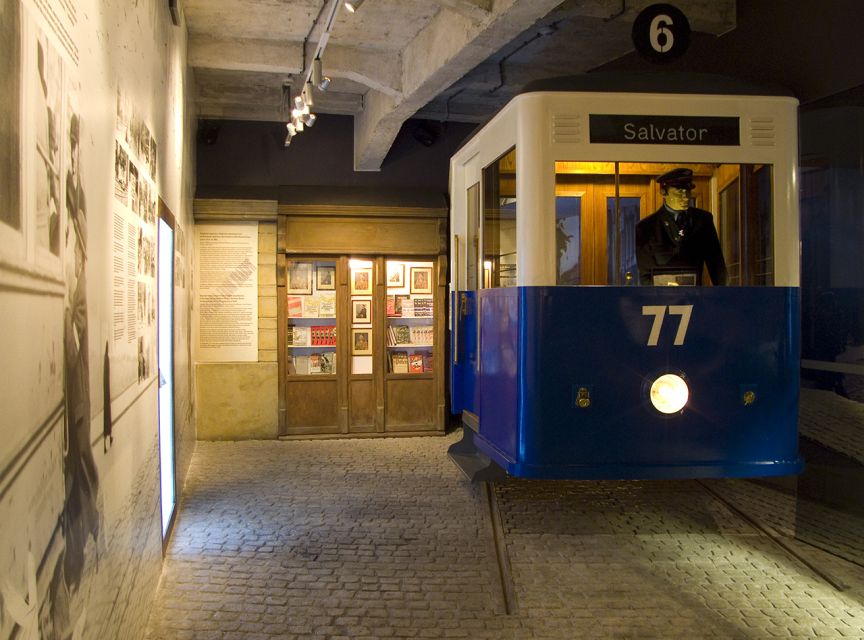
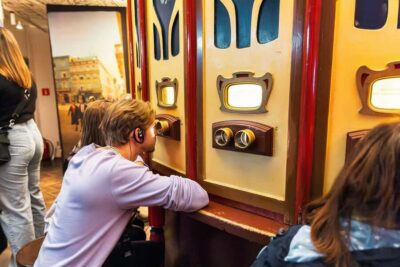
At one point, you board a tram and watch a documentary about everyday life in Krakow. This is one of the exhibition’s more unusual choices, and it helps break up the walking and reading.
The tram presents the city as a place of movement and routine. Then the film shows how that ordinary life was altered during the occupation. The point is not simply to provide another screen. It helps you think about what people saw, where they went, and how public life changed.
A documentary cannot answer every question, and the film portion is only one part of the visit. Still, it gives you a different way to take in the material after the physical recreations and historical objects.
If you want to watch every film carefully and read every panel, 90 minutes may feel tight. The guided format is designed to give you the main story within the scheduled time. You may need to choose between following the guide closely and stopping for every detail.
Inside a typical Jewish apartment
The recreated Jewish apartment offers a smaller, more private view of the period. Instead of focusing on official events, it points you toward home life and the disruption of personal space.
This section helps balance the larger city scenes. Occupation did not happen only in streets, offices, or military buildings. It entered homes, altered family life, and changed what people could keep, say, or do.
The apartment is also part of the museum’s effort to tell the story of both Polish and Jewish residents. The exhibition does not present one group as a background to the other. It shows a society with long connections that was violently broken apart by Nazi rule.
Expect a sober presentation rather than a light cultural stop. You’ll see and hear material that calls for patience and respect. Families with older children may find the visit useful, but the subject matter should be considered carefully before bringing younger children.
Plaszow camp artifacts and the Hall of Choices
The tour includes artifacts from the Plaszow camp. Their value is not simply that they are old objects. They place the larger story of persecution into a concrete setting and help connect Krakow’s wartime changes with the camp system.
The Hall of Choices is another memorable section. This sculptural installation represents the moral decisions people faced during the war. It asks you to consider how fear, pressure, self-interest, courage, and responsibility can shape human behavior.
I find this section valuable because it avoids making the past feel morally simple. The museum still shows the violence of the Nazi occupation clearly, but it also points to the difficult choices made by individuals living under it.
The emotional weight increases as the tour moves through these spaces. Give yourself a little quiet time afterward if you can. The 90-minute format provides a focused visit, but it does not leave much room for a long pause between sections.
Why the $49 price may be worthwhile
At $49 per person, this is not the cheapest way to see a Krakow museum. You are paying for admission, a guided visit, and skip-the-line arrangements. Food and drinks are not included, though that is not a serious concern for a museum visit of this length.
The value depends on how you like to visit museums. If you read quickly, prepare in advance, and are comfortable finding your own way around, you may prefer a standard admission and more time alone. If you want the main story explained in clear order, the guide adds real value.
The museum’s design is layered. You can look at photographs, documentary material, artifacts, recreated spaces, and multimedia displays. A good guide helps connect those pieces and explains where Schindler fits into the larger account.
The price also buys convenience. Skip-the-line entry can matter on a busy day, and the tour removes uncertainty about where to begin. For a first visit to Krakow, that structure can make the museum easier to understand.
I would not book this primarily to save money. I would book it for the combination of guided context and efficient entry. The best value comes when you want an informed introduction rather than a long, solitary museum session.
Practical advice for a smoother visit
Bring a passport or ID card. From January 1, 2026, the museum requires full names for personalized tickets, and you must bring identification for entry. Without the required details or ID, admission may be refused.
Leave food and drinks outside. Large bags and luggage are not allowed, so this is not a good stop if you are carrying suitcases between hotels or transport connections.
Check your messages after booking. Tour times can change, and the scheduled hour is not always final because of the museum’s own timetable. From 2026, the stated time is approximate, even if you select a preferred slot.
Monday opening hours may be reduced, with closing around midday, so do not assume a late Monday visit will work. Confirm the available start time before arranging the rest of your day.
The tour is listed as 90 minutes, or 1.5 hours. That is enough for the guided route, but it may not be enough to read every label or revisit your favorite section. If you want a slow museum study, ask whether you can remain afterward, but do not assume extra access unless it is confirmed.
Who should book this tour
I recommend it most for first-time visitors who want a clear introduction to Krakow under Nazi occupation. It also suits film fans who want to see Schindler’s office and understand the real setting beyond the movie.
The tour is a good fit if you value a guide who can explain difficult material, answer questions, and keep the visit moving. It also works well for anyone who wants to avoid spending time sorting out admission at the door.
You may want another option if your main goal is Oscar Schindler alone. The museum gives him an important place, but its subject is the whole city from 1939 to 1945. You may also prefer a self-guided visit if you need long pauses for reading, photography, or reflection.
Should you book the Schindler’s Factory tour?
Book it if you want a focused, guided visit to one of Krakow’s most serious museums, with theatrical exhibits that make the occupation easier to understand. The strongest reasons are the well-regarded guides, the preserved office, the tram documentary, and the thoughtful combination of Polish, Jewish, and Nazi perspectives.
Skip it if you expect a full museum devoted to Schindler’s personal life or if you dislike guided pacing. At $49, the tour earns its price through context and convenience, not through a large number of included extras.
For most first visits, I would choose the guided option, bring identification, leave your bags behind, and allow a quiet stretch of time afterward. This is a museum that asks you to think, not just look.
FAQ
Where does the tour meet?
Meet at Lipowa 4 in Krakow, at the front entrance of the museum. The guide will be holding an excursion.city sign.
How long does the guided visit last?
The guided tour lasts 90 minutes, or 1.5 hours.
What does the $49 price include?
The price includes entrance fees and a professional guide. Food and drinks are not included.
Which languages are available?
Guided tours are available in English, German, French, Italian, and Spanish.
Do I need to bring identification?
Yes. Bring a passport or ID card. From January 1, 2026, full participant names are required for personalized tickets, and identification is required for entry.
Can I bring food or drinks?
No. Food and drinks are not allowed inside the museum.
Can I bring luggage or a large bag?
No. Luggage and large bags are not allowed.
Can I cancel the booking?
Yes. You can cancel up to 24 hours in advance for a full refund. Reserve now and pay later is also available.
Just added in Kraków
- From Krakow: Guided Tour of Zalipie★ 4.6 · 30 reviews
- From Krakow: Zalipie Village Day-Tour★ 4.9 · 74 reviews
- Krakow: Zalipie Village Tour★ 4.6 · 8 reviews
- ZALIPIE – painted village, unique PRIVATE tour from Krakow★ 5.0 · 20 reviews
- Krakow City Tour on Scooter and Food Tasting with English Guide★ 5.0 · 84 reviews
- Ojców National Park and Ogrodzieniec Castle Tour from Krakow★ 5.0 · 21 reviews
- Electric Scooter Tour: Old Town Tour – 2-Hours of Magic!★ 4.7 · 77 reviews
- Czestochowa the Black Madonna Day Tour from Krakow★ 4.5 · 64 reviews
Schindler's Factory Tours, compared.
Oskar Schindler’s Factory Entry Ticket & Guided Tour
Read the review →
Schindler’s Factory Tour with Entrance Ticket
Read the review →
Schindler’s Factory in Krakow: Guided Tour & Skip the Line Ticket
Read the review →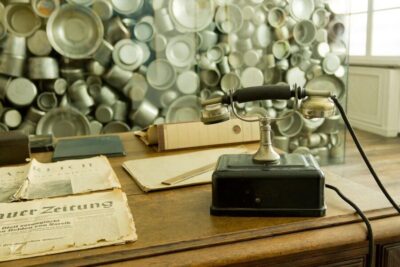
Schindler’s Factory Ticket with Guided Tour Option
Read the review →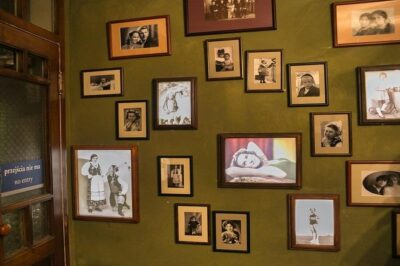
Krakow Schindler’s Factory Guided Tour with Admission Ticket
Read the review →
Krakow Schindler’s Factory Museum Guided Tour in English
Read the review →Browse the lists this tour appears in