
Reviewed · MUSEUMS
Warsaw: Guided tour of the Cold War Museum
Warsaw’s Cold War Museum turns a tense period of 20th-century history into an active visit. You’ll see original uniforms, maps, and devices, then use touch screens, VR goggles, a cinema, and even an autonomous robot to connect the objects with the larger struggle between East and West.
I like the clear Polish point of view, especially the attention given to General Ryszard Kukliński, Ronald Reagan, and Pope John Paul II. I also like that the museum gives younger visitors something to do, rather than asking them to stand quietly beside glass cases. The main consideration is that its interpretation strongly highlights Poland’s contribution to the free world, so you should expect a national perspective rather than a neutral, textbook-style survey.
Key points at a glance
- Original Cold War objects: Examine devices, maps, uniforms, and other material from the period.
- Three VR games: Take an active role in the story instead of only reading labels.
- Space-age displays: Learn about space flights and see a hologram of a space station.
- A Polish interpretation: Follow the Cold War through Poland’s experience and the work of Kukliński, Reagan, and John Paul II.
- Small-group value: The $78 price covers a group of up to 10 people, making it much better value when shared.
- A guide-led visit: Allow 90 minutes to two hours, with Polish and English listed for the live tour.
Starting near Old Town Square
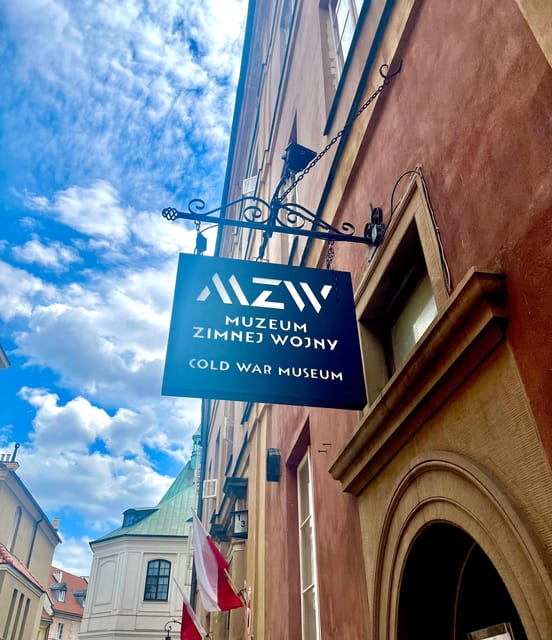
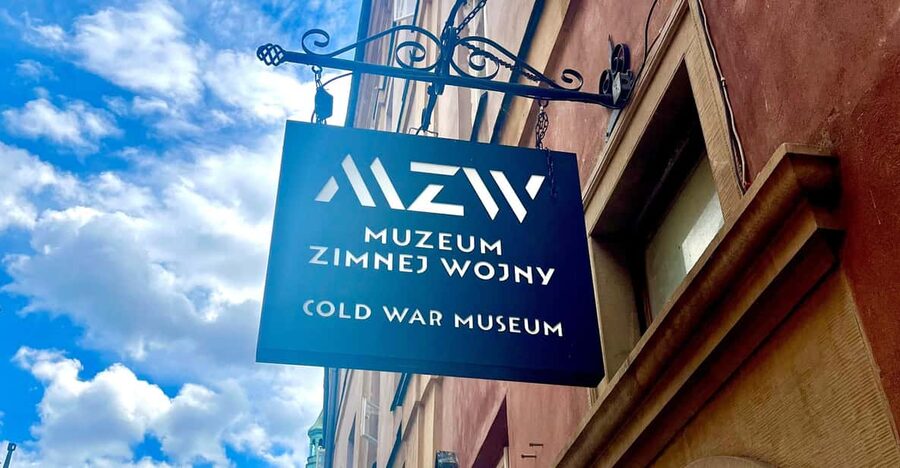
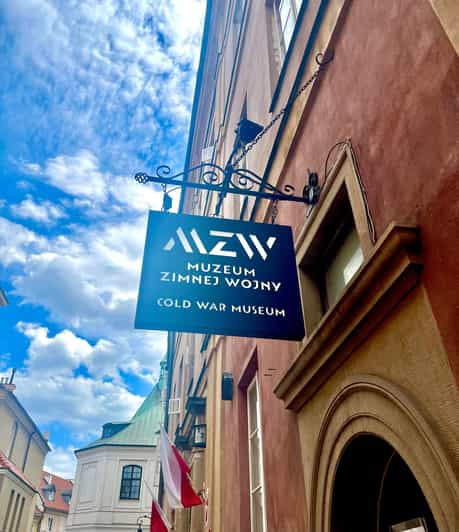
The meeting point is about 40 meters from Warsaw’s Old Town Square, at the Registry Office of the Capital City Warsaw. That is useful if you are already spending time in the historic center. You do not need to build a separate cross-city outing around the museum, and the tour returns to the same starting point after the visit.
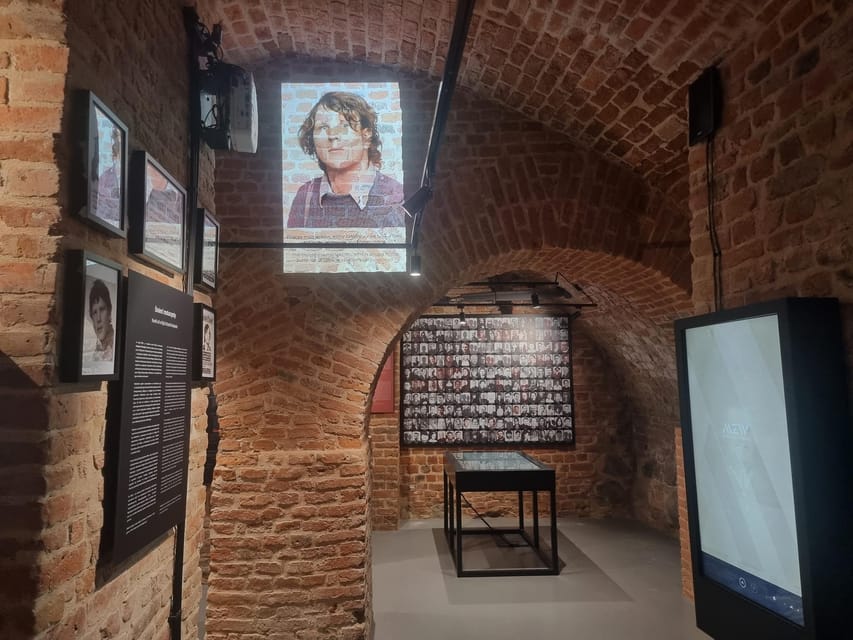
The location also gives the experience an important sense of place. During the Polish People’s Republic, the address housed a communist militia station. It was later associated with the beating and death of Grzegorz Przemyk, a high school graduate who became a well-known victim of martial law.
That detail changes how you enter the museum. This is not history presented in an anonymous gallery. The building itself is tied to the political system being discussed, along with its victims and the people who challenged it. The museum uses that setting to connect international events with the pressure felt in everyday Polish life.
A few more things to do in Warsaw worth a look
- Warsaw: POLIN Museum of the History of Polish Jews Ticket
★ 4.7 · 1,142 reviews - Warsaw: Polish Vodka Museum Tour with Tasting
★ 4.6 · 788 reviews - Warsaw: Museum World of Illusion Entry Ticket
★ 3.9 · 666 reviews
A guided introduction to the Cold War
Your visit covers the Cold War from its beginnings through its course and the countries involved. The museum presents the conflict between the two blocs from a Polish perspective, including Poland’s place inside the Soviet sphere and its contribution to the eventual defeat of Soviet communism.
I would pay close attention during the opening explanation. The subject can become a blur of dates, alliances, speeches, and military terms if you approach it without a guide. A live explanation helps place the displays in a sequence: the division of Europe after the Second World War, the rivalry between the United States and the Soviet Union, the role of Poland, and the people who resisted or worked against the communist system.
The museum gives special attention to three figures from the final two decades of the Cold War: President Ronald Reagan, Pope John Paul II, and General Ryszard Kukliński. That focus tells you a great deal about the museum’s purpose. It is not simply displaying old technology. It is explaining how leadership, faith, political pressure, and secret military information shaped the final years of the conflict.
Filip is identified as both a guide and the museum’s director. He has led an English-language tour that covered Poland after the Second World War, its position within the Soviet bloc, and the part played by General Kukliński. Cyprian is another named guide, described as highly engaged and well informed. If a particular guide matters to you, check the available guide details when booking, since guide assignment can vary.
Original objects that make the politics tangible
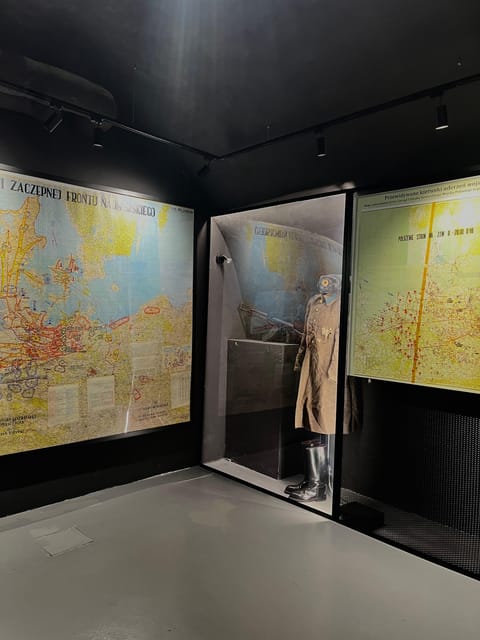
The museum’s original devices, maps, and uniforms give the story physical weight. A map can show the division of Europe, but seeing it alongside the clothing and equipment of the period helps you picture the people who lived under that division.
I find these objects more useful when they are explained rather than left to speak for themselves. A uniform may look like a costume without context. A device may seem like an old piece of machinery. With a guide, each item can help explain the systems of surveillance, military planning, communication, and political control that shaped the era.
The collection also helps balance the museum’s digital attractions. The screens and VR games are lively, but the original material is what ties the experience to real people and actual events. You are not only playing through a historical scenario. You are seeing objects connected to a period when decisions made in offices and military centers affected families across Poland and Europe.
The museum presents the artifacts as part of Poland’s national heritage. That is a strong emotional frame, and it is worth keeping in mind as you move through the displays. The story is proudly Polish and places a large share of attention on Polish resistance and sacrifice.
Touch screens, quizzes, and an autonomous robot
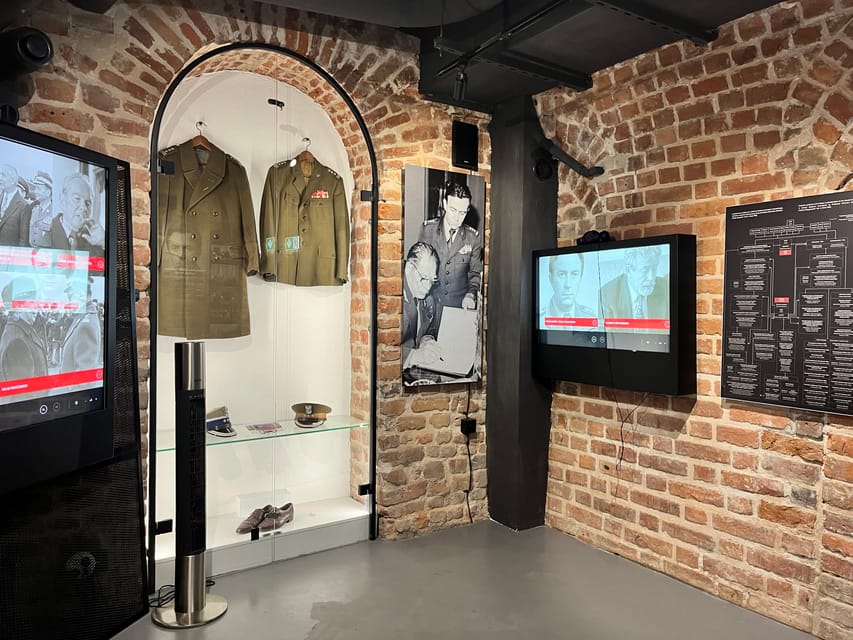
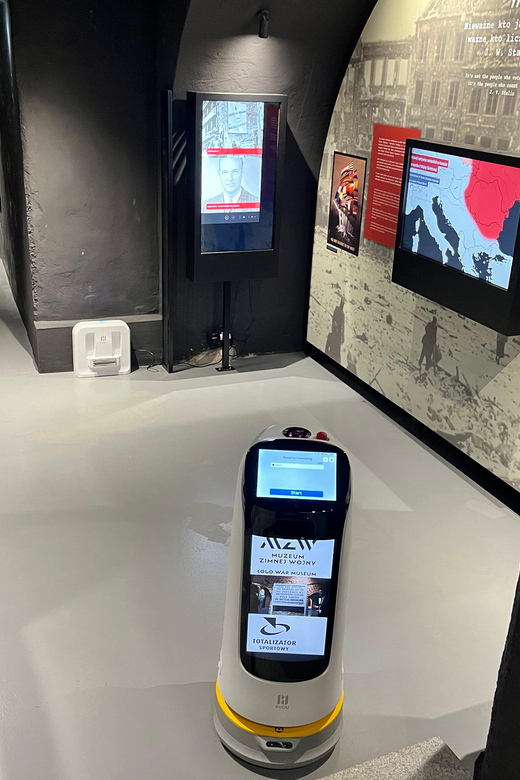
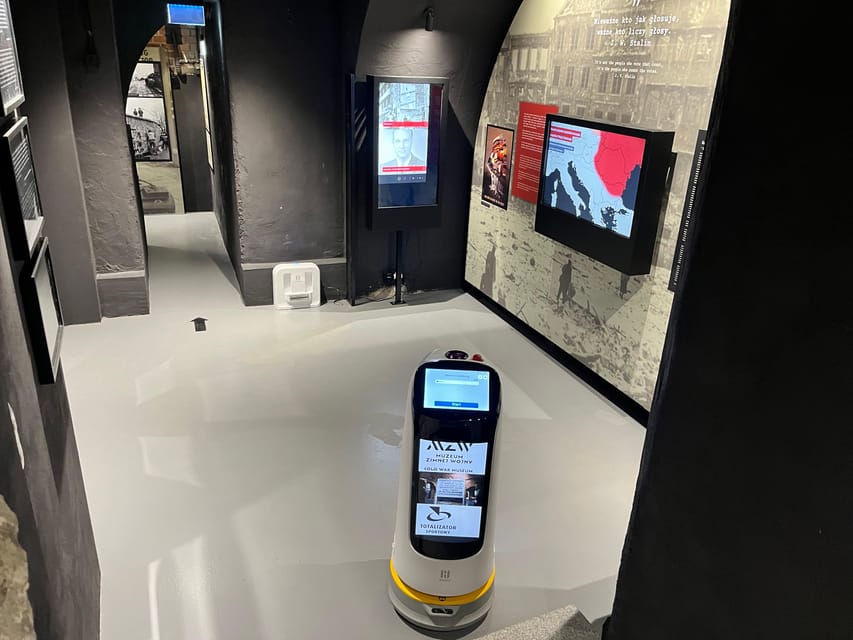
More than 50 multimedia elements are used throughout the exhibition. These include touch screens, multimedia tables, a cinema, VR goggles, and an autonomous robot that acts as a museum guide.
The multimedia knowledge quiz is a good reason to bring children or teenagers, but adults can use it too. It gives you a quick way to test what you have absorbed instead of simply moving from one panel to the next. The format also suits families with different levels of interest. Someone who finds political history heavy can still take part in the quiz and interactive displays.
The robot is an unusual feature. It is described as the first and only museum robot in Poland to serve as an autonomous guide. That does not replace the live guide, but it adds another layer to the museum’s presentation and gives younger visitors a memorable point of contact.
The cinema and multimedia tables help show how the Cold War was communicated to the public. The supplied information does not specify the exact films or subjects shown, so I would treat these as supporting parts of the exhibition rather than plan your visit around one particular presentation.
Same base, a different kind of day:
- Warsaw: Chopin Concert in the Old Town
★ 4.8 · 2,287 reviews - Warsaw: Traditional Galar Cruise on The Vistula River
★ 4.6 · 1,640 reviews - Warsaw: Old Town Highlights Walking Tour in English
★ 4.7 · 1,516 reviews - Warsaw Concert: Chopin – Painted by Candlelights with Wine
★ 4.8 · 1,442 reviews
Space flights and the hologram station
The space-flight section adds a welcome change of subject. The Cold War was fought through military strength and political influence, but it was also staged through science and technology. Space exploration became a public contest between the two blocs, with each side using successful launches and missions to prove its system’s strength.
You can learn about the history of space flights and see a hologram of a space station. The hologram gives the subject a visual hook, especially for children and anyone who prefers machines and engineering to political speeches.
This section also shows why the museum uses several formats. A space-flight display can explain the competition in a way that feels less grim than the sections on repression and military tension. At the same time, it keeps the main theme in view: technology was not separate from the Cold War. It was part of the rivalry.
Three VR games for a more active visit
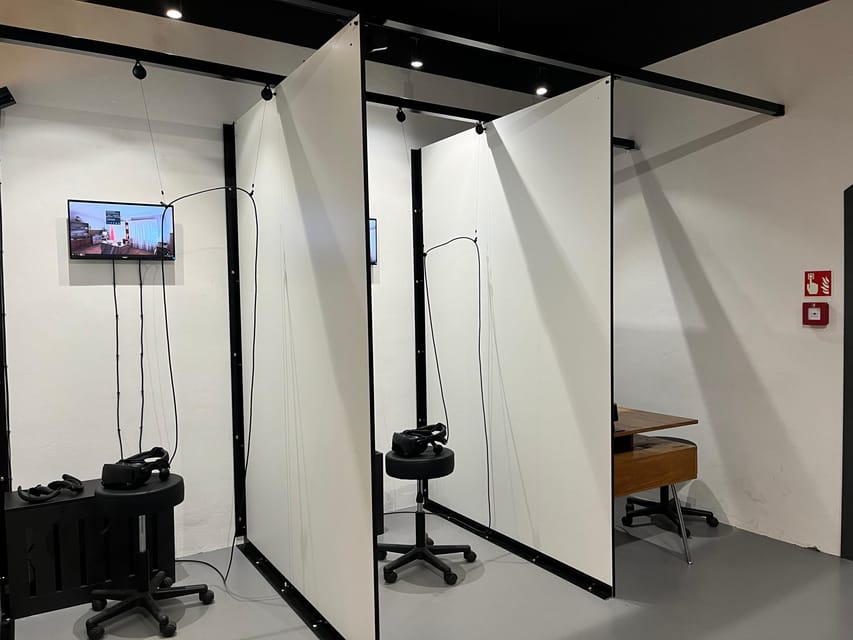
The museum offers three VR games that let you take part in Cold War scenarios. The supplied information does not name the games or describe their exact missions, so I would not book expecting a particular simulation. Think of them as short interactive elements within the wider tour.
They should work especially well for families with older children and teenagers. A 12-year-old and a 16-year-old were able to use the museum’s interactive activities as part of a visit that also included difficult 20th-century history. That combination matters. The games do not make the subject childish, but they can make it easier for younger visitors to stay involved.
For adults, the VR is best viewed as an extra rather than the main reason to come. If you want a long, technically detailed virtual reality session, this is not what the description promises. You are visiting a history museum with three VR games, not an entertainment arcade.
The difficult story of General Ryszard Kukliński
General Ryszard Kukliński is one of the museum’s central figures. He is presented as a Polish and American hero whose actions mattered in the final stages of the Cold War. The museum’s focus on him gives the tour a personal center.
For many people, his name will be unfamiliar before the visit. That is one reason the guide matters. The museum does not ask you to remember a parade of officials and dates. It gives you a figure through whom you can consider loyalty, secrecy, military danger, and the choice to act against the system in which you serve.
The emphasis also makes this a particularly useful stop for American visitors who know the Cold War mainly through the United States and Soviet Union. Poland’s experience can otherwise disappear behind the larger superpower story. Here, you are encouraged to see how Polish people lived inside the Soviet bloc and how Polish actions contributed to wider change.
The interpretation is not detached. It is proud, moral, and clearly shaped by the museum’s belief in the free world’s victory over Soviet communism. I see that as a strength if you want Poland’s own voice, but you should also recognize the point of view. The museum works best as one important Polish account, not as your only source for every argument about the Cold War.
Why the building’s past matters
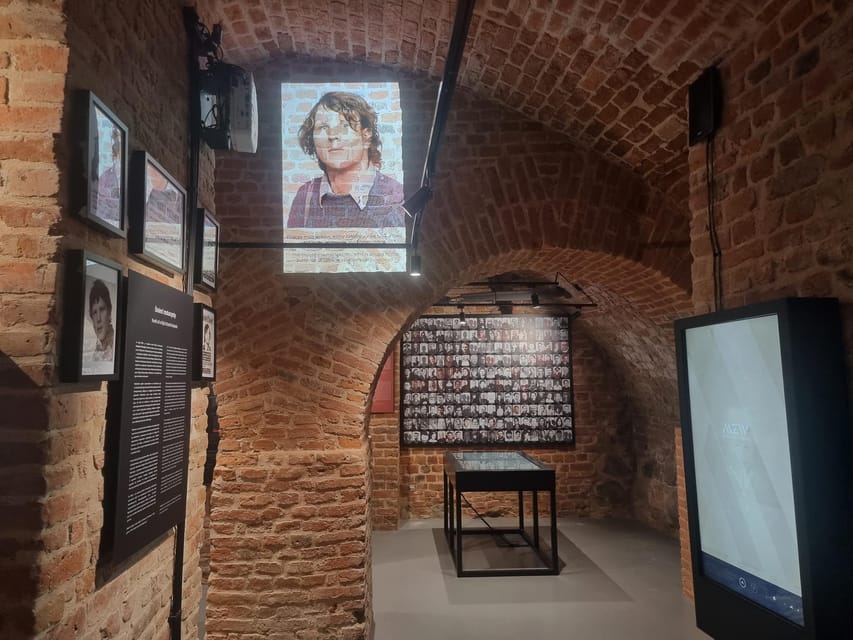
The connection with Grzegorz Przemyk gives the museum a painful local dimension. He was beaten to death at the communist militia station housed at this address, and he became known as a victim of martial law.
That story links the international Cold War to state power on a human scale. The conflict was not only about missiles, space flights, or presidents. It also involved police stations, censorship, fear, and people who suffered because of their opposition or because they were caught in a political system with little protection for individual rights.
The museum combines the architecture, the site’s past, its objects, and its multimedia material. That combination can make the visit more memorable than a collection displayed in a building with no connection to the subject. It also means the tone can become serious. Families should be ready for difficult material, even though the museum includes attractions designed for children.
How long the visit takes
Plan on 90 minutes to two hours. That is enough time for a guided introduction, the main displays, the interactive elements, and the VR games without turning the visit into an all-day commitment.
The exact length may depend on the pace of the group and how much time you spend with the multimedia attractions. A group of adults focused on the political story may move differently from a family stopping for the quiz, hologram, robot, and VR activities.
I would avoid scheduling something immediately afterward. The museum’s official time range leaves room for a slower visit, and the subject benefits from a little breathing space. You want time to listen to the guide rather than rush from one display to the next.
What $78 means for a group of up to 10
The listed price is $78 per group of up to 10 people. That is a strong deal for a family or private group that can fill most of the places. At the maximum size, the cost works out to $7.80 per person, before any currency conversion or booking terms.
For two people, the same group price becomes $39 each. For a larger family, the value improves quickly. You are paying for admission, access to all attractions in the exhibition, and a guided tour rather than only a museum ticket.
The private-group structure also gives the price a practical advantage. You can share the experience with your own party instead of paying separate individual rates, though the information provided does not specify whether the group is fully private or how the guide handles smaller bookings. Check that point when reserving if it matters to you.
Free cancellation up to 24 hours before the activity and the option to reserve now and pay later add flexibility. You can also skip the ticket line, which is useful when you have a tight sightseeing schedule around Old Town.
Who will get the most from this museum
I would recommend this experience to you if you want Warsaw history explained through Poland’s own experience. It suits adults who want more than a general Cold War summary, as well as families with children old enough to follow serious political material and enjoy interactive displays.
It is a good match for:
- Families with children or teenagers
- Visitors interested in Poland’s years inside the Soviet bloc
- People curious about General Kukliński
- American visitors who want a Polish view of the Cold War
- Anyone who likes museums that mix original objects with digital displays
- Small groups who can share the $78 price
It may be less suitable if you want a purely academic or evenly balanced treatment of every country and political argument. The museum’s purpose is clearly tied to Poland’s contribution, its victims, and the role of people who challenged Soviet communism.
The museum is not suitable for wheelchair users. Smoking, vaping, food, drinks, alcohol, and drugs are not allowed. Four-legged companions are welcome, which is unusual for a Warsaw museum, but you should still confirm any practical conditions when arranging your visit.
Should you book the Cold War Museum?
Book it if you want a focused, guide-led look at Poland during the Cold War, especially if your group enjoys interactive exhibits. The strongest reasons are the original objects, the site’s link to communist-era repression, the attention to Kukliński, and the mix of a live guide with quizzes, VR, a cinema, and a space-station hologram.
I would be especially keen to book for a family with older children or a small group that can share the $78 fee. If you already know the basic Cold War story, the Polish perspective and the museum’s emphasis on people such as Kukliński can add something new.
Skip it if you need full wheelchair access, have no interest in political history, or want a museum with a detached international viewpoint. For everyone else, this is a compact and unusually active way to understand how the Cold War felt from Poland’s side of the Iron Curtain.
FAQ
Where does the Cold War Museum tour start?
It starts at the Registry Office of the Capital City Warsaw, about 40 meters from Old Town Square.
How long does the museum visit take?
The visit lasts between 90 minutes and two hours, depending on the available start time and the pace of the tour.
What languages are available for the live guide?
Polish and English are listed for the live tour. The activity information also lists Russian, German, and Spanish among the tour languages, so confirm the language available for your chosen booking.
What is included in the price?
The price includes admission to the exhibitions, access to all attractions within the exhibition, and a guided tour.
Is the tour suitable for children?
Yes. The museum includes a multimedia quiz, interactive displays, a hologram of a space station, and three VR games. The exhibition also deals with serious subjects from the Cold War and martial law.
Is the museum wheelchair accessible?
The activity is listed as not suitable for wheelchair users.
Can I cancel the booking?
You can cancel up to 24 hours in advance for a full refund. A reserve-now and pay-later option is also listed.
Just added in Warsaw
- Warsaw Zoo Skip-the-Line Entry Ticket with Private Transport★ 4.8 · 3 reviews
- Warsaw Private Wilanow Palace & Garden Tour★ 4.6 · 30 reviews
- Warsaw: Vodka Tour★ 4.4 · 18 reviews
- Warsaw Wolf’s Lair with St. Lipka and Mamerki Private Guided★ 4.2 · 3 reviews
- Warsaw: Private Vodka Tasting Night with Snacks and Pickup★ 5.0 · 7 reviews
- Warsaw Uprising and WWII Old Town Walking Tour with Museum★ 4.7 · 15 reviews
- Warsaw Old Town UNESCO HERITAGE walking tour in English★ 4.5 · 23 reviews
- Warsaw: Skip-the-Line Royal Castle Guided Tour★ 4.9 · 79 reviews
Museums, compared.
Auschwitz-Birkenau Museum and Memorial Guided Tour from Krakow
Read the review →
POLIN Museum of the History of Polish Jews Ticket
Read the review →
Krakow Schindler’s Factory Museum Guided Tour in English
Read the review →
Auschwitz Birkenau Museum Guided Tour with Pickup
Read the review →
Browse the lists this tour appears in