
Reviewed · OLD TOWN TOURS
Gdansk Old Town 2-Hour Walking Tour
Gdansk’s Old Town is a polished lesson in survival and renewal. On this private walk, you move from the Golden Gate and the old fortifications to the Motława River, the Crane, St Mary’s Church, and the grand Great Armoury. The guide connects Gothic, Renaissance, and Mannerist buildings with the city’s trading past and its postwar rebuilding.
I especially like the private format, which gives your group a chance to ask questions rather than trail behind a large crowd. I also like the route’s range: you get royal streets, a medieval harbor landmark, a massive brick church, and the Neptune Fountain in one compact outing. The main caution is pacing. Some people found the explanations longer than necessary, and a weak microphone can make a talk harder to follow.
Key points at a glance
- A private two-hour route for up to 10 people, with an English, German, or Polish-speaking guide.
- The Royal Way and Neptune Fountain provide an easy introduction to Gdansk’s grand civic architecture.
- The Crane on the Motława River shows how the city’s port powered its trading age.
- St Mary’s Church is described as the largest brick church in the world, with entry available for an extra EUR 1 per person.
- The route begins at the Upland Gate, near the Pomerania Tourist Information Center, and ends at the Great Armoury.
- Best value comes with a full group, since the $167 rate covers up to 10 people rather than charging each person separately.
Starting at the Upland Gate
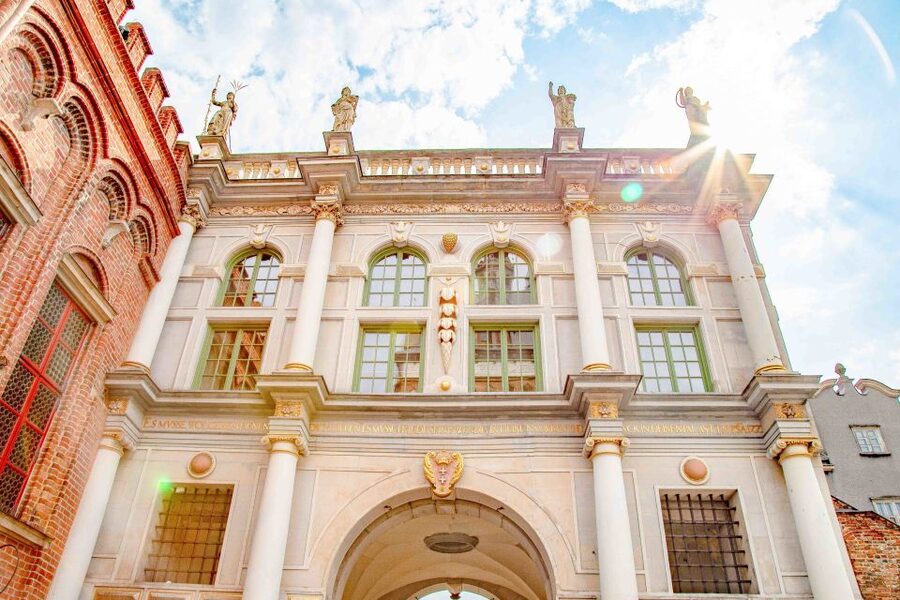
Meet at Brama Wyżynna, or the Upland Gate, at Wały Jagiellońskie 2A. The meeting point is at the entrance to the Pomerania Tourist Information Center, so you have a clear landmark rather than an anonymous street corner.
The Upland Gate was once the main entry into Gdansk’s fortified center. It also welcomed the king of Poland when he arrived from Warsaw, a useful detail that helps you see the gate as more than a handsome old arch. This was an arrival point for power, ceremony, and trade.
The early part of the walk also brings you to the former Torture Chamber. Executions took place here until the middle of the 19th century. It is a grim stop, but it gives the old fortifications a practical edge. Medieval and early modern cities were not only places of churches and merchants. They were defended, policed, and sometimes brutally governed.
The route begins with about 15 minutes around the visitor center and another 15 minutes at the Golden Gate. Those time blocks are a guide rather than a promise that every stop ends on a stopwatch. Your group’s questions and the guide’s speaking pace can affect how long each point receives.
More old town tours in Gdańsk:
- Gdańsk: Sightseeing EcoCruise around the Old Town of Gdansk
★ 4.6 · 719 reviews - Gdańsk: Old Town Private Walking Tour with Legends and Facts
★ 4.9 · 245 reviews - Gdansk Traditional Food Tour with Old Town Sightseeing
★ 4.5 · 27 reviews
The Golden Gate and the old defenses
The Golden Gate once formed part of Gdansk’s defensive system. Today, it provides a theatrical entrance into the historic center, with architecture that prepares you for the ornate streets ahead.
This is one of the better places to hear about Gdansk’s changing architectural language. The city combines Gothic forms with Renaissance and Mannerist decoration, and the walk lets you see those styles close together rather than treating them as isolated museum subjects.
The advantage of having a guide here is context. A quick photograph can tell you that a gate is decorative, but it cannot explain how that gate fitted into the city’s walls, royal route, and commercial life. A good explanation turns the first few blocks into a map of how old Gdansk worked.
A small warning applies to the whole walk: much of the tour is outdoors, and the information comes through spoken explanation. One German-language participant found the material technically solid but too full of stock phrases, while another noted poor sound equipment. If your hearing is sensitive to street noise, stay close to the guide and ask for a repeat when needed.
Following the Royal Way to Long Market
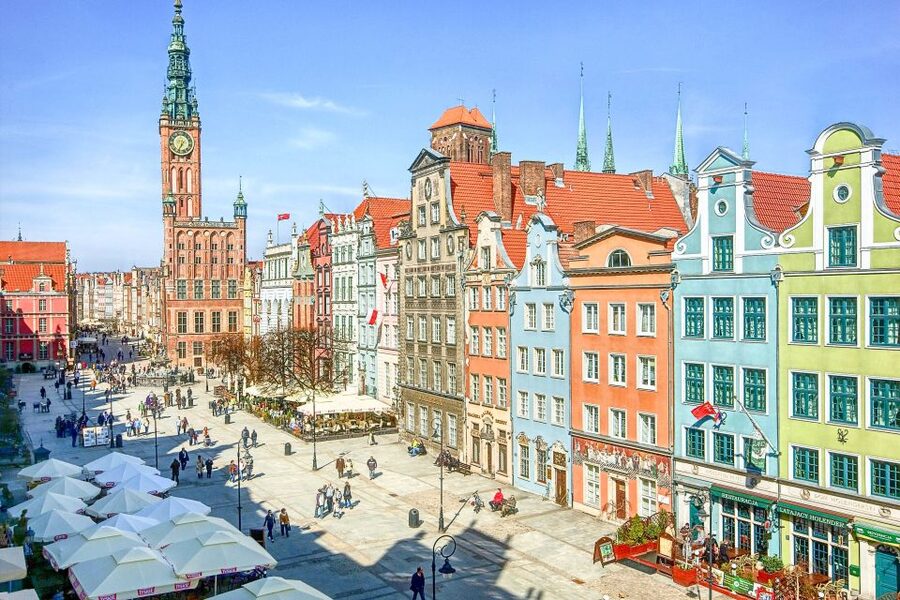
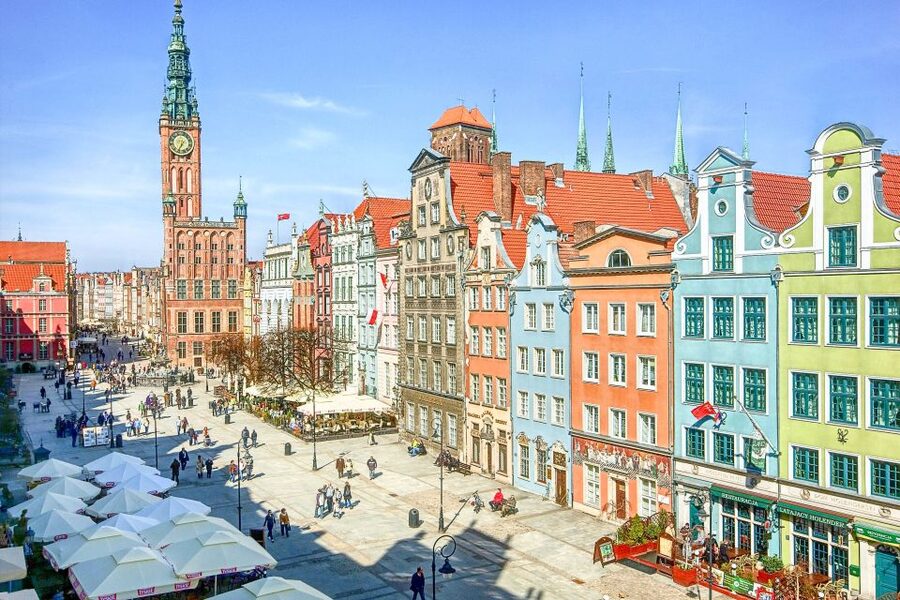
From the gates, you follow the Royal Way toward Long Market and the Town Hall. This is the ceremonial heart of the route, where architecture was designed to impress visiting monarchs, merchants, and local officials.
The street sequence is one of the tour’s strongest features because it links individual buildings into a larger civic story. You are not simply ticking off a gate, a fountain, and a church. You are walking the path that connected the city’s entrance with its political and commercial center.
Long Market is especially photogenic, but the guide’s anecdotes add more than decoration. The Town Hall reflects the authority of the city government, while the grand facades along the route show how wealthy merchants used their homes to announce status.
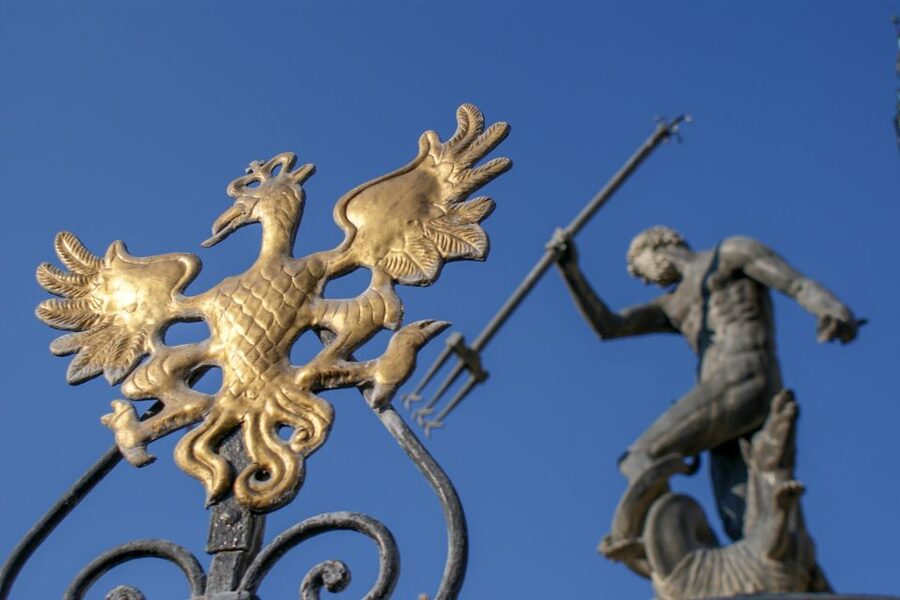
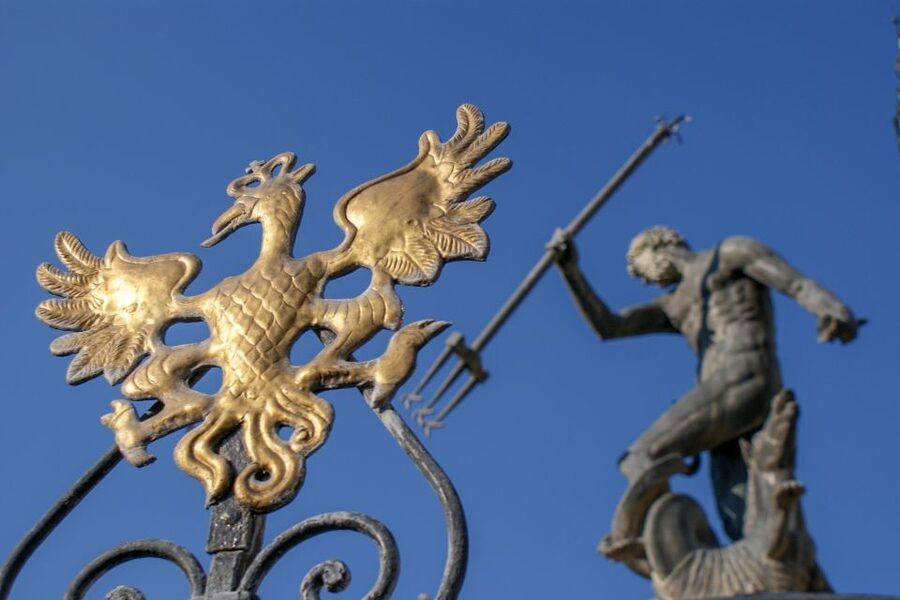
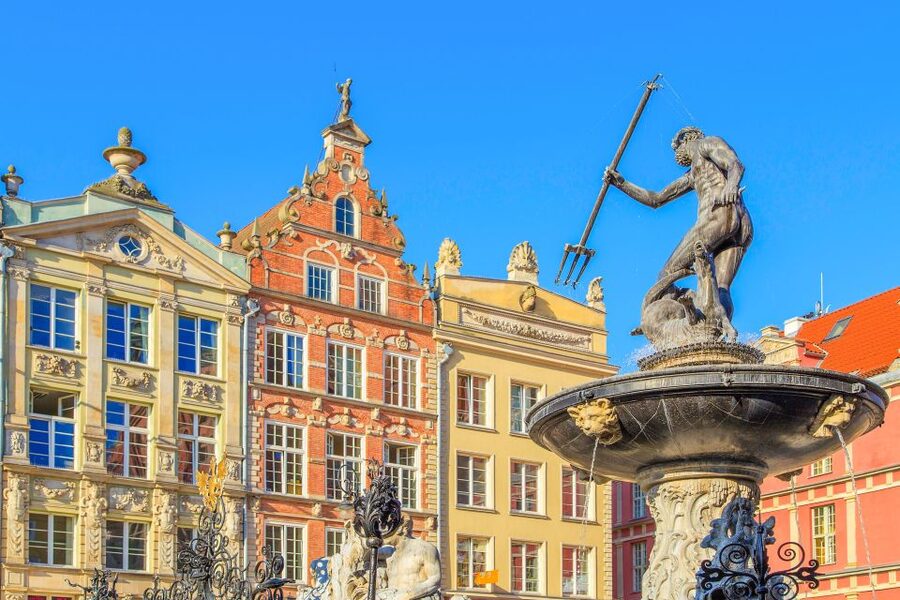
At Neptune Fountain, the sea god becomes a symbol of Gdansk’s close relationship with water and trade. The fountain is a natural pause in the walk, and the 15-minute explanation here should help you read the sculpture as part of the city’s identity rather than just a popular photo stop.
You may want to return to this area after the tour at a slower pace. Two hours gives you orientation and interpretation, but it does not leave much time to study every facade or enter every building.
Neptune Fountain and the Main Town Hall
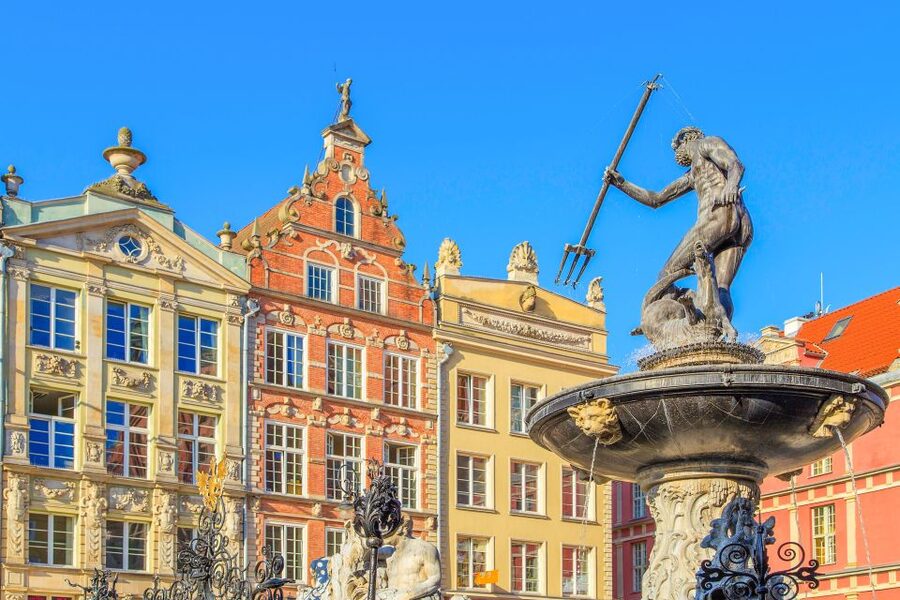
The Main Town Hall receives one of the longer portions of the route, about 25 minutes. That makes sense: it is one of the city’s key civic monuments and a useful place to connect local government, public display, and Gdansk’s trading wealth.
The experience does not include a separate paid museum admission in the stated price. The guide takes you through the area and explains the building and its place in the Old Town. The supplied details identify this stop as Gdansk Museum, Main Town Hall, so you should ask your guide whether the visit is an exterior explanation or includes any interior access that day.
This is also where the tour’s storytelling quality matters most. The guide is expected to bring anecdotes about the Town Hall and other monuments, but not every guide uses the same rhythm. Some explanations may be lively and sharply focused. Others may feel formal or repetitive, especially if your group prefers quick facts to extended historical commentary.
The private format helps here. You can say that you would like more detail about architecture, trade, wartime damage, or daily life. You can also ask the guide to shorten a section if your group has a museum reservation or a train to catch.
More walking tours in Gdańsk:
- Gdańsk City Sights & History Guided Walking Tour in English
★ 4.8 · 876 reviews - Main Town Gdańsk Walking Tour
★ 5.0 · 644 reviews - Discover Gdansk Walking Tour
★ 5.0 · 495 reviews
Down to the Motława River and the Crane
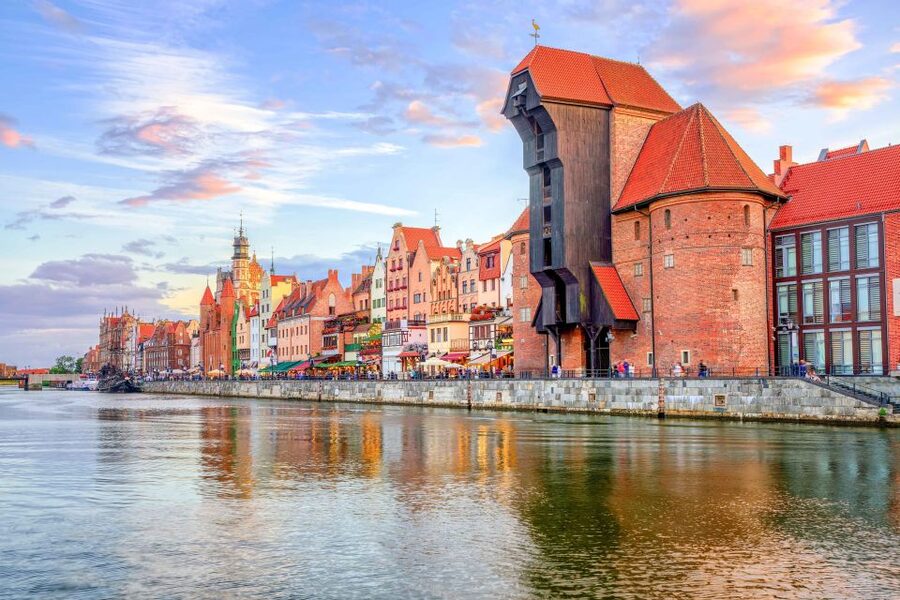
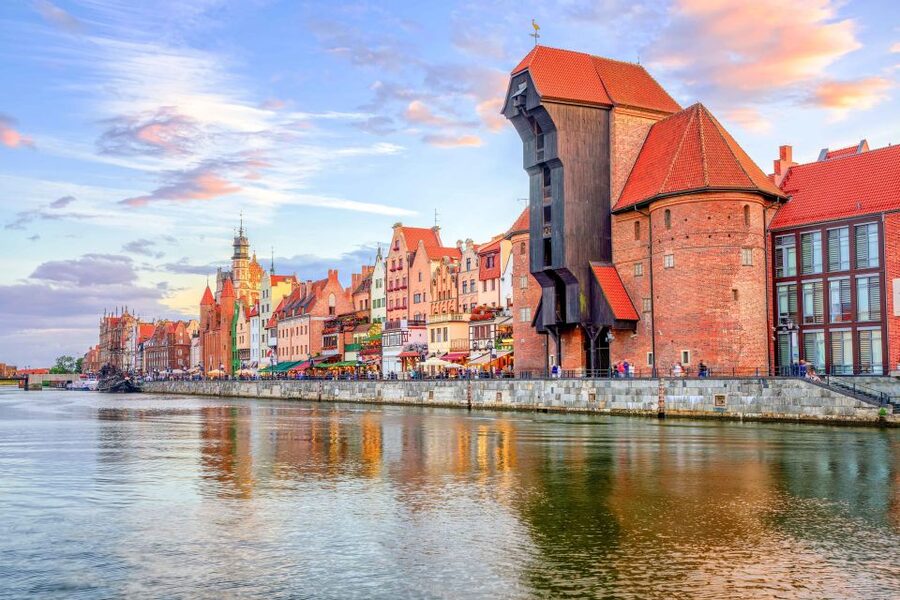
The walk continues toward the Motława River, where you see the Crane, or Żuraw. It is described as the biggest harbor construction of the Hansa Association, and it is one of the most memorable pieces of Gdansk’s port story.
The Crane makes the city’s trading past easier to picture. Instead of hearing only about merchants and shipping, you see the kind of machinery that handled cargo along the waterfront. Its heavy timber and brick form gives the riverfront a different mood from the polished facades of the Royal Way.
This section is valuable because it broadens the tour beyond ceremonial Gdansk. The Golden Gate and Long Market show how the city presented itself. The Crane shows the working port that helped make that presentation possible.
Allow yourself a moment to look along the Motława rather than only at the monument. The riverfront is one of the route’s clearest changes of setting, and it helps you understand why Gdansk grew where it did. The tour remains compact, so your time here is mainly for orientation, stories, and photographs rather than a long waterfront stop.
St Mary’s Street and the enormous brick church
St Mary’s Street leads toward St Mary’s Church, also called St Mary’s Cathedral in the tour information. The street is known for its attractive architecture and amber galleries, making it one of the most enjoyable stretches for a relaxed walk.
Amber is closely tied to Poland’s Baltic identity, and the galleries give the street a distinct local character. You will see jewelry and decorative work in shop windows, though the tour is not presented as a shopping excursion. The guide’s role is to explain the street and its buildings, not to arrange purchases.
St Mary’s Church is the visual heavyweight here. It is described as the largest brick church in the world, and its scale is difficult to appreciate from a single photograph. Even if you do not go inside, the exterior gives you a strong sense of the resources and ambition behind medieval Gdansk.
Entry is optional and costs EUR 1 per person. That small extra charge is not included in the tour price, so decide before you start whether you want to use the interior portion of your visit. The stated two-hour route may not provide a long independent look inside, particularly if the group has spent extra time at earlier stops.
The scheduled church explanation is about 15 minutes. That is enough for a focused introduction, but not enough for a leisurely architectural study. If the church matters to you, tell the guide early so the group can understand how much time is available.
The Old Town and the Great Armoury
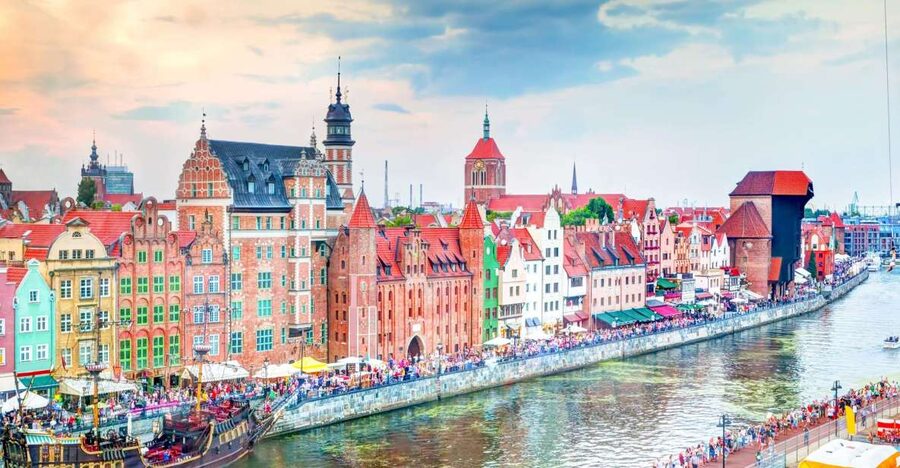
The Old Town portion receives about 25 minutes, giving the guide room to connect the route’s separate pieces. You should come away with a working sense of how the gates, royal streets, market area, riverfront, church, and civic buildings fit together.
The final stop is the Great Armoury, one of the finest Renaissance buildings in Gdansk. Its ornate front makes a strong finish, particularly after the darker medieval material at the Torture Chamber and the industrial story of the Crane.
Ending here also gives you a useful next step. You can continue exploring on your own after the tour, return toward Long Market, or use the walk as a starting point for museums and galleries. The guide does not provide a separate transport segment, so you remain on foot through the compact center.
One criticism to keep in mind is that a few people felt the route spent too long in the area behind the tourist information office and did not expand far enough beyond it. That may reflect a slower guide, a group asking many questions, or a mismatch between expectations and the tour’s compact design. If you want a broad survey of all Gdansk districts, this is not the right format. If you want a concentrated introduction to the historic center, the compact route is an advantage.
What the $167 group price really means
The price is $167 for a private group of up to 10 people. At the maximum group size, that works out to $16.70 per person, which is a strong price for a private guide. For two people, however, the same booking works out to $83.50 each, so the value depends heavily on your group size.
The price includes the guide but not entry to St Mary’s Cathedral. The optional EUR 1 admission is modest, yet it is worth knowing about when comparing the total cost of different walking tours.
A private guide also gives you something a standard group walk cannot promise: control over the conversation. You can ask about the rebuilding of Gdansk after the war, focus on Renaissance architecture, or request more detail about the port. The benefit is greatest when your group has shared interests.
The tradeoff is that private does not automatically mean fast or highly polished. A guide who gives long explanations can make two hours feel full. One German-language experience was described as well informed but tiring at 1.5 hours, while another found the sound equipment poor. I would book this for interpretation and orientation, not for a brisk checklist of landmarks.
Who will get the most from this walk
I would choose this tour if you have only a short time in Gdansk and want the main historic sights arranged into a sensible route. It is also a good fit for families or small groups who want to ask questions without waiting for a large party.
It works particularly well for:
- First-time visitors who want to understand the Old Town before exploring alone.
- Cruise passengers or short-stay visitors with roughly two hours available.
- Small groups that can share the $167 fee.
- People interested in architecture, royal ceremony, port history, and postwar rebuilding.
- Visitors who prefer English, German, or Polish guiding.
I would think twice if you dislike extended spoken explanations or want plenty of free time for shopping and interior visits. The route has many stops, but the format is still a guided overview. It will not replace a full museum visit or an unhurried afternoon in the Old Town.
The experience has a 4.5 rating from 94 reviews, and the most consistent positive qualities are clear: the guide is pleasant, well informed, and able to give you a strong appreciation of Gdansk. The weaker points are also clear: pacing can feel slow, stock phrases can dull the storytelling, and audio equipment may not always be ideal.
Should you book the Gdansk Old Town walk?
Book it if you want a private, tightly focused introduction to Gdansk’s central sights and can fill several places in the group. The route covers the Golden Gate, Upland Gate, Royal Way, Neptune Fountain, Town Hall, Motława River, Crane, St Mary’s Street, St Mary’s Church, Old Town, and Great Armoury in two hours.
Before starting, tell the guide what matters most to you and ask for clear pacing. If you are a small party of two, compare the $167 cost with a shared walking tour. If you have a larger group, the price becomes much more attractive.
This is a good orientation walk, not a complete Gdansk education. It gives you the city’s key shapes and stories, then leaves you free to return to the places that caught your attention.
FAQ
Where does the Gdansk Old Town tour begin?
It begins at Brama Wyżynna, or the Upland Gate, at Wały Jagiellońskie 2A. The meeting point is at the entrance to the Pomerania Tourist Information Center.
How long does the walking tour last?
The tour lasts two hours.
Is this a private tour?
Yes. It is for a private group of up to 10 people.
Which languages are available?
The live guide can lead the tour in English, German, or Polish.
What is included in the price?
The price includes a private guide.
Is entry to St Mary’s Church included?
No. Optional entry costs EUR 1 per person.
What major sights are included?
The route includes the Golden Gate, Neptune Fountain, Long Market, Main Town Hall, St Mary’s Church, the Crane, St Mary’s Street, the Old Town, and the Great Armoury.
How much does the tour cost?
The price is $167 per group of up to 10 people.
Just added in Gdańsk
- Highlights of Gdańsk, Gdynia and Sopot 1-day Private Tour★ 4.9 · 59 reviews
- Gdansk Sopot and Gdynia 3 Cities Private Full-Day Tour★ 5.0 · 56 reviews
- Gdansk Private Bike Tour★ 5.0 · 21 reviews
- Gdansk Private Polish Beer Tasting Tour at Best Pubs & Bars★ 4.8 · 22 reviews
- Gdansk Highlights Bicycle Tour★ 5.0 · 65 reviews
- Gdansk Traditional Food Tour with Old Town Sightseeing★ 4.5 · 27 reviews
- Gdansk Private Bike Tour★ 5.0 · 36 reviews
- Gdansk: 4-Hour Polish Food Tour★ 4.9 · 35 reviews
Old Town Tours, compared.


Bike Tour of Old Town, Jewish Quarter and the Ghetto
Read the review →


Sightseeing EcoCruise around the Old Town of Gdansk
Read the review →
Browse the lists this tour appears in