
Reviewed · WWII MEMORIAL & CAMP TOURS
Guided Tour of Plaszow Concentration Camp, Kraków
Plaszow is not a museum of preserved barracks and display cases. It is an open, quiet place where cemetery traces, mass graves, memorials, and a few surviving structures reveal what happened here. A guide helps you read the ground and understand how this camp once worked.
I like two things right away: the slow pace, which gives the subject the respect it needs, and the attention to detail. You’ll see the Grey House, the ruined pre-burial hall, the roll-call area, and paths once paved with fragments of gravestones. The guide also connects Plaszow with Oskar Schindler and the filming locations from Schindler’s List.
The main consideration is that this is a serious walking tour through an exposed site with few intact buildings. If you want a large museum with many objects and indoor exhibits, this may feel sparse. If you want help understanding a difficult place without turning it into a spectacle, the format works well.
Key points before you book
- Plaszow began on two Jewish cemeteries: The Nazi German camp opened in October 1942 as a forced-labor camp for Jews from the liquidated Kraków Ghetto.
- The site changed over time: It later held Polish prisoners, became a concentration camp in January 1944, and served as a transit camp for Hungarian Jews sent to Auschwitz.
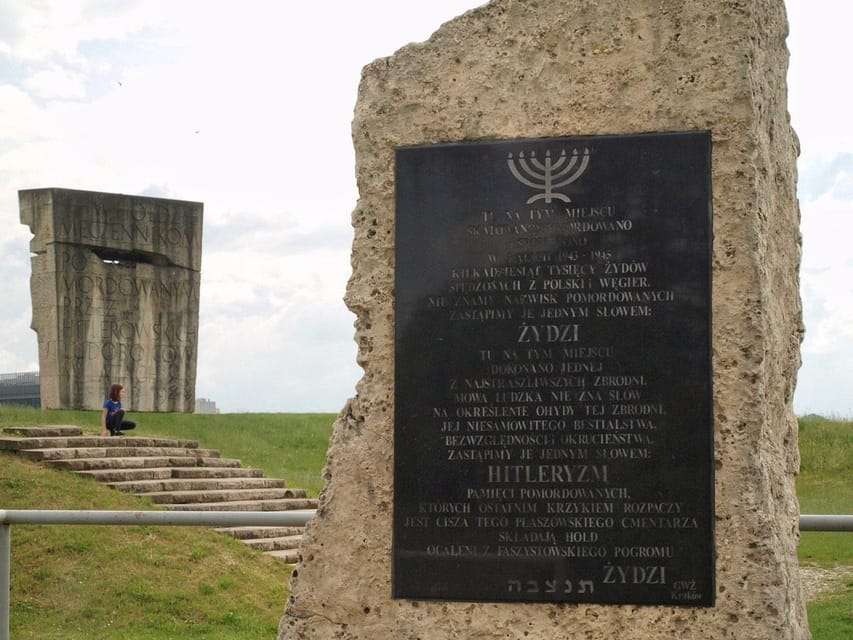
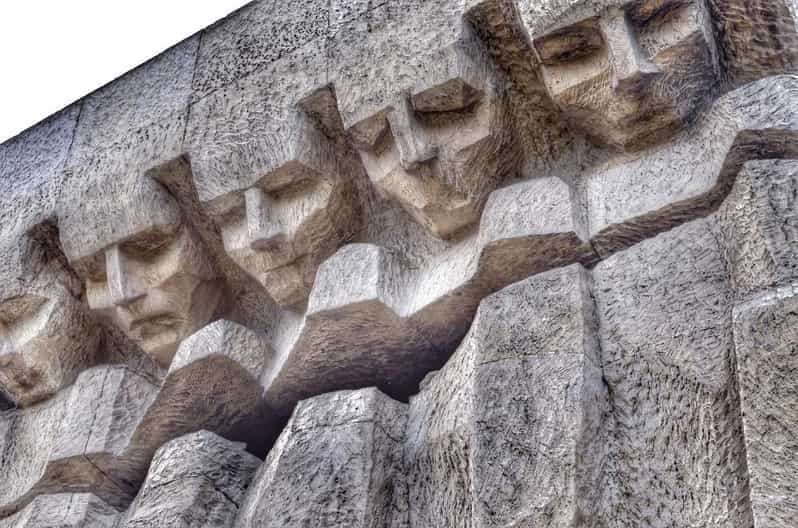
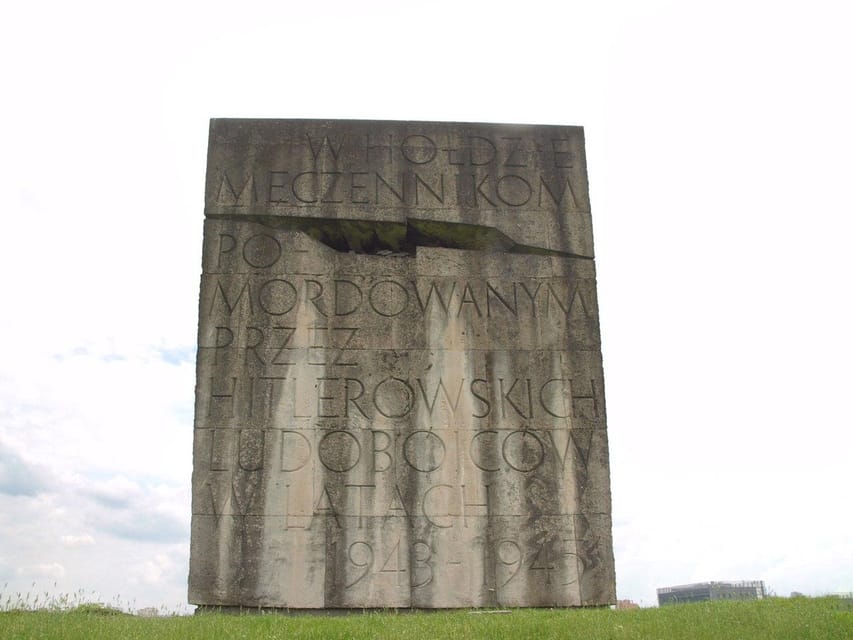
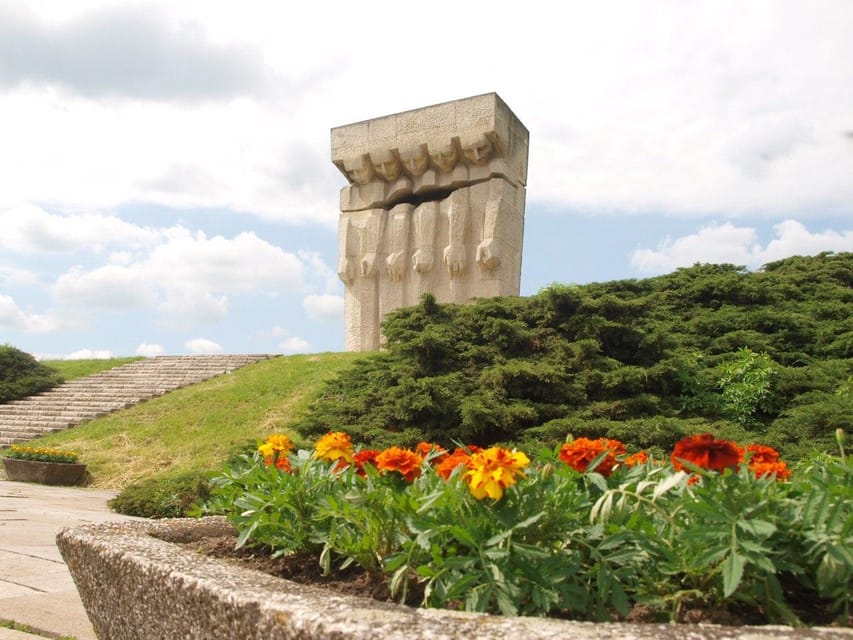
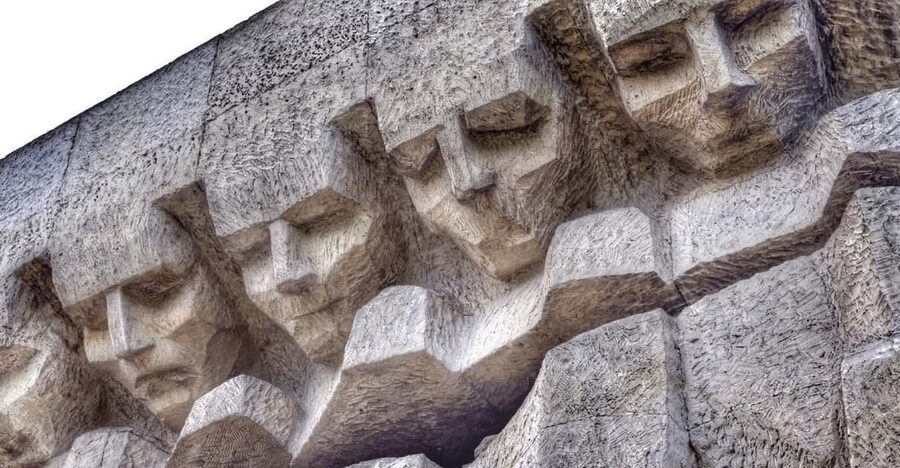
- Memorials carry much of the story: The tour includes the Monument of Torn-Out Hearts and other places linked to executions and mass graves.
- Schindler’s story is part of the camp’s history: His enamelware business helped secure permits for Jewish prisoners, and he later moved more than a thousand people to safety at his plant in Brünnlitz.
- The route is built for reflection: The two-hour walk does not rush from stop to stop, giving you time to listen and ask questions.
- Practical value is solid: At $29 per person, you receive a licensed guide and one tram ticket, with free cancellation up to 24 hours ahead.
Why Plaszow feels different from other camp sites
Plaszow asks you to pay attention in a different way. At many former camps, rows of barracks, watchtowers, and preserved rooms make the story visually clear. Here, much of the camp has disappeared, leaving open ground, partial ruins, memorials, and traces that are easy to miss without guidance.
That absence is not a weakness in itself. It is the point of the visit. You are asked to picture the camp as the guide explains its layout, rather than simply moving through a preserved building. I find that this can make the experience more personal, but it also requires concentration.
The camp was established by the Nazi German occupiers in October 1942 on the grounds of two Jewish cemeteries in Kraków. It first served as a forced-labor camp for Jews removed from the Kraków Ghetto. From July 1943, a separate penal-labor section also held Polish prisoners.
In January 1944, Plaszow was redesignated as a concentration camp. It later functioned as a transit camp for Hungarian Jews being sent to Auschwitz. More than 35,000 people were imprisoned here during the camp’s existence, and around 6,000 were murdered.
Those numbers are important, but the walk gives them a place and a shape. You learn where people lived, where roll calls took place, how the administrative and industrial sections fit together, and where executions happened. The ground is quiet now, but the guide helps you see that this was not an isolated prison yard. It was a large, organized system of forced labor, punishment, transport, and murder.
Other wartime memorials reachable from Kraków:
- Krakow: Plaszow Concentration Camp Walking Tour
★ 4.8 · 39 reviews - Krakow: Schindler’s Factory & Ghetto & Plaszow Camp Guided Tour
★ 4.5 · 28 reviews - Guided Tour in Kraków-Płaszów Former Concentration Camp
★ 5.0 · 19 reviews
Seeing the camp through its remaining structures
The Grey House is one of the key surviving buildings connected with the camp. It helps you understand that Plaszow was not only a work site. It had administrative spaces and places tied to the camp’s control system.
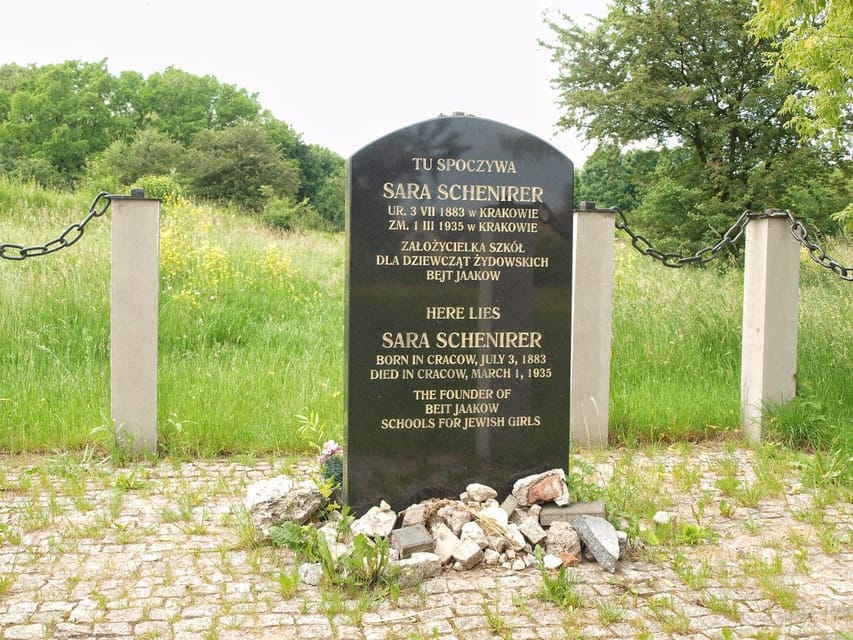
You also visit the ruins of the pre-burial hall. Its presence links the modern site to the Jewish cemeteries that stood here before the camp was created. The camp’s location was not accidental. Nazi authorities built over sacred Jewish ground, destroying parts of the cemeteries and using fragments of gravestones in paths.
That detail is especially hard to forget. A path can look like an ordinary strip of worn earth until you understand what is beneath it and what was used to make it. I like that this tour gives attention to such details instead of focusing only on the most obvious monuments.
Traces of the former cemeteries help explain the violence done to the place itself. You are not simply visiting a camp built on empty land. You are seeing how the Nazis imposed a new system on an existing Jewish site, then erased and abused many of its physical markers.
The former roll-call area is another important stop. Roll call was part of the daily machinery of camp life, used to count prisoners and enforce control. Standing in an open area today, you may find it difficult to picture the crowds and routines, which is exactly why the guide’s explanation matters.
The camp was divided into living, hospital, administrative, and industrial sections. The walk pieces these areas together. You do not need to memorize every boundary, but you should finish with a clearer sense of how Plaszow operated and how prisoners were moved through it.
Memorials, executions, and the Monument of Torn-Out Hearts
The memorial stops give the tour its emotional center. Plaszow contains places connected with mass graves and executions, and the guide explains how these sites fit into the camp’s wider history.
The Monument of Torn-Out Hearts is the most recognizable memorial included on the route. Its shape and title make it difficult to pass without pausing. This is not a place for hurried sightseeing, and the planned pace gives you room to listen and reflect.
Executions took place at several locations within the camp. The tour helps you understand that the killing was not confined to one single point. The remains of the camp are spread across an area, and the memorials mark a story that would otherwise be hard to follow.
I appreciate the balance here. The guide does not need dramatic presentation to make the history powerful. The facts, the silence, and the open setting do enough. You should expect a sober experience, not entertainment.
This is also why I would not place Plaszow late in a packed day of attractions. You may need a little time afterward to process what you have heard. The two-hour length is enough to cover the major parts of the site without turning the visit into a rushed checklist.
Oskar Schindler and the story behind the film
Oskar Schindler is inseparable from the way many people first hear about Plaszow. Steven Spielberg’s Schindler’s List brought the camp and its surrounding history to a worldwide audience, and the tour points out filming locations connected with the movie.
The film connection may attract you, but it should not become the main subject. The tour uses Schindler’s story to explain the camp, the permit system, and the relationship between prisoners and nearby industry.
Through his enamelware enterprise, Schindler obtained work permits for Jewish prisoners registered through Plaszow. Those permits helped shield them from further transports. Later, he arranged for their transfer to his wartime plant in Brünnlitz, where he saved more than a thousand lives.
That story matters because it shows both the cruelty of the camp system and the small openings through which some people survived. Schindler’s actions did not change the nature of Plaszow, but they affected the fate of many individuals connected with it.
I like the way this subject fits into the wider walk. You are not asked to treat Schindler as a lone movie hero detached from the camp. Instead, his business, the prisoners’ work permits, and the camp’s administration are presented as connected parts of the same wartime system.
If you have already seen Schindler’s List, you will recognize some of the context. If you have not, the tour still works, because the history of Plaszow does not depend on the film.
A few more things to do in Kraków worth a look
- From Krakow: Auschwitz-Birkenau Guided Tour & Hotel Pickup
★ 4.5 · 33,358 reviews - From Krakow: Auschwitz-Birkenau Guided Tour & Hotel Pickup
★ 4.5 · 29,340 reviews - Krakow: Auschwitz Guided Tour with Optional Hotel Pickup
★ 4.5 · 15,280 reviews - Krakow: Auschwitz-Birkenau Guided Tour with Pickup & Lunch
★ 4.5 · 9,800 reviews
What the two-hour route is really like
The advertised duration is two hours, and that is a useful amount of time for this site. A shorter visit could point out a few memorials but would leave little room to explain the camp’s changing purpose. Two hours lets the guide connect the physical remains with the timeline.
You will walk between the main points rather than move through a sequence of indoor galleries. Expect the guide to explain the former cemetery grounds, camp sections, surviving buildings, execution sites, and memorials as part of one connected route.
The pace is deliberately suited to reflection. That does not mean the tour is slow in a frustrating way. It means you are not pushed past a memorial before you have understood why it matters. One of the strongest features is the chance to ask questions as the story develops.
The English-language group uses one language only. That is useful when the subject requires careful explanation. You should choose English when booking, and you should arrive 10 minutes early. Once the group has left, latecomers cannot join and tickets are not refunded.
The meeting point is signposted by a guide holding an excursions.city sign. One tram ticket is included, which makes the connection to the meeting point a little easier and adds modest value to the $29 price.
The route is listed as wheelchair accessible. Since Plaszow is an open historic site with outdoor paths and uneven remnants, you may still want to confirm any personal mobility needs before booking. The important point is that accessibility has been considered in the design of the activity.
Is $29 a fair price for Plaszow?
At $29 per person, this is a reasonable price if you want the site explained rather than simply located on a map. The value comes mainly from the licensed guide. Plaszow’s remains are limited, and without context you could easily miss why the Grey House, cemetery fragments, roll-call area, and memorials matter.
The included tram ticket is helpful, though it is not the main reason to book. The stronger value is the guide’s ability to organize a complicated history within two hours and answer questions along the way.
The small set of available ratings is strongly positive, with an overall score of 4.8 from seven reviews. The clearest pattern is praise for the guide’s explanations, passion, accuracy, and willingness to answer questions. One French-speaking participant described the guide as passionate and said the detailed explanation made the camp understandable. An Italian-language comment also highlighted the careful presentation and the guide’s readiness to answer questions.
You should not read those comments as a promise of a specific guide or a private tour. One booking happened to have only one participant, but group size is not stated as a standard feature. Still, the consistent praise for the guide is useful: this experience depends heavily on the person leading it, and the available feedback points to strong guiding.
Free cancellation up to 24 hours before the start lowers the risk of fitting the tour into a changing Kraków schedule. You can also reserve now and pay later, which helps if you are still arranging the rest of your trip.
Who will appreciate this tour most
I would recommend this walk to anyone who wants to understand Plaszow as a functioning camp, not just visit a memorial. It suits history-minded visitors, people studying the Holocaust, and anyone who has seen Schindler’s List and wants to place its story in the real setting.
It is also a good choice if you prefer a guide who welcomes questions. The strongest feedback centers on clear explanations and patient answers, so you should feel comfortable asking for help with the timeline or camp layout.
Families with older children and teenagers may find the visit meaningful, though the subject is severe. The open setting can make the history easier to approach than a room full of graphic displays, but it is still a site of mass imprisonment and murder.
I would think twice if you want a conventional museum visit, many original objects, or a large collection of preserved buildings. Plaszow cannot provide that. Its power comes from the remaining traces and from the work of the guide.
Wear practical walking shoes and plan for an outdoor visit. The supplied information does not specify weather protection or ground conditions, so you should be prepared for a site where much of the experience takes place outside.
Should you book the Plaszow camp walk?
Book it if you want a focused, respectful explanation of one of Kraków’s most important Holocaust sites. The tour gives you the framework to understand the former cemetery grounds, the camp’s changing role, the memorials, the executions, and Schindler’s connection to the prisoners.
Skip it only if you need a museum-style visit with preserved interiors and extensive displays. For everyone else, the $29 fee is fair, the two-hour length is practical, and the guide-led format adds real value to a place that can be difficult to read on your own.
FAQ
Where does the tour take place?
The tour takes place at Plaszow Concentration Camp in Kraków, in Poland’s Lesser Poland region.
How long is the guided tour?
The tour lasts two hours.
What language is the tour offered in?
The live guided tour is offered in English. Group tours use only one language, so you should select English when booking.
What is included in the price?
The price includes a licensed guide and one tram ticket.
How much does the tour cost?
The listed price is $29 per person.
Is the tour wheelchair accessible?
Yes. The activity is listed as wheelchair accessible.
What should I do if I arrive late?
You should arrive 10 minutes before the start. Once the group has departed, latecomers cannot join, and their tickets cannot be refunded.
Can I cancel the booking?
Yes. You can cancel up to 24 hours in advance for a full refund.
Does the tour include Schindler’s List filming locations?
Yes. The walk includes information about filming locations connected with Schindler’s List, along with Oskar Schindler’s connection to Plaszow and the prisoners he helped save.
Just added in Kraków
- Wawel Castle, Old Town with St. Mary’s Church Guided Tour★ 5.0 · 3 reviews
- Wawel Castle, Old Town with St. Mary’s Church Guided Tour★ 5.0 · 5 reviews
- Wawel Castle, Cathedral, Old Town and St. Mary’s Basilica★ 4.8 · 13 reviews
- Wawel Castle, Cathedral, & Rynek Underground Tour with Lunch★ 4.5 · 10 reviews
- Wawel Castle & Cathedral Skip the Line Small Group Tour★ 5.0 · 3 reviews
- Wawel Castle and Cathedral Guided Tour★ 4.6 · 44 reviews
- Wawel Castle, Cathedral, Rynek Underground Tour with Lunch★ 5.0 · 3 reviews
- Wawel Castle and Cathedral Guided Tour★ 5.0 · 8 reviews
WWII Memorial & Camp Tours, compared.
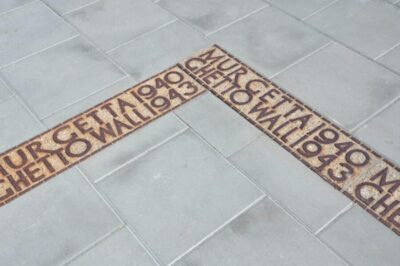
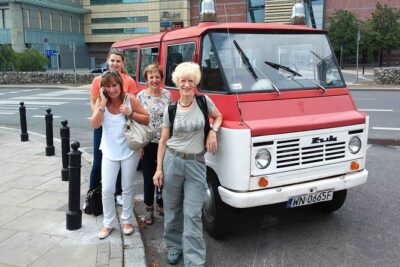
Warsaw for WWII Buffs – private tour with hotel pickup
Read the review →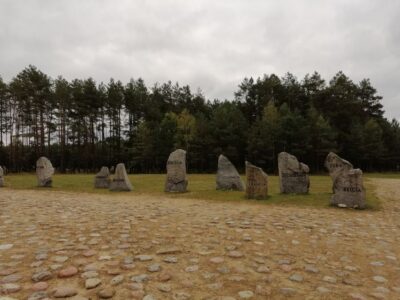
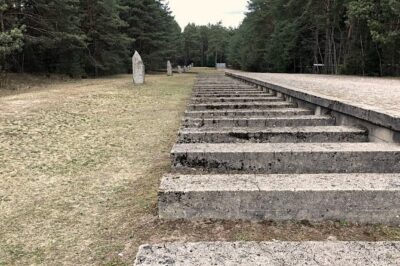
Treblinka Death Camp 6 Hour Private Tour from Warsaw
Read the review →
Stutthof Concentration Camp English Tour with Gdansk Hotel pickup
Read the review →
Majdanek Concentration Camp & Lublin Full Day Private Tour from Warsaw
Read the review →Browse the lists this tour appears in