
Reviewed · WWII MEMORIAL & CAMP TOURS
From Warsaw: Guided Tour of Treblinka Camp
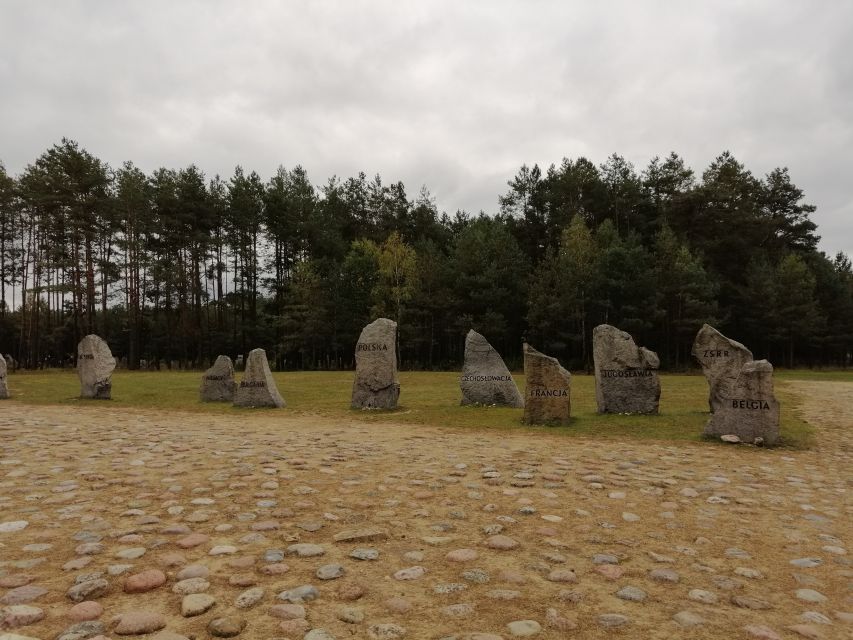
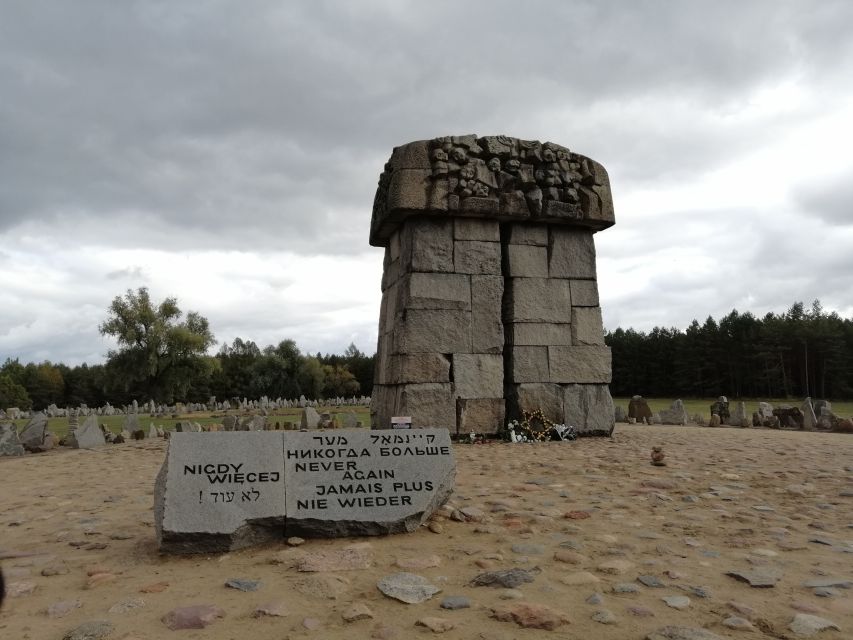
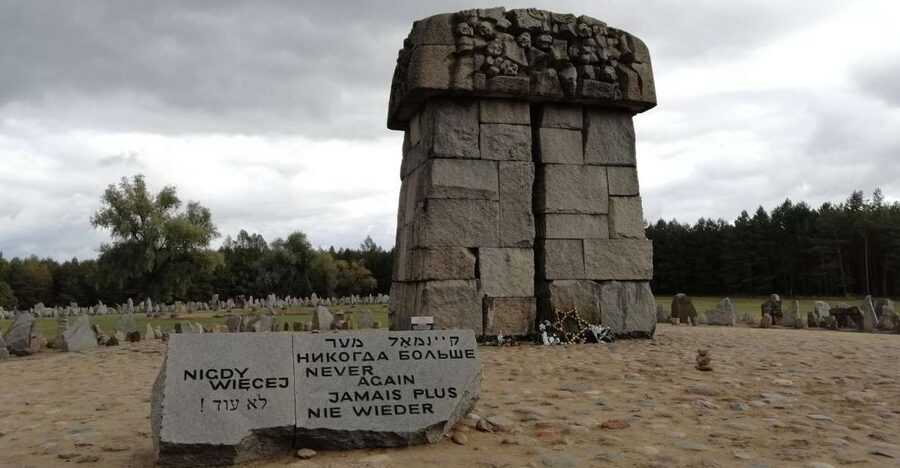
Treblinka is a place where absence tells the story. The Nazi camp was dismantled and the site was altered to hide the crime, so you will not find rows of barracks or a preserved gas chamber complex. Instead, you walk through a quiet forest of stones, memorial markers, ruins, and reconstructed features while your guide explains what once happened here.
I like two things about this six-hour trip: the hotel pickup and smooth transport, and the quality of the guiding. Guides including Leszek, Janusz, Marek, and Jan have been praised for clear English, patience, and detailed explanations. The main drawback is the price, $134 per person, which can feel high for a half-day outing, especially for a solo visitor.
Key points to know before booking
- Treblinka is a memorial site, not a preserved camp complex: Much of the original camp was destroyed, so the visit depends heavily on your guide and the memorial design.
- Hotel pickup saves time: You are collected from your accommodation in Warsaw and returned there after the visit.
- The museum adds essential context: A scale model, films, documents, and exhibits help explain the camp’s layout and daily life.
- The English-speaking guides are the heart of the trip: Leszek, Janusz, Jan, and Marek are among the guides named in the feedback, though your assigned guide may differ.
- Expect a serious day: This is a Holocaust memorial visit, not a light sightseeing stop. Comfortable shoes and a respectful frame of mind matter.
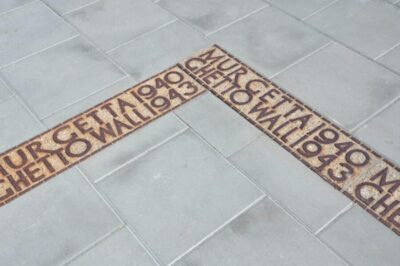
- The tour may include Warsaw context: Some departures have included stops or explanations connected with the Warsaw Jewish ghetto and Umschlagplatz.
Why Treblinka feels different from Auschwitz
Treblinka operated from July 22, 1942, to October 19, 1943, as part of Operation Reinhard, the Nazi campaign that murdered most of the Jews sent to extermination camps in occupied Poland. Estimates place the number of Jewish victims at roughly 700,000 to 900,000, along with about 2,000 Romani people.
Only Auschwitz-Birkenau killed more Jews than Treblinka. Yet Treblinka is less familiar to many visitors because the camp was dismantled after the prisoner revolt in August 1943. The Nazis tried to erase the evidence, level the site, and make it appear to have been an ordinary rural area.
That destruction shapes the entire visit. I would not book this tour expecting a preserved camp filled with original buildings. You come here to understand a crime through traces, testimony, memorial architecture, and careful explanation.
The site also includes the former Penal Labour Camp, which operated from 1941 to 1944. Around 20,000 prisoners were held there. The extermination camp and the labour camp were separate parts of the Treblinka complex, and the guide helps you understand how they fit into the wider system of Nazi persecution.
Other wartime memorials reachable from Warsaw:
- World War 2 in Warsaw walking tour in English
★ 4.7 · 237 reviews - Warsaw for WWII Buffs – private tour with hotel pickup
★ 5.0 · 166 reviews - Treblinka Death Camp 6 Hour Private Tour from Warsaw
★ 5.0 · 74 reviews
Leaving Warsaw with a guide who sets the context
The day begins with pickup from your accommodation in Warsaw. The exact starting time depends on availability, but the full experience lasts about six hours, including the drive, the visit, and the return to your hotel.
You meet an English-speaking driver and guide before setting off in an air-conditioned vehicle. Several departures have used comfortable Mercedes minibuses or similar vehicles, while others have used a car. The reviews describe punctual pickup, courteous drivers, and smooth journeys.
The drive is more useful when the guide provides background along the way. Some guides have explained parts of Warsaw linked to the wartime Jewish population, the Warsaw ghetto, and the route by which people were transported toward Treblinka. This gives you a clearer sense of how the camp was connected to the city rather than treating it as an isolated forest site.
One practical point matters here. A passenger noted that it could be hard to hear the guide while driving and suggested a small microphone. If you are seated farther back, ask the guide to repeat anything you miss. The information on the road can be as valuable as the formal tour at the memorial.
The group size can be small. One booking described a group of seven guests plus the guide, which allowed for questions and a more personal briefing. Group size can vary, so do not assume every departure will be identical.
The museum gives shape to an invisible camp
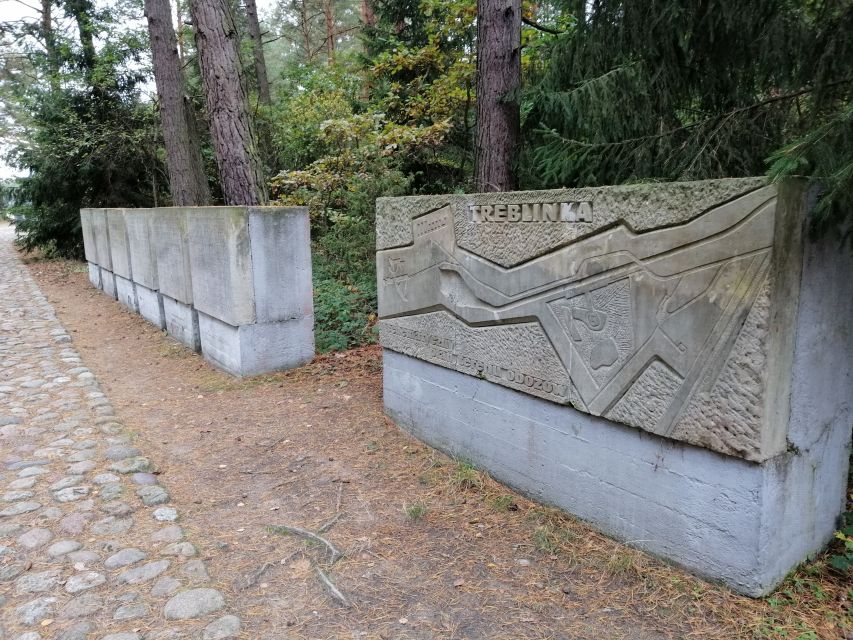
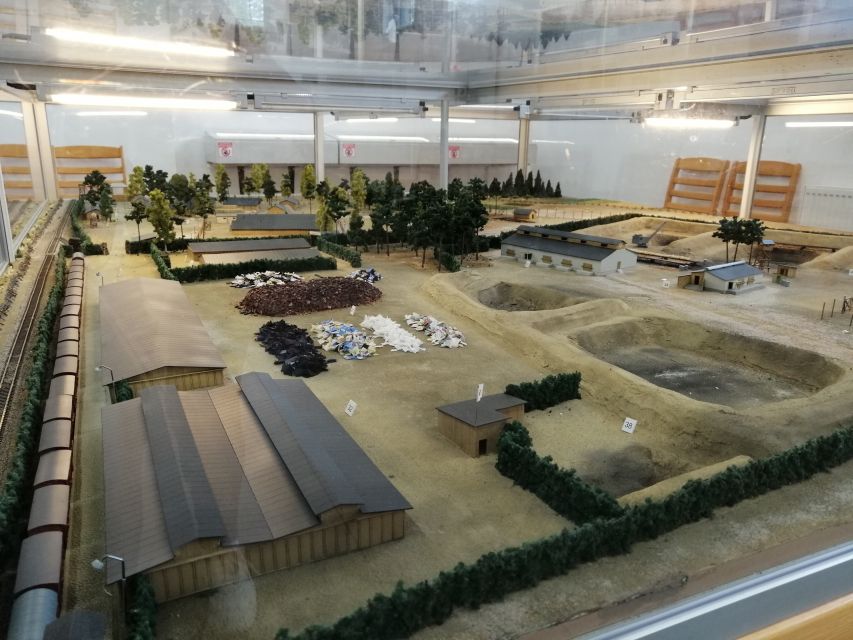
The museum is an important first stop because it explains what the memorial site cannot show directly. You can see exhibits about the camp and the daily life of prisoners, along with a miniature model that helps you understand the camp’s architecture.
This scale model is especially useful. Without it, the forest and memorial stones can be difficult to read. A guide can point out where key areas once stood and explain how the camp was designed to deceive people arriving by train.
Films at the museum may also help you prepare for the memorial walk. One guide specifically encouraged visitors to watch them to gain a fuller sense of the place and its history. I would allow time to watch rather than rushing through the displays. The site is powerful, but it requires information to make its meaning clear.
The museum cannot make the visit easy. The subject is mass murder, and some material may be distressing. Still, the exhibits help prevent the memorial from becoming an abstract arrangement of stones. They connect the physical site with the people who were imprisoned, transported, murdered, or forced to work there.
Walking among the memorial stones
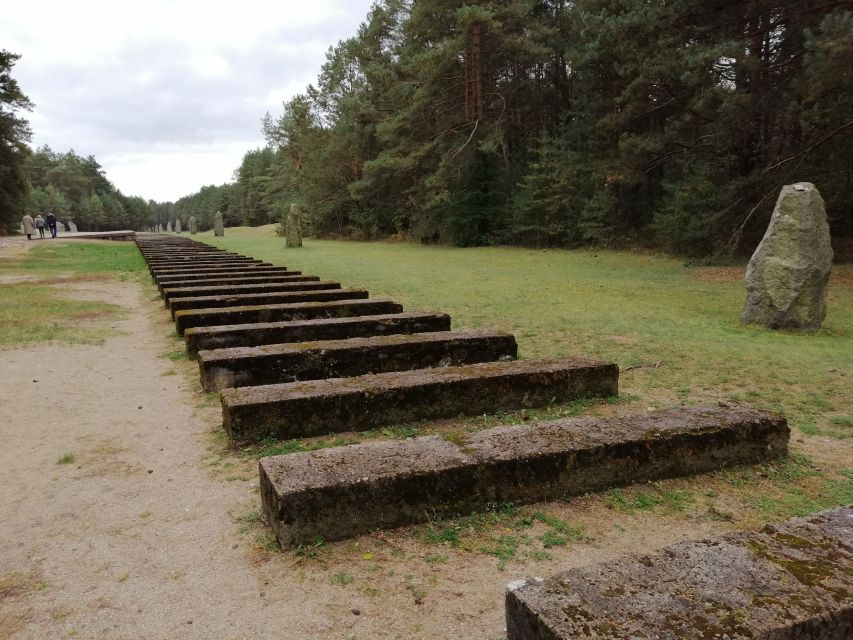
The main memorial area is quiet and deliberately spare. Since the camp was destroyed, the memorial uses stones, open space, reconstructed elements, and the forest setting to mark what was lost.
You may find that the lack of buildings is the hardest part to process. There is no single preserved structure that tells you exactly what you are seeing. Instead, your guide provides the map in words, explains the testimony behind the memorial, and helps you read the site.
This is where the difference between a guided visit and an independent visit becomes clear. Without context, you might see a large memorial and a series of stone markers without understanding the camp’s layout or the scale of the crime. With a good guide, each area gains a purpose.
Guides such as Leszek and Janusz have been praised for answering detailed questions without making the visit feel rushed. A guide named Jan was also described as personal and attentive, remembering visitors’ names and avoiding a mechanical presentation. These qualities matter at Treblinka because the site calls for both accuracy and care.
One guide described in the feedback was born in 1941 and used personal historical perspective during a group briefing. You should not assume that every departure includes this particular guide, but it shows the kind of added context that can make a small-group visit memorable.
A few more things to do in Warsaw worth a look
- 3-Hour Guided Cycling Tour of Warsaw
★ 4.9 · 624 reviews - Warsaw: Old Town Guided Walking Tour
★ 4.9 · 599 reviews - Half-Day Polish Food Walking Tour with Guide and Dinner
★ 4.5 · 381 reviews - From Warsaw: Guided Tour to Auschwitz-Birkenau and Krakow
★ 4.4 · 363 reviews
The Penal Labour Camp and the 1943 revolt
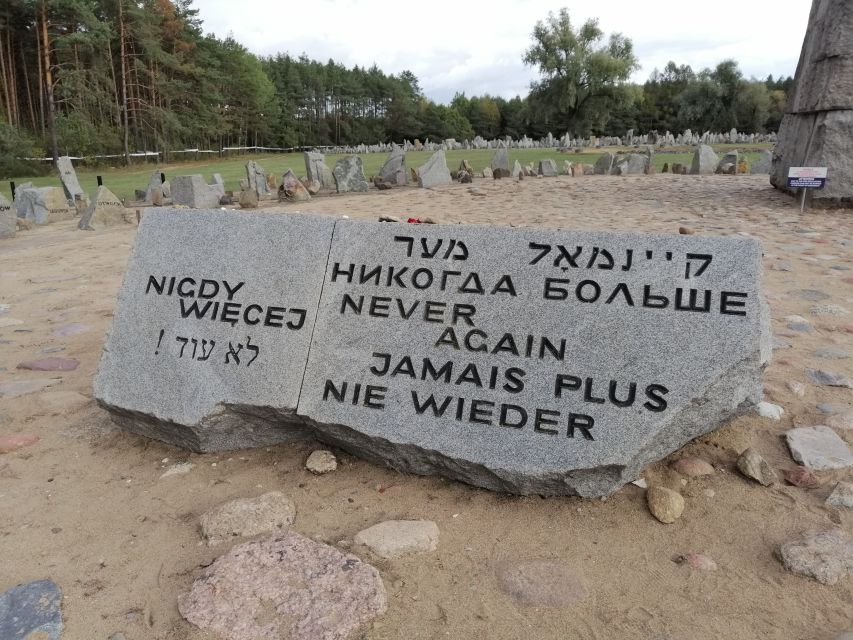
The tour also covers the ruins of the Penal Labour Camp. Around 20,000 inmates were held there between 1941 and 1944. The ruins add another layer to the visit, showing that Treblinka was not only an extermination site but part of a wider network of forced labour, imprisonment, and terror.
Your guide also explains the prisoner revolt of August 1943. About 840 prisoners of the Death Camp took part in an uprising against the system designed to kill them. Their decision to resist was desperate and dangerous, and the story brings human agency into a place often described only through victim numbers.
I value this part of the tour because it avoids presenting prisoners as passive figures in a timeline. You hear about fear, planning, courage, and the effort to destroy evidence. The revolt also helps explain why the Nazis closed and dismantled the camp soon afterward.
The visit is not a reenactment, and no responsible guide can make the site feel ordinary. The best approach is quiet attention. You will have time to ask questions, but this is not a place for casual entertainment or hurried sightseeing.
Why the guide matters so much here
Treblinka is one of the clearest examples of a memorial site where the guide shapes your understanding. The physical remains are limited, and the site’s meaning comes from combining the memorial design with historical records, maps, survivor testimony, and explanations of the camp system.
A strong guide will help you separate the extermination camp from the Penal Labour Camp, explain the railway connection, and show how the Nazis attempted to erase the evidence. You can also ask about the Warsaw ghetto, Operation Reinhard, the Final Solution, and the prisoner revolt.
The named guides in the feedback include Leszek, Janusz, Jan, Marek, and Mark. Visitors have described them as patient, clear, and willing to answer questions. Drivers including Kris, Maciej, Mateusz, Marzena, and Leskek were also singled out for punctual, friendly service. Since staff assignments change, treat these names as examples rather than a promise.
The best guide may not be the one who gives the most facts. At Treblinka, tone matters. You need someone who can explain the history without turning suffering into a performance, and who gives you enough quiet time to take in the memorial.
Transport, timing, and what to bring
The included hotel pickup and drop-off are a real benefit. Treblinka lies northeast of Warsaw, and arranging transport independently would add planning to an already serious day. A driver who knows the route also makes the half-day schedule easier to manage.
The vehicle is air-conditioned, and water has been provided on some departures. Still, food and drinks are not included, so bring your own water and something to eat. The tour information specifically advises comfortable shoes, which is sensible because you will walk outdoors around the memorial and ruins.
The six-hour duration gives you a workable visit without requiring a full extra day in your Warsaw schedule. At the same time, one person felt there should have been more time at Treblinka instead of spending part of the day at Warsaw’s Umschlagplatz. This is worth noting if your priority is the memorial site itself.
The exact balance between Warsaw context and time at Treblinka can depend on the departure and guide. If you want the longest possible visit at the camp, ask about the planned timing before you set off.
The site is wheelchair accessible according to the activity information. Because the visit takes place partly outdoors, you should still consider the footwear and conditions that day.
Is $134 good value?
At $134 per person, this is not a budget excursion. The cost covers private or small-group transport from Warsaw, hotel pickup and return, an English-speaking driver, skip-the-line entry, and a guided visit.
The value depends on how much help you want. If you are comfortable arranging your own transport, studying the history beforehand, and exploring independently, the price may feel high. One solo visitor specifically found the trip expensive, while another felt it was not worth the money despite praising the guide and driver.
For many people, though, the guide is the reason to pay. Treblinka’s memorial design is not self-explanatory, and the location is far enough from central Warsaw that transport adds time and effort. If you want the journey, museum, camp history, and return handled in one six-hour package, the cost is easier to justify.
The strongest value comes for visitors who ask questions and want context beyond a simple stop for photographs. It is less attractive if you want only a quick look at the memorial or prefer to spend every available minute walking without a guide.
Free cancellation up to 24 hours before departure and the option to reserve now and pay later make the booking less rigid. Those terms are useful when your Warsaw plans may shift, but they do not change the tour’s emotional weight or the need to prepare for the subject.
Who should book this Treblinka tour?
I would recommend it to anyone with a serious interest in World War II, the Holocaust, Polish history, memorial design, or the way societies preserve evidence of mass crimes. It is particularly useful if you want a guide who can connect Treblinka with Warsaw and explain the site through maps, testimony, and historical detail.
It also suits visitors who value easy transport. The pickup, air-conditioned vehicle, and return to your accommodation remove much of the practical work from a remote half-day visit.
I would think twice if you want a light cultural outing, dislike emotionally heavy sites, or expect a preserved camp with many original buildings. Treblinka is quiet, sparse, and difficult. The absence of visible structures is not a flaw in the memorial, but it can surprise you.
Should you book it?
Book this tour if you want careful historical explanation, door-to-door transport, and a small-group setting where you can ask questions. The guides are the main strength, and the museum, memorial stones, labour camp ruins, and revolt story form a meaningful half-day from Warsaw.
Before booking, accept that the price is higher than a self-guided visit and that the time at Treblinka may be balanced with Warsaw-related stops. Bring water, wear good shoes, and allow yourself a quiet evening afterward. This is not simply another day trip. It is a serious act of remembrance, made more understandable by a guide who knows how to explain what is no longer there.
FAQ
How long does the Treblinka tour from Warsaw last?
The activity lasts about six hours, including transportation from Warsaw, the guided visit, and the return to your accommodation.
Is hotel pickup included?
Yes. Pickup from your accommodation in Warsaw and drop-off afterward are included.
Is transportation air-conditioned?
Yes. The tour uses a comfortable, air-conditioned vehicle. Some departures have used a Mercedes minibus.
Is the tour conducted in English?
Yes. The activity includes an English-speaking driver and a live English-speaking guide.
What does the tour include at Treblinka?
You visit the museum, see a miniature model of the camp, walk through the memorial area, visit the Penal Labour Camp ruins, and learn about the prisoner revolt of August 1943.
Are food and drinks included?
No. Food and drinks are not included, so you should bring your own.
What should I wear or bring?
Bring comfortable shoes for walking and food or drinks for the day.
Is the activity wheelchair accessible?
Yes. The activity information describes the tour as wheelchair accessible.
Can I cancel the booking?
Yes. You can cancel up to 24 hours in advance for a full refund. The tour also offers a reserve-now-and-pay-later option.
Just added in Warsaw
- Warsaw Zoo Skip-the-Line Entry Ticket with Private Transport★ 4.8 · 3 reviews
- Warsaw Private Wilanow Palace & Garden Tour★ 4.6 · 30 reviews
- Warsaw: Vodka Tour★ 4.4 · 18 reviews
- Warsaw Wolf’s Lair with St. Lipka and Mamerki Private Guided★ 4.2 · 3 reviews
- Warsaw Uprising and WWII Old Town Walking Tour with Museum★ 4.7 · 15 reviews
- Warsaw Old Town UNESCO HERITAGE walking tour in English★ 4.5 · 23 reviews
- Warsaw: Private Vodka Tasting Night with Snacks and Pickup★ 5.0 · 7 reviews
- Warsaw: Skip-the-Line Royal Castle Guided Tour★ 4.9 · 79 reviews
WWII Memorial & Camp Tours, compared.
Warsaw for WWII Buffs – private tour with hotel pickup
Read the review →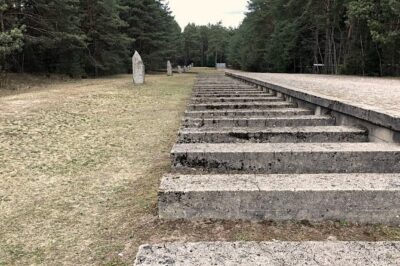
Treblinka Death Camp 6 Hour Private Tour from Warsaw
Read the review →
Stutthof Concentration Camp English Tour with Gdansk Hotel pickup
Read the review →
Majdanek Concentration Camp & Lublin Full Day Private Tour from Warsaw
Read the review →
Stutthof Concentration Camp:Guided Tour with Transportation
Read the review →Browse the lists this tour appears in