
Reviewed · SCHINDLER'S FACTORY TOURS
Krakow: Oskar Schindler’s Factory Entry and Guided Tour
Krakow’s Oskar Schindler’s Factory is not just a museum about one famous industrialist. It tells the wider story of Krakow under Nazi occupation, using photographs, films, personal accounts, objects, and theatrical rooms to show how daily life changed for Polish and Jewish residents. The preserved office and the striking Survivor’s Ark give the visit a clear link to Schindler, while the rest of the museum reaches well beyond the film.
I like two things here. First, the guided structure helps you make sense of a dense exhibition in only 90 minutes. Second, skip-the-line entry matters at a popular museum with narrow exhibition spaces. The main caution is group size: if your guide is speaking from across a crowded room, you may miss details or struggle to see the displays.
Key points
- A 90-minute guided visit: The tour gives you a focused introduction rather than an unstructured walk through the museum.
- More than Schindler’s story: The exhibits cover Polish and Jewish life, Nazi occupation, and the choices forced on people between 1939 and 1945.
- A preserved office: You enter Oskar Schindler’s office inside the former factory administration building.
- Strong visual material: Documentary photographs, eyewitness accounts, films, and multimedia displays carry much of the story.
- A memorable series of rooms: Look for the recreated city space, tram film, Jewish apartment, Plaszow camp artifacts, and Hall of Choices.
- A possible crowd problem: Narrow passages and a large group can make it hard to hear or see every explanation.
Why the former enamel factory matters
The museum occupies the former enamel factory of Oskar Schindler, the businessman made famous around the world by Steven Spielberg’s Schindler’s List. That connection gives the visit an immediate focus, but it would be a mistake to expect a film-set tour or a museum devoted only to Schindler himself.
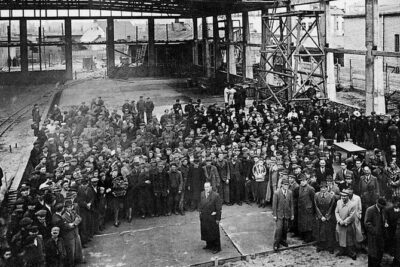
The exhibition places the factory inside the larger story of Krakow from 1939 to 1945. You learn about everyday life under Nazi occupation, with attention to Polish residents, Jewish residents, and the Nazi officials who violently disrupted centuries of Polish-Jewish relations.
That wider frame is the museum’s main value. Schindler’s name gets you through the door, but the exhibition asks you to look beyond one man. You see how a city functioned under occupation, how public and private life changed, and how ordinary people faced choices with terrible consequences.
I find this approach more useful than a simple biography. You still get the personal connection, especially in Schindler’s office, but you also gain context for what happened across Krakow.
More Schindler's Factory tours from Kraków:
- Krakow: Oskar Schindler’s Factory Entry Ticket & Guided Tour
★ 4.2 · 3,793 reviews - Krakow: Schindler’s Factory Tour with Entrance Ticket
★ 4.5 · 3,182 reviews - Krakow: Schindler’s Factory Skip-the-Line Ticket
★ 4.4 · 3,105 reviews
Starting at Lipowa 4
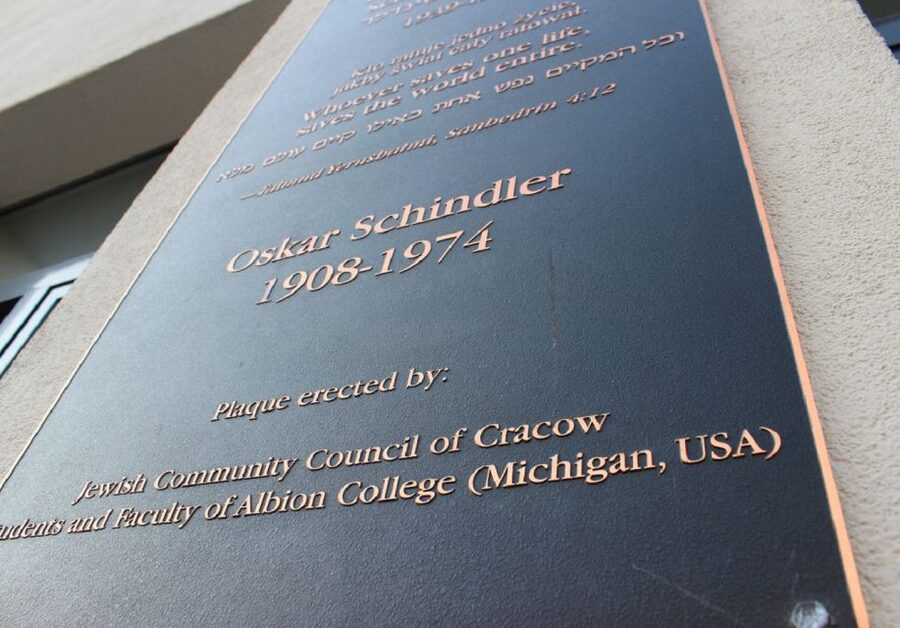
The meeting point is the main entrance of the museum at Lipowa 4. You should wait there for the guide, who will be holding an excursions.city sign. The tour finishes at the same location, so you do not need to arrange transport between the meeting point and the museum.
This is a good setup for a short city visit. The entire activity lasts about 1.5 hours, and the route does not involve a separate transfer or another attraction. Check the available starting times when you book, since the exact departure depends on the date and availability.
The guide leads the visit rather than simply handing you an entrance ticket. That distinction matters here. The museum uses many different forms of presentation, and a guide can point out how the photographs, objects, films, and reconstructed spaces fit together.
The available tour languages are English, French, German, Italian, Spanish, and Polish. You should select the language that lets you follow difficult material without effort. This is not a light sightseeing stop, and missing a few explanations can affect your understanding of the whole exhibition.
Seeing Schindler’s office and the Survivor’s Ark
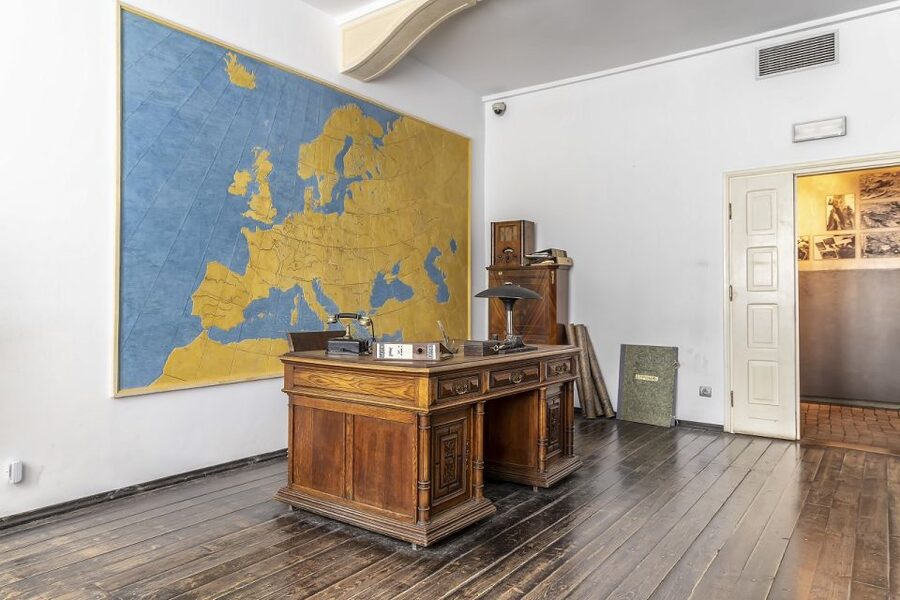
One of the first major draws is Schindler’s preserved office in the factory’s administrative building. This is the most direct physical link to the man whose name brings many people to the museum.
The office gives the visit a tangible center. Instead of hearing only about Schindler in the abstract, you see a preserved part of the place where factory administration took place. It helps connect the personal story to the industrial setting.
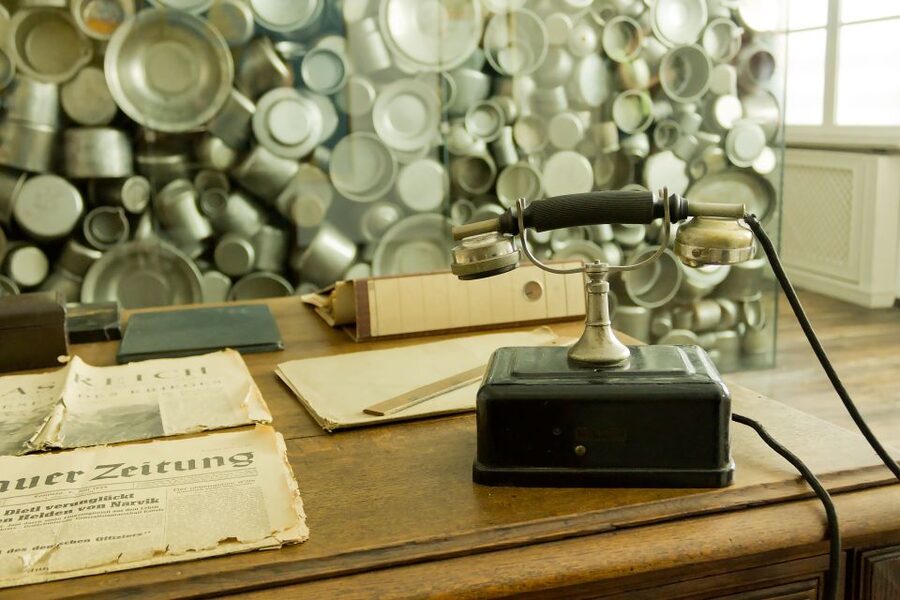
Another memorable feature is the Survivor’s Ark, made from thousands of enamel pots. The object recalls the kind of goods produced in the factory while also carrying a strong symbolic meaning. It is one of the displays you are likely to remember after the tour because it turns a large historical subject into a single, visually clear object.
You should not expect the visit to remain in Schindler’s office for long. The museum quickly expands into the story of the city and its people. That is a strength, but it also means that anyone looking for a narrow account of Schindler’s life may find the broader approach different from what they expected.
Krakow under occupation, shown through real voices
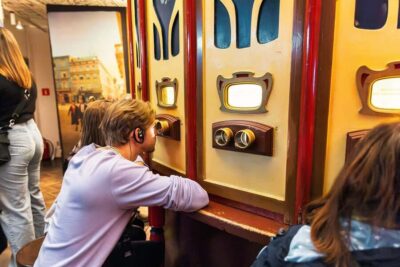
The permanent collection relies heavily on documentary photographs, eyewitness accounts, film documentaries, and multimedia presentations. These materials give the exhibition a human scale.
Photographs can show what a street looked like, but eyewitness accounts help explain what daily life felt like. Films add another layer, helping you see how the city operated and how occupation affected people in their homes, workplaces, and public spaces.
The subject matter is serious, so the guided format is useful. You have someone to identify key details and explain why a particular photograph or object matters. A guide can also help keep the chronology clear when you move from one room to another.
The collection covers both Polish and Jewish experiences. That matters because Krakow’s wartime story cannot be reduced to one community or one famous factory. The exhibition presents the disruption caused by the Nazi occupation and the damage done to long-standing Polish-Jewish relationships.
I would allow yourself some quiet time after the tour if possible. The scheduled 90 minutes gives you a focused route, but the material may stay with you longer than the visit itself. One useful point raised about the format is that a guided tour can leave little time to study every display at your own pace.
A few more things to do in Kraków worth a look
- From Krakow: Auschwitz-Birkenau Guided Tour & Hotel Pickup
★ 4.5 · 33,358 reviews - From Krakow: Auschwitz-Birkenau Guided Tour & Hotel Pickup
★ 4.5 · 29,340 reviews - Krakow: Auschwitz Guided Tour with Optional Hotel Pickup
★ 4.5 · 15,280 reviews - Krakow: Auschwitz-Birkenau Guided Tour with Pickup & Lunch
★ 4.5 · 9,800 reviews
Walking through a recreated Krakow
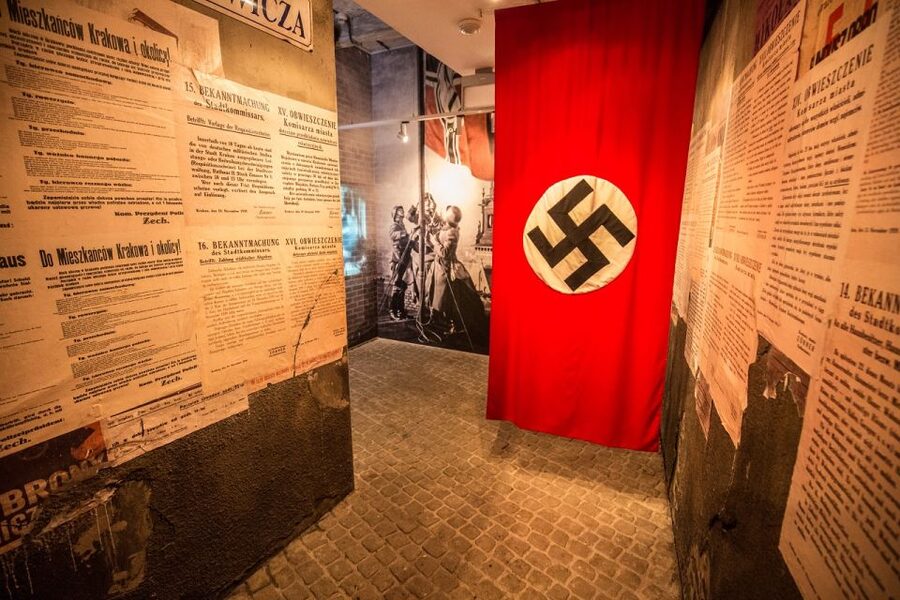
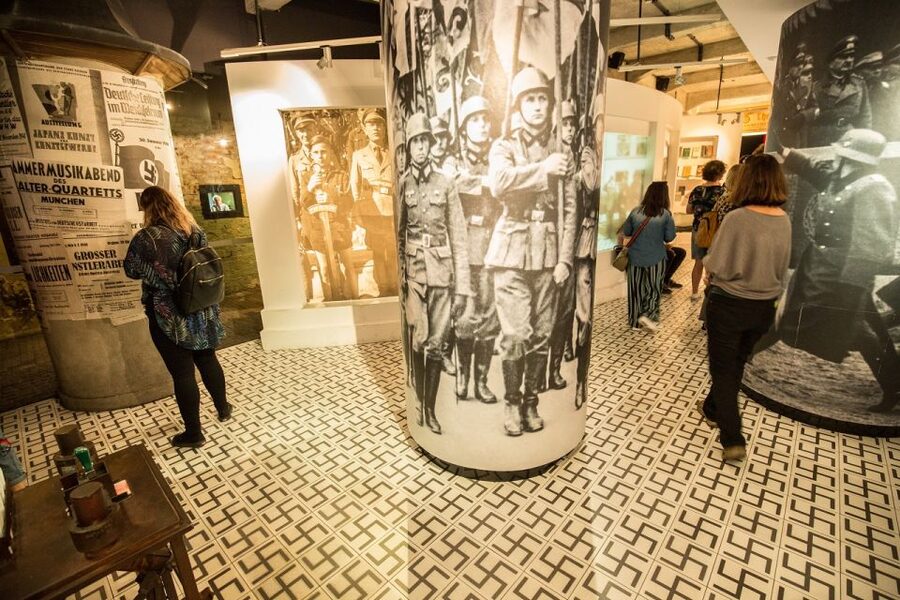
Part of the museum is arranged as a theatrical recreation of Krakow’s historical city space. This approach gives you more than a line of display cases. You move through an environment designed to suggest the city and its changing atmosphere during the occupation.
The setting helps break up the amount of written information. You are not simply reading labels in one long gallery. Instead, the museum uses rooms and installations to create a sequence, with each section presenting another part of city life.
You also board a tram and watch a documentary about everyday life in Krakow. The tram is an effective choice because public transport is part of how people experience a city. Here, it becomes a place to watch the city’s wartime story unfold.
This kind of presentation may appeal to you if you learn best through images and settings. If you prefer a quiet museum with plenty of time at each object, the movement of a group can feel restrictive. The tour has a set rhythm, and the guide needs to keep everyone moving through the exhibition.
The Jewish apartment and Plaszow camp artifacts
The visit includes a typical Jewish apartment, which shifts the focus from public events to domestic life. A room like this helps you think about the occupation at a personal level. It presents the home as a place affected by fear, restrictions, and sudden changes outside the door.
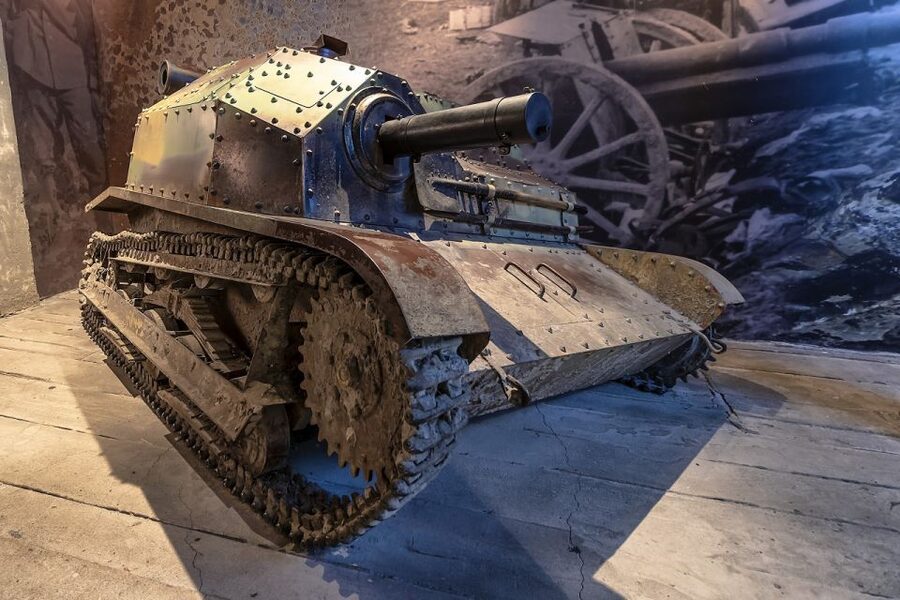
The museum also displays artifacts from the Plaszow camp. These objects connect the story of Krakow to the camp system and show how the occupation extended beyond the city’s streets and residential areas.
The combination of the apartment and camp artifacts is important. One shows everyday life in a domestic setting. The other points to the machinery of persecution and imprisonment. Together, they prevent the exhibition from becoming too abstract.
You should expect difficult material. This is a serious historical museum, not a casual attraction to fit into a spare half hour. The 90-minute schedule makes the visit manageable, but you may want to avoid placing it immediately before another demanding activity.
The Hall of Choices and wartime moral questions
The Hall of Choices is a sculptural installation about the ethical dilemmas people faced during the war. It is not simply another room filled with objects. The design asks you to consider how people responded when every option carried danger or loss.
This is one of the museum’s more reflective spaces. The exhibition does not present wartime decisions as simple choices between good and bad. Occupation created pressure, fear, compromise, and uncertainty. The Hall of Choices gives that problem a physical form.
A guide can be especially useful here, since the meaning of an installation may not be obvious at first glance. At the same time, this room may work best if you have a moment to look at it without being pushed too quickly by the group.
That is where the group-size issue matters. The museum’s passages can be narrow, and a large group may gather around the guide. If you are at the back, you might have trouble hearing the explanation or seeing the full installation. Try to stay near the guide when the group enters a new room.
How the 90-minute tour works for you
A 1.5-hour tour is long enough to give you a clear introduction but short enough to fit into a full Krakow schedule. You will move through the permanent exhibition with the guide, stopping at the main installations and displays.
The benefit is focus. You do not need to work out the museum’s structure alone, and you are less likely to spend too much time on one early room and rush through the rest. The guide keeps the story moving from Schindler and the factory to the city, its communities, and the occupation.
The trade-off is limited independence. You may want to linger over photographs or read every account, but the group has to follow a timetable. One useful approach is to treat the tour as an introduction. Pay attention to the guide’s main explanations, then ask about having time to examine displays afterward if the schedule allows.
A practical note: one French-language experience was described as difficult when a large group spread through narrow passages and people stood too far from the guide. This is not a reason to reject the tour, but it is a good reason to arrive on time, stay close, and choose a quieter starting time if the booking calendar gives you options.
Is $45 good value?
At $45 per person, this is not the cheapest way to visit a Krakow museum. The price includes admission and a professional live guide, along with skip-the-ticket-line access.
The value depends on how you like to visit museums. If you are comfortable reading a large exhibition on your own, paying for a guide may not be essential. You might prefer a basic entry ticket and more time with the displays.
I see better value here for a first visit, especially if you want the main story explained in English, French, German, Italian, Spanish, or Polish. The collection covers several communities, a difficult period, and a series of unusual installations. A clear route helps you understand how the pieces connect.
Skip-the-line entry also has practical value. It does not make the museum less crowded inside, and it cannot guarantee that every room will feel spacious. It does save time at the entrance, which matters if your Krakow schedule is tight.
The strongest case for the price is the combination of a professional guide and a well-designed permanent collection. The weakest case is for someone who wants a slow, solitary museum visit. You are paying for structure and interpretation, not just access.
Who should book this Krakow museum tour?
I would recommend this tour to you if you want to understand Krakow during World War II rather than only visit a famous film location. It suits first-time visitors who want a clear introduction and people who prefer historical museums with photographs, films, reconstructed rooms, and objects.
It is also a good choice if you are short on time. The fixed 90-minute format gives you a defined visit, and the return to Lipowa 4 keeps the logistics simple.
Families with older children may find the tram, recreated city space, and visual displays easier to follow than a museum made entirely of text. Still, the themes are difficult, and adults should decide if the subject is suitable for the children in their group.
You may want a different arrangement if you dislike guided groups or need to read every label. The narrow passages can feel crowded, and a large group may make it hard to hear. In that case, a quieter time or independent entry, if available, would give you more control.
The activity has free cancellation up to 24 hours before the start time, and you can reserve now and pay later. Those options help if your Krakow plans are still moving around, but the main decision should remain the format: guided and focused, rather than slow and independent.
Final call: book it for context, not just Schindler
Book this tour if you want the famous factory connection plus a wider account of Krakow under Nazi occupation. The preserved office, Survivor’s Ark, tram documentary, Jewish apartment, Plaszow artifacts, and Hall of Choices give the 90-minute route plenty of substance.
Skip it if your only goal is to see a small collection of Schindler memorabilia or if you need a quiet visit with unlimited reading time. The guide adds useful structure, but the group may be large and the museum’s passages can be tight.
For most first-time visitors interested in Krakow’s wartime past, the $45 price is reasonable because it includes entry, interpretation, and skip-the-line access. Arrive at the main entrance at Lipowa 4, stay close to the guide, and treat the tour as a focused introduction to a museum you may want to explore more slowly afterward.
FAQ
Where does the tour begin?
The tour begins at the main entrance of the museum at Lipowa 4. Wait there for the guide holding an excursions.city sign.
Where does the tour end?
The activity ends back at the meeting point at Lipowa 4.
How long does the Oskar Schindler’s Factory tour last?
The guided tour lasts 1.5 hours.
What is included in the price?
The price includes entrance fees and a professional guide.
How much does the tour cost?
The price is $45 per person.
Is skip-the-line entry included?
Yes. The activity includes skip-the-ticket-line access.
Which languages are available?
The live guide is available in English, French, German, Italian, Spanish, and Polish.
What will I see inside the museum?
You will see Schindler’s preserved office, the Survivor’s Ark, documentary photographs, eyewitness accounts, films, multimedia presentations, a recreated Krakow city space, a tram documentary, a typical Jewish apartment, Plaszow camp artifacts, and the Hall of Choices.
Can I cancel for a full refund?
Yes. You can cancel up to 24 hours in advance for a full refund.
Do I have to pay when I book?
No. The reserve-now-and-pay-later option lets you book your place without paying immediately.
Just added in Kraków
- Wawel Castle, Old Town with St. Mary’s Church Guided Tour★ 5.0 · 3 reviews
- Wawel Castle, Old Town with St. Mary’s Church Guided Tour★ 5.0 · 5 reviews
- Wawel Castle, Cathedral, Old Town and St. Mary’s Basilica★ 4.8 · 13 reviews
- Wawel Castle, Cathedral, & Rynek Underground Tour with Lunch★ 4.5 · 10 reviews
- Wawel Castle & Cathedral Skip the Line Small Group Tour★ 5.0 · 3 reviews
- Wawel Castle and Cathedral Guided Tour★ 4.6 · 44 reviews
- Wawel Castle, Cathedral, Rynek Underground Tour with Lunch★ 5.0 · 3 reviews
- Wawel Castle and Cathedral Guided Tour★ 5.0 · 8 reviews
Schindler's Factory Tours, compared.
Oskar Schindler’s Factory Entry Ticket & Guided Tour
Read the review →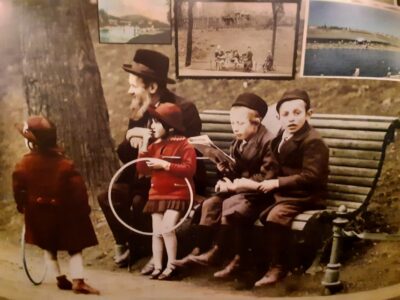
Schindler’s Factory Tour with Entrance Ticket
Read the review →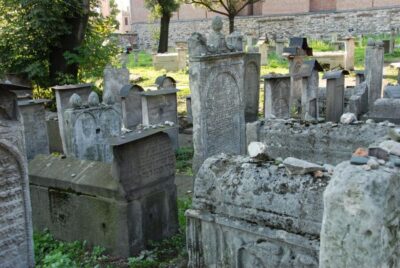
Schindler’s Factory in Krakow: Guided Tour & Skip the Line Ticket
Read the review →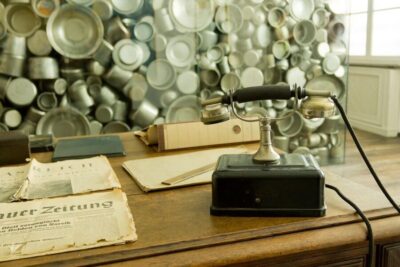
Schindler’s Factory Ticket with Guided Tour Option
Read the review →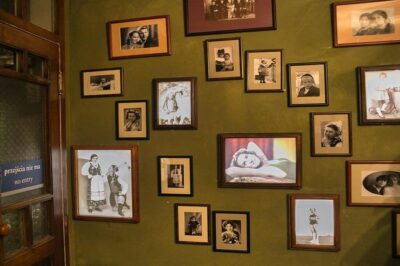
Krakow Schindler’s Factory Guided Tour with Admission Ticket
Read the review →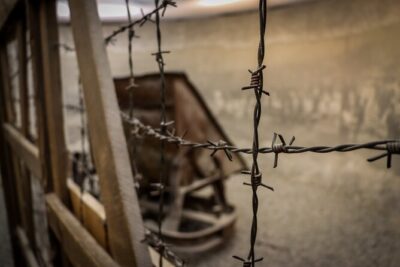
Krakow Schindler’s Factory Museum Guided Tour in English
Read the review →Browse the lists this tour appears in