
Reviewed · OLD TOWN TOURS
Old Town Warsaw Walking Tour
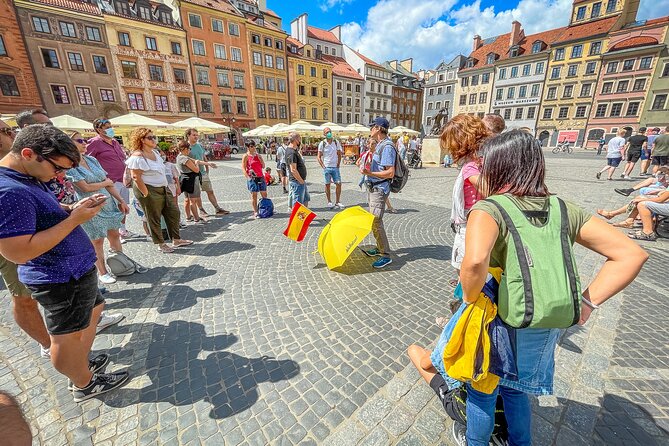
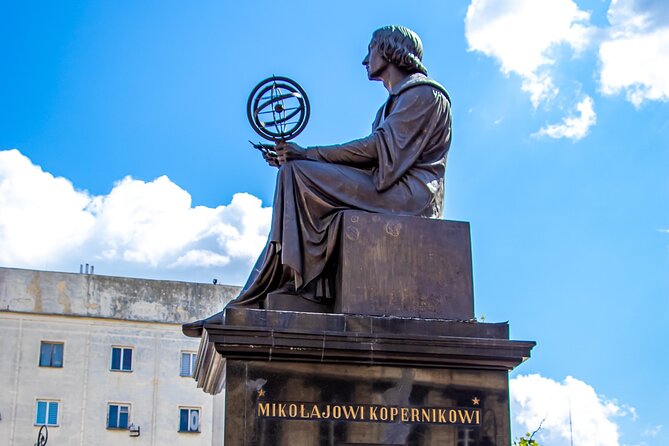
Warsaw’s Old Town looks medieval, but its most striking fact is modern: much of it was rebuilt after World War II. This walking tour makes that story the heart of the visit, linking the royal boulevard, the colorful Old Town, and the Barbican in about two and a half hours.
I like the strong historical story and the way guides such as Aga, Andrzej, Jack, and Oliwia use humor without making serious subjects feel shallow. I also like the steady route from the Nicolaus Copernicus Monument to the Warsaw Barbican, which gives you a useful first look at central Warsaw without wasting time on transport.
The main thing to consider is the group size, which can reach 40 people. A few people have found a guide’s accent or microphone difficult to follow, so stay near the guide and ask for clarification when needed.
Key points to know before booking
- The rebuilt Old Town is the main event: You will learn how Warsaw recreated its historic center after near-total wartime destruction.
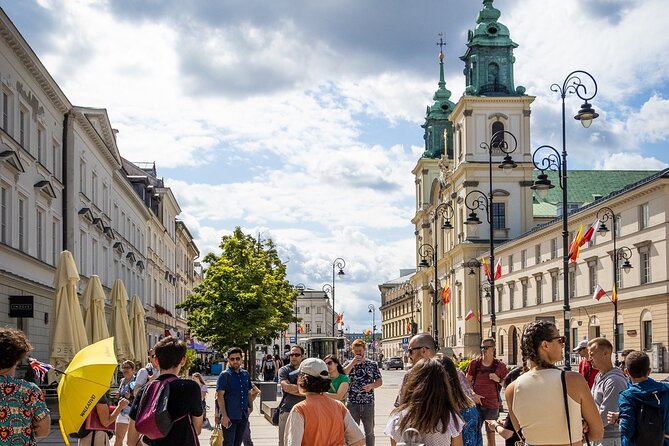
- The route begins on the royal boulevard: Krakowskie Przedmieście brings palaces, monuments, the Presidential Palace, Bristol Hotel, and St. Cross Church into one walk.
- Guides make or break the experience: Aga, Andrzej, Jack, Jacek, Ania, and Oliwia have all led lively tours, with humor and clear stories often praised.
- The walk is about 2.5 hours: It covers a lot, but the pace is generally manageable and does not require an extreme level of fitness.
- The finish is at the Barbican: You end between Old Town and New Town, close to the birthplace area of Maria Skłodowska-Curie.
- The $26.60 price includes the guide’s payment: It is presented as a general pay-as-you-wish tour, with the online amount covering the reservation and guide payment.
Starting beside the Copernicus Monument
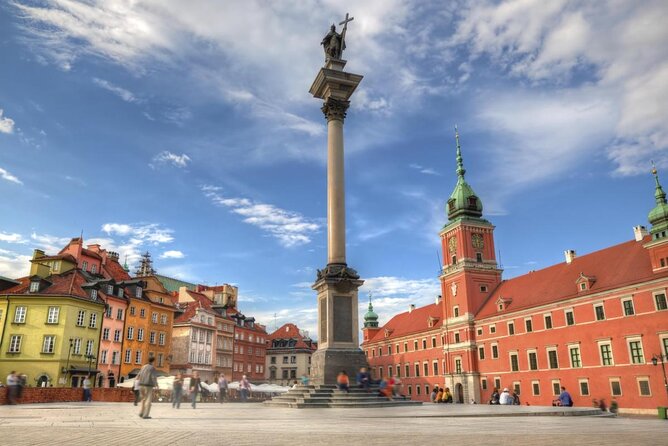
The tour begins at the Nicolaus Copernicus Monument on Krakowskie Przedmieście. This is a practical starting point because you are already on Warsaw’s main historic boulevard, with the route unfolding naturally toward the Old Town.
You will want to arrive a little early and look for the guide near the monument. The tour is offered in English, and the guide is the main source of value. This is not a sightseeing bus with recorded commentary. You walk, stop, listen, and ask questions.
The group may include as many as 40 people. That is not a tiny private walk, but it is still a useful format for a first visit. The larger size helps keep the price low, though it can make hearing harder at busy stops. Stay close to the guide, especially if the street is noisy or the group spreads out.
Guides vary by departure. Aga has been praised for making the history personal and easy to follow. Andrzej is known for enthusiasm and a strong grasp of Polish history. Jack, sometimes listed as Jacek, mixes facts with jokes, while Oliwia and Ania bring a lighter, friendly style. The exact guide is not guaranteed, but the tour clearly depends on a guide who can tell a good story rather than simply recite dates.
More old town tours in Warsaw:
- Warsaw: Chopin Concert in the Old Town
★ 4.8 · 2,287 reviews - Warsaw: Old Town Highlights Walking Tour in English
★ 4.7 · 1,516 reviews - Warsaw: Old Town Guided Walking Tour
★ 4.9 · 599 reviews
Krakowskie Przedmieście and Warsaw’s royal past
The first hour follows Krakowskie Przedmieście, Warsaw’s grand central boulevard. Its palaces, churches, monuments, and hotels give you a quick lesson in the city’s former royal importance.
The Presidential Palace is one of the key stops. You will also see the Bristol Hotel, a well-known historic building, and St. Cross Church. The church has a special link to Frédéric Chopin: his heart is interred there. That detail gives the walk a personal connection to one of Poland’s most famous cultural figures.
This part of the tour works well because the guide can connect individual buildings to the wider story of Warsaw. You are not just checking off façades. You are learning how the boulevard helped shape the city’s public image and how Poland’s political and cultural life is reflected in this short stretch.
The route includes monuments and parks, so the first hour is not wall-to-wall architecture. You get places to pause while the guide explains what you are seeing. The reviews of the experience repeatedly praise this balance of facts, personal stories, music, art, politics, and humor.
Do not expect detailed interior visits here. The attraction is the street itself and the explanation provided at each stop. Admission is included in the simple sense that there is no separate ticket for the outdoor walk, but this is not an interiors tour.
Warsaw Old Town and the remarkable reconstruction
The second hour reaches the Old Town, or Stare Miasto. Its red roofs, colorful houses, narrow streets, and Royal Castle create the classic Warsaw view. Yet the most important thing to understand is that this medieval-looking center was almost destroyed during World War II.
The rebuilding was so careful that you may have trouble telling old from new. That is the unusual point of this stop. The Old Town is recognized by UNESCO not because every building survived, but because Warsaw reconstructed the historic center with such care and historical accuracy.
This is where the guide’s storytelling matters most. A good explanation turns the pretty square and painted houses into evidence of a city choosing to recover its identity. Several guides have been praised for explaining which parts are original and which were rebuilt, making the streets easier to understand.
Expect the discussion to focus heavily on the war, destruction, reconstruction, and modern Polish identity. Some departures may spend more time on World War II than others. If that subject matters to you, ask questions. One criticism of the tour is that some people wanted a longer explanation of the war and its impact on Poland.
The Old Town section is also where you get the most familiar photographs. The Royal Castle and colorful façades provide the visual payoff, but do not mistake the polished appearance for untouched age. The rebuilt character is the reason this district is so meaningful.
Walking is steady but not punishing. One guide kept the pace suitable for a broad range of people, and another participant felt the tour involved less walking than expected. Still, you should have a moderate level of fitness and be ready to remain outdoors in changing weather.
New Town Square and the Barbican finish
The route continues to New Town Square, or Nowe Miasto. The name can mislead you. This area was also established in the Middle Ages, so it is not modern in the usual sense.
New Town adds another layer to the walk because it is linked with Maria Skłodowska-Curie, the Polish-born scientist better known internationally as Marie Curie. The tour identifies this area as her birthplace. That gives you a welcome change of subject after the royal and wartime focus of the earlier stops.
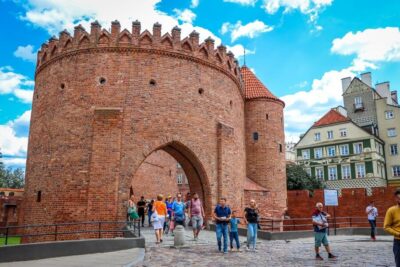
The walk ends at the Warsaw Barbican, the historic defensive structure between Old Town and New Town. The Barbican is a logical finish because it marks the transition between the two districts and leaves you in a useful central location for continuing your own sightseeing.
One person found the New Town portion too limited, so keep your expectations in check. This is an overview walk, not a detailed tour of every street in both districts. You will see the main areas and hear the key stories, but you will not explore every corner or enter every major building.
The final stop is also a good moment to ask the guide for advice. Guides have stayed after the formal end to answer questions, which can be helpful if you want suggestions for museums, restaurants, or a better understanding of what you have just seen. Specific recommendations beyond that are not guaranteed, so use the opportunity while the guide is available.
More walking tours in Warsaw:
- Half-Day Polish Food Walking Tour with Guide and Dinner
★ 4.5 · 381 reviews - Warsaw: Warsaw Ghetto Private Walking Tour with Hotel Pickup
★ 4.9 · 369 reviews - Warsaw: Jewish History Guided Walking Tour in English
★ 4.7 · 324 reviews - World War 2 in Warsaw walking tour in English
★ 4.7 · 237 reviews
How the guide affects the experience
This tour has earned strong praise for its guide-led style. The best guides do three things well: they explain difficult history in plain English, keep the group moving, and use humor without losing respect for painful subjects.
Aga is particularly associated with engaging stories about Warsaw, reconstruction, music, art, politics, and the way the past affects Polish life today. Andrzej has been praised for his enthusiasm and broad historical knowledge. Jack, or Jacek, is often remembered for mixing travel experience and jokes with solid explanations.
You may also meet Ania, Oliwia, or another English-speaking local guide. The exact personality will vary. One guide was described as friendly and informed but difficult to follow because of a strong accent and a microphone that did not carry well. That is a fair warning for anyone with hearing difficulty.
If you have trouble hearing, move close to the guide at the start. Tell the guide directly if the pace or volume is a problem. One person with limited hearing found the guide’s clear tone made the tour enjoyable, so the experience can vary greatly by guide and position in the group.
The pay-as-you-wish format can also shape the tone. The amount paid online covers the reservation fee and guide payment, while the tour description still uses the familiar pay-as-you-wish language. Some people choose to give an additional tip for especially strong guiding, but you should not assume that an extra payment is required.
Is $26.60 good value?
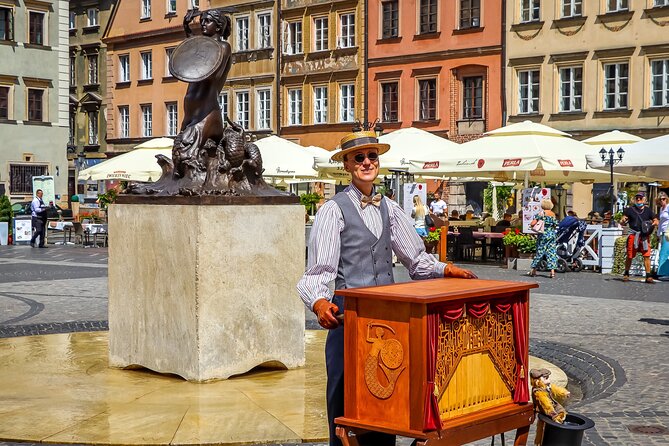
At $26.60 per person, this is a fair price for a two-hour-thirty-minute introduction to central Warsaw. You are paying for a local English-speaking guide, a planned route, and historical interpretation rather than entry to a museum or castle.
The value is highest if you are new to Warsaw and want the city explained before exploring alone. The route covers the main boulevard, Old Town, Royal Castle area, New Town Square, and Barbican without requiring you to organize the sequence yourself.
You should compare the cost with what you want from a walking tour. If you want quiet, detailed attention or a private conversation, a group that may reach 40 people will not be ideal. A smaller private tour can be arranged by contacting the operator, but that will likely involve a different price.
The tour does not include hotel pickup, hotel drop-off, or transport to the meeting point. That is not a serious drawback in central Warsaw, since the start is near public transportation, but you need to make your own way to the Copernicus Monument and from the Barbican afterward.
Weather, clothing, and practical comfort
The walk operates in all weather. Bring clothing suited to the forecast, since much of the experience takes place outdoors and there is no promise of shelter during every explanation.
Winter deserves special attention. Wear thermal layers, a warm coat, hat, gloves, and suitable shoes. The cold can make it harder to listen, especially when the group stops for longer historical explanations.
In warmer weather, comfortable walking shoes and water make sense, though the provided information does not specify a water stop or rest break. The route is described as manageable rather than strenuous, but you should still be comfortable standing and walking for around two and a half hours.
Children must be accompanied by an adult. The tour is not described as a special children’s program, so families should decide if their children enjoy history, outdoor walking, and listening to a guide for long stretches.
The tour is offered only in English. If English is not your first language, the humor and fast delivery may require extra focus. Ask the guide to repeat important points rather than letting a missed sentence create confusion.
Who should book this Warsaw walk?
I would choose this tour for a first or second day in Warsaw. It gives you the basic map of the center and explains why the Old Town looks historic while having been largely rebuilt. That context can improve every later visit to the castle, churches, museums, and memorials.
It suits people who like history delivered through stories rather than a list of dates. The guides often bring in Chopin, Maria Skłodowska-Curie, wartime destruction, reconstruction, politics, and present-day Polish identity.
It is also a good fit if you want a moderate walk rather than an exhausting city marathon. The route is long enough to feel worthwhile but compact enough to leave time for your own plans.
I would look elsewhere if you need a private guide, guaranteed quiet, or a detailed visit inside major buildings. I would also be cautious if you have serious hearing difficulties unless you can stay close to the guide and are comfortable asking for repeats.
Free cancellation is available up to 24 hours before the start time for a full refund. Within 24 hours, changes and refunds are not accepted. The experience also requires a minimum number of participants, so a cancellation by the operator can result in another date or a full refund.
Should you book the Old Town Warsaw Walking Tour?
Yes, if you want a lively introduction to Warsaw’s central story at a reasonable price. The route is well chosen, and the rebuilt Old Town gives the tour a subject more memorable than a standard parade of old buildings.
Book it early if your schedule is fixed, since it is often reserved about three weeks ahead. Go with realistic expectations: this is a group overview, not a private seminar or a full museum tour.
For most first-time visitors, the combination of Krakowskie Przedmieście, the reconstructed Old Town, Maria Skłodowska-Curie’s New Town connection, and the Barbican makes this a smart opening look at Warsaw. Stay near the guide, dress for the weather, and ask questions. Those small choices will make the difference between merely walking through the center and understanding what you are seeing.
FAQ
Where does the Old Town Warsaw Walking Tour begin?
It begins at the Nicolaus Copernicus Monument on Krakowskie Przedmieście in Warsaw.
Where does the tour end?
The walk ends at the Warsaw Barbican on Nowomiejska Street, between the Old Town and New Town.
How long does the tour last?
The tour lasts approximately 2 hours and 30 minutes. The listed route allows about one hour for Krakowskie Przedmieście, one hour for the Old Town, and 30 minutes for New Town Square and the Barbican.
Is the tour offered in English?
Yes. The tour is offered in English.
Is transportation included?
No. Hotel pickup, hotel drop-off, and transportation to or from the attractions are not included. The meeting point is near public transportation.
Does the tour operate in bad weather?
Yes. It operates in all weather conditions, so you should dress appropriately.
Can I cancel for a full refund?
Yes. You can cancel at least 24 hours before the experience start time for a full refund. Cancellations or changes made within 24 hours are not refunded.
Just added in Warsaw
- A unique walking tour of Jewish Warsaw — past and present★ 5.0 · 8 reviews
- Tour from Warsaw: Wolf’s Lair, Hitler’s HQ Zones I and II★ 5.0 · 32 reviews
- Wolf’s Lair Private Day Trip from Warsaw★ 5.0 · 50 reviews
- Wolf’s Lair & Treblinka Tour in 1 day from Warsaw★ 5.0 · 37 reviews
- Jewish Warsaw Walking Tour★ 5.0 · 95 reviews
- Warsaw: The Original Pub Crawl★ 4.5 · 97 reviews
- Warsaw: Gun Shooting Experience with Transfers★ 4.8 · 97 reviews
- Segway Tour Warsaw: Old Town Tour – 1,5-Hour of Magic!★ 5.0 · 112 reviews
Old Town Tours, compared.
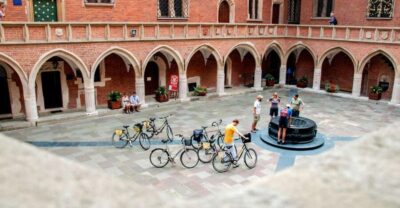
Bike Tour of Old Town, Jewish Quarter and the Ghetto
Read the review →

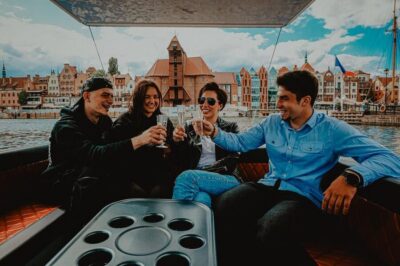
Sightseeing EcoCruise around the Old Town of Gdansk
Read the review →
Browse the lists this tour appears in