
Reviewed · MUSEUMS
Warsaw: Cold War Museum Entry Ticket
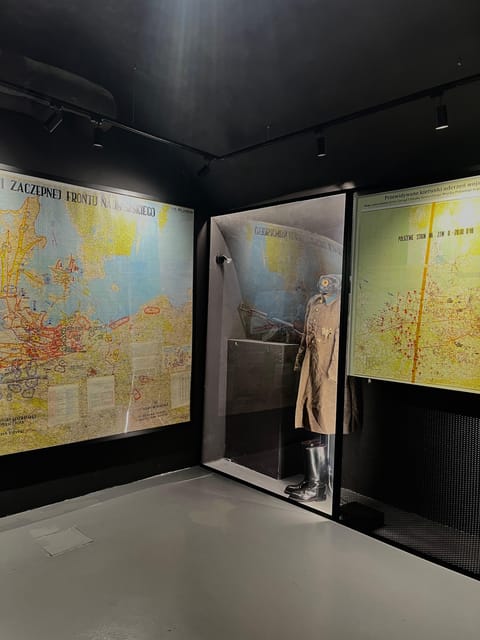
The most striking part of this museum is its point of view. You are not getting a broad, neutral timeline alone. You are seeing the Cold War through Polish experiences, including the roles of Ronald Reagan, Pope John Paul II, and Polish general Ryszard Kukliński.
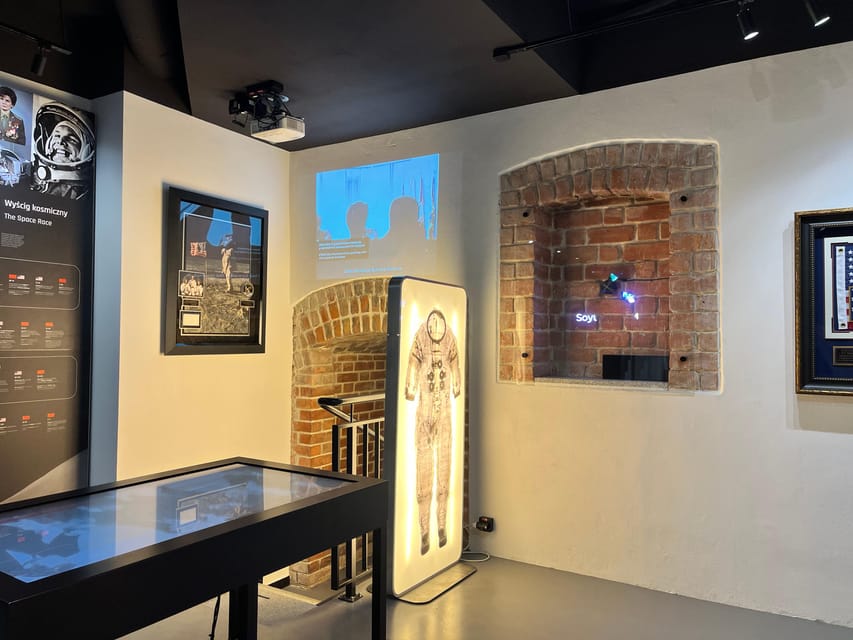
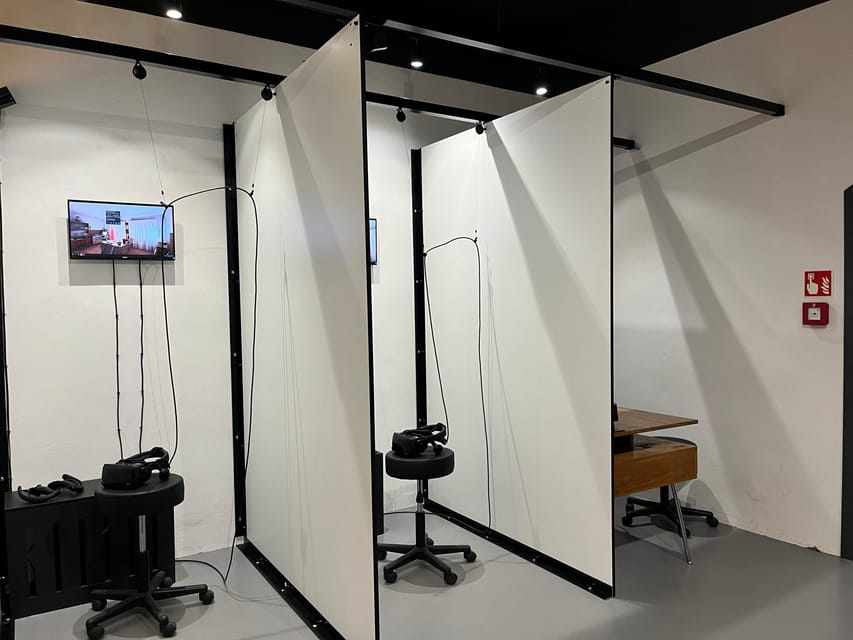
I like the mix of original objects and hands-on displays, especially the three VR games that let you play at being a Cold War agent. I also like that the museum sits about 40 meters from Warsaw’s Old Market Square, making it an easy addition to a day in the historic center.
The main consideration is the museum’s clear political and moral position. It presents Polish efforts as part of the victory of the capitalist world over Soviet communism, so visitors looking for a strictly even-handed account should keep that framing in mind. The museum is also not suitable for wheelchair users.
Key points to know before you go
- Polish point of view: The exhibition presents the Cold War through Poland’s place in the struggle between the two blocs.
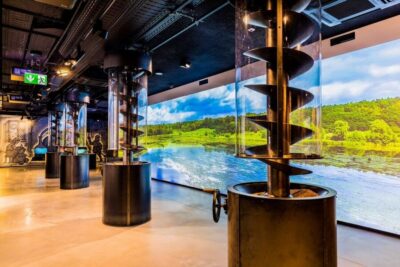
- More than 50 multimedia displays: Touch screens, tables, VR goggles, film, and other interactive tools share space with original objects.
- Three Cold War VR games: You can take on missions linked to espionage and attempts to stop Soviet invasion plans.
- Space history with a hologram: The exhibition covers space flights and includes a holographic space station.
- Autonomous robot guide: This unusual museum helper can guide you in English or Polish.
- Easy Old Town stop: The entrance is roughly 40 meters from Old Market Square, and the $12 ticket is valid for three months.
A Cold War museum with a distinctly Polish voice
The Cold War Museum is built around a straightforward idea: Poland was not merely caught between Washington and Moscow. It was part of the pressure that eventually weakened Soviet control.
That message shapes the displays. The museum gives special attention to three figures from the final two decades of the Cold War: President Ronald Reagan, Pope John Paul II, and General Ryszard Kukliński. Each represents a different kind of influence, from American political pressure to religious leadership and secret military information.
You should expect a museum that explains the Cold War as a conflict between two political systems, but also as a contest of people, ideas, faith, military planning, and public courage. The story is not limited to the United States and the Soviet Union. The exhibition covers the countries involved in the wider struggle.
That makes the museum useful for visitors who know the Cold War mainly from school lessons or films. You get names, maps, objects, and interactive material that help put the rivalry into a Polish setting. At the same time, the strong viewpoint means you should read the displays with an alert eye. This is an interpretation of history, not a detached textbook.
A few more things to do in Warsaw worth a look
- Warsaw: POLIN Museum of the History of Polish Jews Ticket
★ 4.7 · 1,142 reviews - Warsaw: Polish Vodka Museum Tour with Tasting
★ 4.6 · 788 reviews - Warsaw: Museum World of Illusion Entry Ticket
★ 3.9 · 666 reviews
The building adds a serious layer to the story
The museum’s address matters. During the Polish People’s Republic, the site housed a communist militia station. It is also linked to the death of Grzegorz Przemyk, a high school graduate and well-known victim of martial law who was beaten there.
That history gives the visit a weight that a standard gallery could not easily provide. The building is connected to the period being discussed, and the exhibition uses that setting to bring attention to victims, aggressors, survivors, and people who resisted official accounts.
I would allow yourself a little time to consider the location before rushing toward the gadgets. The museum is not only about spy stories, military technology, or Cold War leaders. It also points to the damage caused by authoritarian power inside Poland.
This is one reason the museum may work especially well for adults and older children who already have some basic knowledge of 20th-century European history. The displays can prompt useful questions about martial law, state violence, and the difference between official propaganda and personal experience.
Original objects keep the technology grounded
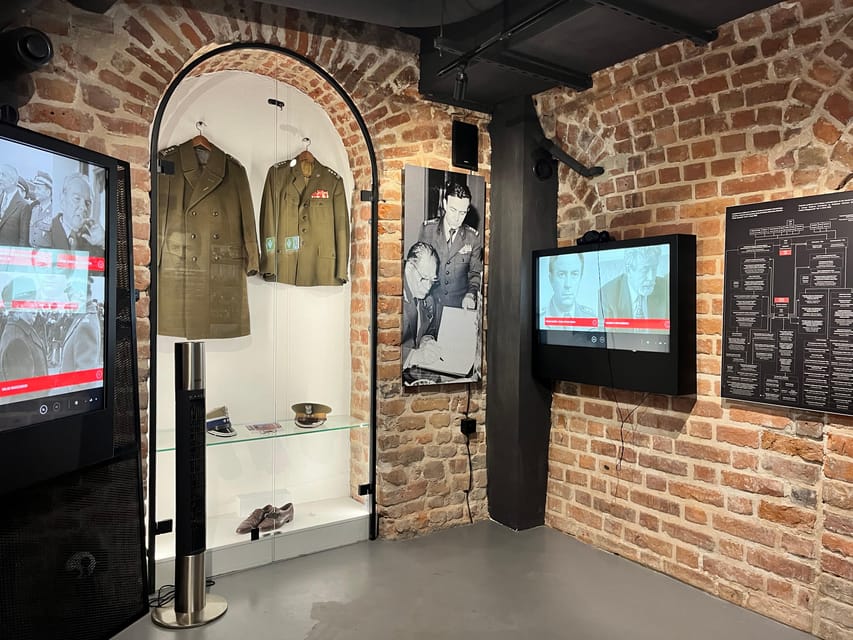
The museum includes original devices, maps, uniforms, and other historical material. These objects give the exhibition a physical anchor.
A touch screen can explain an event quickly, but a uniform or piece of equipment shows the period in a more direct way. Maps help you follow the division between the two blocs and the wider political stakes. Devices suggest how people communicated, worked, watched, or prepared during a long conflict that never became a direct war between the United States and the Soviet Union.
The balance between objects and screens is important. A museum made only of text can feel like a school assignment. One made only of games can make serious history feel weightless. Here, the original material helps keep the interactive sections tied to real events and real lives.
The exhibition uses more than 50 multimedia elements. That is a lot of technology for a relatively focused museum, so the experience is likely to feel active rather than quiet and traditional. If you prefer reading long labels at your own pace, the number of screens and activities may feel busy. If you enjoy learning by doing, the format should suit you.
VR missions turn espionage into a hands-on lesson
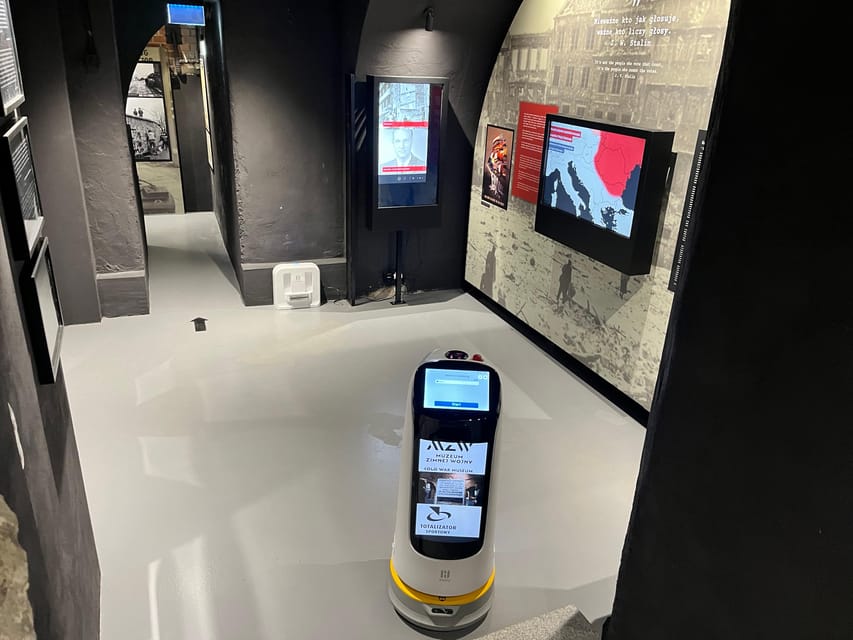
The three VR games are among the museum’s most distinctive features. They let you act as a Cold War secret agent and attempt to disrupt Soviet invasion plans.
This does not replace the historical material, but it changes your role. Instead of only reading about secrecy, military tension, and political risk, you get a simulated task that asks you to respond inside that world.
I like this approach when it is used as a supplement, and that seems to be the purpose here. The games give younger visitors a reason to stay engaged, while adults can use them as a simple reminder of how tense and uncertain the era felt.
You should not book this experience expecting a full virtual reality attraction. The supplied information identifies three games, but it does not give their individual length or technical detail. Think of them as short interactive stations within a larger museum visit, not the entire reason to come.
The VR activities may also appeal to people who usually find political history dry. A mission with a clear objective is easier to grasp than a long explanation of military doctrine. After playing, you can return to the maps, figures, and displays with a better feel for the stakes.
Same base, a different kind of day:
- Warsaw: Chopin Concert in the Old Town
★ 4.8 · 2,287 reviews - Warsaw: Traditional Galar Cruise on The Vistula River
★ 4.6 · 1,640 reviews - Warsaw: Old Town Highlights Walking Tour in English
★ 4.7 · 1,516 reviews - Warsaw Concert: Chopin – Painted by Candlelights with Wine
★ 4.8 · 1,442 reviews
Space flights provide a change of pace
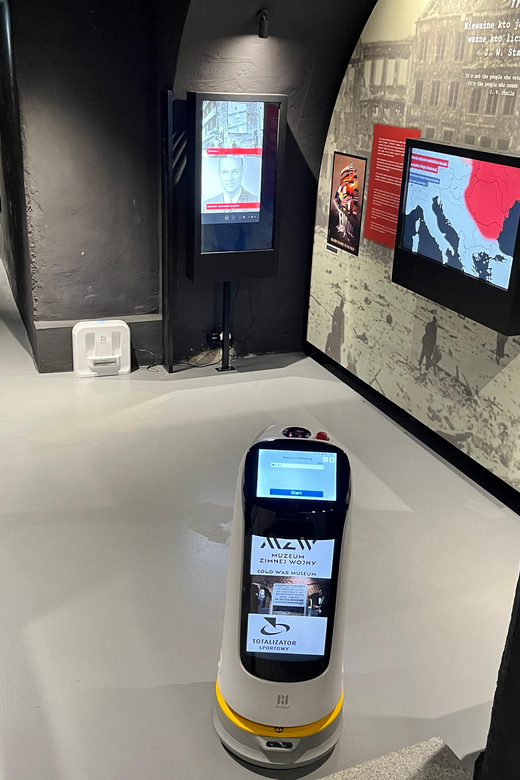
The museum also covers the history of space flights and includes a hologram of a space station. This section widens the Cold War story beyond spies and soldiers.
The space race was a contest of science, engineering, prestige, and national power. A launch or orbital achievement was presented as proof that one political system could organize technology and human talent better than the other. The hologram gives that story a visual centerpiece.
For you, this creates a useful pause in the exhibition. The Cold War was not fought only in government offices or military bases. It reached into science, education, television, and popular culture. Space exploration made the rivalry visible to ordinary people around the world.
The hologram is also likely to be a strong stop for families. Children may connect with a space station more quickly than with a map of political alliances, while adults can explain why space flights mattered so much during the period.
The multimedia quiz makes you check what you remember
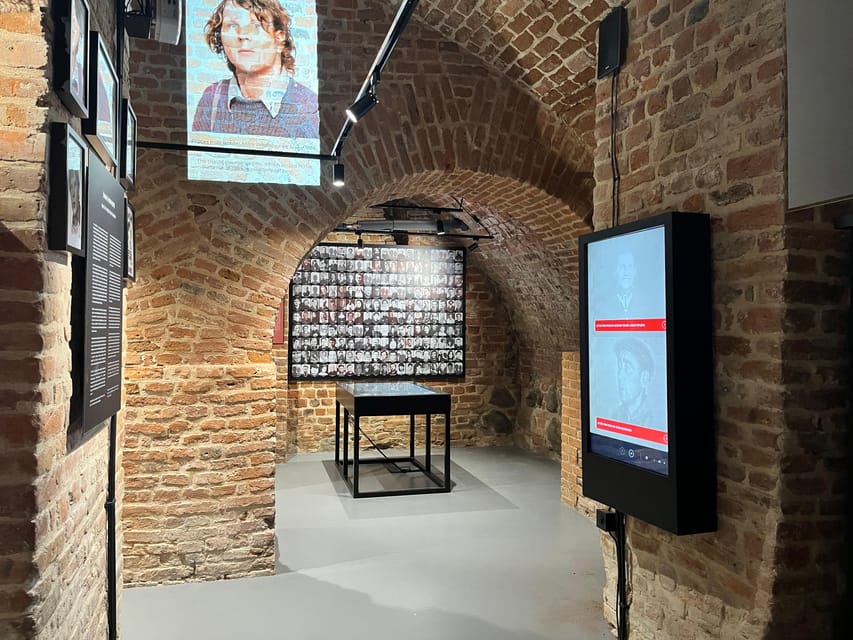
A multimedia knowledge quiz lets you test yourself as you move through the museum. This is a small feature, but it can make the visit more active.
Instead of passively collecting facts, you have a reason to recall names, dates, events, and relationships. You might find the quiz most useful near the end of your visit, once you have seen enough of the displays to make the questions meaningful.
It also helps groups. One person can read a display while another takes the quiz, then you can compare answers. That gives the museum a social element without turning the visit into a guided group activity.
The quiz is not a substitute for context, and the information provided does not specify its length or difficulty. Treat it as a light challenge rather than a formal test. The museum’s serious subject matter benefits from moments like this, provided you still give attention to the people affected by the events.
An autonomous robot is part guide, part attraction
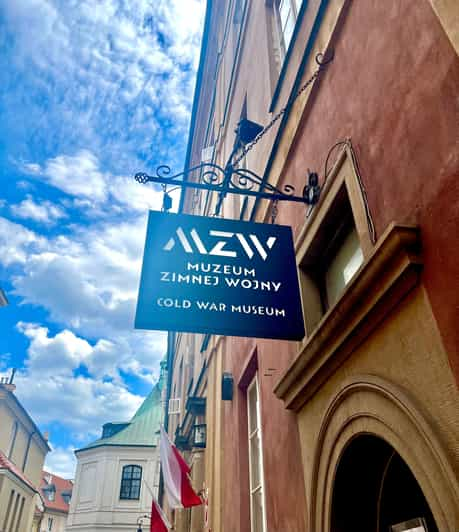
This is the first and only museum in Poland described as having an autonomous robot that serves as a guide. The robot can help guide you through the museum in English or Polish.
That feature will be a hit with children and technology fans, but it also has practical value. A robot guide gives the museum a distinctive way to present information without requiring a scheduled human-led tour. It may help you get your bearings and decide which displays deserve more time.
You should remember that the ticket does not include a personal human guide. English and Polish host or greeter support is available, and the autonomous robot is included, but the experience remains a self-directed museum visit.
The robot is not the main historical source. Its best role is to make the museum approachable and memorable. I would use it as one tool among many, then spend time with the original objects and written explanations as well.
How much time should you allow?
The ticket is valid for three months, but that does not mean the museum visit lasts three months. It means you have a broad window in which to use the admission, subject to available starting times.
No fixed visit length is provided, so you should check the available entry times when booking. The exhibition has many interactive elements, and the amount of time you need will depend on how closely you read the displays and how long you spend with the VR games, quiz, film, and robot guide.
I would avoid squeezing it into a rushed Old Town schedule. The museum is close to Old Market Square, so reaching it is easy, but a nearby location does not automatically make it a five-minute stop. If you want to understand the Polish story rather than simply try the VR equipment, give yourself enough time to read and think.
Transportation is not included. You make your own way to the museum and show your ticket at the entrance. The skip-the-line ticket is useful if you value a simple arrival, though the information does not promise a particular waiting time on a given day.
Is $12 a fair price?
At $12 per person, the admission is reasonably priced for an exhibition that combines physical objects with more than 50 multimedia elements, three VR games, a quiz, a cinema, a space-flight section, and an autonomous robot guide.
The value depends on how you use it. If you only want a quick look at uniforms and maps, the price may feel less attractive. If you take part in the interactive displays and read the Polish sections carefully, the ticket offers more than a standard small museum admission.
The three-month validity also adds flexibility. You do not need to build your whole day around one narrow visit date, though you still need to check available times. Free cancellation up to 24 hours before the visit and a reserve-now, pay-later option make the booking less rigid.
For a couple, the $24 total buys a focused history stop with unusual technology. For a family, the VR stations, space hologram, quiz, and robot may help keep children interested. The value is weaker for anyone who dislikes screens, simulated missions, or museums with a clear political argument.
Who will enjoy this museum most?
I would recommend it most strongly to:
- People curious about Poland’s role in the Cold War
- Visitors who want more than a traditional object-and-label museum
- Families with children interested in robots, space, or VR
- Anyone who has studied the Cold War but wants a Polish setting
- Visitors already exploring Warsaw’s Old Town
- People who want a short, focused museum with several ways to learn
You may want to choose another attraction if you need step-free access, since the museum is not suitable for wheelchair users. You should also be comfortable with the exhibition’s pro-Western and anti-Soviet framing.
Four-legged visitors are welcome, making this one of the few museums in Warsaw that allows dogs. The rules are otherwise strict and sensible: smoking, vaping, food, drinks, alcohol, and drugs are not allowed.
A practical way to fit it into your Warsaw day
Because the museum is about 40 meters from Old Market Square, it pairs naturally with time in Warsaw’s historic center. You can visit the square first, then move indoors for a concentrated look at the Cold War, or do the museum before returning outside to continue sightseeing.
I would start with the main historical displays rather than rushing to the VR stations. Learn the basic political setting, notice the Polish figures highlighted by the museum, and look at the original objects. Then use the quiz to check your memory and save time for the games and space section.
If you are visiting with children, the robot and VR equipment may be useful early in the visit because they create immediate interest. After that, guide them toward the maps, uniforms, and stories connected to the building. The goal is to connect the fun technology with the history, not let the technology swallow the whole visit.
There is no transportation or human guide included, so this is best for visitors who are happy to explore independently. English and Polish support is available, and the exhibits are intended for both Polish and foreign visitors of all ages.
Should you book the Cold War Museum?
Book it if you want a modern, interactive look at the Cold War from Poland’s side, especially if original objects, VR games, space history, and a robot guide sound appealing. The location near Old Market Square and the $12 price make it an easy addition to a Warsaw sightseeing day.
Think twice if you want a politically neutral account, a fully guided tour, or wheelchair access. For everyone else, the museum offers a focused way to connect Poland’s recent past with the wider struggle between East and West. Its strongest feature is the blend of serious local history and hands-on displays, so give yourself time for both.
FAQ
Where is the Cold War Museum located?
The museum is located in Warsaw, in Mazovia Province, about 40 meters from Old Market Square.
How much does admission cost?
Admission costs $12 per person.
What does the ticket include?
The ticket includes admission to the exhibitions, access to all attractions within the exhibition, and the autonomous robot guide.
Is a human guide included?
No. A human guide is not included. English and Polish host or greeter support is available, and the museum has an autonomous robot guide.
How long is the ticket valid?
The ticket is valid for three months. You should check availability for starting times before visiting.
Can I cancel my booking?
Yes. You can cancel up to 24 hours in advance for a full refund.
Are dogs allowed inside?
Yes. The Cold War Museum is one of the few museums in Warsaw where four-legged visitors are welcome.
Just added in Warsaw
- Warsaw Zoo Skip-the-Line Entry Ticket with Private Transport★ 4.8 · 3 reviews
- Warsaw Private Wilanow Palace & Garden Tour★ 4.6 · 30 reviews
- Warsaw: Vodka Tour★ 4.4 · 18 reviews
- Warsaw Wolf’s Lair with St. Lipka and Mamerki Private Guided★ 4.2 · 3 reviews
- Warsaw Uprising and WWII Old Town Walking Tour with Museum★ 4.7 · 15 reviews
- Warsaw Old Town UNESCO HERITAGE walking tour in English★ 4.5 · 23 reviews
- Warsaw: Private Vodka Tasting Night with Snacks and Pickup★ 5.0 · 7 reviews
- Warsaw: Skip-the-Line Royal Castle Guided Tour★ 4.9 · 79 reviews
Museums, compared.
Auschwitz-Birkenau Museum and Memorial Guided Tour from Krakow
Read the review →
POLIN Museum of the History of Polish Jews Ticket
Read the review →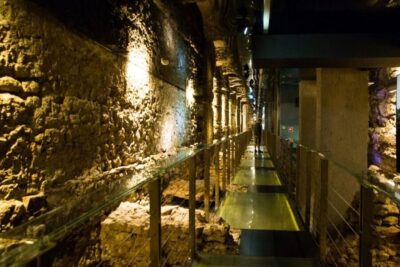
Krakow Schindler’s Factory Museum Guided Tour in English
Read the review →
Auschwitz Birkenau Museum Guided Tour with Pickup
Read the review →
Browse the lists this tour appears in