
Reviewed · NOWA HUTA & COMMUNISM TOURS
Warsaw Communism Private Tour in a Retro Fiat
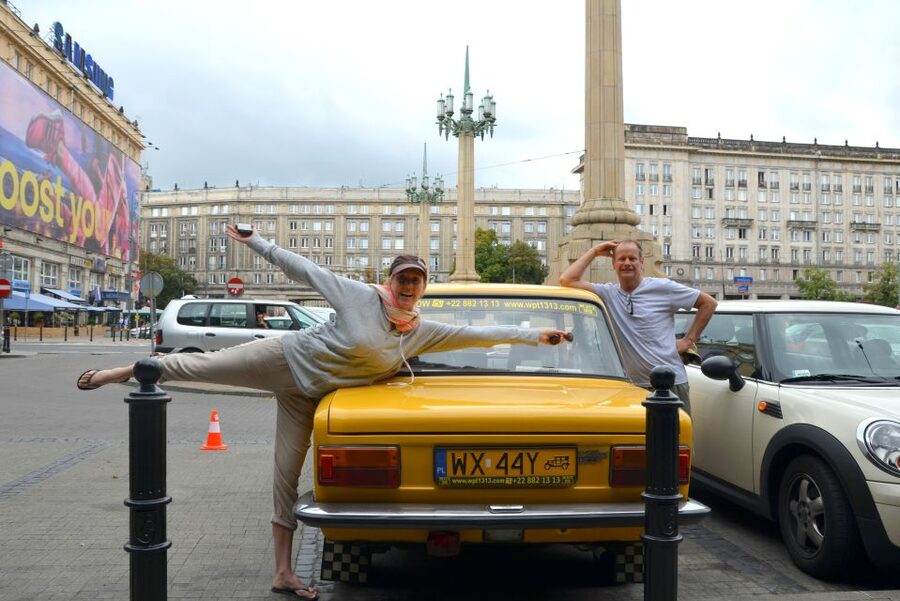
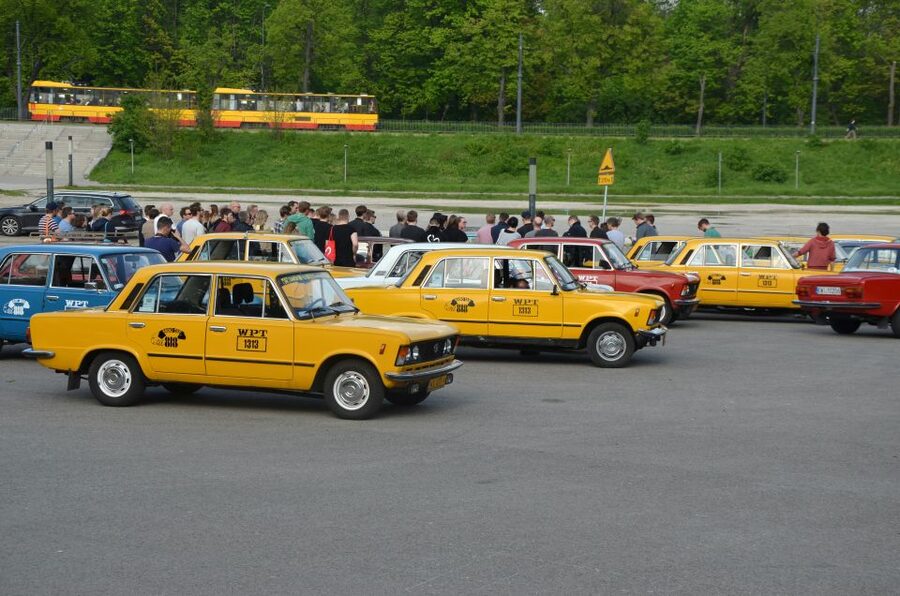
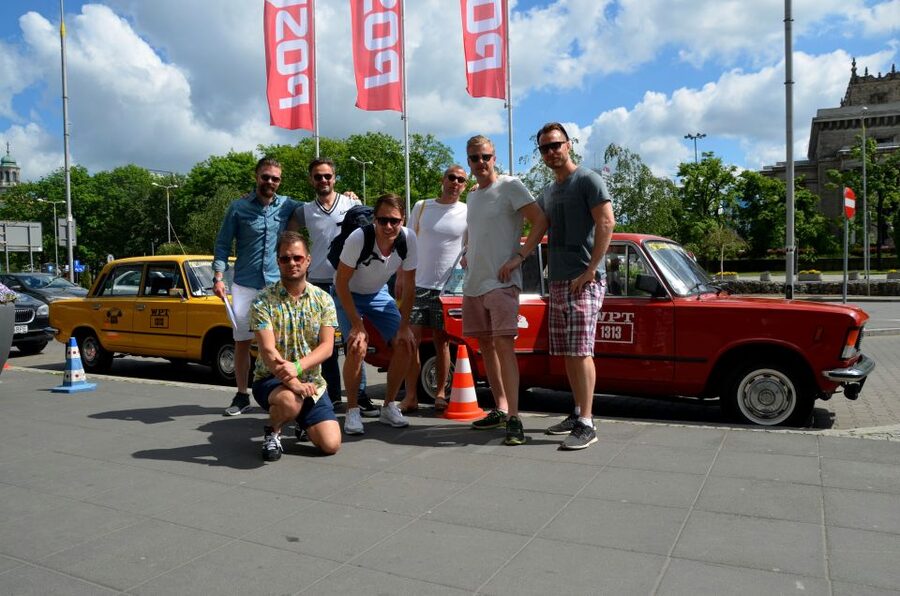
The most unusual way to explore Warsaw’s communist past is from the back seat of a Fiat 125p, the boxy Polish car that once filled the streets. Your English-speaking driver-guide connects the buildings to daily life under communism, from rationing and party power to the way Warsaw looks and feels today.
I like the mix of driving and walking, and I like that the route can be adjusted to your interests and physical needs. The included vodka and Polish doughnut add a small, good-natured taste of local culture. The main drawback is that much of the appeal depends on your guide, and four hours may feel long if postwar architecture is not your thing.
Key points to know before booking
- Ride in a Fiat 125p: The vintage car is the experience’s main attraction, not simply a way to get between sights.
- See Warsaw’s communist symbols: The route includes the Palace of Culture and Science, Constitution Square, the former Communist Party headquarters, and Muranów.
- Expect a half-driving, half-walking tour: Comfortable shoes matter, though the route can be adapted.
- Get a personal history lesson: Guides such as Martin and Max explain how communism shaped Polish life and how Poland changed afterward.
- Best for small private groups: Larger parties of more than four use a blue vintage minivan instead of the Fiat.
- Good value for a private outing: The $105 per-person price includes transport, hotel pickup and return, guiding, a vodka shot, a doughnut, and photos.
Why a vintage Fiat is the right classroom
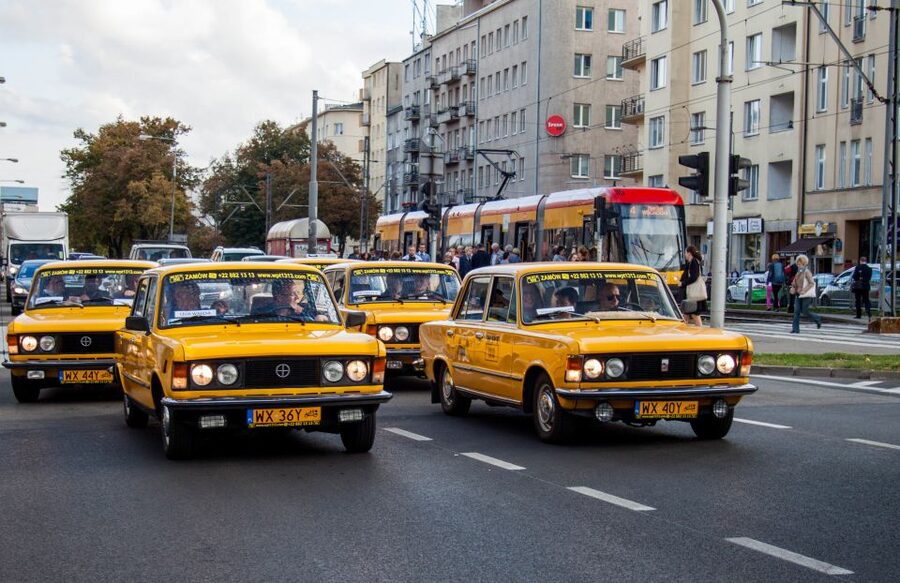
Warsaw’s communist period can be hard to picture from a normal modern car. The Fiat 125p changes that. Its 1970s and 1980s design puts you physically inside the period you are studying, even if only for a few hours.
This is not a museum tour with objects behind glass. You move through present-day Warsaw while looking for the marks left by the old system. The car gives the outing a playful side, but the subject is serious. Your guide discusses how communism began in Poland, how it affected ordinary people, and how it ended.
The private format helps here. You can ask questions as they come up rather than waiting for a guide to finish a fixed speech. The route may also be altered for a place that especially interests you, within the limits of traffic and time.
Recent guides have included Martin and Max. Martin has been praised for explaining Warsaw in a way that works well for families, including children. Max has also led clear introductions to communism in Poland. Your assigned guide may be different, but the key point is that the outing depends on a live English-speaking conversation rather than an audio recording.
Other communist-era tours around Warsaw:
- Private Tour: Warsaw’s Communist History by Retro Fiat
★ 5.0 · 115 reviews - Warsaw: Communism Tour in an Original Socialist Van
★ 4.9 · 75 reviews - Warsaw: Communist History Self-Driving Tour
★ 4.8 · 52 reviews
Palace of Culture and Science: Warsaw’s giant gift from Moscow
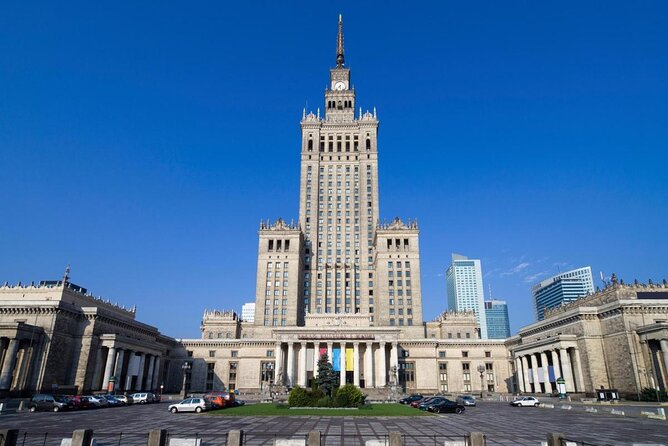
The Palace of Culture and Science is the obvious first chapter. Its enormous Stalin-era form dominates central Warsaw, and its history is tied directly to Soviet power.
Your guide explains why the building is called a gift from Moscow and describes the circumstances of its construction. That phrase sounds generous until you understand the political message behind it. The palace was not just a useful office and cultural complex. It was a powerful symbol of the system imposed on postwar Poland.
You will hear anecdotes about the building and its place in the city. The point is not simply to admire or dislike its architecture. It is to understand why the palace remains such a loaded sight for Polish people. Some see a practical city landmark, while others see a reminder of outside control.
The stop works well even if you are not an architecture specialist. The scale is easy to grasp from street level, and the guide gives you the political background needed to read the building properly. The tour information does not promise a separate interior visit or observation deck stop, so you should book this for the explanation and exterior view rather than for a full palace visit.
Constitution Square and the planned working-class city
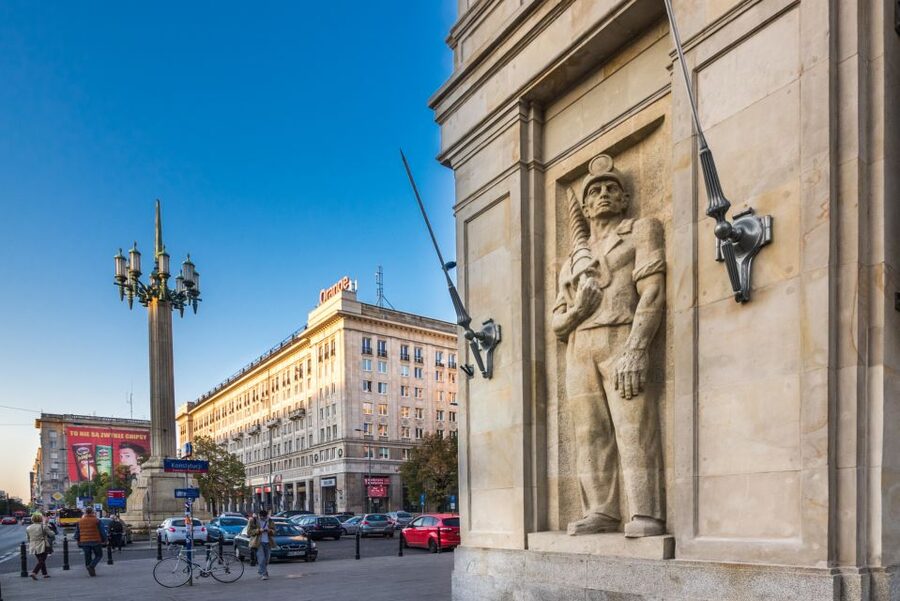
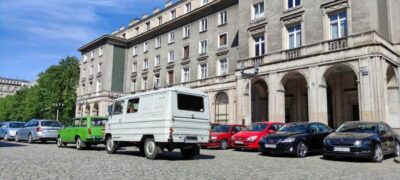
At Constitution Square, the tour shifts from one huge building to a whole neighborhood. This is one of the most representative Stalin-era housing districts in Warsaw, designed to show the power and order of the communist state.
The square’s broad planning and surrounding apartment blocks were meant to serve working-class residents while also presenting an official image of the new society. Your guide points out the architecture and explains how housing became part of political messaging.
I find this kind of stop more useful than simply ticking off famous monuments. The buildings are part of everyday Warsaw, so you can consider how ideology appeared in apartment blocks, public spaces, and city plans. The tour helps you notice details you might otherwise pass without a thought.
You will walk around the square, so wear comfortable shoes. The tour is described as half walking and half driving, with a moderate amount of walking overall. If you have mobility concerns, tell the provider in advance. The experience is wheelchair accessible and can be adjusted, but the exact walking pattern still depends on your requirements.
The ministerial district and the former Party headquarters
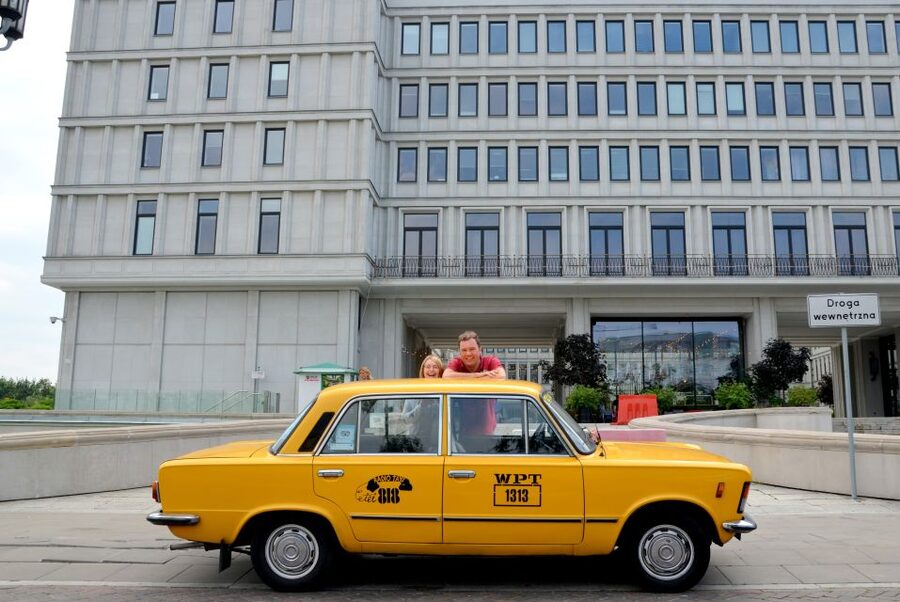
The route continues through the communist ministerial district, including the Ministry of Agriculture. Here the buildings matter because they show where the state’s power operated, not only where ordinary people lived.
You also visit the former House of the Communist Party and learn what the building is used for now. That change of use gives the stop a useful present-day angle. You are not looking only at a frozen piece of the past. You are seeing how Warsaw has carried on around buildings that once directed public life.
The guide fills in the human side of these official places with stories about the party and its institutions. This is where a private tour has an advantage over a self-guided drive. A building with little visual explanation can become meaningful once someone connects it to the system it served.
Do not expect every stop to offer a dramatic interior visit. Much of this tour is about seeing the exteriors, understanding the districts, and asking questions from the car or on foot. If you want a museum-heavy experience, this may not be the best match.
Other sightseeing runs by little car around Warsaw:
- Private Tour: Warsaw City Sightseeing by Retro Fiat
★ 5.0 · 562 reviews - Discover the Dark Side of Warsaw in Praga District by Retro Bus
★ 5.0 · 327 reviews - Warsaw: 2.5-Hour Dark Side – Praga District by a Retro Bus
★ 4.5 · 248 reviews - Private Tour: Warsaw’s Jewish Heritage by Retro Fiat
★ 5.0 · 208 reviews
Muranów and housing built over the former Ghetto
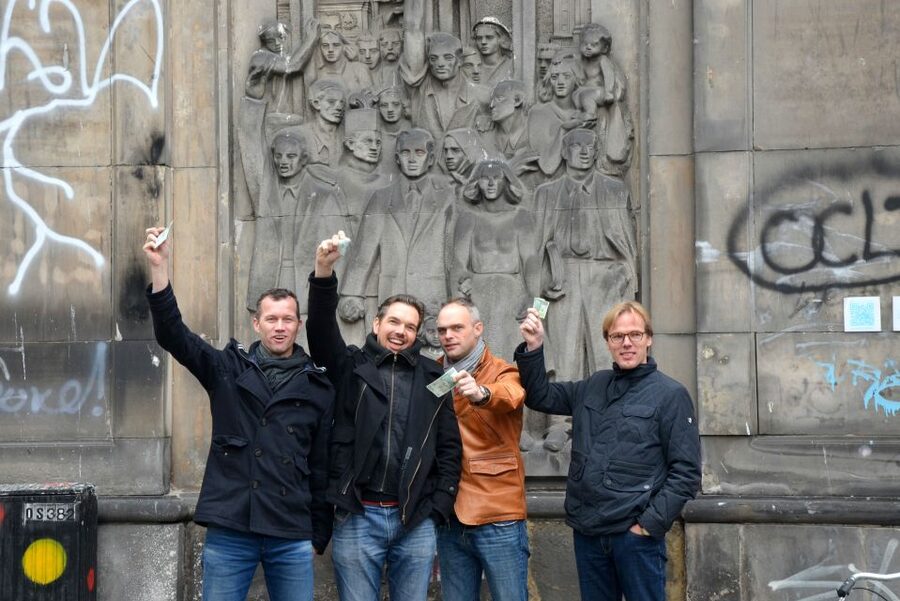
Muranów brings a more difficult layer to the tour. The area’s communist-era housing blocks were built upon the former Jewish Ghetto, and the guide explains how postwar reconstruction and party influence shaped the neighborhood.
This stop matters because Warsaw’s communist story cannot be separated from the destruction of the Second World War. The apartment blocks are not just examples of postwar housing. Their location carries the memory of what stood there before, and the new architecture reflects the decisions made by the authorities after the war.
The tour description does not promise a full Holocaust-focused walking tour, so keep your expectations precise. Muranów is included as part of a wider look at architecture, reconstruction, and political influence. If you want a detailed study of the former Ghetto, you may need a separate experience.
Still, the stop adds weight to the route. It shows that communist Warsaw was built on a city already damaged, emptied, and reshaped. That context helps explain why postwar buildings can feel both practical and emotionally complicated.
What the four hours feel like
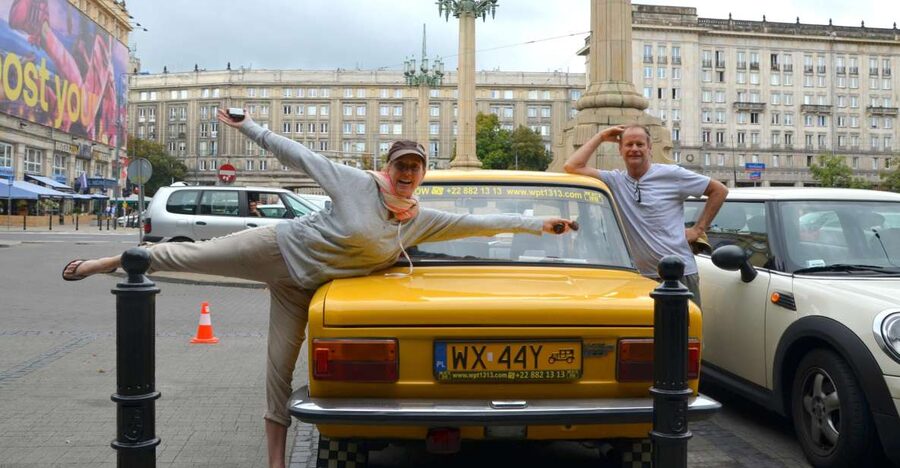
The tour begins with pickup from your centrally located hotel or another central point at a time you choose. You then move between the main locations by historic vehicle, getting out for walks and explanations along the way.
Because it is a private group, the pace can be more relaxed than on a large bus tour. You can ask to spend more time on a subject that interests you, and the route can be changed a little for current traffic conditions. That flexibility is useful in Warsaw, where the best use of four hours may depend on the time of day.
The itinerary is not a continuous four-hour drive. It combines driving with moderate walking. Think of the Fiat as a moving setting for the conversation, then expect to leave it at the main districts and squares.
The car itself is compact. Groups of up to four use the historic Fiat 125p, while groups larger than four are transported in a blue vintage minivan. If the old Fiat is your main reason for booking, check the group size before paying. The minivan still fits the period theme, but it is a different experience from riding in the smaller car.
Vodka, doughnut, and the human side of the tour
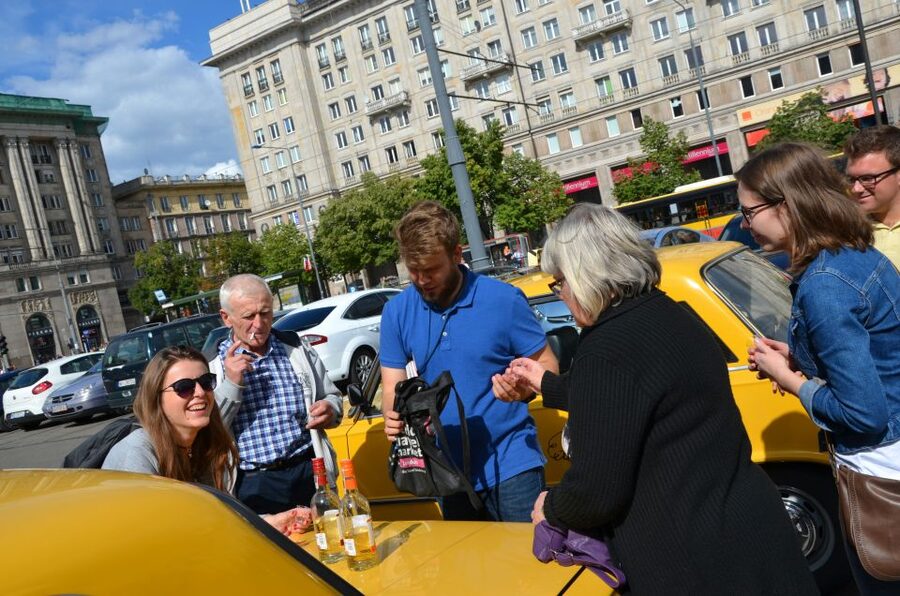
A vodka shot is served on board, along with a Polish sweet, described as a doughnut. These are small inclusions, but they help keep the history from becoming too formal.
The vodka is not the reason to book the tour, and you can ask about the serving if you do not drink alcohol. The doughnut gives you a simple taste of Poland while the guide talks about everyday life. It is a modest touch rather than a full food tour.
The strongest part of the experience is the conversation. You are encouraged to ask about life under communism, how Poland changed, and what Polish identity means today. That last subject makes the tour more than a parade of old buildings. It links the architecture to questions that still matter.
Families can benefit from this format. A guide can explain difficult political subjects in a way that fits the ages in your group, rather than delivering the same lecture to everyone. Martin, one of the guides named in recent tour feedback, has been especially effective with groups that included children.
Is $105 per person good value?
At $105 per person, this is not the cheapest way to see Warsaw. You are paying for a private four-hour experience, not a standard hop-on, hop-off route.
The price includes:
- Private English-speaking guide
- Hotel pickup and return within central Warsaw
- Historic Fiat 125p transport
- Vodka shot
- Polish doughnut
- Photos emailed after the tour
That package gives the price a fair argument, especially for two to four people who want a personal introduction without organizing taxis between districts. Hotel pickup and return also save time at the beginning and end of the day.
The value is weaker if you only want quick photographs of the Palace of Culture. You can see several of these areas independently for far less. The extra cost pays for the vintage car, the guide’s explanations, private flexibility, and the chance to connect separate neighborhoods into one story.
I would also consider the cost per person carefully for a larger group. Groups over four switch to the blue vintage minivan, so the price may make more sense if your group values the private guide and door-to-door service more than the Fiat itself.
Who should book this communist Warsaw tour?
I would choose this experience if you want history explained through streets and buildings rather than through a long museum visit. It suits first-time visitors who want a structured introduction to postwar Warsaw, as well as repeat visitors looking for a different angle on the city.
It is a good fit for:
- Couples and small private groups
- Families with older children
- Visitors interested in Cold War and communist history
- People who enjoy classic cars and unusual transport
- Anyone who wants hotel pickup and a flexible route
- Visitors who prefer conversation to a large guided group
You may want another option if you dislike driving in a confined vintage car, want a detailed museum program, or are mainly interested in Warsaw’s medieval and royal past. This outing focuses on communist-era architecture, political history, reconstruction, and daily life.
Bring comfortable shoes. The tour is wheelchair accessible and can be adapted, but it still involves a moderate amount of walking unless you arrange otherwise. Pets are not allowed.
My call: book it for the story, not just the car
Book this tour if you want Warsaw’s communist past explained by a person who can answer your questions while taking you to the places where that history happened. The Fiat 125p makes the outing memorable, but the real value is the link between the Palace of Culture, housing districts, ministries, party offices, and Muranów.
I would be especially happy to recommend it to a family or small group with only a few days in Warsaw. You get transport, a private guide, several important districts, a snack, and photos in four hours.
Skip it if you want extensive interior visits or a purely architectural tour. For everyone else, the combination of personal guiding and period transport offers an engaging way to understand how communist Warsaw was built and how modern Poland moved beyond it.
FAQ
How long does the Warsaw Communism Private Tour last?
The tour lasts four hours.
What language is the tour conducted in?
The live guide speaks English.
Is this a private tour?
Yes. The experience is offered for a private group.
Where does pickup take place?
Pickup is included from your centrally located Warsaw hotel or another centrally located point.
Is hotel drop-off included?
Yes. You are driven back to your hotel after the tour, provided it is within the city center pickup area.
What vehicle is used?
Groups of up to four are transported in a historic Fiat 125p from the 1970s or 1980s. Groups larger than four use a blue vintage minivan.
Which communist-era sights are included?
The route includes the Palace of Culture and Science, Constitution Square, the communist ministerial district, the Ministry of Agriculture, the former House of the Communist Party, and communist-era housing in Muranów.
Is walking required?
Yes. The tour is about half driving and half walking and requires a moderate amount of walking. The route can be adapted to suit your requirements.
Is the tour wheelchair accessible?
Yes, the tour is wheelchair accessible. Contact the provider about your specific needs because the experience includes walking and historic-vehicle transport.
What is included besides transport and guiding?
You receive a vodka shot on board, a Polish doughnut, and photos from the tour emailed afterward.
Just added in Warsaw
- Warsaw Zoo Skip-the-Line Entry Ticket with Private Transport★ 4.8 · 3 reviews
- Warsaw Private Wilanow Palace & Garden Tour★ 4.6 · 30 reviews
- Warsaw: Vodka Tour★ 4.4 · 18 reviews
- Warsaw Wolf’s Lair with St. Lipka and Mamerki Private Guided★ 4.2 · 3 reviews
- Warsaw Uprising and WWII Old Town Walking Tour with Museum★ 4.7 · 15 reviews
- Warsaw Old Town UNESCO HERITAGE walking tour in English★ 4.5 · 23 reviews
- Warsaw: Private Vodka Tasting Night with Snacks and Pickup★ 5.0 · 7 reviews
- Warsaw: Skip-the-Line Royal Castle Guided Tour★ 4.9 · 79 reviews
Nowa Huta & Communism Tours, compared.
Legendary Private Nowa Huta Communism Tour with Crazy Guides
Read the review →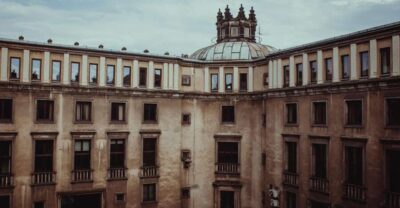
Nowa Huta: Steelworks Administration Buildings/Shelters Tour
Read the review →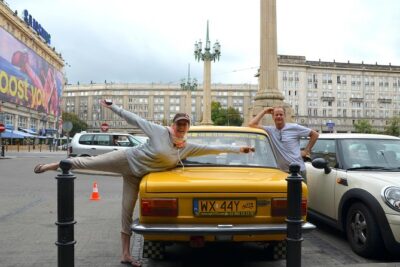
Private Tour: Warsaw’s Communist History by Retro Fiat
Read the review →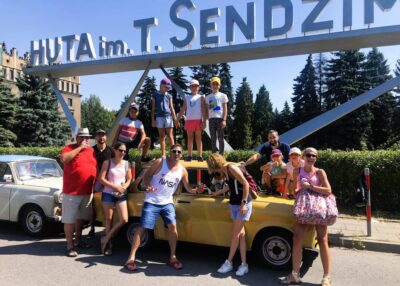
Private Nowa Huta Adventure Tour in Communist Cars
Read the review →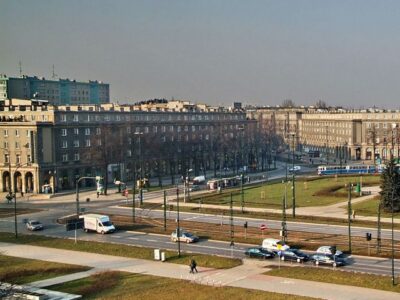

Browse the lists this tour appears in