
Reviewed · NOWA HUTA & COMMUNISM TOURS
Warsaw: Private Communism Tour with Hotel Pickup
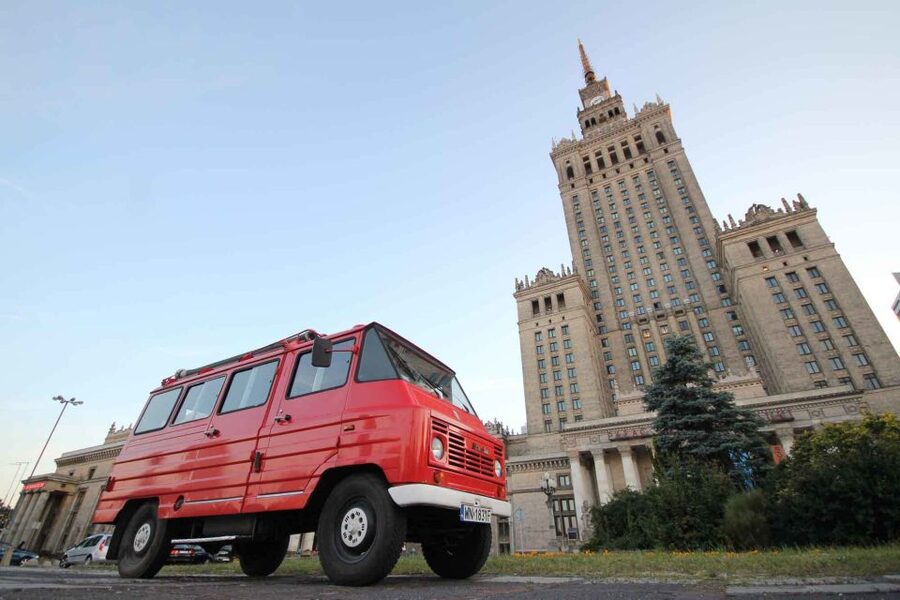
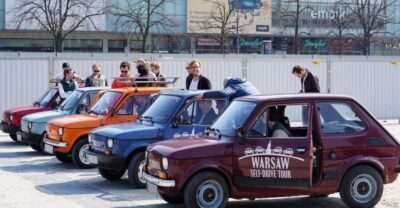
Warsaw’s communist past is easiest to grasp from the back seat of a Żuk retro minibus, a vehicle made in communist Poland. The three-hour private tour links major sites with the small, practical details of daily life: shortages, censorship, state planning, informal networks, and the ways people learned to cope.
I like the private format, which gives you room to ask direct questions and adjust the pace. I also like the chance to cover several far-flung landmarks without spending the day on foot. The main drawback is that the vintage minibuses are not air-conditioned, and some do not have seat belts, as historic vehicles are permitted different rules in Poland.
Key points to know before booking
- Ride in a genuine Żuk minibus: The vehicle itself sets the mood before the history lesson begins.
- See Warsaw through the communist period: The route connects postwar rebuilding, socialist city planning, political control, and the 1989 transition.
- Visit symbolic central sites: Expect the Palace of Culture and Science, Constitution Square, the former Communist Party headquarters, and other Cold War locations.
- Ask for the details that interest you: A private English-speaking guide can spend more time on ordinary life, politics, architecture, or family stories.
- Allow for walking at each stop: The minibus is mainly used to move between locations, not as a continuous sightseeing cabin.
- Plan for the vehicle’s limits: Wear suitable clothing and shoes. Historic minibuses have heating, but not air conditioning.
Why the Żuk makes the history feel real
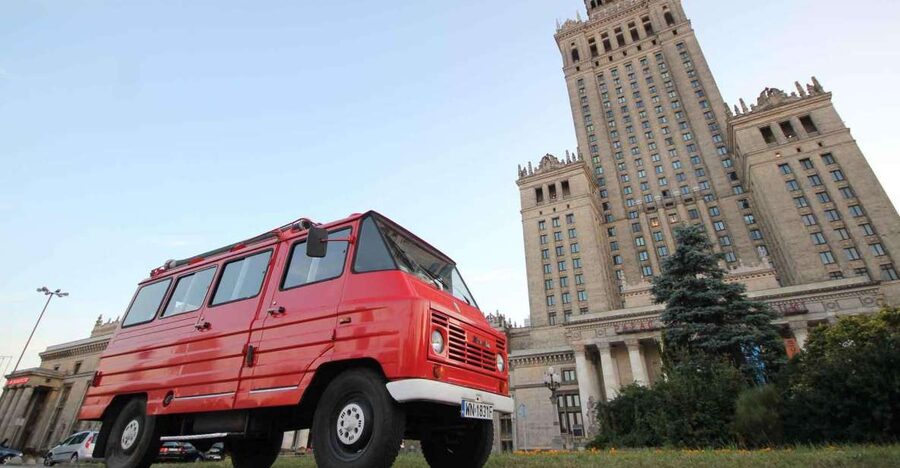
The Żuk is more than transport. It is an object from the period being discussed, built in Poland when the country’s economy and industry were controlled by the communist state. Sitting inside it gives the tour an immediate physical connection to the subject.
That matters because communist history can feel abstract when it is presented only through dates and political slogans. A vintage vehicle turns the subject into something you can see and feel. You are not simply hearing about state production or limited consumer choice. You are riding in one of the machines that belonged to that system.
The minibus also helps the tour cover more ground than a walking route. Warsaw’s communist landmarks are spread through the central city, and moving between them lets your guide explain how individual buildings fit into the wider plan for postwar Warsaw.
There is a practical tradeoff. Classic minibuses do not offer modern coach comfort. Some have no seat belts, and none has air conditioning. In winter, heating is available. In warm weather, dress lightly and expect the ride to feel more old-fashioned than polished.
Each vehicle carries up to eight people, and the operator has five minibuses. That keeps the experience genuinely private rather than turning it into a large group excursion. It also makes the tour suitable for a family or small party that wants to discuss the subject at its own pace.
Other communist-era tours around Warsaw:
- Private Tour: Warsaw’s Communist History by Retro Fiat
★ 5.0 · 115 reviews - Warsaw: Communism Tour in an Original Socialist Van
★ 4.9 · 75 reviews - Warsaw: Communist History Self-Driving Tour
★ 4.8 · 52 reviews
Hotel pickup and Warsaw after 1945
Your guide picks you up at your hotel if it is within three kilometres of central Warsaw. From there, the story begins with the city’s difficult postwar rebuilding.
Warsaw was badly damaged during World War II. The communist government rebuilt the capital according to socialist ideals, with broad spaces, large public buildings, planned housing, and monuments designed to express the power of the state. This was not simply a repair job. The rebuilt city was also meant to show what the new political order wanted Poland to become.
As you travel, listen for the difference between official plans and ordinary experience. The state promised modern housing, work, education, and a more equal society. At the same time, it controlled production, limited political freedom, censored information, and struggled to provide enough consumer goods.
This opening section is useful because it prevents the tour from becoming a list of gloomy buildings. You begin to see why the city looks the way it does and how architecture was used to send political messages.
Your guide can also put the period into everyday terms. The emphasis is not just on leaders and party meetings. You learn how shortages affected shopping, how censorship shaped public discussion, and how people depended on personal contacts and unofficial arrangements when the formal system failed to deliver.
The Palace of Culture and Science
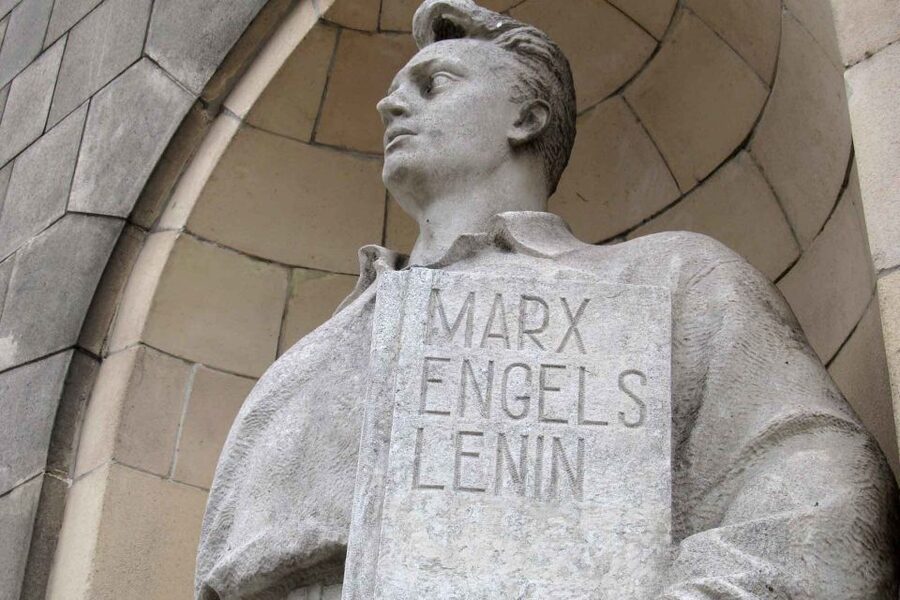
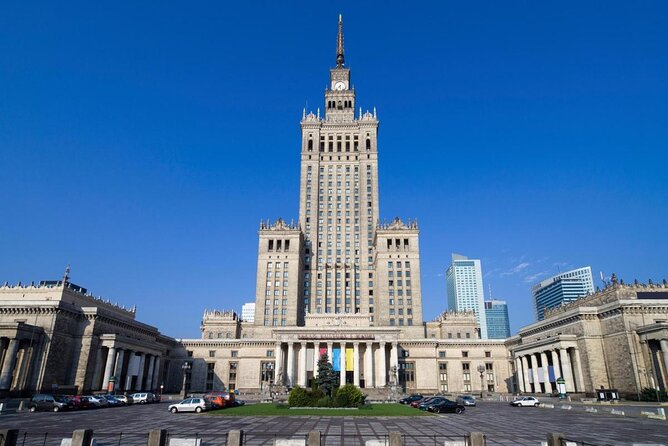
The Palace of Culture and Science is one of the clearest symbols of communist Warsaw. Its enormous scale makes an immediate impression, and its place in the city tells you something about political power.
The building was a gift from the Soviet Union and became a dominant feature of central Warsaw. Its presence was meant to communicate strength and cooperation within the Soviet sphere. For many people in Poland, however, it also represented outside control and the political order imposed after the war.
A good guide helps you hold both ideas at once. The palace is an architectural landmark, but it also carries an uncomfortable political meaning. It has served cultural, educational, and public purposes, yet its size and position made it impossible to ignore the state behind it.
You will not spend the entire three hours inside the building. The tour uses sites like this to explain the period and then moves on. That is a strength if you want a broad introduction to communist Warsaw rather than a single-building visit.
Bring your camera, but pay equal attention to the space around the palace. The surrounding streets and open areas help show how central Warsaw was arranged during the postwar period. Your guide’s explanation gives the building context that a quick photo stop cannot provide.
Constitution Square and socialist city planning
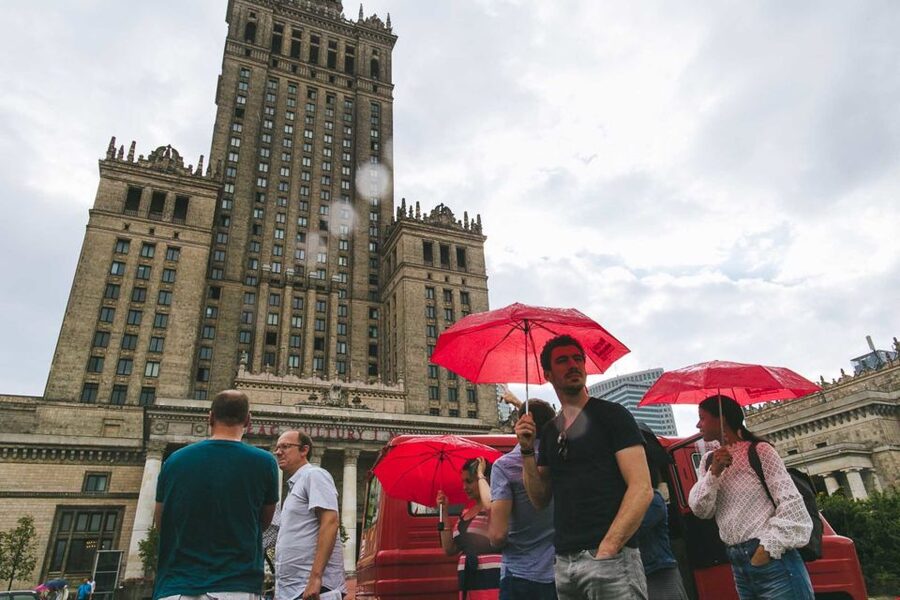
Constitution Square offers another view of the communist city. It was designed as a grand public space and is tied closely to the official image of postwar Poland.
The square’s scale and surrounding architecture reflect the government’s desire to create a city suited to mass demonstrations, public ceremonies, and state occasions. Wide avenues and monumental blocks gave the rebuilt capital a formal, controlled appearance.
This is a useful stop for understanding how urban design affected daily life. The architecture was not only about beauty or convenience. Public spaces could also display the strength of the state and organize how people gathered and moved through the city.
At the same time, the square helps explain the gap between official presentation and private feeling. A government might use a public space to celebrate progress, while residents experienced the same city through crowded shops, limited goods, and strict political controls.
Expect to walk at this stop. The Żuk is mainly used for transfers, and the walking sections are part of the experience. Comfortable footwear matters more than dressing up. Weather-appropriate clothing is also important since the tour operates outdoors as well as in the vehicle.
A few more things to do in Warsaw worth a look
- Private Tour: Warsaw City Sightseeing by Retro Fiat
★ 5.0 · 562 reviews - Warsaw: Warsaw Ghetto Private Walking Tour with Hotel Pickup
★ 4.9 · 369 reviews - Private Tour: Warsaw’s Jewish Heritage by Retro Fiat
★ 5.0 · 208 reviews - Private Historical Tour of Warsaw by a Retro Fiat with Pickup
★ 5.0 · 190 reviews
The former Communist Party headquarters
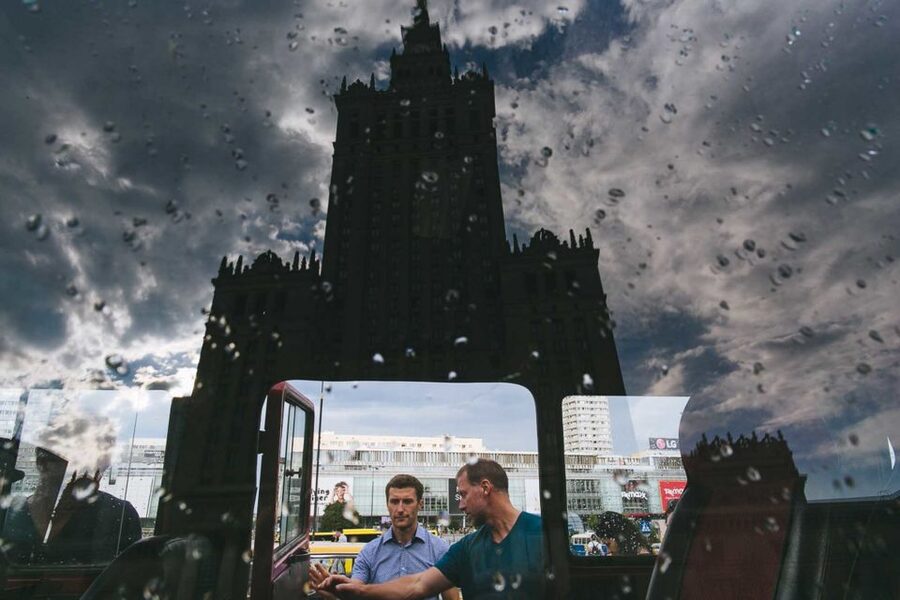
The former Communist Party headquarters connects the physical city with the machinery of government. Here, your guide can explain how political decisions shaped work, housing, media, education, and public life.
The story is not limited to party officials. The point is to understand how the system reached ordinary households. A centrally planned economy influenced what could be produced and bought. State control of the press affected what people were allowed to read and hear. Career opportunities could also be tied to political expectations and personal connections.
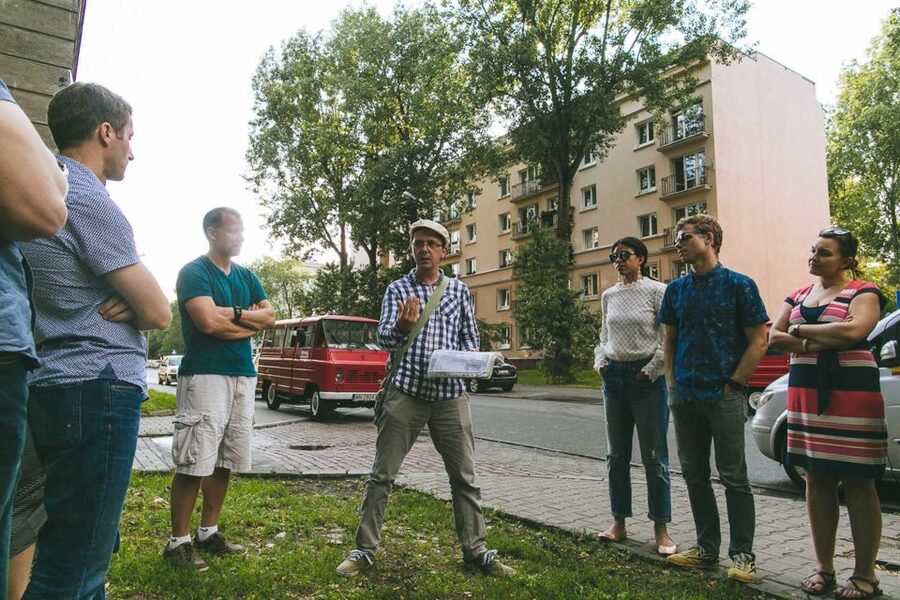
This is where the private format earns its keep. You can ask how the system worked in practice, rather than simply hearing a prepared outline. If your interest is family life, your guide can spend more time on shortages and informal networks. If you are more interested in politics, you can ask about the opposition movement and the changes of the 1980s.
Guides who have led this experience include Martin and Lucasz. Martin has been flexible enough to add two church stops when requested, showing that the private route can sometimes be adjusted. Lucasz is also among the named English-speaking guides associated with the tour. Your exact guide is not guaranteed, so treat those names as useful possibilities rather than a promise.
Everyday life from the 1950s through the 1970s
The strongest part of this experience is likely to be the explanation of how people managed ordinary life under communism. Political history often focuses on speeches and governments. This tour gives space to the practical side.
You learn about shortages and the centrally planned economy, including the ways limited supplies shaped shopping and household decisions. You hear how people built informal networks and used creative survival strategies when official channels were slow or inadequate.
That can mean understanding why personal contacts mattered so much. A friend, relative, colleague, or neighbor might help locate a product, arrange a service, or share information. These arrangements were not a minor side issue. They were part of how people made daily life work.
Censorship is another important theme. You see how political control affected public information and discussion, then follow the gradual breakdown of that control in the 1980s. The guide’s role is especially important here because the subject can be reduced to simple good-versus-bad storytelling. A better explanation shows both the official claims of the system and the pressures that made it difficult to live under.
You should ask questions. This is not a tour where you need to remain silent while the guide recites facts. The private setup gives you room to compare the Polish experience with other communist countries or to ask about the difference between public behavior and private opinion.
The 1980s and the road to 1989
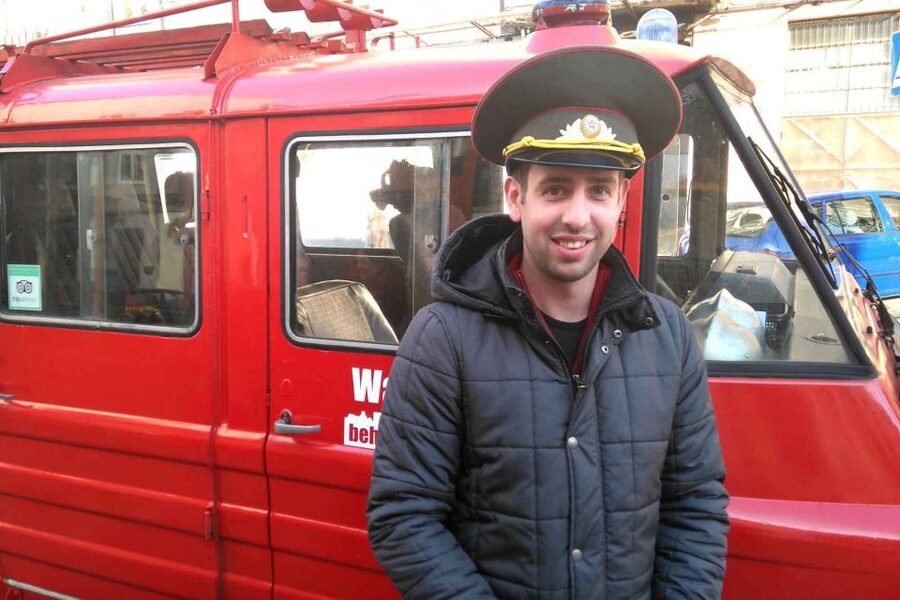
The final part follows the political changes of the 1980s and ends with the first free elections in 1989. This gives the tour a clear arc, from postwar reconstruction to the collapse of communist rule.
The ending matters because it shows that the period was not static. Poland changed over four decades. The pressures created by shortages, political opposition, public frustration, and wider changes in the Soviet sphere eventually led to a new political order.
You may find the 1989 conclusion especially useful if you are seeing Warsaw for the first time. Modern Poland can look very different from the city described at the start of the tour, yet the older system still shapes its buildings, public spaces, and family memories.
The guide can connect the landmark stops to this political shift. The Palace of Culture and Science, Constitution Square, and the former party headquarters are not isolated sights. Together, they show how power was displayed, exercised, and eventually challenged.
How the private format changes the experience
A private tour is most valuable when the subject invites questions. Communism in Poland is not a single story, and people often want to understand contradictions: how the state could offer security in some areas while restricting freedom in others, or how citizens could adapt without fully accepting the system.
With up to eight people in a minibus, you avoid the scale of a standard coach tour. You can usually hear the guide clearly, and the pace can be shaped around your group’s interests. If a particular site raises questions, you have a better chance of getting an answer instead of being hurried along.
The route also has room for small adjustments. Martin has added two churches for one group, so it is sensible to ask about possible extra stops when you book or at the start. Do not assume every request can be met, but the private format gives you more flexibility than a fixed group itinerary.
The downside is price. At $165 per person, this is not a bargain sightseeing ride, especially for a solo visitor. The value improves for a small private group because you are paying for a guide, a dedicated vehicle, hotel service, and a focused three-hour history lesson rather than just transport between attractions.
I would compare it with the cost of arranging a private guide and separate transport. The vintage Żuk is part of the value, since it provides an experience a normal car cannot. If you mainly want the cheapest way to see central landmarks, this is probably more than you need. If you want context and conversation, the price is easier to justify.
Comfort, walking, and practical planning
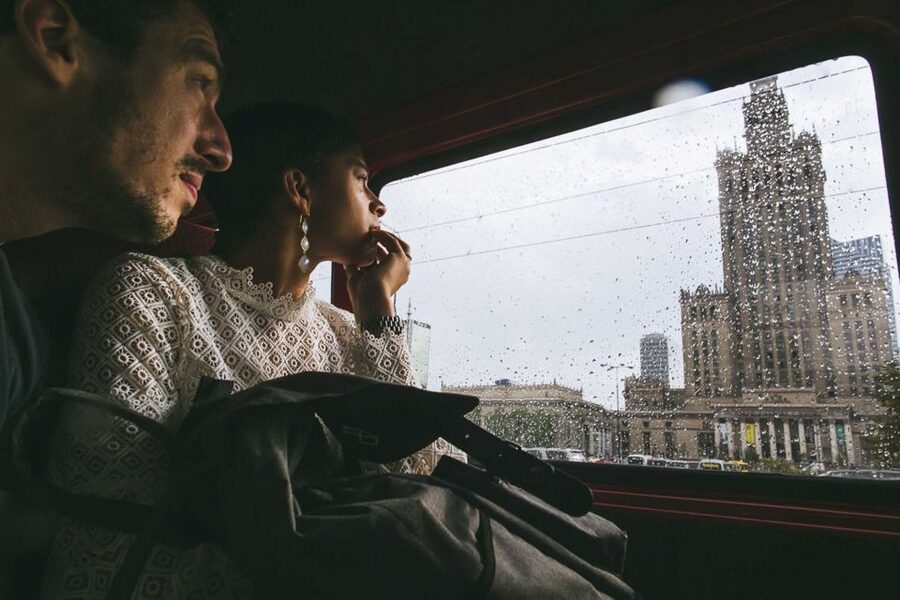
The tour lasts three hours, which is long enough to build a clear story without taking over your whole day. Hotel pickup and drop-off are included within a three-kilometre radius of central Warsaw. At the end, you can be dropped at a location of your choice within central Warsaw.
The vehicle is used primarily to transfer you between stops. You will get out and walk at each location, so this is not a ride where you remain seated for the whole route. Choose comfortable shoes and clothing suited to the weather.
Children must be at least 150 centimetres tall to book instantly online. For a child under that height, contact the operator in advance to ask about a booster seat. Polish law requires an appropriate booster, and availability needs to be checked before booking.
Unaccompanied minors are not allowed. Food and drinks are not included, so plan those separately around the three-hour schedule.
The tour offers free cancellation up to 24 hours before departure and a reserve-now, pay-later option. Those terms are useful if your Warsaw plans are still moving, but check the available start times before you commit to the rest of your day.
Who should book this Warsaw communist tour?
I would choose this tour if you enjoy history best when it is tied to real streets, buildings, and daily habits. It suits first-time visitors who want an introduction to Warsaw’s postwar identity, as well as people with a particular interest in the Cold War and life behind the Iron Curtain.
It is also a good fit for families or small groups who want a private conversation rather than a large scheduled tour. The three-hour length works well near the beginning of a Warsaw stay, when you are still getting your bearings, or later when you want to understand sights you have already seen.
I would think twice if you dislike old vehicles, need modern transport comfort, or want an entirely indoor activity. The lack of air conditioning can matter in warm weather, and some minibuses do not have seat belts. The walking sections also mean you should not treat this as a fully seated sightseeing ride.
Should you book it?
Book this tour if you want the story behind Warsaw’s communist landmarks, not just a drive past them. The Żuk, private guide, hotel pickup, and flexible pace make it more personal than a standard city loop, while the route gives you a solid three-hour framework for understanding postwar Poland.
Skip it if your main goal is the lowest price or a modern, climate-controlled vehicle. For everyone else, especially history-minded visitors and small groups, the combination of authentic transport and direct discussion makes the $165 cost reasonable. Ask about your guide, possible extra stops, and vehicle comfort before setting out.
FAQ
How long is the Warsaw Communism Tour?
The tour lasts three hours.
Is the tour private?
Yes. It is offered as a private group experience, with each minibus accommodating up to eight passengers.
What language is the tour conducted in?
The live tour guide speaks English.
Where does hotel pickup take place?
Pickup is available from your hotel within a three-kilometre radius of Warsaw city centre.
Is hotel drop-off included?
Yes. Drop-off is included, with the final location available within central Warsaw.
Which landmarks are included?
The tour includes the Palace of Culture and Science, Constitution Square, the former Communist Party headquarters, and other locations connected with Warsaw’s communist and Cold War history.
Is the Żuk minibus air-conditioned?
No. The classic vintage minibuses are not equipped with air conditioning. They do have heating for winter use.
Are seat belts available in every minibus?
Some historic minibuses do not have seat belts. This is permitted for historic vehicles.
Can children under 150 centimetres join the tour?
They may be able to join, but you must contact the operator in advance to check booster-seat availability. Booster seats are mandatory under Polish law.
Just added in Warsaw
- Warsaw Zoo Skip-the-Line Entry Ticket with Private Transport★ 4.8 · 3 reviews
- Warsaw Private Wilanow Palace & Garden Tour★ 4.6 · 30 reviews
- Warsaw: Vodka Tour★ 4.4 · 18 reviews
- Warsaw Wolf’s Lair with St. Lipka and Mamerki Private Guided★ 4.2 · 3 reviews
- Warsaw Old Town UNESCO HERITAGE walking tour in English★ 4.5 · 23 reviews
- Warsaw: Private Vodka Tasting Night with Snacks and Pickup★ 5.0 · 7 reviews
- Warsaw Uprising and WWII Old Town Walking Tour with Museum★ 4.7 · 15 reviews
- Warsaw: Skip-the-Line Royal Castle Guided Tour★ 4.9 · 79 reviews
Nowa Huta & Communism Tours, compared.
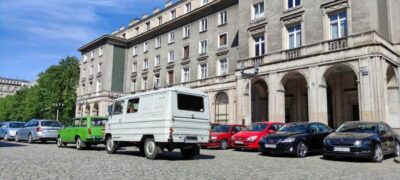
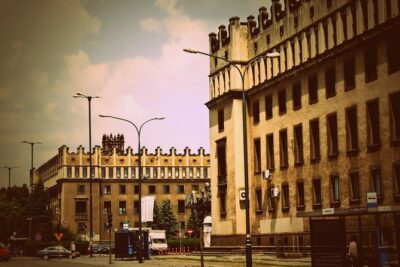
Legendary Private Nowa Huta Communism Tour with Crazy Guides
Read the review →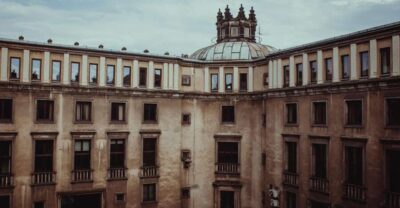
Nowa Huta: Steelworks Administration Buildings/Shelters Tour
Read the review →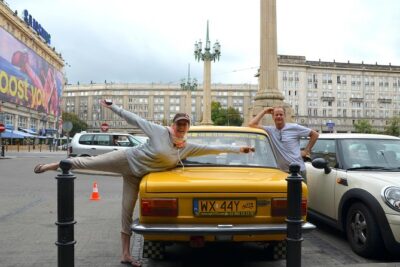
Private Tour: Warsaw’s Communist History by Retro Fiat
Read the review →
Private Nowa Huta Adventure Tour in Communist Cars
Read the review →
Browse the lists this tour appears in